Sichuan Compound Soy Sauce (复制酱油)

If you have eaten your way through Sichuan, chances are you have already tasted 复制酱油 (fùzhì jiàngyóu), even if you have never heard its name.
It appears in some of Sichuan’s most recognizable snacks and cold dishes, including 钟水饺 (Zhong Dumplings), 甜水面 (Sweet Water Noodles), 四川凉面 (Sichuan Cold Noodles), 红油抄手 (Red Oil Wontons), and 蒜泥白肉 (Garlic Pork). Yet compared with red chili oil, doubanjiang, or Sichuan pepper, 复制酱油 rarely gets much attention.
The name can also be confusing. 复制 today commonly means “to copy” or “duplicate,” but that does not really explain what happens in the kitchen. For this recipe, we call it Compound Soy Sauce, borrowing the same idea as compound butter: an existing ingredient is further prepared with other ingredients to create a new condiment.
Compound soy sauce starts with brewed soy sauce, then adds sugar, spices, and fresh aromatics before slowly reducing everything together. The result is sweeter, more aromatic, slightly thicker, and more concentrated than the soy sauce it started with.
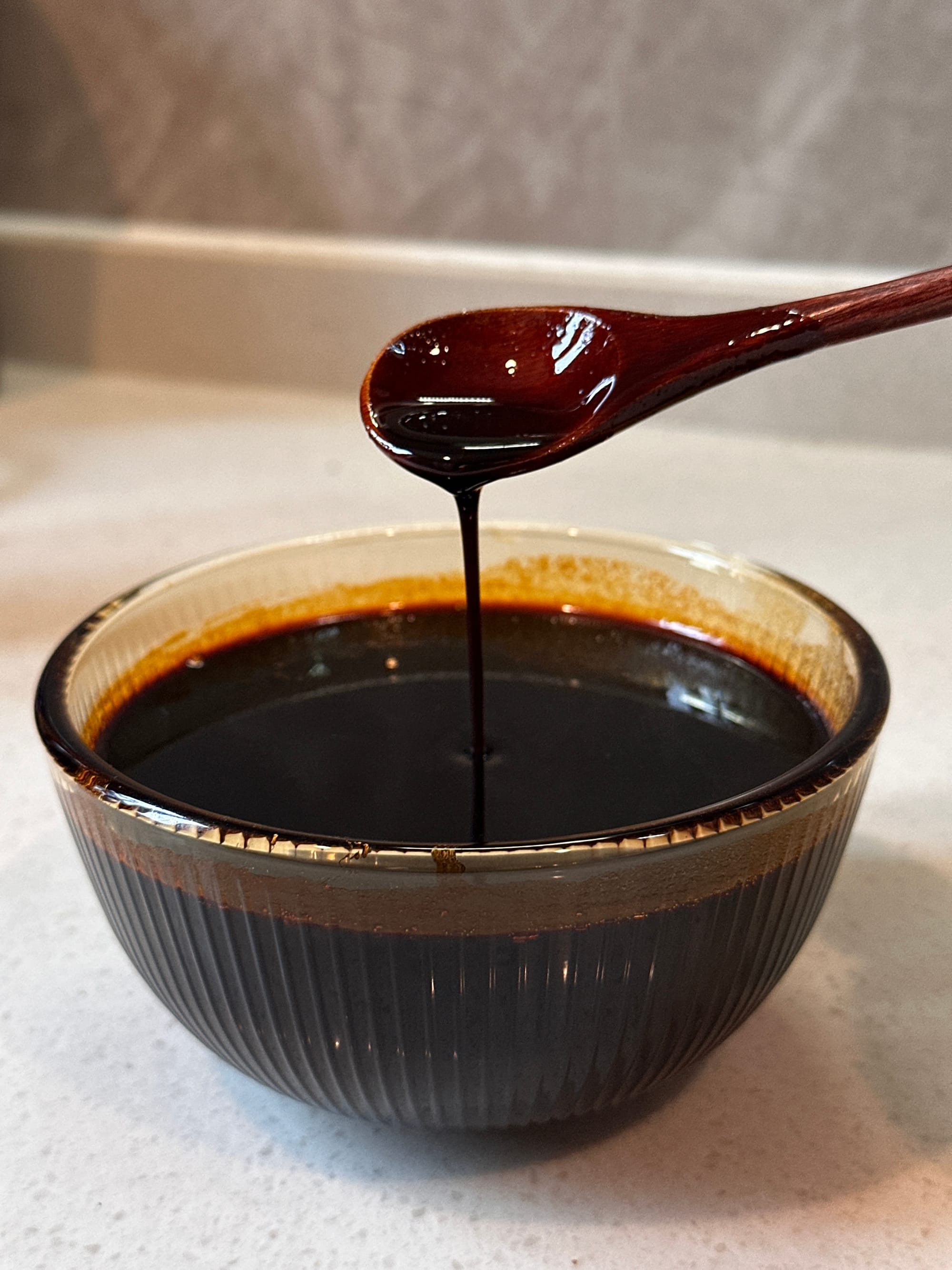
There is no single recipe for 复制酱油. In researching this recipe, we compared seven different Sichuan formulas, including recipes attributed to Sichuan chefs as well as versions used in home kitchens. For roughly 500 g or ml of soy sauce, the amount of sugar ranged from just 75 g to as much as 300 g. Some recipes added no water at all, while others used it generously. The spices also varied considerably.
What remained consistent was the basic idea: take fermented soy sauce and build another condiment from it through sweetness, aromatics, and slow reduction.
This recipe takes the common elements from those different approaches and turns them into a balanced compound soy sauce that is practical to make at home.
The Significance of Compound Soy Sauce
Sichuan cooking is often associated with bold ingredients such as chili oil, Sichuan pepper, doubanjiang, and fermented vegetables. But many familiar Sichuan flavors are actually created by combining several prepared seasonings, with each one contributing something different.
Compound soy sauce is a great example.
In dishes such as Zhong Dumplings, it is commonly paired with red chili oil. The chili oil provides heat and fragrance, while the compound soy sauce contributes saltiness, sweetness, fermented umami, and a background of spices. Together, they create something much more complex than simply adding plain soy sauce and chili oil to a bowl.
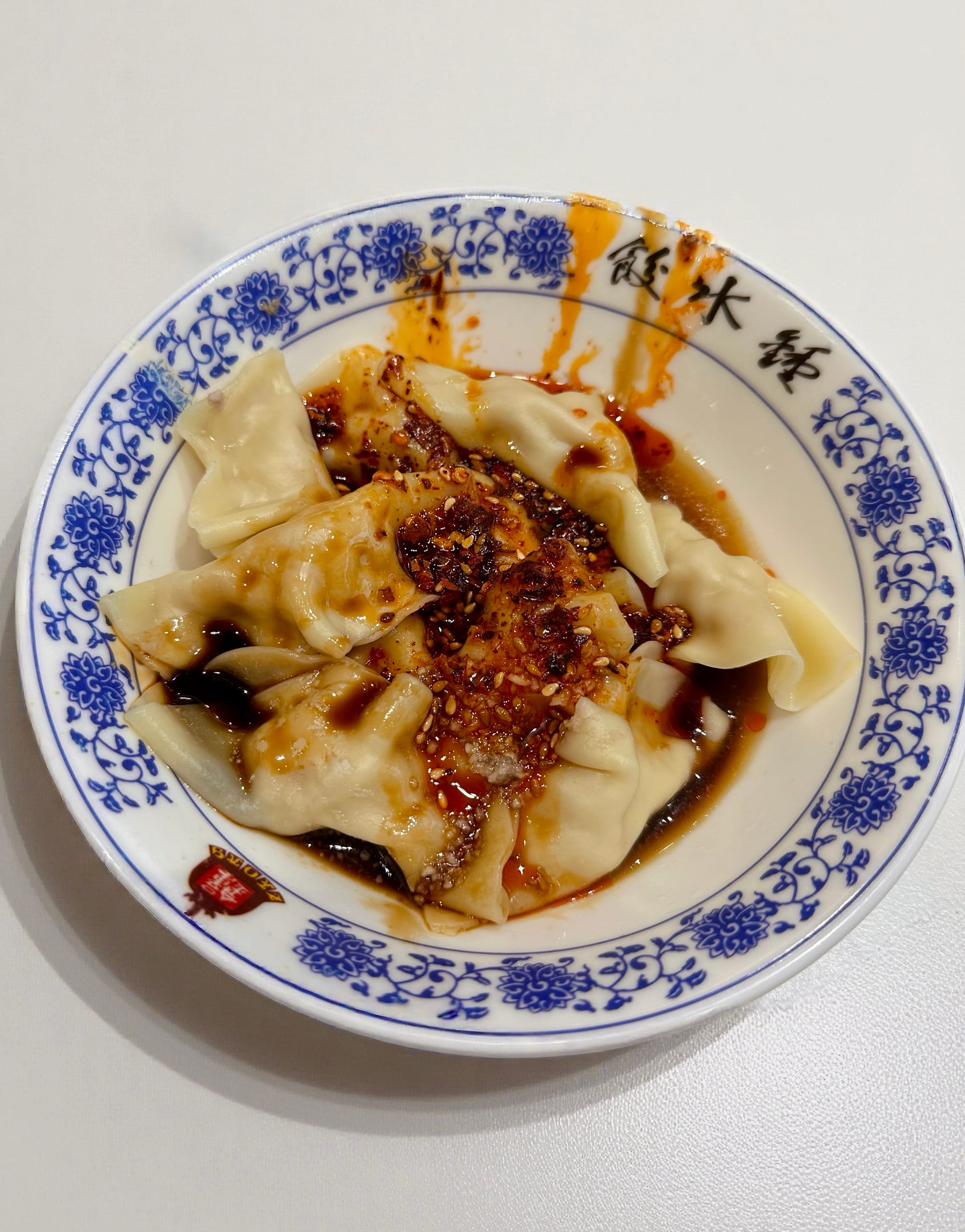
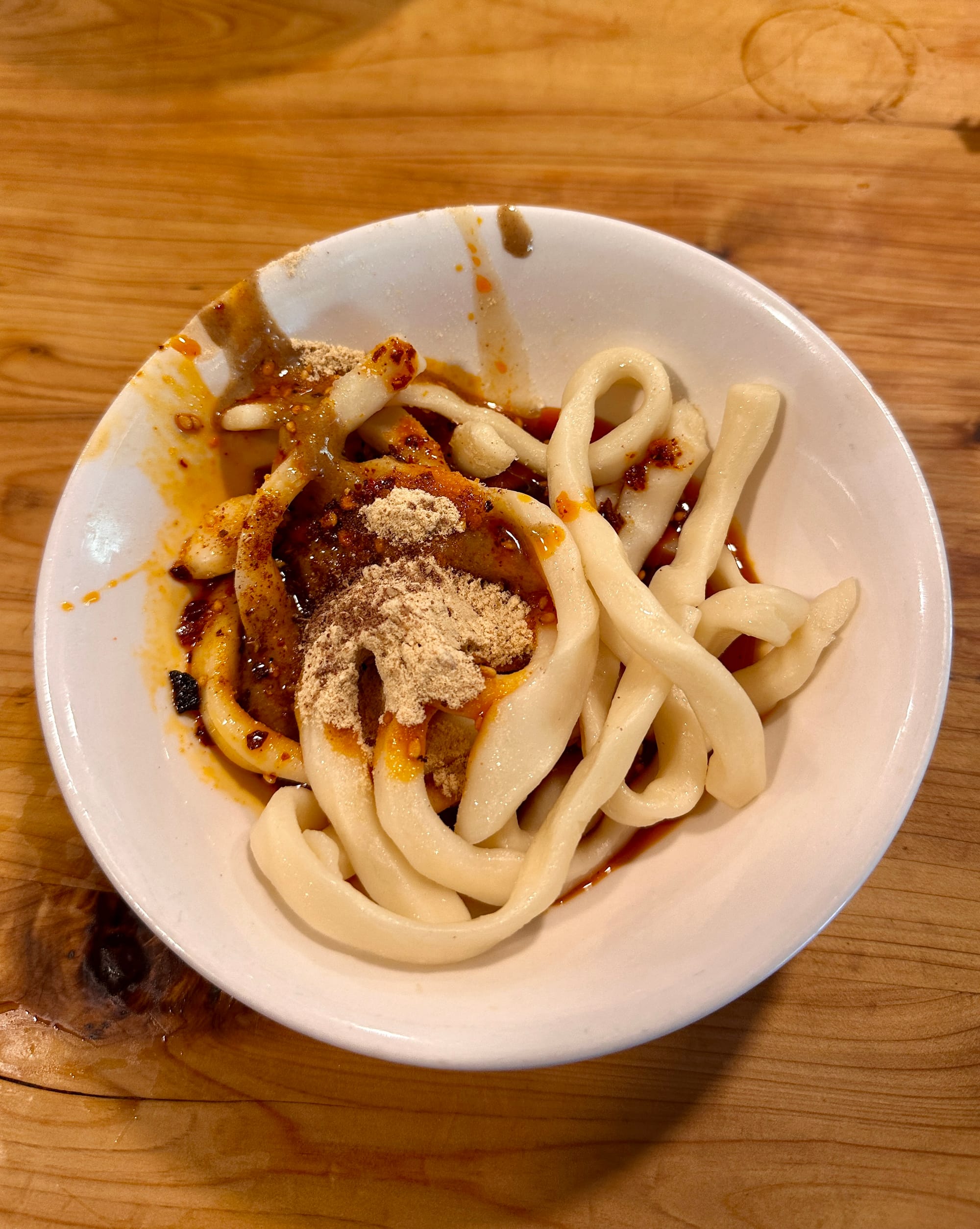
First: Zhong Dumplings with red chili oil and compound soy sauce as main base sauce. | Second: Tianshuimian with compound soy sauce and sesame paste as base sauces. It is almost a signature Sichuan dish when you see sauces dripping on the edge of the bowl, showcasing how thick and silkily the sauce is.
Sweet Water Noodles (tiánshuǐmiàn) is another example that is probably more controversial among Sichuanese. As its name suggests, the noodles are quite sweet, balanced with savoriness and the heat of chili oil and chili powder. It is a staple to try in Chengdu and is loved by many locals and tourists. But in other parts of Sichuan, some people have a hard time with it.
As I was researching the recipe for compound soy sauce, I turned to a Luzhou chef we know. He immediately pointed out how much the amount of sugar can vary depending on where you are in Sichuan. Naturally, I then asked him what he thought about tianshuimian. His response was instant: “Disgusting. I can’t put that in my mouth.”
I laughed so hard because I understood exactly where he was coming from. People in Luzhou and Chongqing generally have a stronger preference for salty, numbing and spicy flavors, while Chengdu has a much more noticeable sweet side to its food.
Food, in this sense, is indeed deeply personal. Even within Sichuan, something considered an essential local delicacy in one city can be completely unacceptable to someone from another.
It is also an interesting example of how Chinese cooking treats a fermented condiment as an ingredient rather than necessarily a finished product. Soy sauce has already gone through fermentation before it reaches the kitchen. In 复制酱油, it becomes the starting point for another process.
Once prepared, compound soy sauce can be kept on hand for noodles, dumplings, cold dishes, vegetables, and other foods that benefit from a sweet, savory, aromatic seasoning.
Ingredient Guidance
This recipe uses ingredients that should be relatively easy to find in Chinese or Asian supermarkets outside China.
Soy Sauce - Use a naturally brewed Chinese soy sauce (酿造酱油).
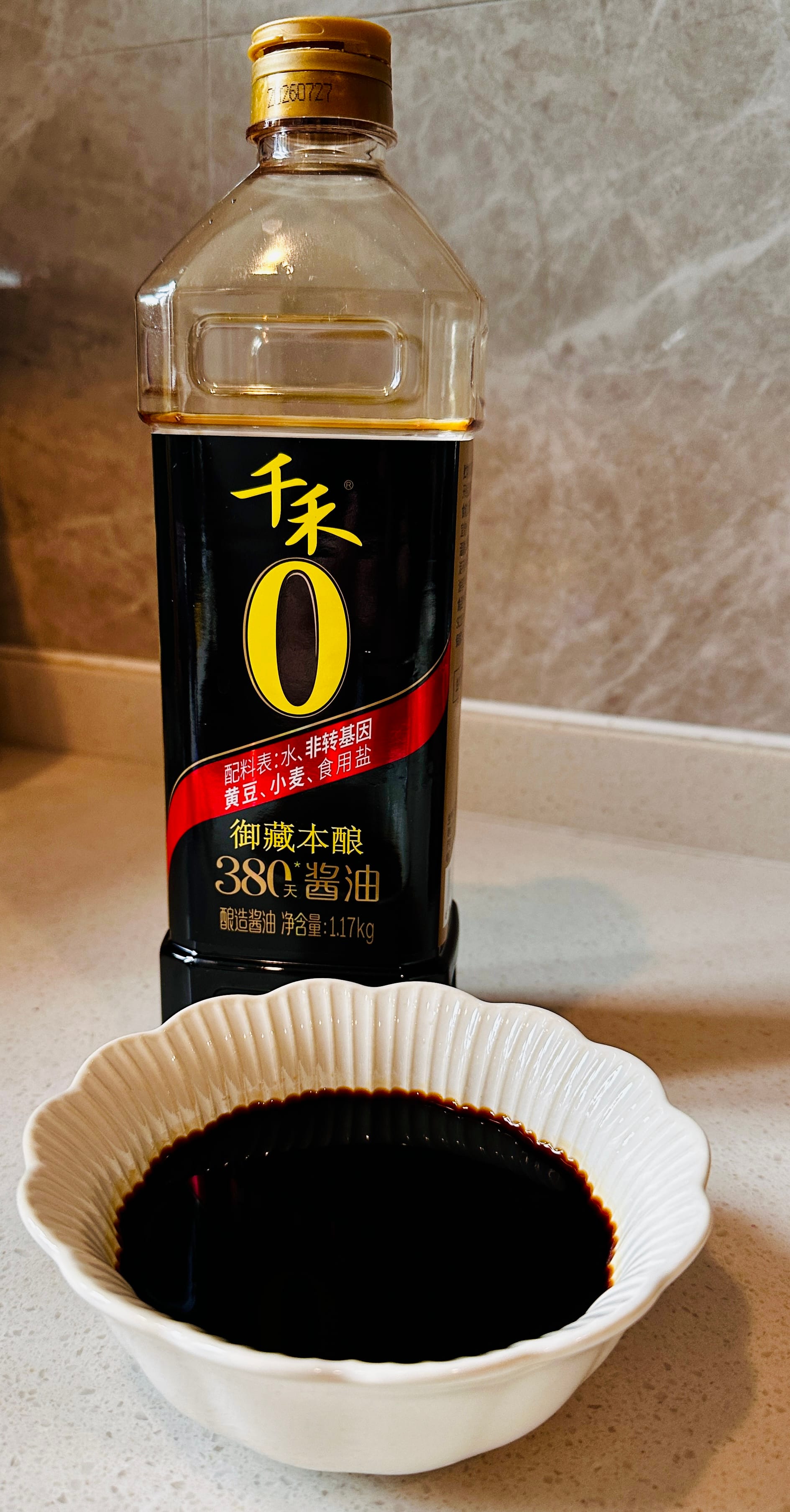
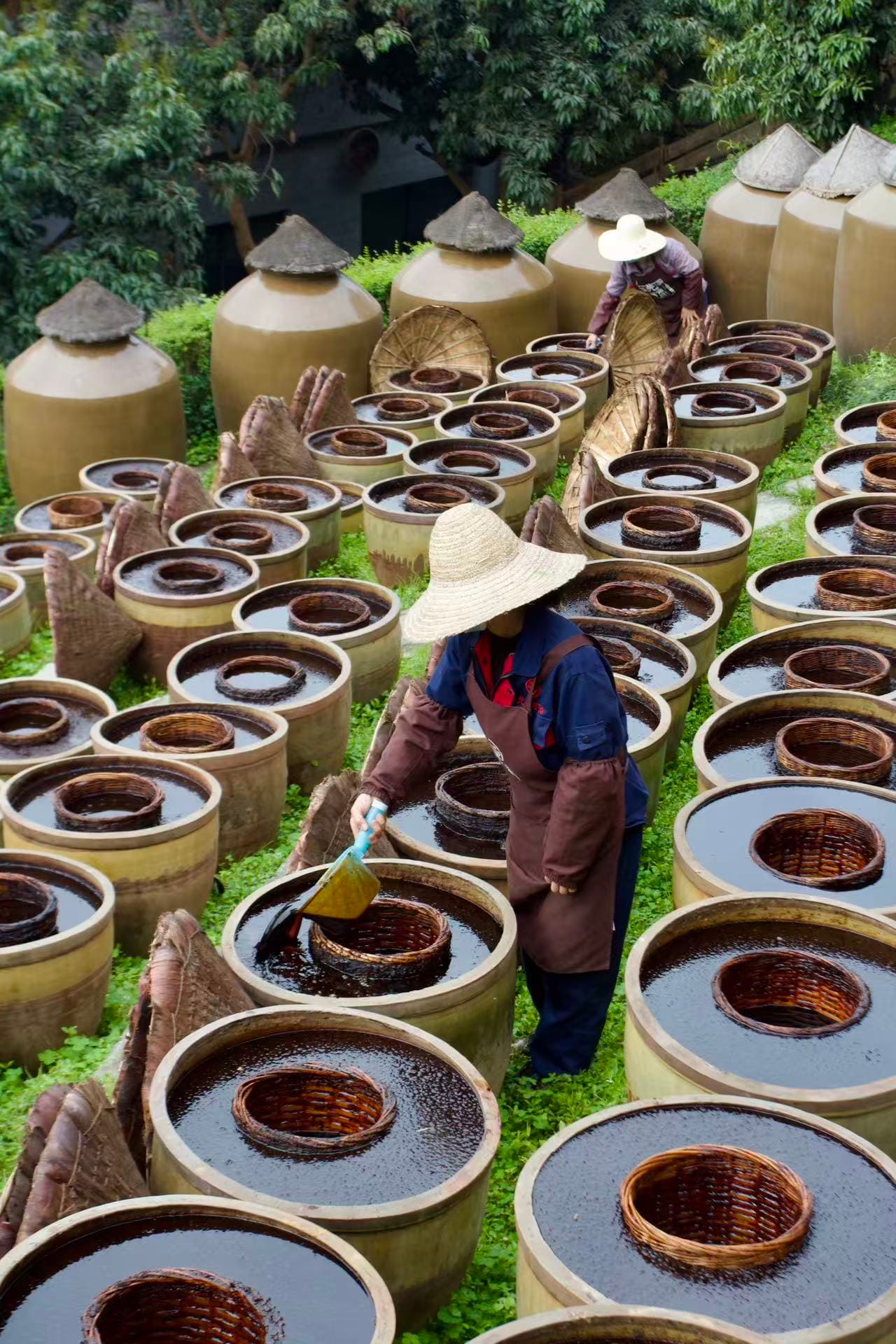
First: an example of the soy sauce I used for this recipe, for which only contains water, soybeans, wheat and salt as ingredients. | Second: Naturally brewed soy sauce in a traditional soy sauce factory in Sichuan.
For this recipe, choose a good-quality brewed soy sauce whose flavor you already enjoy. When you go to an Asian grocery store to look for soy sauce, take a closer look at the ingredient list rather than simply choosing between “light” and “dark.” A naturally brewed soy sauce can have a very simple ingredient list: water, soybeans, wheat or flour, and salt. If you see additional coloring or flavoring, try to choose another bottle. Since soy sauce makes up most of this recipe, starting with a simply brewed soy sauce keeps us closer to the original flavor of the condiment. If there are not readily available, choose the one with less ingredients.
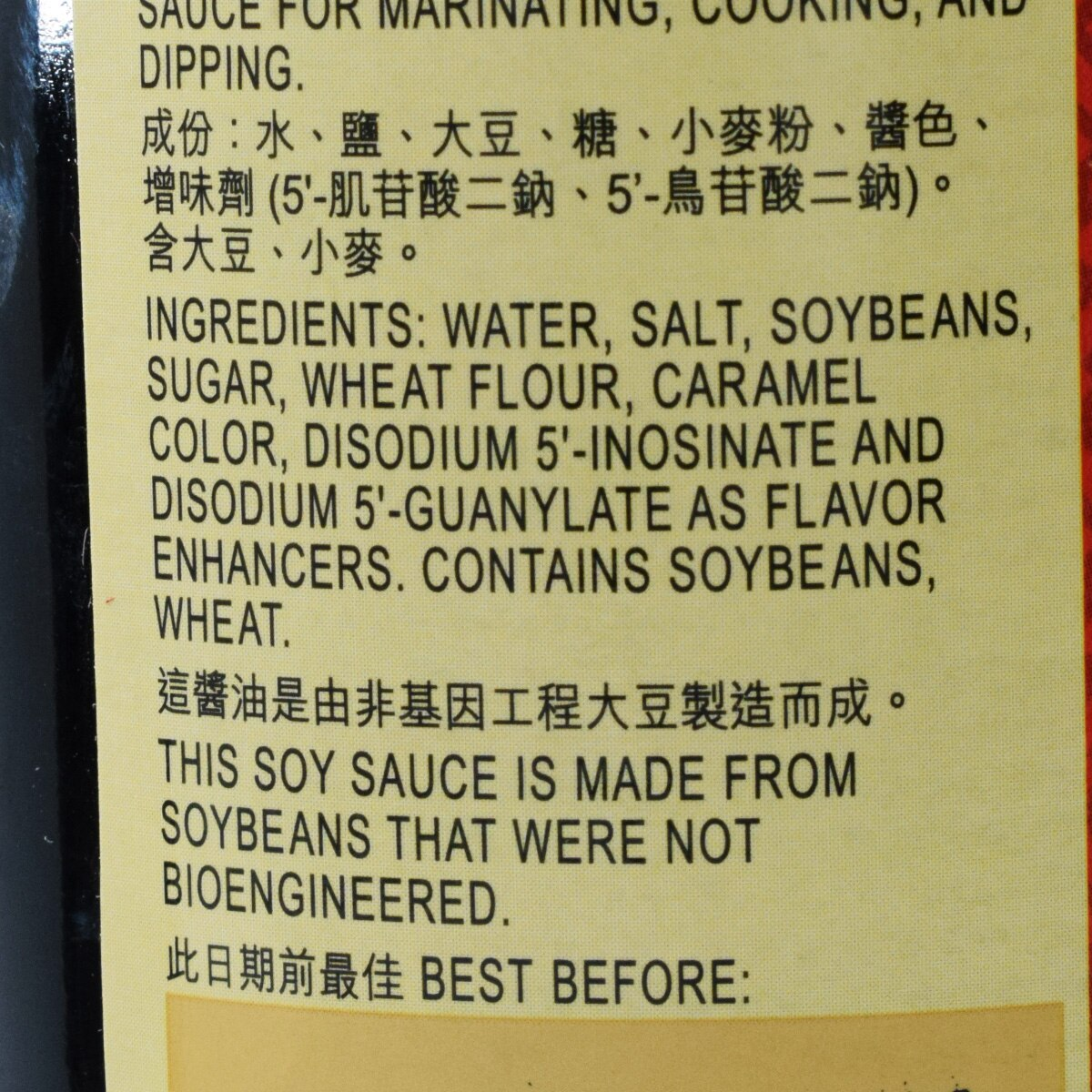
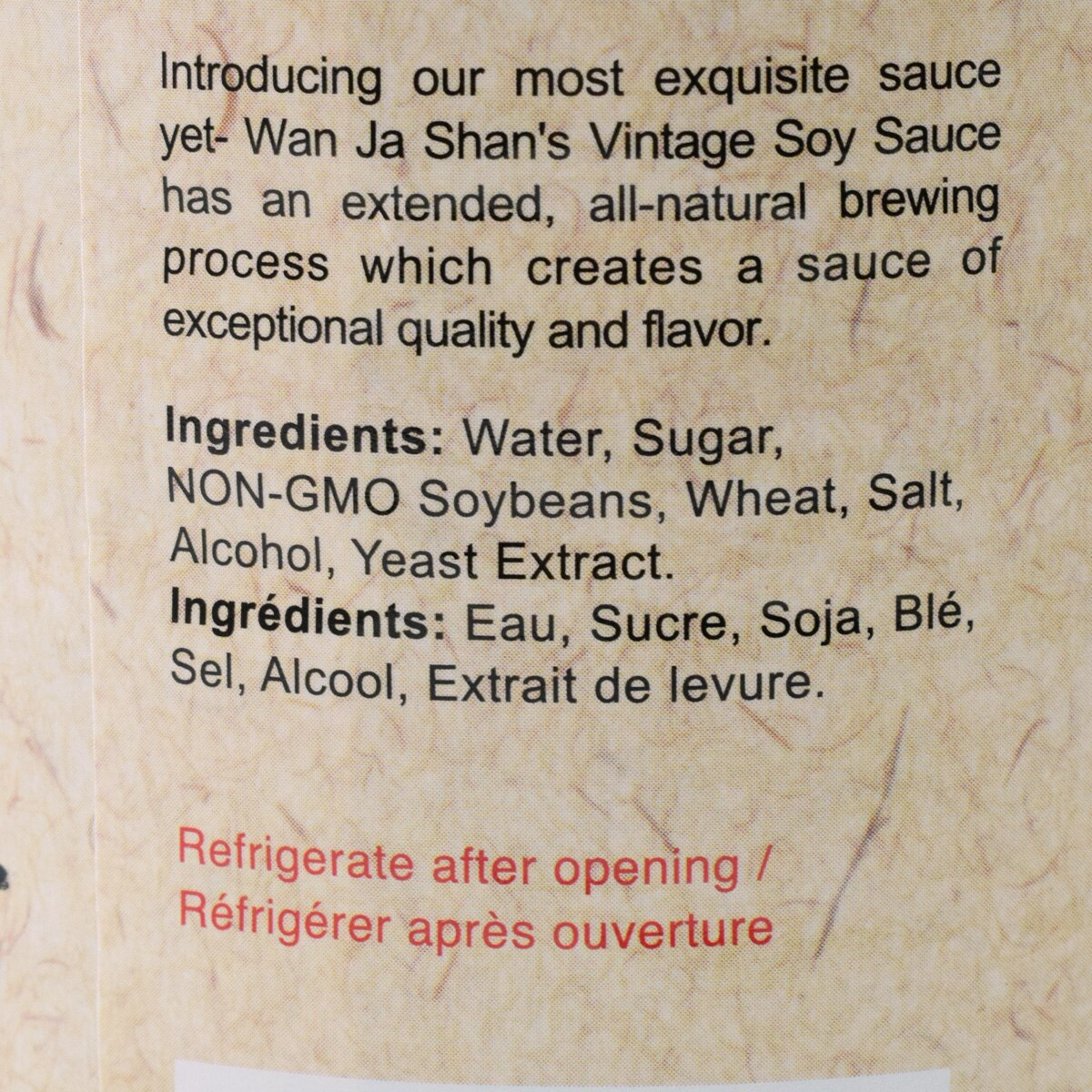
Two examples of soy sauces that has extra ingredients and flavorings. Credit: T&T Supermarket
Avoid using dark soy sauce as the main soy sauce. Its deep color can make the compound soy sauce unnecessarily dark.
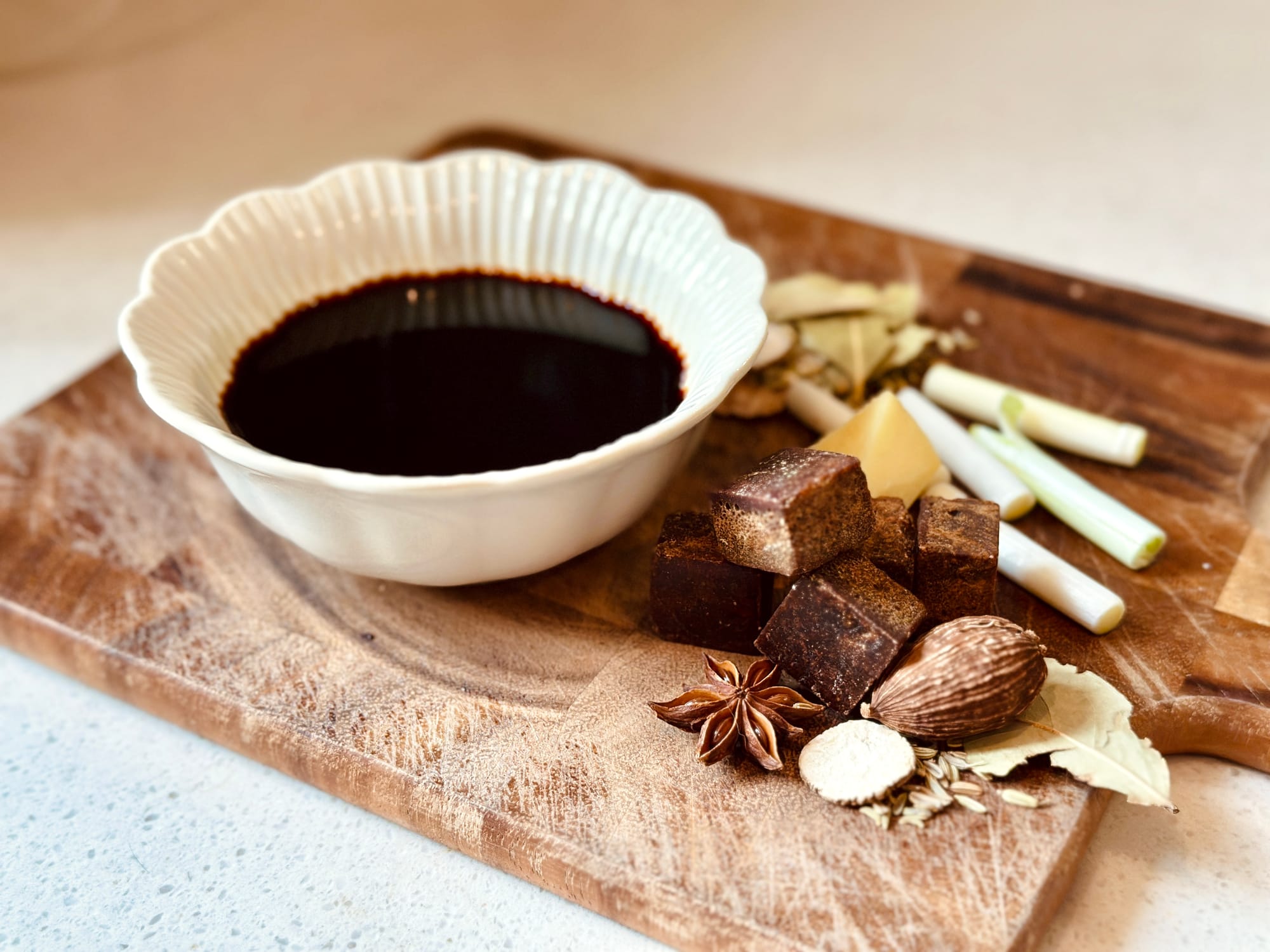
Red Sugar/Brown Sugar - Red sugar (红糖) provides more than sweetness. It also adds body, color, and a deeper sugarcane flavor.
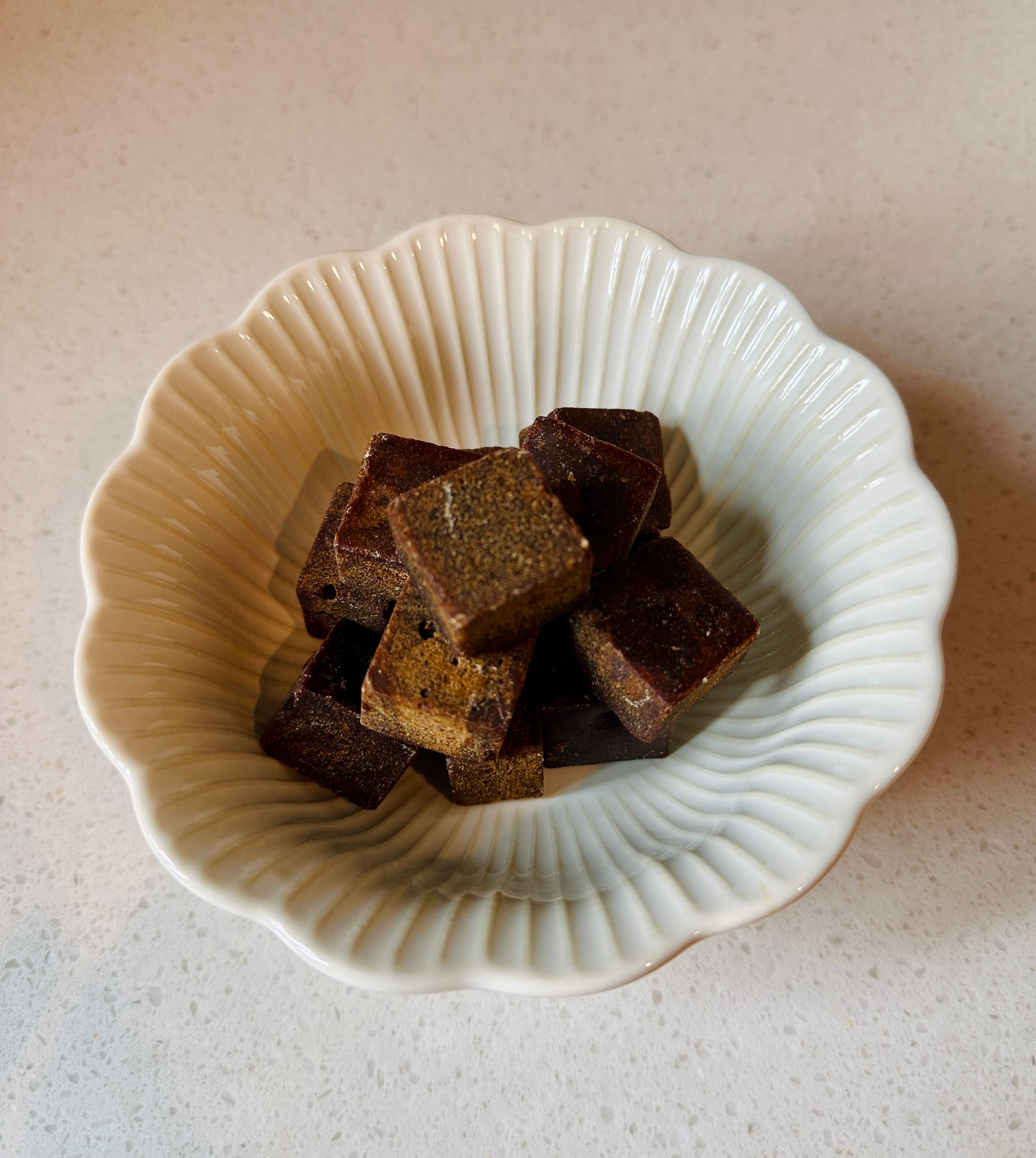
This was one of the biggest differences among the seven recipes we compared. For approximately 500 g or ml of soy sauce, the recipes used anywhere from 75 g to 300 g of sugar.
This recipe uses 150 g. It provides enough sweetness to balance the saltiness of the soy sauce without turning the finished condiment into an overly sweet sauce. Make your own and taste how you like it and adjust accordingly to your preference later.
Water - Water is optional, and the seven recipes took very different approaches to it. Some did not add any water whatsoever. Others added a small amount, while several first simmered the spices in water before adding the soy sauce.
Here, water serves a practical purpose. It allows the spices and aromatics to simmer and release their flavor before the soy sauce becomes overly concentrated. The water is then gradually removed again during reduction.
If you prefer not to add water, see the No-Water Recipe Variation at the bottom of this page.
Star Anise - Star anise is warm, its sweet aroma pairs naturally with soy sauce and red sugar, but it can easily dominate. Two whole star anise are enough for this recipe.
Fennel Seeds - 小茴香 (fennel seeds) contribute a lighter sweet aroma that works alongside the star anise. Use them with restraint so that the finished sauce still tastes primarily of soy sauce rather than dried spices.
Bay Leaves - Bay leaves provide a subtle background aroma during the long simmer.Their flavor should not be immediately identifiable in the finished sauce.
Baizhi (白芷) - 白芷 (báizhǐ, Angelica dahurica root) has a distinctive earthy, herbal aroma and is quite powerful. We use only a small amount here to add another layer of fragrance without giving the sauce an overly medicinal character.
Tsaoko (草果) - Tsaoko is a dried aromatic fruit commonly used in Sichuan cooking, particularly in braises, stocks, and spice mixtures. It has a strong smoky, earthy, and slightly medicinal aroma, so a little goes a long way. Lightly crack the pod and take the seeds out. This allows the tsaoko to add depth without overpowering the soy sauce.
Ginger and Scallion Whites - Unlike the dried spices, ginger and scallion bring a fresher aromatic quality to the sauce. Scallion whites are particularly suitable because their flavor holds up well during longer cooking.
Mise en Place
Before cooking:
- Peel the ginger, slice or leave to small chunks.
- Cut the scallion whites into 5–6 cm pieces.
- Measure the soy sauce, red sugar, and water.
- Measure the fennel seeds and baizhi.
- Prepare the star anise and bay leaves.
- Crack the tsaoko and remove the seeds inside, save the outer shell for use.
- Prepare a fine-mesh strainer.
- Prepare a clean glass bottle or jar for storage.
If the dried spices have visible dust or debris, rinse them quickly under water and drain well.
Use a saucepan with enough space above the liquid. As the soy sauce and sugar concentrate, the mixture will begin to produce larger bubbles and can rise considerably in the pan.
Ingredients
Compound Soy Sauce
- 500 ml naturally brewed Chinese soy sauce
- 150 g red sugar (brown sugar)
- 150 ml water
- 10 g ginger
- 15 g scallion whites
- 2 whole star anise
- 3 bay leaves
- 2 g fennel seeds (小茴香)
- 1 g baizhi (白芷)
- 1 pod of tsaoko
Methods & Procedures
Step 1. Infuse the Spices
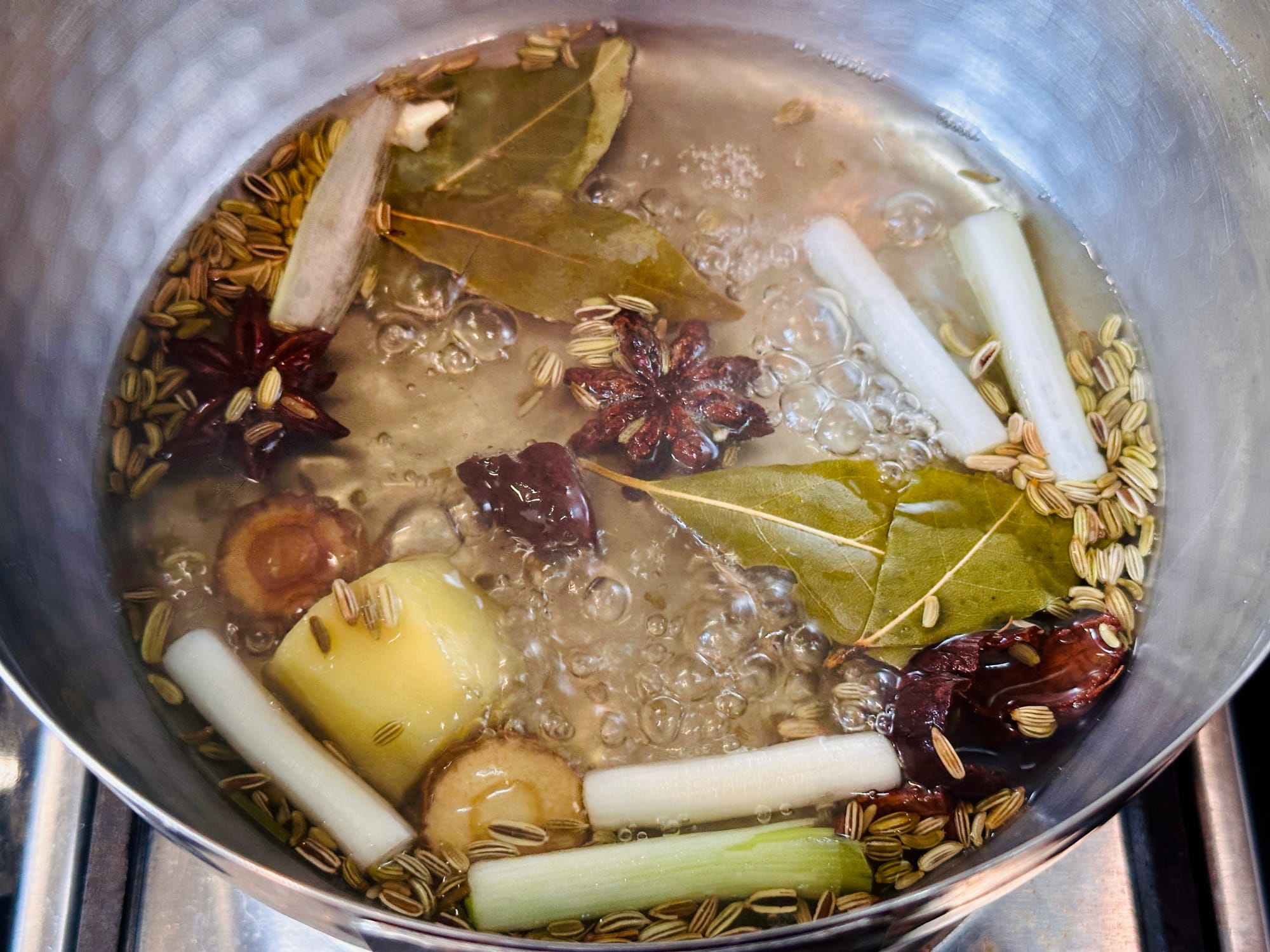
Add the following to a saucepan:
- water
- ginger
- scallion whites
- star anise
- bay leaves
- fennel seeds
- baizhi
- tsaoko
Bring to a boil then reduce to low heat and gently simmer for 10 minutes.
Step 2. Add the Soy Sauce
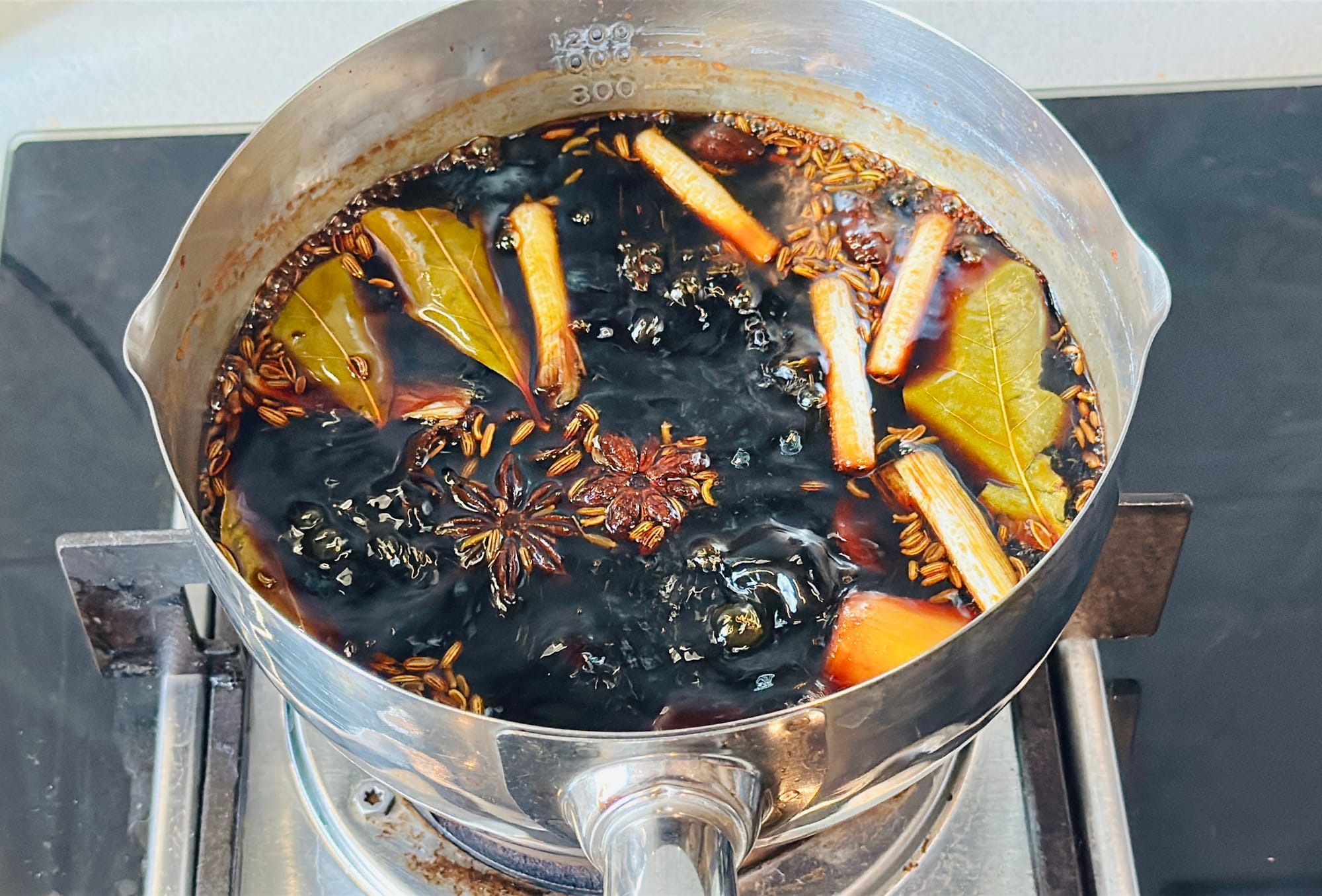
Pour in the soy sauce and bring the mixture back to a gentle simmer, then immediately reduce the heat to low. Simmer, uncovered, for approximately 25 minutes.
Keep the heat low. You want gradual evaporation and extraction rather than a rapid boil.
Step 3. Add the Red Sugar
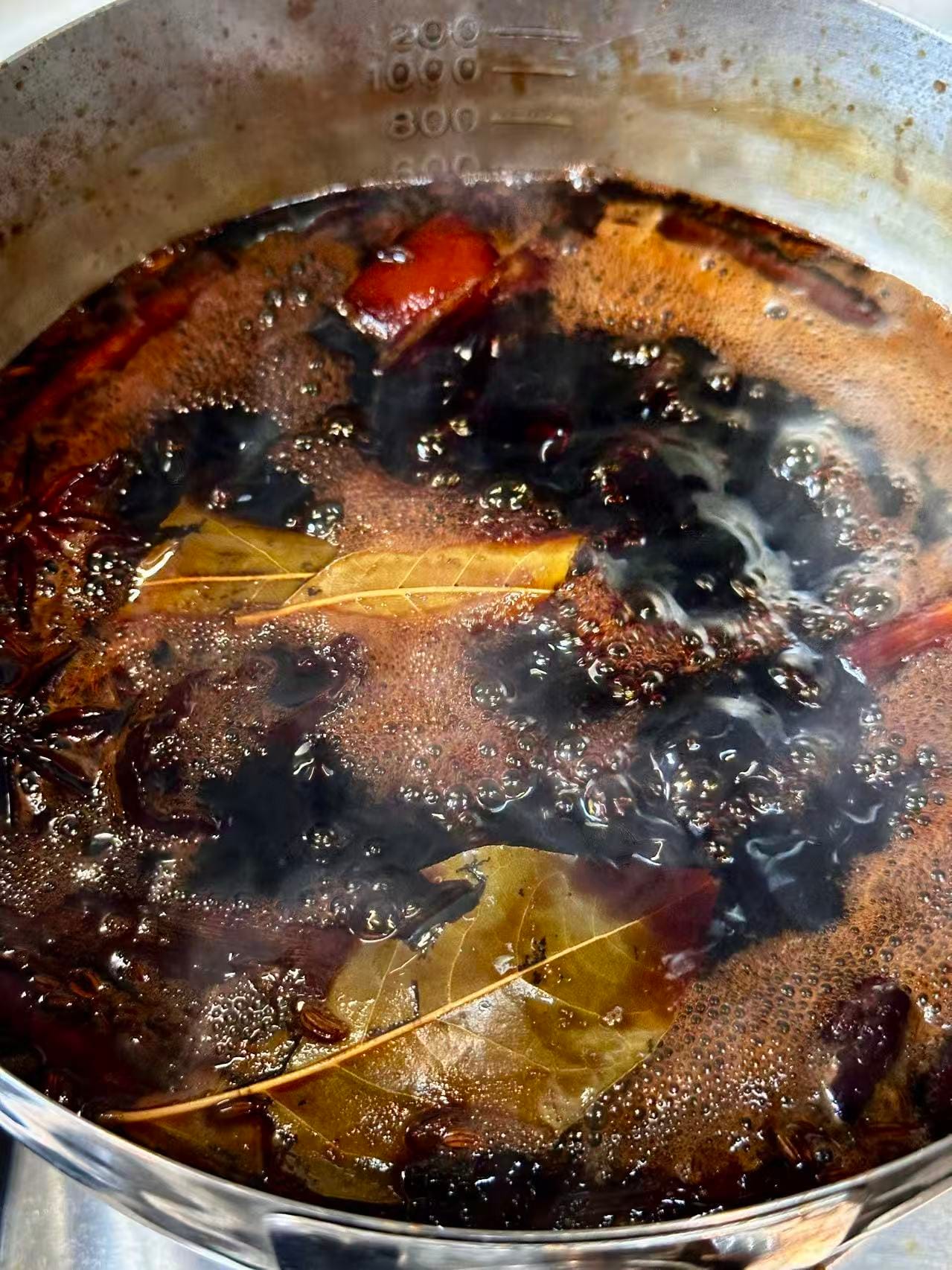
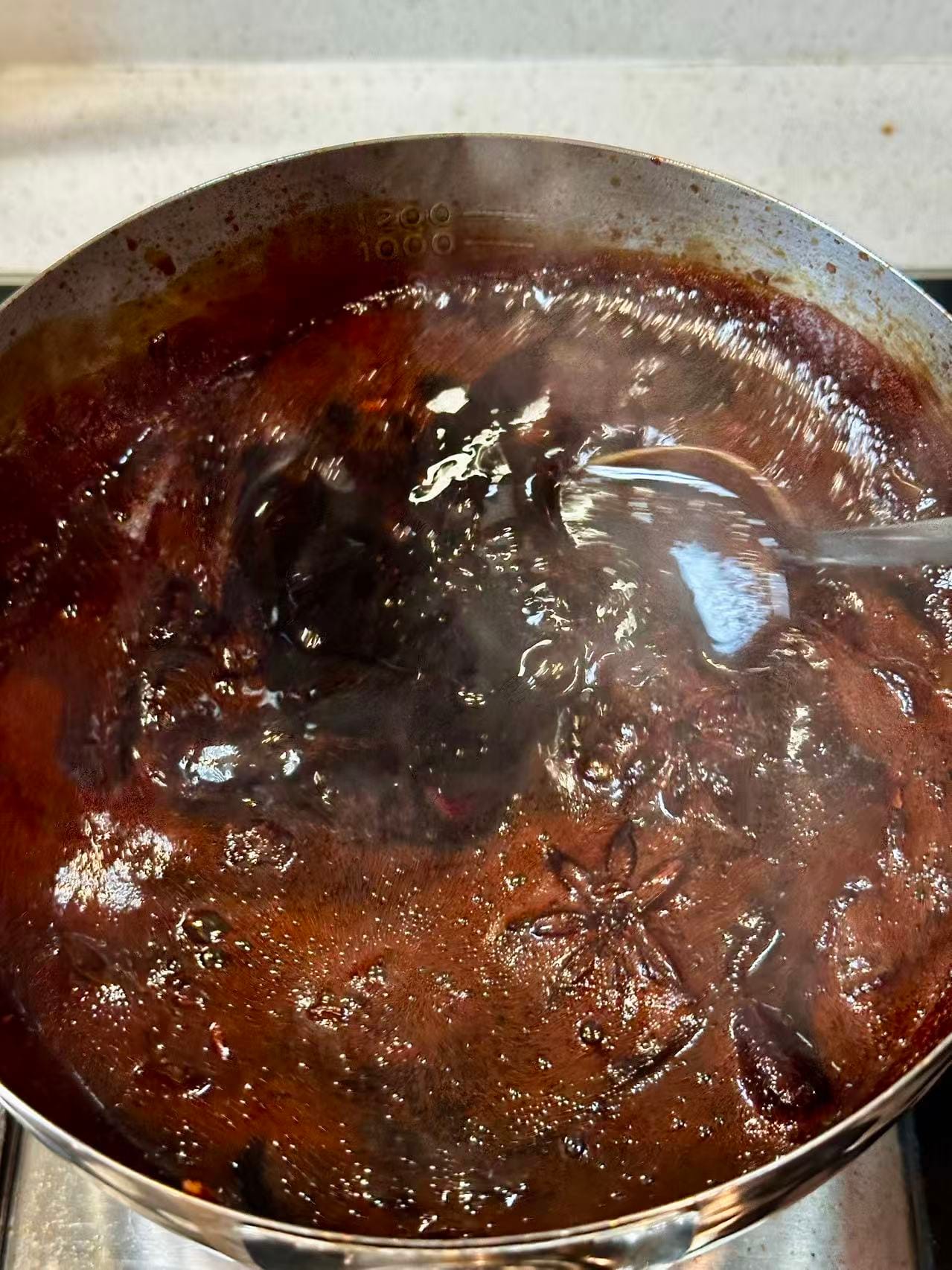
Add the red sugar and stir until completely dissolved and continue simmering over low heat for another 15–20 minutes.
As the sauce reduces, the color will deepen and the surface will become more and more glossy.
Step 4. Check the Reduction
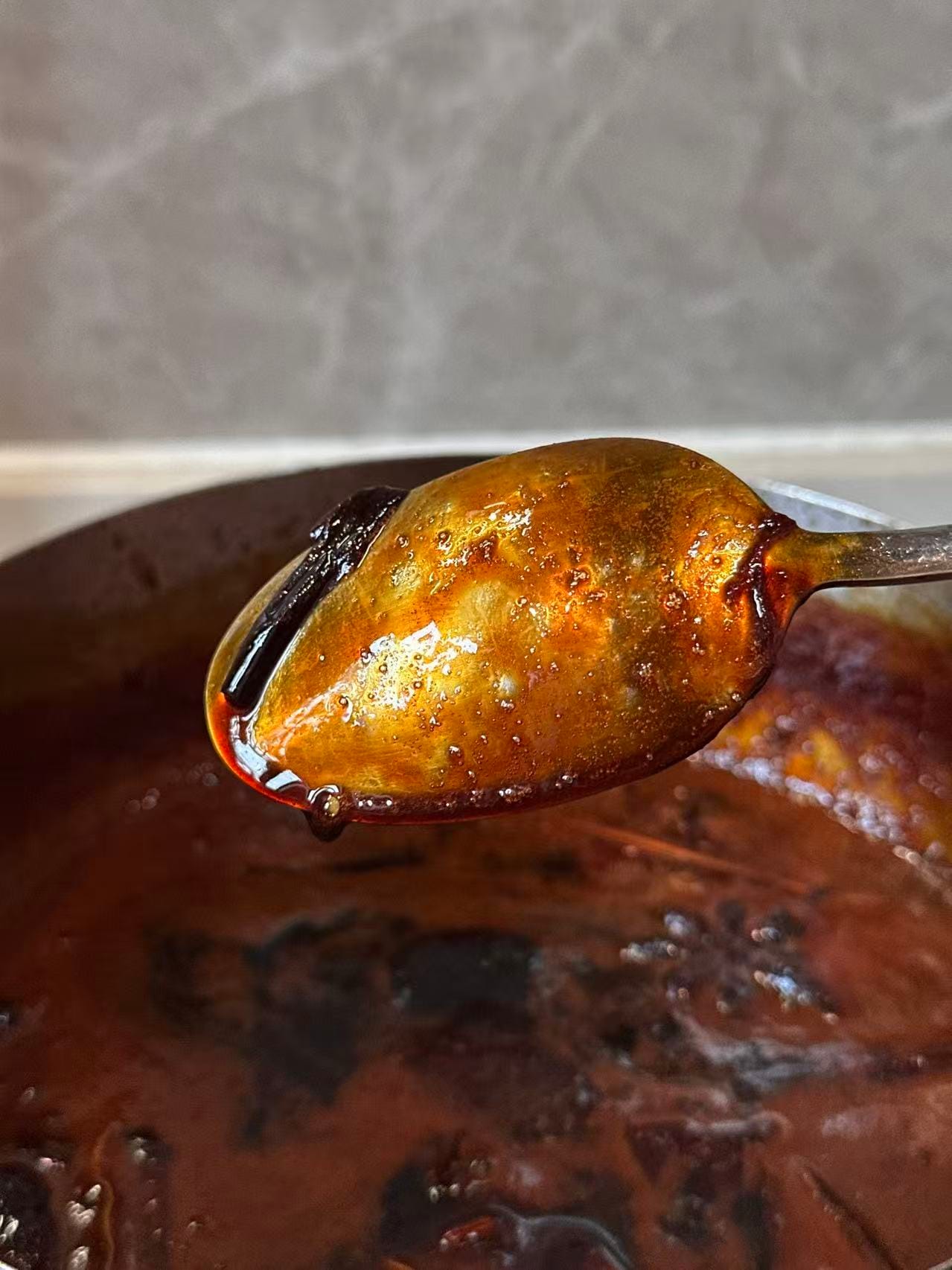
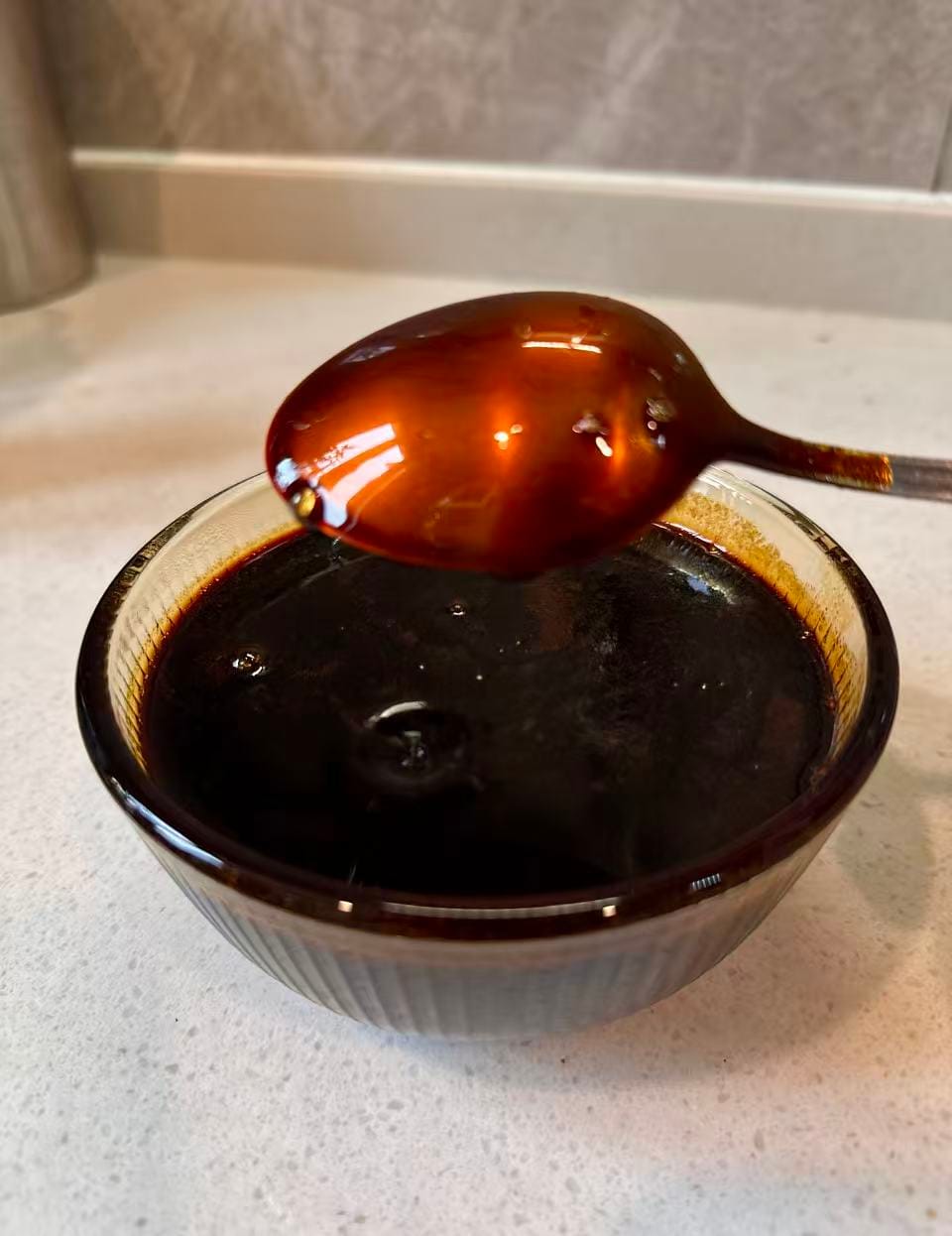
First: Recently cooked and still hot, sauce consistency. | Second: Cooled down soy sauce consistency.
There isn't an exact time to cook. Reduction times will change based on the size of your saucepan and general heat strength, as these will affect how quickly the liquid evaporates.
You need to look for the sauce to become:
- glossy
- deeper in color
- slightly syrupy
- noticeably more concentrated
- able to lightly coat the back of a spoon
- bubbles become larger as sauce concentrates
DO NOT reduce the sauce until it reaches the consistency of honey. It will become thicker on its own, once it cools.
Step 5. Straining the Sauce
Remove the saucepan from the heat source and strain out the spices, ginger, and scallion until only the liquid sauce remains. Allow the compound soy sauce to cool completely and transfer to a clean glass bottle or jar and refrigerate.
Pro Tip - Sauce Consistency is Key
Be sure to keep an eye on the consistency of the sauce and how the liquid becomes concentrated, glossy, and reddish. This is a useful visual indication of concentration.
At the beginning of cooking, when the mixture contains more water, it is close to water and the consistency is quite watery, when the sauce becomes thicker and more glossy, and less runny, it will be ready soon.
Once you understand this visual change, it is a more reliable guide than simply setting a timer for 45 minutes.
Finish & Serve
Compound soy sauce is a seasoning, so it is generally used in relatively small quantities or combined with other condiments.
Try with:
- Zhong Dumplings (钟水饺)
- Sweet Water Noodles (甜水面)
- Sichuan Cold Noodles (四川凉面)
- Red Oil Wontons (红油抄手)
- Garlic Pork (蒜泥白肉)
- cold chicken dishes
- dumplings
- blanched vegetables
It pairs particularly well with Sichuan red chili oil.
The finished sauce should first taste savory and deeply xian (umami), followed by sweetness and a gentle background of warm spices. None of the individual spices should dominate the soy sauce.
Recipe Variations
No-Water Compound Soy Sauce
Water is not essential.
One of the seven recipes we compared specifically emphasizes making compound soy sauce without adding a single drop of water. If you want to use this method, begin by...
- Adding the dry spices to a dry saucepan:
- star anise
- bay leaves
- fennel seeds
- baizhi
- Toast briefly over low heat until they become fragrant. Do not brown or burn them.
- Add the ginger and scallion whites, followed by the soy sauce.
- Simmer gently and add the red sugar toward the end of cooking.
- Because you have not added 150 ml of water, the soy sauce will concentrate considerably faster. Do not follow the cooking times in the main recipe. Judge the sauce by its concentration and consistency.
Sweeter Compound Soy Sauce
- Increase the red sugar to 175–200 g for a sweeter version.
- This is still well within the range of the recipes we researched. Some formulas use as much as 250–300 g of sugar for approximately 500 g of soy sauce.
- A sweeter version can be particularly useful when the compound soy sauce will be paired with a strongly flavored chili oil.
Build Your Own Spice Blend
There is no single universal spice formula for 复制酱油.
Across the seven recipes we compared, we found:
- star anise (八角)
- cinnamon sticks (桂皮)
- fennel seeds (小茴香)
- bay leaves (香叶)
- Sichuan pepper (花椒)
- tsaoko (草果)
- shannai (山奈)
- licorice root (甘草)
- baizhi (白芷)
- white cardamom (白蔻)
- ginger
- scallion
- and several other aromatics
You can try adding Chinese cinnamon sticks; it would be a natural addition to this recipe. Start with 1–2 g for 500 ml soy sauce and adjust in future batches according to your preference.
The goal is not to add as many spices as possible. The finished compound soy sauce should still taste predominantly of soy sauce, sugar, and fermentation, with the spices sitting behind them.
Essential Pairings
Noodles & Dumplings
- Zhong Dumplings
- Sichuan Cold Noodles
- Sweet Water Noodles
- Red Oil Wontons
Cold Dishes
- Garlic pork
- Cold chicken
- Cucumber salad
- Blanched vegetables
- Cold tofu
Other Uses
Try a small amount in dipping sauces or other cold-dish dressings where you would normally use plain soy sauce and sugar separately.
Make Ahead & Storage
Compound soy sauce is well suited to making ahead. Allow it to cool completely before transferring it to a clean glass bottle or jar. Store it in the refrigerator and always use a clean, dry spoon when taking sauce from the container.
Because homemade batches can be reduced to different concentrations and contain different amounts of residual water, avoid assuming that every homemade compound soy sauce has the same shelf life. For home cooking, it is better to prepare manageable batches and keep them refrigerated.
Ingredient Sourcing
- Look for naturally brewed Chinese soy sauce (酿造酱油). Since soy sauce is the foundation of this recipe, use one that tastes good to you on its own.
- Red sugar (红糖) can be found in most Chinese supermarkets. If unavailable, brown cane sugar can be substituted, although the flavor will be slightly different.
- Baizhi (白芷) can often be found in Chinese supermarkets with extensive dried spice selections or shops selling Chinese herbs and spices.
- Star anise, fennel seeds, bay leaves, ginger, and scallions should be readily available in most Asian supermarkets and increasingly in regular supermarkets.
Glossary
复制酱油 (Fùzhì Jiàngyóu) - Compound Soy Sauce. A Sichuan condiment made by further cooking soy sauce with sugar, spices, and aromatics until fragrant and concentrated. It is commonly used in noodles, dumplings, Sichuan snacks, and cold dishes.
酿造酱油 (Niàngzào Jiàngyóu) - Naturally brewed soy sauce produced through fermentation. It provides the fermented aroma, saltiness, and umami that form the foundation of compound soy sauce.
红糖 (Hóngtáng) - Chinese red sugar. A less refined cane sugar with a deeper color and flavor than refined white sugar.
八角 (Bājiǎo) - Star anise. A warm, sweet aromatic spice commonly used in Chinese cooking and one of the most consistent spices found in the 复制酱油 recipes researched here.
小茴香 (Xiǎohuíxiāng) - Fennel seeds. Small aromatic seeds with a gently sweet, anise-like fragrance, commonly used in Chinese spice mixtures.
白芷 (Báizhǐ) - Angelica dahurica root. An aromatic dried root used in Chinese spice mixtures and braises. Its fragrance is powerful, so only a small amount is needed.
香叶 (Xiāngyè) - Bay leaf. Used to provide a subtle background aroma during simmering.
葱白 (Cōngbái) - The white portion of the scallion. It has a stronger aroma and holds up particularly well during longer cooking.

A Tianjin, China native - Chloe has a deep appreciation for all things hotpot. Her appreciation of food and culture runs so deep that after a successful corporate career, she decided to uproot her life in China to attend Le Cordon Bleu Ottawa and Madrid. After working in the culinary industry in Canada, she decided to found Snout & Seek!
No spam, no sharing to third party. Only you and me.

Member discussion