Shanghai Scallion Oil Noodles (葱油拌面)
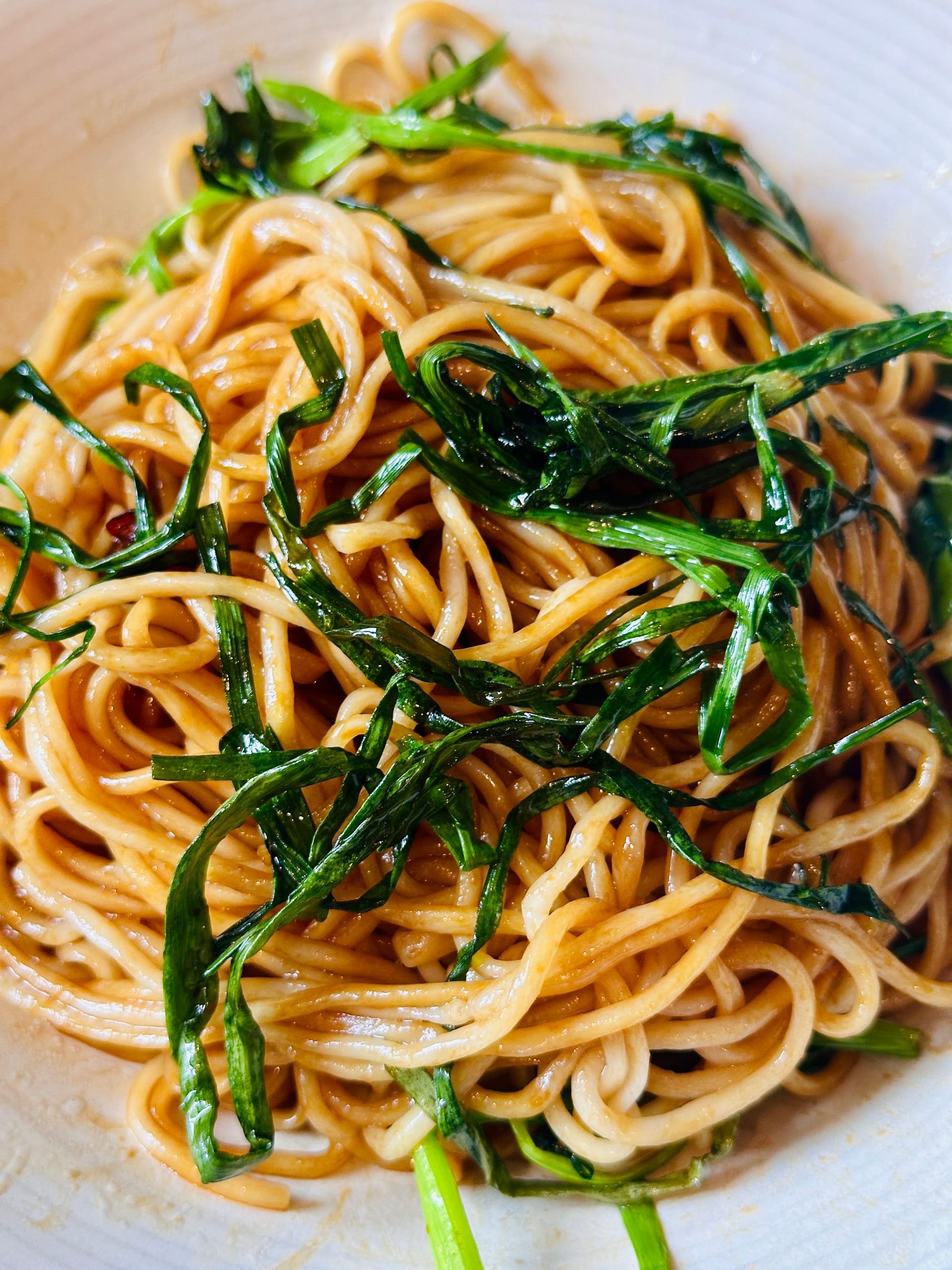
Long before we moved to Shanghai, I had already heard of 葱油拌面 (Scallion Oil Noodles). Compared with the city’s famous soup dumplings, river crab, braised pork belly, and elaborate banquet dishes, a bowl of noodles dressed with little more than scallion oil and soy sauce seemed almost too humble to deserve its reputation.

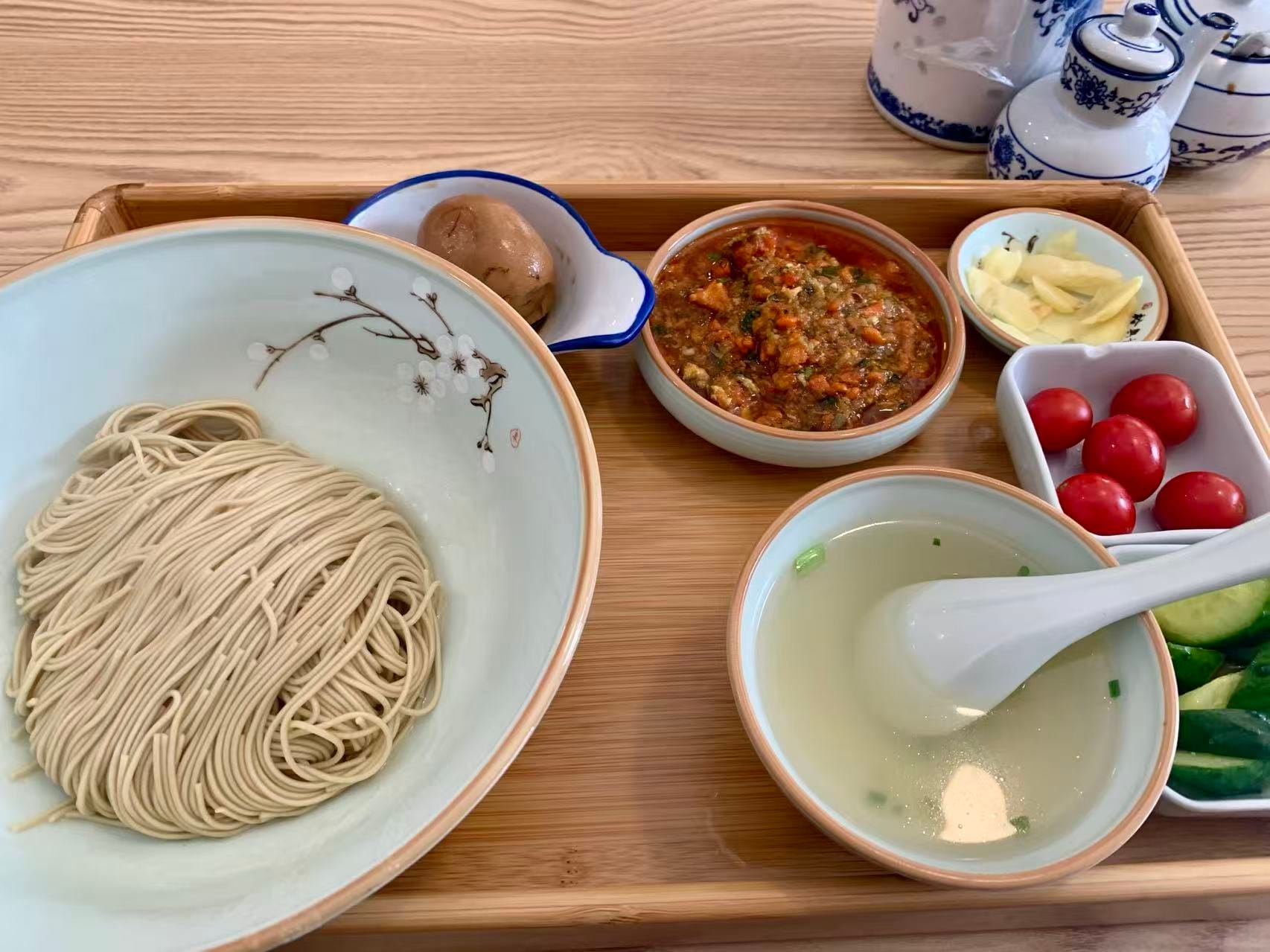
First: Shanghai skyscrapers at night. | Second: The famous crab roe noodles that represents “luxury” eating from an outsider’s perspective.
As soon as I tried making it myself, I discovered how detailed and intricate this recipe really is, and how truthfully it reflects the way people in Shanghai approach everyday life. People spend time and effort studying even the simplest ingredients, finding ways to maximize both their aroma and flavor. Then they pair them with soy sauce, not to overpower the scallions, but to balance their natural sweetness and bring everything together.
Although it is considered street food enjoyed by the general public, scallion oil noodles is by no means a simple dish to dissect. The fewer the ingredients, the more every detail matters. A few extra minutes in the oil, a little too much heat, or an unbalanced sauce can completely change the final bowl. That being said, the recipe itself is quite straightforward to practice, and can be made in batches to enjoy for a long period of time.
Looking back now, I probably misjudged Shanghai a little because of its glamorous image. I saw the skyline, the luxury shopping streets, and the refined restaurants before I noticed the quieter side of the city. Living here taught me that Shanghai is also about paying attention to the details. People are willing to spend time refining the smallest things, believing that small improvements can lead to something exceptional. I think 葱油拌面 is a perfect reflection of that mindset.
The Significance of the Dish
Despite its simplicity, 葱油拌面 is one of Shanghai’s most recognizable comfort foods. It is commonly enjoyed for breakfast, lunch, or as a quick evening meal, and can be found everywhere from family kitchens to small noodle shops.
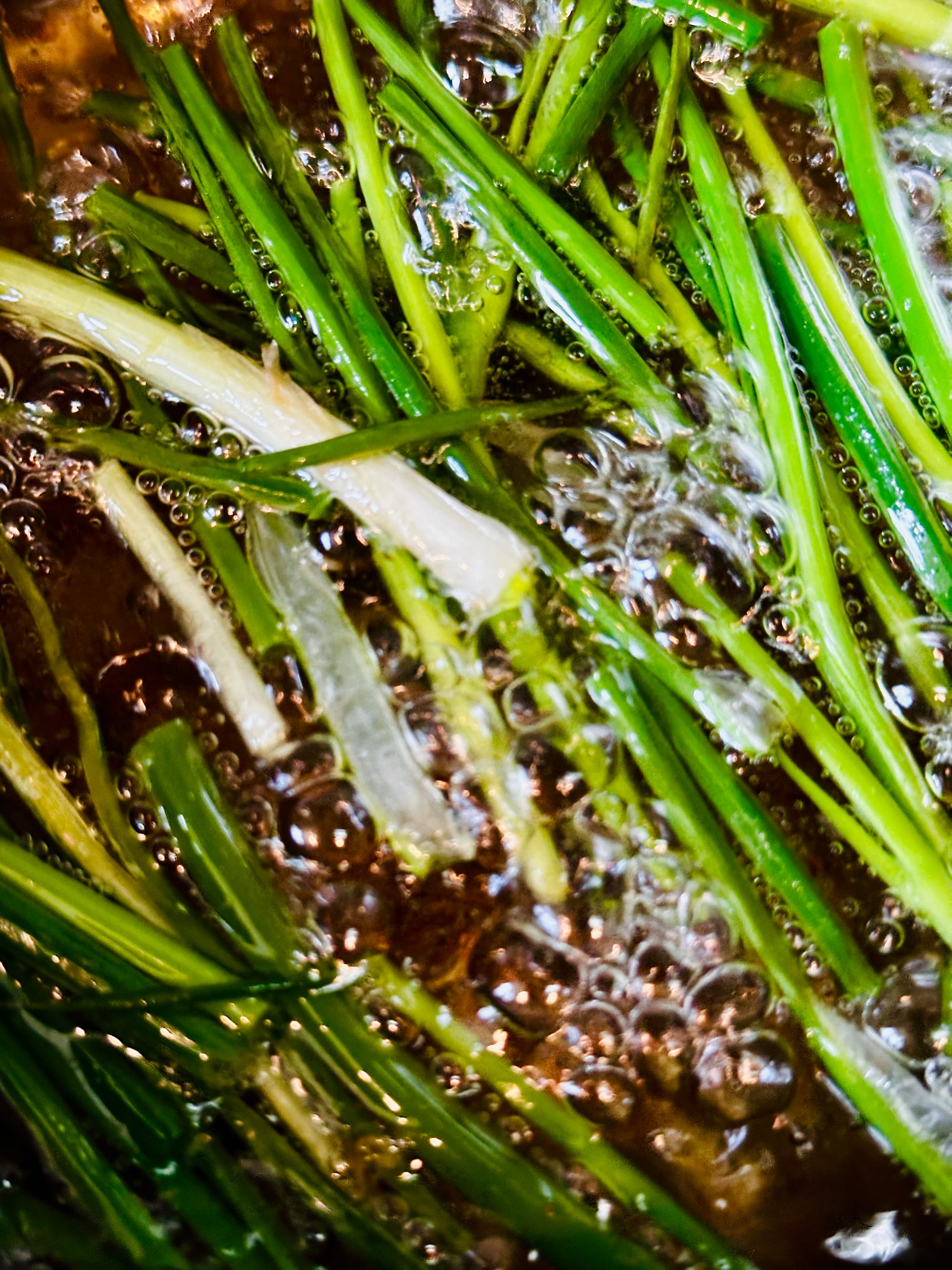
Unlike many noodle dishes where toppings take center stage, 葱油拌面 relies almost entirely on technique. The noodles are simply the canvas. The real flavor comes from slowly infusing oil with scallions until they become sweet, fragrant, and lightly caramelized. The soy sauce is there to season and balance the dish, never to overpower it.
It is a recipe that demonstrates one of the most important lessons in Chinese cooking: simple ingredients demand the greatest attention.
Ingredient Guidance
This recipe uses ingredients that are widely available in North America and Europe while staying true to the character of the original dish.
Scallions
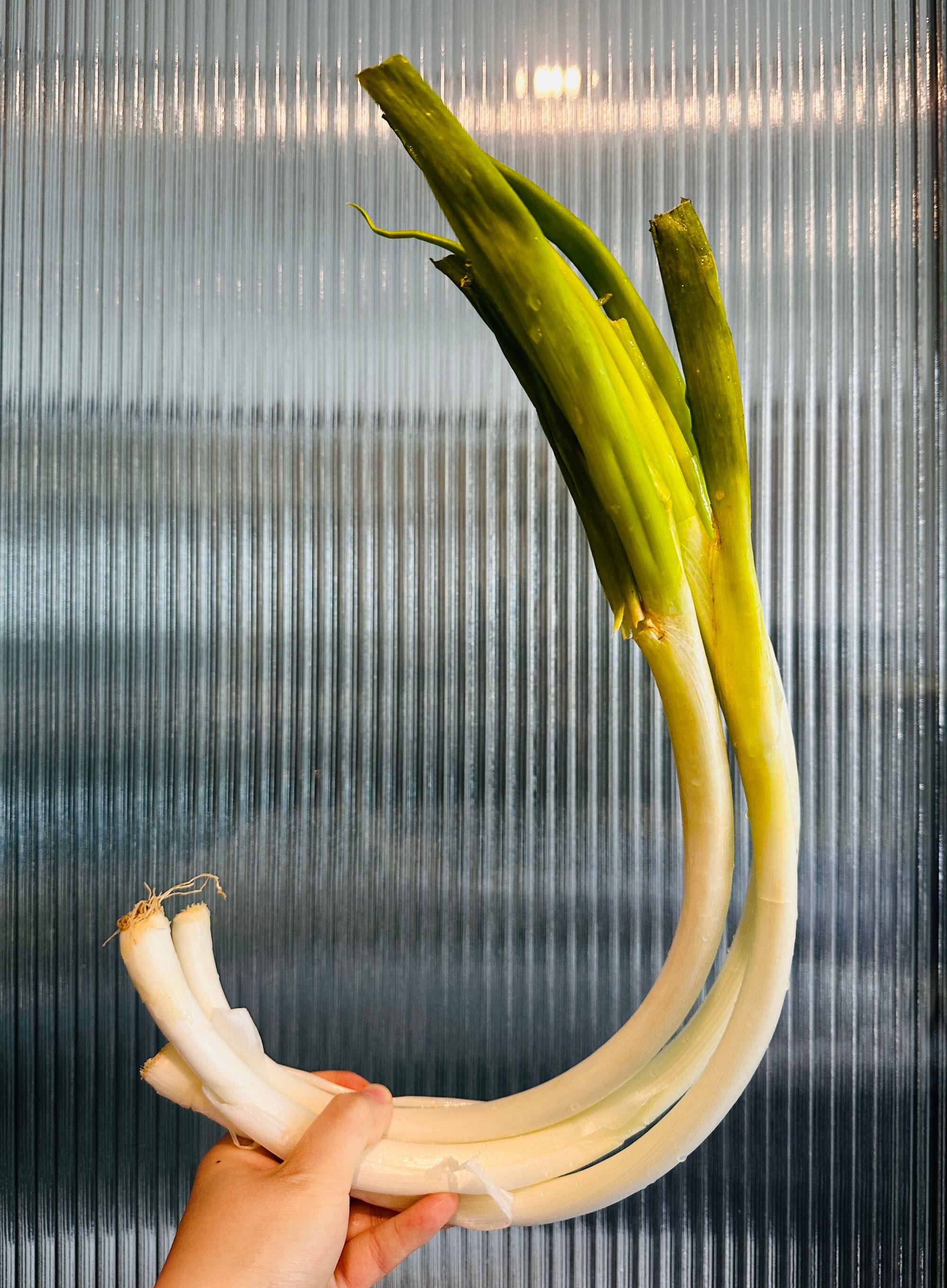
Regular scallions work beautifully. If you can find Chinese large scallions (大葱), replace half of the scallions with one large stalk. Their thick white stems develop a sweeter, deeper aroma during slow frying. If the roots are still attached, leave them on and fry them together with the white stems. The root end is one of the most aromatic parts of the scallion and adds even more flavor to the oil.
Oil
Choose a neutral oil with a high smoke point.
Recommended:
- Canola oil
- Sunflower oil
- Rice bran oil
- Grapeseed oil
Avoid strongly flavored oils such as olive oil or toasted sesame oil.
Soy Sauce
Use naturally brewed soy sauce whenever possible. Light soy sauce provides the seasoning and fermented aroma. Dark soy sauce contributes colour and a gentle sweetness.
Mise en Place
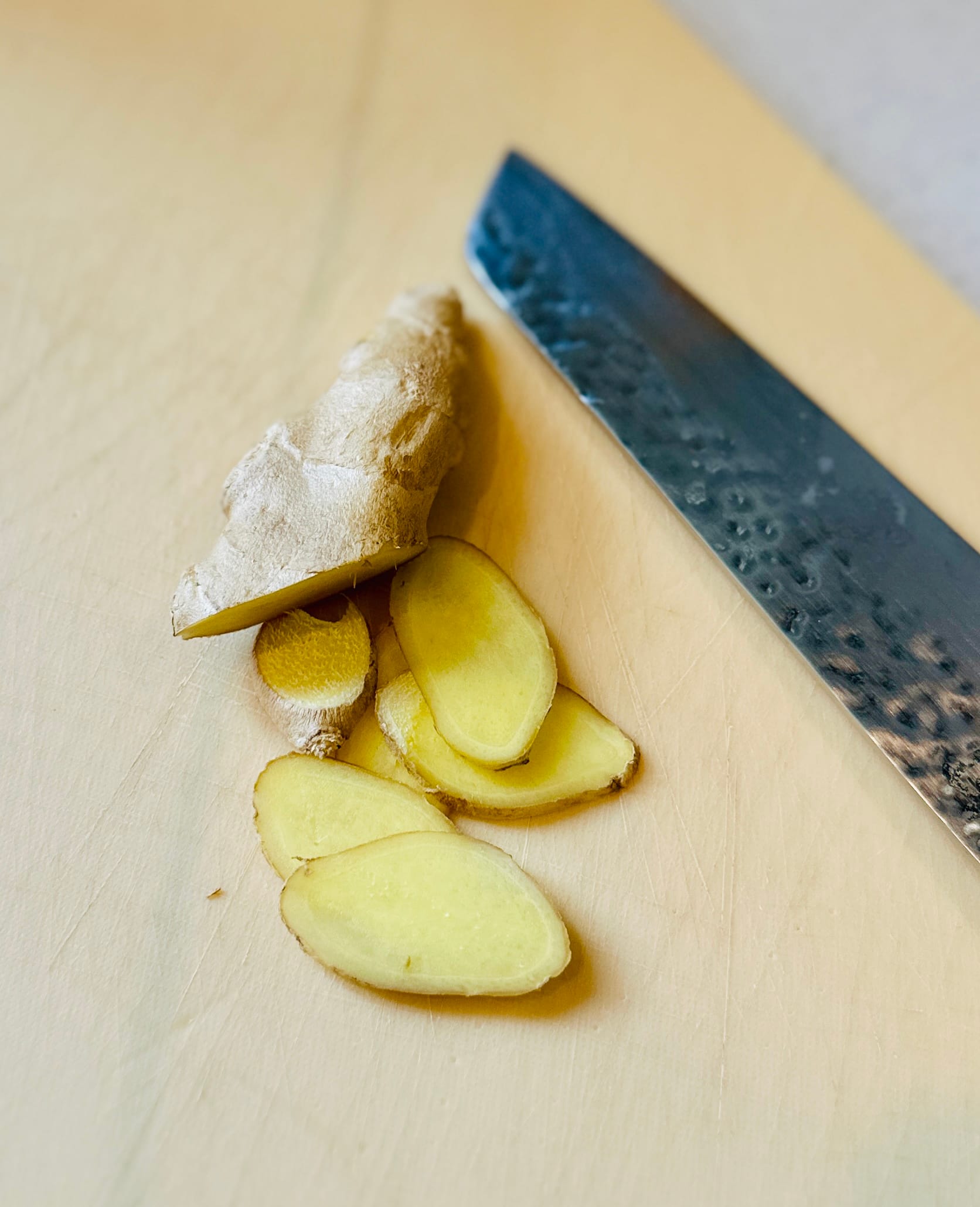
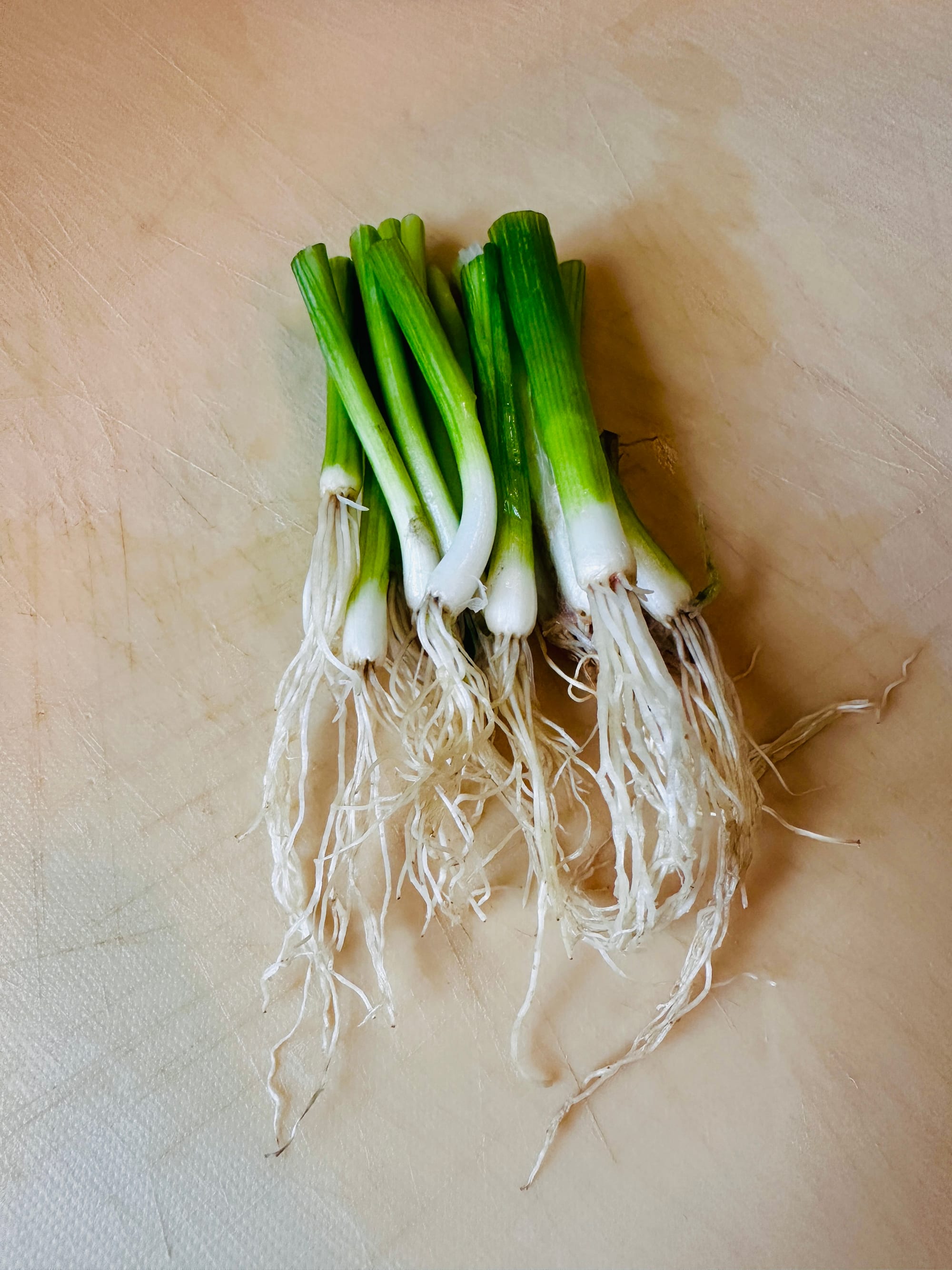
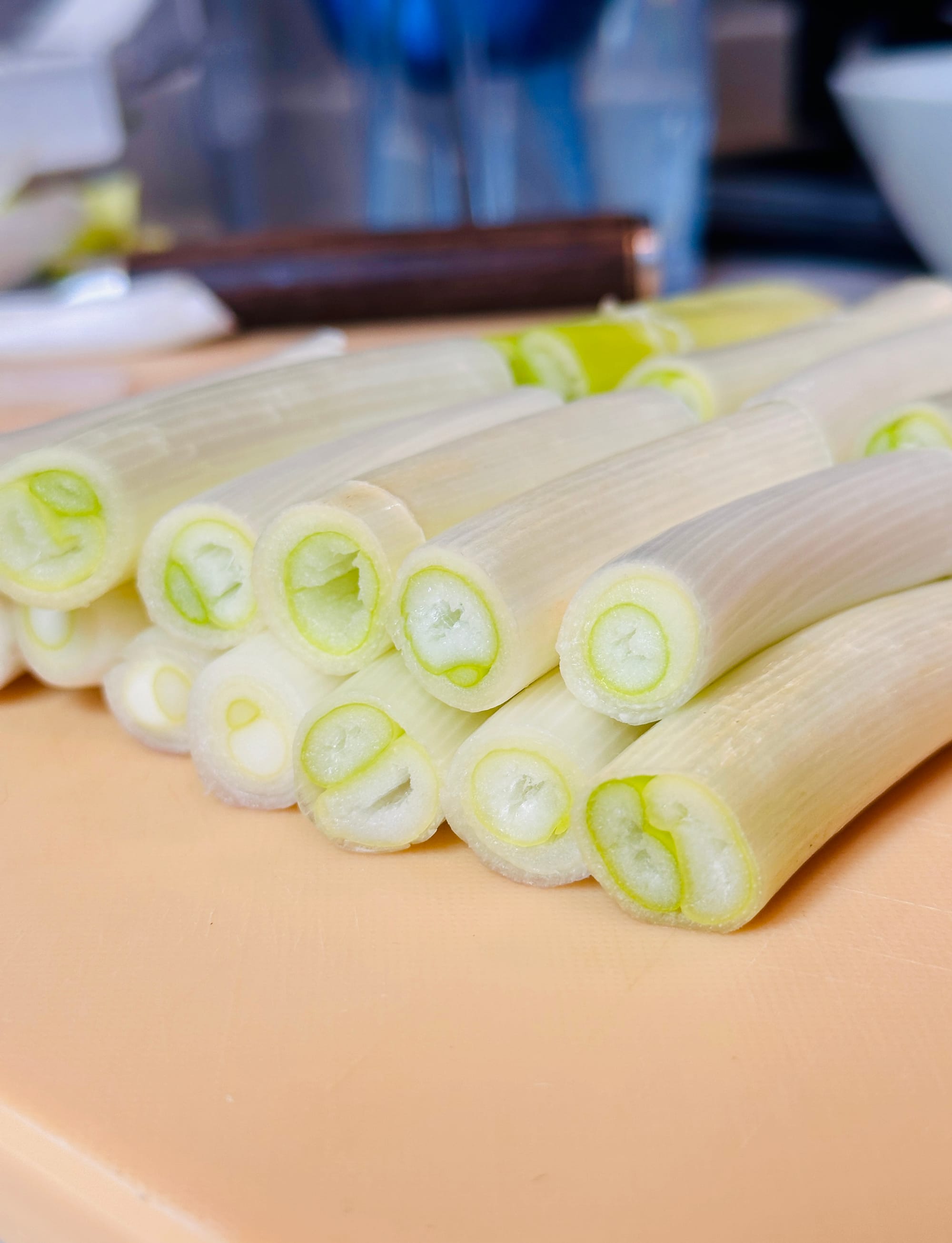
Before heating the oil:
- Cut the scallions into 5–6 cm pieces.
- Separate the white and green portions.
- Slice the red onion into thin strips.
- (Optional) Toss the onion lightly with 1 tbsp all-purpose flour, shaking off any excess.
- Slice the ginger.
- Measure all sauce ingredients.
Why coat the onions with flour?
This is a modern kitchen trick rather than a traditional technique. A light dusting of flour absorbs surface moisture, helping the onions brown more evenly and become crisp while reducing splattering. Since the onions are removed after frying, it has little effect on the finished oil. If you want to leave the onion pieces in the oil, don’t dust the scallions and onion with flour as it will cloud the oil and shorten the shelf life of the oil. Simply pat them dry with paper towel so they won’t splatter in oil.
Ingredients
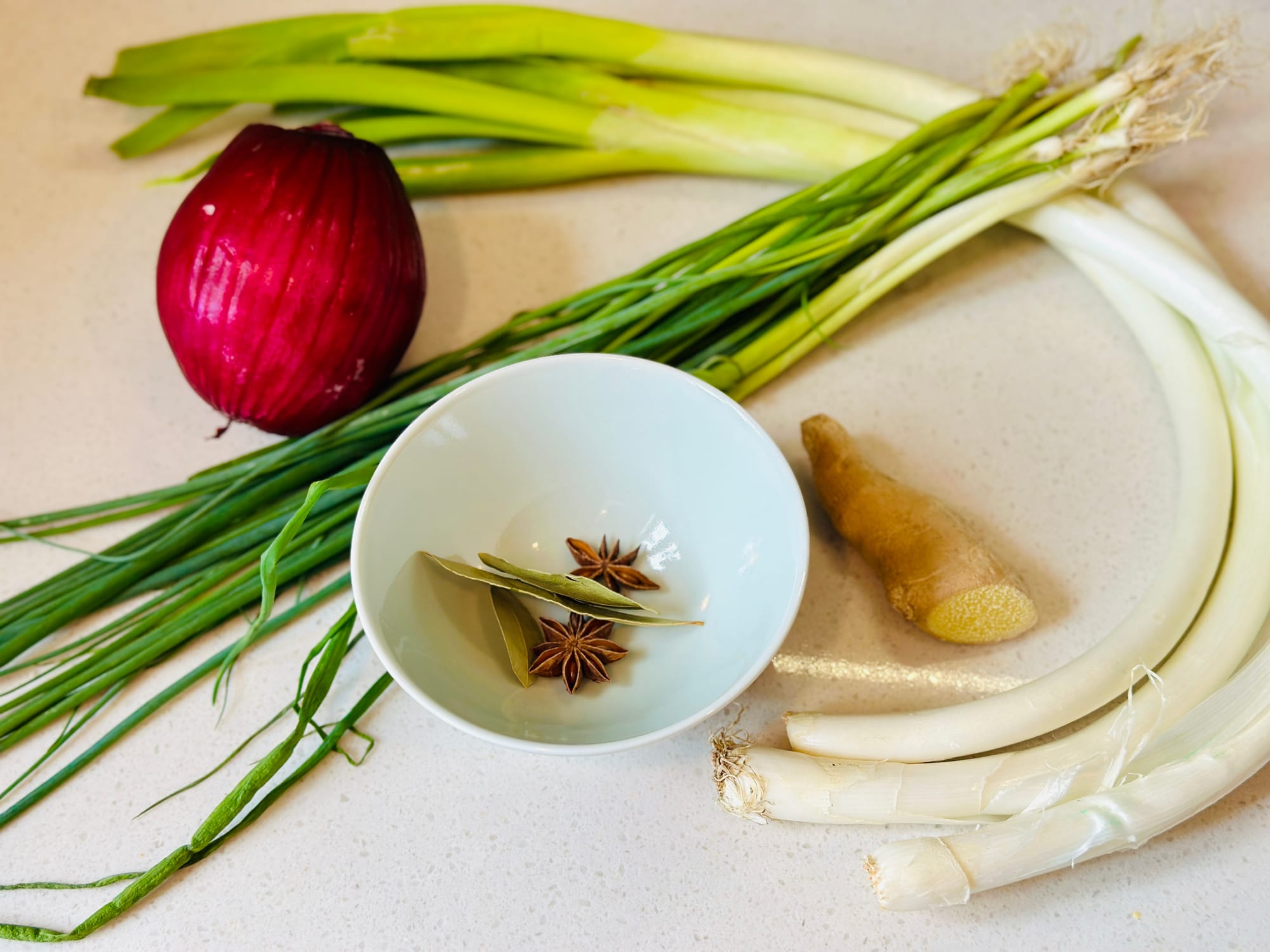
Scallion Oil
- 500 ml neutral oil
- 1-2 bunches scallions, if you can find Chinese large scallions, use 300 grams and 1 bunch regular scallions
- 1 large red onion
- 20 g ginger, sliced
- 2 star anise (optional)
- 2-3 bay leaf (optional)
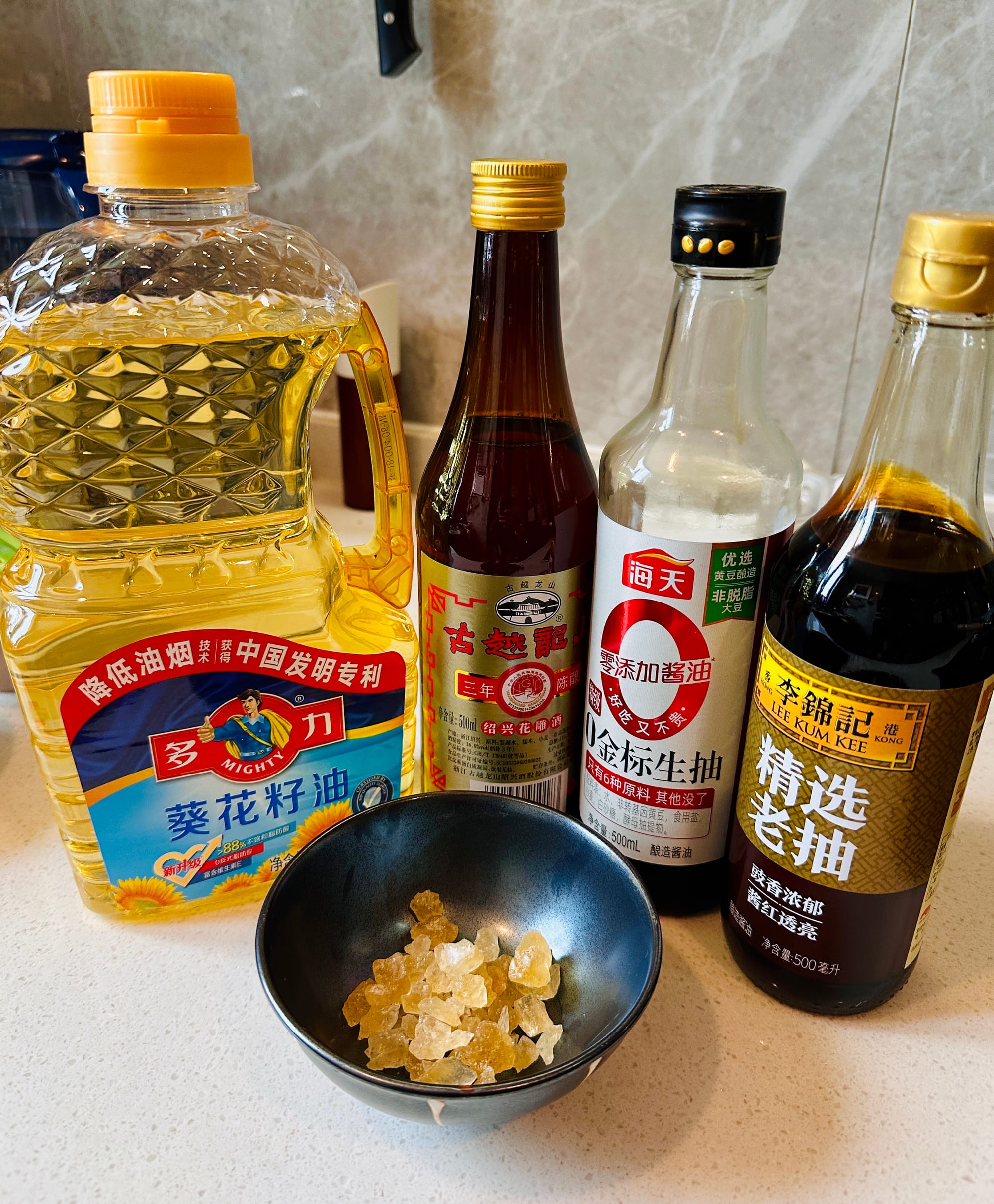
Soy Sauce
- 100 ml light soy sauce
- 50 ml dark soy sauce
- 50ml scallion oil
- 30 g rock sugar
- 30 ml Shaoxing wine
- 60 ml water
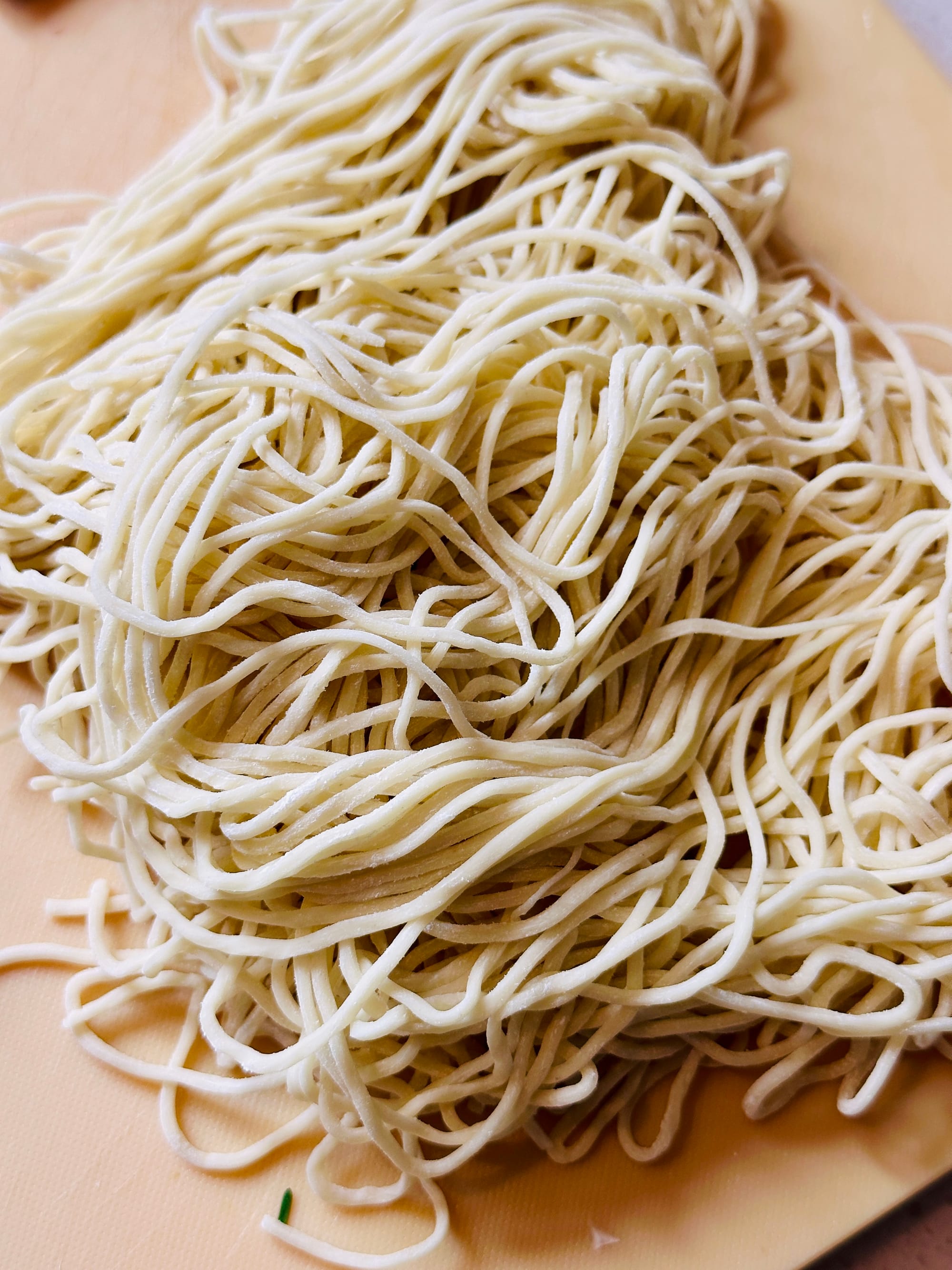
Noodles
- 500 g fresh Shanghai wheat noodles, or any thin noodles you can find
Substitutes:
- Fresh lo mein noodles
- Fresh ramen noodles
- Fresh alkaline wheat noodles
Methods & Procedures
Create the Scallion Oil
- Step 1: Heat the oil over medium heat until warm.
- Step 2: Add in and immediately reduce to low heat:
- Red onion slices
- Scallion whites with roots
- Ginger
- Star anise
- Bay leaf
- Step 3: Slowly fry for 20–30 minutes, stirring occasionally, until the while part of onions become evenly golden.
- Step 4: Remove all the aromatics.
- Step 5: Add the scallion greens, continue frying over low heat until the greens become dark green and lightly crisp. Don’t over cook the greens as it will become bitter. Usually just a quick fry will do the job.
- Step 6: Strain the oil.
- Step 7: Retain the crispy green scallions for serving.
Prepare the Sauce
- Step 1: Combine in a pot and bring to a simmer:
- light soy sauce
- dark soy sauce
- scallion oil
- rock sugar
- Shaoxing wine
- water
- Step 2: Cook on low heat to reduce the sauce to a slightly thicker consistency. Locals prefer it to be a bit “sticky” to best coat the noodles.
- Step 3: Allow to cool slightly.
Cook the Noodles
- Step 1: Bring a large pot of water to a rolling boil.
- Step 2: Cook the noodles to your preferred doneness, if you go to a local noodle shop in Shanghai, they will also let you choose how you want your noodles cooked.
- Step 3: Drain well.
Final Assembly
- Step 1: For a single serving, combine:
- 120–150 g cooked noodles
- 2 tbsp scallion infused soy sauce
- 1 tbsp scallion oil
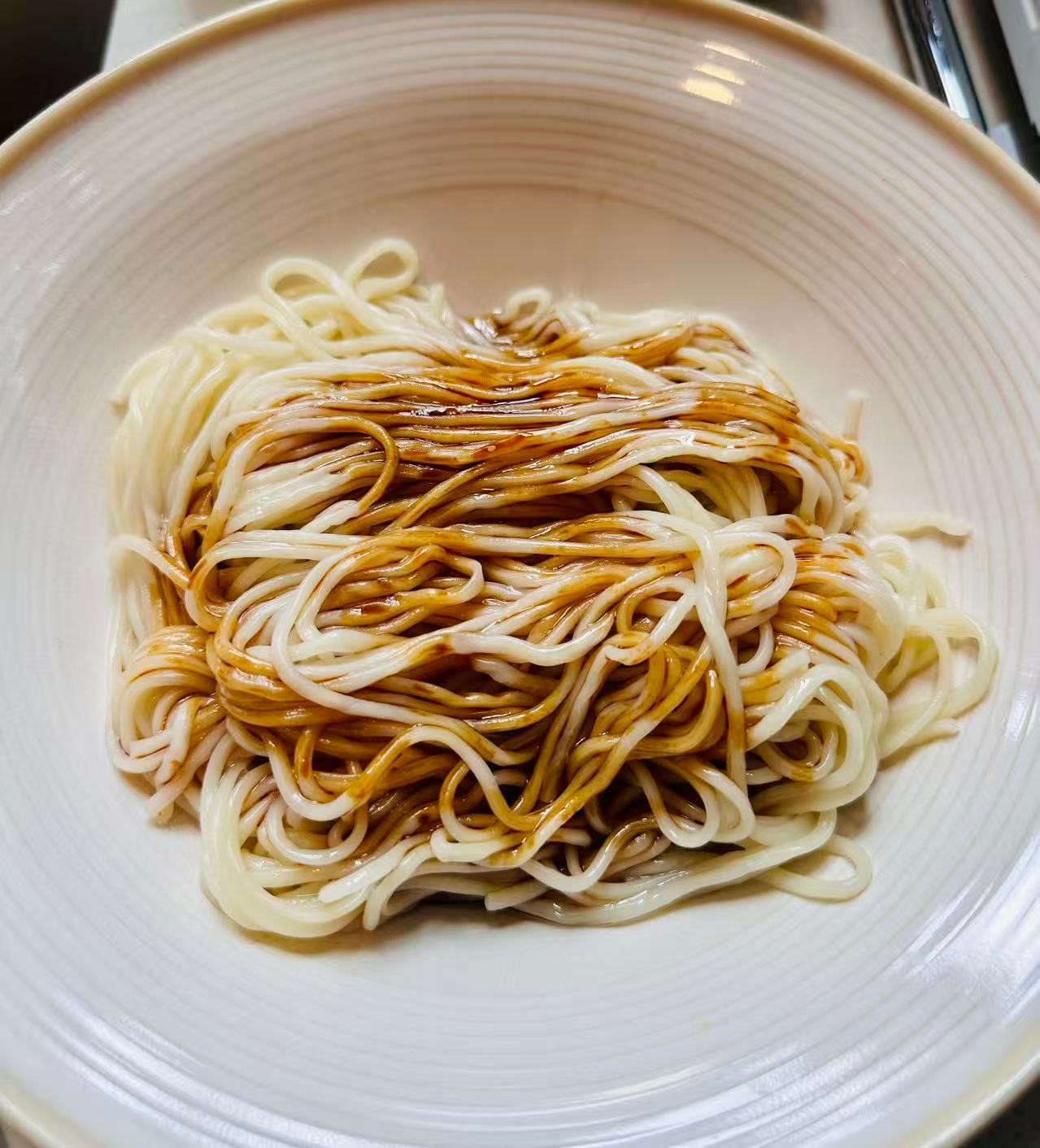
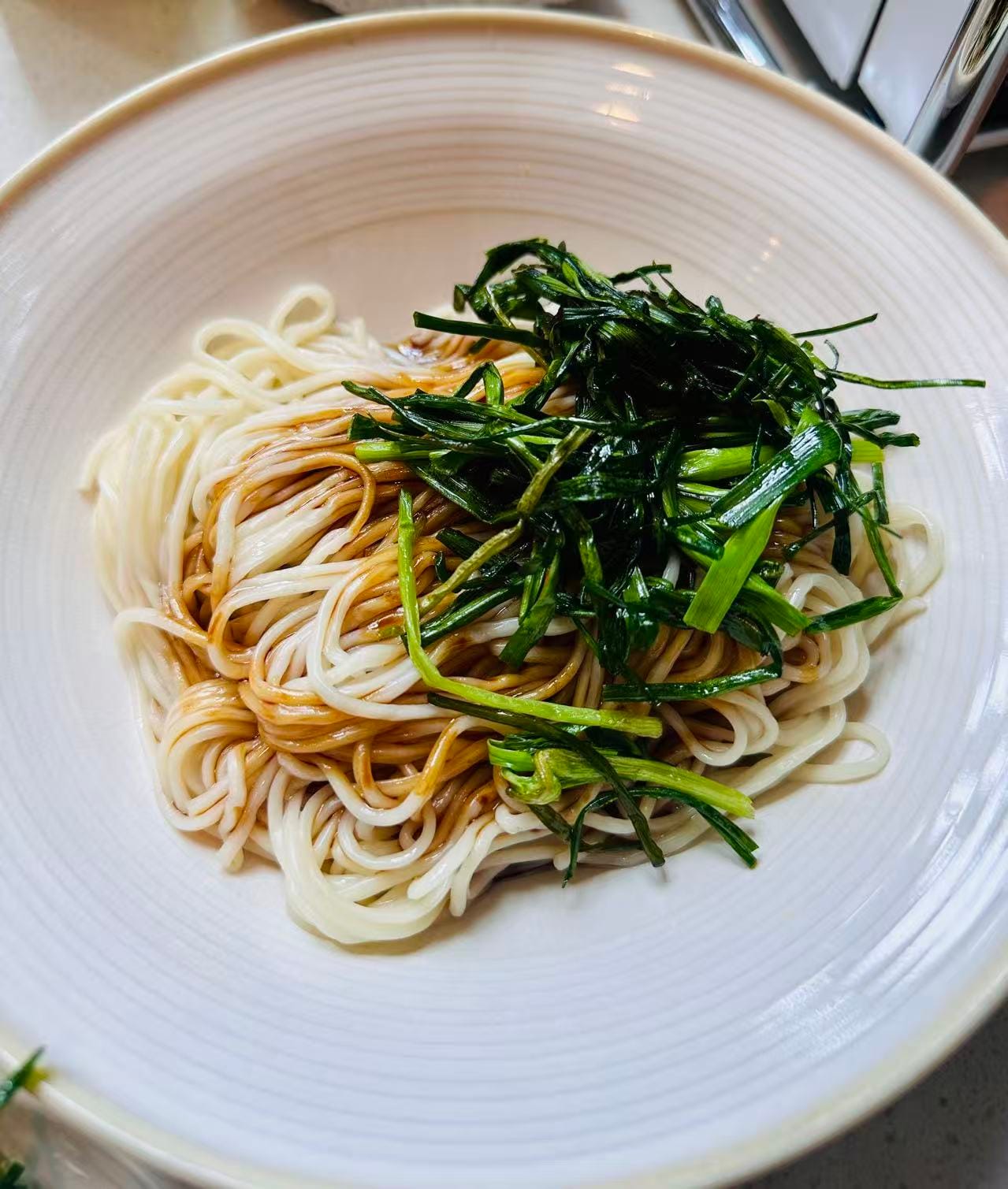
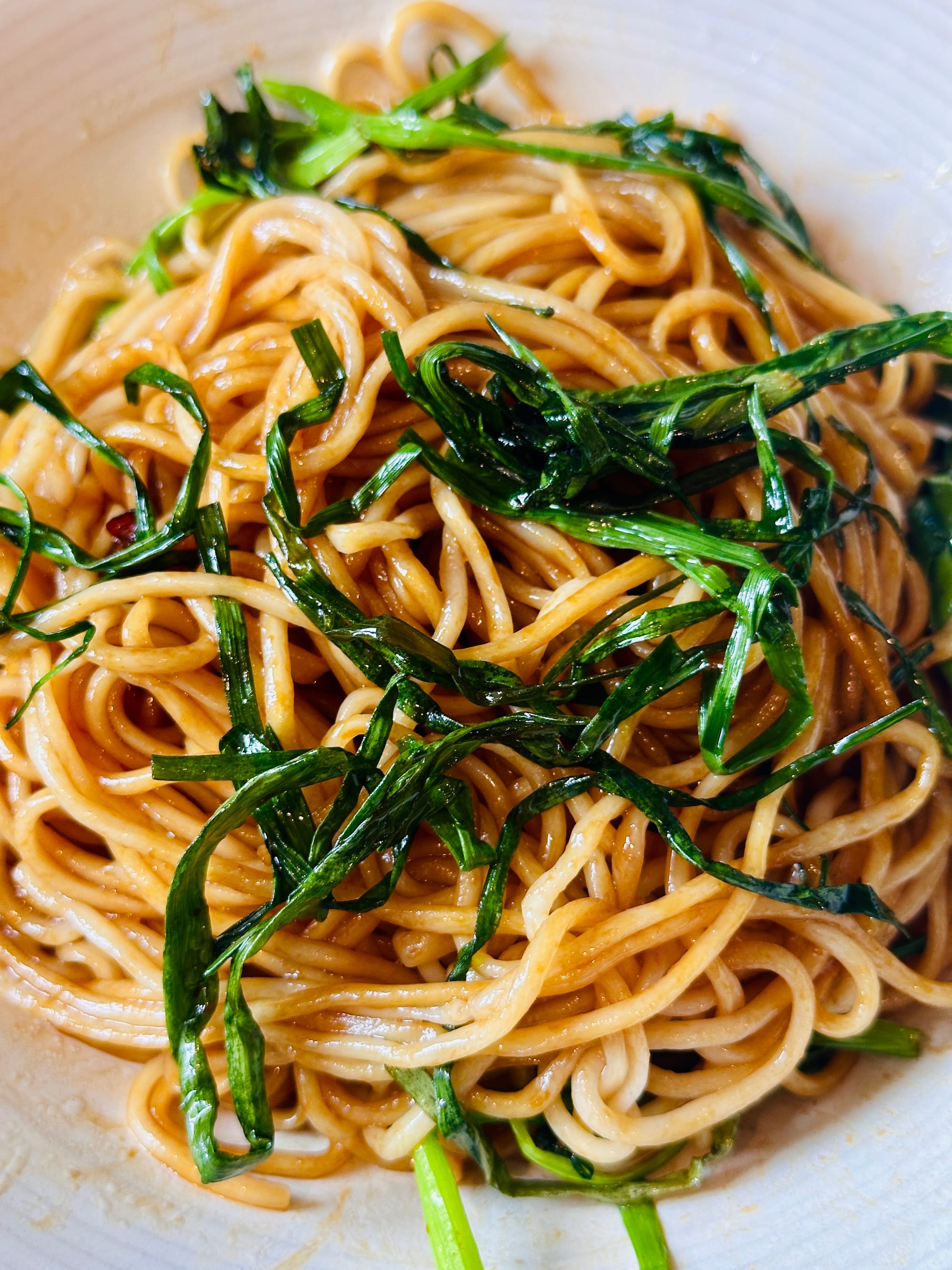
- Step 2: Toss thoroughly until every strand is coated.
- Step 3: Finish with the crispy scallions.
- Step 4: Serve and enjoy!
Pro Tip
The biggest mistake is using too high heat!
Scallions need to be cooked slowly in order to draw out the heat. If you cook too quickly on high heat, it will not draw out that sweetness. Low heat allows their natural sugars to develop while keeping the oil fragrant and pure. If the scallions become dark-brown too early, the oil will taste bitter and acrid.
Finishing & Serving
Serve immediately while the noodles are still hot.
For a traditional Shanghai meal, pair them with a fried egg, blanched bok choy, marinated tofu, and clear vegetable soup (on the side).
The dish should taste balanced. The first aroma should be scallion, followed by the savoriness of the soy sauce, with a gentle sweetness lingering at the end. No one flavor should overwhelm the dish.
This recipe is built around this contrast. The slow-fried scallions provide sweetness and aroma. The light soy sauce contributes saltiness and a fermented umami. The dark soy sauce rounds out the color without making the dish overly salty. Because there are so few ingredients, each one has a clearly defined role. Remove one, or let one dominate, and the balance is lost.
Variations
Extra Fragrant
Add your favorite mushrooms while frying the onions, you can then also put the fried mushrooms on the noodles when you serve, thus adding another subtle level of flavor.
Pairings
Common side dishes:
- Smashed cucumber salad
- Marinated tofu
- Pickled vegetables
Make Ahead & Storage
- The scallion oil can be stored in a sterilized glass jar in the refrigerator for up to 2 weeks.
- The soy sauce mixture can also be prepared in advance and refrigerated for 1 week.
- Freshly cooked noodles should always be tossed immediately before serving.
Sourcing
If fresh Shanghai noodles are unavailable, fresh lo mien or ramen noodles are the closest alternatives.
Look for naturally brewed soy sauce rather than chemically hydrolyzed varieties. A good-quality soy sauce makes a noticeable difference in a dish with so few ingredients.
Glossary
葱油 (Cōng Yóu) Scallion-infused oil made by slowly frying scallions until their aroma and sweetness are released into the oil.
生抽 (Shēng Chōu)Light soy sauce used primarily for seasoning, aroma, and umami.
老抽 (Lǎo Chōu)Dark soy sauce used mainly to deepen color while adding a subtle sweetness.
Shaoxing Wine (绍兴酒)A traditional Chinese rice wine commonly used to add aroma and complexity to sauces and braises.

A Tianjin, China native - Chloe has a deep appreciation for all things hotpot. Her appreciation of food and culture runs so deep that after a successful corporate career, she decided to uproot her life in China to attend Le Cordon Bleu Ottawa and Madrid. After working in the culinary industry in Canada, she decided to found Snout & Seek!
No spam, no sharing to third party. Only you and me.




Member discussion