Sansan: Kombucha Is a Surprise on My Personal Quest for the Life I Want

Part One: A Sensory Invitation to Guizhou
I can still remember a lecture I attended 13 years ago, when a professor asked us if we had ever noticed that in Western grocery stores, it is almost always fresh fruits and vegetables that greet you when you first walk in. He explained that this is part of the psychology of retail: seeing something fresh, colorful and abundant makes people feel good and welcome.
If we were to describe this in today’s Chinese internet language, we might call it 情绪价值, or “emotional value.” Beautiful storefronts, welcoming service and a good story all have a way of drawing people in and making them want to get closer.
 Chloe Wang
That is why, when I walked into the venue of a fermentation gathering in Guiyang this summer, I was immediately drawn to an oasis.
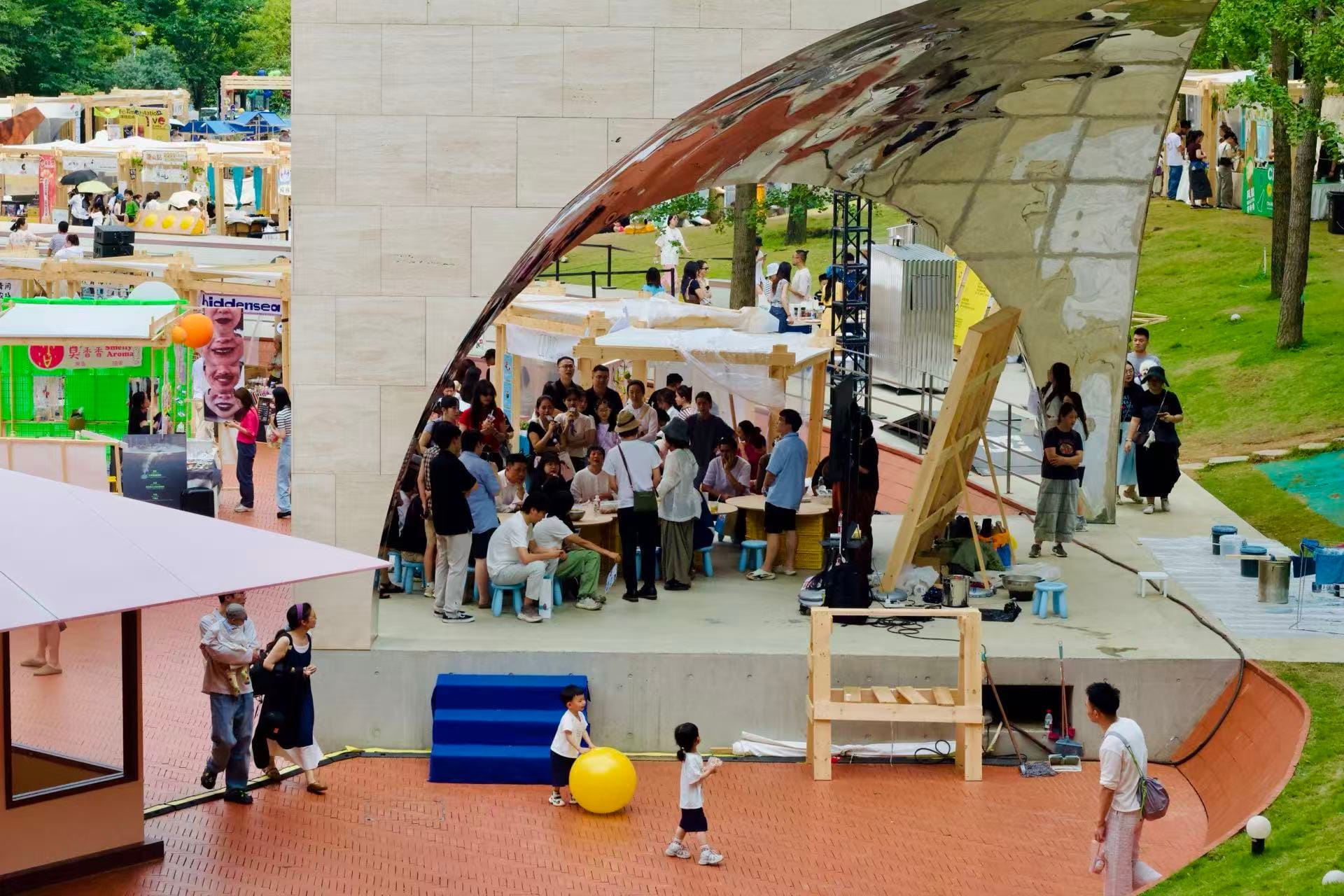
AYDC, or 阿云朵仓, is an art, culture and tourism compound whose name comes from the Yi language, meaning 理想之地, or “The Place of Ideals”. It hosted the gathering, bringing together vendors and organizations closely connected to fermentation. There were demonstrations, installations, performances and talks happening across the grounds, with locals and visitors wandering from one to another.
It was a little overwhelming at first. I stood there with a big map in my hands and no clue where to go first.
Then I walked into an open herb garden, where cool mist was spraying over the plants. Somehow, I found myself moving closer and looking at them one by one. They were undeniably green and robust, moving gently in the cool summer breeze Guiyang is famous for. Water droplets clung to the leaves, making them even more inviting. I wanted to touch them.
But I couldn’t, could I?
The desire to get closer to something beautiful was fighting with my instinct not to touch anything without permission. Then I looked around. There were little signs planted in the soil, asking me to touch, smell and feel the herbs.
What kind of store was this?
Part Two: Nature Bites, A Wild Path in a Wild Land
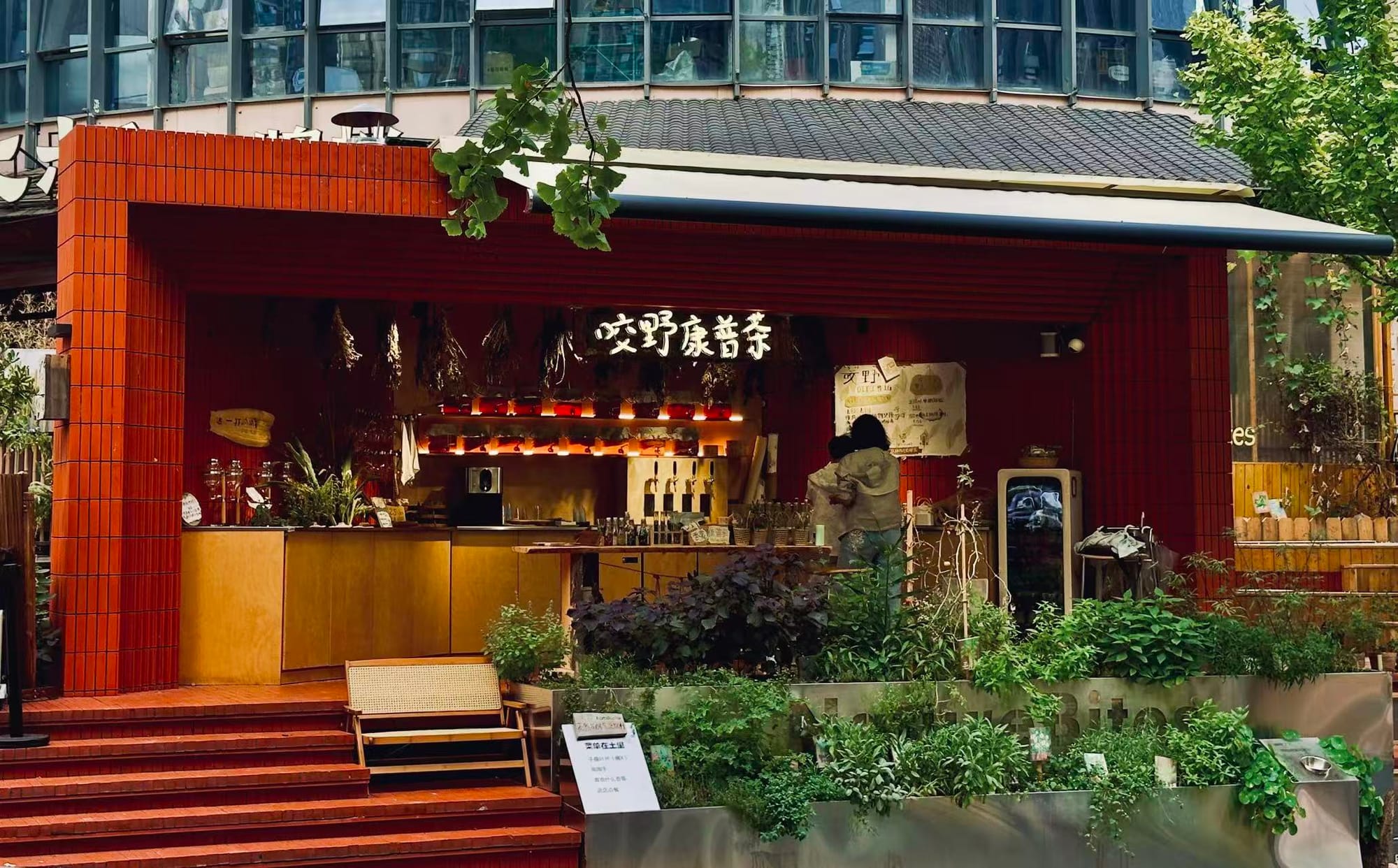
I looked up and finally noticed the brand name above the storefront: 咬野, which literally translates to something like “biting the wild.” Its official English name is Nature Bites, but there is something about the word “wild” that better captures the essence of the brand, and perhaps even Guizhou itself.
Kombucha was what they were selling. It was something I was familiar with, but had never really explored as deeply as other fermented foods. What caught my attention was how the drinks connected back to the garden I had just walked through. Each herb was clearly labelled, and many of them found their way into different flavors of kombucha inside the store. Rice-scented tea, sage, basil, mint, lemon verbena, and Guizhou wild cherry tomatoes were all there in the garden, waiting for people to touch, smell and discover.
Inside, glass jars held SCOBY (Symbiotic Culture Of Bacteria and Yeast) discs floating in different tea bases, almost like a live display of the fermentation process itself. Everything was beautifully presented, and I was invited to try whichever flavor caught my interest.
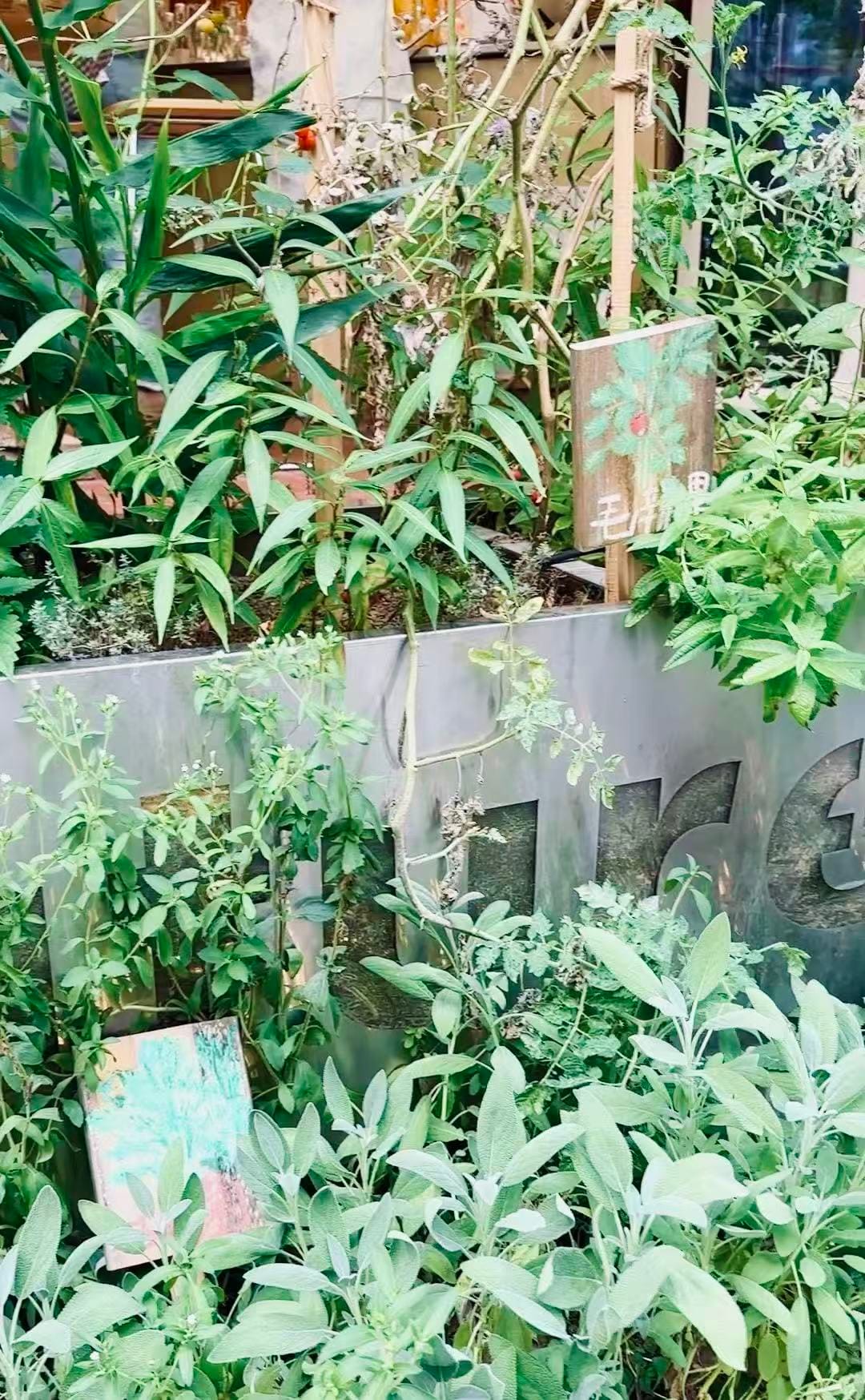
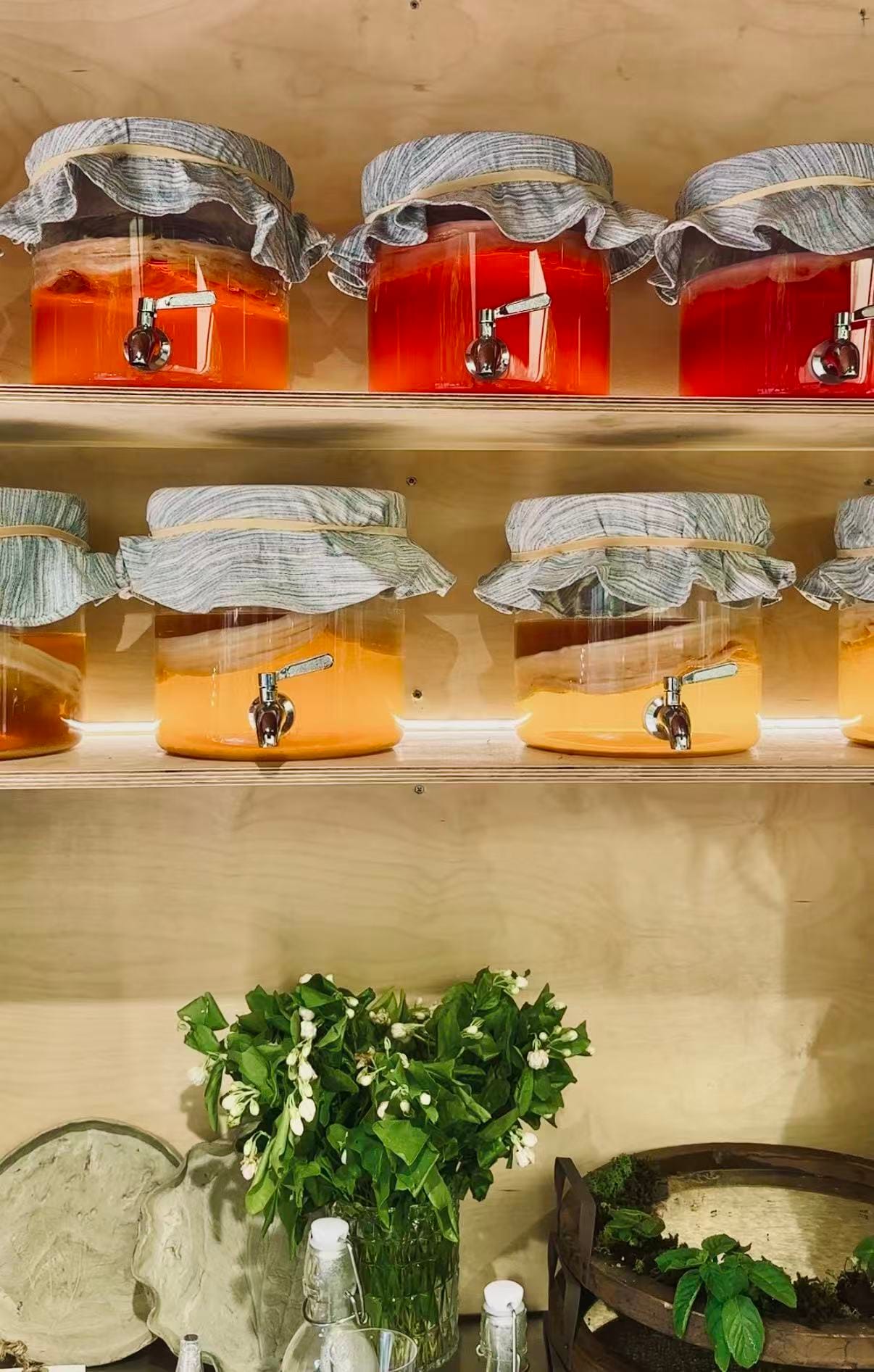
First: The outside garden showcasing different varieties of herbs and plants. | Second: Inside the store there are SCOBY inside different jars.
If I had to use one word to describe the whole experience, it would be refreshing. The aesthetics were refreshing, the kombucha was refreshing, and the herbs brought little hints of wildness into the flavors. But more than anything, the whole experience left me with the feeling that there was something more to it.
Two months later, I returned to Guiyang to talk to Sansan, the owner of Nature Bites, in a small yard in the countryside where everything started. I wanted to hear about her personal journey with kombucha and how the brand came into being.
“When I was working and living in Shanghai over three years ago, I had a tiny open balcony about three square meters, where I grew fruits and vegetables. One of them was a fig plant that I took really good care of, and eventually it started producing fruit.
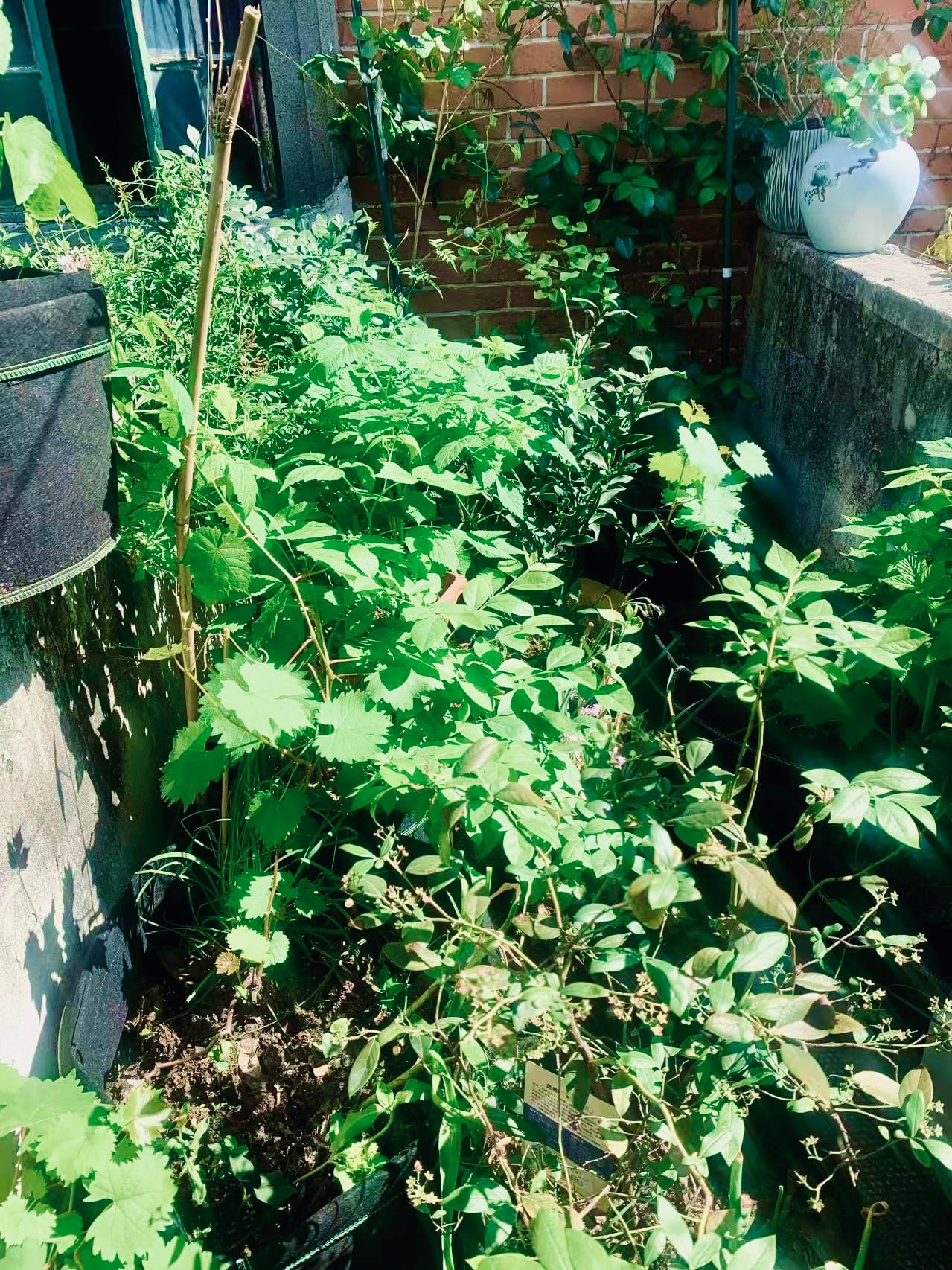
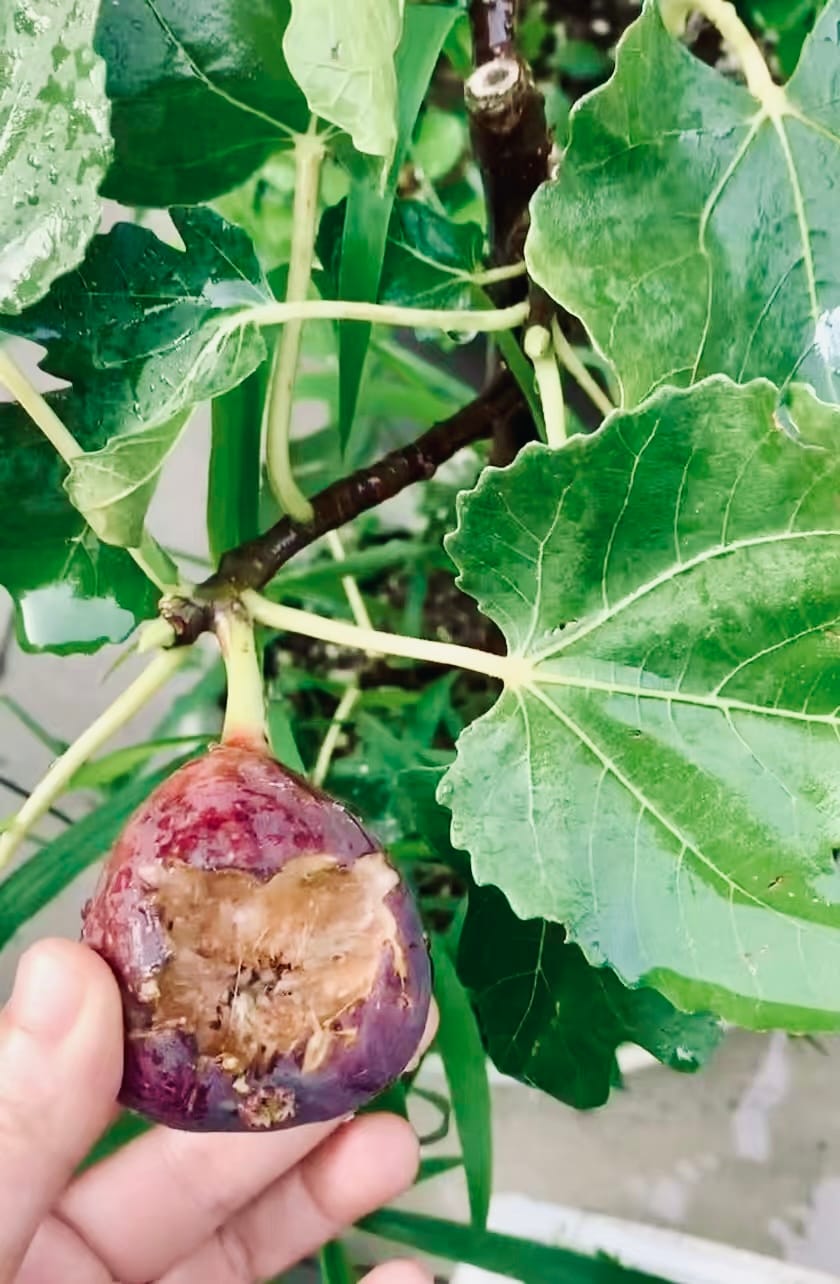
Sansan’s balcony in Shanghai and the fig she grew that was enjoyed first by birds. Credit: Sansan
The first ripe fig was quickly eaten by the birds before I could get to it. Then one day, I came home from work and saw this beautifully ripe fig facing me. I was so excited. I picked it, only to find that the birds had already carved out most of the back, leaving just the perfect side facing me.
I remember picking it up and biting into that tiny bit they had left behind. As the sweet juice rushed into my mouth, tears started running down my face. I wasn’t really upset. Instead, I felt this overwhelming sense of gratitude and comfort. Somehow, sharing that fruit with a bird made me feel connected to a natural world that extended far beyond those three square meters.
I still cherish that connection today.”
Part Three: A Wonderland, a Witch, and a Surprise
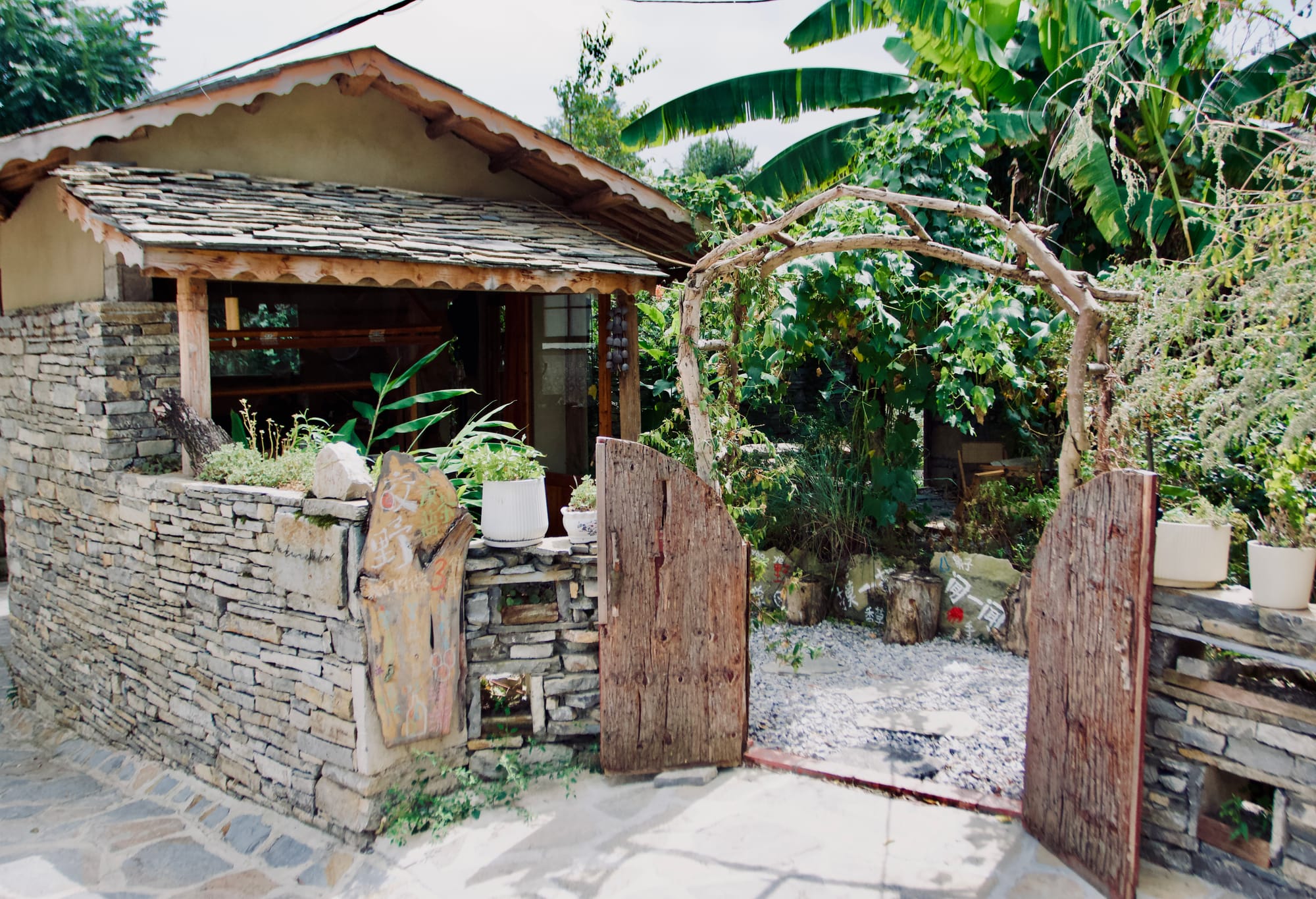
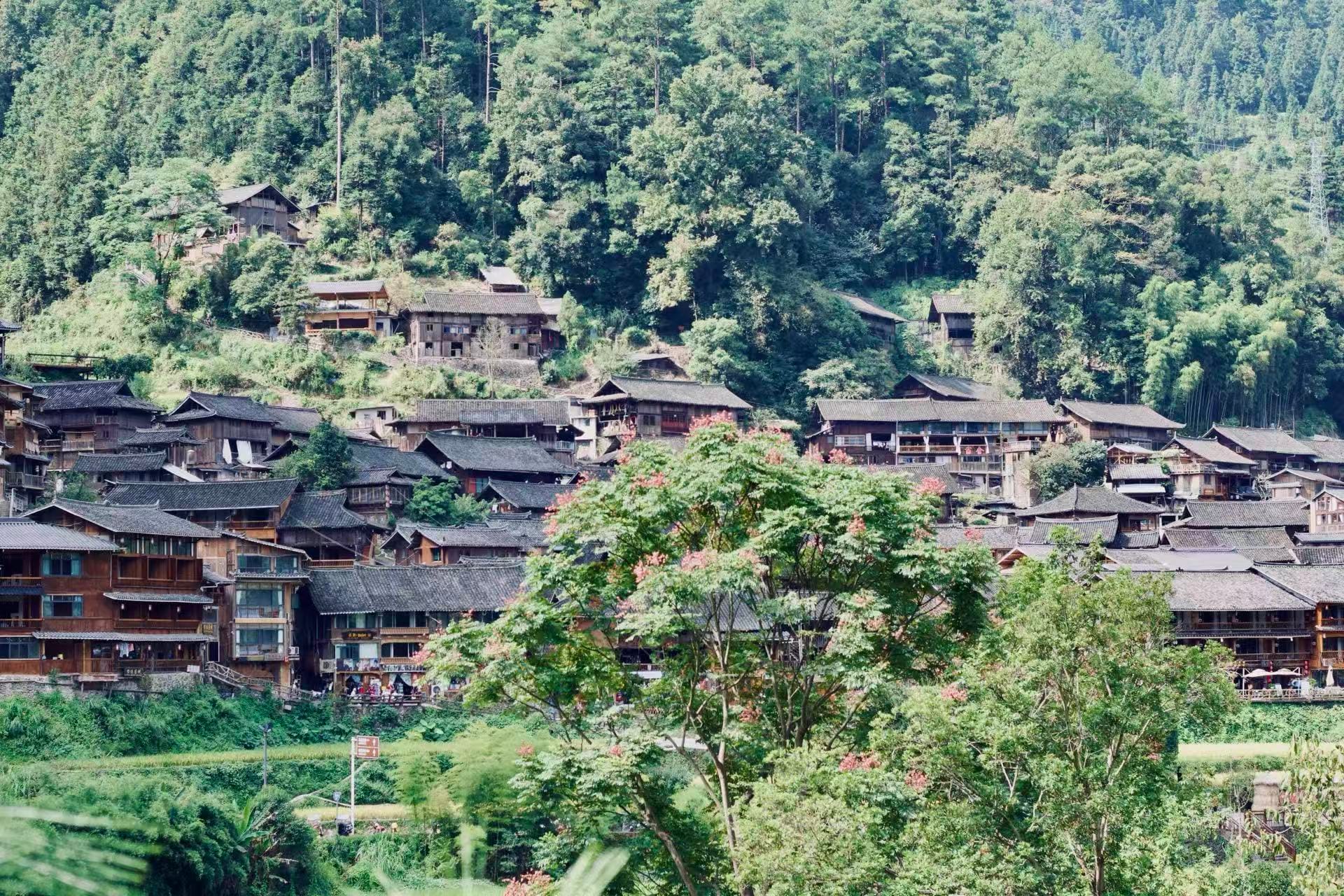
About 40 minutes from downtown Guiyang, we arrived at the southern edge of the city, in a small town next to a large reservoir. The village itself is somewhat of a tourist attraction, with vendors selling snacks near the entrance. When we stopped to ask an old grandma for directions to the kombucha shop, she immediately knew where we were going and pointed us uphill.
Sansan’s yard sits on the upper side of the village, which required a mild hike to reach. Along the way, we passed pottery studios, tea shops and other small creative spaces scattered between the village houses.
Eventually, we came to a little house behind a low stacked-stone wall. Its uneven tiled roof rested on thick wooden beams, and a pair of weathered wooden gates stood wide open beneath a bare timber arch. Plants seemed to be everywhere, growing over the wall, around the entrance and from pots tucked into whatever space was available. It felt somewhere between a home, a garden and a workshop. By the gate, a hand-painted wooden sign finally confirmed that we had found the right place: Nature Bites.
Sansan moved here from Shanghai three years ago, leaving behind a career in finance. When I asked what motivated such an “unorthodox” move, she began to unfold the emotional journey that eventually brought her back to Guizhou.
“When I was working in finance in Shanghai, I felt like I was somehow cut off from the outside world. Not physically. I was still interacting with people every day and working really hard. But the world I dealt with existed at such a macro level. Before the pandemic, I thought about the world economy and the financial situations of different countries. After the pandemic, I started worrying about how people were going to survive all the turmoil ahead of them.
It was fundamentally depressing, to worry about all these things but have no real means to make a difference. That was when I started asking myself whether I wanted to continue living this way.”
Born in Qiandongnan, Guizhou, Sansan is Miao and grew up with a close connection to nature. She remembers travelling between different zhaizi (寨子), traditional village communities scattered throughout the region, playing in the mountains and rivers, eating fish raised in the rice paddies, and discovering what people cooked as the seasons changed.
“While I was still in Shanghai, I wanted to feel like that kid again and decided to make a change in my lifestyle. I volunteered at local farms and started learning how to grow plants and vegetables. As part of a CSA program, I also ordered groceries directly from local farms. One day, a package arrived with a bottle of frozen brown liquid instead of an ice pack to keep the vegetables fresh. The farmer told me it was kombucha and that I could drink it. That was the first time I learned about kombucha.”
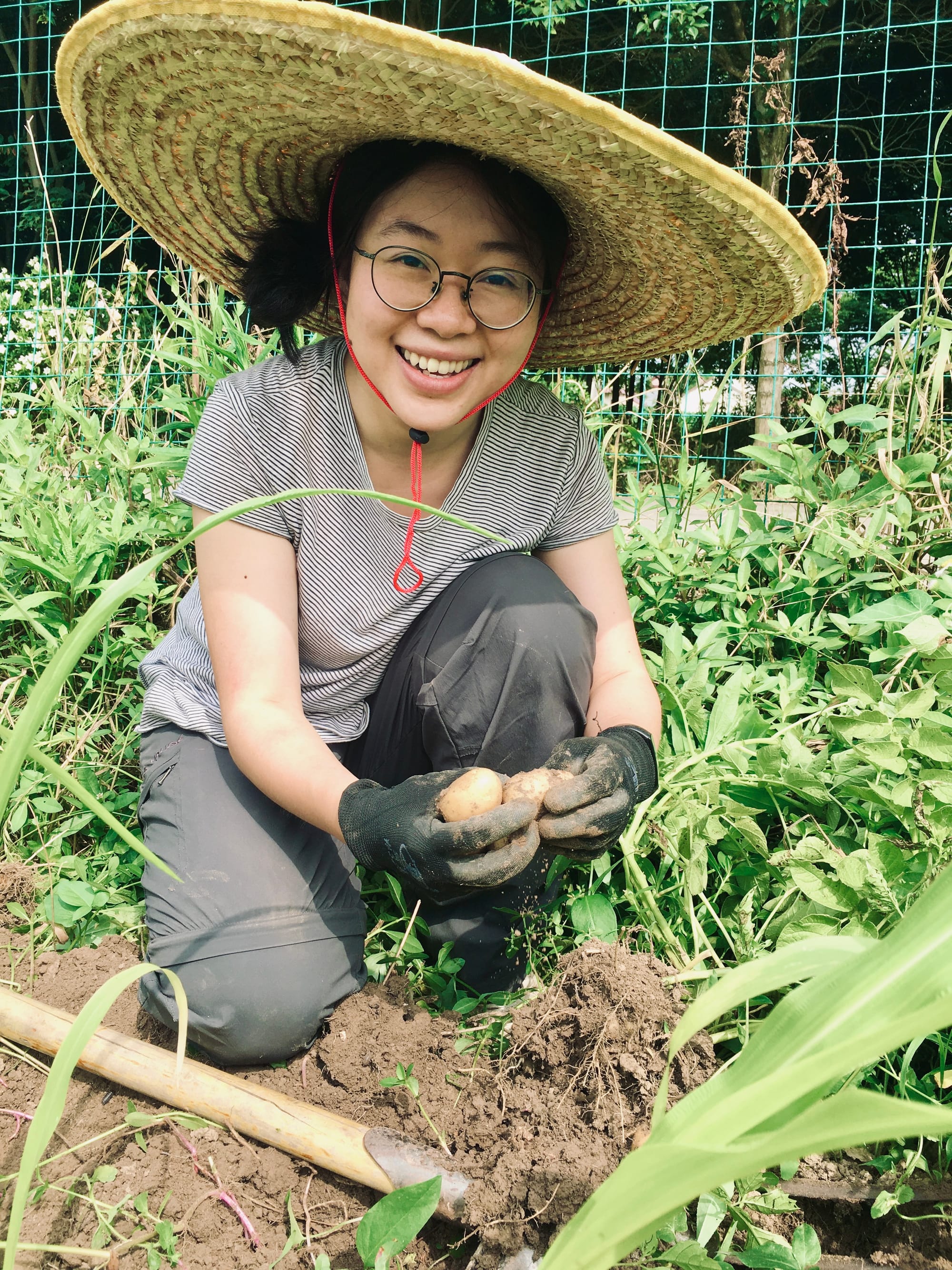
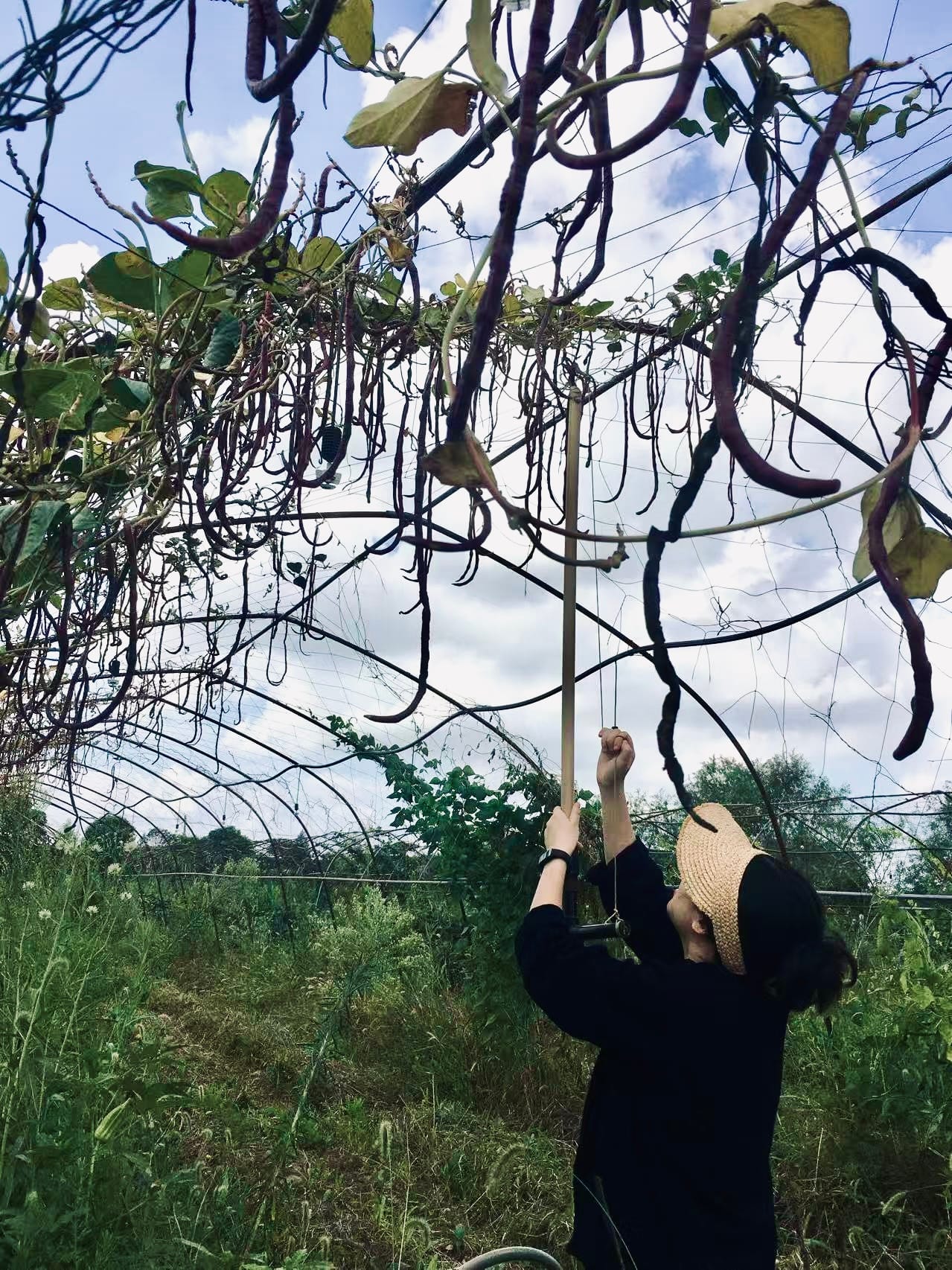
Sansan volunteering at local farms in Shanghai, as part of her preparation to move back to hometown and live with nature. Credit: Sansan
Sansan moved back to her hometown with the idea of being closer to nature and building a life of her own, by hand. After finding a yard that felt right for her, she began renovating it to make it comfortable, sustainable and as close to nature as possible. She reused whatever materials were available around the property. Old stone roof tiles became tables and paving for the paths through the yard, while camphor wood was turned into a countertop. What used to be a pigpen now holds a hammock, with ferns growing underneath where people can lie down and zone out. She even built her own heated kang (炕) for the winter and a pizza oven.
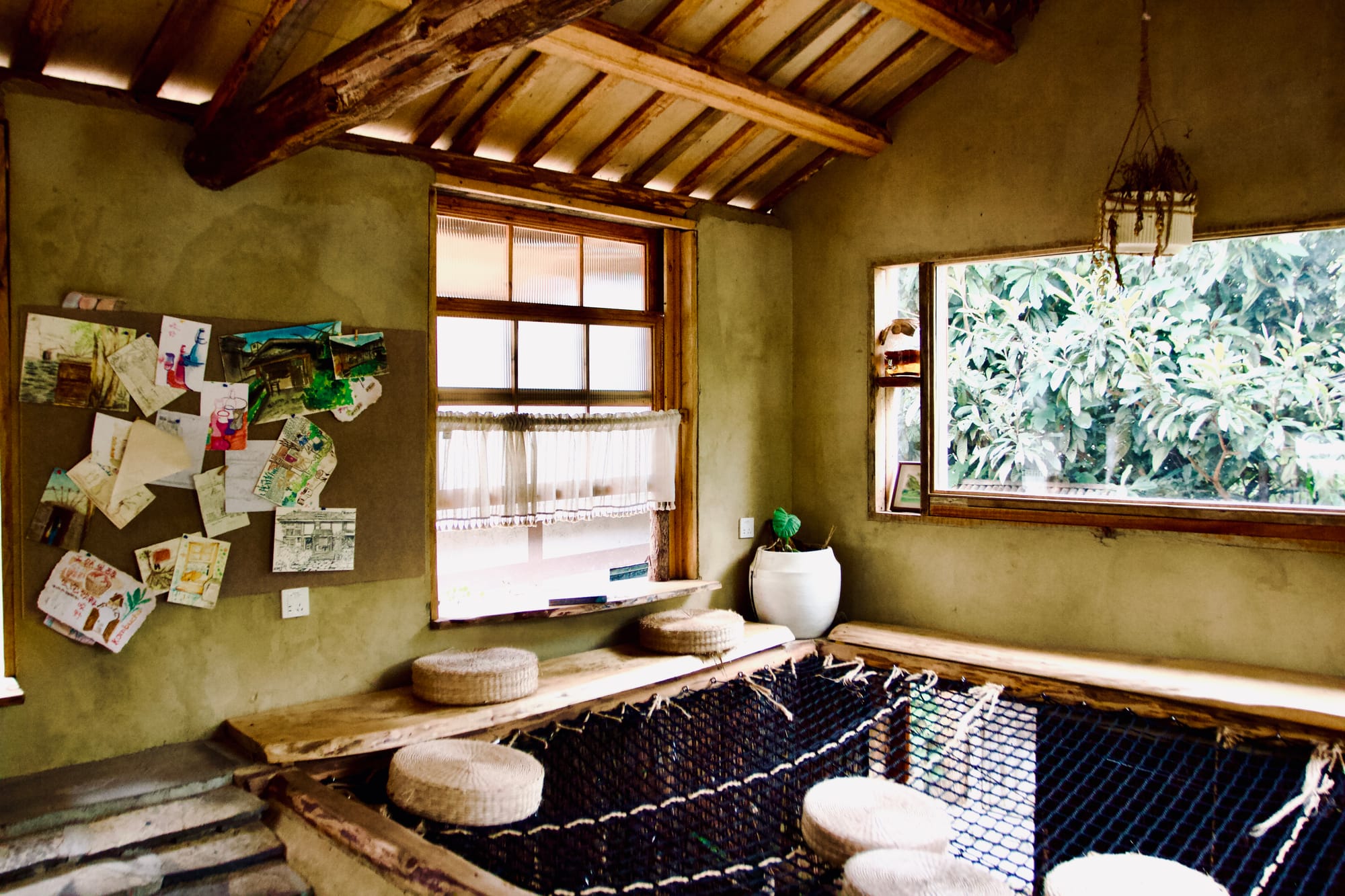
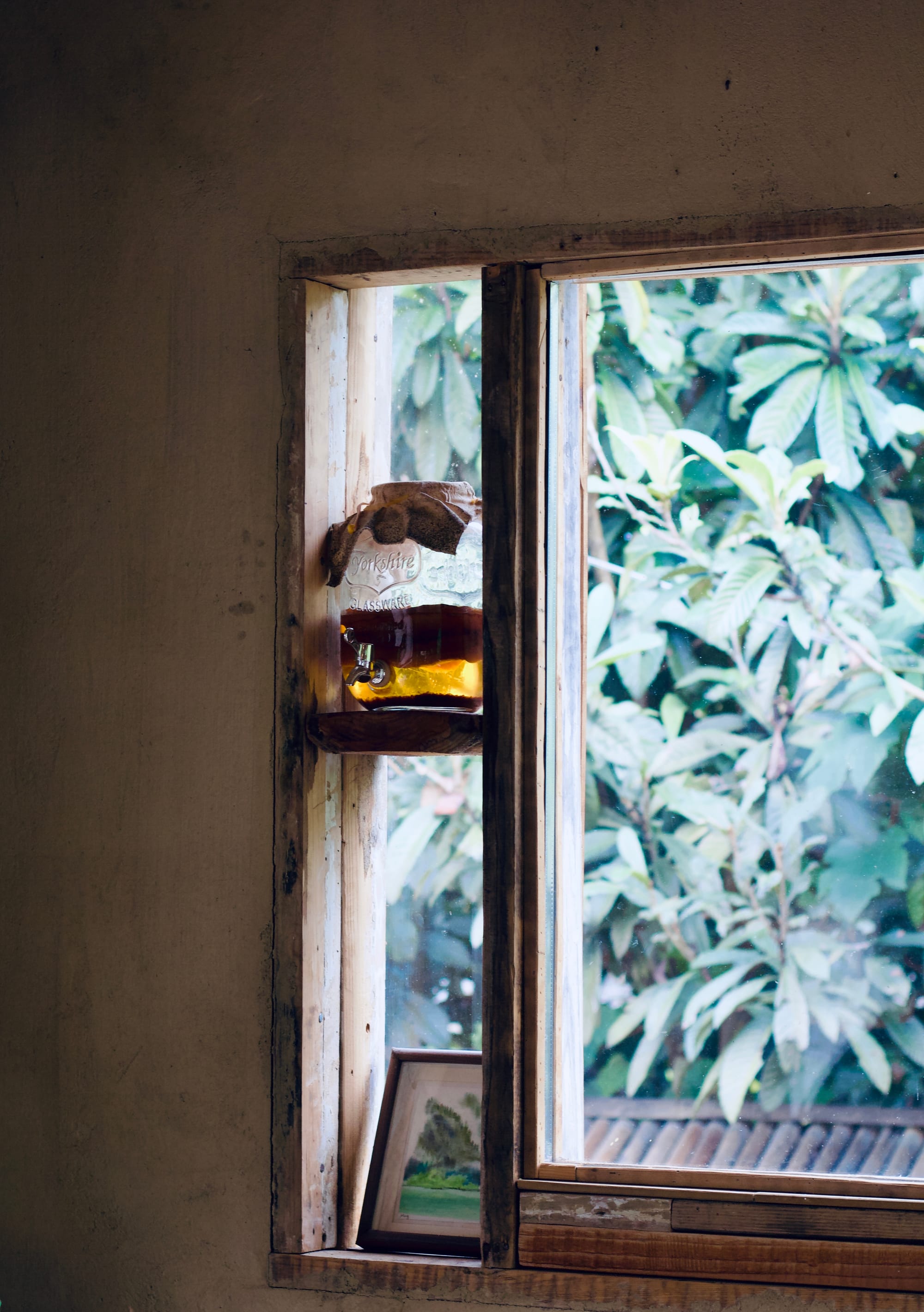
The main room of the storefront in the village, a cozy and inviting environment that Sansan designed and renovated herself.
Around the yard, she started growing her own vegetables, herbs and other plants, experimenting with whatever the land would give her. She was no longer in that three-square-meter space. Everything she planted grew strong and wild, just how she liked it.
“At that stage of my life, I just wanted a space of my own, somewhere I could feel at home and in harmony with my surroundings. Then I started exploring what I could do with it. With everything I was harvesting from the yard, I began thinking about how I could use it in food and drinks.
“I’ve always been someone with too many ideas. Some are new and nice, and some are bizarre and catastrophic. I didn’t care. I tried them all. And then I discovered how forgiving kombucha could be. It gave me room to explore, to be a witch and make my own little concoctions.”
To be continued…

A Tianjin, China native - Chloe has a deep appreciation for all things hotpot. Her appreciation of food and culture runs so deep that after a successful corporate career, she decided to uproot her life in China to attend Le Cordon Bleu Ottawa and Madrid. After working in the culinary industry in Canada, she decided to found Snout & Seek!
No spam, no sharing to third party. Only you and me.

Member discussion