
Potato and Sprat Curry (Village Style) ගමේ රසට හාල්මැස්සෝ කරිය
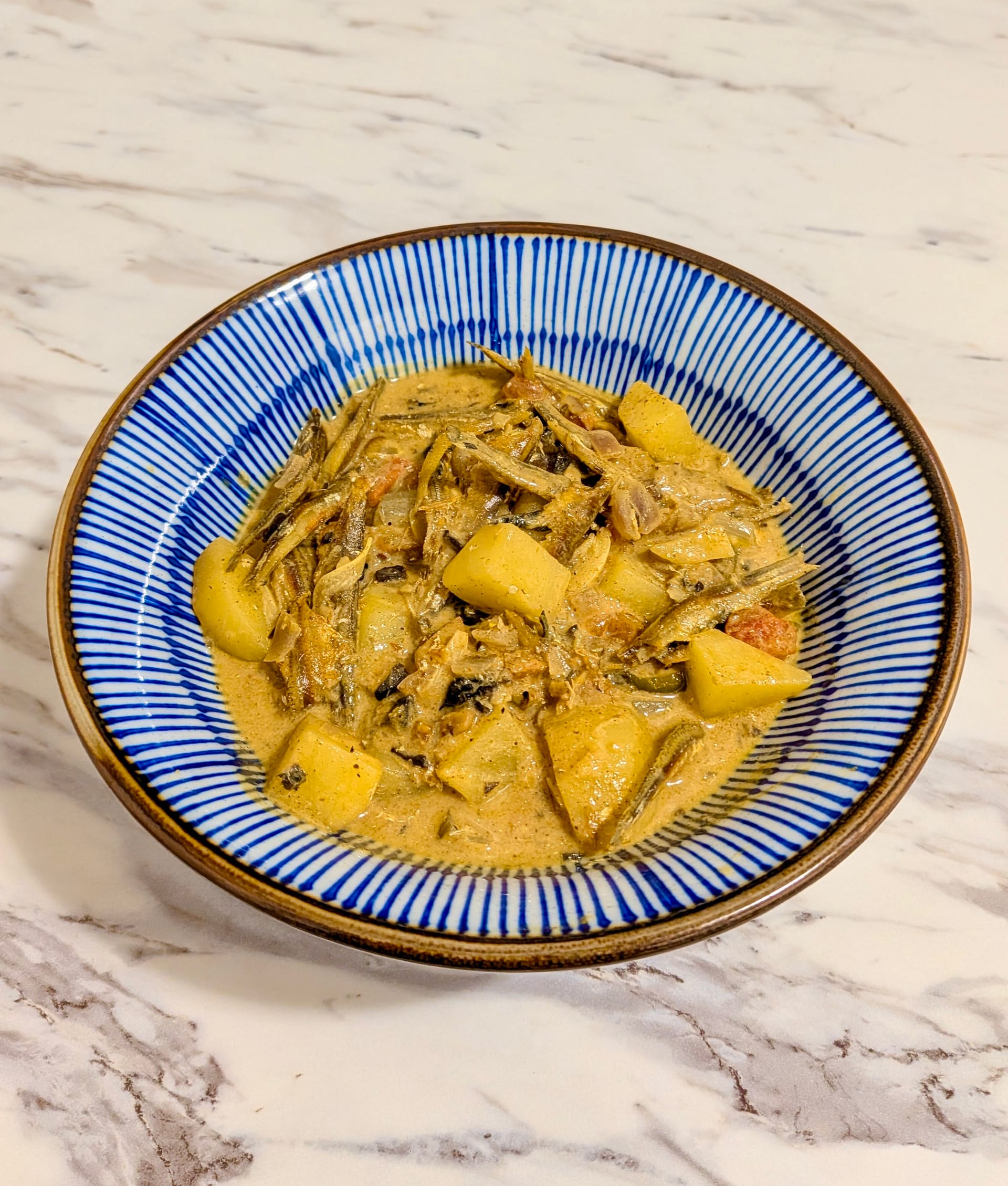
A breakfast curry to start the day the right way.
Author: Arnold Kuiper
Yield: 2-4 servings
Time Active: 40 minutes
Total: 55 minutes
Heat: 🌶🌶🌶/5
Diet: DF, GF
Significance of the dish
Sri Lanka has a number of fantastic curries that are eaten for breakfast, lunch, and dinner. When I was younger, this curry used to be my breakfast at least once a week. The potatoes soak up the flavors of the spices and coconut milk, while the sprats (haalmasso) give an umami saltiness that awakens the senses. The richness is cut by a sour tang which comes a tropical fruit called garcinia, and a kick of heat from the ginger and chilies gets you ready for the day!
This curry is often eaten with either a local bread known as roast paan, or a rice dish called string hoppers and accompanied with coconut sambol (pol sambol), a local condiment that goes with everything and brings some extra spice and tang to any Sri Lankan meal. This dish being a village style recipe would normally be cooked in a clay pot, which brings added flavors to the dish.
For this recipe, traditionally the coconut milk would be extracted by squeezing the grated flesh of the coconut. The first squeezes are what is considered the thick milk, and the thin milk is extracted by adding a bit a water to the leftover coconut and then squeezing the flesh again to extract every bit of the milk. The thin milk is used to cook the dish whilst the rich thick milk is used at the end to bring the creaminess and richness to the dish. This recipe also works well with canned or boxed coconut milk with the addition of water to help cook the potatoes through properly, but make sure to buy high quality, and not from concentrate!
Ingredient Guidance
- Garcinia: garcinia, or Goraka is a tropical fruit. it gives a very rich deep sour and tangy taste to the dish. It is similar in flavor and texture to tamarind. if you cannot find dried garcinia, you can use 1/2 the amount of tamarind paste as a substitute.
- Curry Leaves: a leaf from the curry plant. It is used in Sri Lankan as well as a number of other South Asian cuisines for its aromatic fragrance and slightly bitter taste.
- Sprats: a small oily fish (like mackerel) that is in the herring family, and about the size of a small anchovy. Buy them dried and without heads. If the heads are on, they are easy to pull of because of how crispy the fish are when dried. I have also made the recipe with dried Japanese anchovies when I was in a pinch and it came out with almost the same flavor and texture.
- Fenugreek seeds: brings a bittersweet nutty flavor.
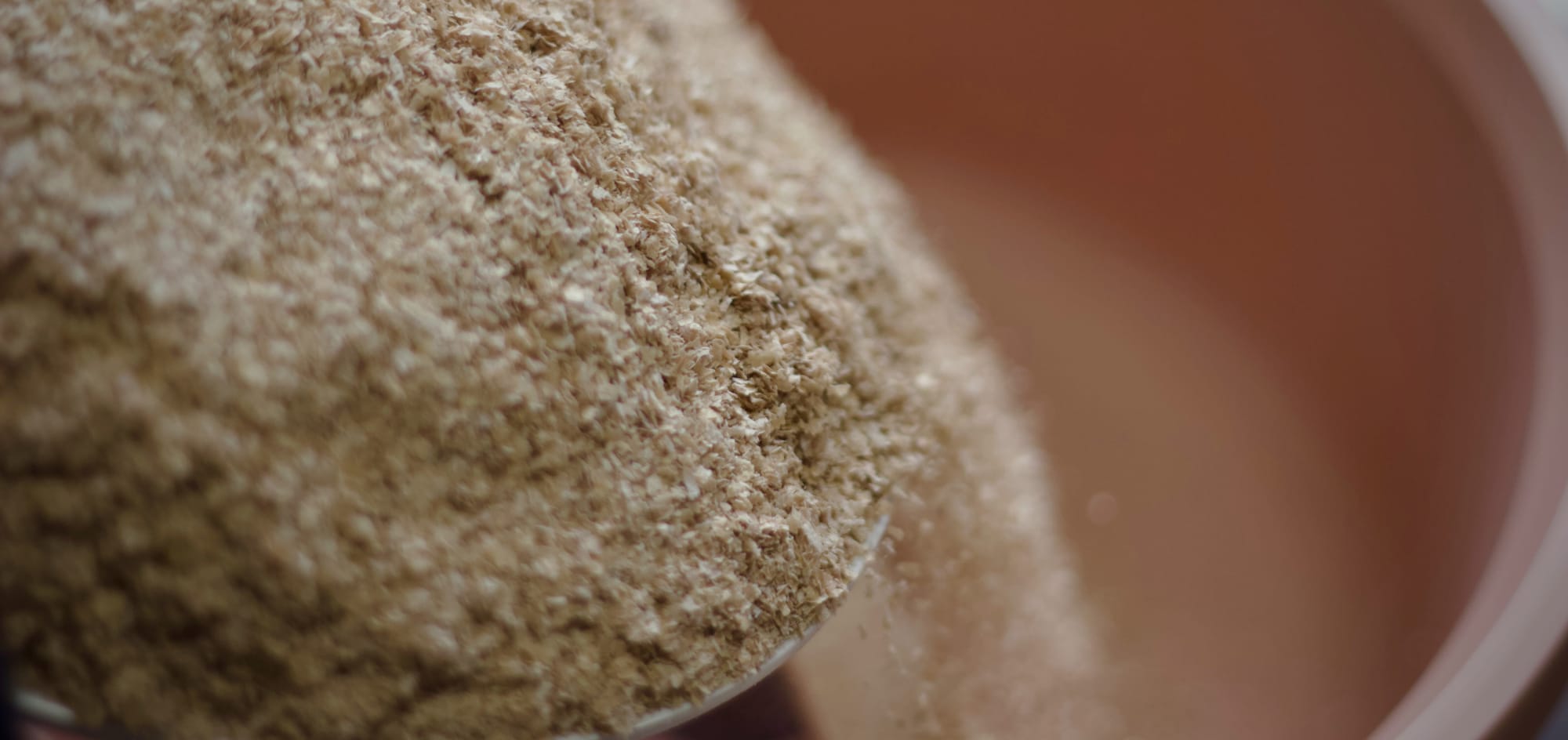
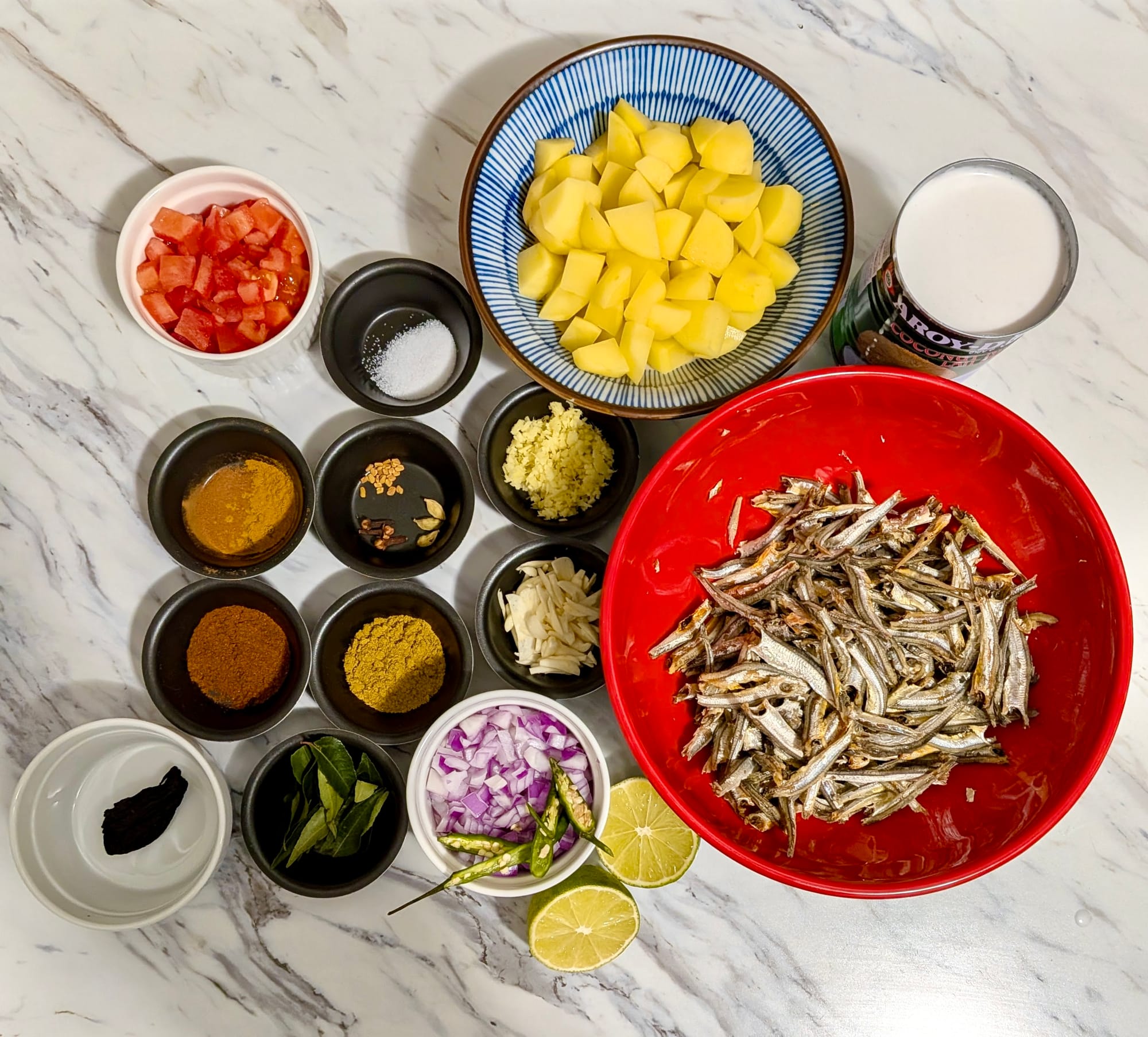
Ingredients
- 2-3 medium yellow potatoes (Firmer potatoes are best to retain shape/structure after cooking)
- 200g dried sprats
- 8-10 curry leaves (Younger leaves are more flavorful)
- 1 red onion (medium size)
- 4 cloves of garlic
- 1 inch ginger piece (Smaller ginger roots have more flavor)
- 1 tomato (medium size)
- 2 green chili
- 500 mL of coconut milk (not from concentrate)
- 50 mL water
- 1 tsp curry powder
- ¼ tsp fenugreek seeds
- 1-2 tsp chili powder (to taste)
- ½ tsp turmeric
- 1 stick of Ceylon cinnamon (Or substitute with regular cinnamon sticks or 1 tsp cinnamon powder)
- 1 tbsp of garcinia (Or substitute with tamarind, but use half the amount)
- 3 green cardamom pods
- 3 units cloves
- 2 tsp of salt (+ salt to taste)
- 1 unit lime (+lime juice to taste)
Method and Procedures
1. Start by soaking the dried garcinia in warm water for 30 minutes to rehydrate. I normally cut it up into smaller pieces if I want to speed up the process. Peel the potatoes and rinse the dried sprats in cold water. Cut the potatoes into small pieces roughly 2-3 cm3.
2. Cut the tomatoes into small pieces roughly 2 cm3 and cut the green chilis in half lengthwise. Remove the seeds and white membranes if you want to reduce the heat level.
3. Finely chop the ginger (brunoised) and slice the garlic thinly (emincer).
4. Add all the ingredients except the coconut milk and water to a pot and mix well with a spoon. Let the ingredients marinate together for about 1o minutes before turning the heat on.
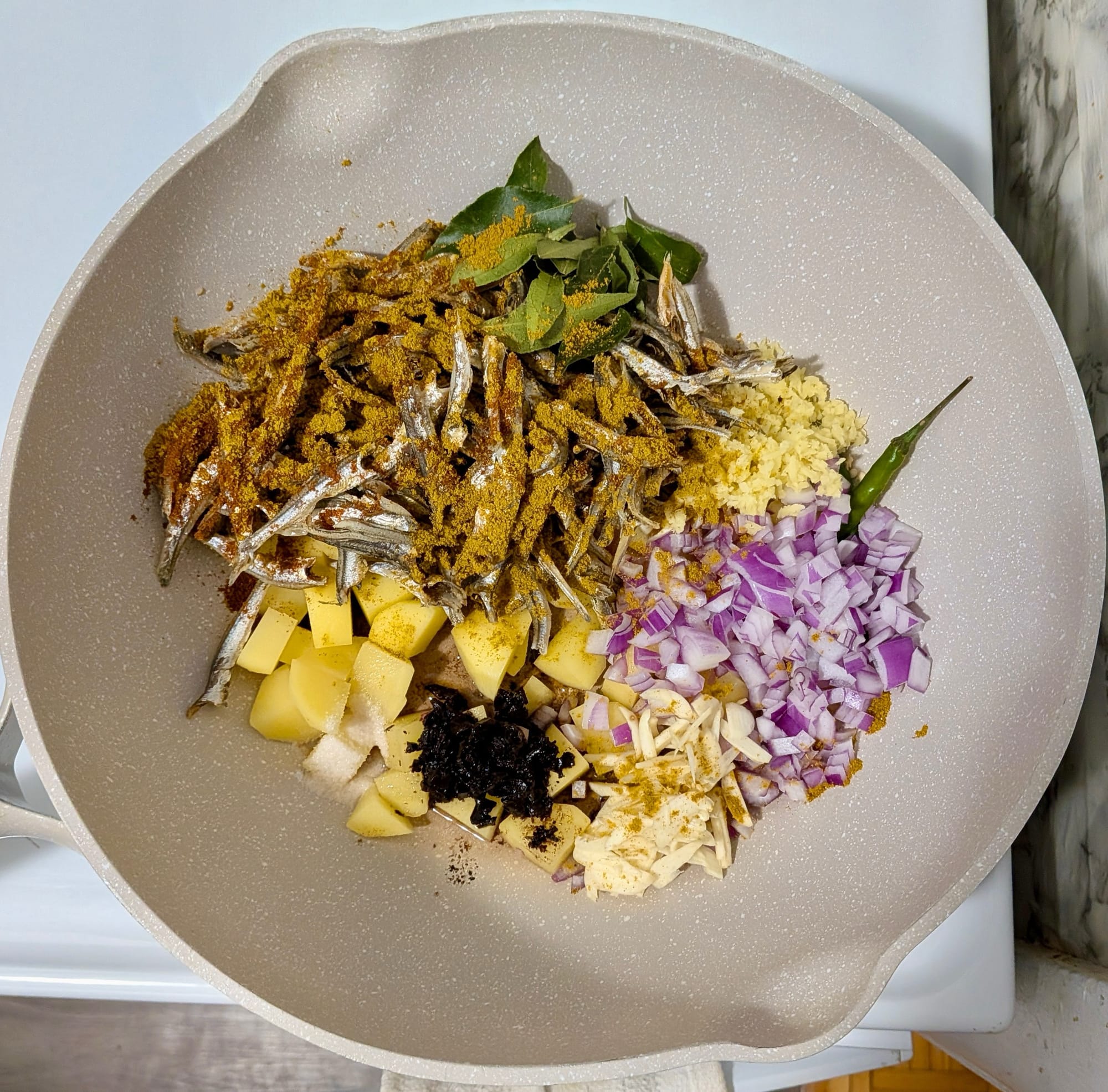
- Place the pot on the stove and turn the heat on to a medium setting.
6. As it is heating up, continuously mix and add in approximately ¾ of the coconut milk once you start to hear some noises and smell the spices coming from your pot. Don’t wait too long to add the coconut milk or the spices will burn!
7. Add in the water and bring the pot to a simmer (omit if using the traditional method of extracting the coconut milk).
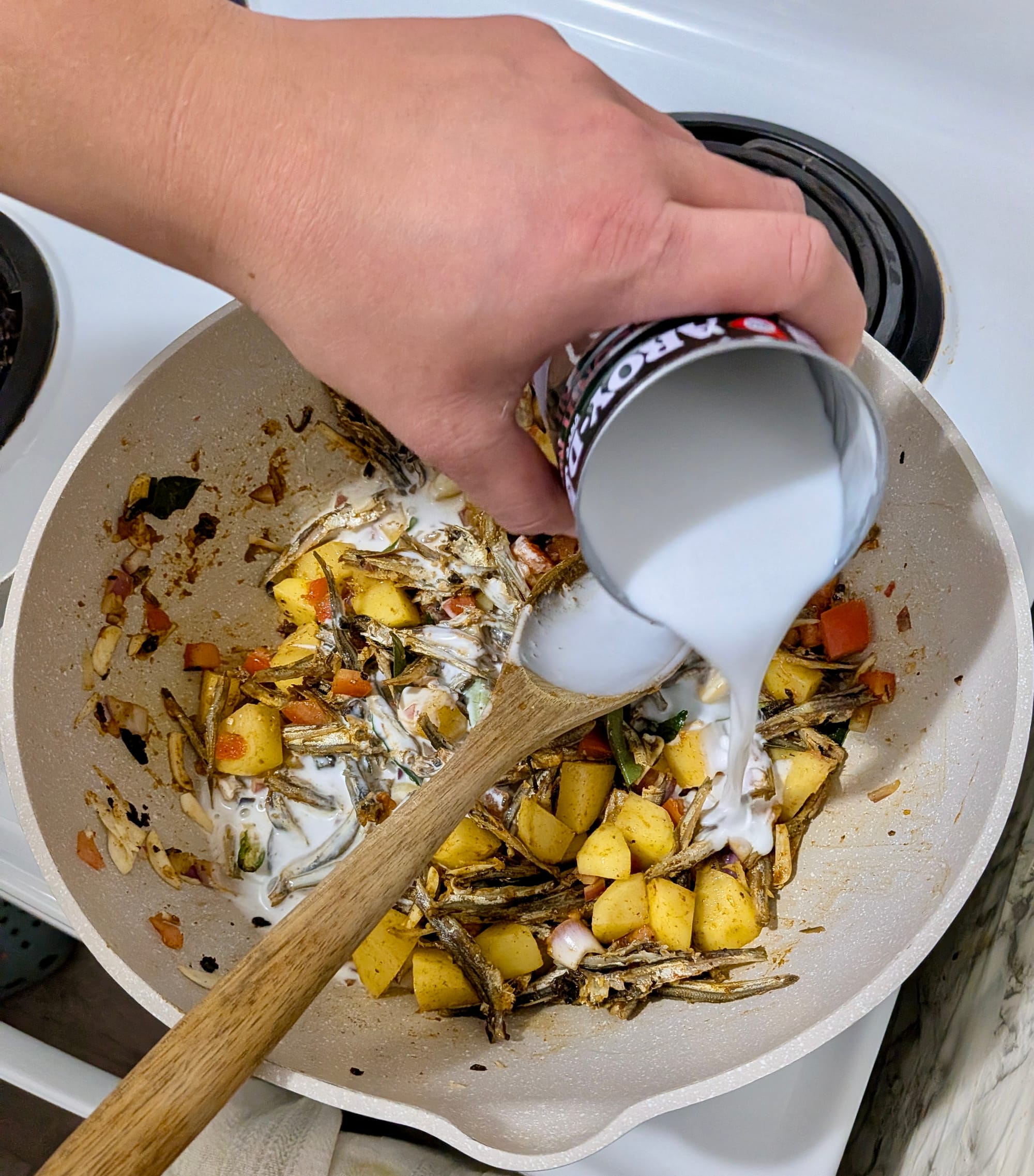
8. Place a lid on top to cover and reduce the heat to low. Let it simmer for about 15-20 minutes and then remove the lid.
9. Let the liquid reduce to a thick consistency (about 5 more minutes) and then add the remaining coconut milk at the end for a creamy finish.
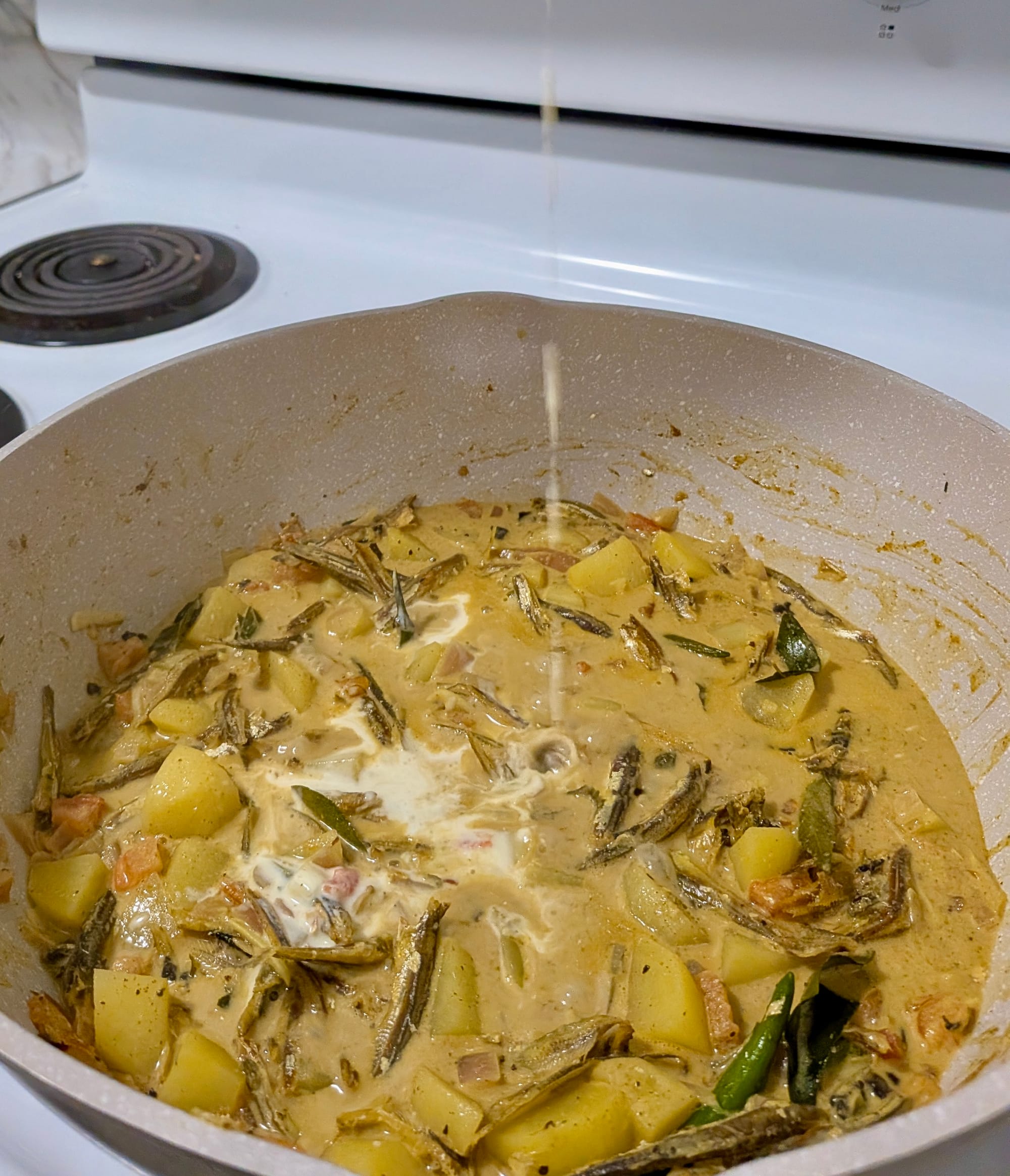
Season to taste with salt, if its too sour, add more salt to correct. If it's too salty add a tsp of lime juice.
Pro Tip: Pairs extremely well with the Pol Rotti from another Arnold Kuiper recipe!
Making Ahead and Storage
If you make the curry a day ahead, it will be even more flavorful. Just like most foods, the flavor develops more over time as the ingredients have longer to mingle together.
Store in an airtight container in the fridge for up to 3 days. To reheat, place the curry in a pot on the stove on medium heat with a splash of water (2 tbsp) until heated through before serving.

Co-founder of Snout & Seek. Born and raised in Sri Lanka, Arnold's passion for food stems from both his Dutch and Sri Lankan roots. A graduate of Le Cordon Bleu Ottawa, Arnold's career in the culinary industry has brought him from the Netherlands to Canada, where he now teaches at a cooking school.
No spam, no sharing to third party. Only you and me.



Member discussion