Mushroom Season: Yunnan’s Poem of Place
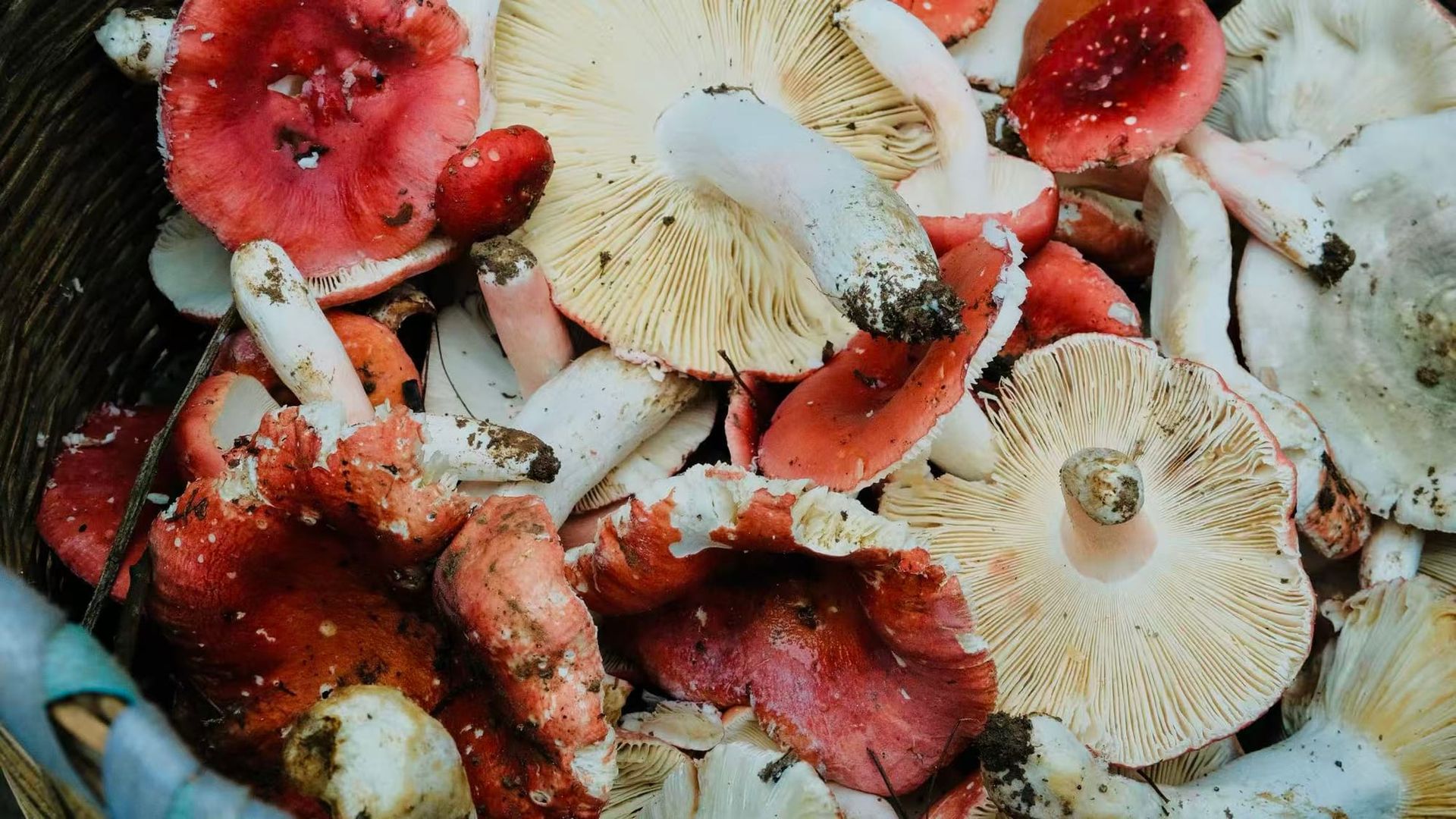
Summer is the rainy season in Yunnan, and with the rains comes the delicacy that locals eagerly await all year: wild mushrooms.
Yunnan boasts the richest diversity of wild edible mushrooms in China, as well as one of the country’s longest histories of mushroom consumption. Among the most celebrated regions are Yuxi, Kunming, and Chuxiong in central Yunnan, where both the variety of mushrooms and the ways of preparing them reach their peak.
It is also the region most famous for eating “poisonous mushrooms.”
The best-known example is jianshouqing (见手青), a type of bolete that has gained nationwide attention in recent years. Depending on an individual’s physiology, consuming undercooked jianshouqing may produce hallucinatory effects. As a result, it has become one of the defining symbols of Yunnan’s reputation for mysterious mushroom-induced visions. Many visitors arrive secretly hoping for their own encounter with the legendary “little people” often described in stories of mushroom intoxication.
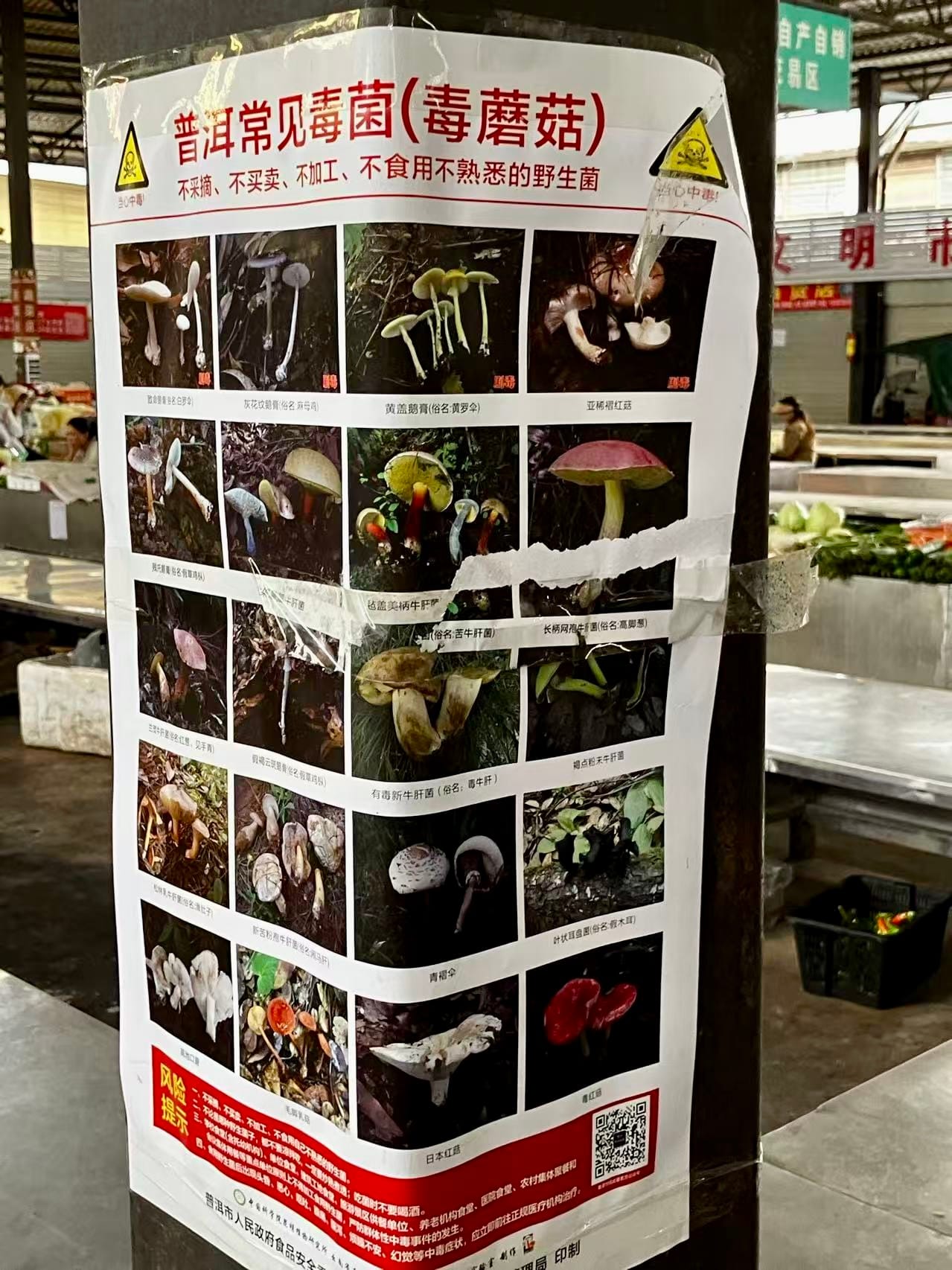
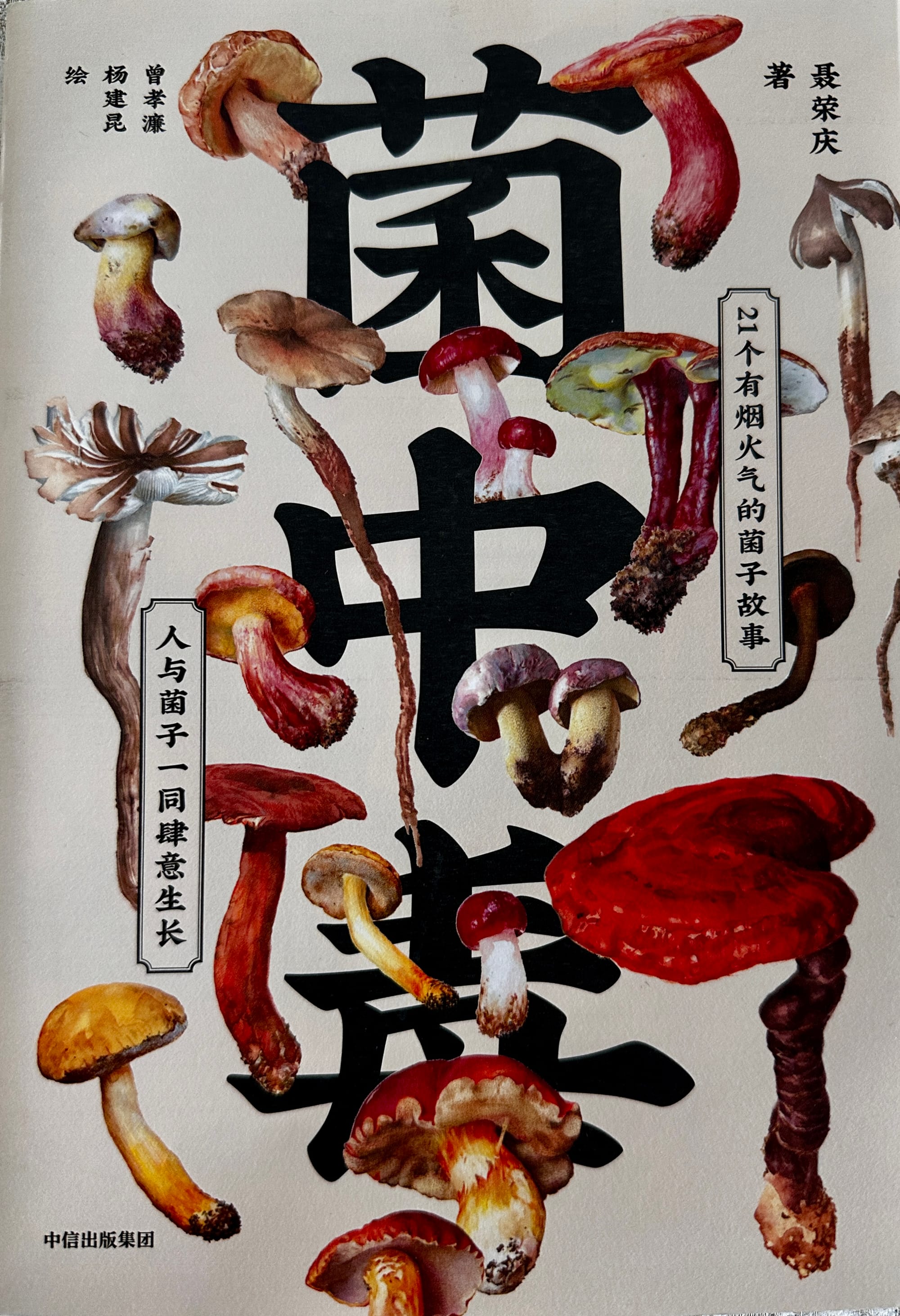
First: Because mushroom poisoning remains a serious concern every rainy season, educational posters identifying dangerous species can be found throughout markets and residential communities across Yunnan. | Second: The book Mushroom Poisoning (《菌中毒》) by artist Nie Rongqing has even become a bestseller in Yunnan bookstores in recent years.
As the rains arrive, markets throughout Yunnan begin setting aside entire sections devoted to wild mushrooms. Many visitors know of Kunming’s Shuimu Flower Market, the largest wild mushroom trading center in the province. But for those seeking the freshest mushrooms, people from Yuxi and the surrounding region are more likely to drive sixty kilometers to Yimen County, one of central Yunnan’s richest mushroom-producing areas.
Every year around this time, my parents and aunt make the trip to Yimen’s market. They leave before dawn and return home carrying baskets full of freshly gathered mushrooms, ready for a mushroom feast.
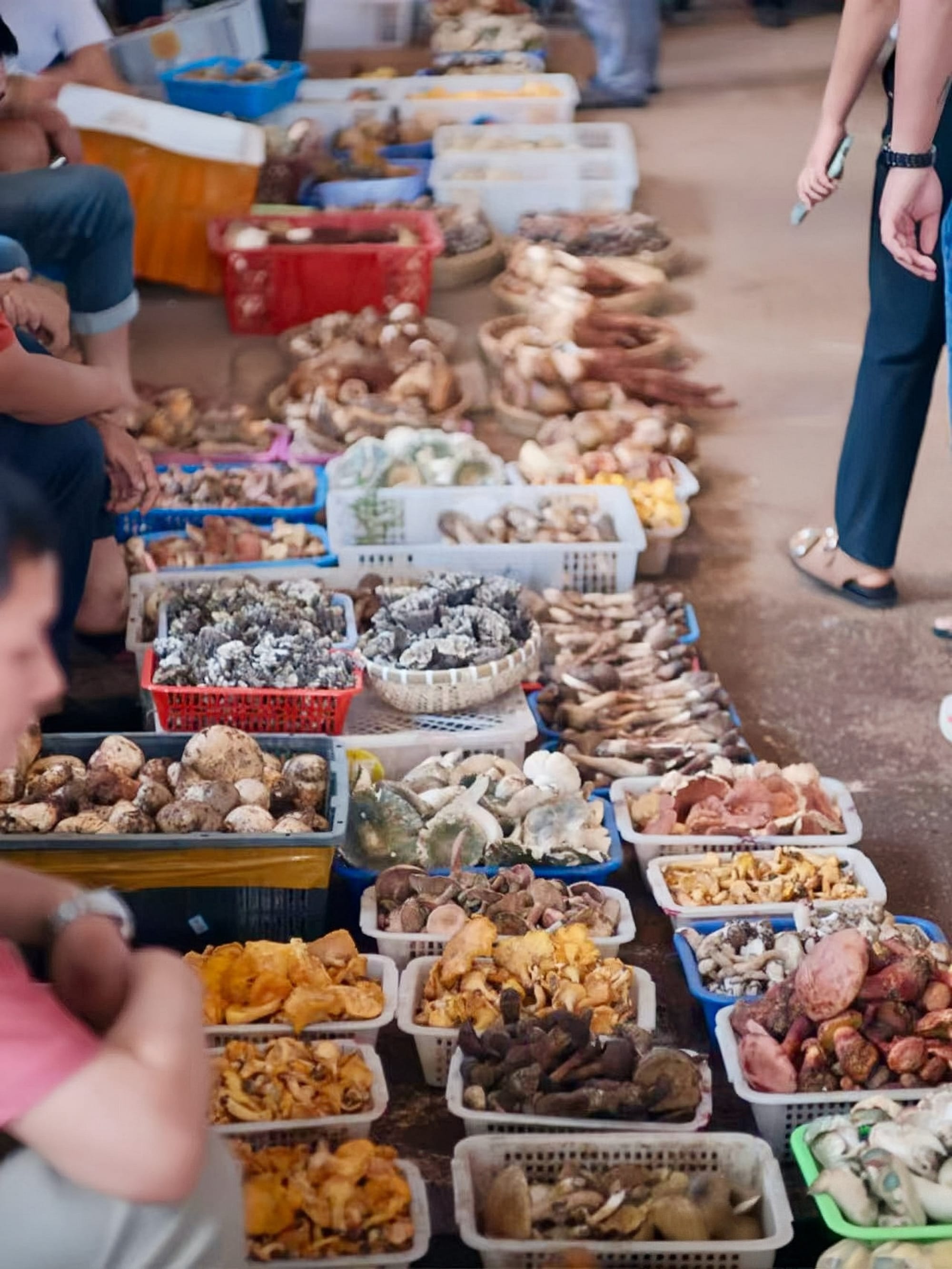
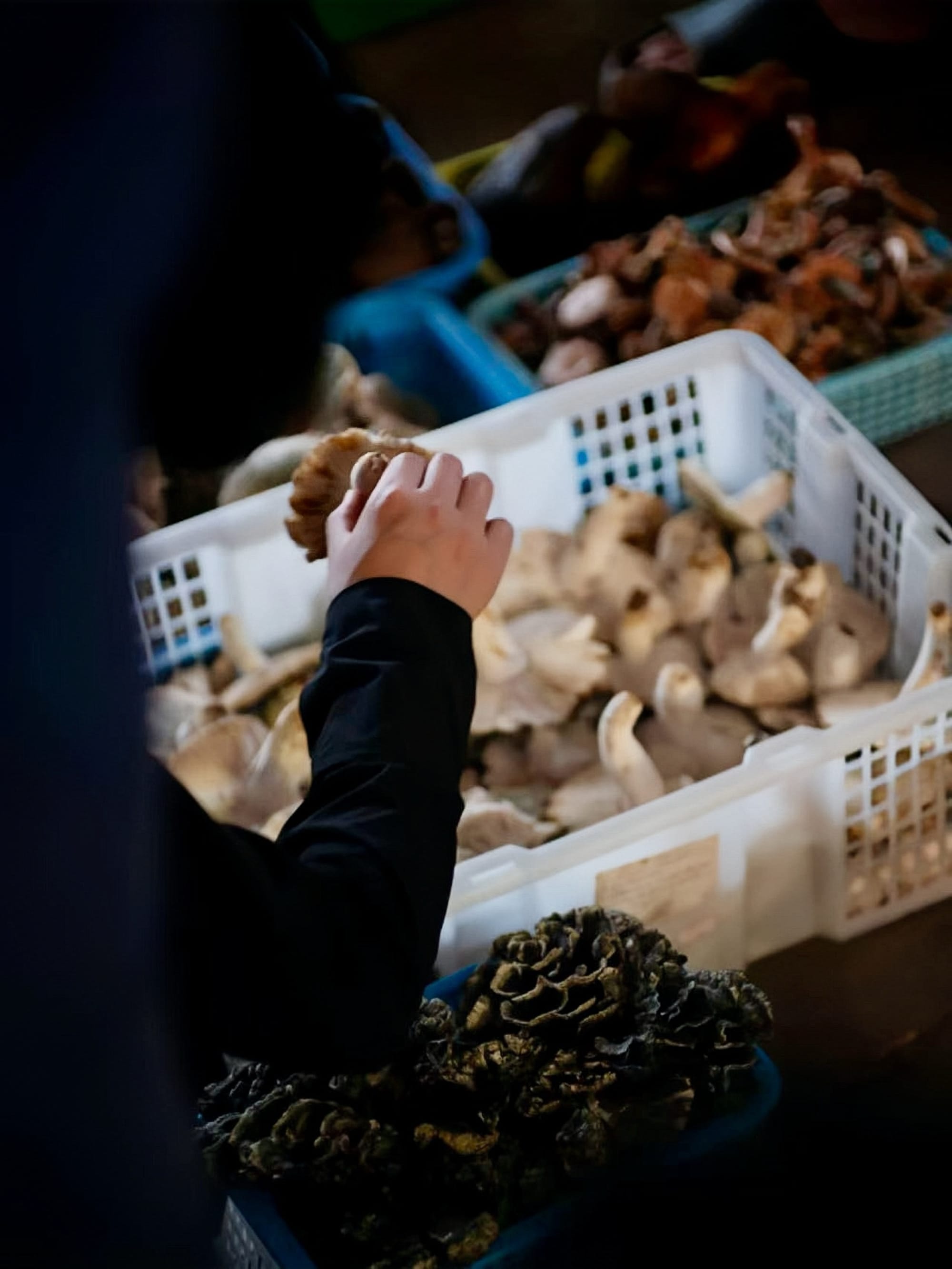
Markets selling wild mushrooms with a wide range of varieties in Yunnan. Going to the market to check out the mushrooms is part of daily ritual for the locals. Credit: RED 95299614060
At our family table, the most common mushroom is jianshouqing.
A member of the bolete family, its name literally means “turns blue upon touch.” Press the underside of the cap, and the yellow flesh quickly oxidizes into shades of blue-green. Even within the category, there are distinctions such as yellow jianshouqing and red jianshouqing, each with its own devotees. My aunt, whose standards are notoriously high, insists that the yellow variety is too soft and lacks character. The red variety, she argues, offers a firmer bite, a pleasant crispness, and a more intense aroma.
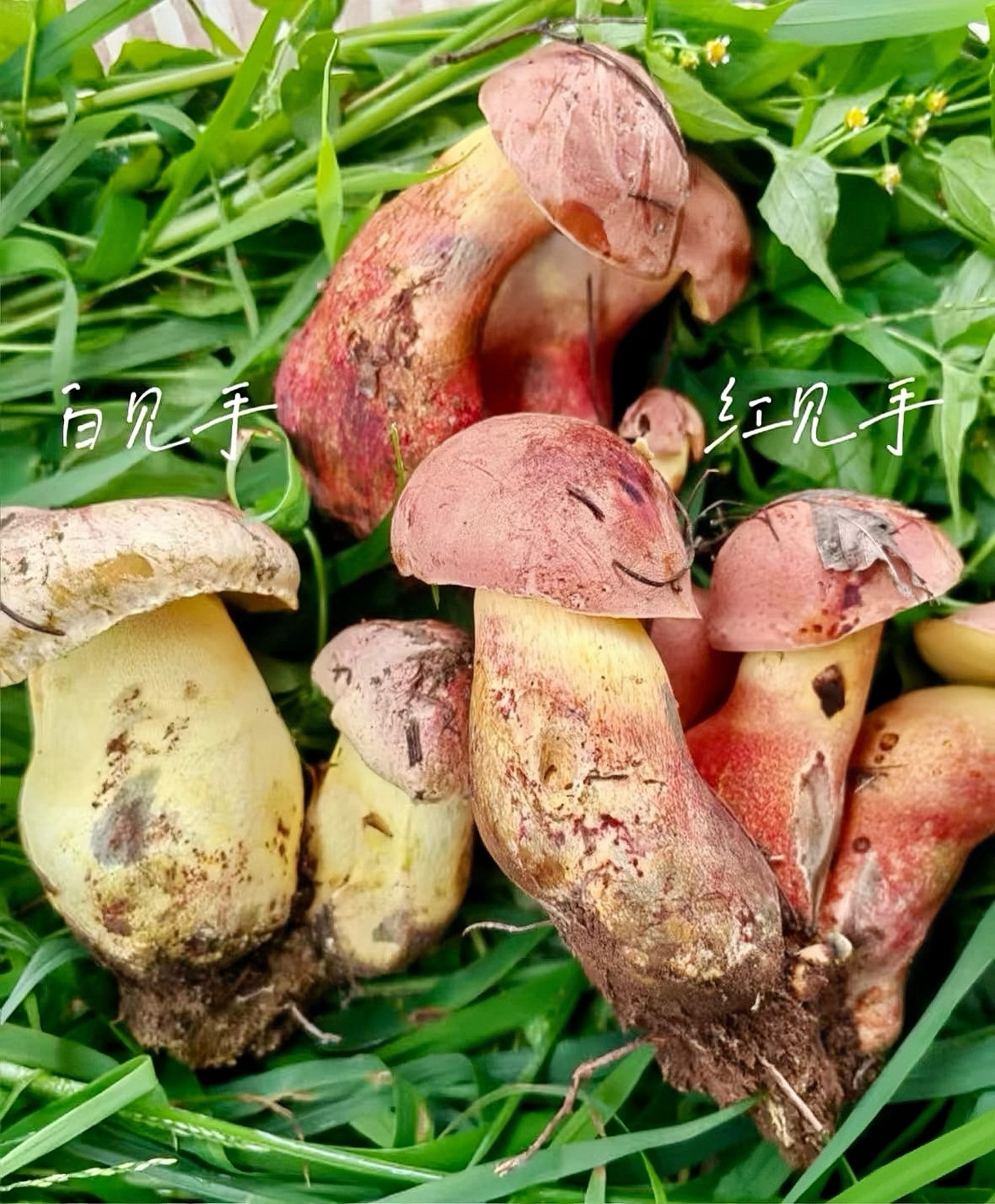
Across central Yunnan, every family has its own preferred way of cooking mushrooms. Some practices have become regional conventions, while others reflect local ingredients and traditions.
Take stir-fried jianshouqing, for example. In Dali, it is often cooked with cured pork or ham. To us, this overwhelms the mushroom’s distinctive fragrance. We prefer to let the mushroom speak for itself. But for people in Dali, where ham is a treasured local product, the combination enriches rather than obscures the flavor.
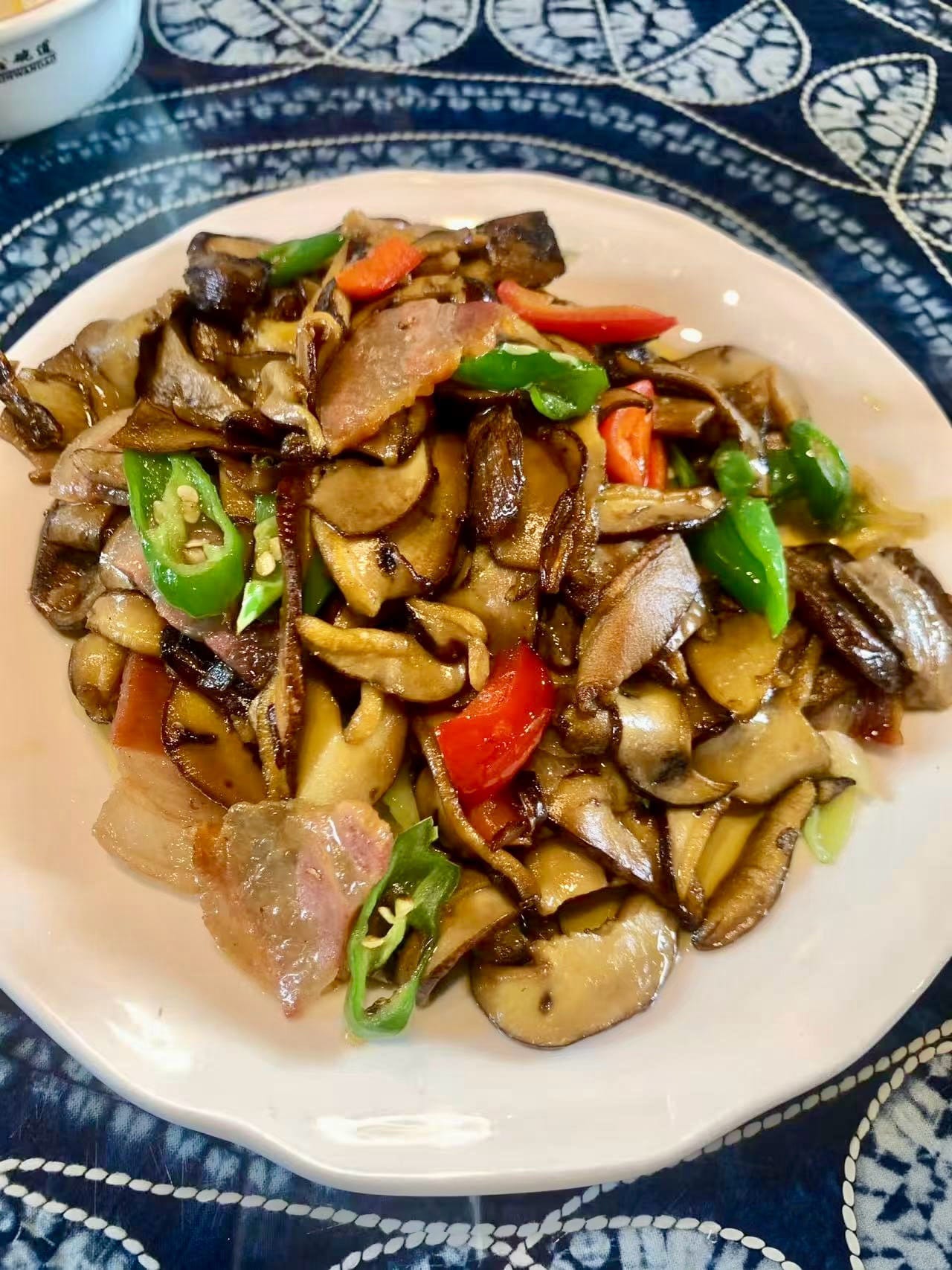
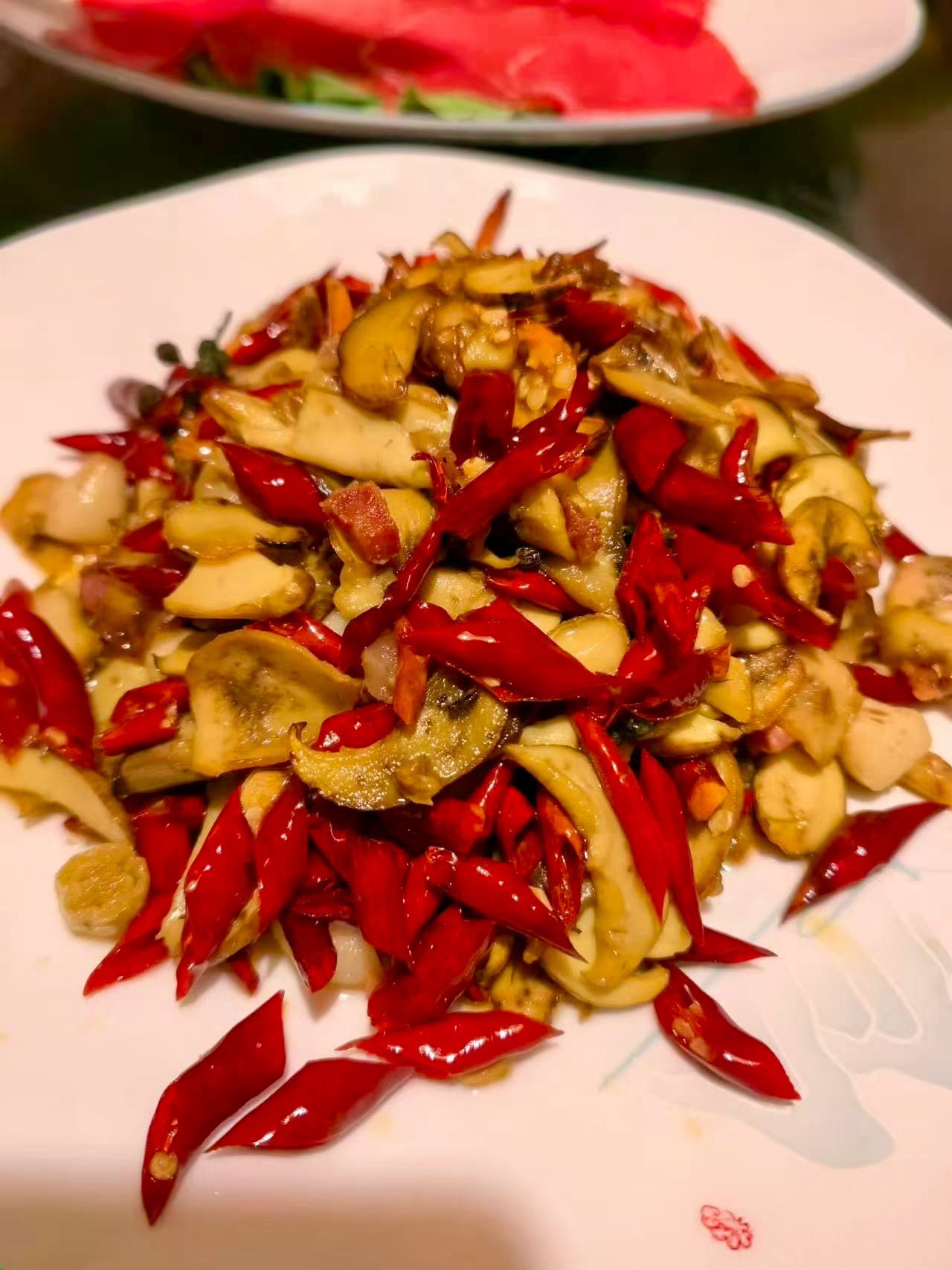
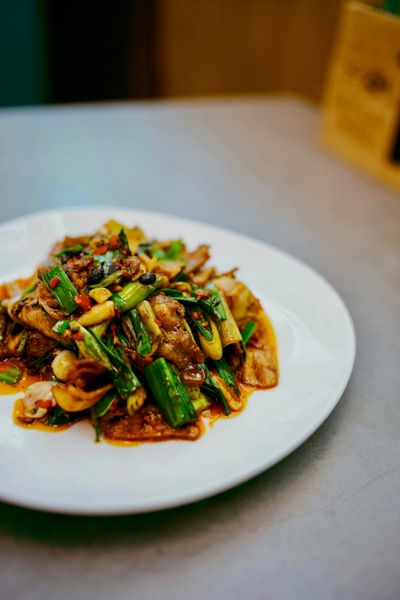
Stir-fried jianshouqing with pork and chili peppers. Credit: RED 9938854591; 255236818
Beyond jianshouqing, my aunt frequently cooks green russulas, black boletes, termite mushrooms, broom mushrooms, chanterelles, and ganbajun. Mushroom-loving Yunnan locals can identify many species simply by their aroma.
Sometimes friends return from the mountains carrying baskets filled with mushrooms, including species whose names nobody can identify with certainty. At that point, the group’s confidence in the collector’s expertise becomes very important. Even then, everyone will gather around the basket to inspect the harvest, separating unfamiliar specimens for further discussion.
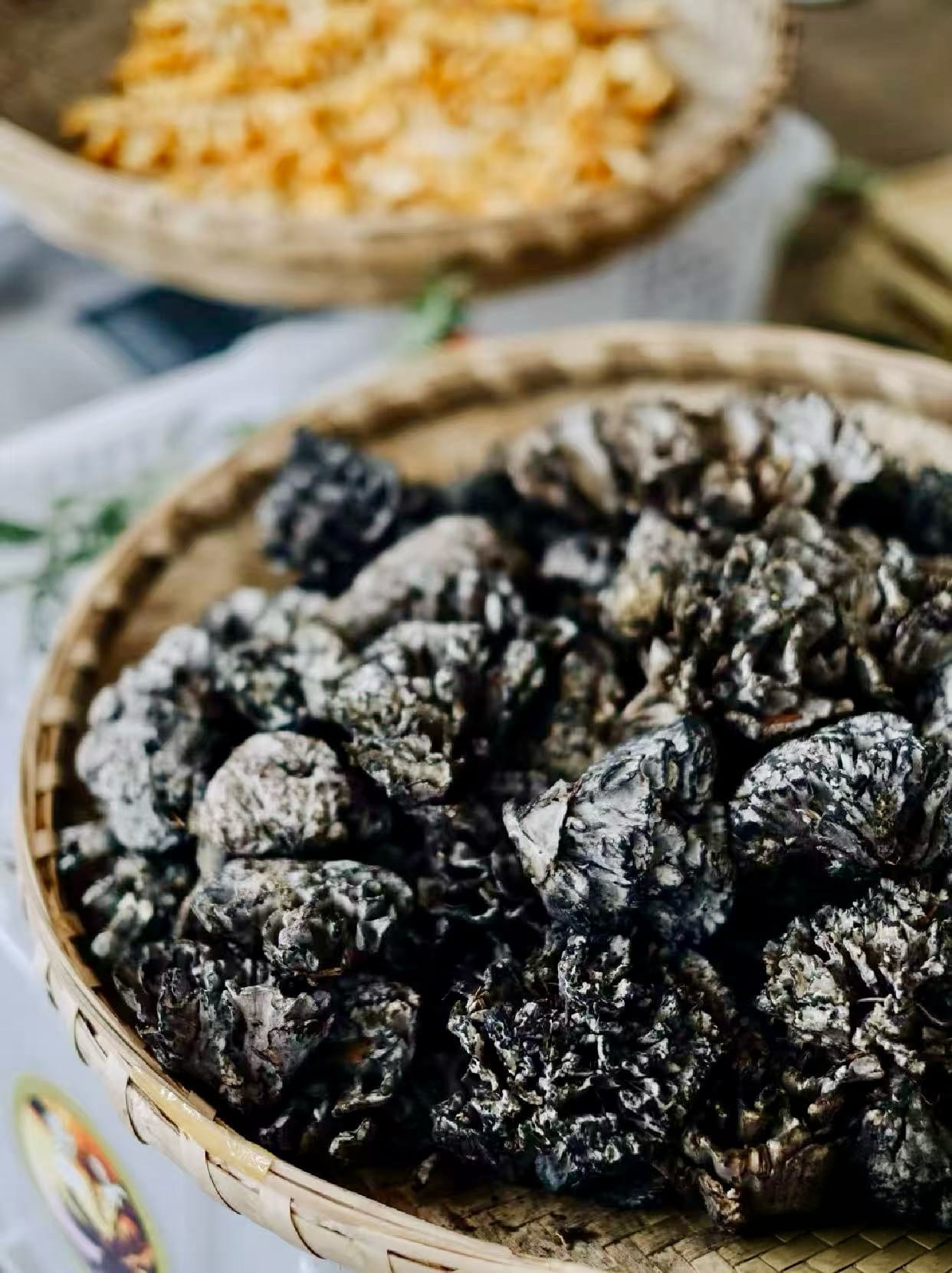
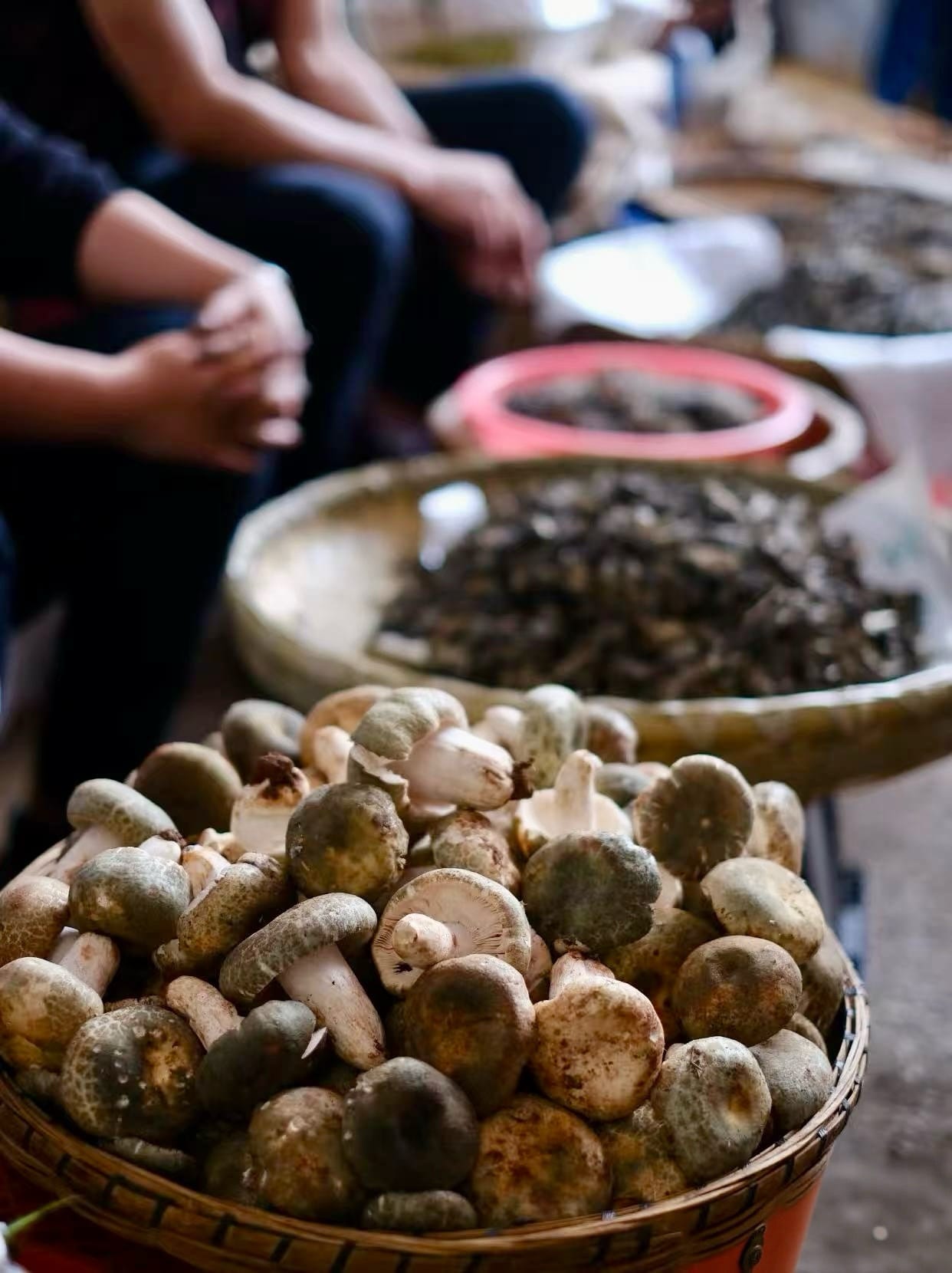
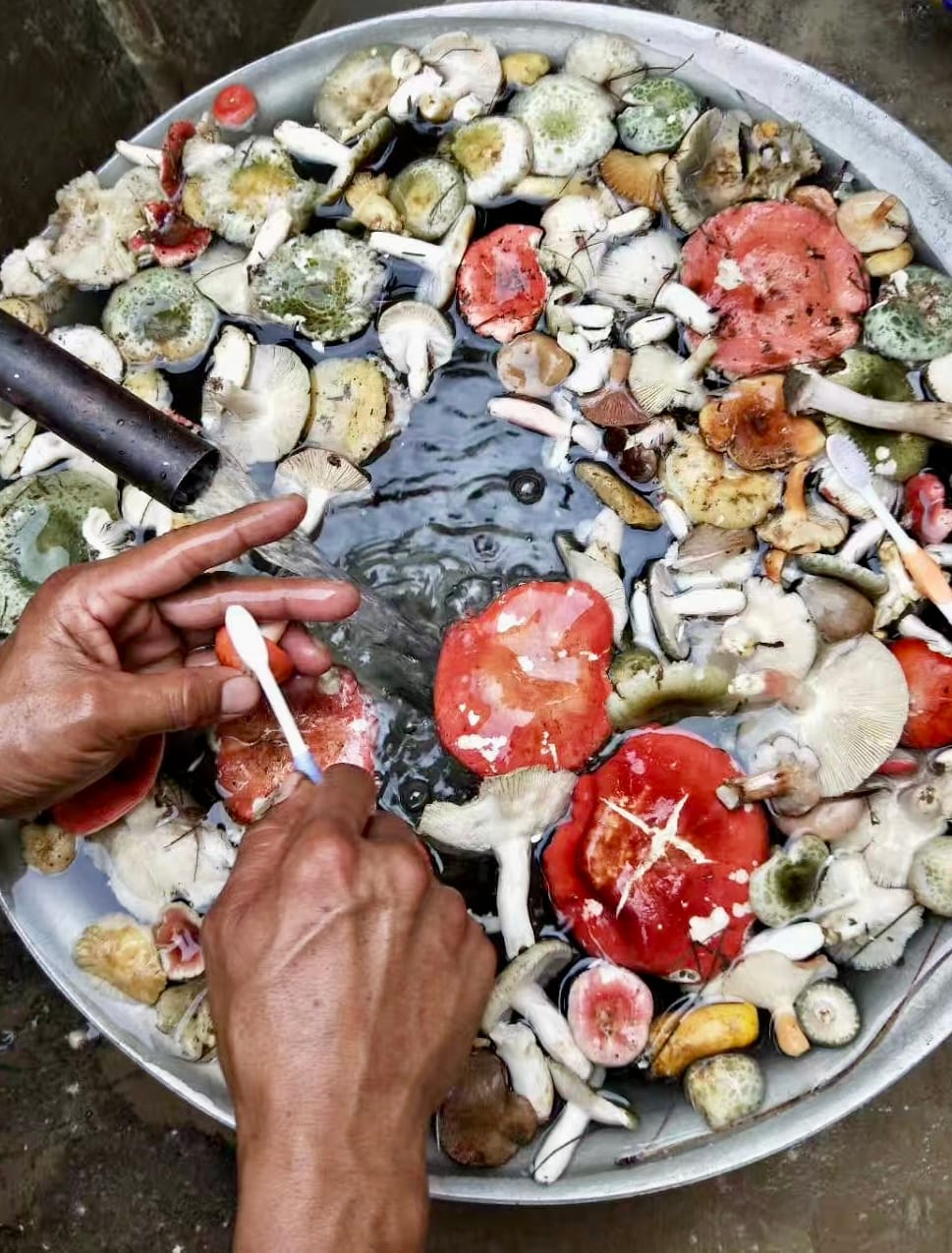
It is quite common for people to go to the mountains to collect mushrooms themselves, but being able to identify the species and making sure if they are safe to eat, depends heavily on the collectors’ expertise. Credit: RED chimido
Despite Yunnan’s reputation for eating poisonous mushrooms, people approach them with considerable caution.
The person doing the cooking matters. The most basic qualification is how many times they have successfully cooked jianshouqing before, along with their ability to distinguish edible mushrooms from dangerous lookalikes. As a result, locals rarely cook mushrooms for outsiders, and they generally avoid eating unfamiliar species.
When it comes to mushroom foraging, however, the Yi people are widely regarded as the experts.
 Snout & Seek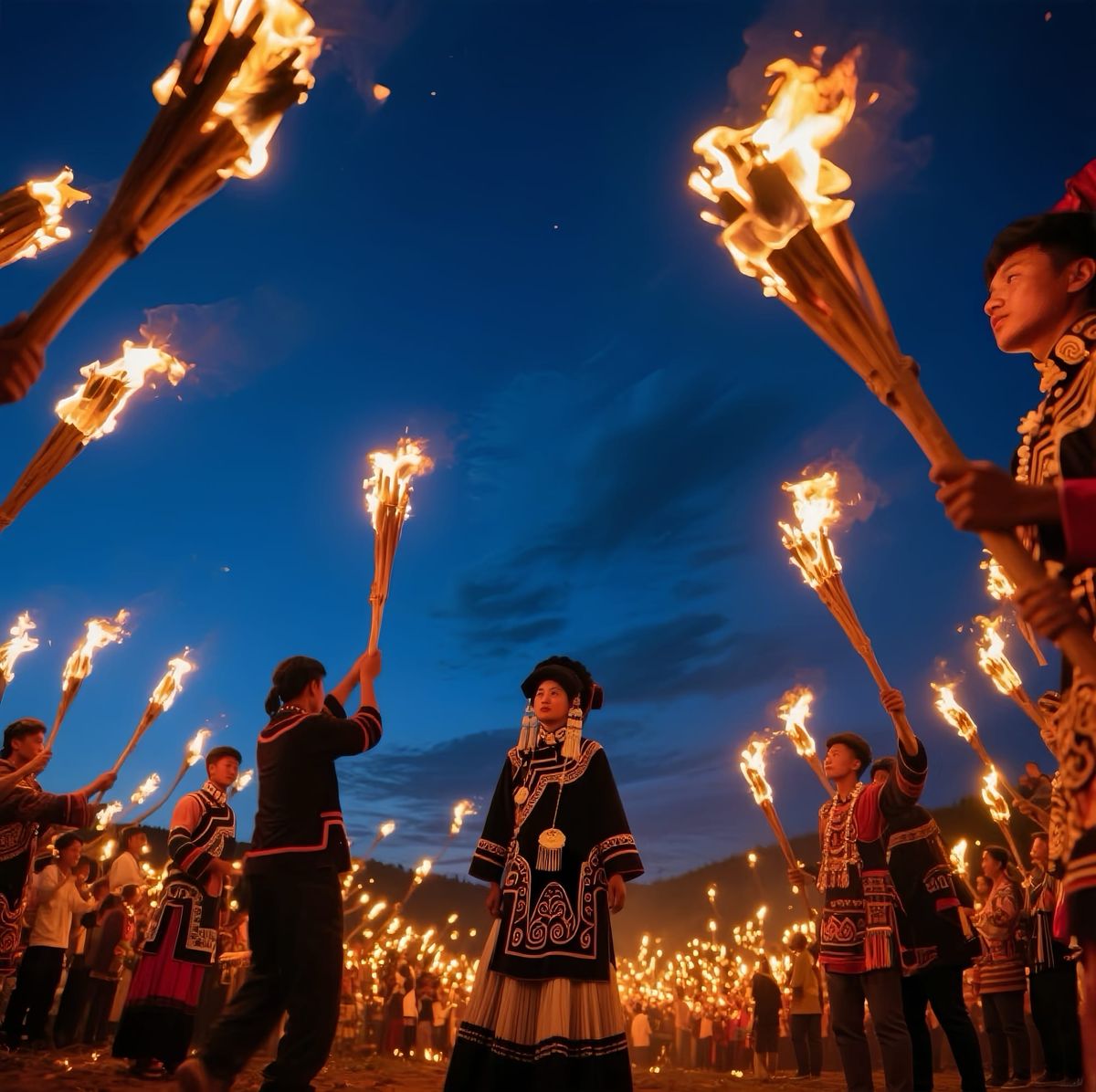
For generations, they have lived close to the mountains and accumulated deep knowledge of the landscape. Experienced elders can estimate the coming mushroom harvest simply by observing the amount of rainfall. They know secret mushroom patches that reliably produce year after year, provided the underground mycelium remains undisturbed.
My aunt joins her Yi friends on these foraging trips every year. To her, mushroom hunting is more than gathering food. It is a seasonal pilgrimage filled with anticipation, romance, and a deep connection to the rhythms of nature. More often than not, they return empty-handed. Yet every journey begins with the same sense of excitement and possibility.
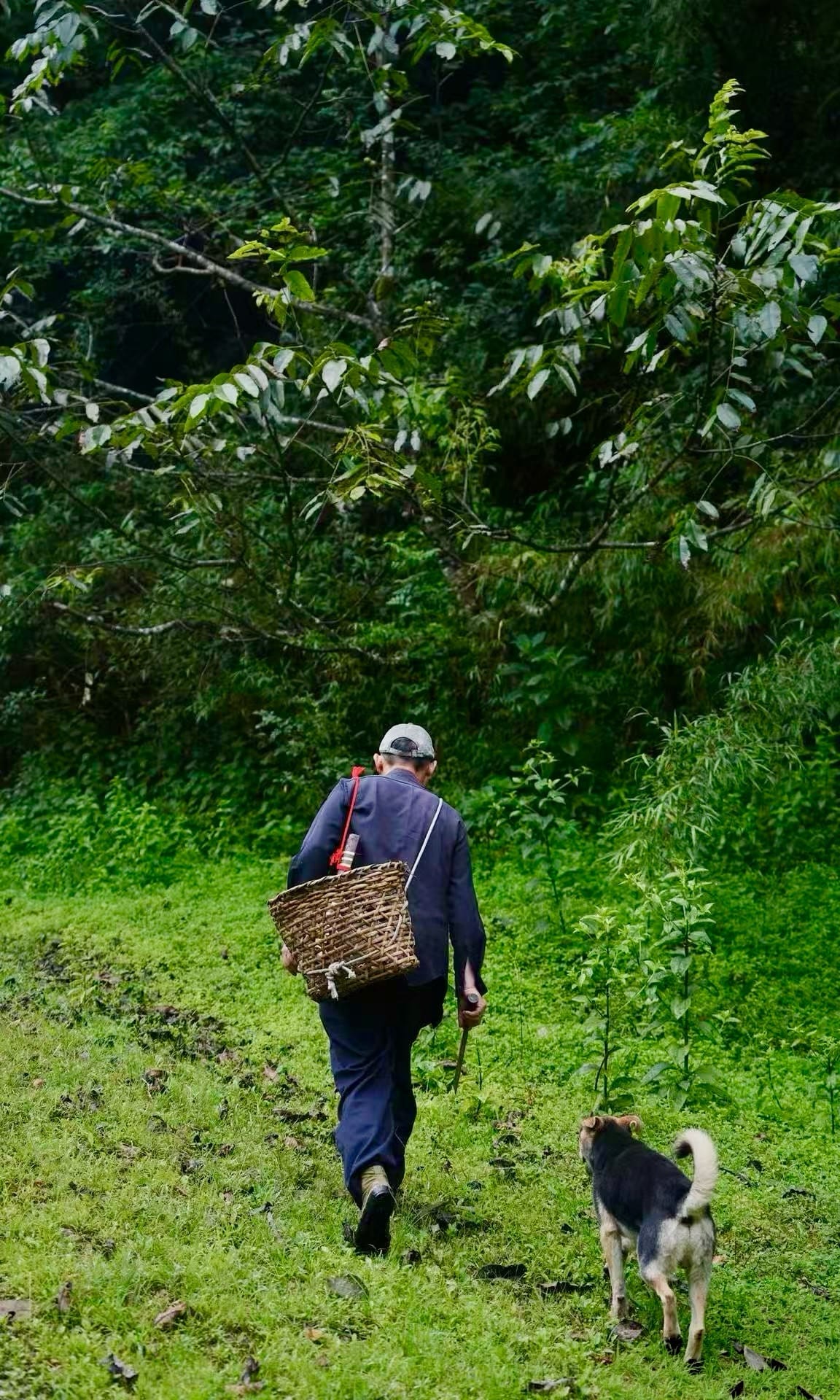
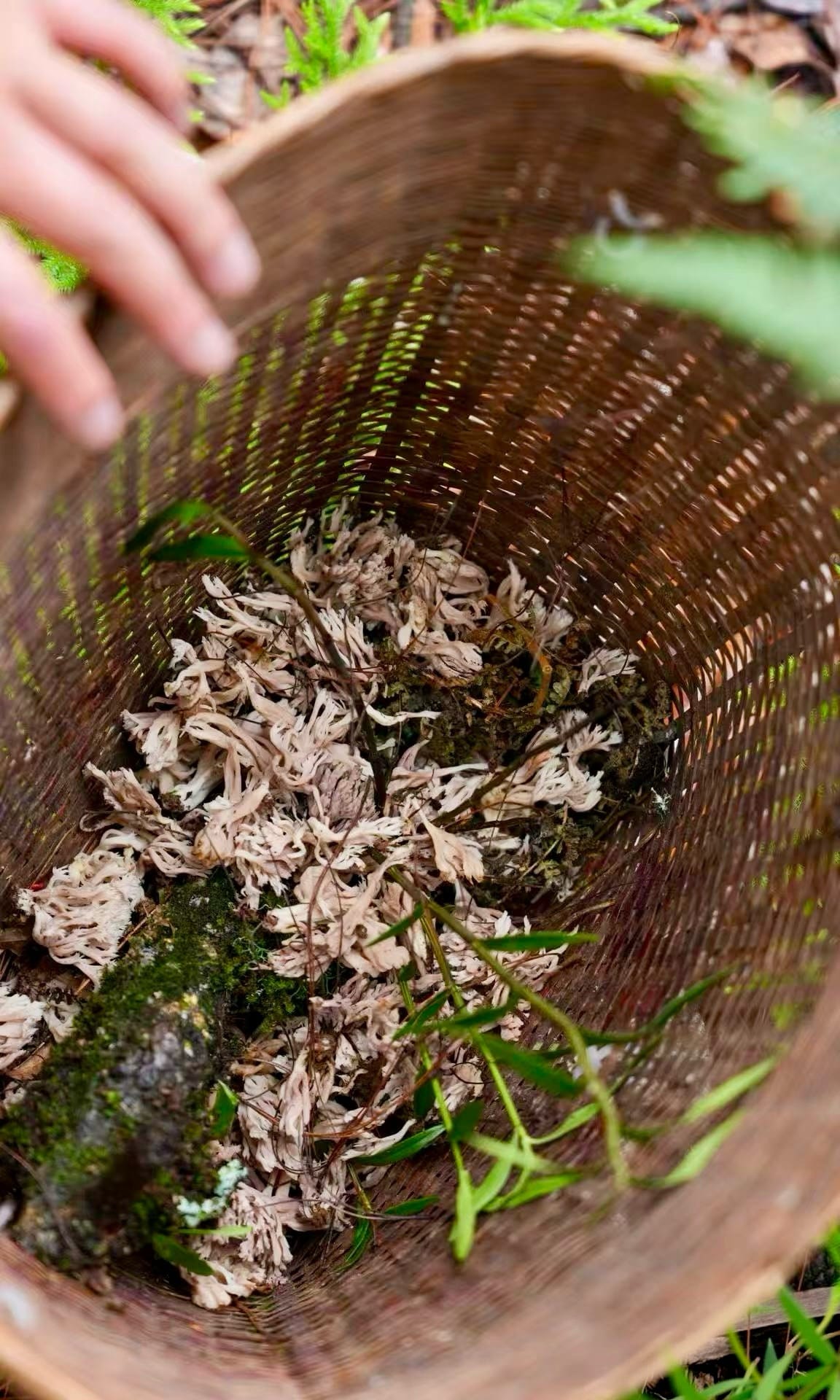
Mushroom hunting in Tengchong, Yunnan, with coral fungi on the right in the basket. Locals also love calling it “broom mushroom”. Credit: RED 923707126
Appendix: Central Yunnan Mushrooms and Our Family’s Favorite Ways to Eat Them
Jianshouqing (见手青)
Stir-fried over high heat with garlic and fresh chili peppers, producing an intense earthy aroma and rich umami flavor.
Leftover jianshouqing is also excellent in fried rice.
In our family, properly cooked jianshouqing is considered safe. The challenge is that “properly cooked” is a matter of experience. Undercooked mushrooms can be toxic, but overcooking them ruins both texture and flavor.
This is why restaurants willing to serve jianshouqing generally know what they are doing.
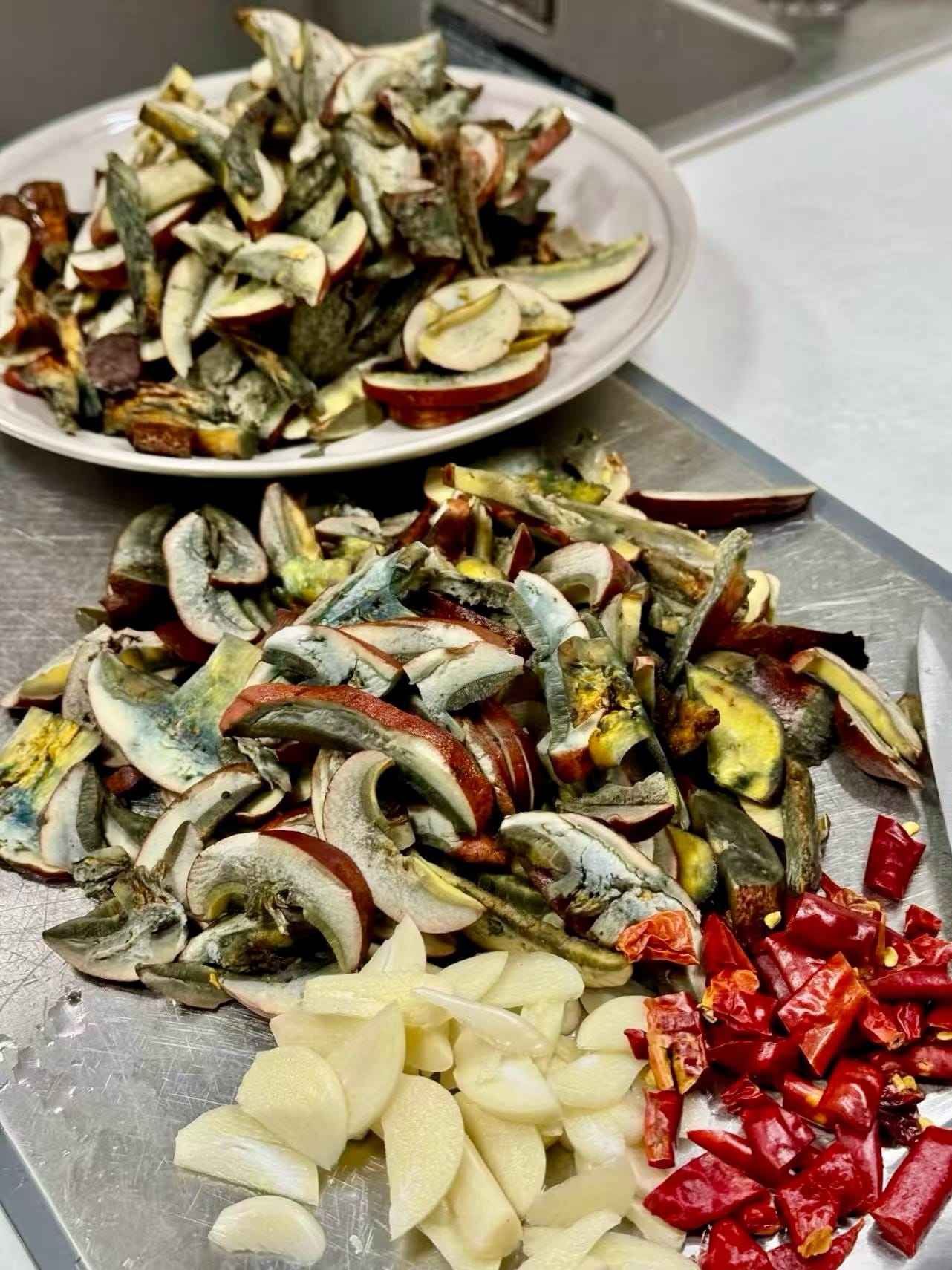
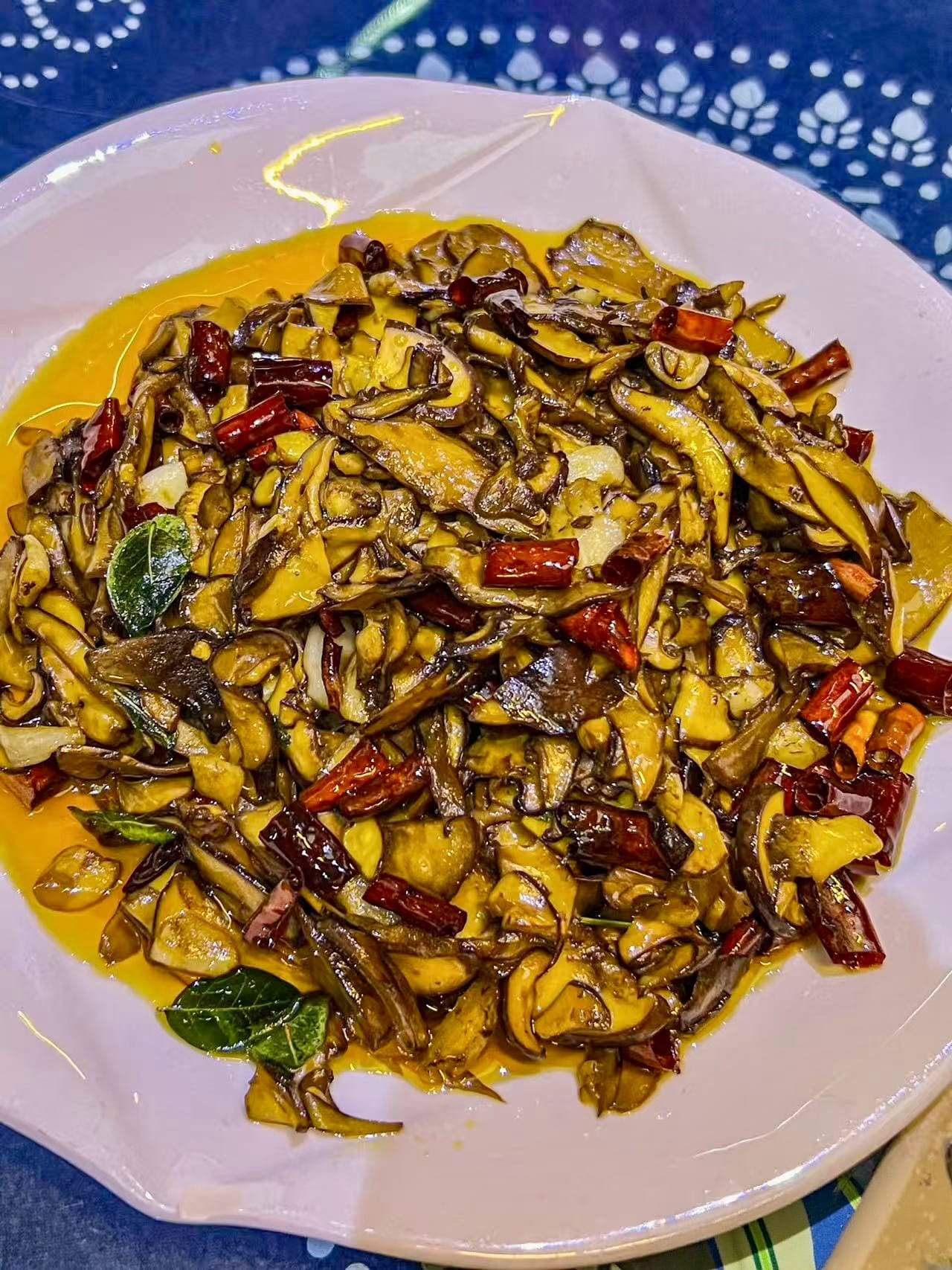
Jianshouqing before and after cooking. Credit: RED 20190025; 5294904886
Ganbajun (干巴菌)
Unique to central Yunnan, ganbajun possesses one of the most distinctive flavors of any wild mushroom. It is often the most expensive mushroom of the season, commanding higher prices than truffles and matsutake.
Chinese food writer and director Chen Xiaoqing once called it “the most delicious wild mushroom in the world,” a sentiment many people in Yuxi wholeheartedly share.
The best preparation is a simple stir-fry with garlic and small bird’s-eye chilies. Cooked until slightly dry and intensely fragrant, it becomes irresistible over rice. Fried rice made with ganbajun is even better.
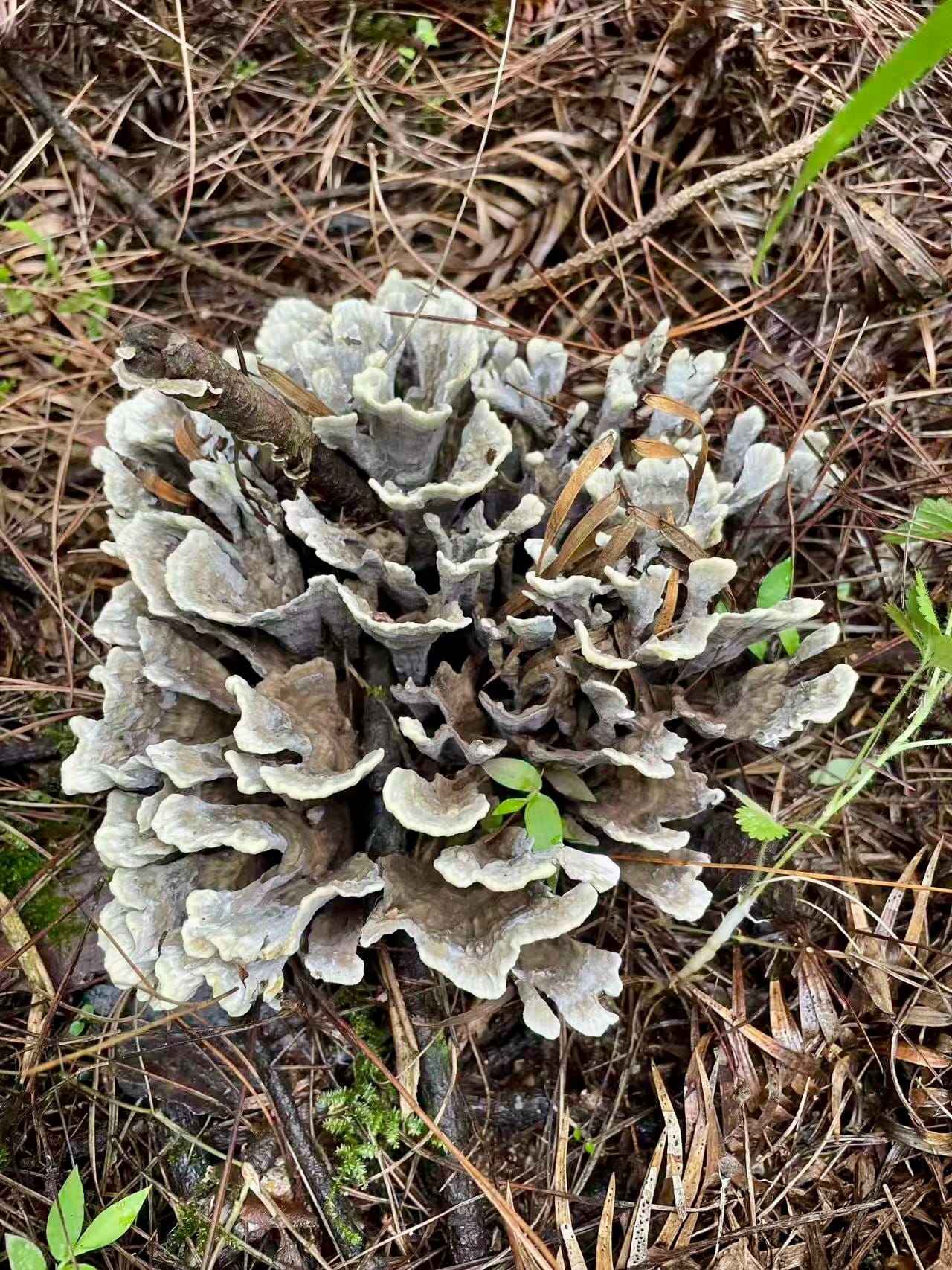
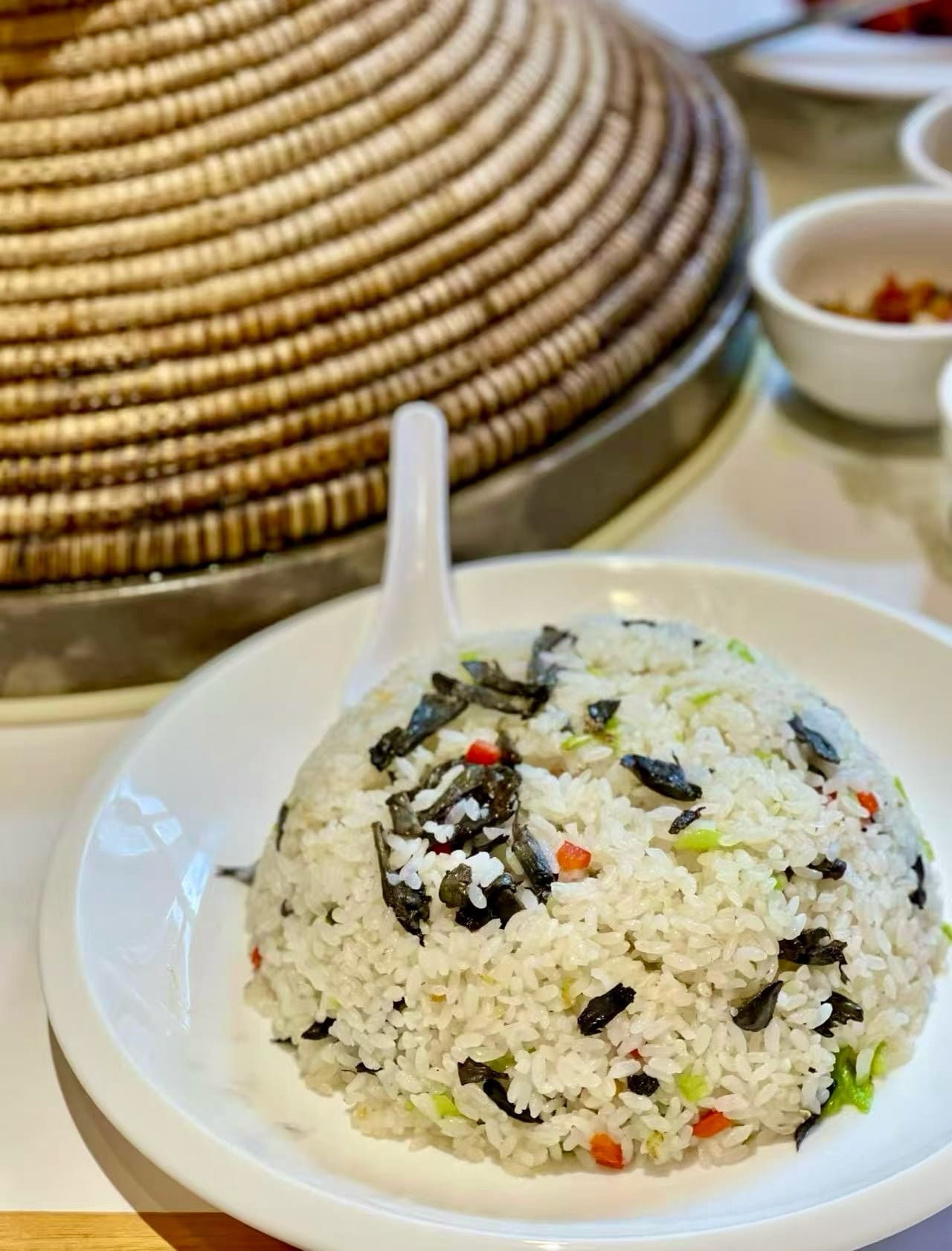
Ganbajun in its wild form and stir-fried rice with ganbanjun. Credit: RED 240659645; 262582848
Qingtoujun (青头菌)
Another mushroom that can cause poisoning if improperly identified.
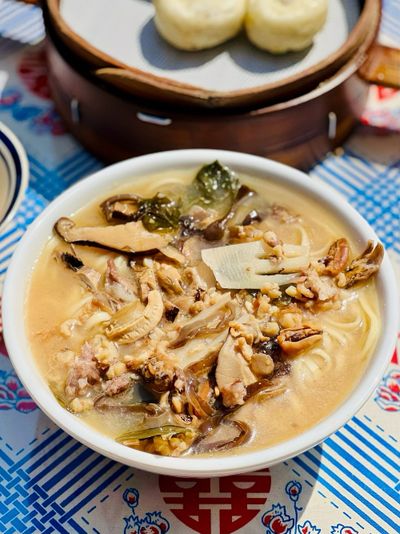
While most people stir-fry it, our family prefers it in soup. Once the water comes to a boil, the mushrooms are added with just a little garlic. The resulting broth is clear, delicate, and deeply flavorful.
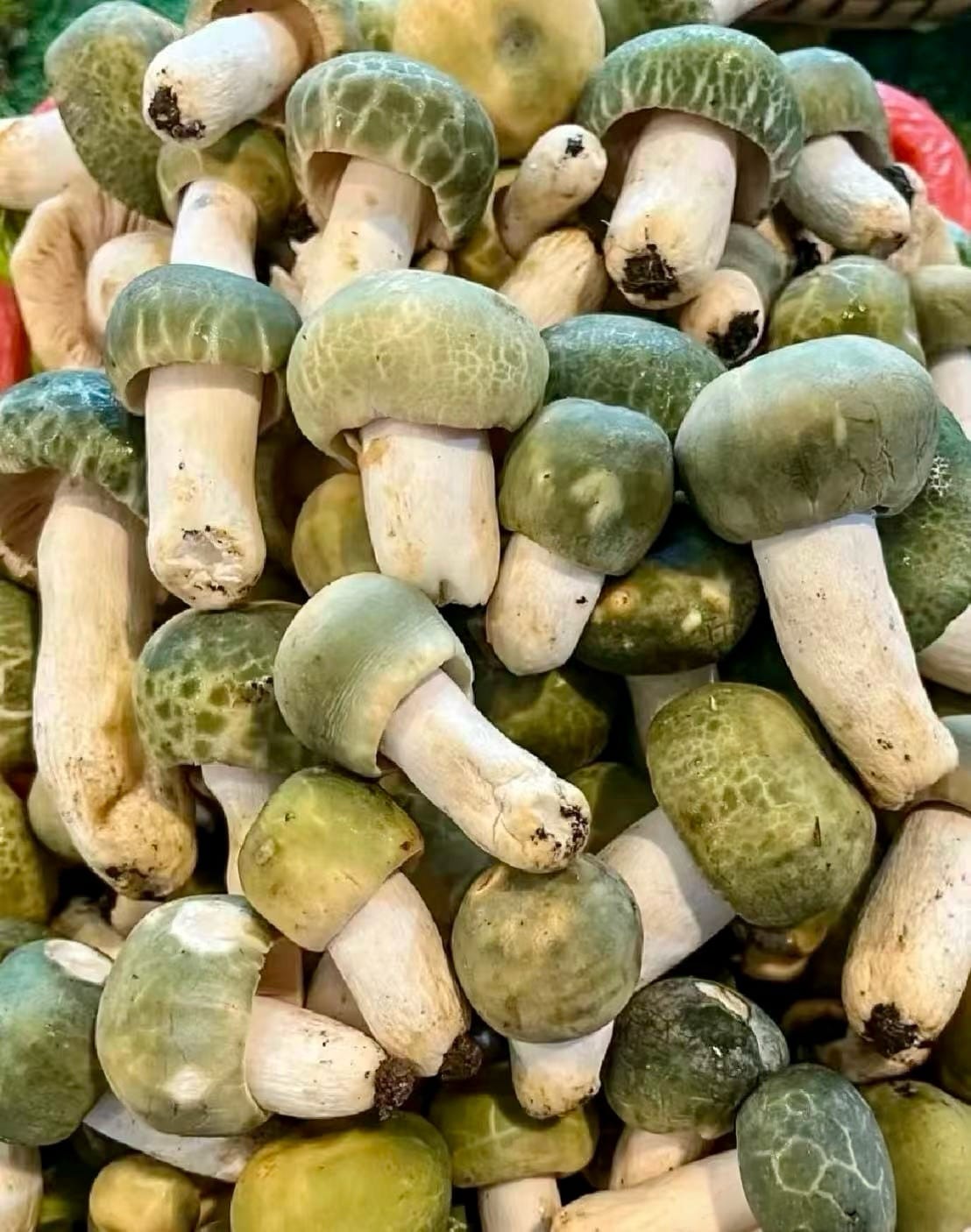
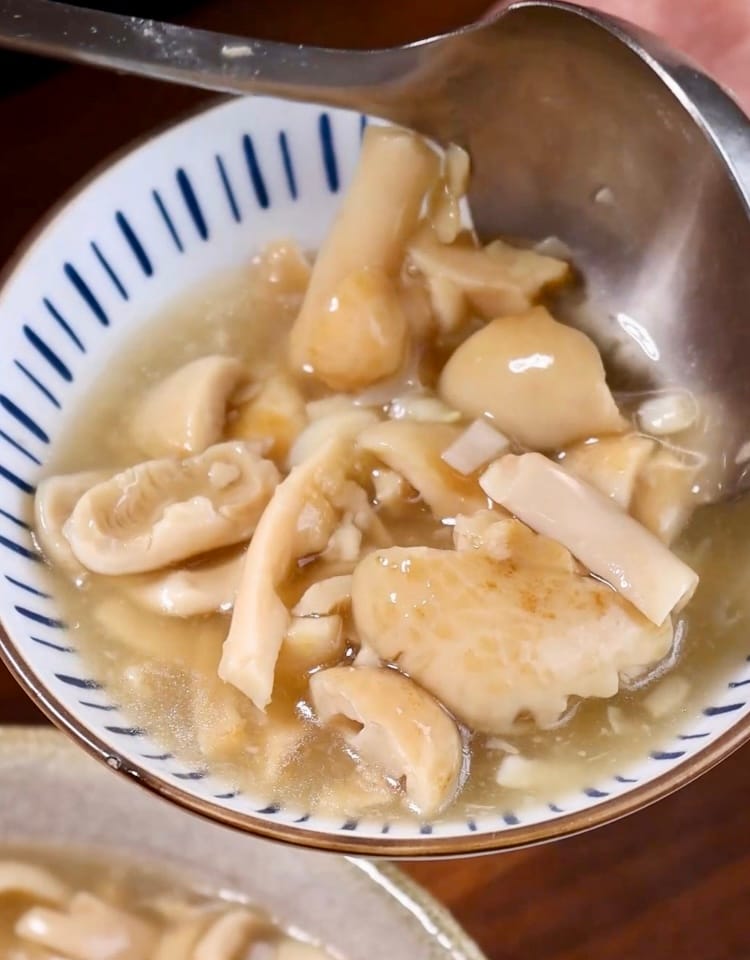
Qingtoujun in its original form and cooked in soup. Credit: RED Winter9991010
Chanterelle (鸡油菌, otherwise known as Jiyoujun – Chicken fat fungi)
Named for its rich aroma reminiscent of chicken fat, yet never greasy.
This is my favorite mushroom for soups. It produces remarkable depth of flavor without requiring any added animal fat.
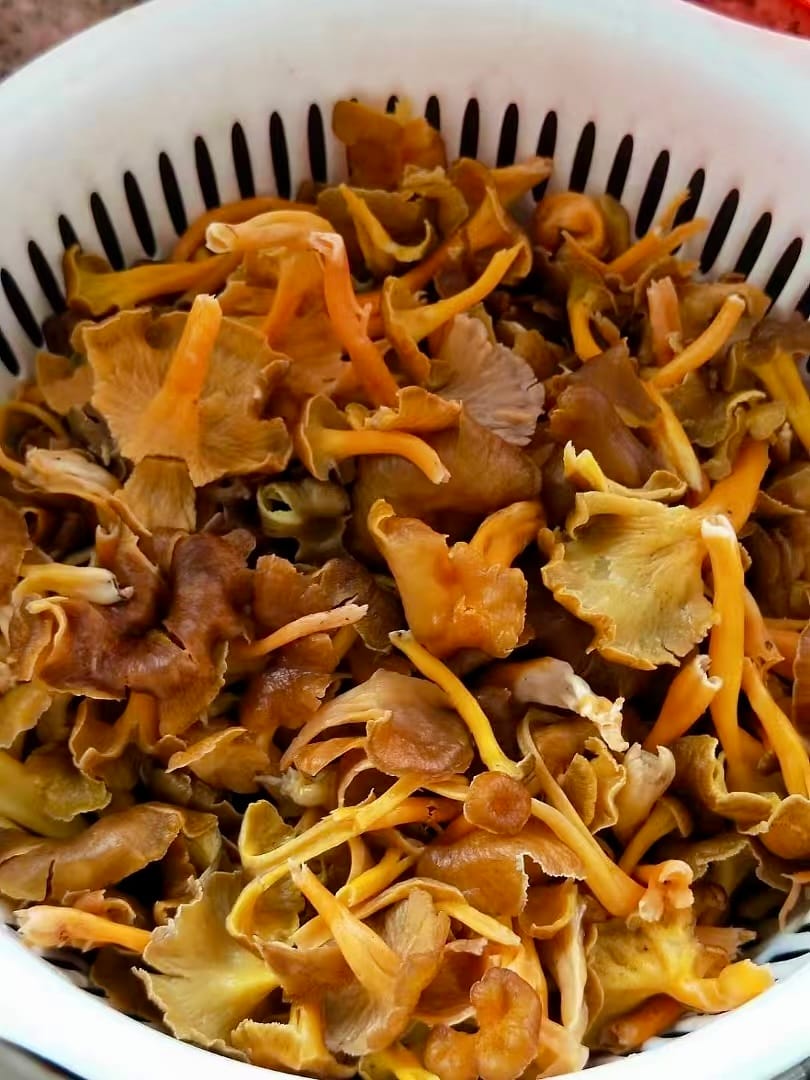
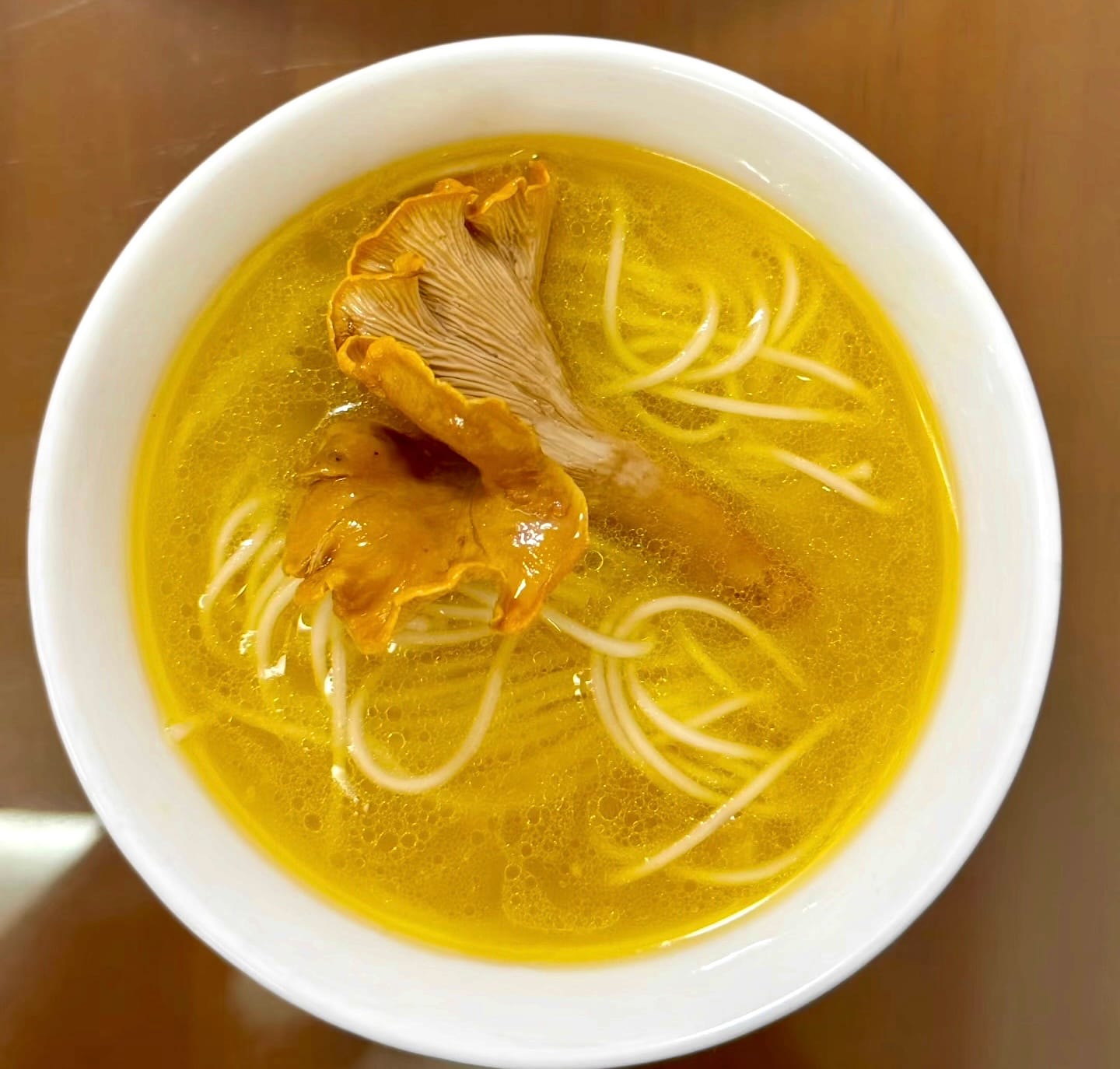
Fresh chanterelle and cooked chanterelle in soup. Credit: RED102693415
Jizong (鸡枞菌)
One of Yunnan’s most prized and expensive mushrooms.
Most people use it in soups, but our family prefers to deep-fry it and preserve it in jars. Throughout the summer, it becomes the perfect accompaniment to a simple meal.
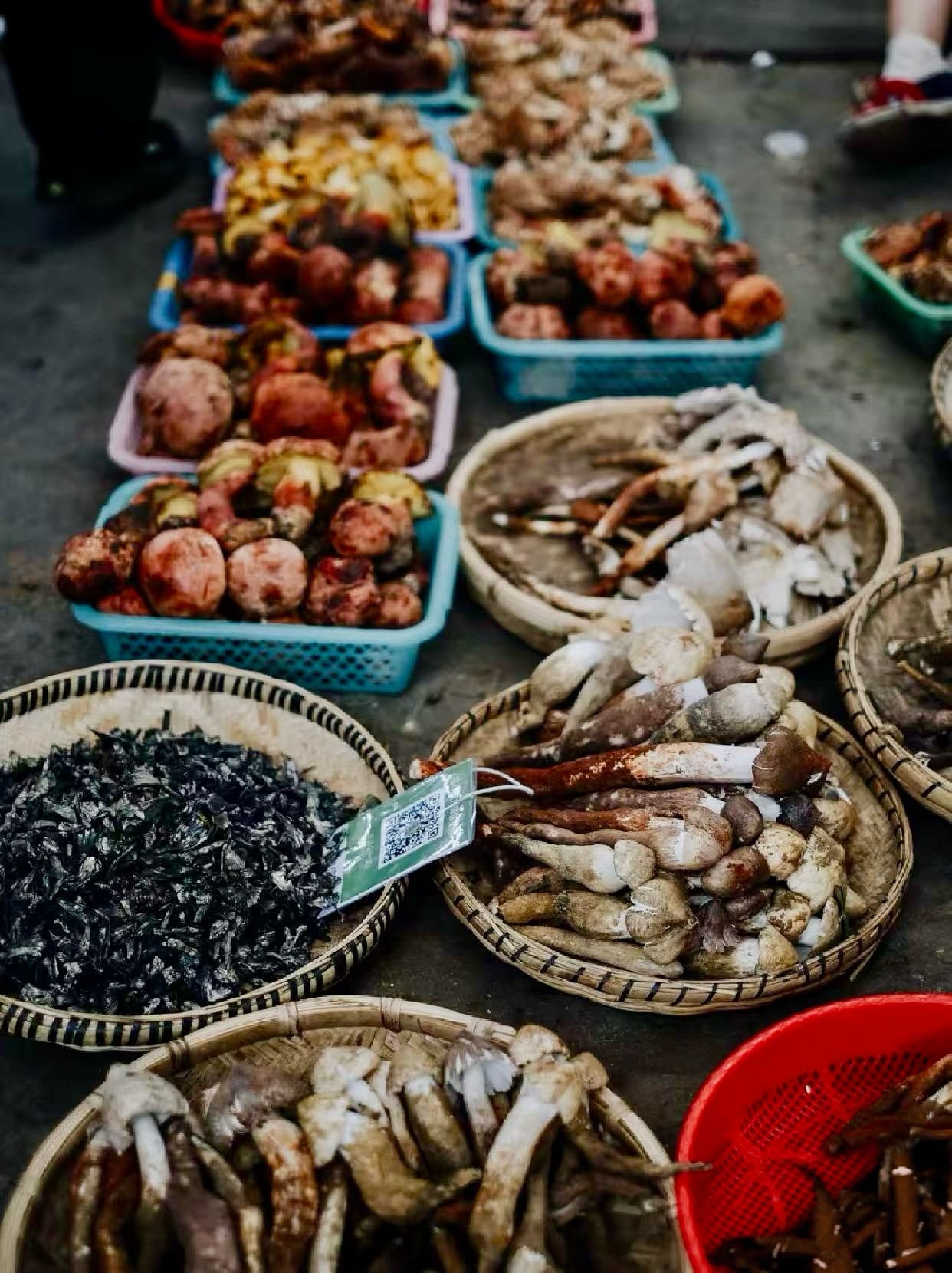
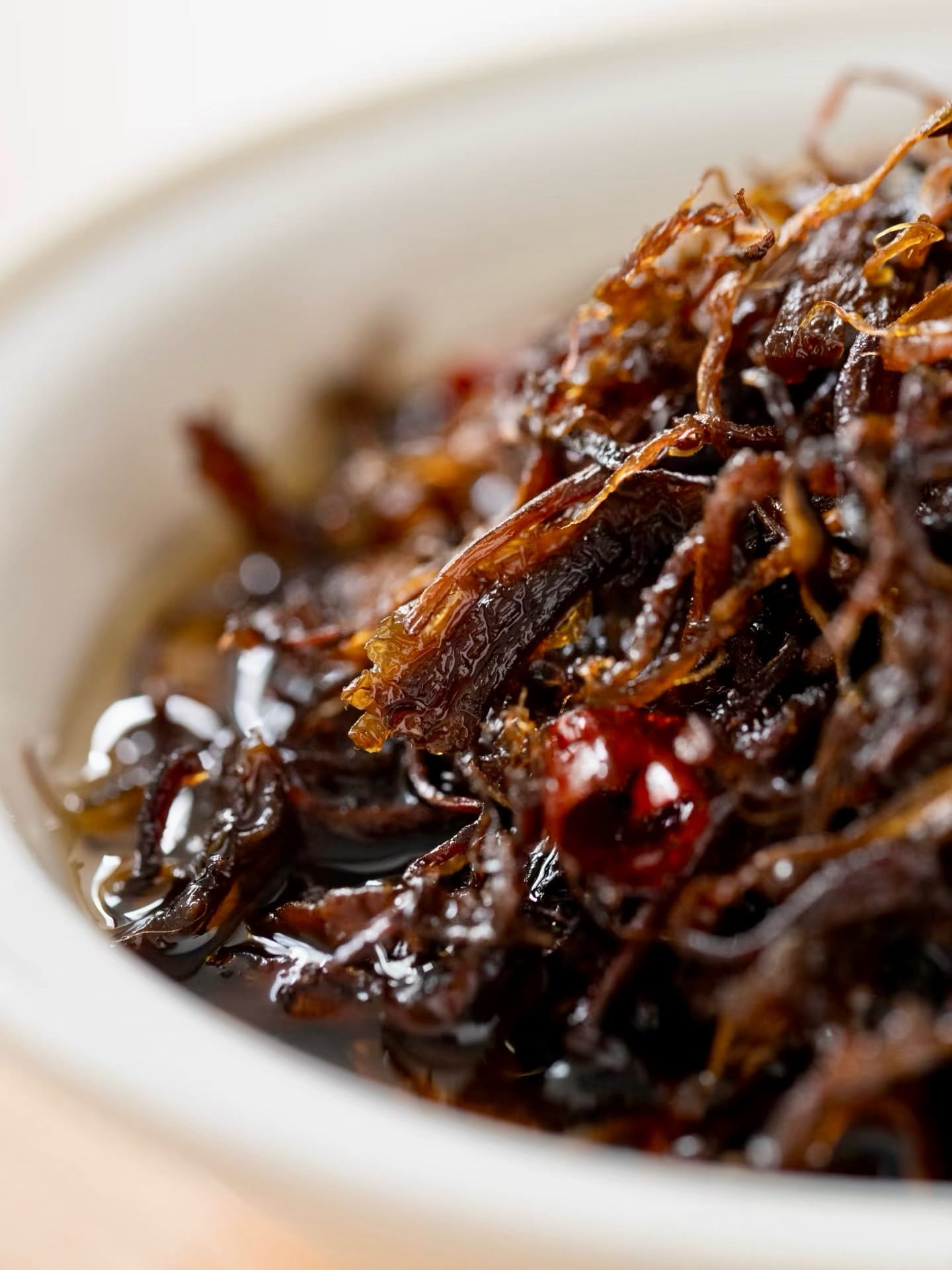
Jizongjun before and after cooking in oil. Credit: RED chimido; 7532651030
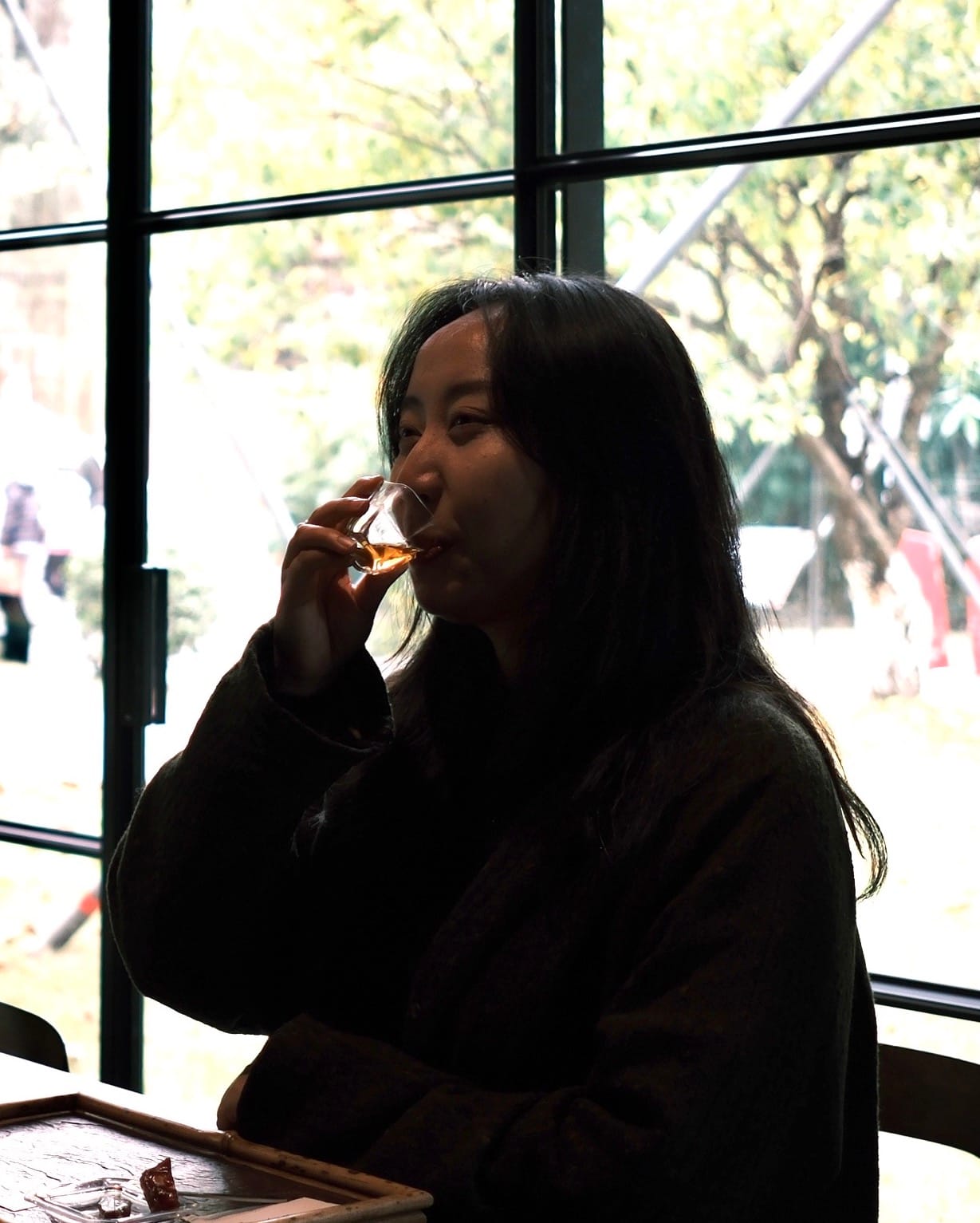
Co-founder of Snout & Seek, Hui Mu is a Yunnan native who loves hometown cuisine and local culture, Hui is currently based in Chengdu, Sichuan, engaged in food culture writing and magazine editing. Hui enjoys reading, trying new cuisines, hiking, and people-watching.
No spam, no sharing to third party. Only you and me.


Member discussion