Giacomo Lorandi: “I am as concerned about fermentation as I am in love with it”
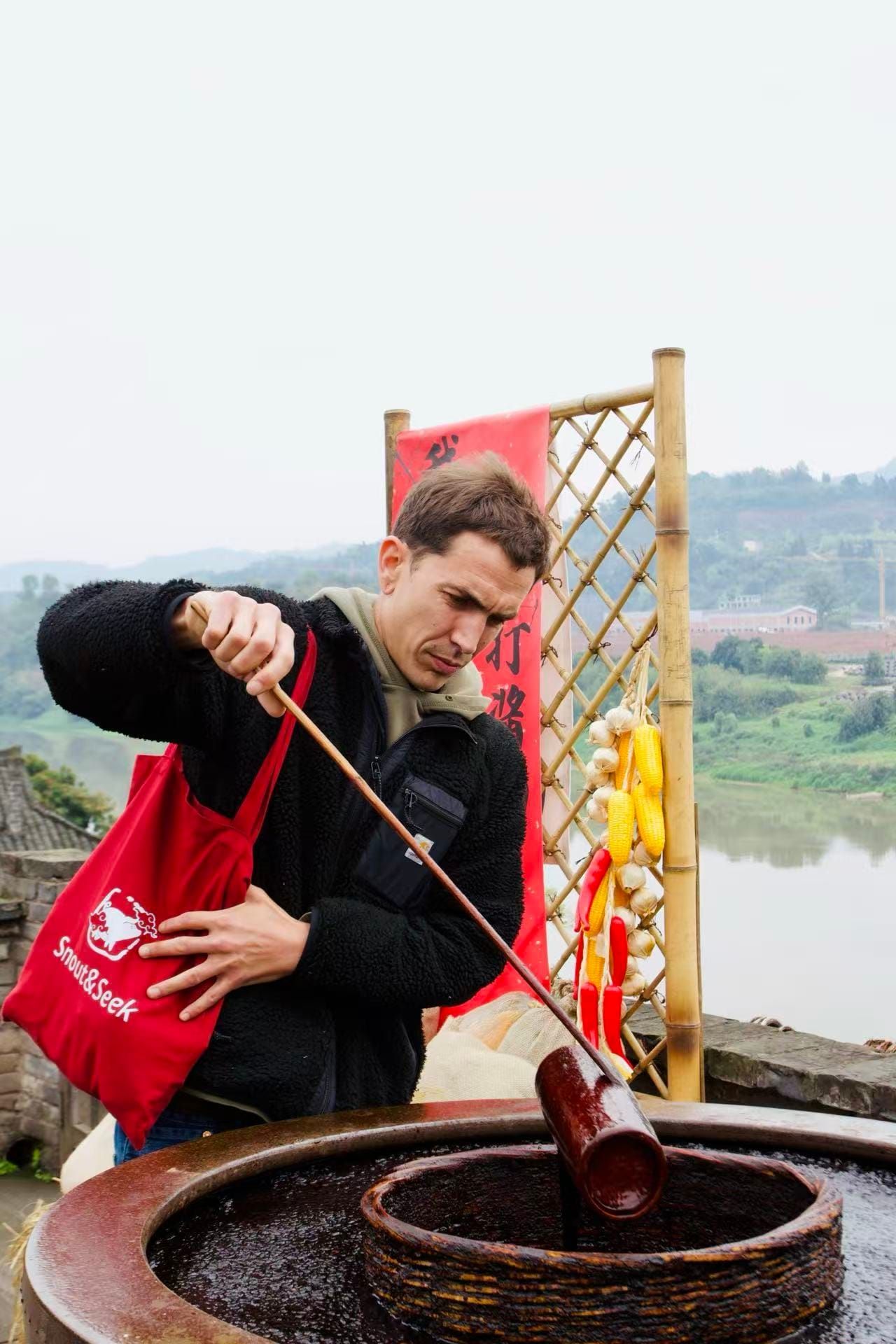
One of the best things about doing the Sichuan Fermentation Experience is meeting people from different backgrounds. Most of the time, we are reminded that the world is not so big or different after all. Even though we may look different, speak different languages, and eat differently, at our core we share more than what separates us. And sometimes we meet that rare person that brings both worlds together - an incredible breadth of diversity, while being able to draw on and share familiar experiences.
Giacomo is one of those rare ones.
An Italian that Makes Soy Sauce
As much as I am obsessed with providing people on our journeys with surprises along the way, Giacomo surprised us first. Although most of the people we meet are professional chefs, Giacomo came to us from a very different background. He is a researcher at heart who found his way into fermentation.
His journey started while he was at university. Giacomo was working as a bartender and became obsessed with making the ingredients he served every night, from scratch. That eventually led him to looking into ginger beer, and ginger beer led him down the rabbit hole of fermentation. Until then, he had mainly associated fermentation with alcohol production in wine and beer. He started reading, experimenting at home, taking courses, and eventually completed a three-month internship at one of the first Italian companies producing miso and soy sauce.
As Giacomo puts it,
“It all happened naturally, much like most fermentation processes.”
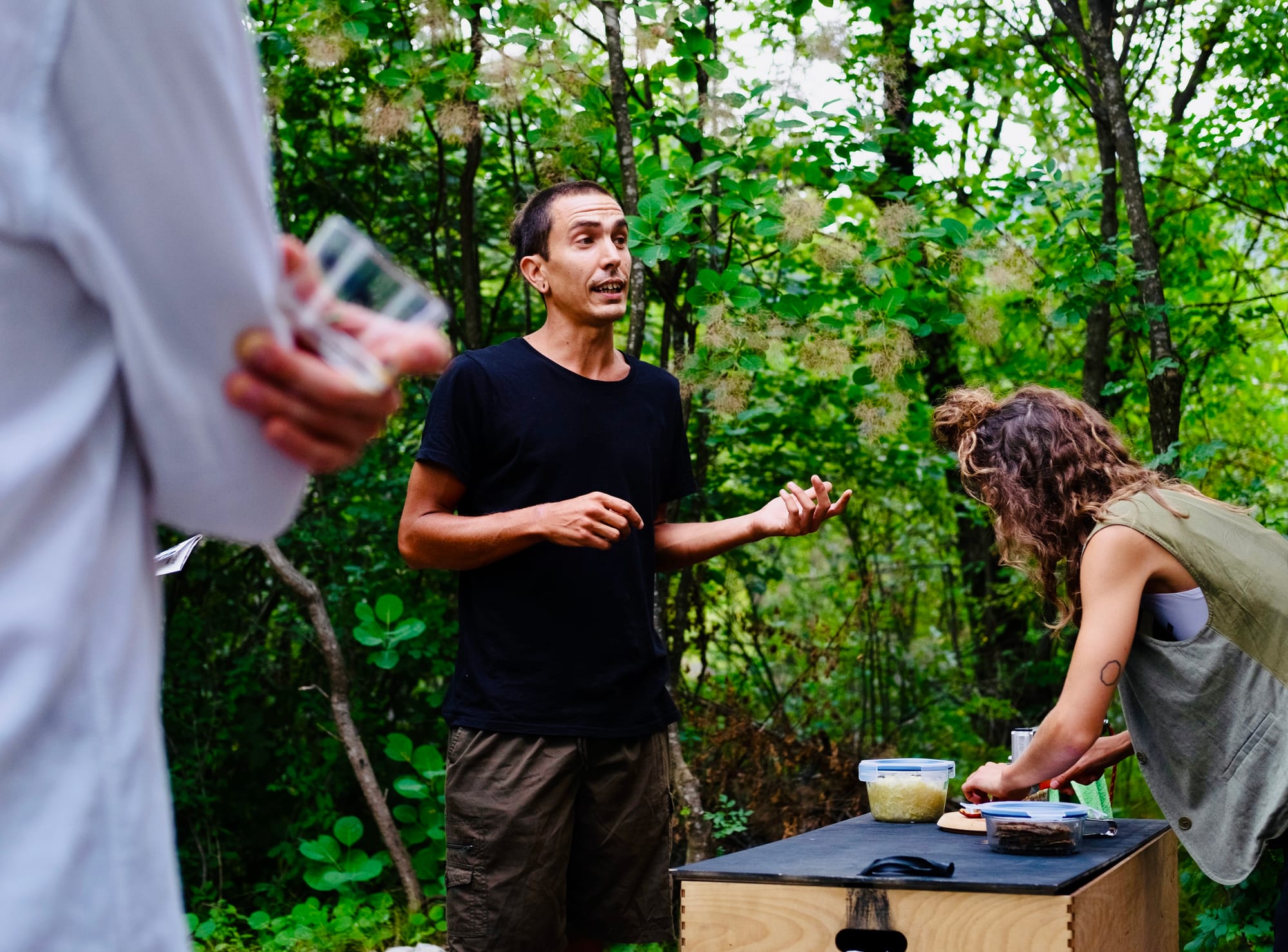
It is not generally surprising when we meet people from Europe or North America who make their own wine and/or beer. They are, after all, pretty “on brand” for that part of the world. But when Giacomo mentioned that he makes his own miso and soy sauce, we were genuinely surprised, on multiple levels.
Well, first of all, why is an Italian making soy sauce in Italy in the first place?
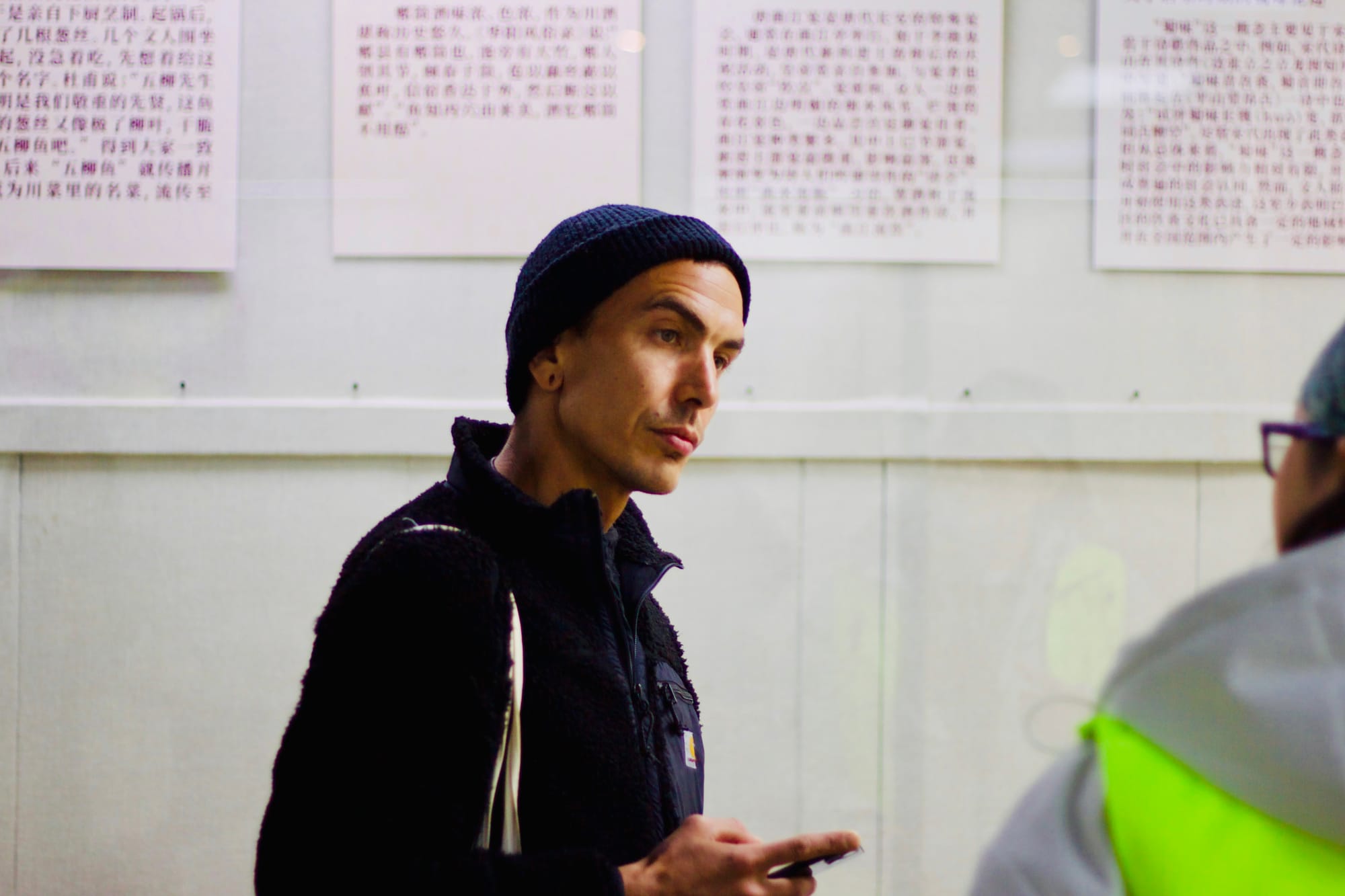
When we took Giacomo to a soy sauce factory in Sichuan that still uses traditional fermentation methods, you could tell immediately that he was in his natural habitat. From what type of flour they used and the ratio of salt, to the temperature of the soybean fermentation, he paid attention to the smallest details. He wasn’t there simply to see how soy sauce was made. He was there to compare and understand how different geographical environments and culture have an impact on fermentation.
What made the encounter even more interesting was that the curiosity here went both ways. When the shifu (master) at the soy sauce factory - who has worked there for decades - started talking with Giacomo, he was equally impressed by how much and the depth of what Giacomo already knew.
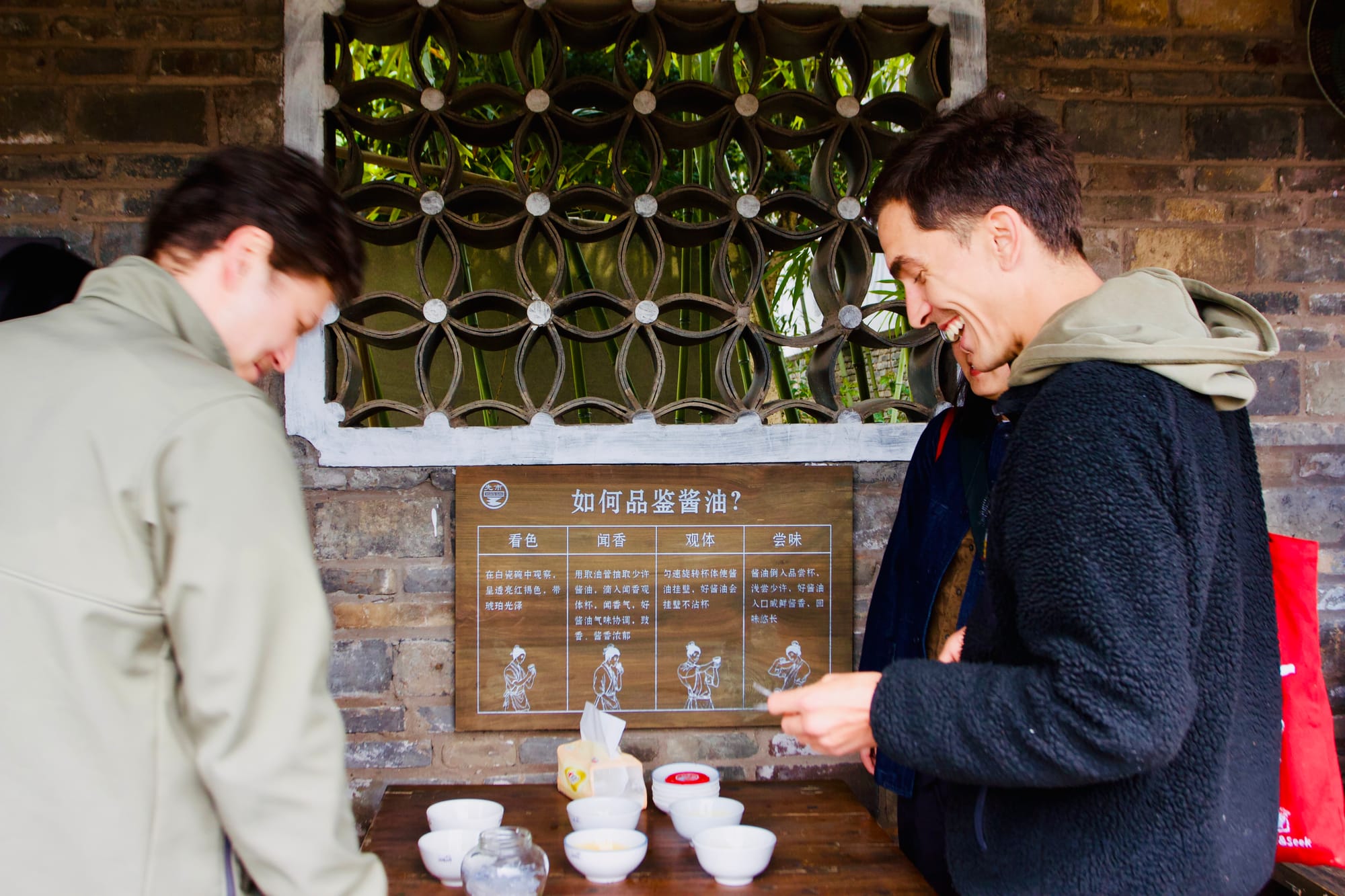
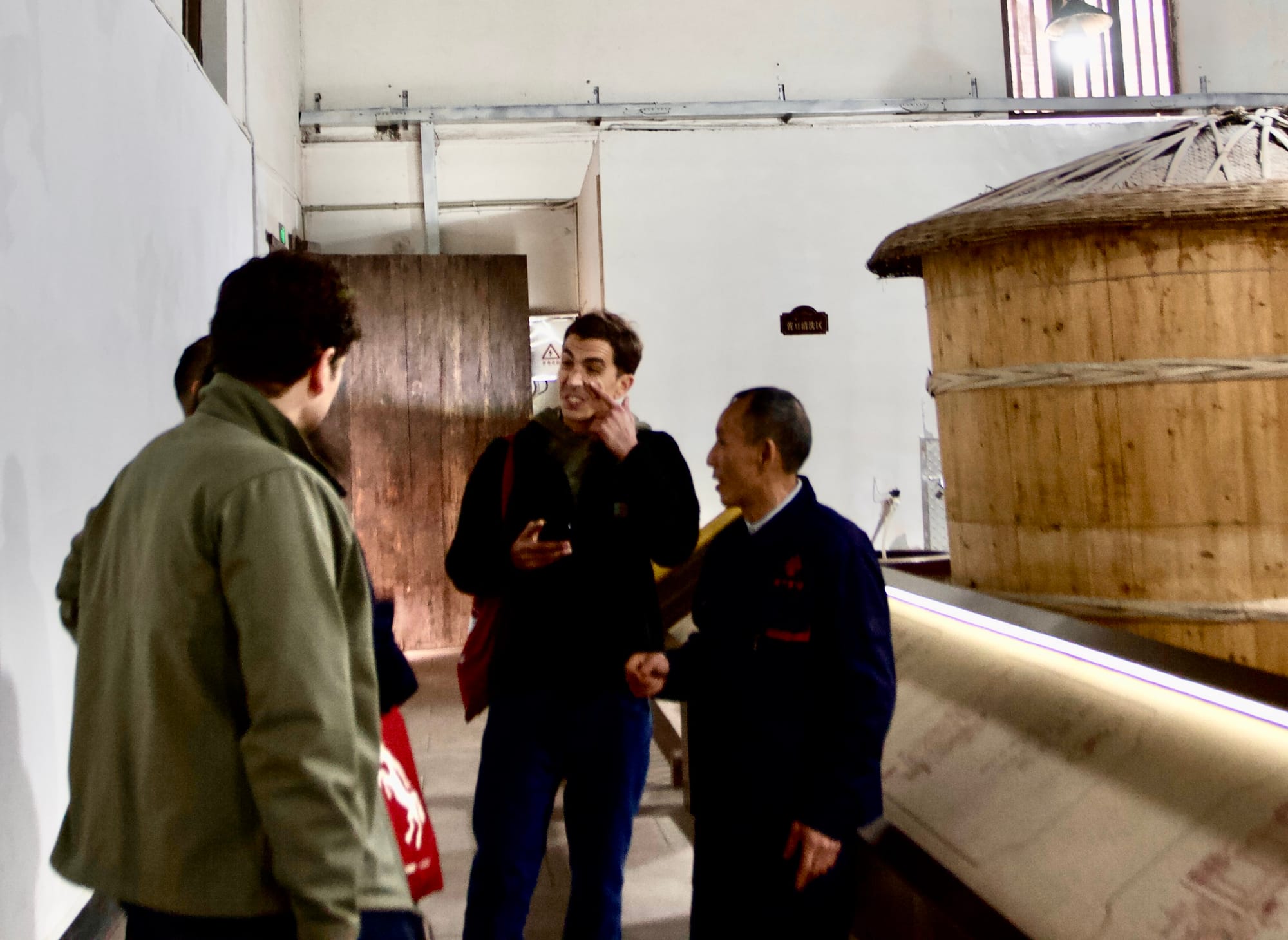
Giacomo and our team at a traditional soy sauce factory tasting soy sauce aged for different years and talking with local brewing masters.
In that moment, there was something quite special about watching an Italian fermentation researcher and a Sichuan soy sauce shifu (whom even we sometimes struggle to understand because of his thick Luzhou accent) come from completely different food cultures and somehow find a common language through fermentation.
How Giacomo “Translates” Fermentation
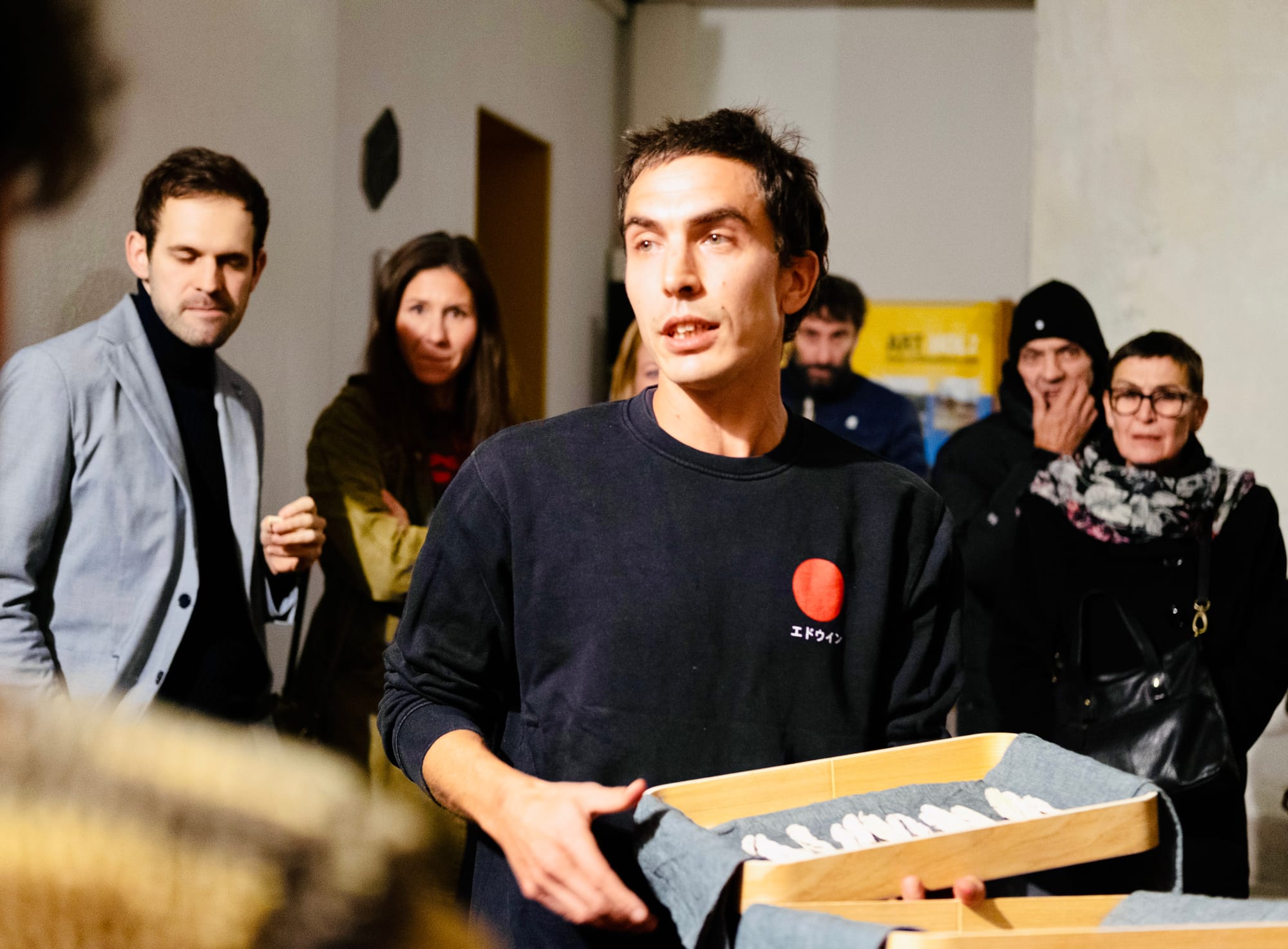
Outside this small world of people who are fascinated by fermentation, Giacomo often finds himself having to explain, and sometimes defend, the very thing he loves.
When I asked him about the biggest challenge he faces when promoting fermentation, his answer was simple:
“The fear of the unknown, of microbes, and of these invisible organisms transforming our food.”
For Giacomo, much of that fear comes from our modern obsession with sanitation. He believes that in the West, anything that isn’t “hyper-sanitized” has gradually become something to be suspicious of, creating what he calls a “general war on microbes,” including the beneficial ones that humans have lived and made food with for thousands of years.
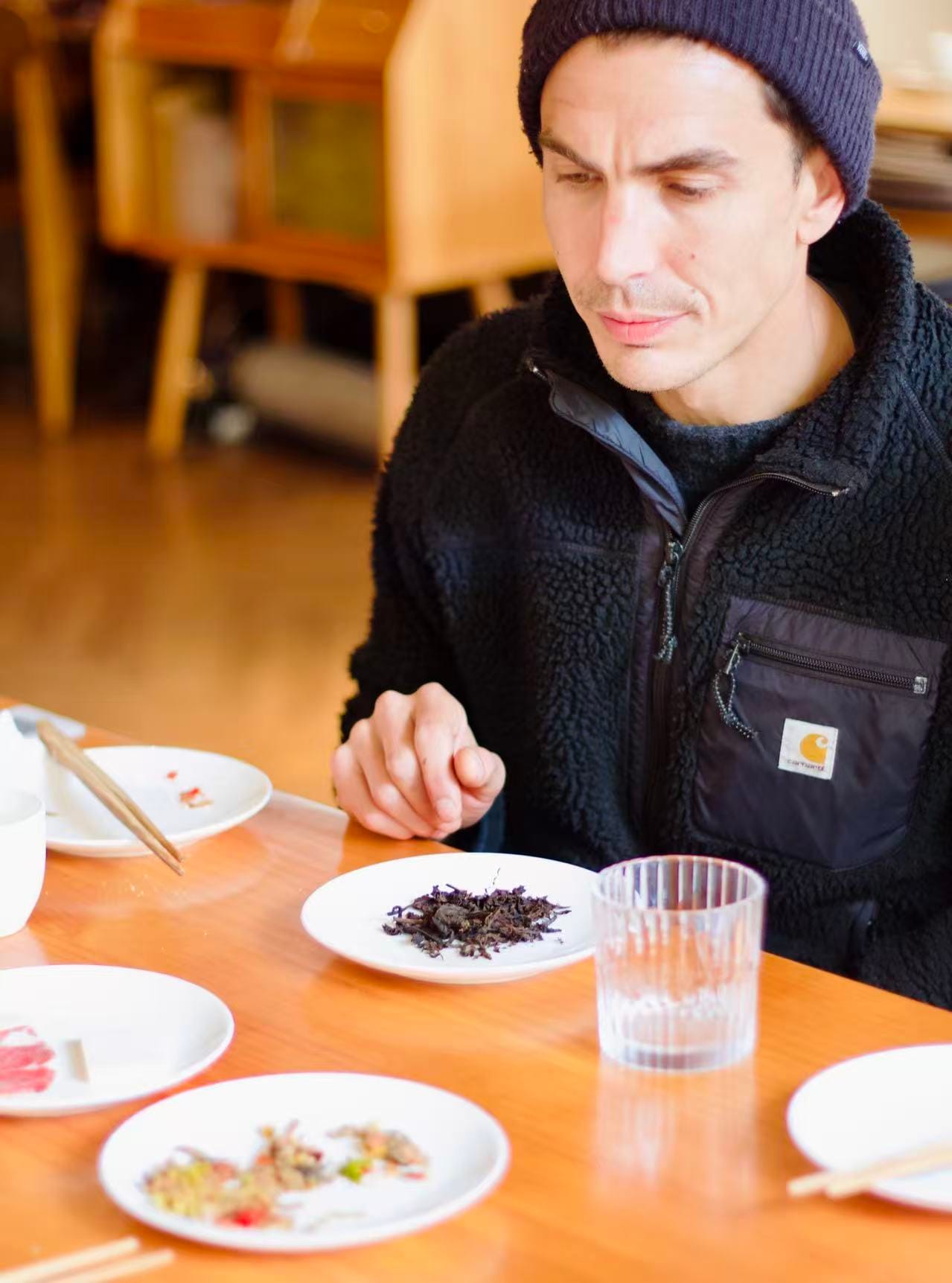
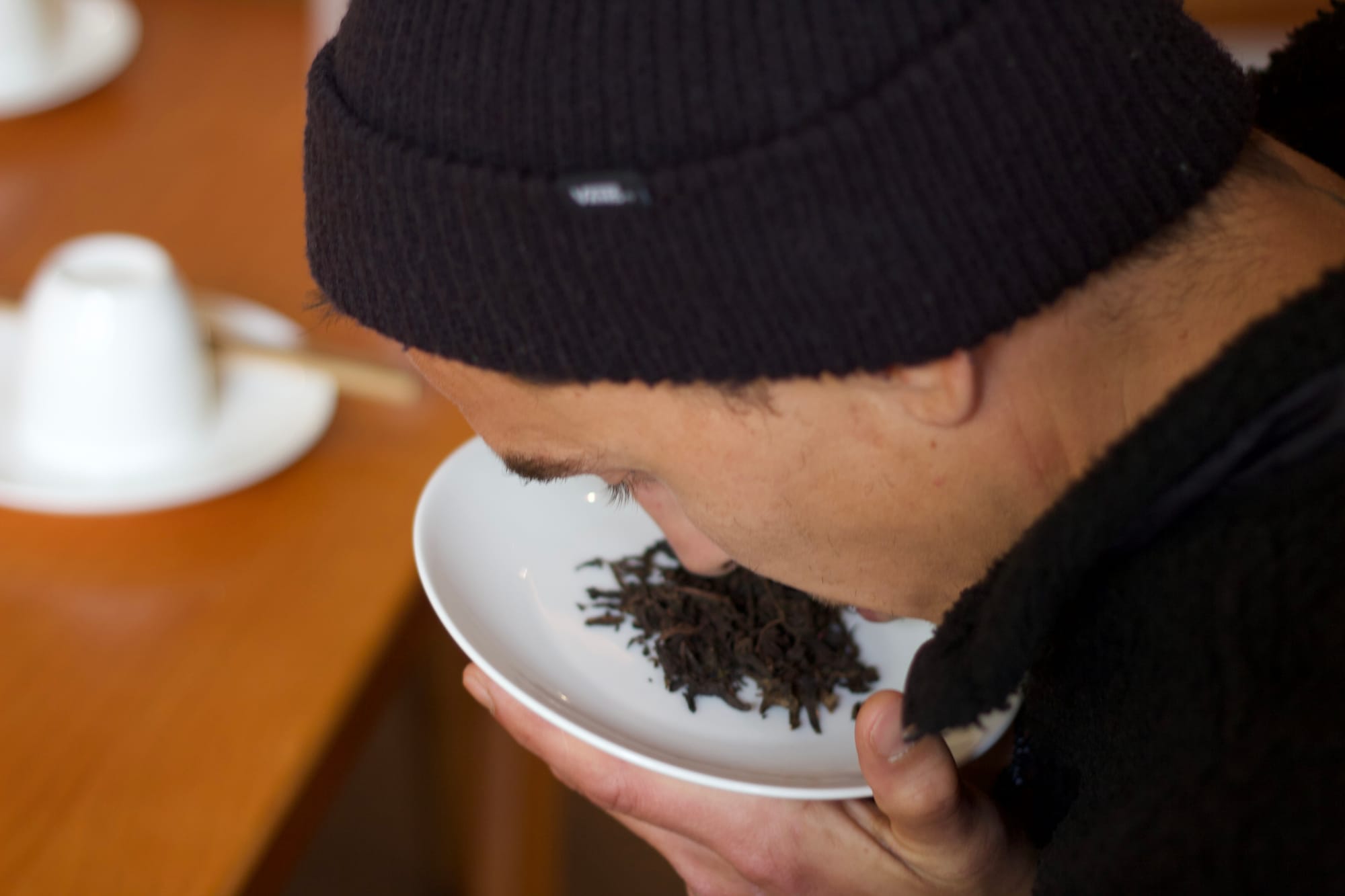
At the fermentation themed restaurant in Chengdu, Giacomo was offered a wide range of different fermented dishes with deep roots from Yunnan.
Compared with China, where people often don’t pay much attention to fermentation simply because it is so prevalent in our daily lives, Giacomo faces a different set of challenges in Europe.
That is why, when we visited a fermentation-focused restaurant in Chengdu, everything seemed to make sense. The chef, who is of Bai ethnicity from Yunnan, brought the fermentation traditions and lifestyle he grew up with directly to the table. From fermented ants served with salmon tartare to Yunnan local ham and cheese, as well as homemade kombucha, he showed how fermentation could be introduced through food, not as an abstract concept or technical exercise, but as something connected to where you come from and how you live.
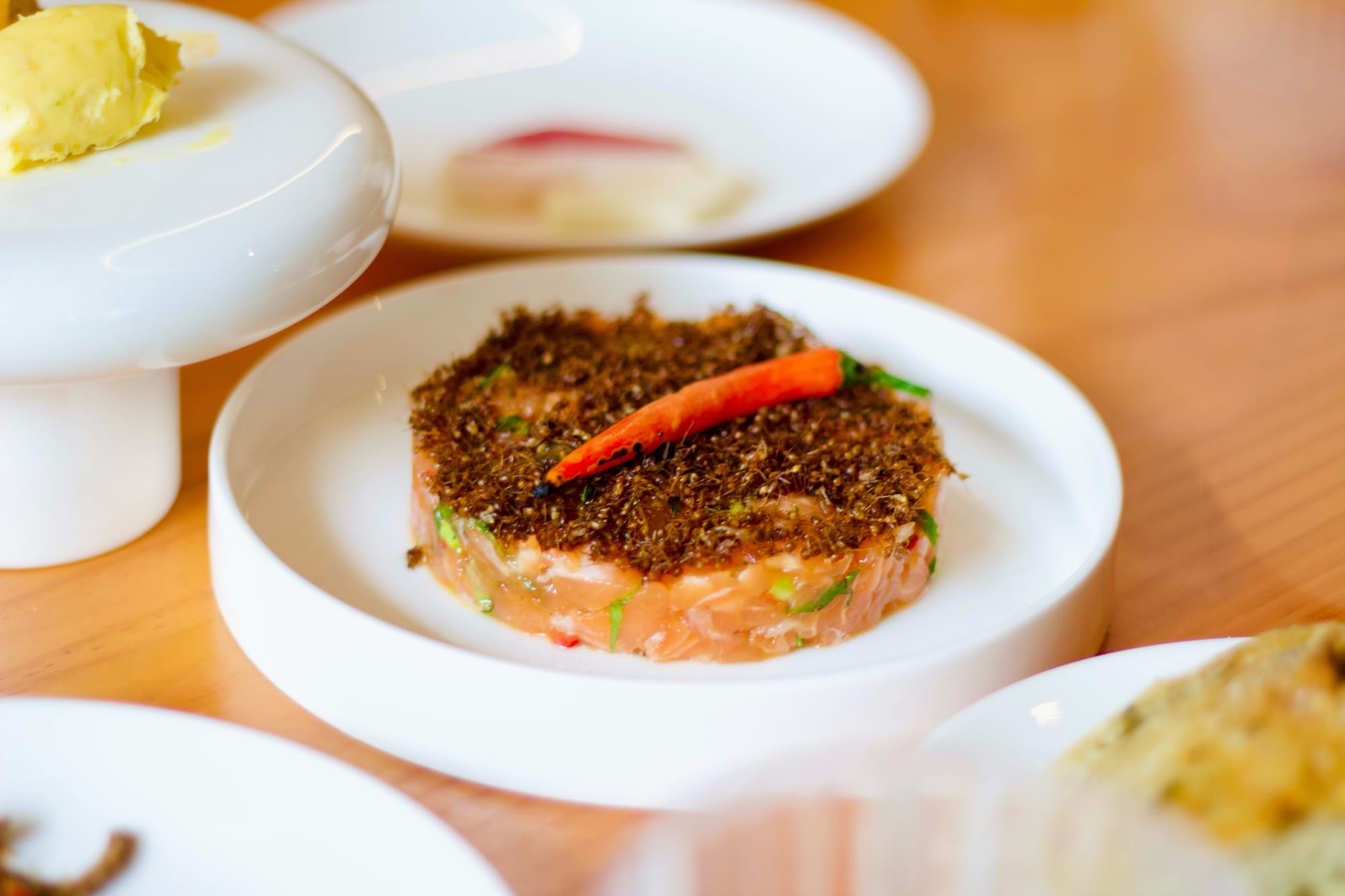
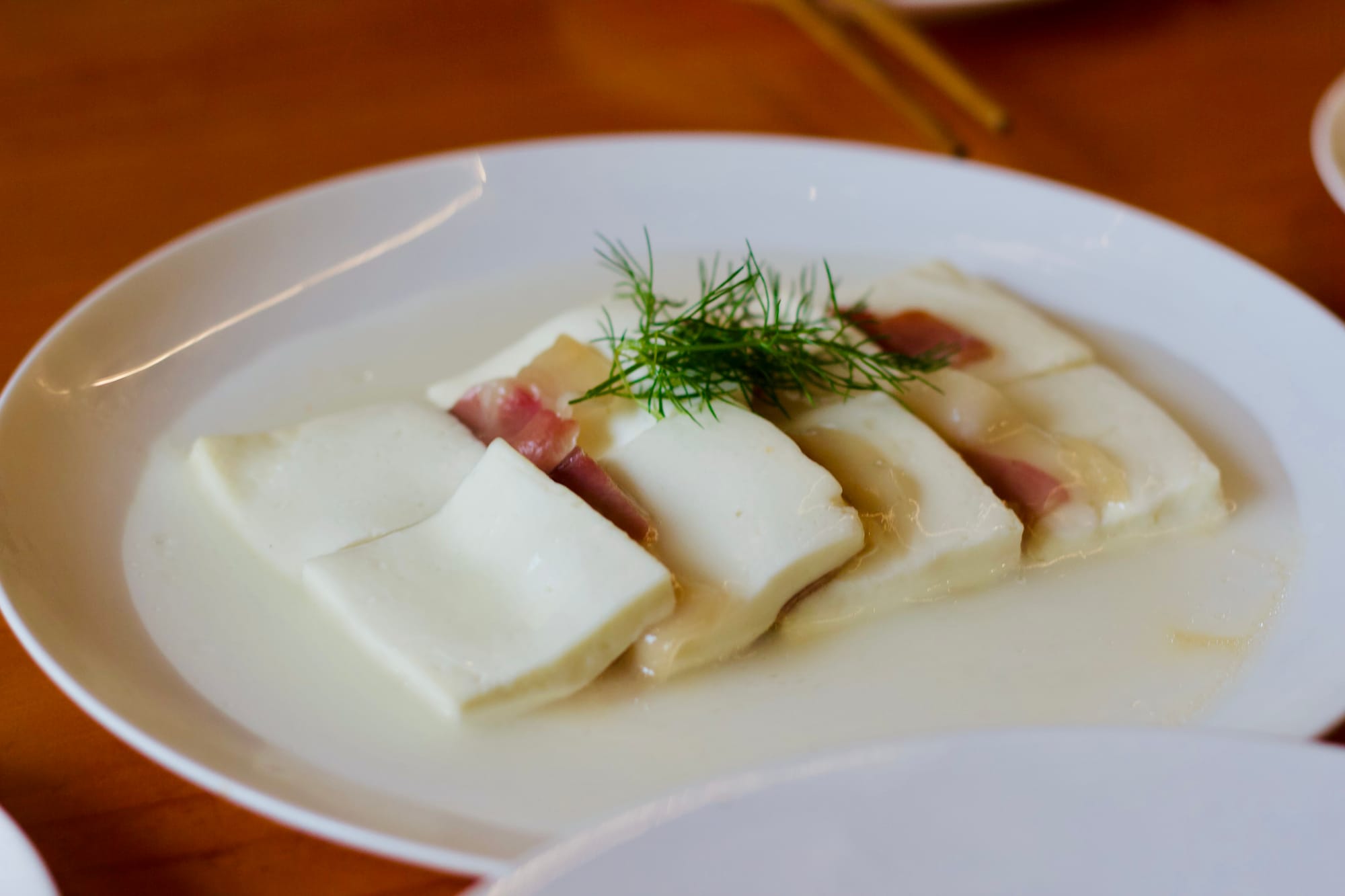
First: Salmon tartar with fermented ants. | Second: steamed Yunnan Rushan cheese and ham.
This was something Giacomo connected with quite deeply. For someone who teaches fermentation himself, he believes that understanding comes from actually experiencing the process:
“I believe hands-on workshops are the best approach, giving people the chance to get their hands dirty. Field trips and site visits are also incredible, as they allow learners to truly understand what goes into producing those types of foods.”
Terroir, Spontaneous, Trendy, Elite
As Giacomo understands it, fermentation is organic in the sense that it is deeply connected to location.
“In France, the term terroir describes how a combination of environmental factors, including location, profoundly shapes a wine’s character. I believe that exact concept applies seamlessly to all fermentation processes, making location a crucial element. This connects right back to what impressed me most during my journey exploring fermentation in China.”
Indeed, throughout our fermentation journey with Giacomo in Sichuan, we found evidence everywhere that fermentation is not really a concept floating in the air without any roots. It can be found in every inch of soil, every drop of river water, every household, and every meal.
It is spontaneous and natural and connected through our daily life.
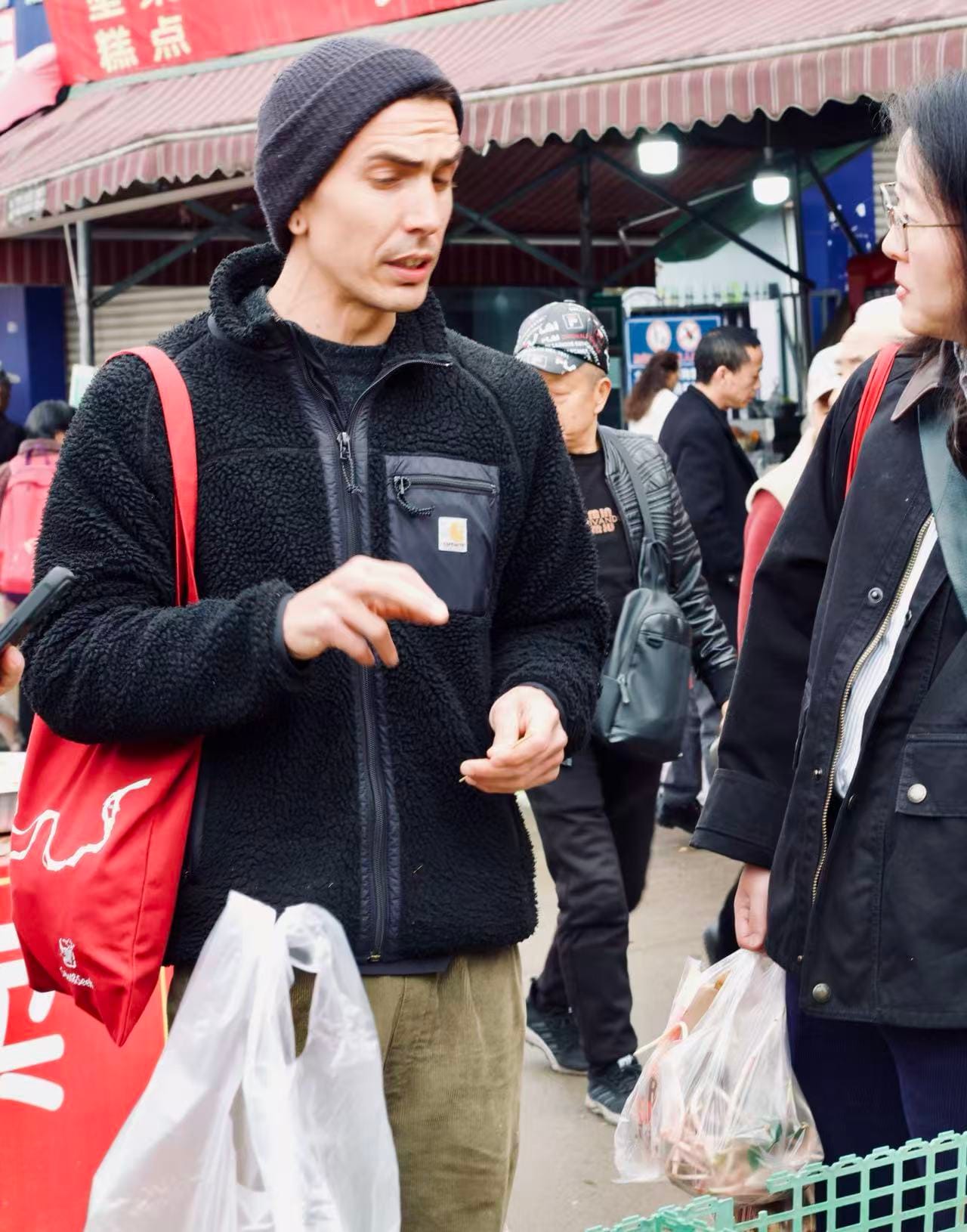
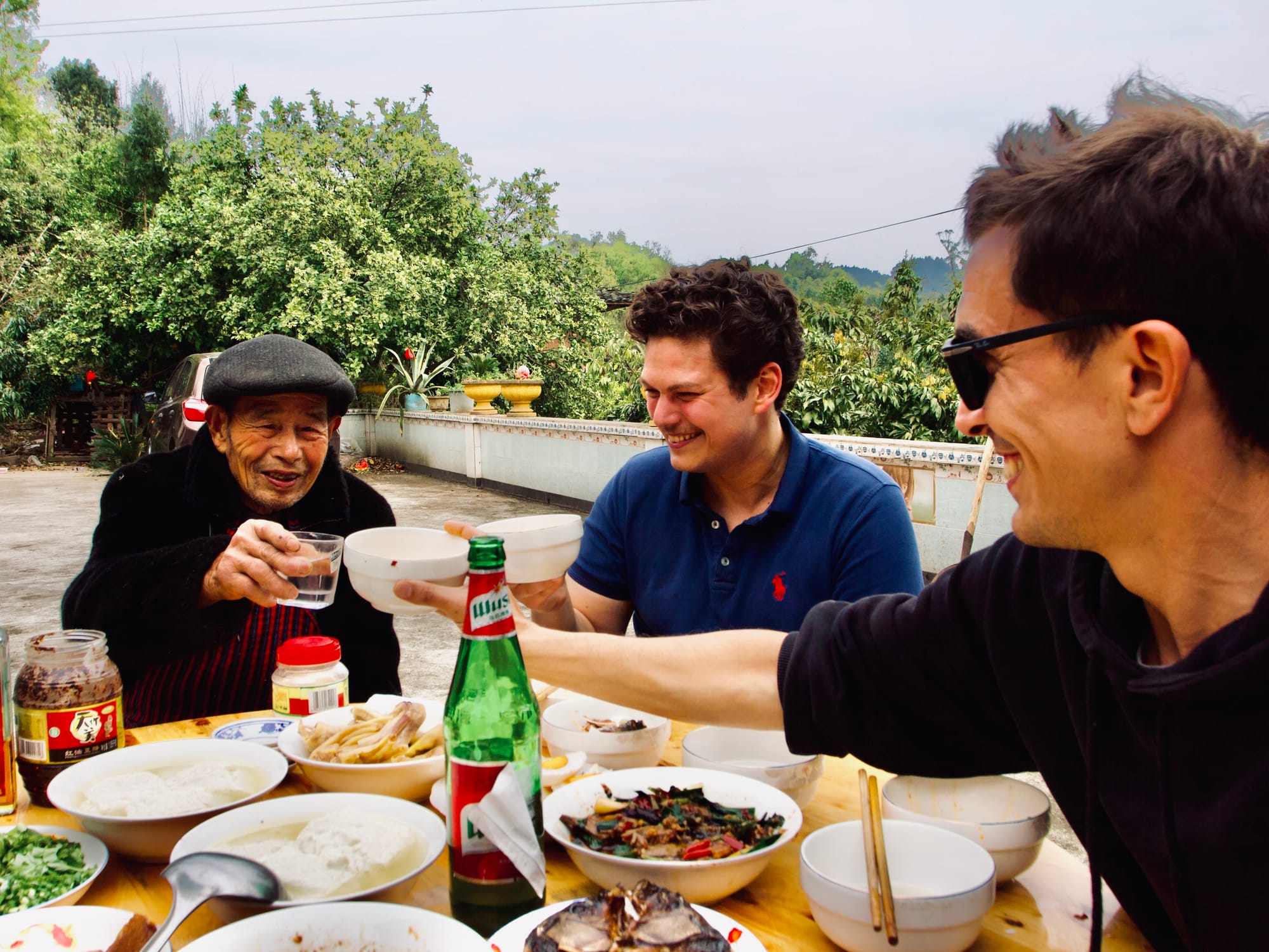
First: Giacomo at a Chengdu food market. | Second: Giacomo toasting with locals on an ordinary and traditional family meal in Sichuan.
This spontaneity was also what surprised Giacomo most about Chinese fermentation. Coming from a Western fermentation background, he was used to processes where variables are closely monitored and controlled. In Sichuan, he encountered a different mentality. Ingredients, vessels, microorganisms, temperature, and the surrounding environment are given more freedom to work together.
“In the West, we tend to over-control every variable, whereas in China, you allow much more freedom for the ingredients, the storage vessels, and the environment to interact naturally.”
He then added,
“I’ve unconsciously always leaned more toward the Chinese mindset in this regard.”
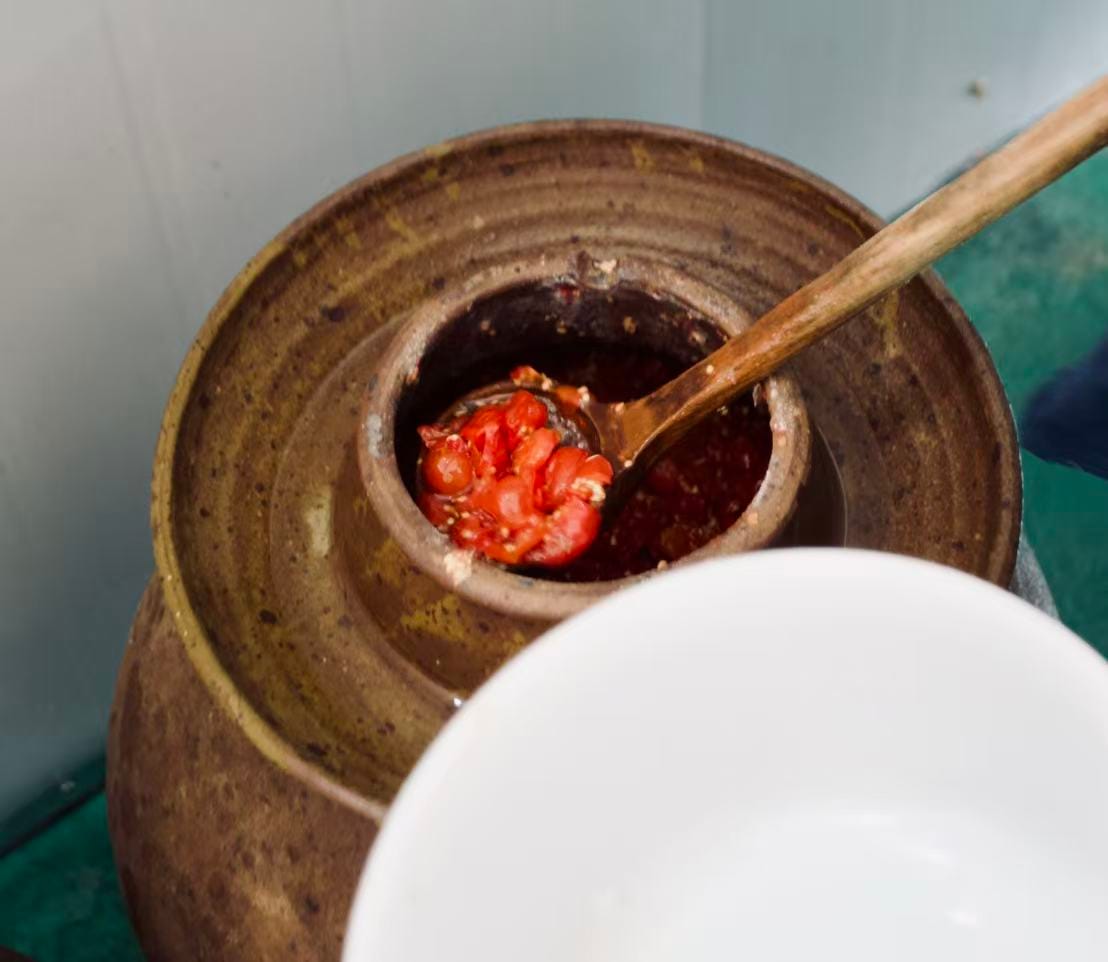
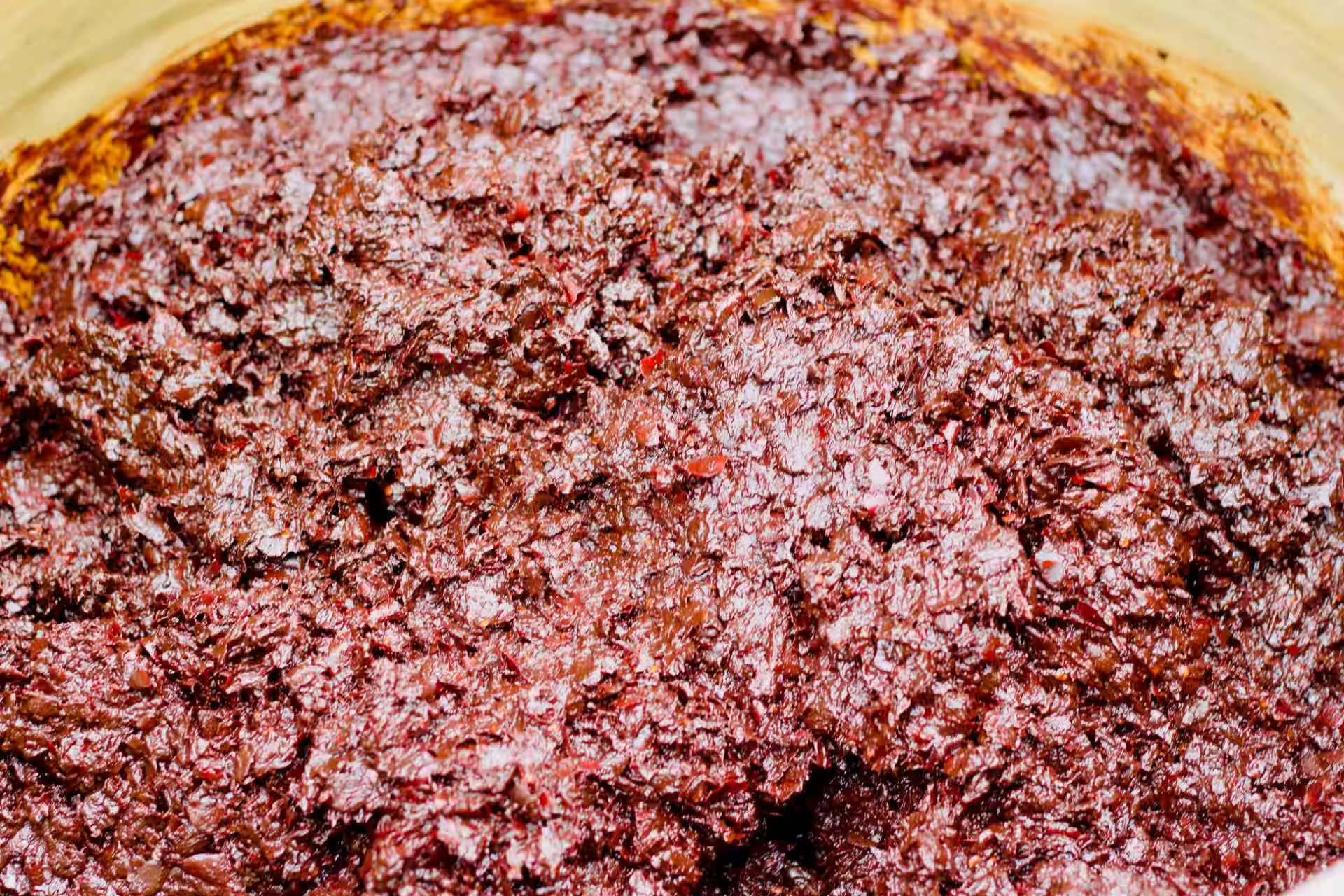
First: Sour soup from Guizhou. | Second: Doubanjing from Sichuan.
As we enter an era where people live through hashtags, acronyms, and readily available AI-generated information, being able to catch what is trending often determines how much traffic and attention you can get online. Fermentation is one of those concepts that has been gaining popularity in recent years as more people begin to make and share their own experiences.
As much as we are in the fermentation business ourselves, we are still observers of the people working within it. So we asked Giacomo what he thought about the growing fermentation trend.
“Part of me hopes it stems from a genuine reconnection with traditional knowledge and heritage, but another part sees it as a trend whenever fermentation is brought up. I’m referring mainly to Italy and the Western world, where fermentation often seems to be used to highlight a chef’s technical skills and creativity, rather than being seen as a smart, ancient method for preserving and transforming food.”
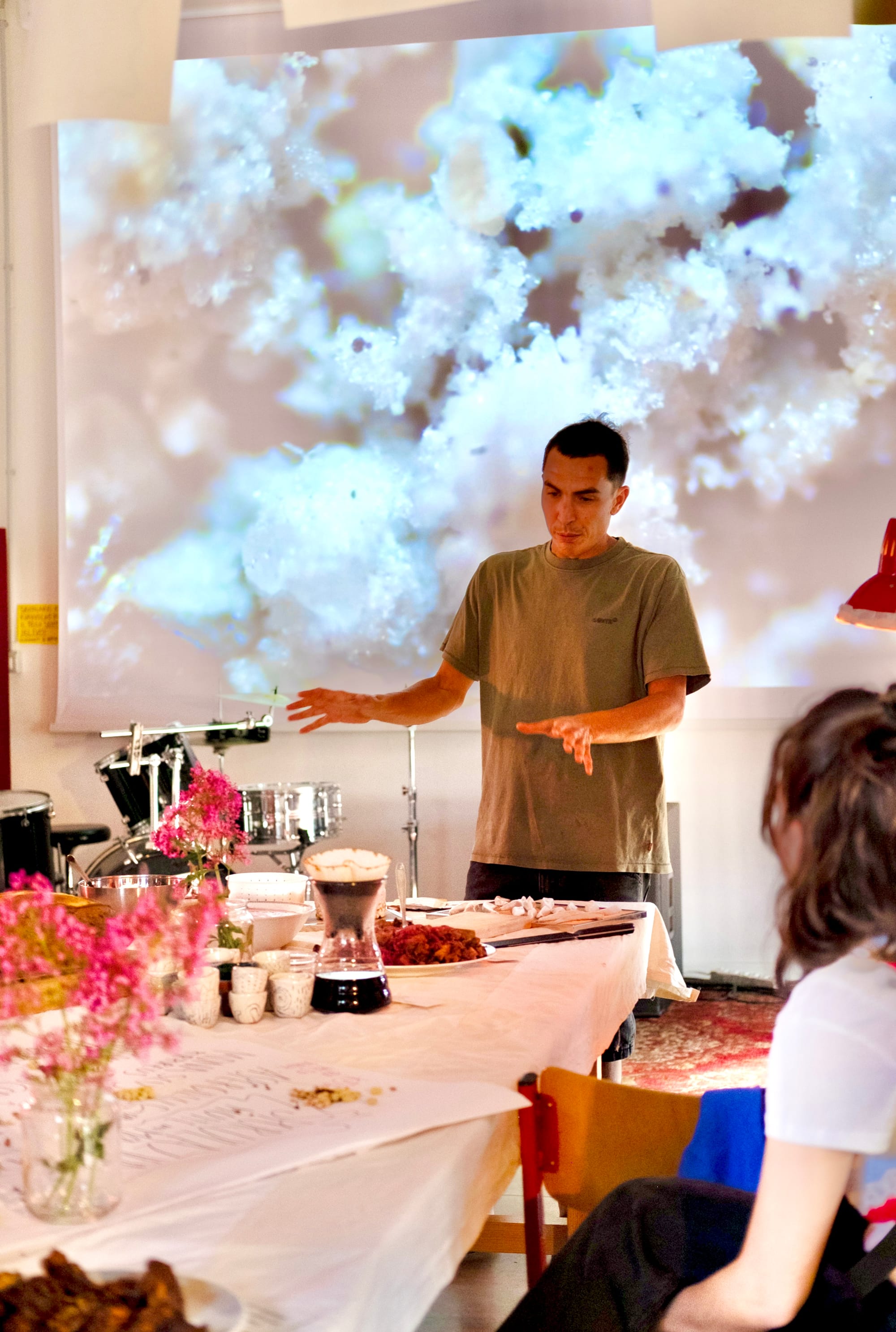
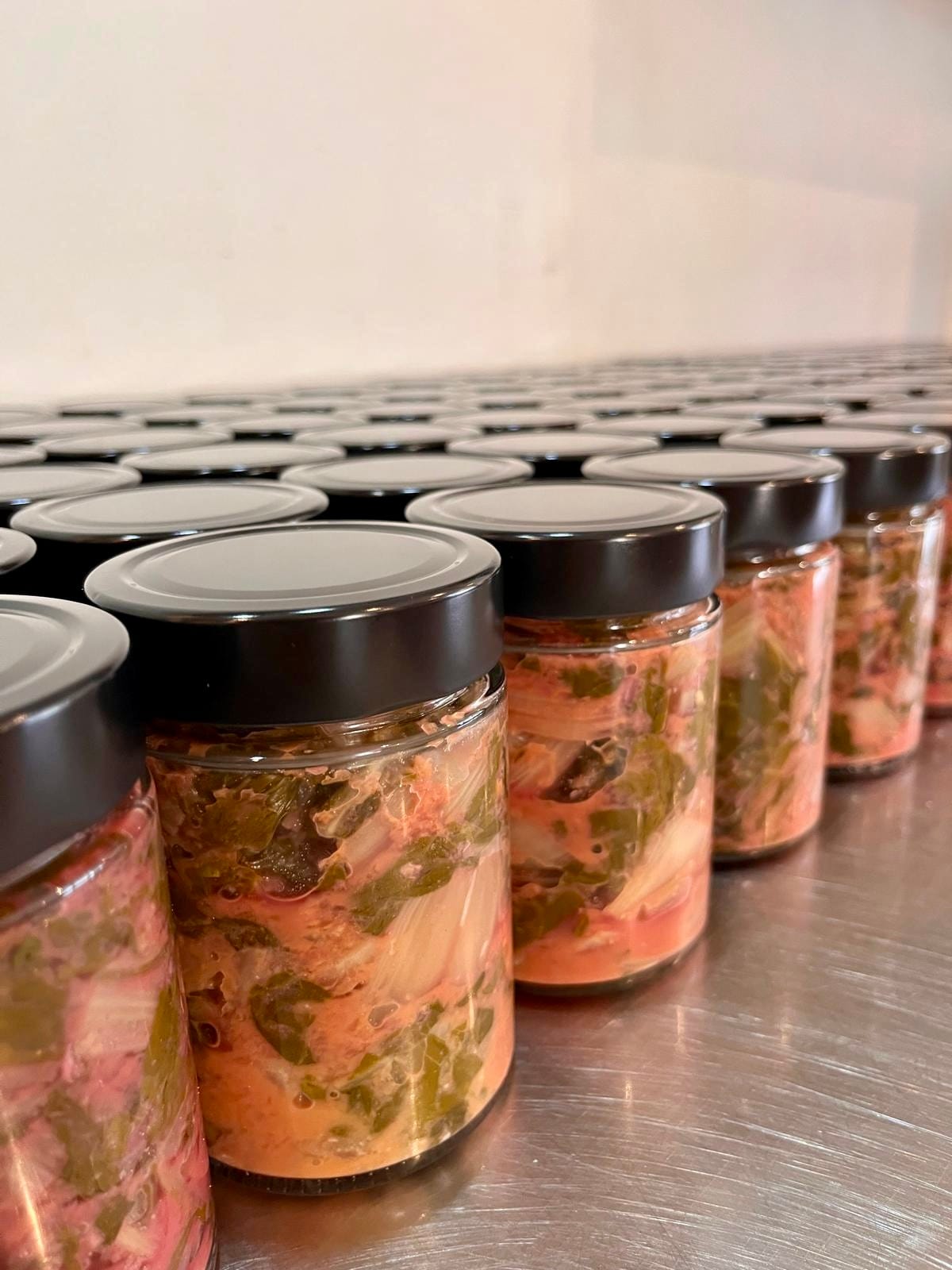
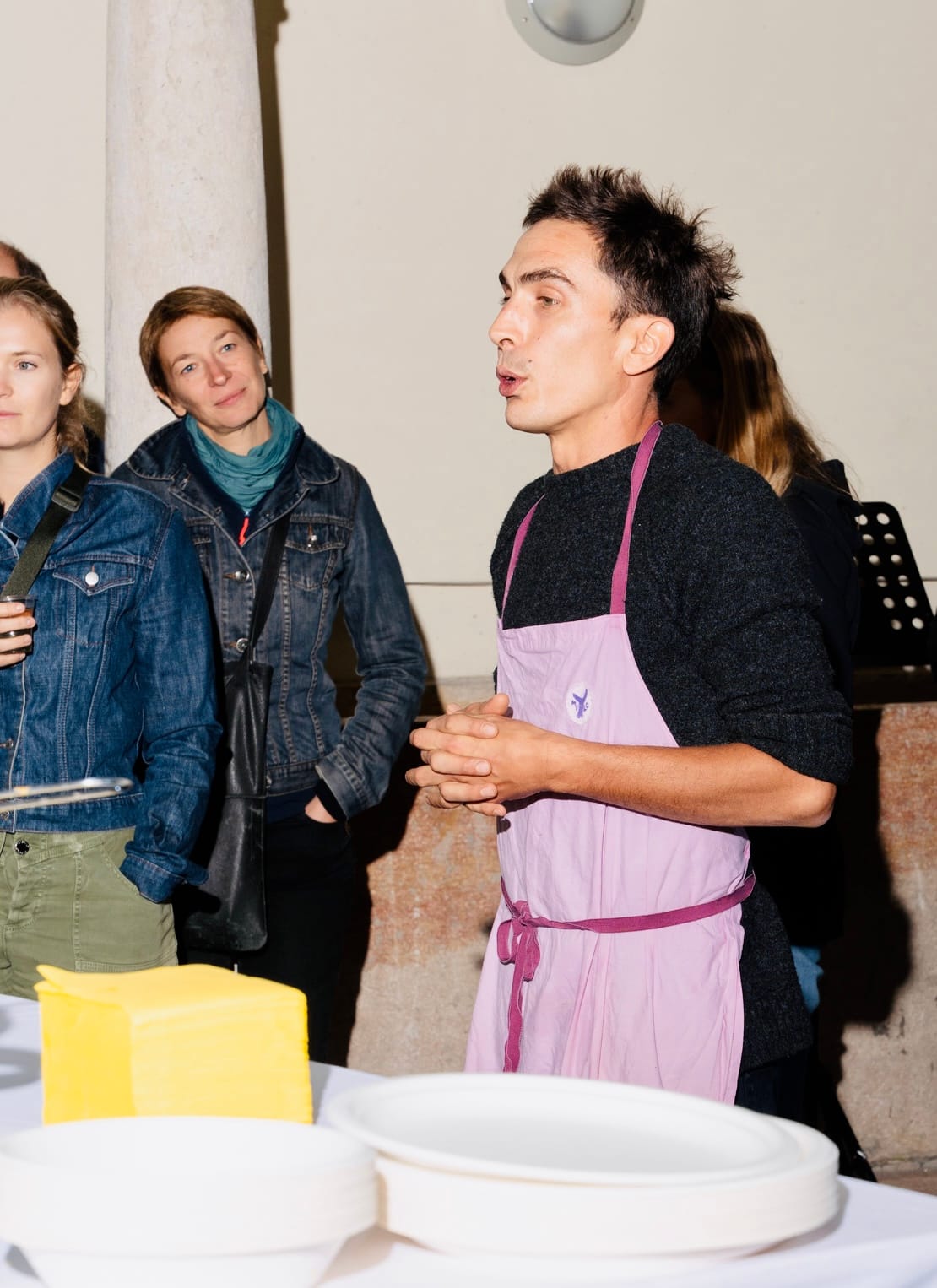
First: Giacomo at a fermentation event with tasting. | Second: Kimchi production from Giacomo.
The popularity itself is not what concerns Giacomo. More people becoming curious about fermentation is, after all, a good thing. His concern is what happens to the knowledge behind it when fermentation moves from households and communities into professional kitchens, laboratories, and commercial businesses.
When we asked him what role he thinks fermentation will play in the future of food, he was optimistic about its potential. He sees some of the most innovative food companies already incorporating fermentation into their work and believes it will become increasingly important. But his optimism came with a warning.
“I do worry this trend might lead to a loss of traditional community knowledge in favor of elite, highly commercialized expertise.”
What makes Giacomo’s concern interesting is that he is part of this growing fermentation movement himself. He teaches fermentation, produces his own fermented foods and sauces, and continues to experiment and learn from traditions outside Italy. He certainly isn’t against fermentation becoming more widely understood or practiced.
His concern seems to be about what could happen when fermentation becomes increasingly commercialized and specialized. As more companies invest in its potential and more professionals build expertise around it, can traditional knowledge continue to have a place alongside them?
Perhaps Giacomo’s concern also comes from what he has already observed in Italy. When we asked him to design the perfect fermentation journey through his home country, he first mentioned places famous for Parmigiano Reggiano and Prosciutto di Parma, as well as wine regions such as Tuscany, Piedmont and Alto Adige. But surprisingly, that wasn’t the journey he would actually choose.
Instead, he would take people on a food journey around cucina del recupero, the Italian tradition of resourcefulness in cooking. His reason was particularly relevant to our conversation: Italy has already lost some of its historical fermentation practices along the way.
The Torchbearer
In the end, part of what makes us distinctly human is our ability to connect with land, history, culture, and one another, and carry those connections from one generation to the next.
Giacomo is finding his own way to do exactly that. He currently teaches fermentation at local culinary schools, produces his own fermented foods and sauces, and creates food experiences that bring people together. Starting this autumn, he also plans to host small themed private dinners, continuing to experiment with fermentation while sharing what he learns with others.

A Tianjin, China native - Chloe has a deep appreciation for all things hotpot. Her appreciation of food and culture runs so deep that after a successful corporate career, she decided to uproot her life in China to attend Le Cordon Bleu Ottawa and Madrid. After working in the culinary industry in Canada, she decided to found Snout & Seek!
No spam, no sharing to third party. Only you and me.

Member discussion