
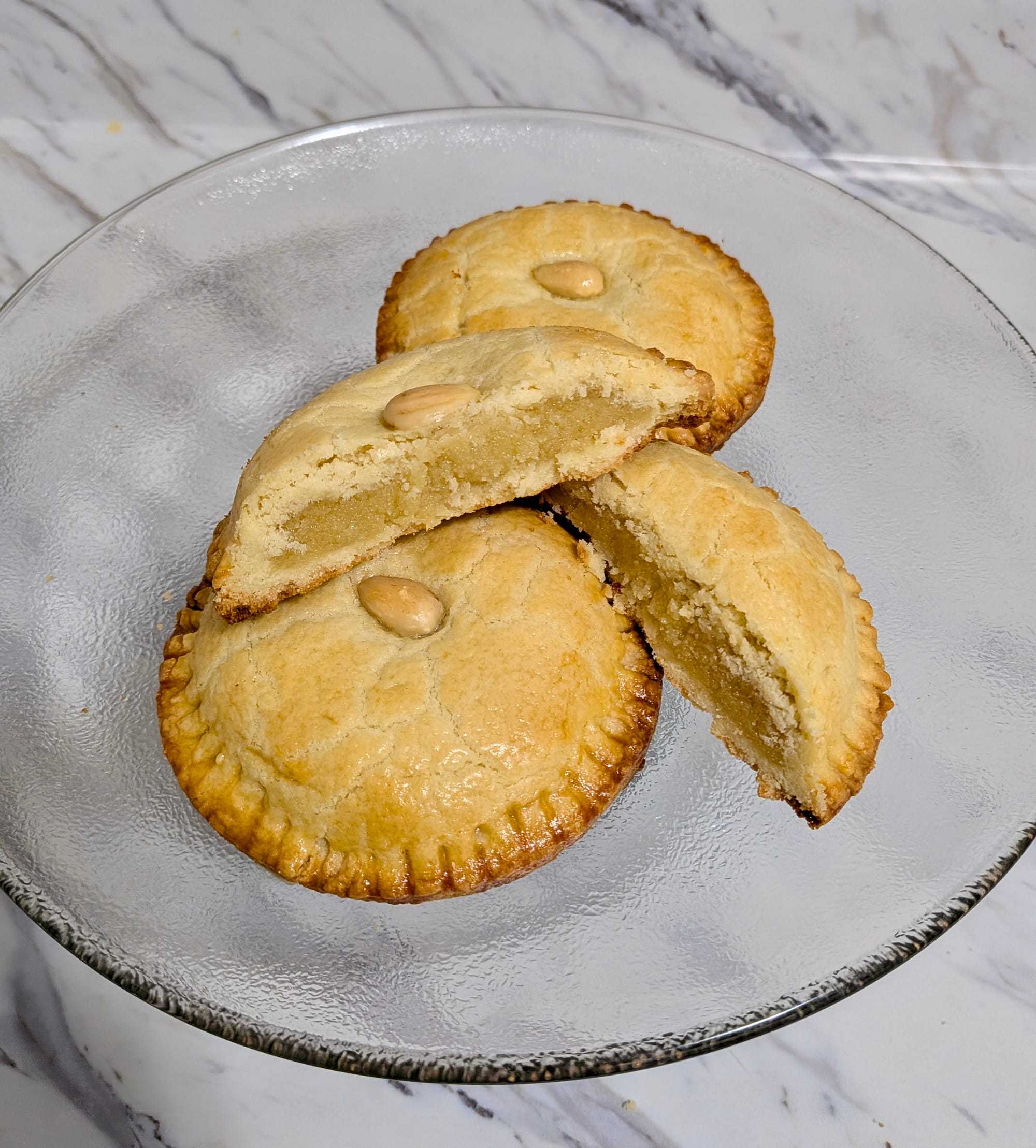
Gevulde Koeken – Almond Filled Cookies
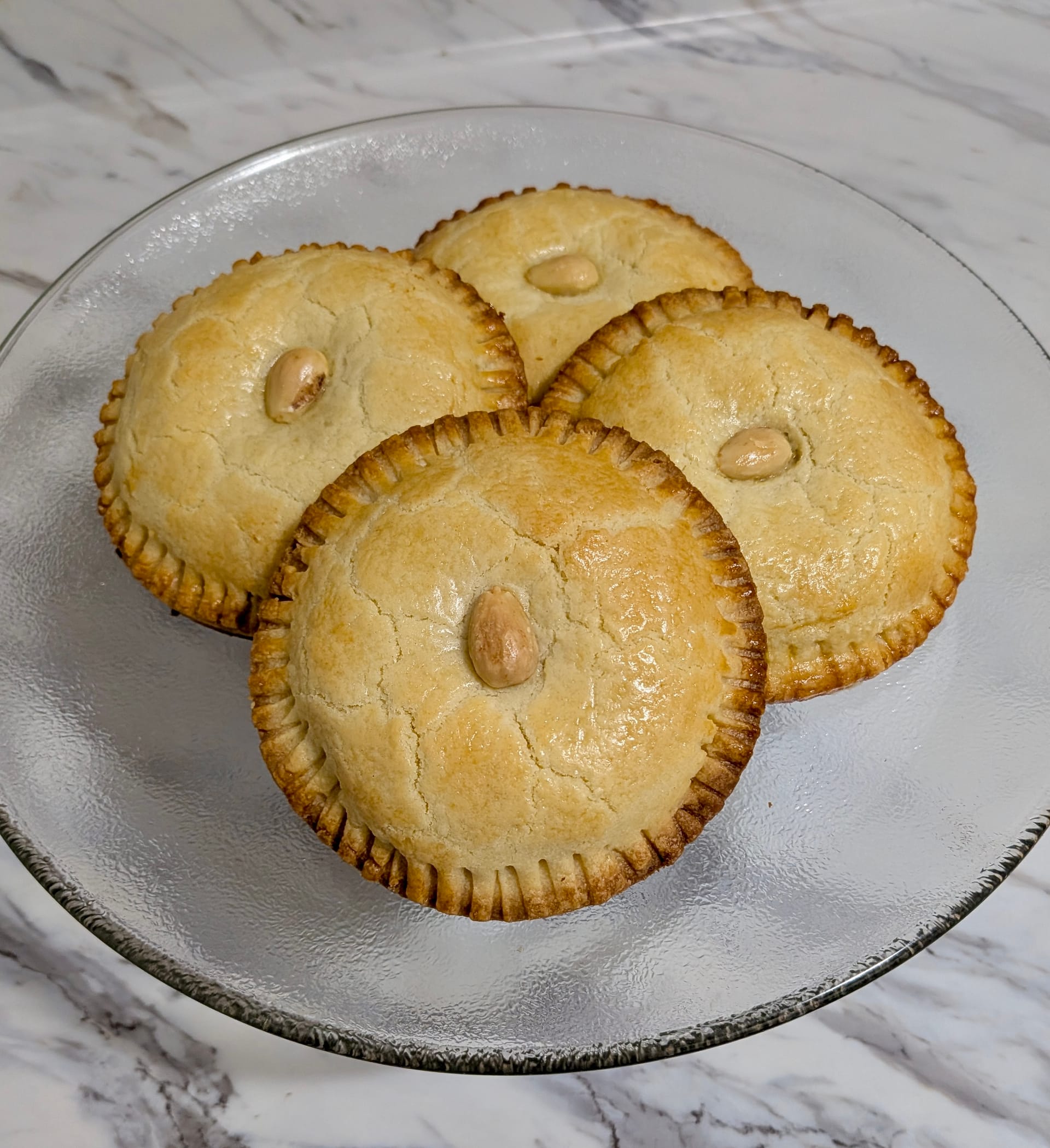
Makes: 6
Allergens: Contains Nuts, Gluten, and Dairy
Significance of the Dish
When I was younger, my family and I would travel from Sri Lanka to spend our summer vacations visiting my father’s side of the family in the Netherlands; and after a few days, we would end up traveling and camping around other parts of Western Europe. This would become a yearly tradition in my family. Sitting around the campfires, eating, sharing stories. Later on in life, when I moved to the Netherlands for university and work, I used to spend my free time traveling around Europe on my motorcycle. One tradition I continued on my own, which started on my family summer trips, is to stop before leaving the Dutch border at a petrol station or roadside diner to grab a few gevulde koeken. These cookies made for the perfect little energy boost on road trips and acted as a quick hunger quencher.
Gevulde Koek (singular) or Koeken are sweet almond paste-stuffed cookies traditionally made in the Netherlands a long time ago for royalty. Today, everyone with a sweet tooth enjoys them. The buttery dough that encases the sweet almond filling, similar to a frangipane, flakes apart when you bite into it and makes a delicious envelope for the center.
Ingredient Guidance
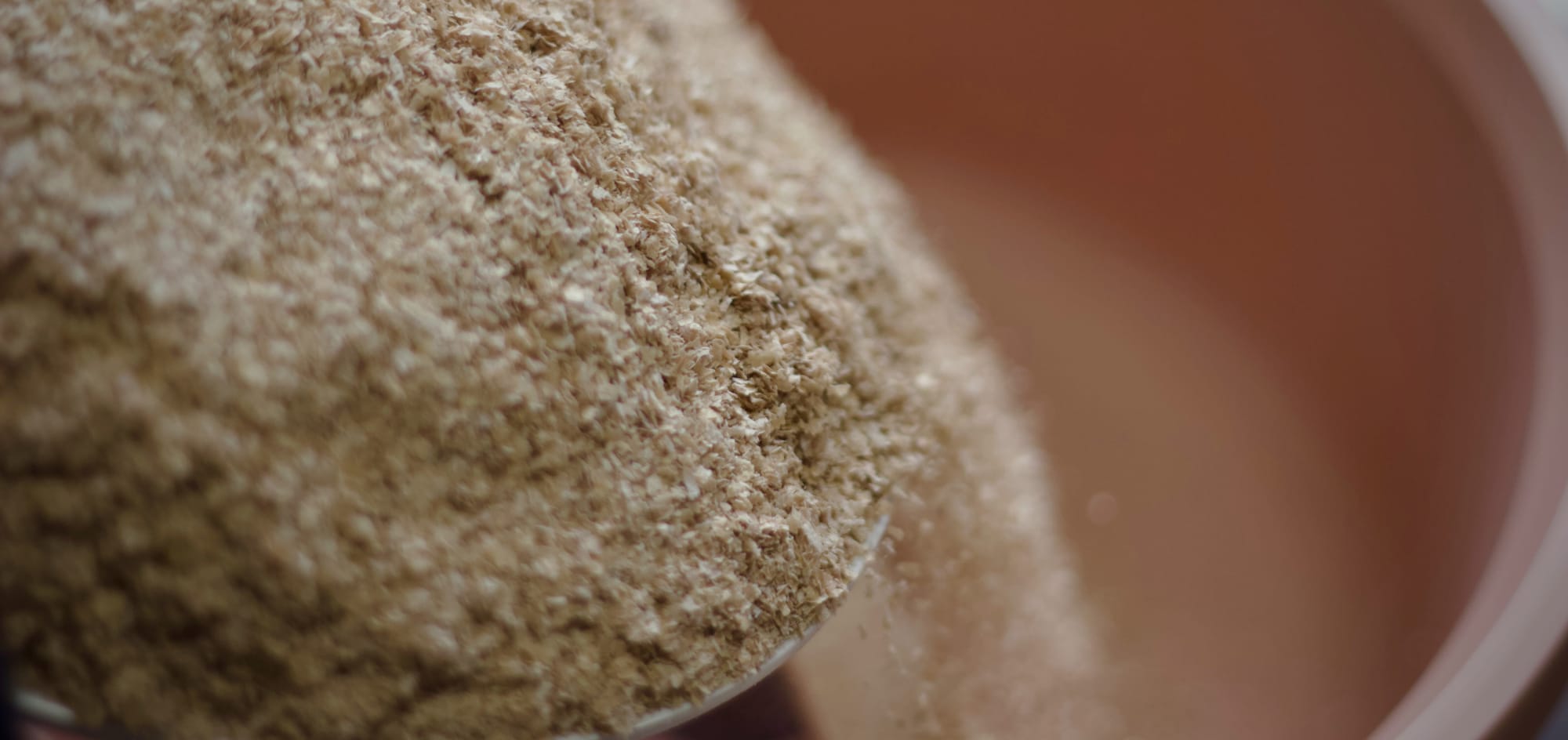
- Almond Paste: There are different sweetness levels when it comes to almond pastes. For this recipe, it is best to create your own by combining 250g of almond flour, 250g white caster sugar, and 1 large egg (50g) in a food processor. Blend until it forms a uniform paste. You can also bring it together by hand with a spatula if you are making a small quantity.
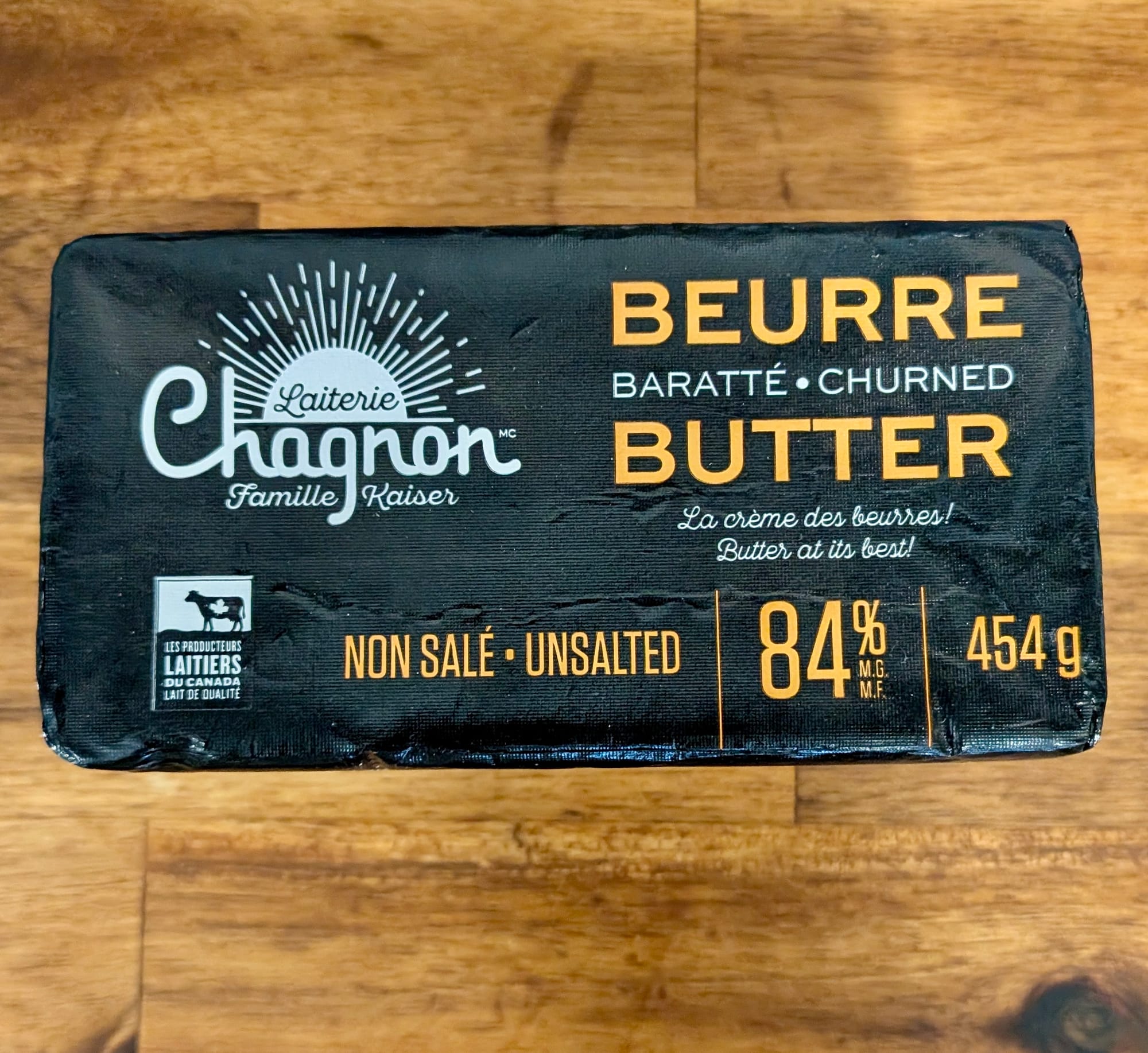
- Butter: Should be room temperature and high in milk fat. The quality of the butter affects the taste of the pastry, so pick a good one. The higher the milk fat percentage, the better. I generally use between 80-84% depending on the brand.
Ingredients
For the Dough
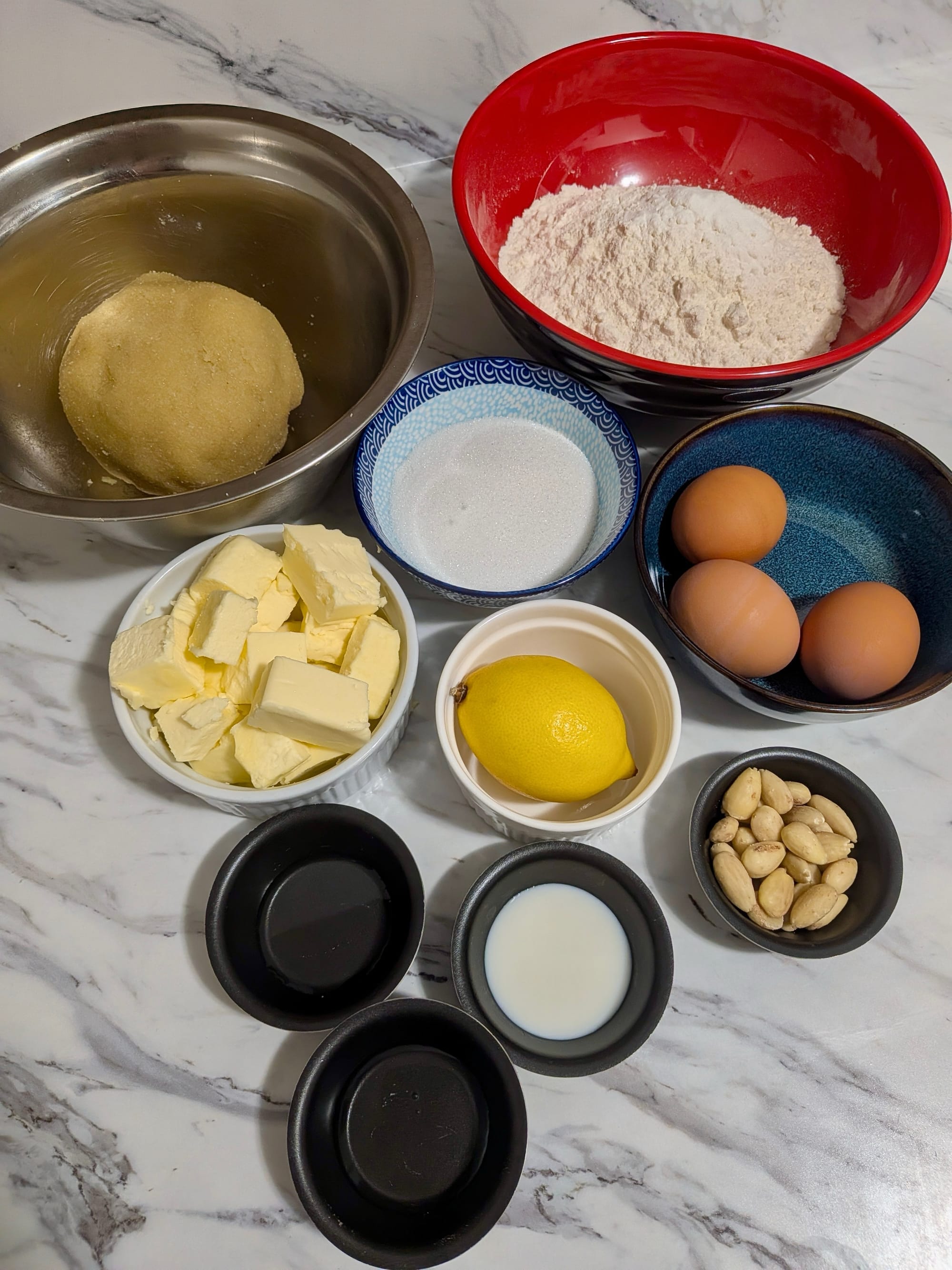
- 300g all-purpose flour
- 5ml baking powder (1 tsp)
- 120g sugar
- 180g unsalted butter
- 15ml milk
- 20g egg yolk (1 unit)
- Pinch of salt
For the Filling
- 250g almond paste
- 20g egg yolk (1 unit)
- 15ml water (1 tbsp)
- Lemon zest (optional)
For the Assembly
- 1 large egg
- 10ml water (2 tsp)
- Whole almonds for decorating (peeled)
Methodology
For the Dough
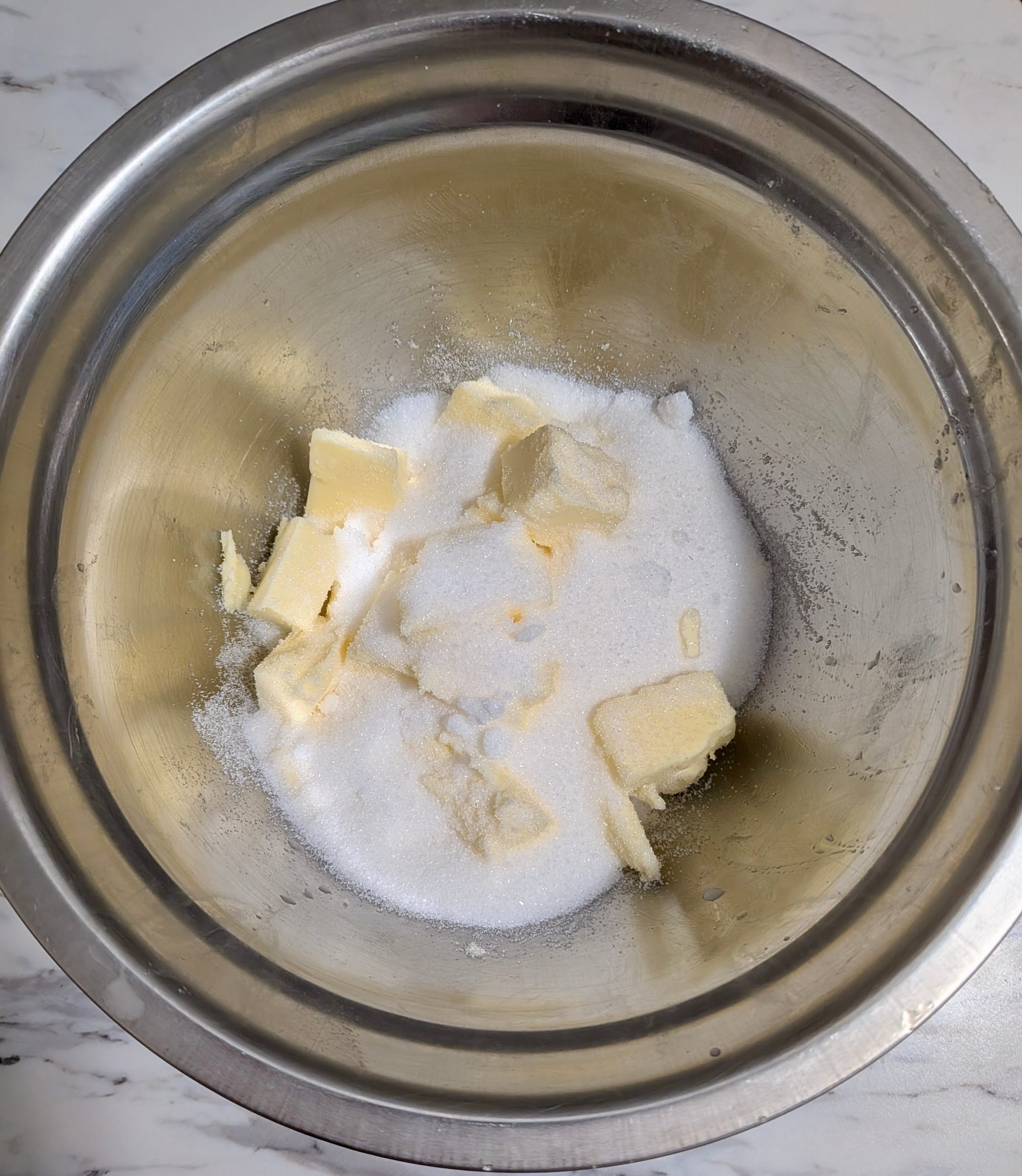
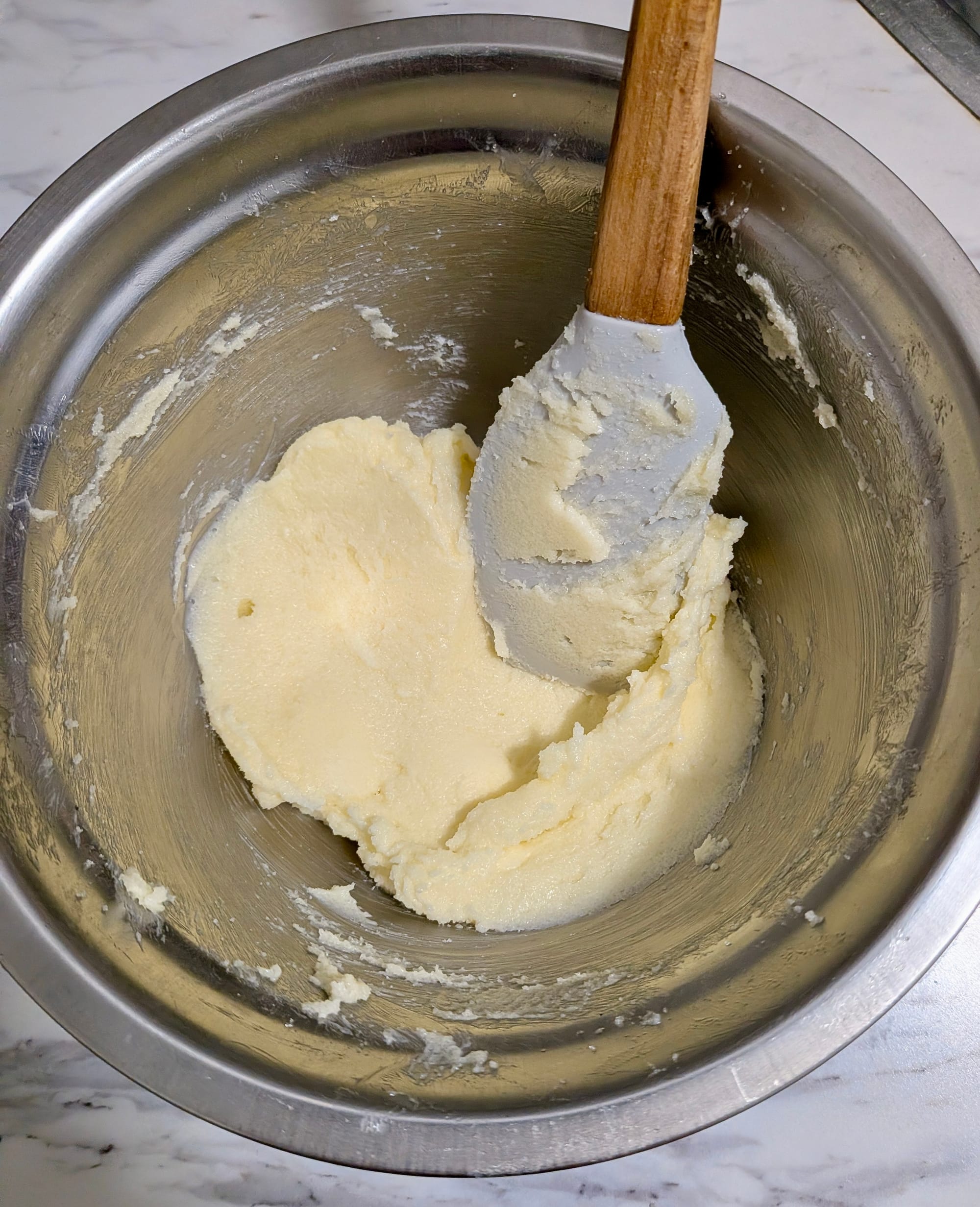
Cream Butter — Start by cutting the butter into small cubes and adding it to a mixing bowl along with the sugar and the salt. Mix the ingredients together until the butter becomes smooth (creaming the butter).
Separate Eggs — Separate the egg white from the yolk.
Mix Liquids — Mix the egg yolk and the milk into the butter.
Add Dry Ingredients — Once it has turned smooth again, sift in the flour along with the baking powder. Bring the dough together with a spatula. Once the flour has been absorbed by the butter, knead the dough by hand until the ingredients have combined.
Do Not Overwork — Do not overwork the dough or you will lose the flaky texture of the dough. This happens when the gluten in the flour gets activated.
Chill — Wrap the dough in plastic wrap and place it in the fridge to chill for 30 minutes.
For the Filling
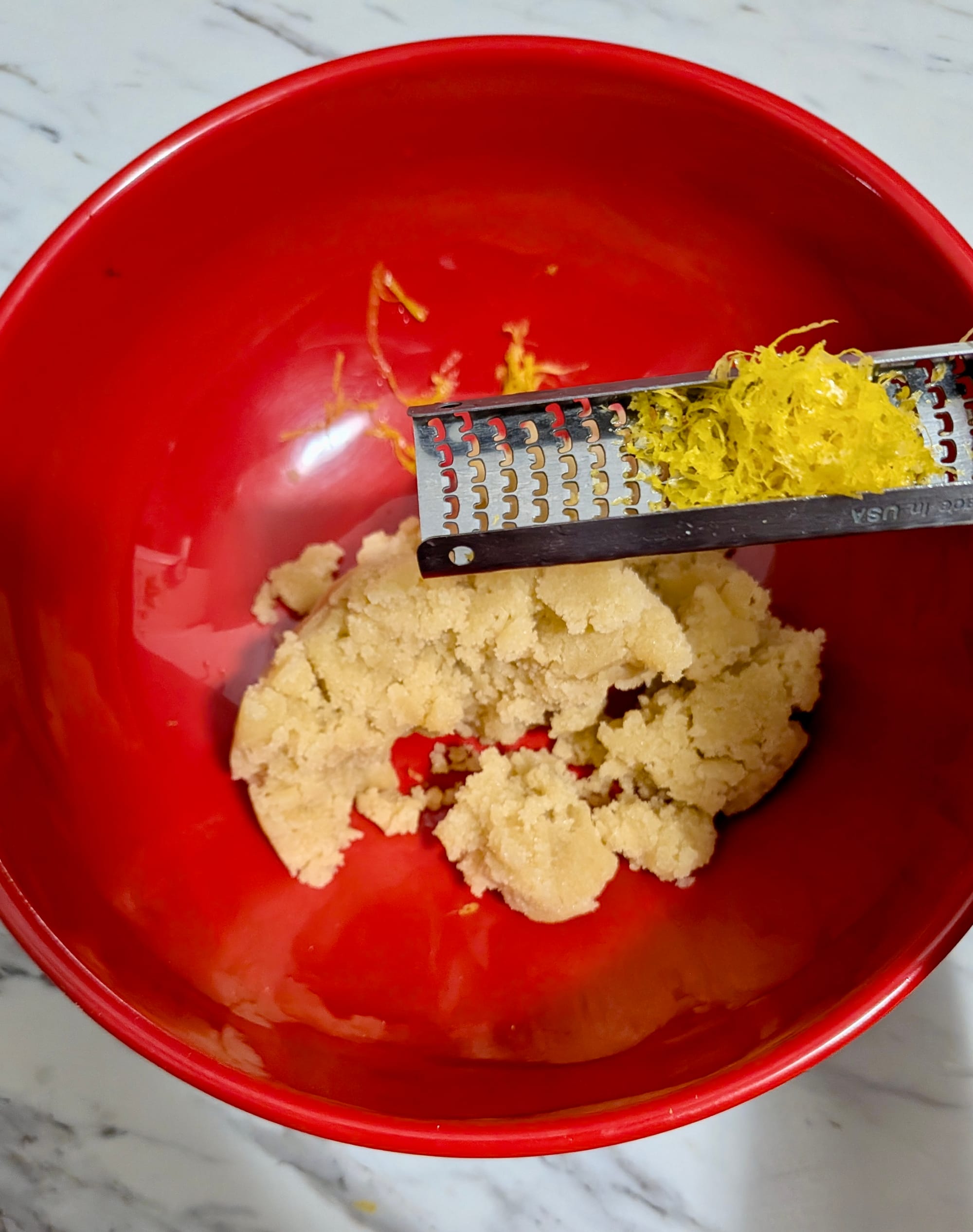
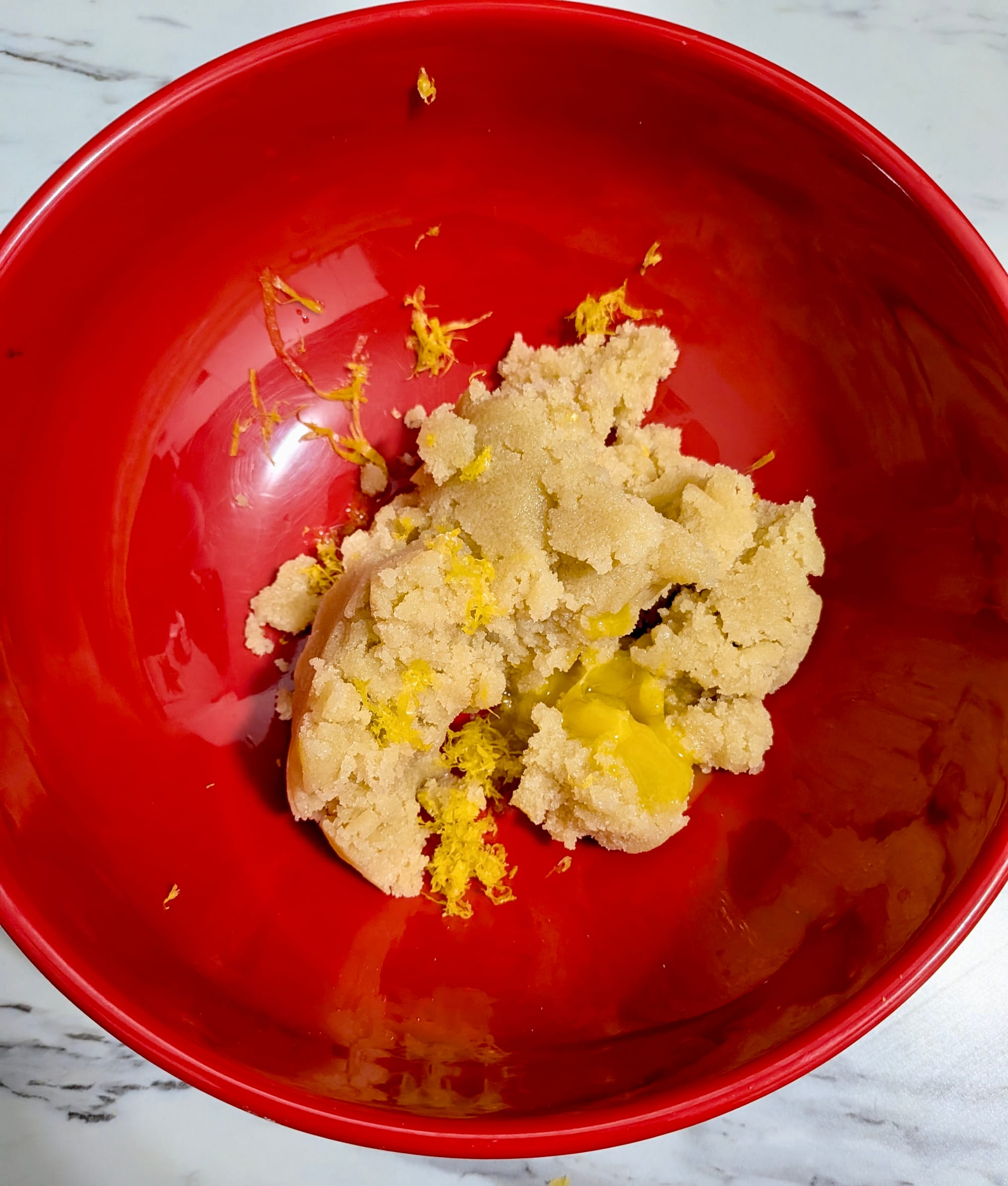
Combine — Zest the rind of 1 lemon into a bowl with the almond paste. Mix in the egg yolk along with the water and mix with a spatula until combined. If you are making a big batch, I would recommend using a mixer for this stage.
For the Assembly
Prepare Egg Wash — Start by creating an egg wash by blending 1 large egg with 10ml of water with an immersion blender.
Preheat — Next, preheat the oven to 220°C or 430°F.
Roll Dough — Remove the dough from the fridge. Roll the dough out between two pieces of parchment paper to 3mm thick.
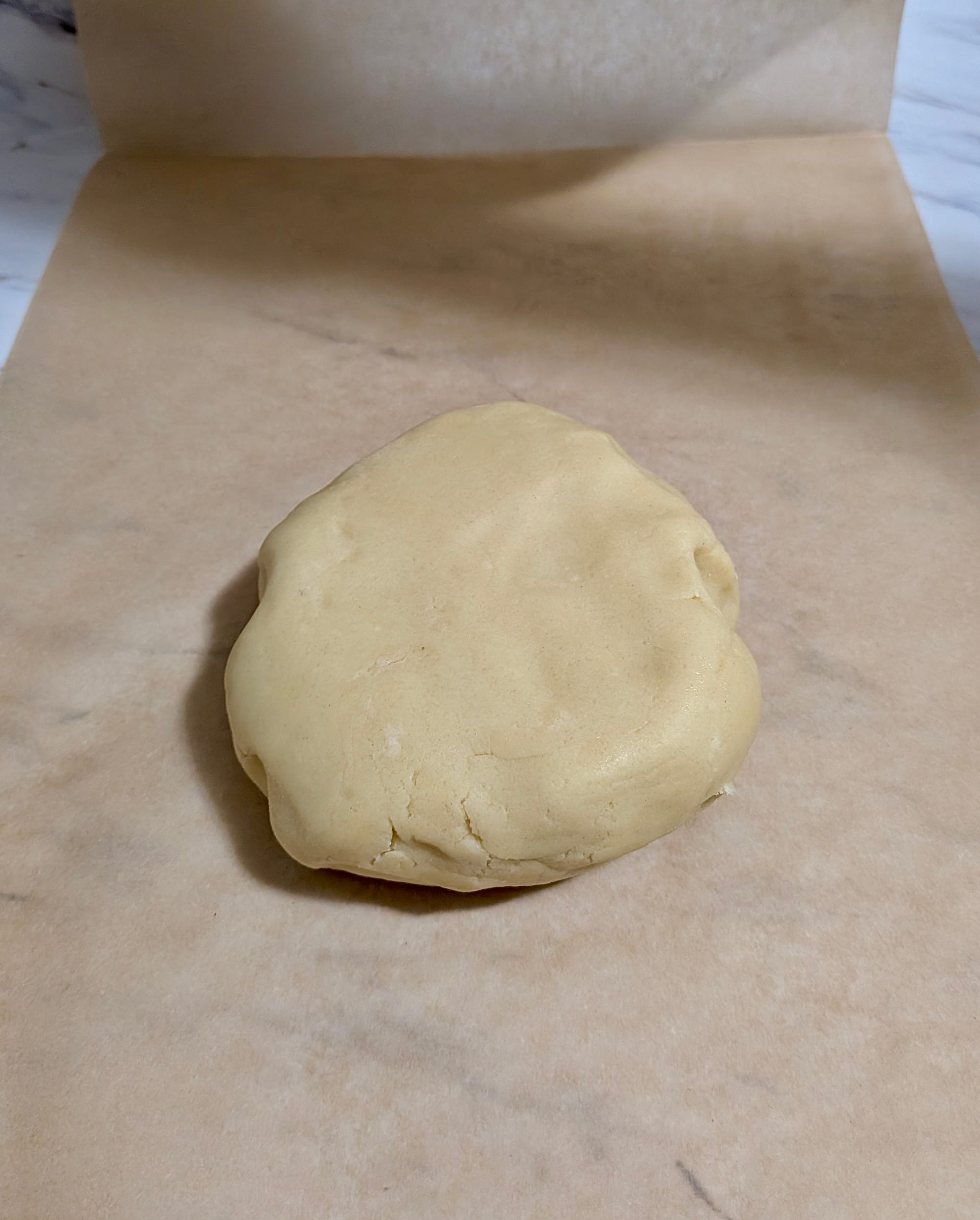
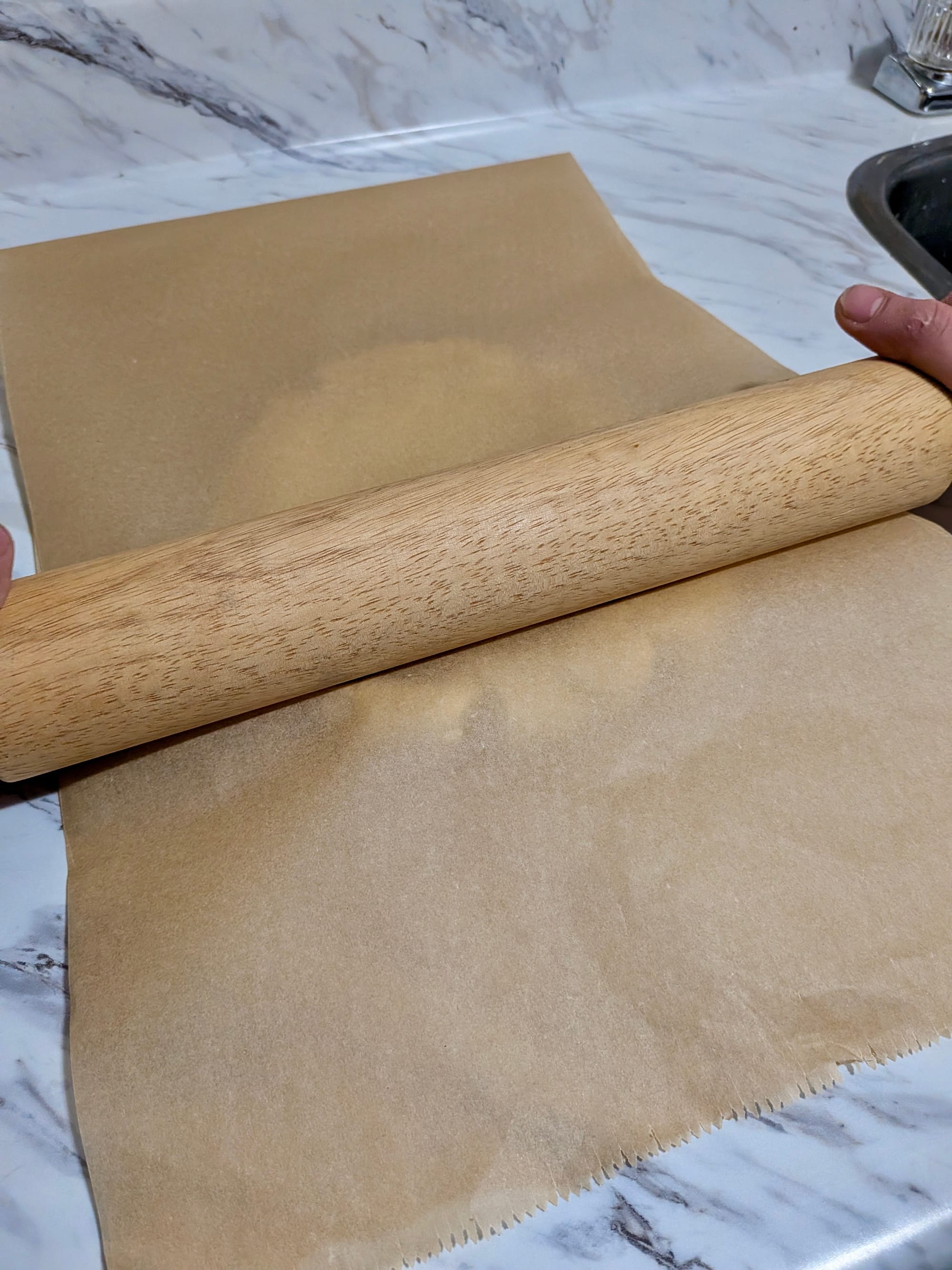
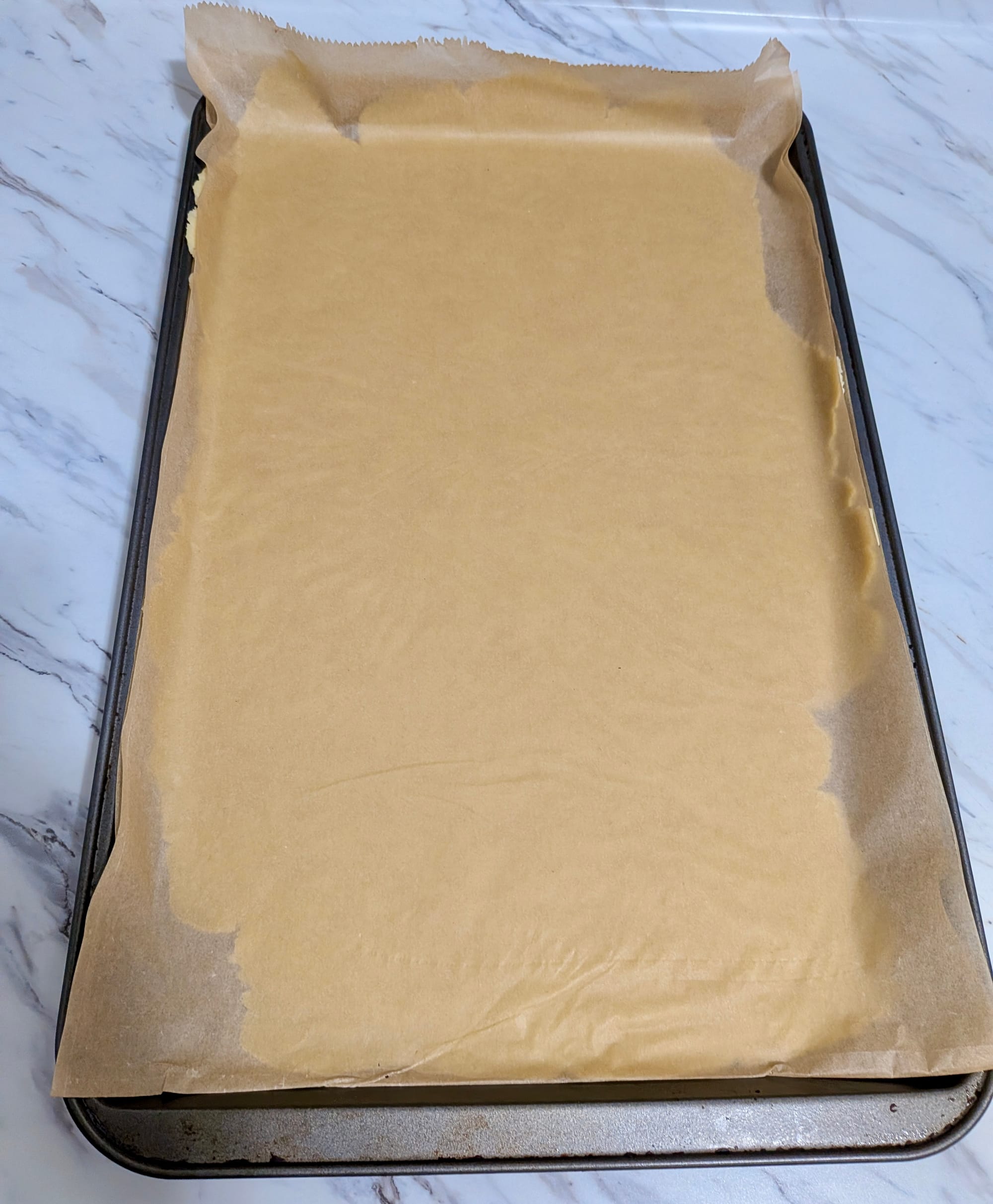
Chill Dough — Place the dough back in the fridge for 15-20 minutes so that it can harden.
Cut Disks — Remove the dough from the fridge and release the parchment paper from both sides. Cut out disks using a 10cm circle cutter.
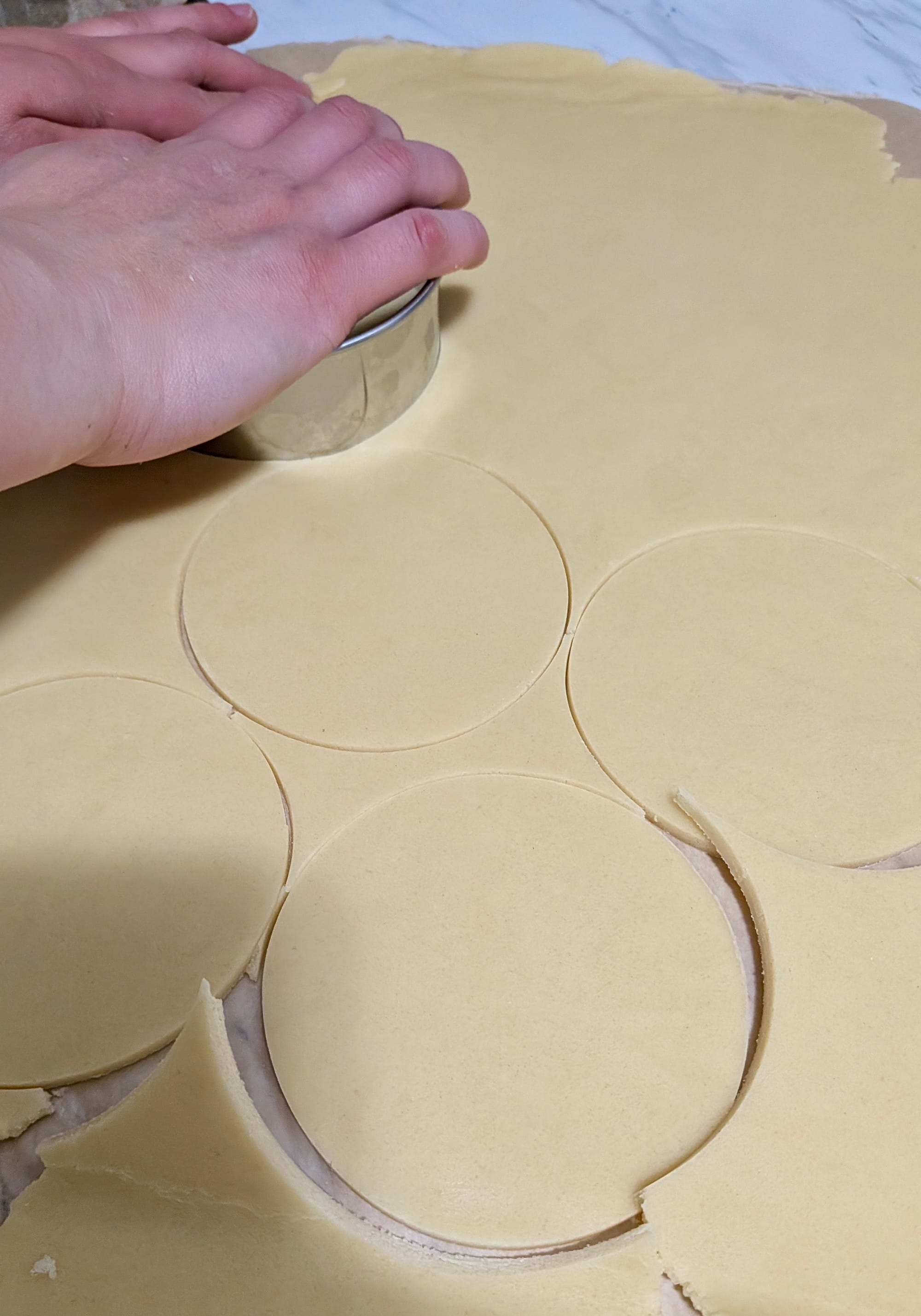
Fill — Place 2 tbsp of the filling onto one circle, spread the filling with wet fingers around the dough disk leaving 1 cm around the edge.
Seal — Use the egg wash as a glue to seal another disk on top of the circle with the filling.
Pleat and Trim — Use a fork to pleat the edges. Use the same 10cm circle cutter to remove the excess dough after pleating. Place an almond in the center of the cookie and brush with the egg wash.
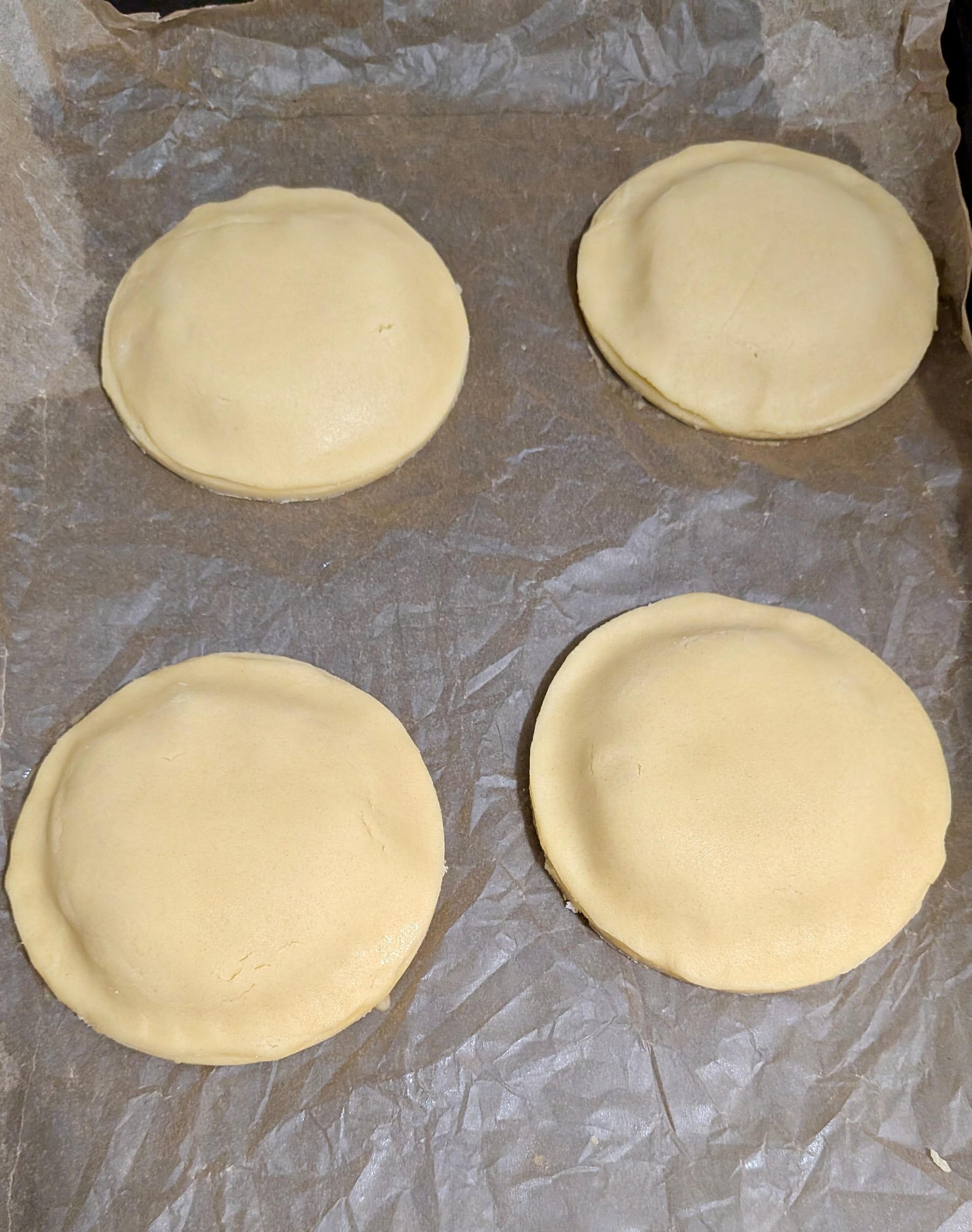
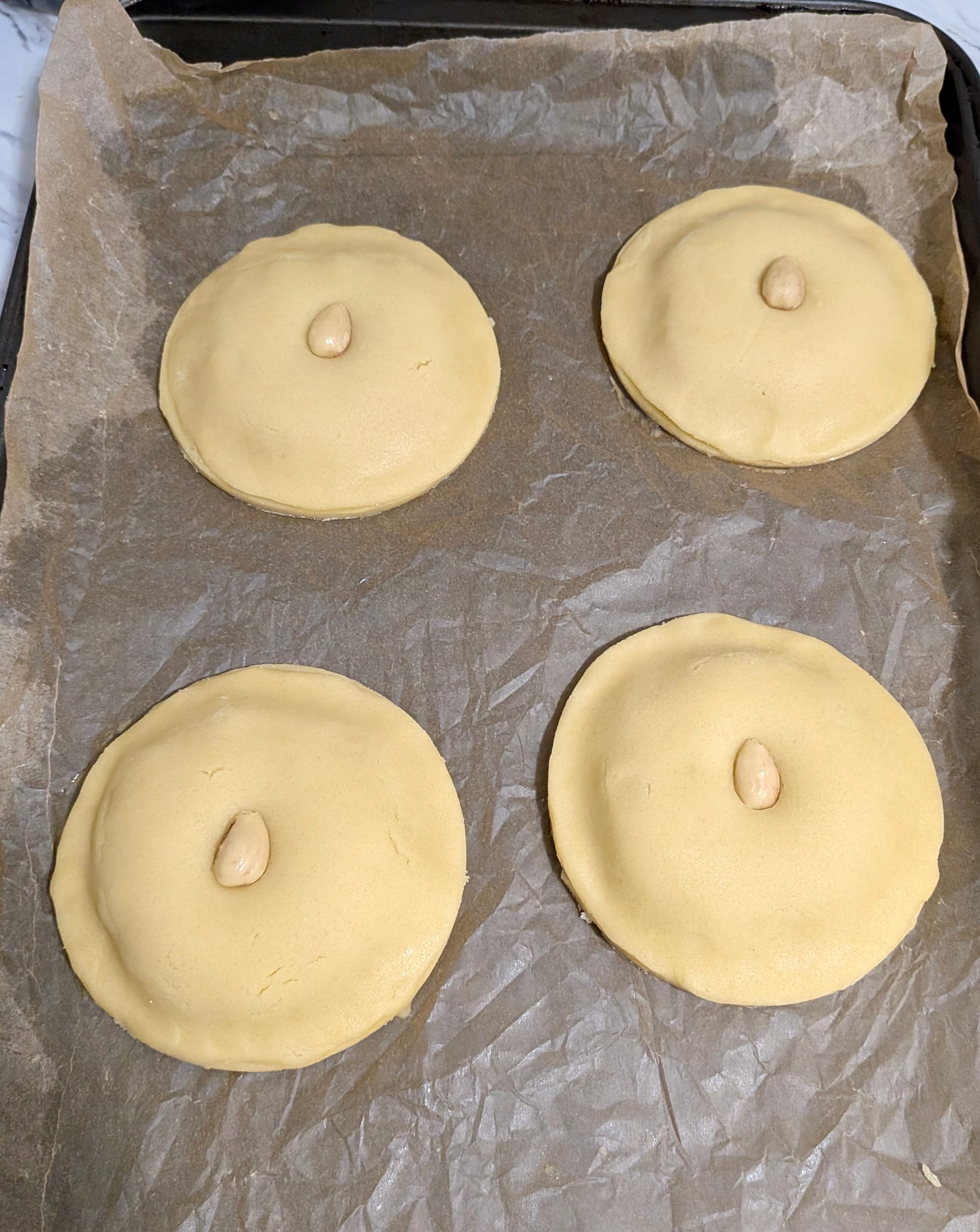
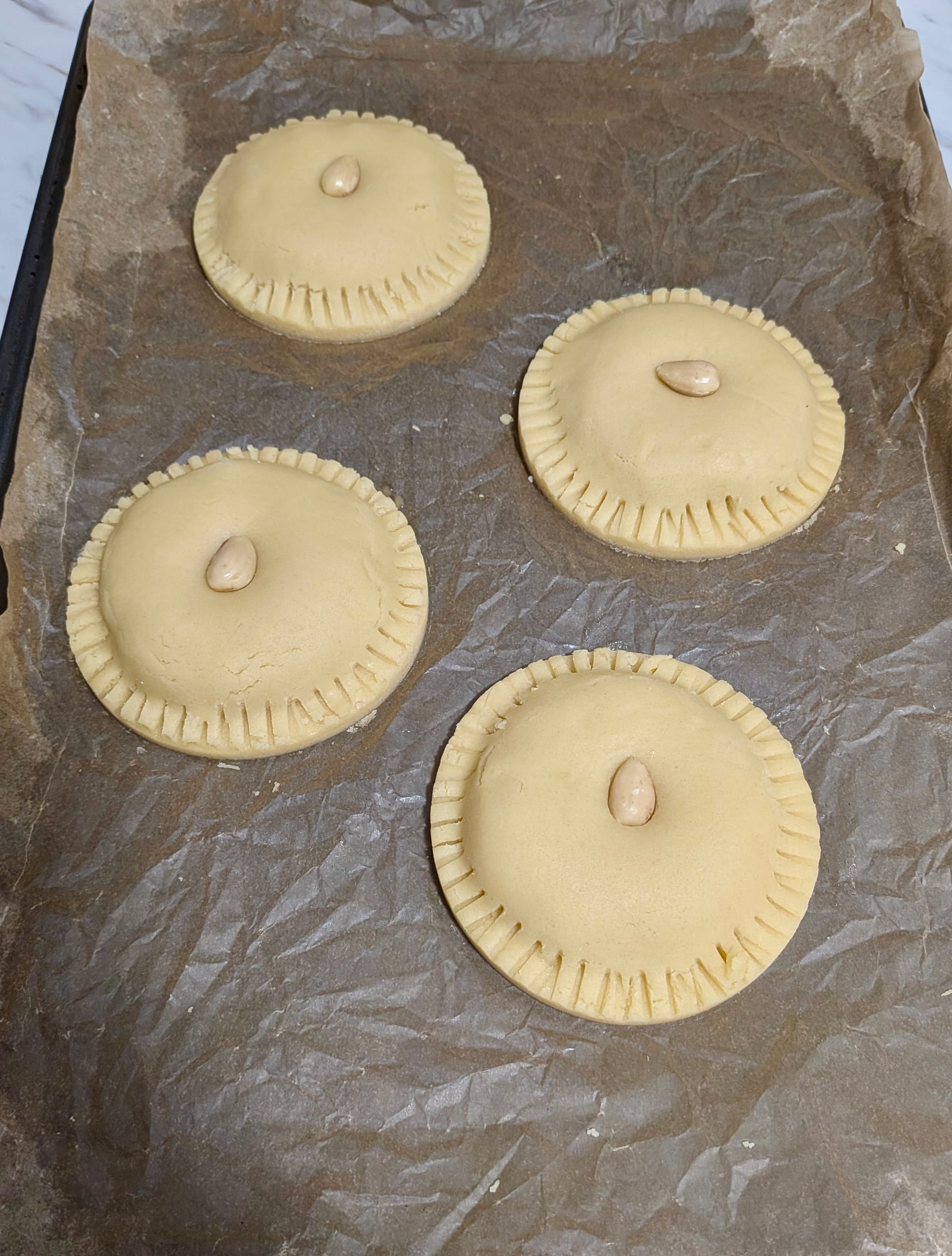
Final Chill — Return the tray to the fridge for another 10 minutes to chill everything before baking.
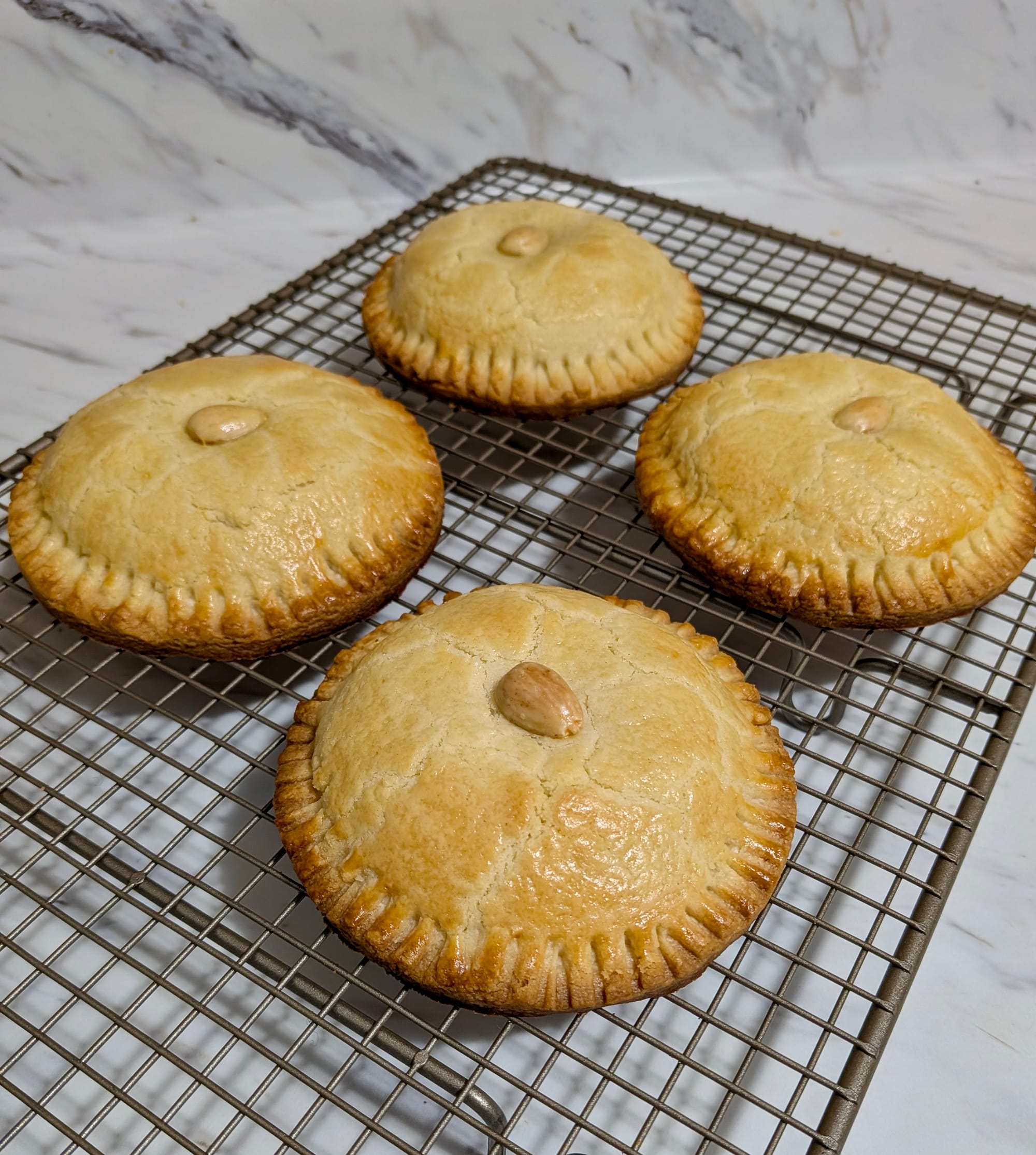
Bake — Bake for 14-17 minutes. Rotate the tray halfway at the 8-minute mark.
Cool — Once golden, let them cool on a rack before serving.
Pairing
Goes well with a nice strong coffee.
Variations
- Size: Smaller versions of the cookie are also called herenkoek.
- Holiday version: Some swap out the traditional dough for Dutch gingerbread (speculaas) during the holiday season.
- Modern flavors: Today in the Netherlands, bakers are experimenting with different flavors for the filling such as hazelnut or pistachio instead of the almond paste.
Storage and Reheating
Should be stored in an airtight container or covered at room temperature for 3-4 days.

Co-founder of Snout & Seek. Born and raised in Sri Lanka, Arnold's passion for food stems from both his Dutch and Sri Lankan roots. A graduate of Le Cordon Bleu Ottawa, Arnold's career in the culinary industry has brought him from the Netherlands to Canada, where he now teaches at a cooking school.
No spam, no sharing to third party. Only you and me.


Member discussion