
Clay Pot Rice (Bāozǎi fàn / 煲仔饭) with Sichuan Spicy Smoked Sausages and Matsutake Mushroom
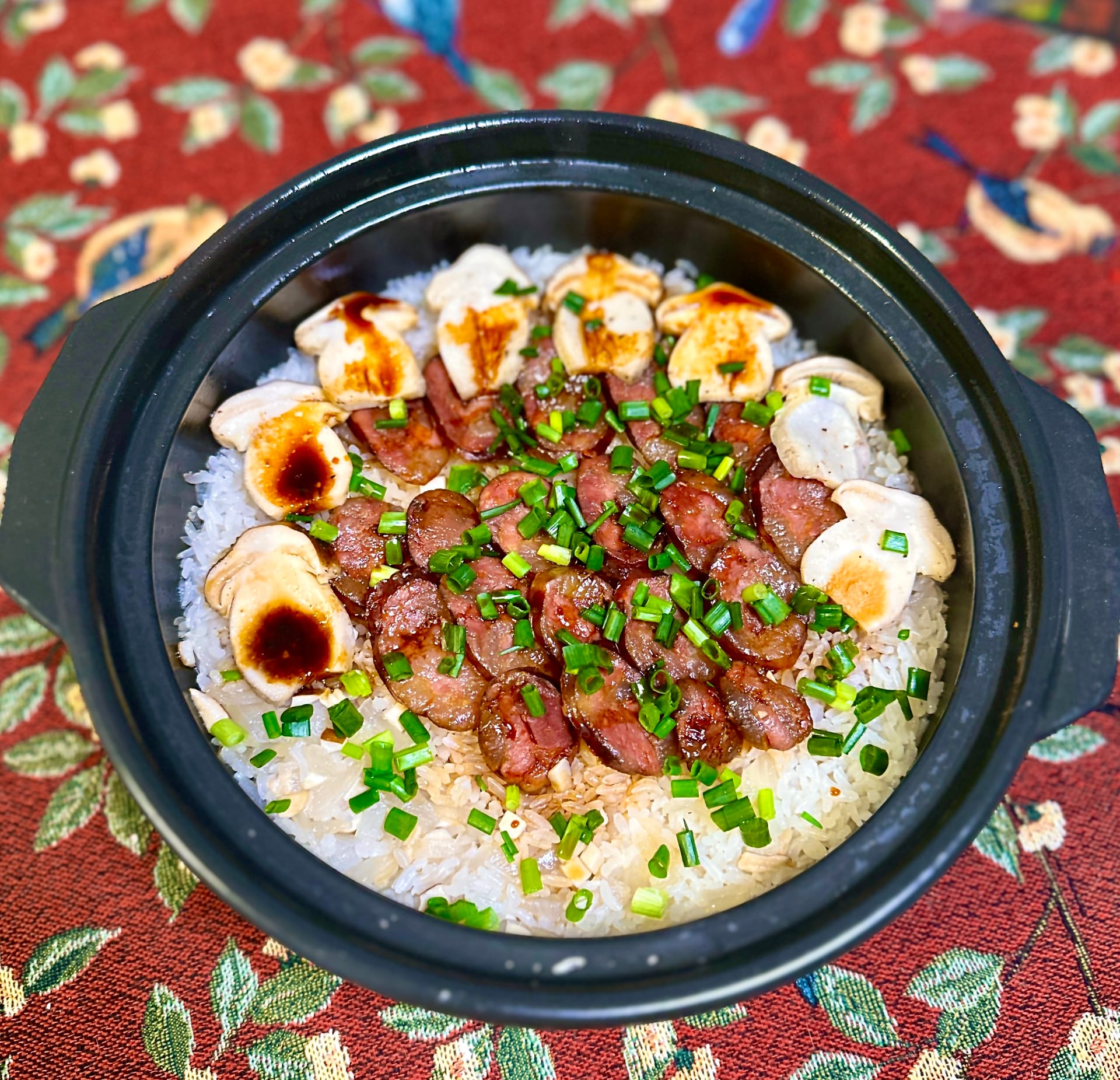
Yield: 2
Active: 15 min
Total: 35–40 min
Heat: 🌶0/5
Diet: DF
The Significance of the Dish
Clay pot rice is a classic Cantonese comfort food built around technique rather than complexity. Rice is cooked directly in a clay pot, allowing steam to cook the grains gently while the base forms a crisp golden crust known as 锅巴 (guōbā).
For this recipe, we’ve adapted the traditional method to introduce deeper winter flavors. Fragrant matsutake mushrooms from Yunnan bring an earthy aroma, while spicy Sichuan sausages smoked by our fermentation instructor and guide, Chef Tang, add warmth and depth. If, like me, you gravitate toward richer, more robust flavors during the colder months, this dish is made for you. Toppings are added partway through cooking, so their aroma infuses the rice. The dish is finished with a soy-based sauce poured hot over the rice, creating a balance of fragrance, texture, and savor.
A traditional clay pot (砂锅 - shāguō) and a cast iron pot perform differently when making 煲仔饭. Clay absorbs and releases heat gradually, creating steady steam that cooks the rice evenly while allowing the base to crisp slowly and evenly. This makes it more forgiving and better suited to achieving fluffy rice with a controlled锅巴. Cast iron, by contrast, heats aggressively and holds that heat for a long time. It forms a crust quickly and reliably, but requires closer attention, as the bottom can brown too fast if the heat is not reduced early. Clay favors balance and subtlety, while cast iron offers power and consistency, especially on modern stoves.
Ingredient Guidance
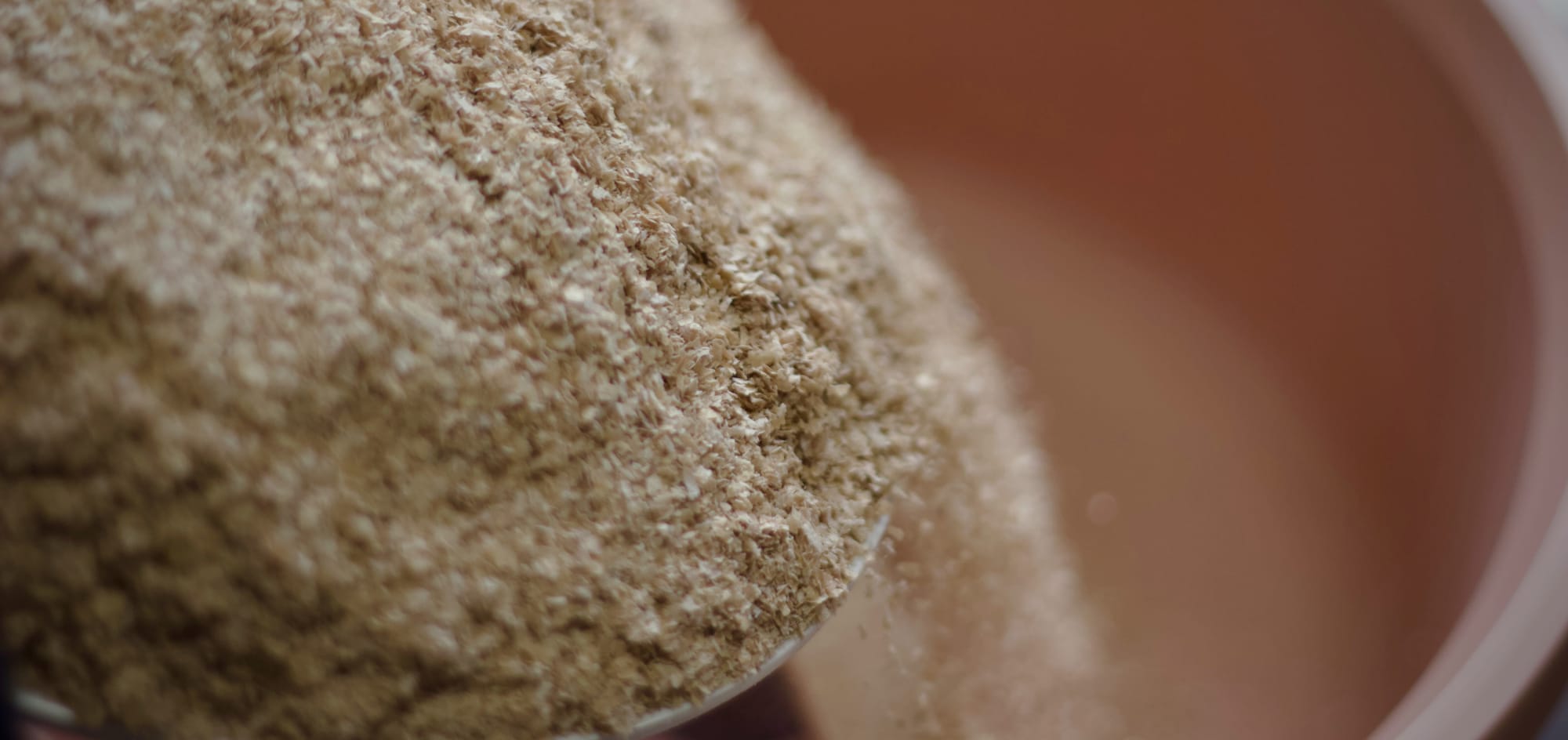
- Rice: Short- or medium-grain white rice works best. Rinsing removes excess starch and improves texture. If you have access to Asian grocery stores, we highly recommend rice from Northeast China, especially Wuchang rice. It is, by far, the best rice I’ve tasted for this dish.
- Water: The classic ratio for clay pot rice is close to 1:1 by volume.
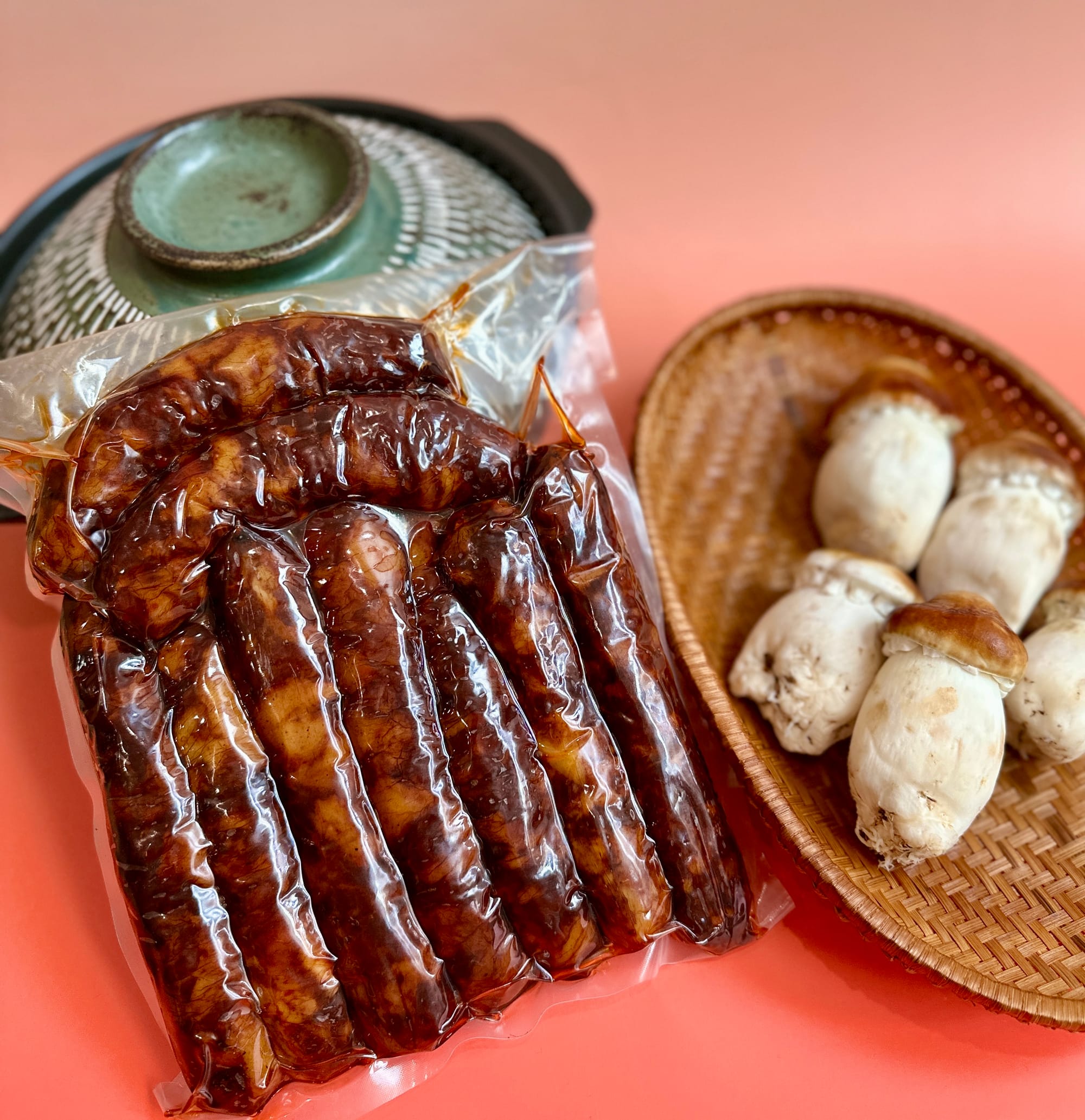
- Sausage: Traditional versions use Cantonese cured sausage, sliced thinly so the fat renders into the rice. These are usually vacuum-packed and easy to find in Asian grocery stores. For this recipe, I’ve switched to spicy smoked Sichuan sausages, which add deeper aroma and warmth.
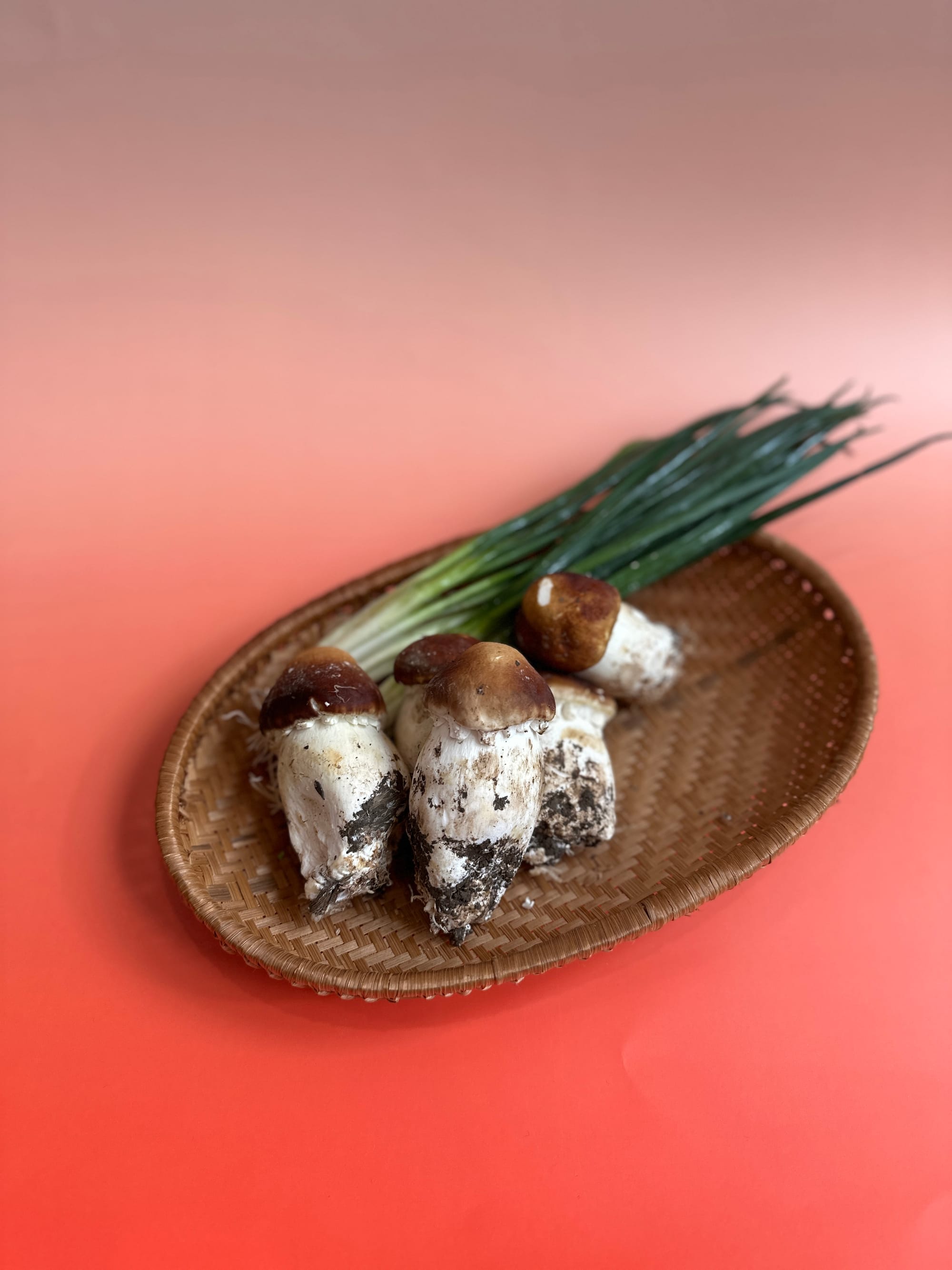
- Matsutake mushroom: A seasonal mushroom that can be difficult to find in North America. If unavailable, substitute with mushrooms you enjoy, such as chanterelles or king oyster mushrooms.
- Onion: Use white onion to build a base flavor alongside the sautéed mushrooms and sausage end pieces.
- Spring onions: Added at the end, their aroma blooms with the heat of the rice and clay pot and ties all the flavors together.
- Oil: A light coating helps form an even crust. You can substitute oil with lard for a richer, fuller flavor.
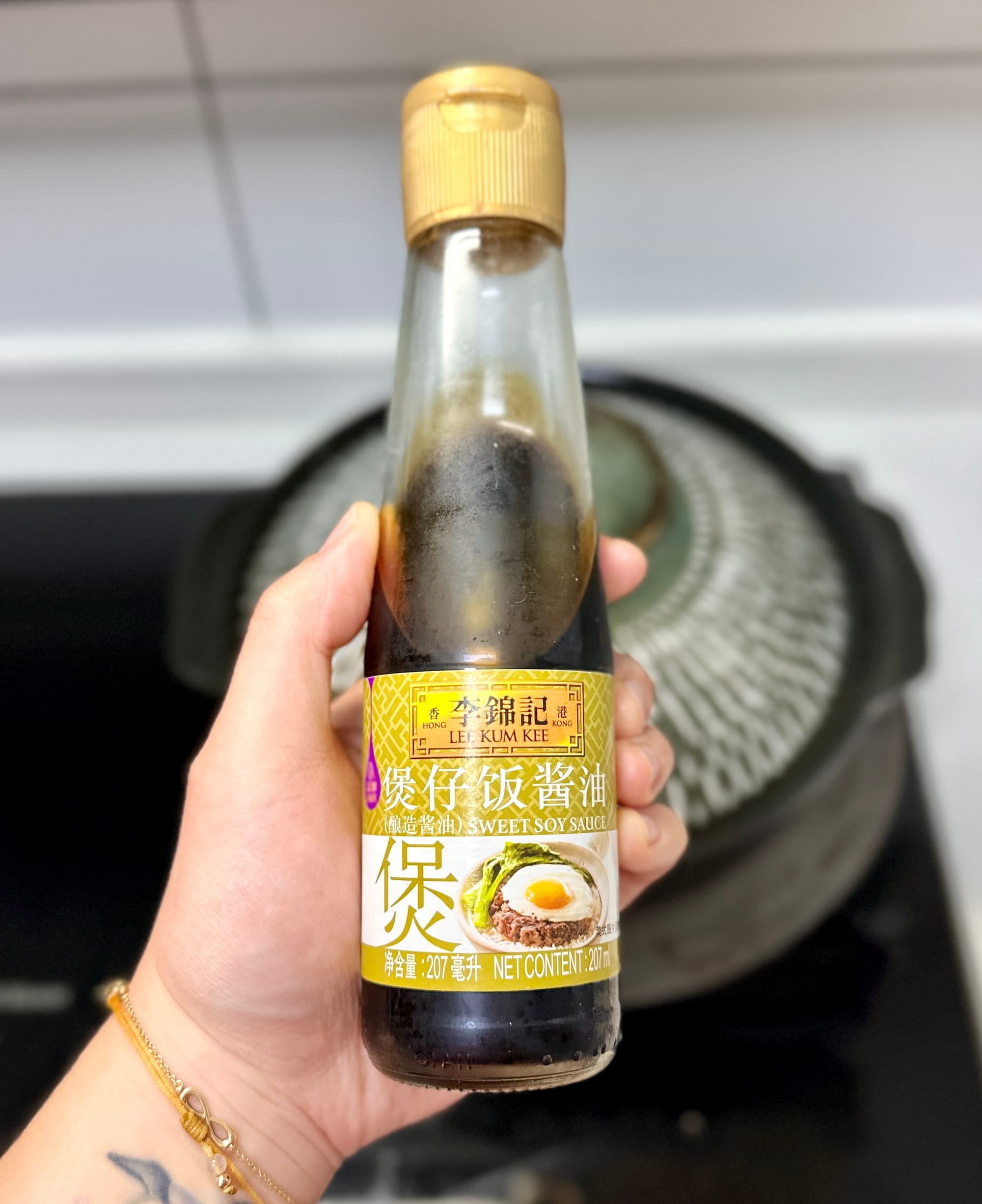
- Sauce: A simple soy sauce mixture added at the end is essential to clay pot rice. There is a special soy sauce made specifically for 煲仔饭 that is slightly sweet and commonly found in Asian grocery stores. Regular soy sauce works well if you prefer a more savory profile.
- Clay pot: Retains heat and creates the signature crispy bottom. These are widely available at Asian grocery stores. If unavailable, a cast iron Dutch oven is a solid alternative with very similar results.
Mise en place
- Rinse rice until water runs mostly clear.
- Soak rice 20–30 minutes, then drain.
- Slice the sausage thinly on a bias, dice the onion, chop the scallions (green parts)
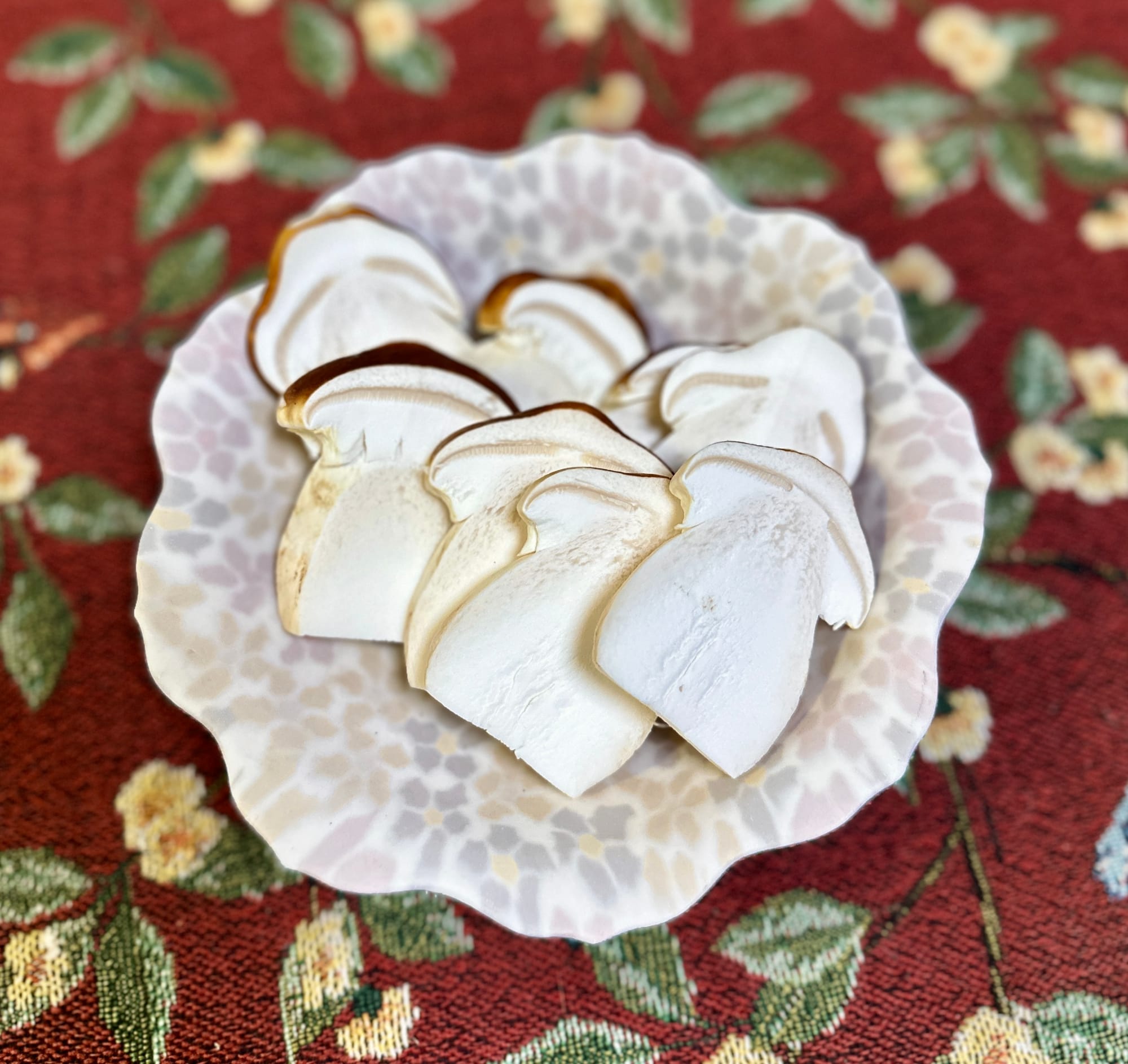
- Trim the mushroom by cutting off about one third from the base and dice it finely to build base flavor. Slice the remaining crown vertically into 0.5 cm thick pieces.
- Lightly oil the inside of the clay pot.
Ingredients
Rice
- 200 g white rice
- 200 mL water
- 5 mL neutral oil (1 tsp)
Base Aromatics
- 2 Matsutake mushrooms, cleaned and trimmed
- ¼ White onions
Topping
- 1–2 Cantonese sausages, thinly sliced
- 1 Bunch scallions
Sauce
- 30 mL light soy sauce (2 Tbsp)
Method & Procedures
Soak the rice — Rinse rice, then soak with water at a 1:1 ratio for about 30 minutes.
Slice sausage — Slice Cantonese sausage thinly on an angle, pick out the end pieces for quick base flavoring
Lard base — Add 1 tablespoon of pork lard or oil to the pot and melt it to coat the bottom.
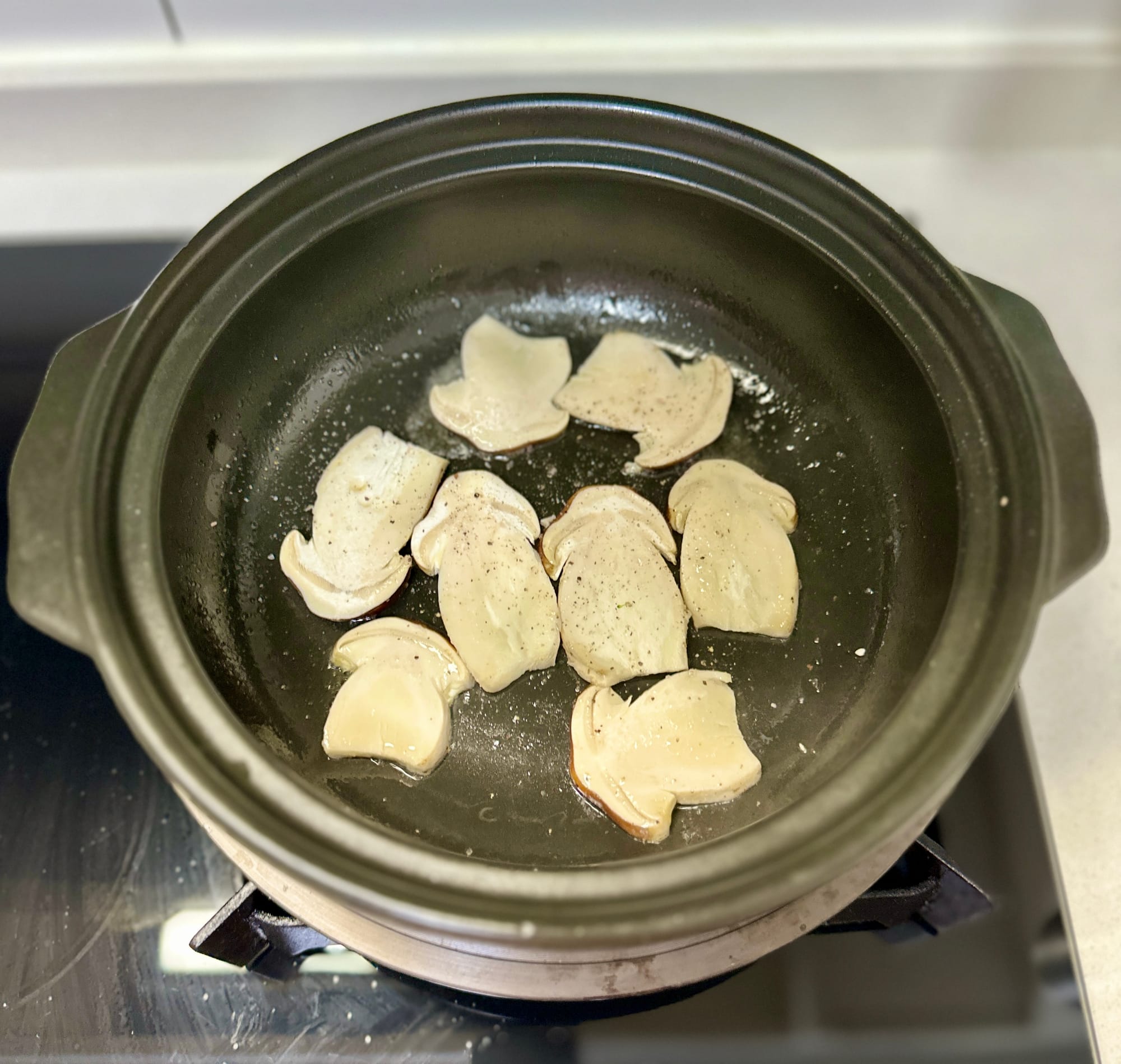
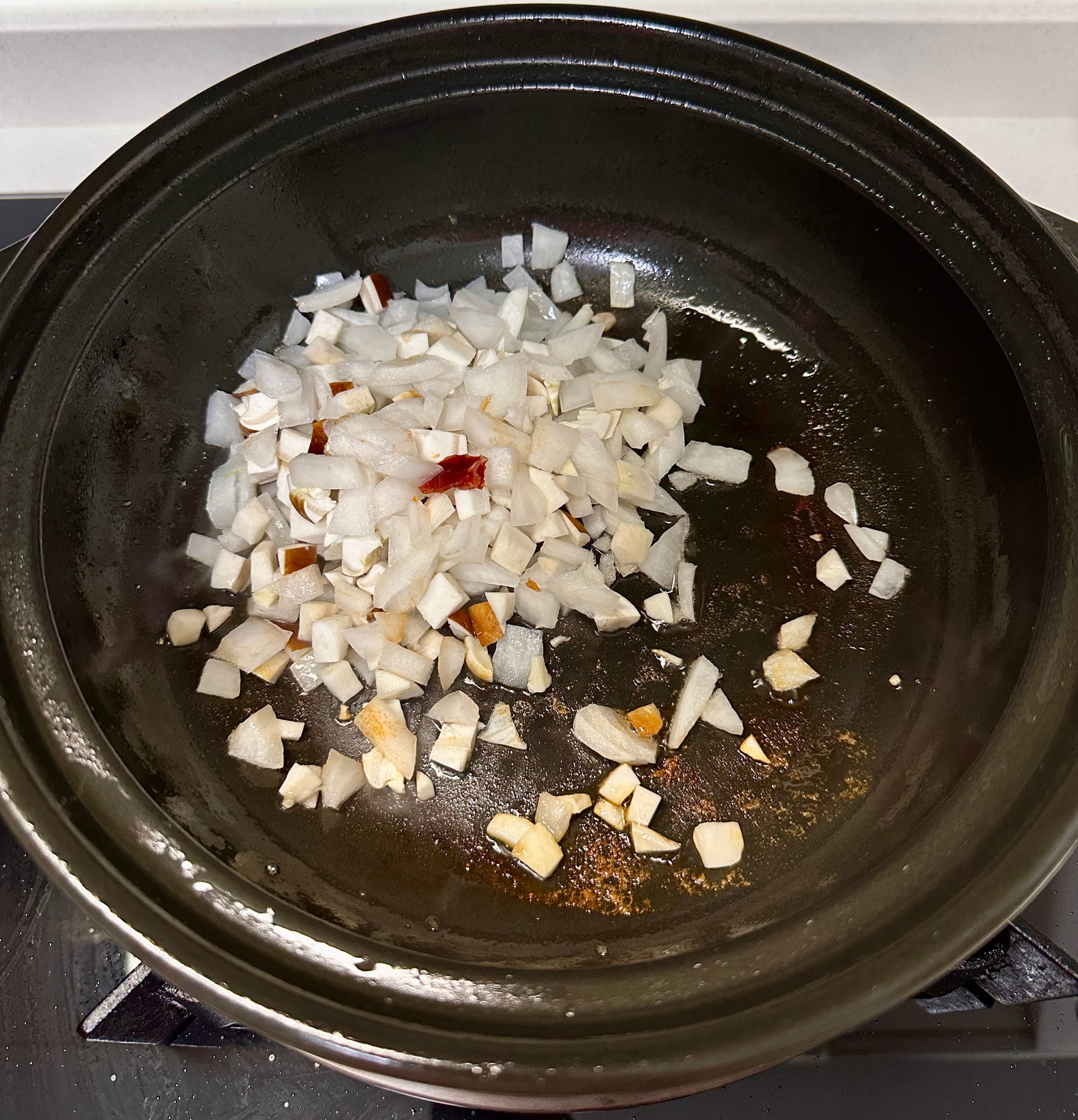
Add in aromatics — Once the pot is hot, add in the sliced mushroom slices to sear on both sides, season with salt and pepper, pick out and put them aside to add at the final step. With the same oil, add in white onions, sausage end pieces and dice mushroom end pieces to sauté to get the flavors out, for about 2 minutes until the onions turn transparent and soft.
Add the rice — Add the rice and its soaking water, stir well with the vegetable base. Bring to a boil over high heat.
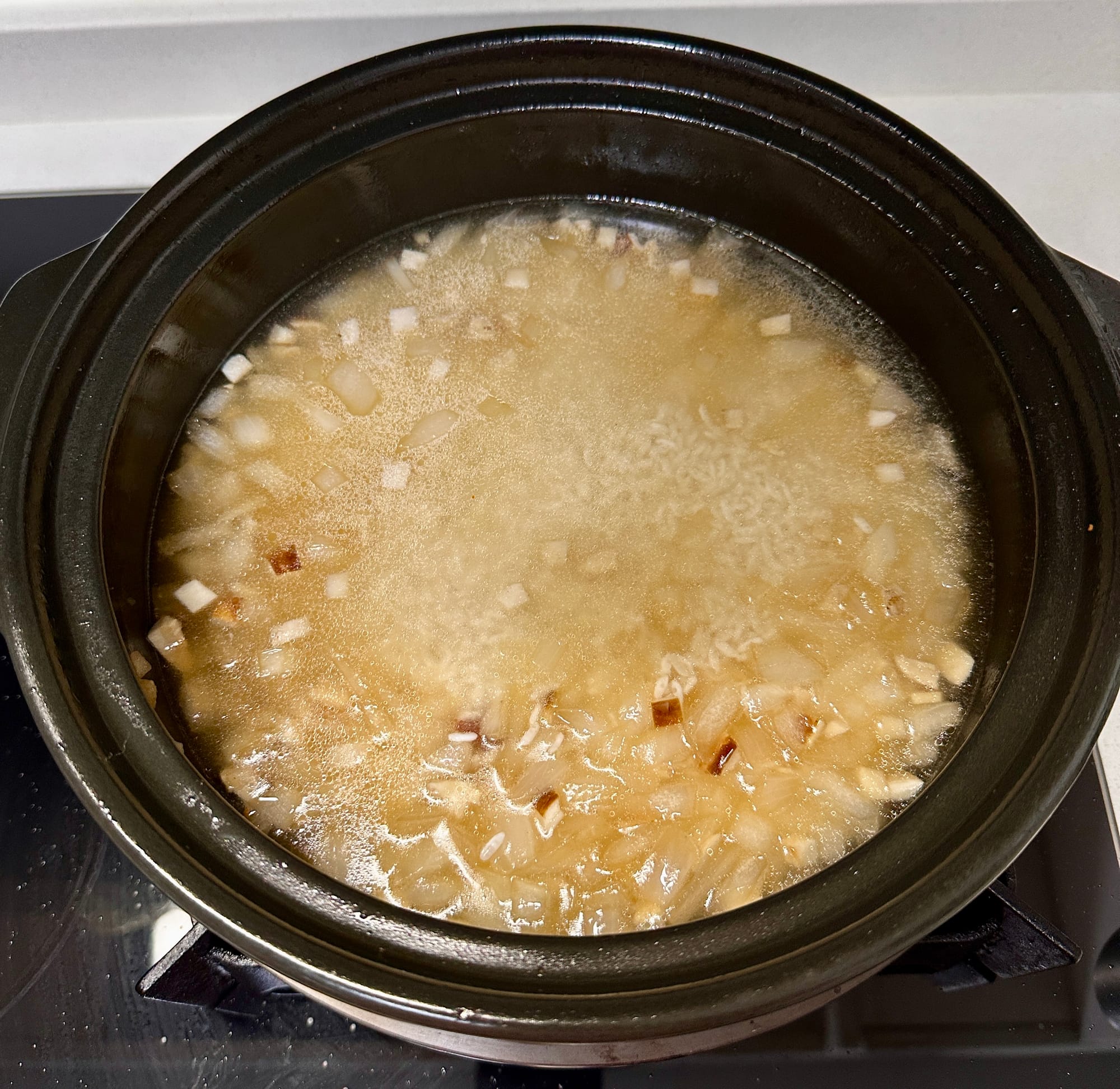
Low heat + sausage — Once boiling, turn to the lowest heat, lay the sausage on top, cover, and cook 10 minutes.
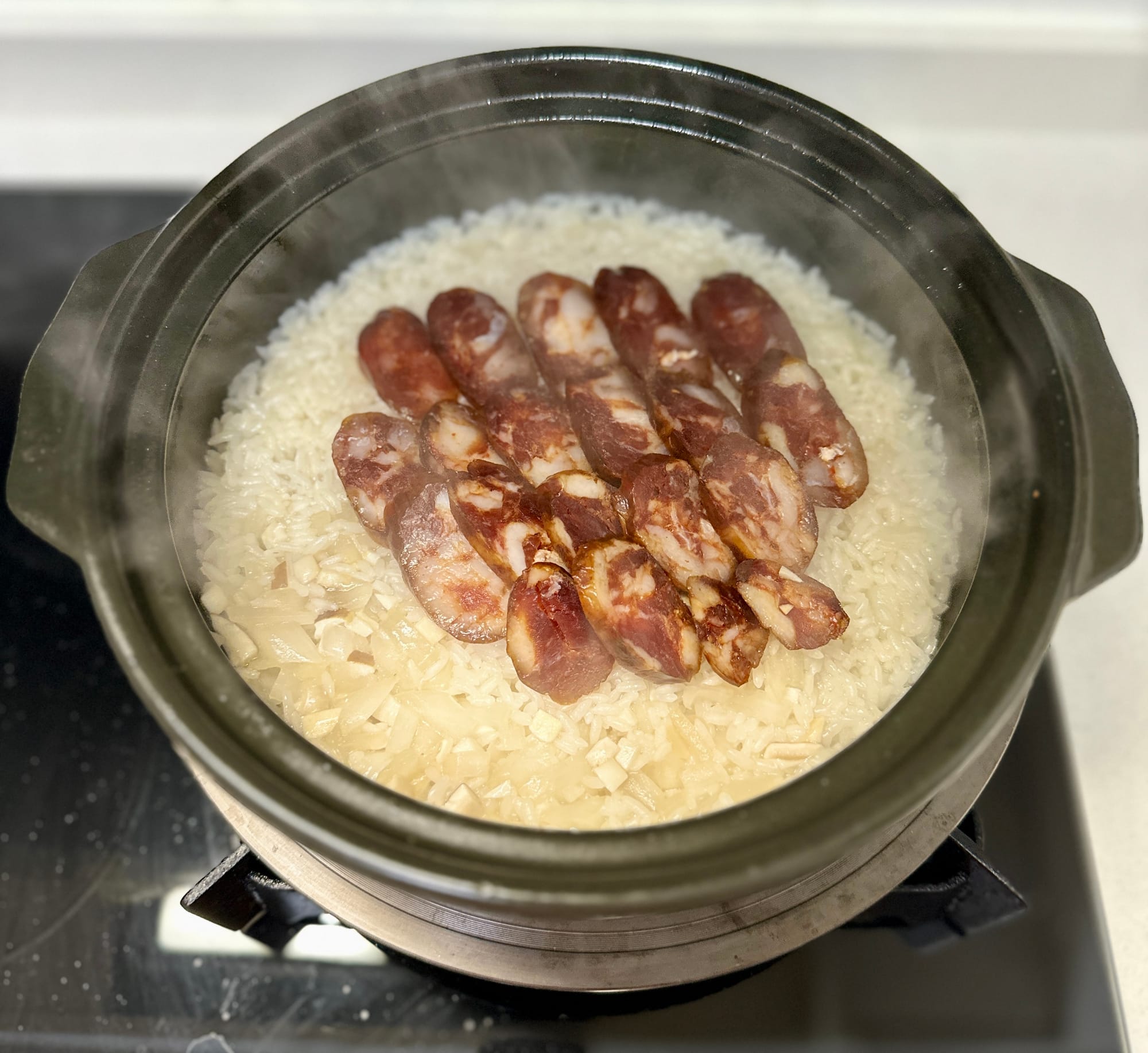
Second lard for crust — Open the lid, add another spoon of lard, and drizzle it around the inner edge of the pot to encourage a crisp crust. Cover again.
Build crust — Heat at medium-high for 5–6 minutes, then turn off the heat and rest covered for 10 minutes.
Final crisp — Finish with high heat for 1 minute.
Toppings and serve — Top with scallions and drizzle clay pot rice soy sauce (or light soy). Mix and eat.
Pro tip
Listen closely. When the rice begins to crackle softly, the crust is forming. If you smell burning instead of toasted rice, remove from heat immediately.
Finish and Serve
Serve directly from the clay pot. Scrape gently to lift rice and crust together. Garnish with scallions or blanched greens if desired.
Why This Works
Clay retains heat and distributes it evenly, allowing rice to steam and crisp at the same time. Adding toppings late prevents overcooking while letting their fat and aroma flavor the rice. The final sauce ties everything together.
Variations
- Richer version: For a more indulgent finish, add freshly shaved truffle just before serving. The aroma melts into the dish and introduces another layer of depth and luxury.
- Other vegetables: Vegetables can be added according to your preference. Root vegetables should be cooked with the base aromatics in the early stages so they fully absorb the flavors. More delicate or leafy vegetables are best added at the end. Simply scatter them over the top, close the lid, and let the residual steam gently cook them for about two minutes.
Pairings
- Side: light soup or blanched greens.
- Drink: jasmine tea or light beer.
- Condiment: chili oil or pickled vegetables.
Make-ahead and Storage
Best eaten fresh. Leftovers can be reheated in a pan with a splash of water, but crust will soften.
Glossary
- 煲仔饭 | bāozǎi fàn — clay pot rice
- 砂锅 | shāguō — A traditional Chinese clay cooking pot known for gentle, even heat retention. Its porous material allows steady steam circulation, making it ideal for slow cooking, braising, soups, and dishes like 煲仔饭 where even cooking and controlled crust formation are essential.
- 锅巴 | guōbā — crispy rice crust

A Tianjin, China native - Chloe has a deep appreciation for all things hotpot. Her appreciation of food and culture runs so deep that after a successful corporate career, she decided to uproot her life in China to attend Le Cordon Bleu Ottawa and Madrid. After working in the culinary industry in Canada, she decided to found Snout & Seek!
No spam, no sharing to third party. Only you and me.





Member discussion