Bowls Up! The Curious Chinese Idea of 下饭 (Xiàfàn)
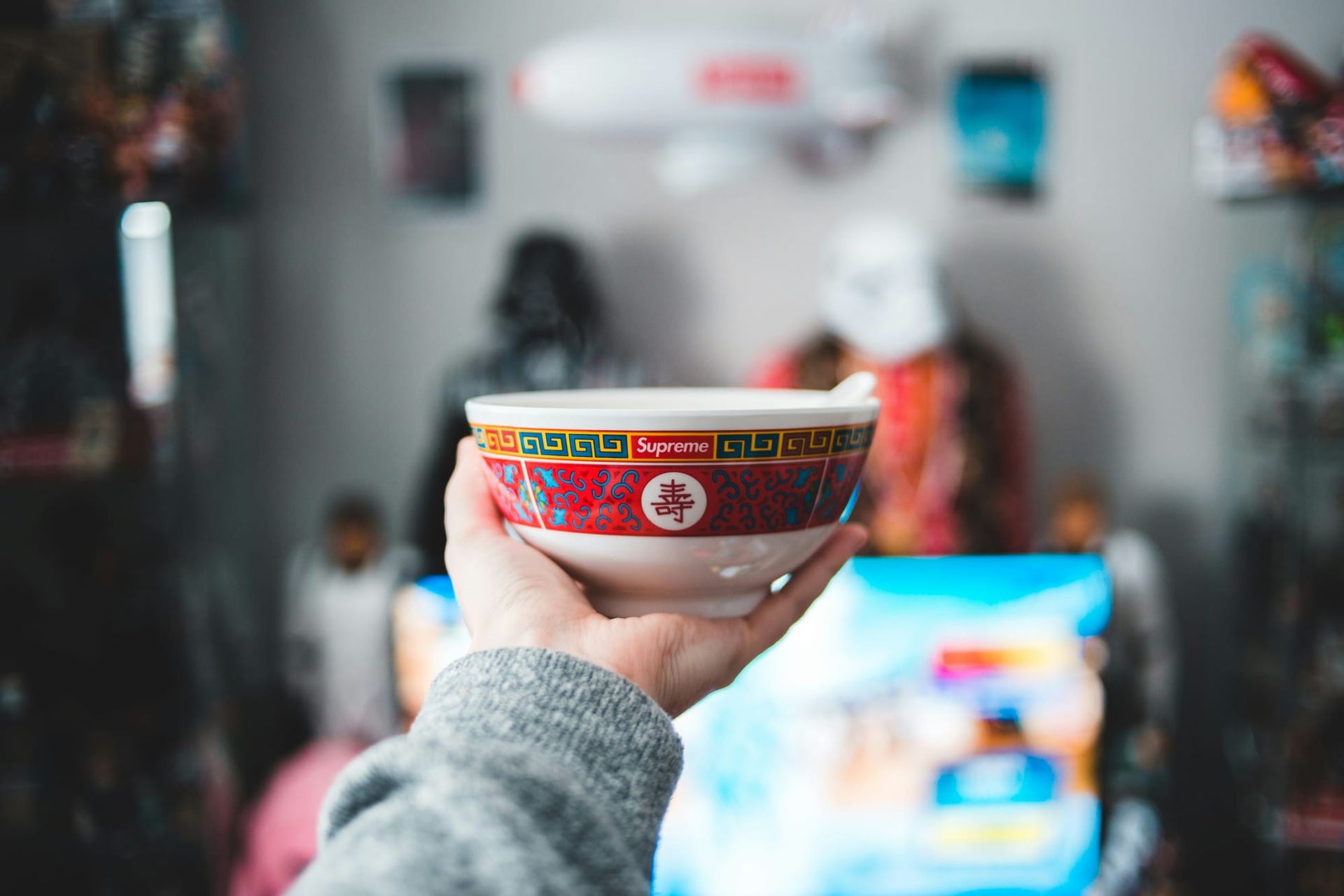
There Was Always a Bowl of Rice
As early as I can remember, I always loved rice. I loved it so much that whenever my parents brought up funny stories from my childhood, my good and easy appetite would inevitably come up.
“Compared with your sister, you were so easy to satisfy. Just give you a bowl of rice and some sauce from the stir-fry, and you could finish the whole thing without a problem!”
This was the early 1990s, when China was going through a period of dramatic change. Many families were still struggling financially, even as people became cautiously optimistic about the future. As the second child in a northern Chinese family, feeding me was an extra expense for two parents earning fairly average salaries at the time. Luckily for them, I really was quite easy to satisfy.
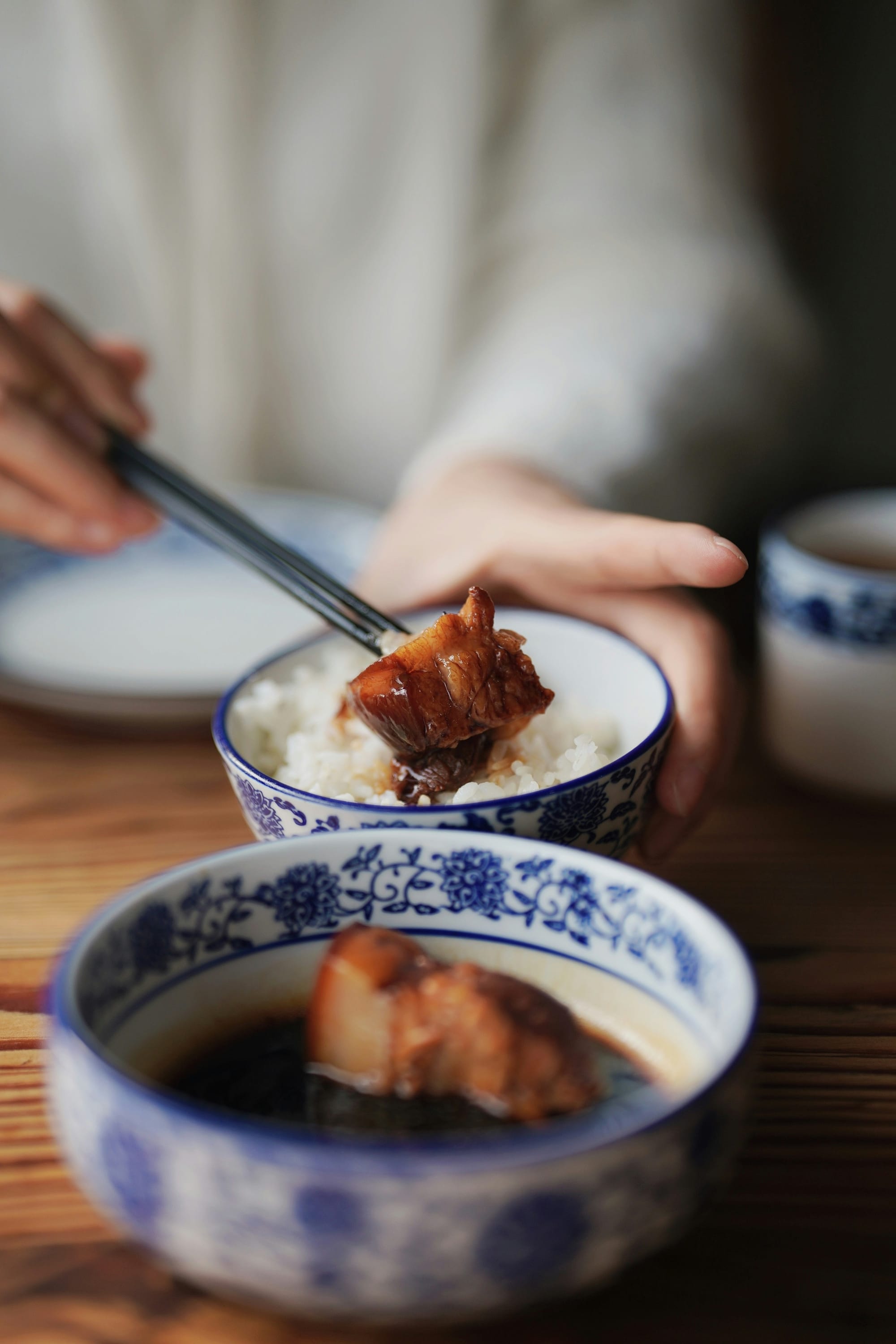
Eating rice with meat stew that has sauce is a typical way to enjoy both the meat and the rice. The pork belly stew is considered one of the best dishes to go with white rice.
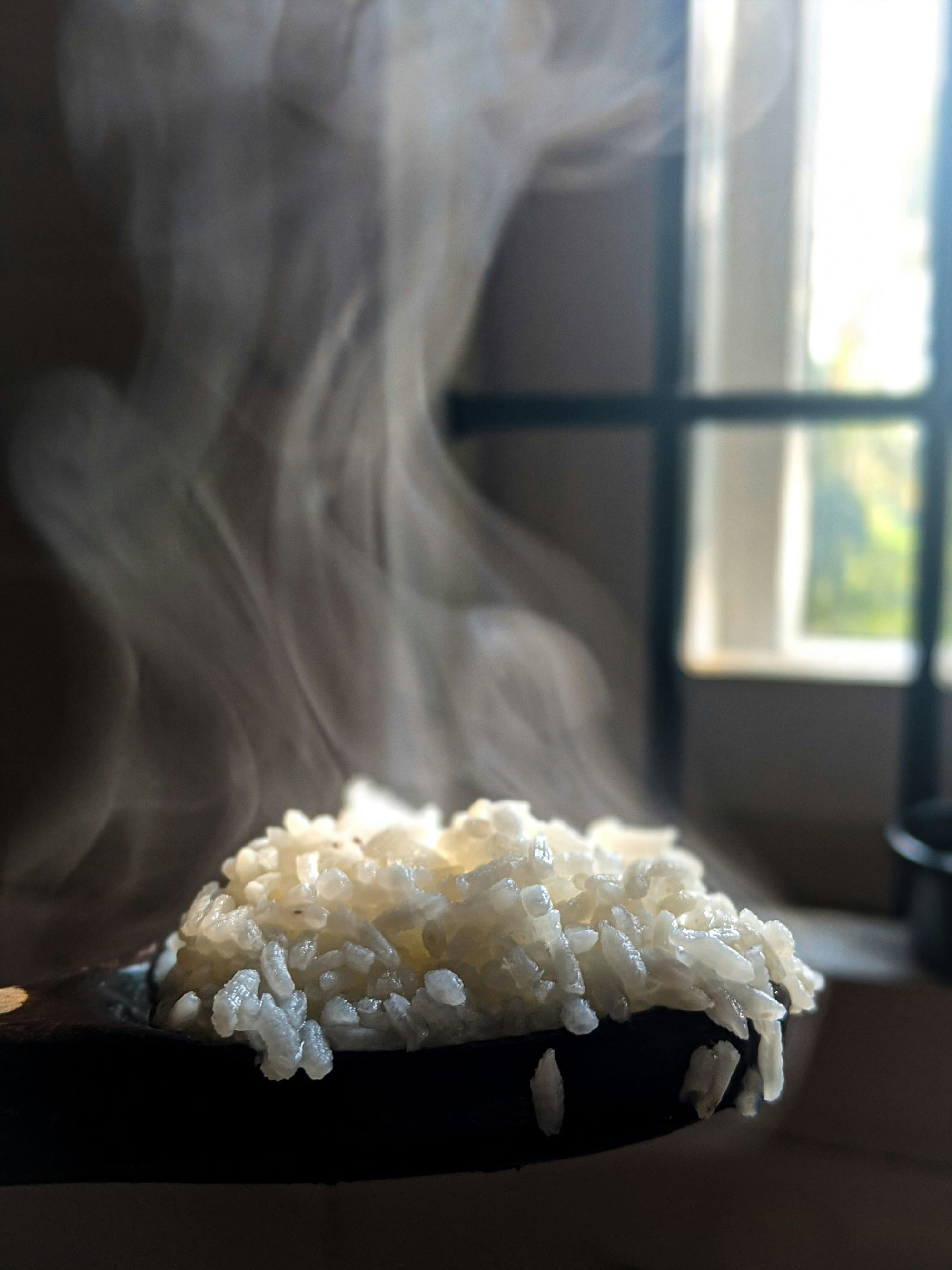
Give me some freshly cooked white rice and spoon over the sauce left at the bottom of a stir-fry, and I was happy. It is a habit I still have today. The fluffy rice soaks up the salty sauce, while a little rendered fat from the meat coats each grain with a glossy finish. Once you start chewing, the natural sweetness of the rice comes through against the salt and fat. Rich, but not too oily. Savoury, but softened by the rice.
For a child growing up in China at the time, it was perhaps the ultimate easy-to-eat food.
Xiafan is a compliment
It wasn’t until a few years ago that the word xiafan finally registered with me. If you watch food content on Chinese social media, xiafan (下饭) is one of the most common ways to describe a dish packed with flavor, the kind of food that makes you want to eat more rice.
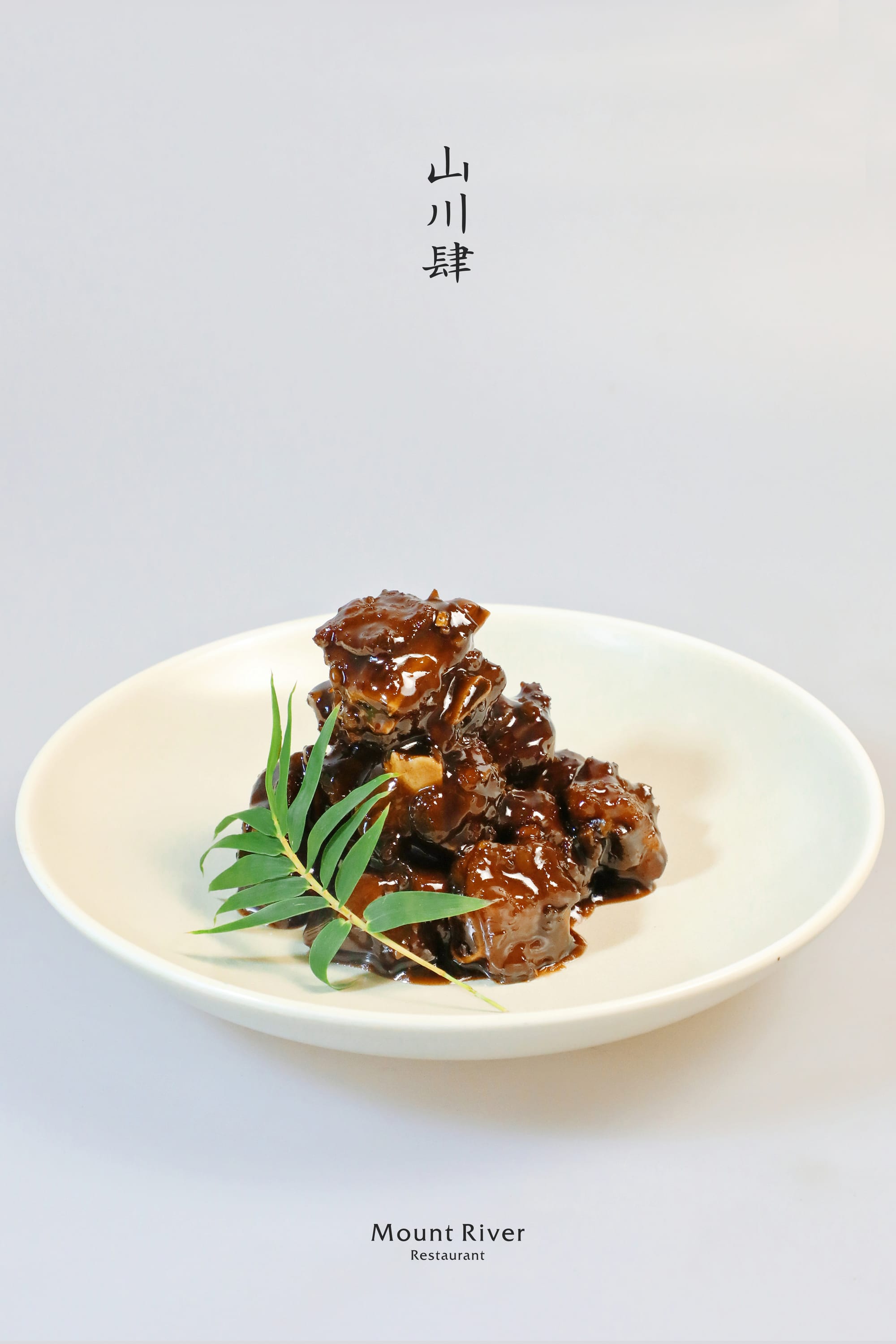
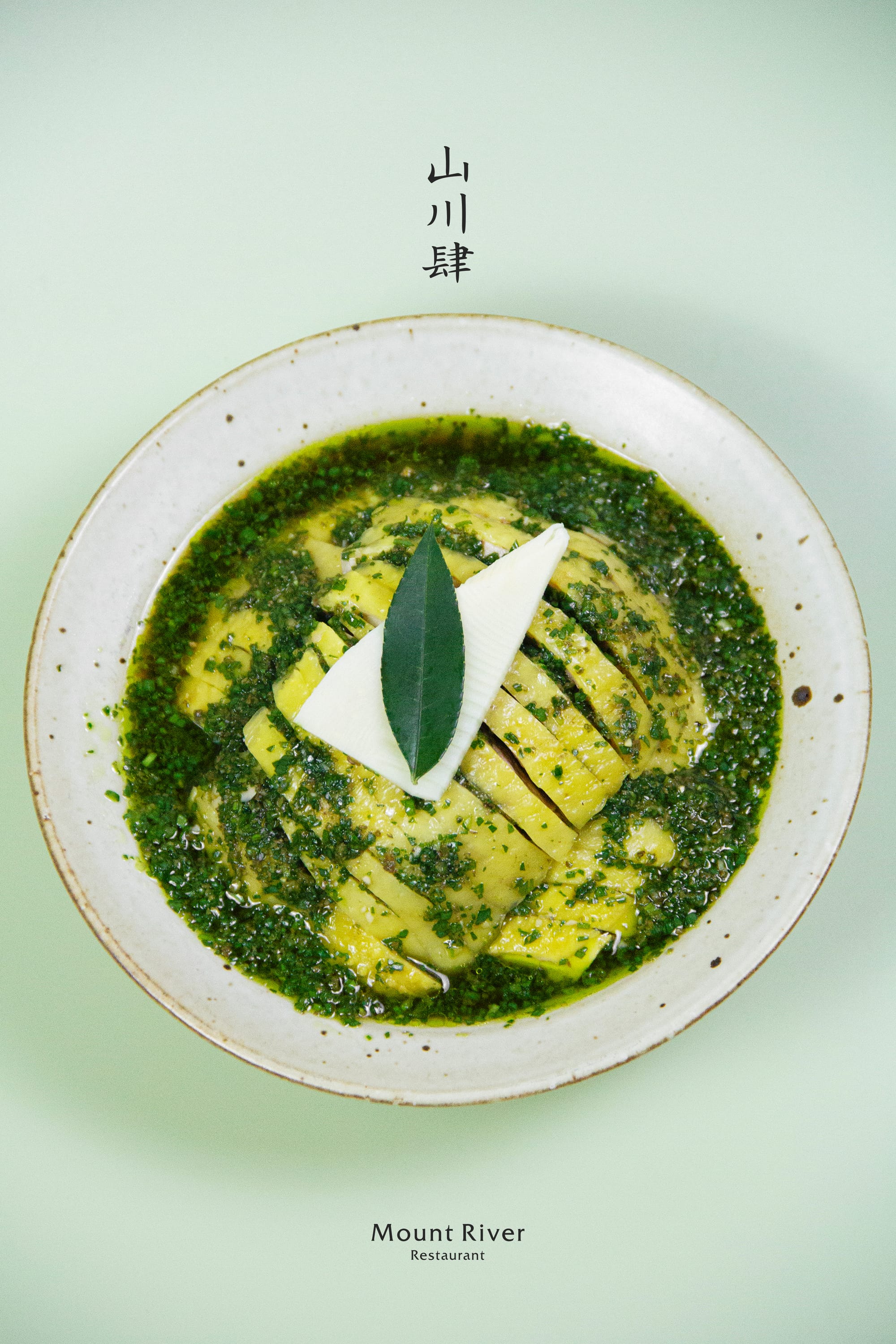
Dishes in MountRiver Restaurant in Luzhou, Sweet and Sour Pork and Sichuan Peppercorn Chicken. Credit: MountRiver Restaurant
The word came up again when I was interviewing local restaurants in Sichuan for our fermentation research. Xiafan was repeatedly used to describe the fermented condiments Sichuanese have eaten for generations. From simple paocai served with rice, porridge, or steamed buns, to stir-fries and elaborate banquet dishes made with fermented condiments and vegetables, these foods all have one thing in common: they make the staple food easier and more enjoyable to eat.
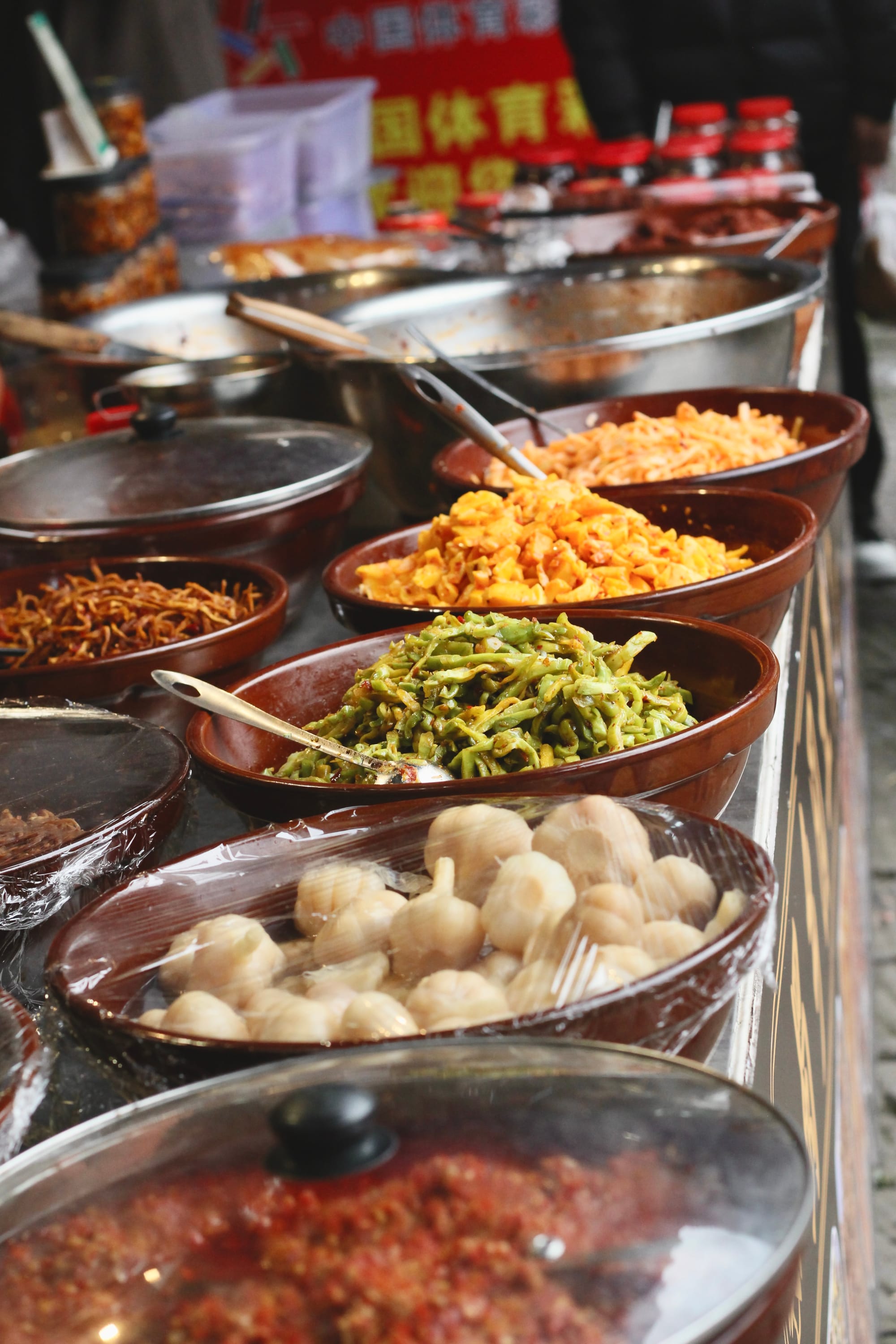
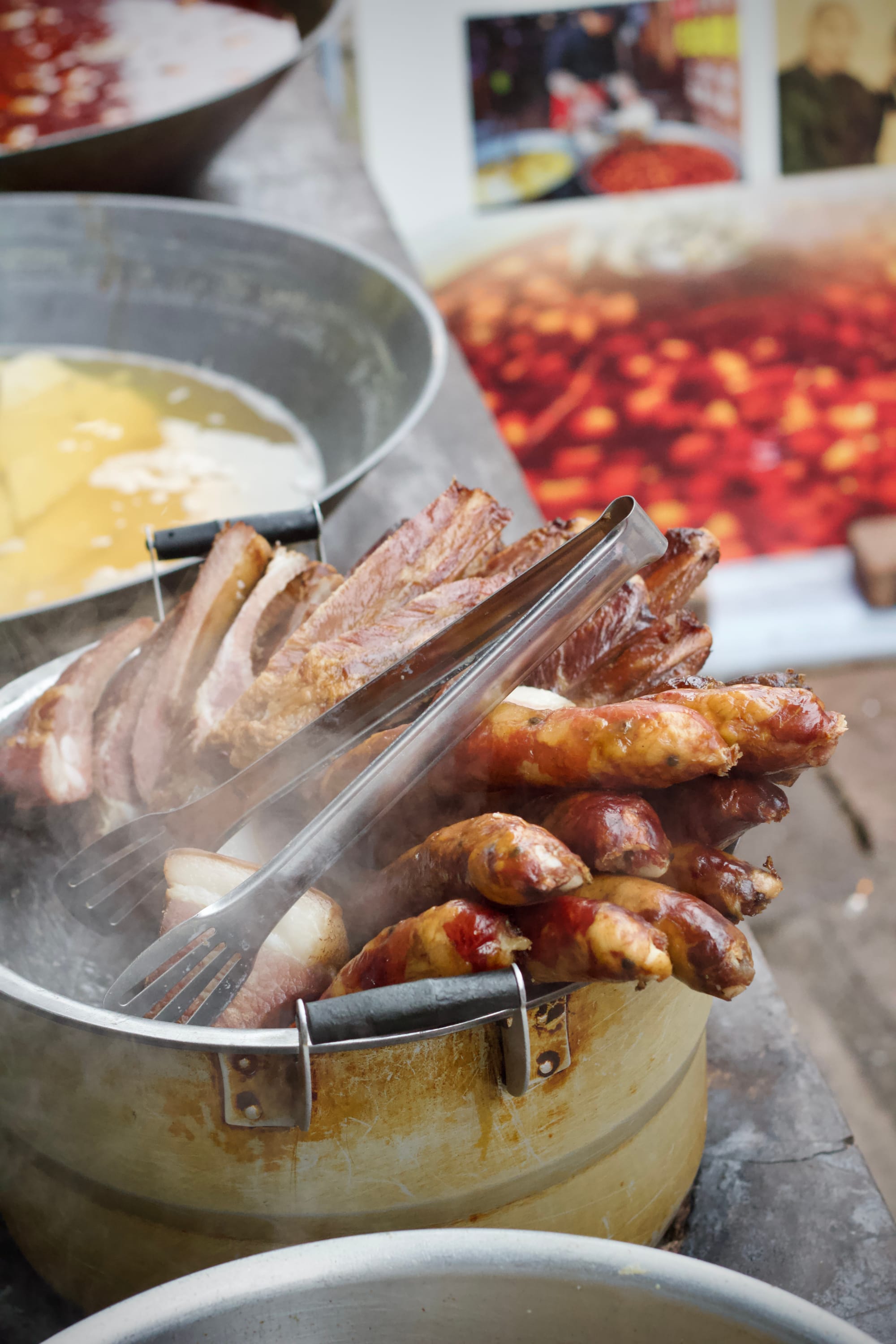
Fermented condiments and cured meats are typical xiafan dishes for people in Sichuan.
In that sense, xiafan is perhaps one of the humblest compliments you can give a dish, but also one of the proudest. It doesn’t need to mean refined, expensive, or technically impressive. It simply means the food is so satisfying that you want another bite of rice, and perhaps another bowl.
Staple Foods: A Product of Agricultural Society
There has always been some confusion among our foreign friends visiting China for the first time and trying to order at restaurants. Beyond the occasional funny or awkward menu translation, I am often asked what exactly “staple food” means and why it has a category of its own.
To me, as a native Chinese, the idea of staple food – zhushi (主食) feels completely natural. Rice, noodles, steamed buns, dumplings and other grain-based foods belong to one category, while cai (菜), the dishes we eat alongside them, belong to another. But explaining why we divide a meal this way turns out to be far more complicated than identifying the allergens on a menu.
The answer, at least partly, takes us back to China’s long history as an agricultural society.

The idea of a staple food is closely connected to the way agricultural societies developed. Once people began cultivating crops on a large scale, grains such as rice, wheat, millet, and sorghum became reliable sources of calories that could be harvested in quantity and stored for long periods of time.
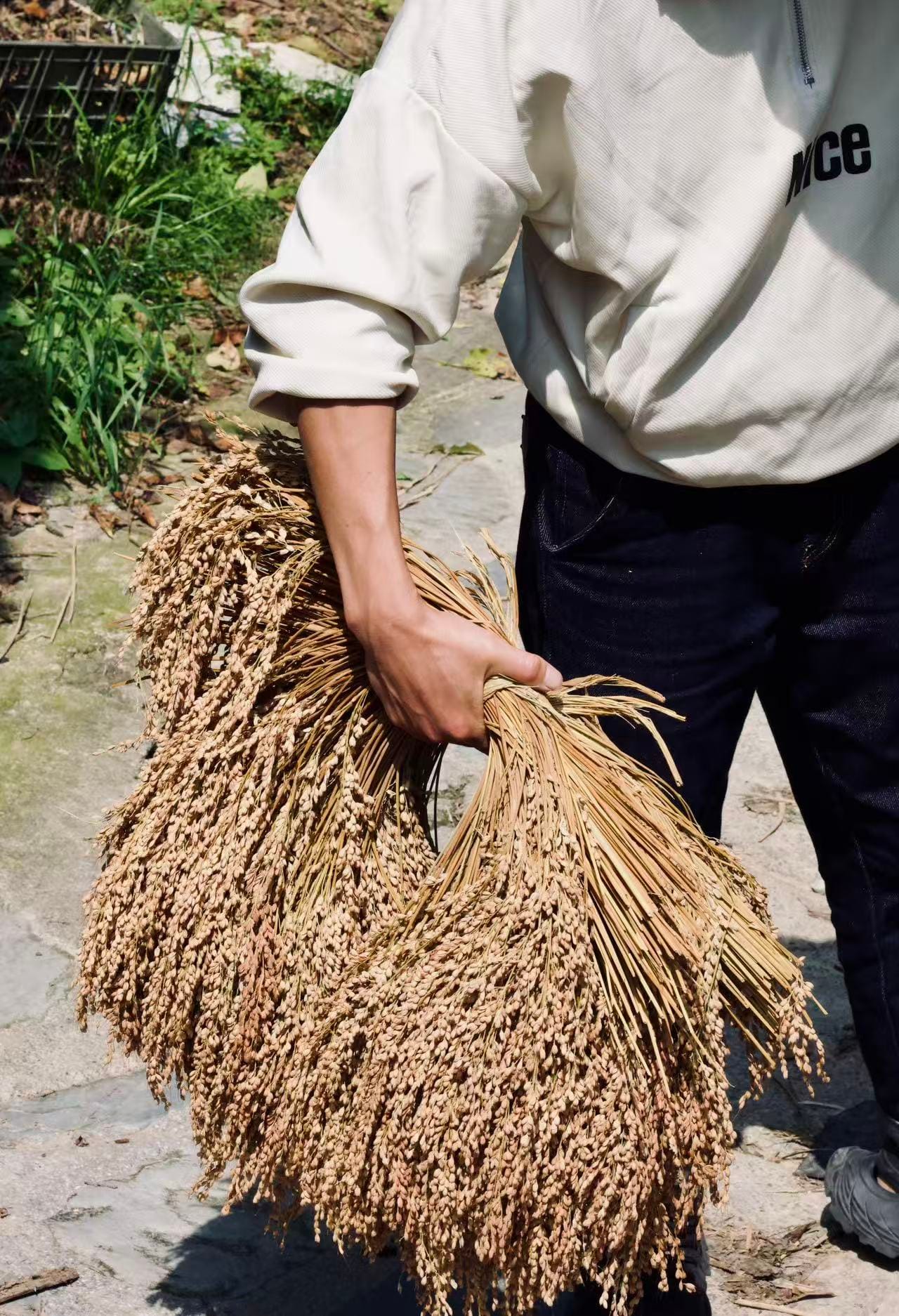
They were also relatively economical compared with meat and many other foods. For ordinary families, the practical way to feed everyone was therefore to build a meal around a large amount of grain, while using smaller amounts of vegetables, meat, preserved foods, and condiments to provide additional nutrition and, importantly, flavor. In northern China that staple might be wheat or millet, while further south rice became dominant, but the basic relationship remained remarkably similar: the staple filled the stomach, while the dishes gave you a reason to keep eating it.
Bowls Up! The Art of Living Economically
Geography and economics also played a role in determining what went into the bowl. In regions such as the Yangtze River Delta and Pearl River Delta, mild climates, productive farmland, extensive waterways, access to seafood, and long histories of trade gave people relatively diverse sources of vegetables, fish, meat, and other ingredients. Cantonese cuisine, for example, often celebrates the idea of preserving an ingredient’s original flavor (原味), with freshness itself becoming something worth appreciating.
However, in areas that were historically more closed off and had limited access to resources, rice and other staple foods were often what people relied on most to fill their stomachs. With fewer options available, making these staples satisfying and flavorful became even more important.
This way of eating is still visible in Guizhou today, where the sheer variety of fermented condiments is remarkable. Chili, vegetables, soybeans, fish, and other local ingredients are fermented and preserved in countless ways, creating intensely flavored foods that can be eaten in small amounts alongside rice.
When we visited a Dong community in Guizhou, local farmers told us that before heading out to work in the rice fields, they would prepare a basket of steamed rice to take with them for the day. They would eat some for breakfast and bring the rest to the fields for lunch, accompanied by a selection of fermented condiments. The rice provided the energy needed for a long day of physical work, while small amounts of salty, sour, spicy, and fermented foods made bowl after bowl of rice enjoyable. It was xiafan in perhaps its most practical form: a little flavor helping a lot of rice go a long way.
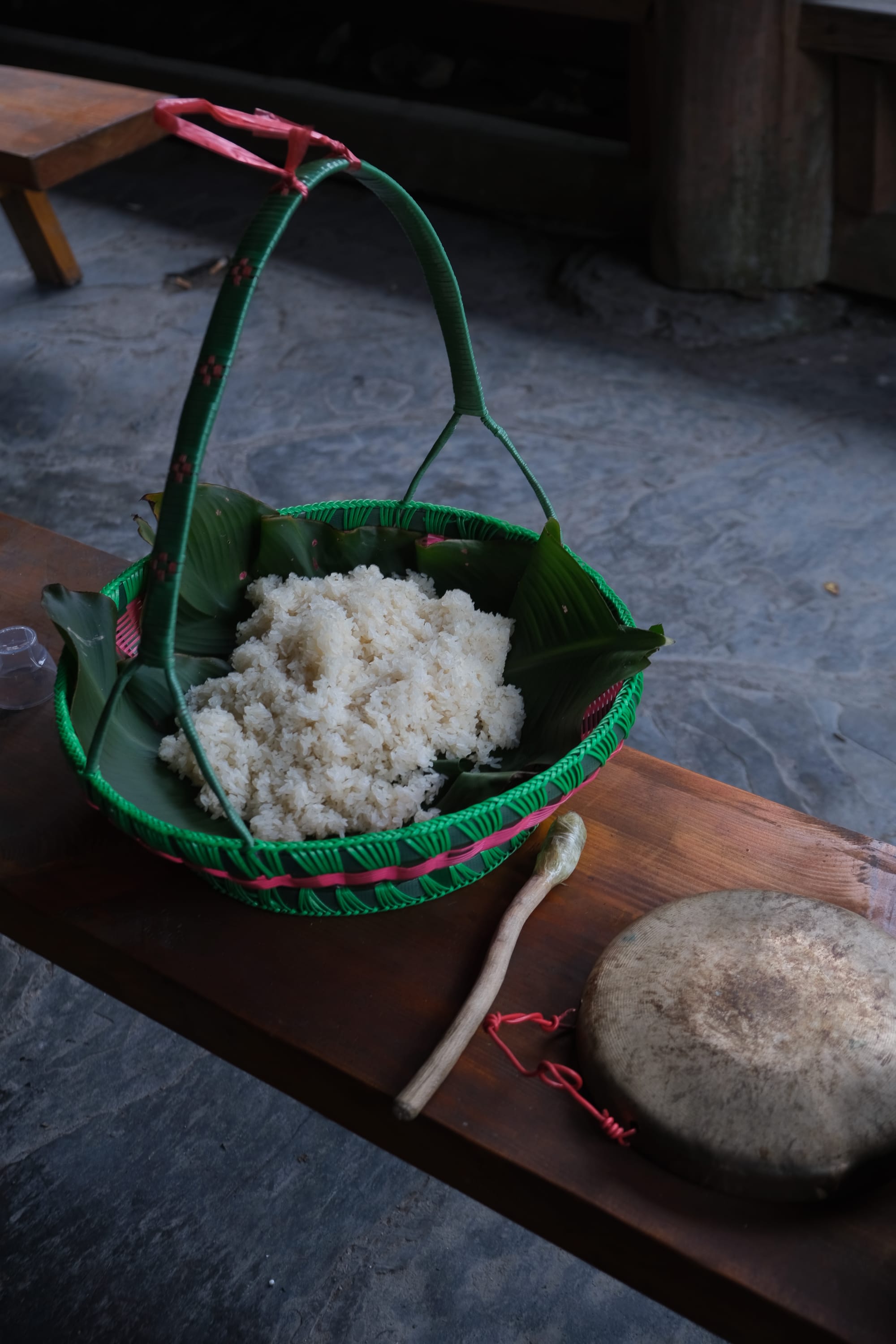
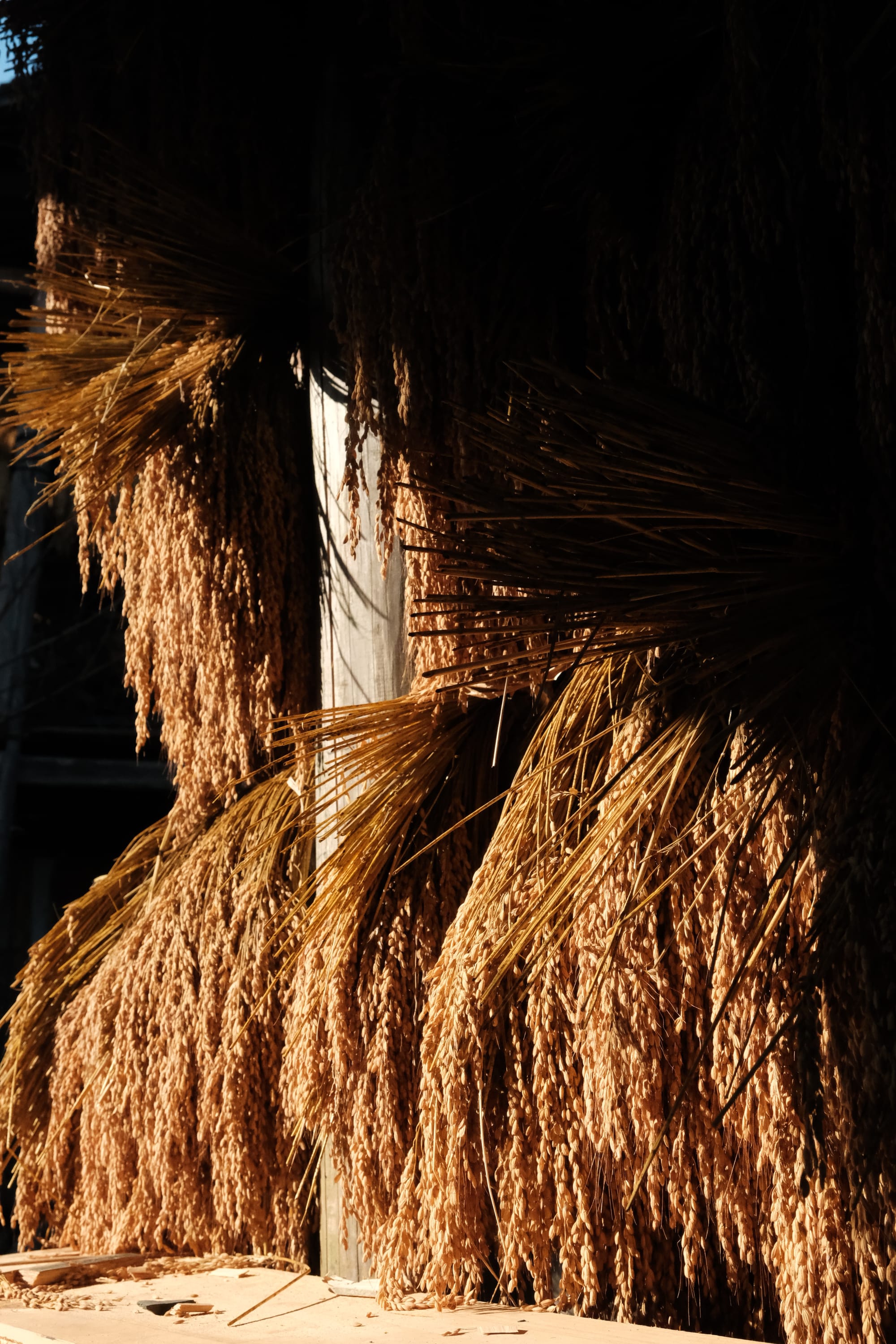
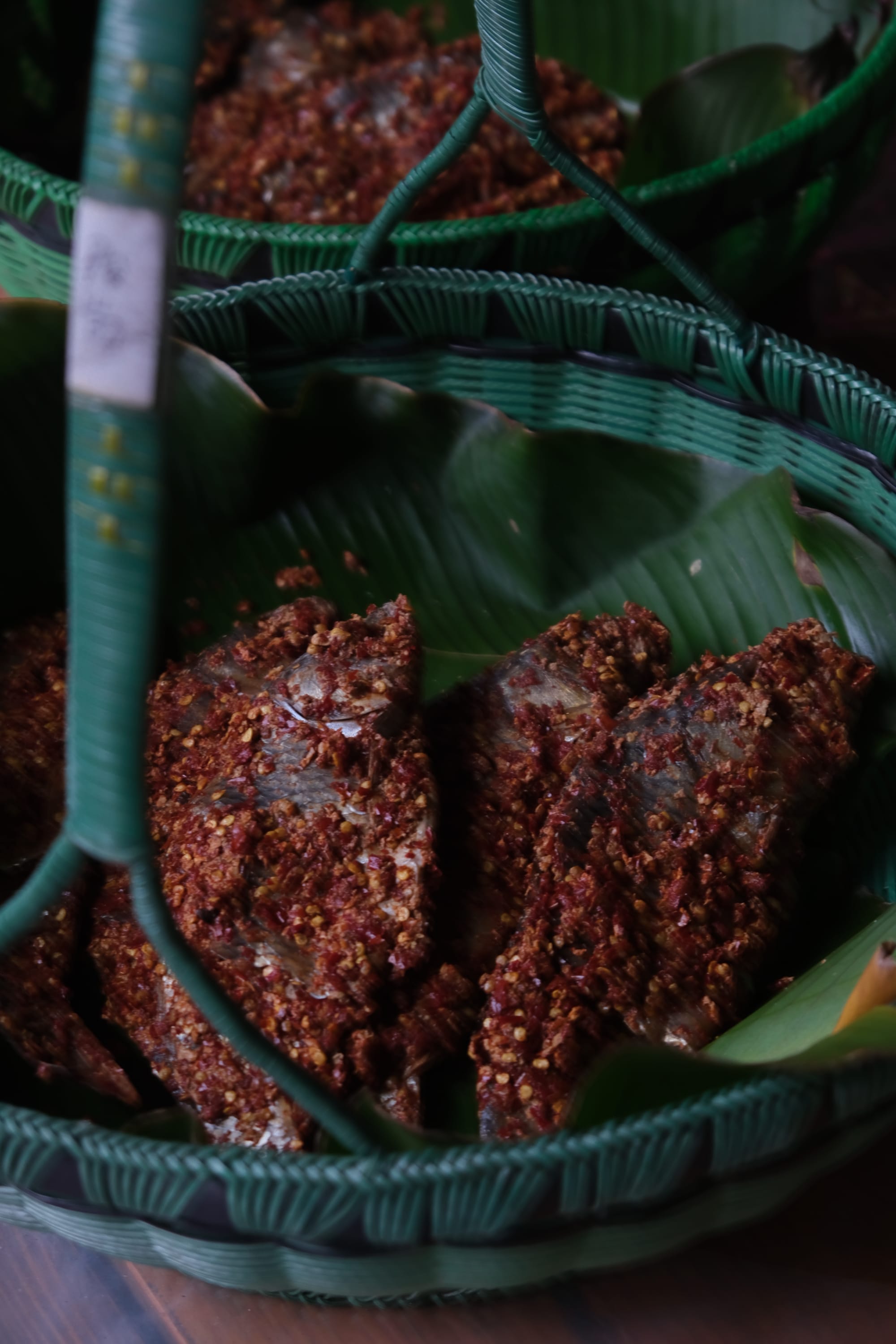
First: Glutenous rice in the basket as both staple food and a full meal for Dong people who works in the rice field. | Second: Bushels of glutonous rice, drying in the sun. | Third: Fermented fish with rice and chili powder.
While people nowadays buy sophisticated, high-tech Japanese rice cookers in pursuit of the perfect bowl of rice, I have returned to using the most basic cast-iron pot. My favourite rice has always come from Northeast China, where fertile black soil, long summer days, cool nights, and a single annual harvest give the rice its distinctive aroma, plump texture, and subtle sweetness. Whenever I cook it, I still get excited by how fragrant, fluffy, and delicious a freshly made pot of rice can be.
Like an empty plate, a bowl of white rice holds endless possibilities. It can be covered with the sauce left at the bottom of a stir-fry, paired with a small piece of furu or some paocai, or become the starting point for an entirely different meal. Even before I know what I am going to eat with it, a good bowl of rice already feeds both my stomach and my imagination.
Perhaps that is why, after all these years, I still get so excited about a simple bowl of white rice. Xiafan is a state of mind.
Bowls up!

A Tianjin, China native - Chloe has a deep appreciation for all things hotpot. Her appreciation of food and culture runs so deep that after a successful corporate career, she decided to uproot her life in China to attend Le Cordon Bleu Ottawa and Madrid. After working in the culinary industry in Canada, she decided to found Snout & Seek!
No spam, no sharing to third party. Only you and me.
Member discussion