Baijiu: The Moving Banquet
Chapter 1: The Banquet
Social gatherings in China can be a lot, especially when food is involved. As a child born in the 1980s, I consider myself fully immersed in China’s dining culture. I remember sitting at large round banquet tables with my parents, surrounded by adults and children I barely knew. The adults talked, ate, drank, and smoked while we children occupied ourselves as best we could. This was a different era, when smoking was still common at the dinner table and secondhand smoke was simply part of the atmosphere.
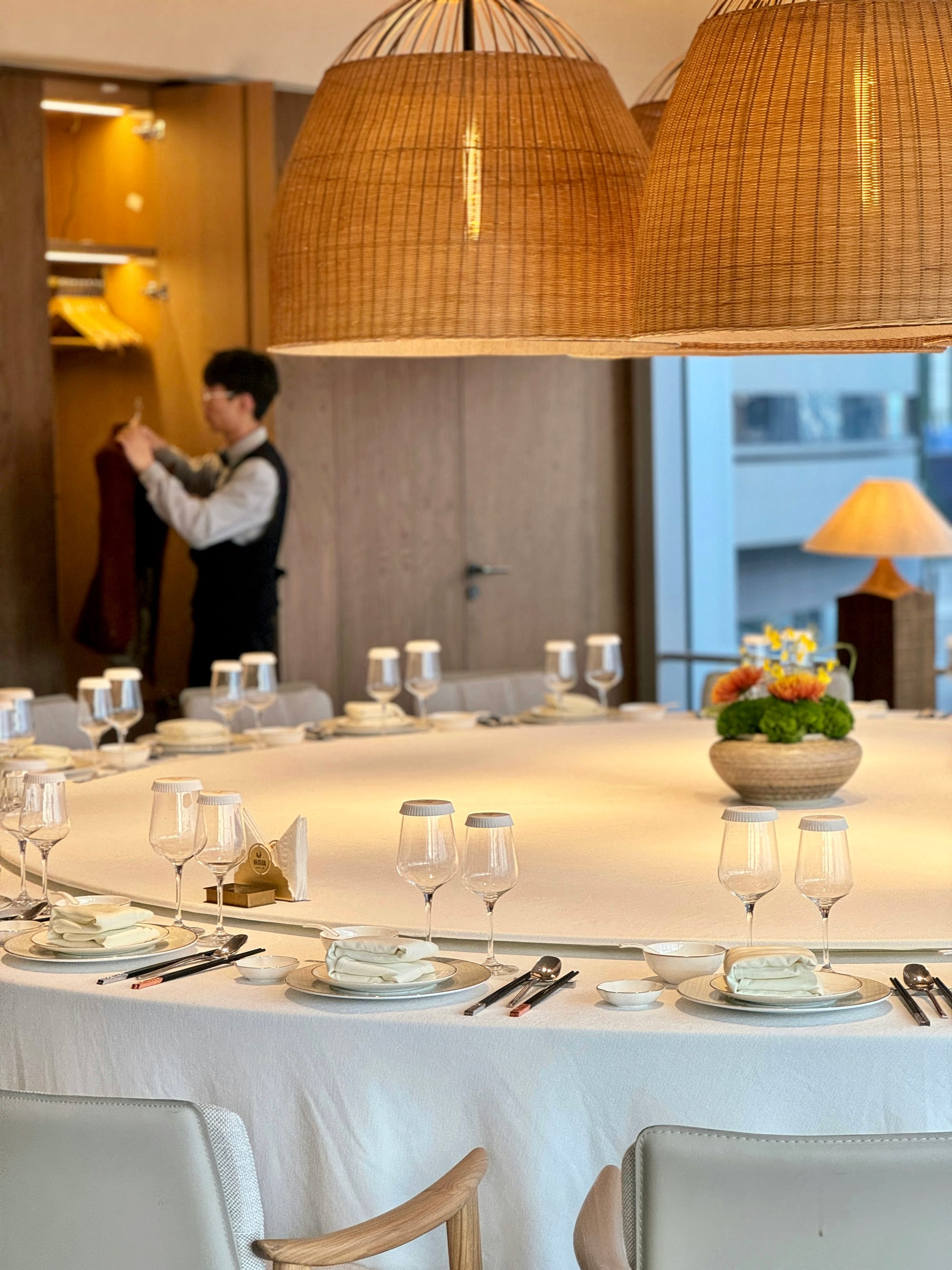
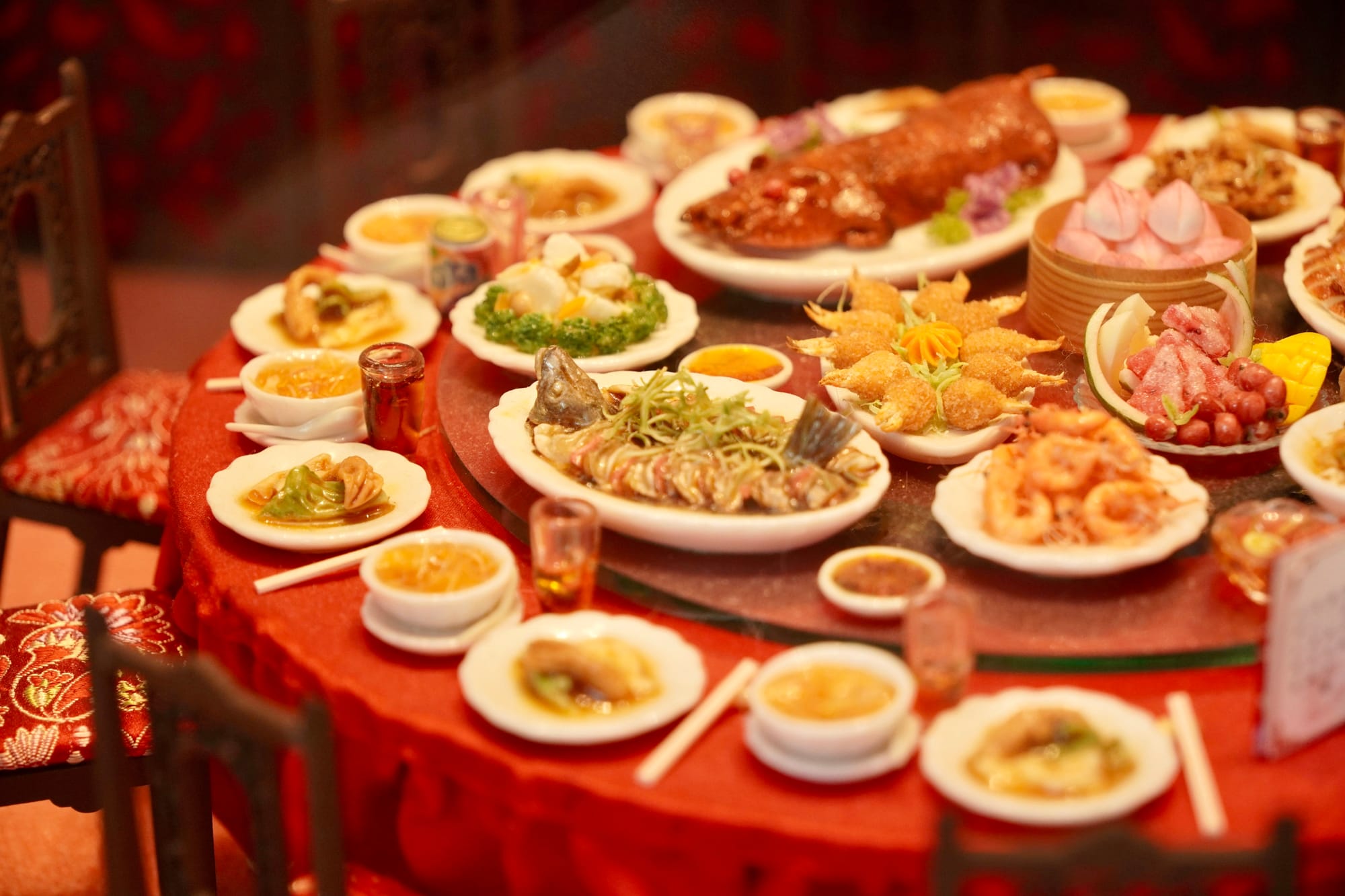
First: A typical private room in Chinese restaurant with round table and mutiple glasses placed for different types of drinks. | Second: A miniature model display for a traditional Chinese banquet table.
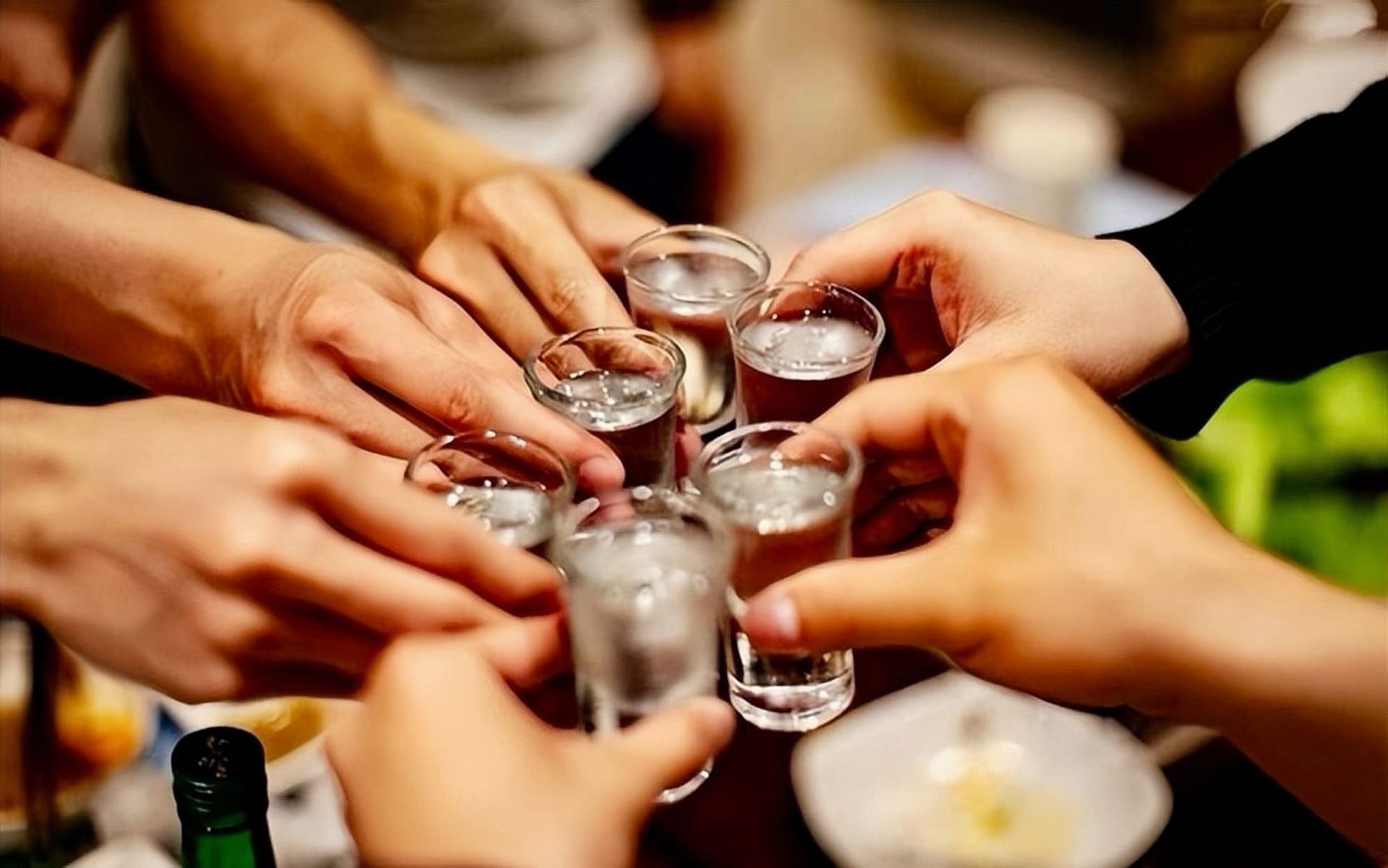
Baijiu was almost always present, especially when business was involved. As many in the older generation liked to say, negotiations did not truly begin until the baijiu started flowing. I sat through hundreds of these gatherings, watching adults loosen up as the evening progressed. Even as a child, I found it strange. Why did people need alcohol to start conversations? Why couldn’t they simply talk to one another?
When I reached adulthood, it became my turn to drink. Family gatherings, weddings, Chinese New Year celebrations, all came with the expectation that sooner or later a small glass of baijiu would be placed in front of you. I still remember my first sip. My mouth filled with a spicy warmth unlike anything I had tasted before. It was not a flavor I immediately enjoyed, and to be honest, it still isn’t something I actively seek out today.
Yet I gradually began to understand why people cared so much about it. Around the table, discussions about baijiu could become surprisingly passionate. People debated brands, compared vintages, and argued over which bottles were smoother or more fragrant. Beyond the liquid itself, baijiu functions as a form of social currency, and helps establish relationships at the table. It becomes signal in the meal that hospitality is now the focus and social customs at the table change accordingly. There is a shared rhythm for the meal, as toasting takes over and filling other’s cups brings a new atmosphere of belonging.
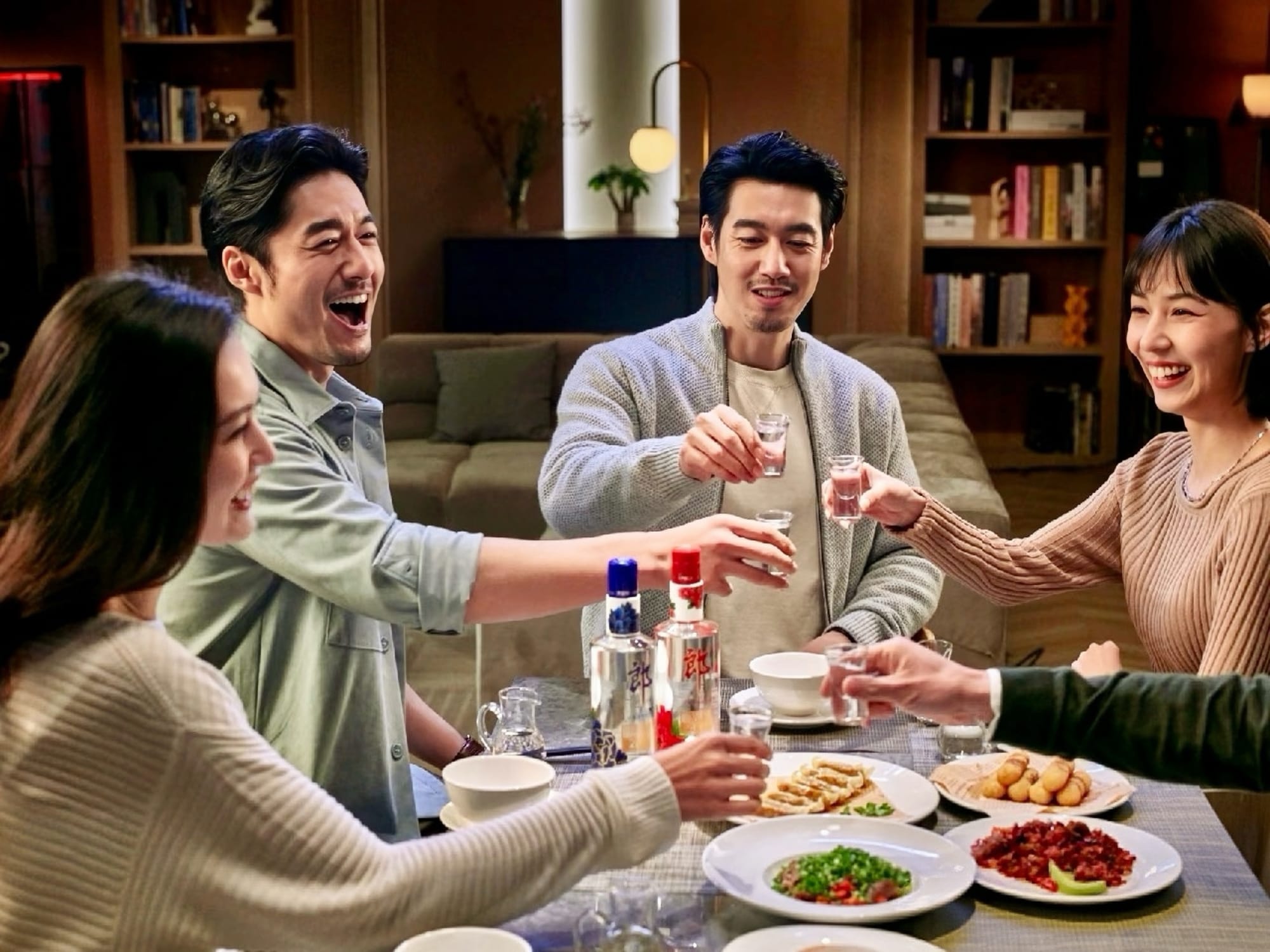
One thing I have noticed in recent years is that younger generations, especially those born after 2000, are far less interested in attending large banquets and often refuse to drink altogether. As someone who has always considered myself an introvert, I find this oddly amusing. You would think people like me would be less comfortable sitting at a table full of strangers, making small talk and drinking baijiu. Yet because I grew up surrounded by this culture, it feels strangely familiar. I know when to raise a glass, when to toast, and how to navigate the social choreography of a Chinese banquet.
Meanwhile, many younger people who appear far more outgoing than I ever was have little interest in participating at all. Perhaps the rules have changed. Or perhaps baijiu has simply lost some of its appeal as a social lubricant. Either way, looking down at that small glass of clear liquid today, I cannot help but see it as a book filled with stories. It contains history, migration, agriculture, fermentation, business, celebration, and countless human interactions. The problem, perhaps, is that fewer people are interested in reading it.
Chapter 2: The Cellar
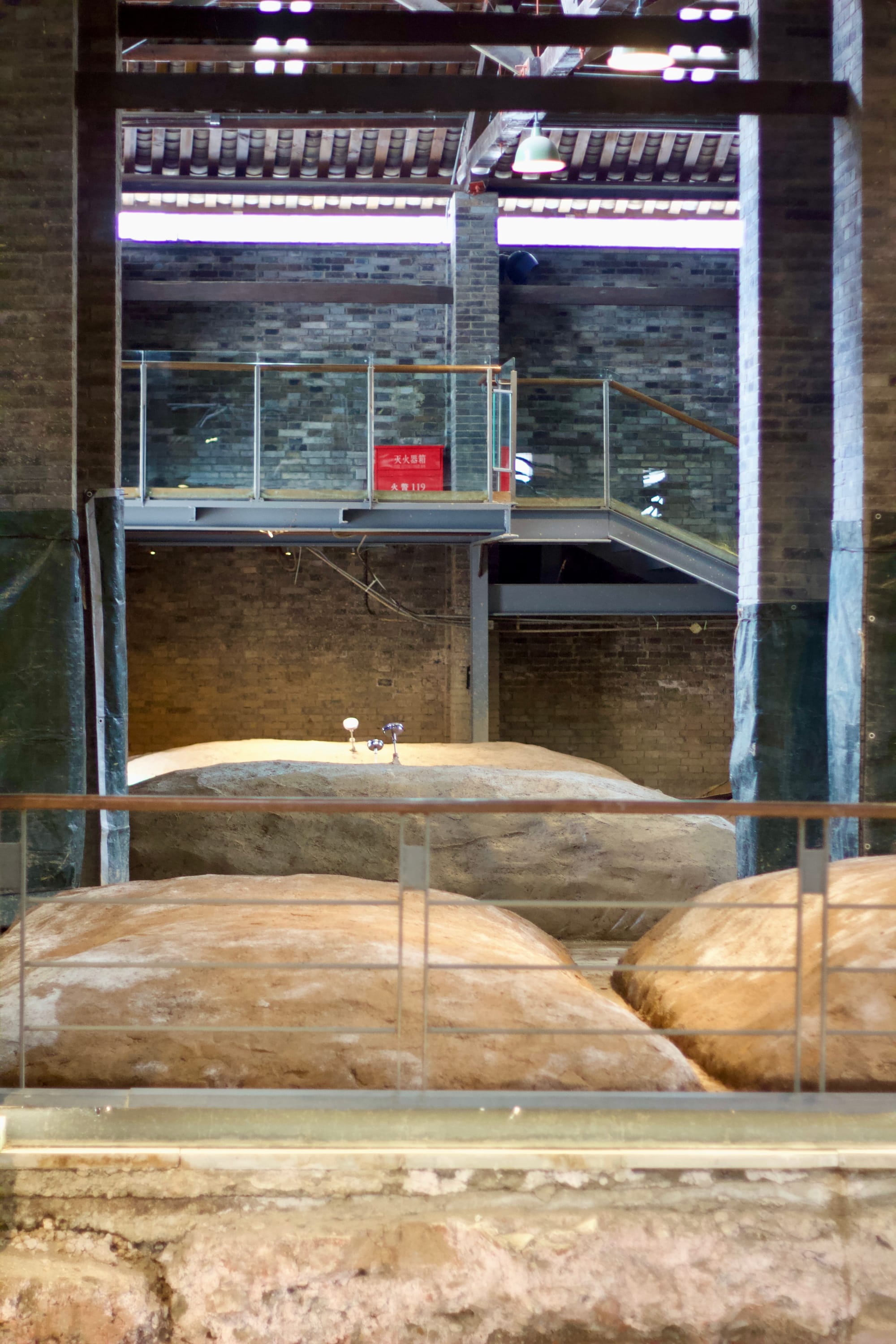
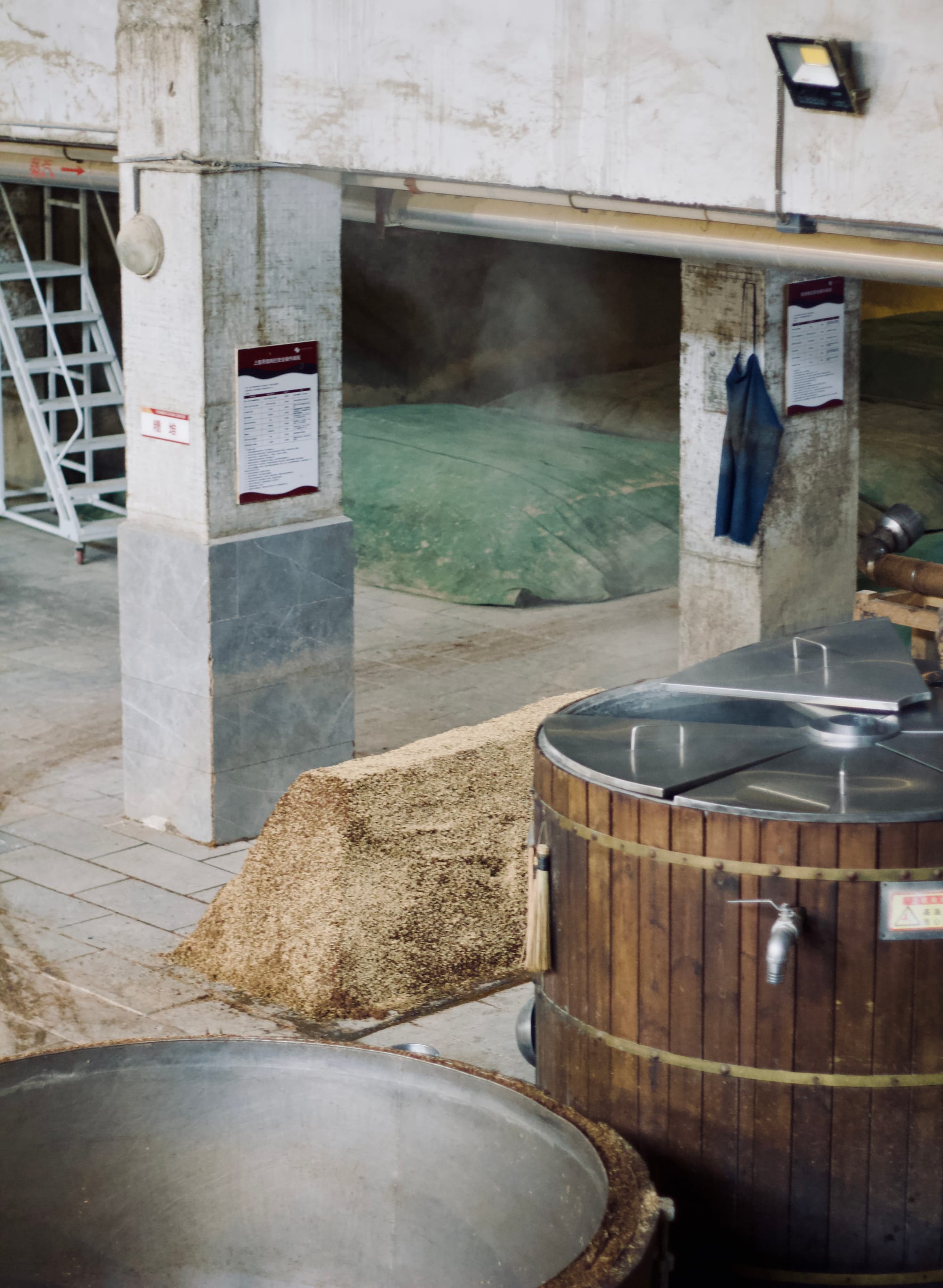
Fermentation pits in Chengdu. First are sealed pits with grains fermenting underneath, and second is a view of the distillation process.
Every baijiu cellar we visited in Sichuan smelled different, yet somehow the same. Whether it was in Luzhou or Chengdu, the first thing that greeted us was never a bottle or a fermentation pit. It was the aroma. The moment you stepped inside, a wave of fermented grain, ripe fruit, and damp earth rushed into your nostrils, announcing its presence long before anyone began explaining how baijiu was made. Before seeing a single drop of baijiu, we had already encountered fermentation.
Before coming to Sichuan, I thought baijiu was simply a strong spirit. Grain goes in, alcohol comes out. How complicated could it be?
As it turns out, very complicated.
Imagine if bread, beer, and whiskey had a child. Like bread, baijiu relies on molds, yeasts, and bacteria. Like beer, grains are transformed through fermentation. Like whiskey, the final product is distilled. But unlike most alcoholic beverages in the world, baijiu ferments solid grains rather than liquid.
The primary grain used in Sichuan baijiu is sorghum. After being steamed and cooled, it is mixed with qu (曲) and placed into fermentation pits. Qu is often described as a starter culture. If the concept sounds familiar, it is because Japan’s famous koji (麹) likely evolved from earlier Chinese fermentation traditions centered around qu, although the two developed quite differently over time.
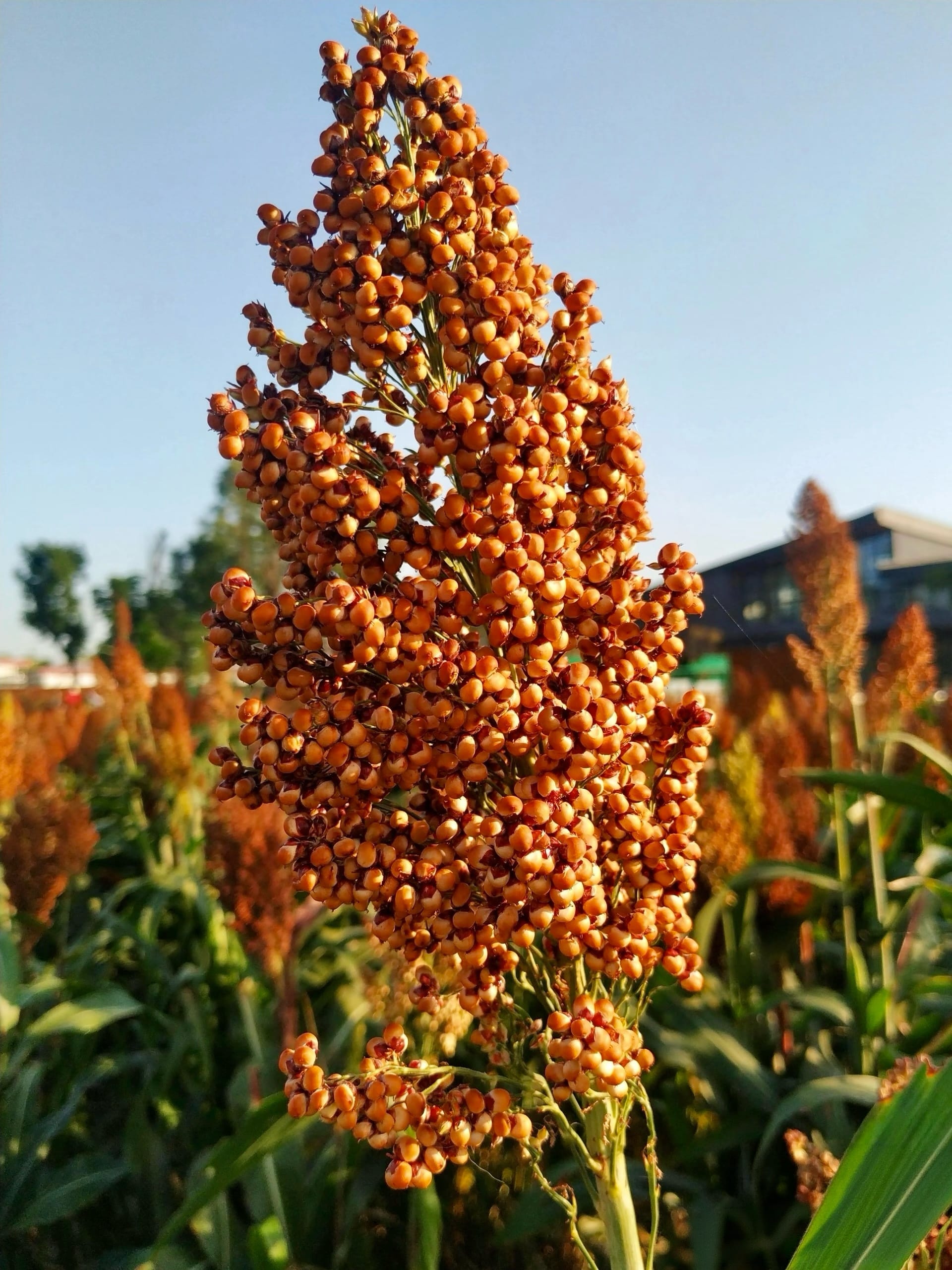
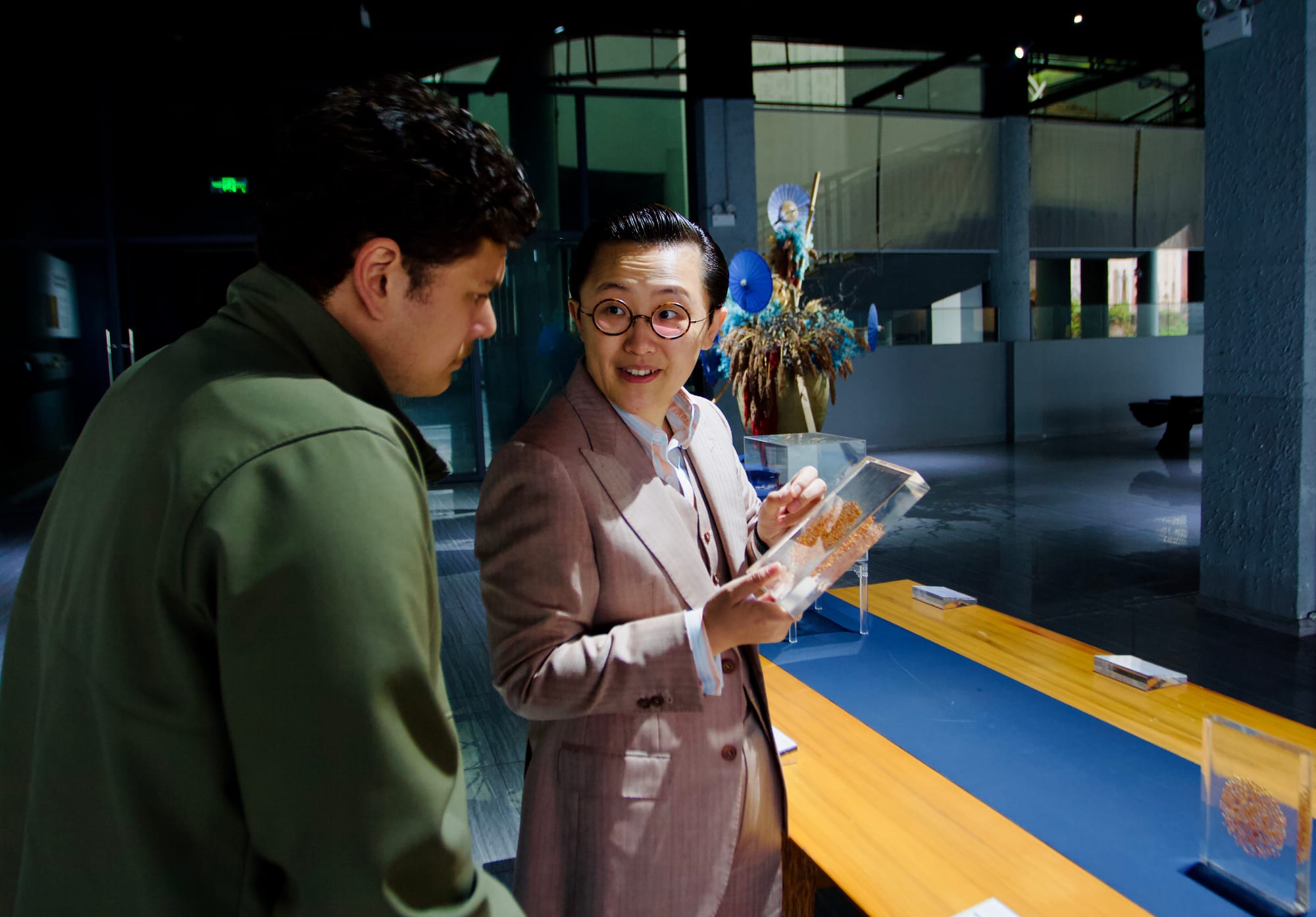
First: Sorghum is ready for harvest, it is the most used ingredient in baijiu production. | Second: Learning about different sorghum. Historically, rice and wheat were too valuable to divert into alcohol production, reserved instead for daily meals. Sorghum, with its tougher texture and lower cost, became the grain of distillation. Credit: Left RED 42728888314
Inside each piece of qu live communities of molds, yeasts, and bacteria that work together to transform grain into alcohol and aroma. Before a single drop of baijiu is distilled, an entire microscopic city has already gone to work.
As we moved through the cellars, one thing became increasingly clear. Distillation may produce the final spirit, but much of its character has already been determined long before that, inside the grain and the fermentation pit. The deeper we went into the cellars, the more baijiu stopped feeling simply like another alcoholic drink and began feeling like an ecosystem in every drop.
Chapter 3: The Blending Room
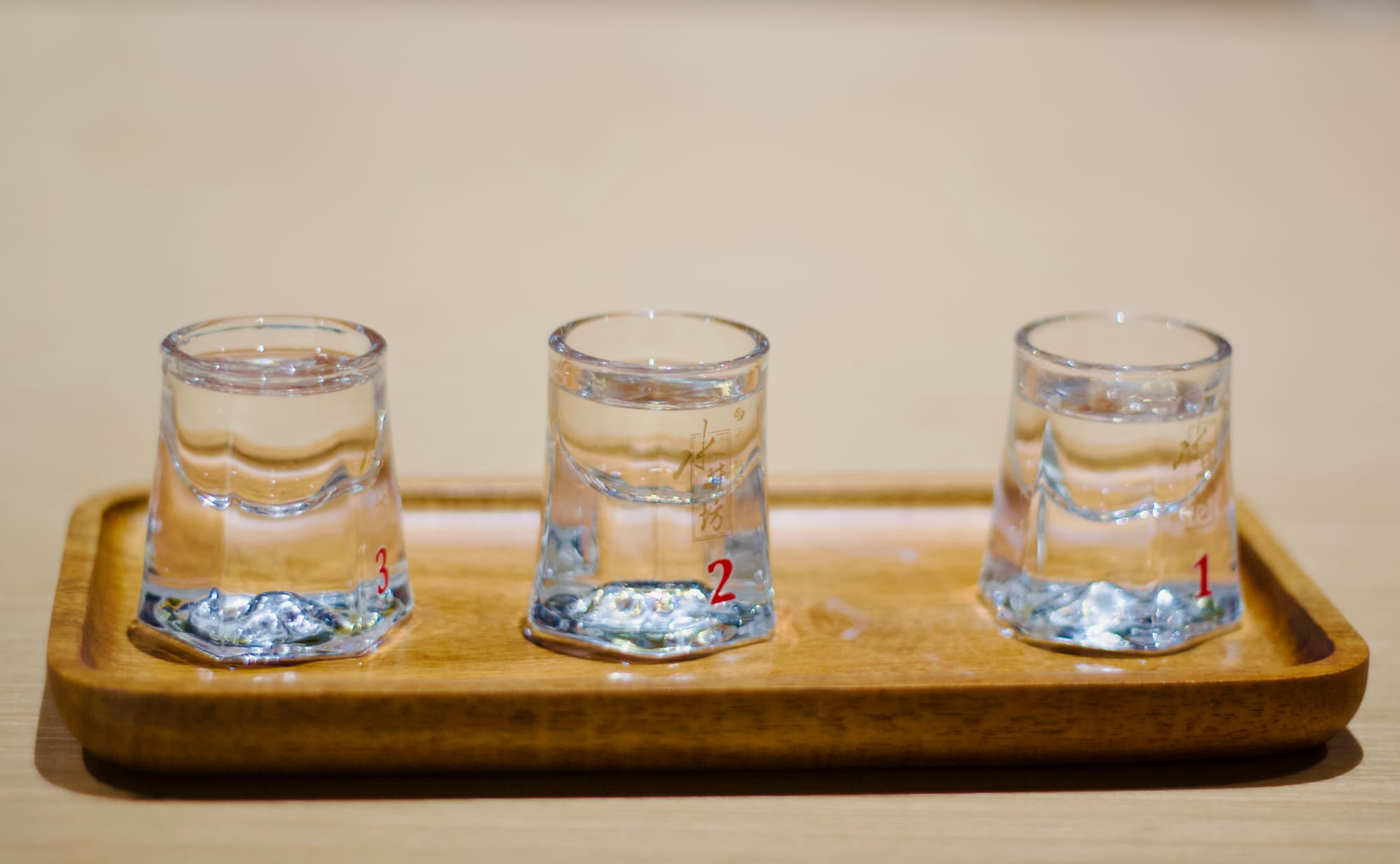
At Shunchenghe Manor in Luzhou, rows of small glasses lined the tasting table, each filled with baijiu of a different age. Although they came from the same production system, the differences were immediately noticeable. Younger spirits felt sharper and more direct, while older ones had spent years resting in pottery jars, becoming softer and more rounded.
Among our group, Michele was undoubtedly the most enthusiastic baijiu drinker. While the rest of us were still deciding what we were tasting, she was already comparing glasses and choosing favorites.
Then came the final challenge. Using baijiu of different ages, Michelle was invited to create her own blend. A little more of one glass, a little less of another, taste, adjust, and taste again. Watching her work, I realized that blending is not only a technical process but also a creative one.
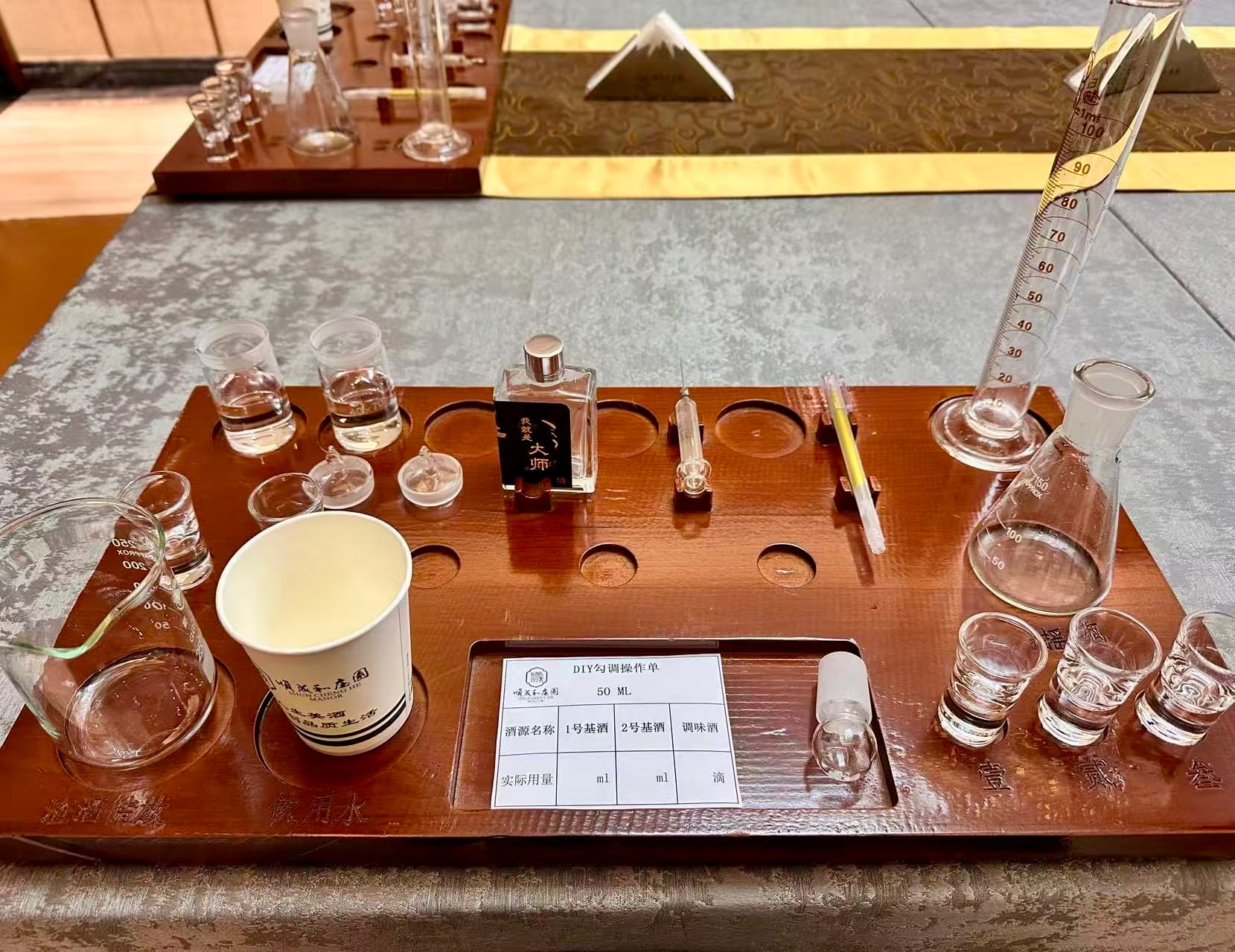
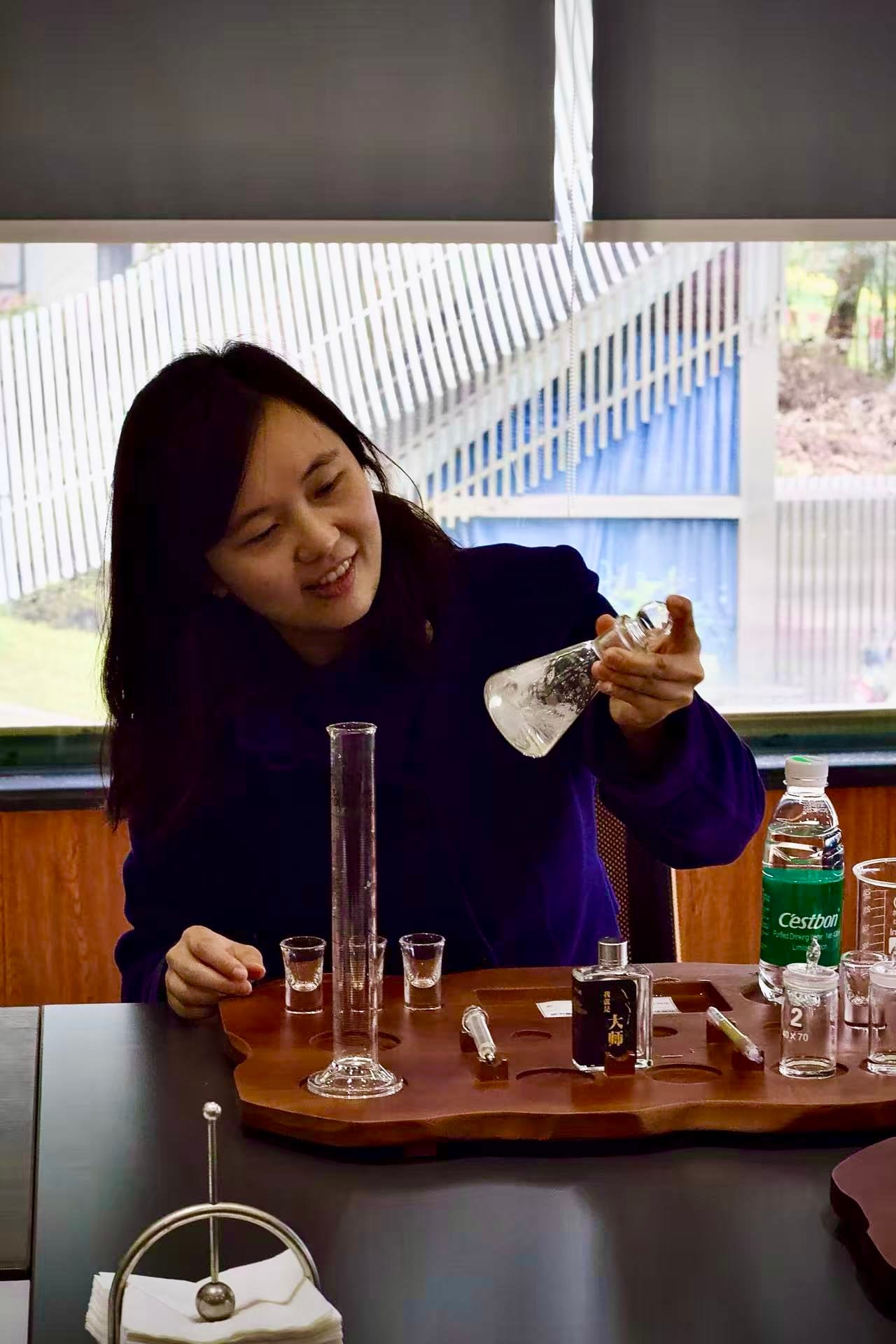
Bajiu mixing equipment to customize personal favorite for Michele.
The exercise also revealed something important about baijiu. Many of China’s most respected spirits are not defined by a single batch or a single year. Instead, they achieve their signature character through blending, combining spirits of different ages and qualities into something greater than the individual parts.
By the end, Michele had settled on a blend she was happy with. More importantly, the rest of us had gained a new appreciation for the role of the blender. Long after fermentation and distillation are finished, there are still decisions that shape the final spirit.
But blending does not always stop there.
At another manor, we encountered a different approach to aging. Instead of bottling the spirit after traditional storage, the producers gave it an additional stage of maturation. The original baijiu was first aged in pottery jars for at least five years. Only then was it transferred into oak barrels, where it would spend another twelve to twenty-four months. During this period, master distillers closely monitored the spirit’s development and occasionally transferred it between barrels when necessary.
The result was fascinating. The fruity character associated with strong-aroma baijiu remained, but new notes of vanilla, spice, toasted wood, and dried fruit began to emerge. It felt neither completely Chinese nor completely Western.
Standing between those tasting tables, I began to appreciate how many decisions exist between fermentation and the final bottle. The cellar may create the spirit, but the blending room determines how that spirit ultimately tells its story.
Chapter 4: The Rivers

During the 2026 China International Alcoholic Drinks Expo in Luzhou, we stood by the river looking at different booths showcasing their products of various kinds. Around us were live streamers broadcasting to their audiences, tourists posing for selfies, and even a Donald Trump impersonator drawing crowds along the waterfront. Like many modern Chinese cities, Luzhou was busy performing itself for cameras and social media.
The river, in the meantime, seemed entirely uninterested.
The Yangtze and Tuo Rivers meet in Luzhou, and for centuries these waterways served as some of the most important transportation routes in southwest China. Long before highways and high-speed rail, they carried grain, salt, merchants, and migrants through the region. If Sichuan had the climate and agricultural conditions necessary for making baijiu, the rivers provided the means to move both raw materials and finished spirits.
They also helped shape the population itself. Following periods of warfare and population decline during the late Ming and early Qing dynasties, waves of migrants moved into Sichuan in what later became known as Huguang Filling Sichuan. Along with farming knowledge and local customs came new food traditions and fermentation practices that would become woven into Sichuan’s culture.
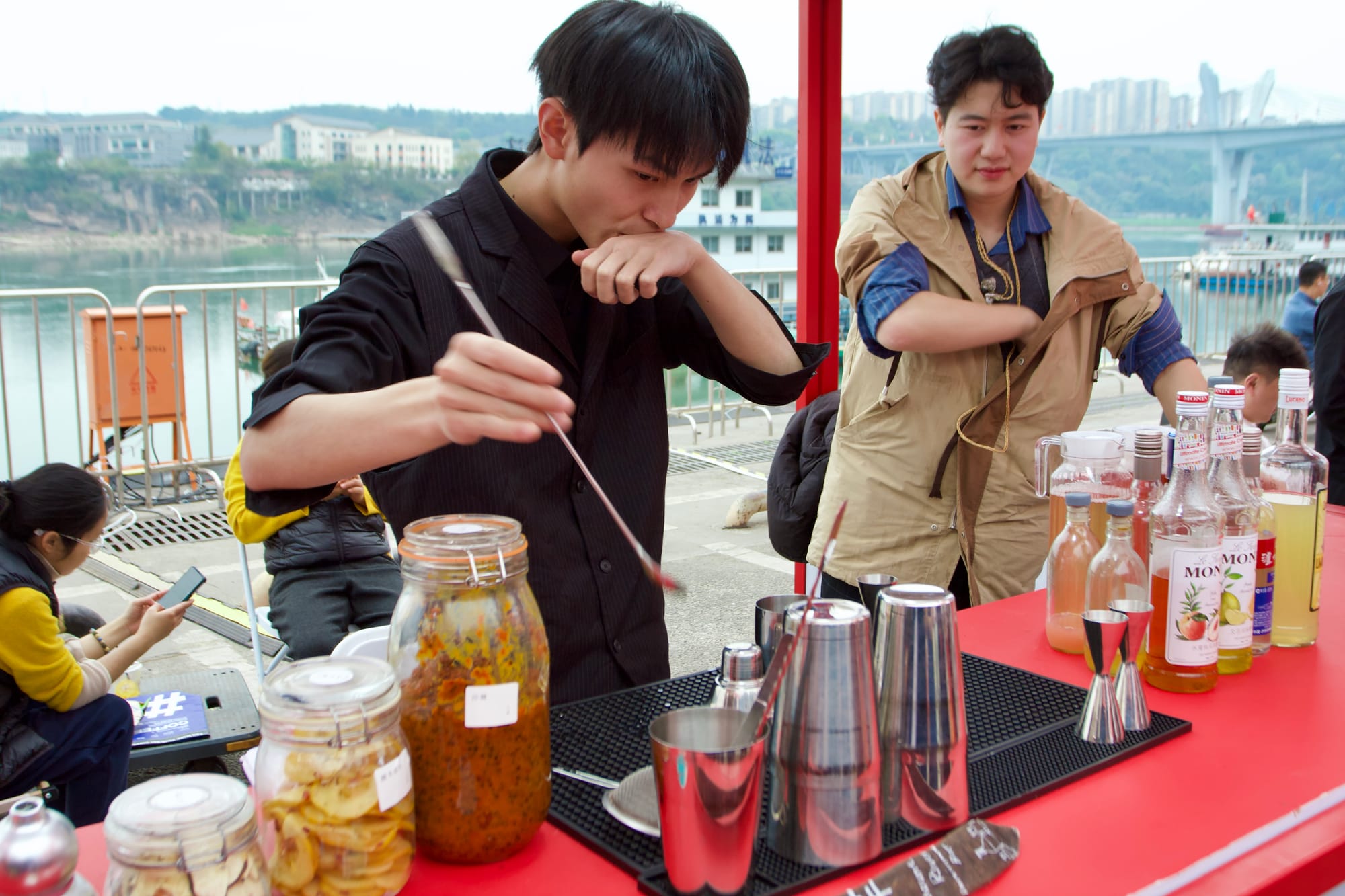
Looking at the busy riverfront today, it is easy to focus on what is happening now. Yet much of Luzhou’s success as a baijiu-producing region can be traced back to geography. The basin provided the right environment for fermentation, while the rivers connected Sichuan to the rest of China. Together, they helped turn a local product into one of the country’s defining spirits.
Chapter 5: The Invisible Workforce
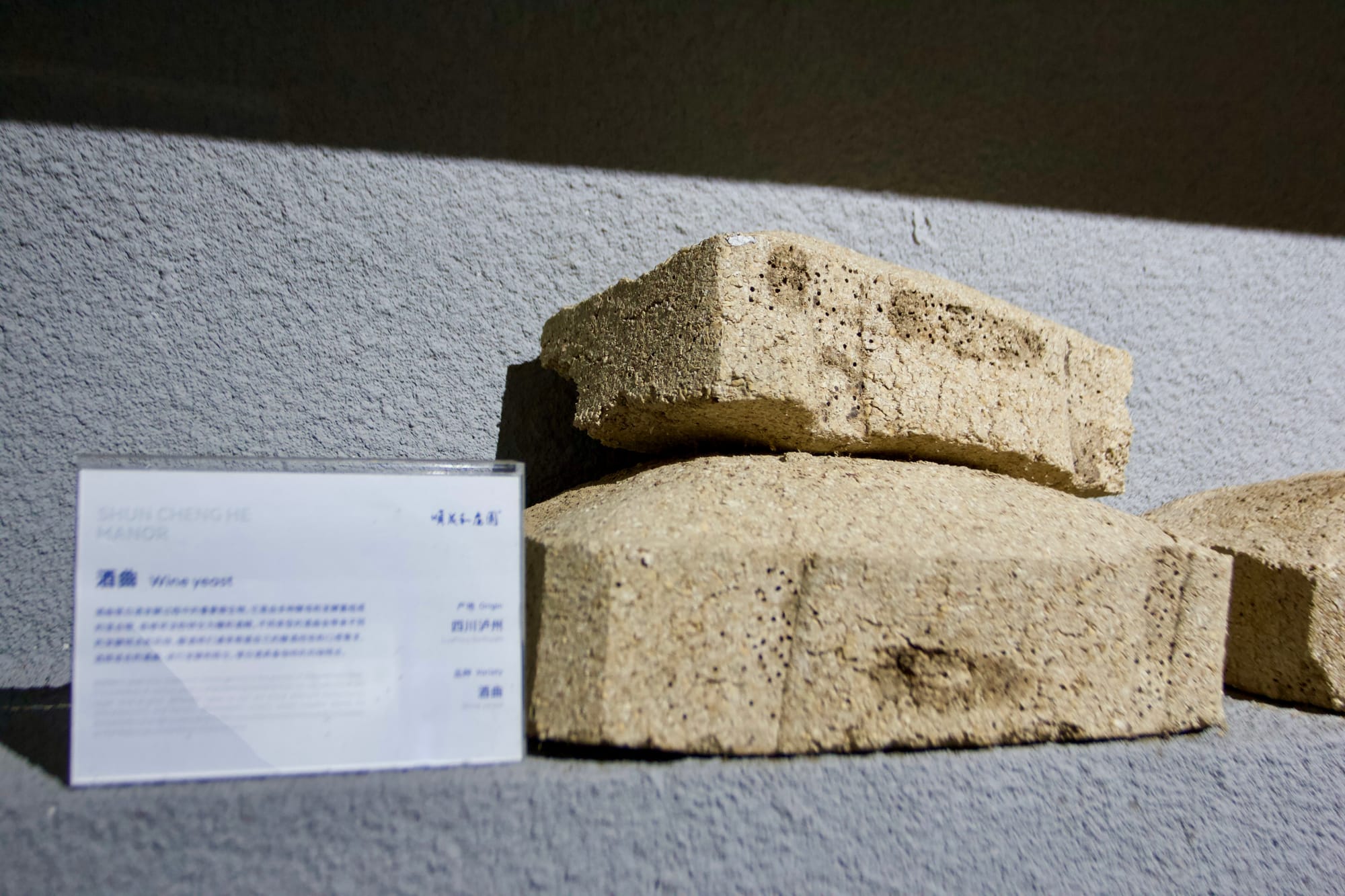
A field of sorghum does not naturally become baijiu. Between the grain and the glass lies a transformation so complex that for centuries people could observe it, benefit from it, and perfect it without fully understanding what was happening.
The answer lies in an invisible workforce.
Every piece of qu contains communities of molds, yeasts, and bacteria working together. Unlike many Western alcoholic beverages that rely primarily on yeast, baijiu fermentation is a team effort. Different microorganisms perform different tasks. Some break down starches into sugars. Others convert those sugars into alcohol. Still others create the aroma compounds that eventually define the character of the spirit.
Unlike wine grapes, which naturally contain the sugars needed for fermentation, sorghum stores most of its energy as starch. Before alcohol can be produced and the complex aroma developed, that starch must first be converted into sugar, a task performed by the molds and microorganisms living inside qu.
The deeper I went into the world of fermentation, the more I began to see distilleries differently. What appeared at first to be factories that are stationery and uniform are actually breathing entities that changes through time and environment.
This was especially evident when learning about the fermentation pits used for strong-aroma baijiu. To an outsider, they look surprisingly ordinary. Rectangular pits lined with dark mud and filled with grain. Yet some of the most valuable pits in China have been in continuous use for hundreds of years.
The reason lies beneath the surface.
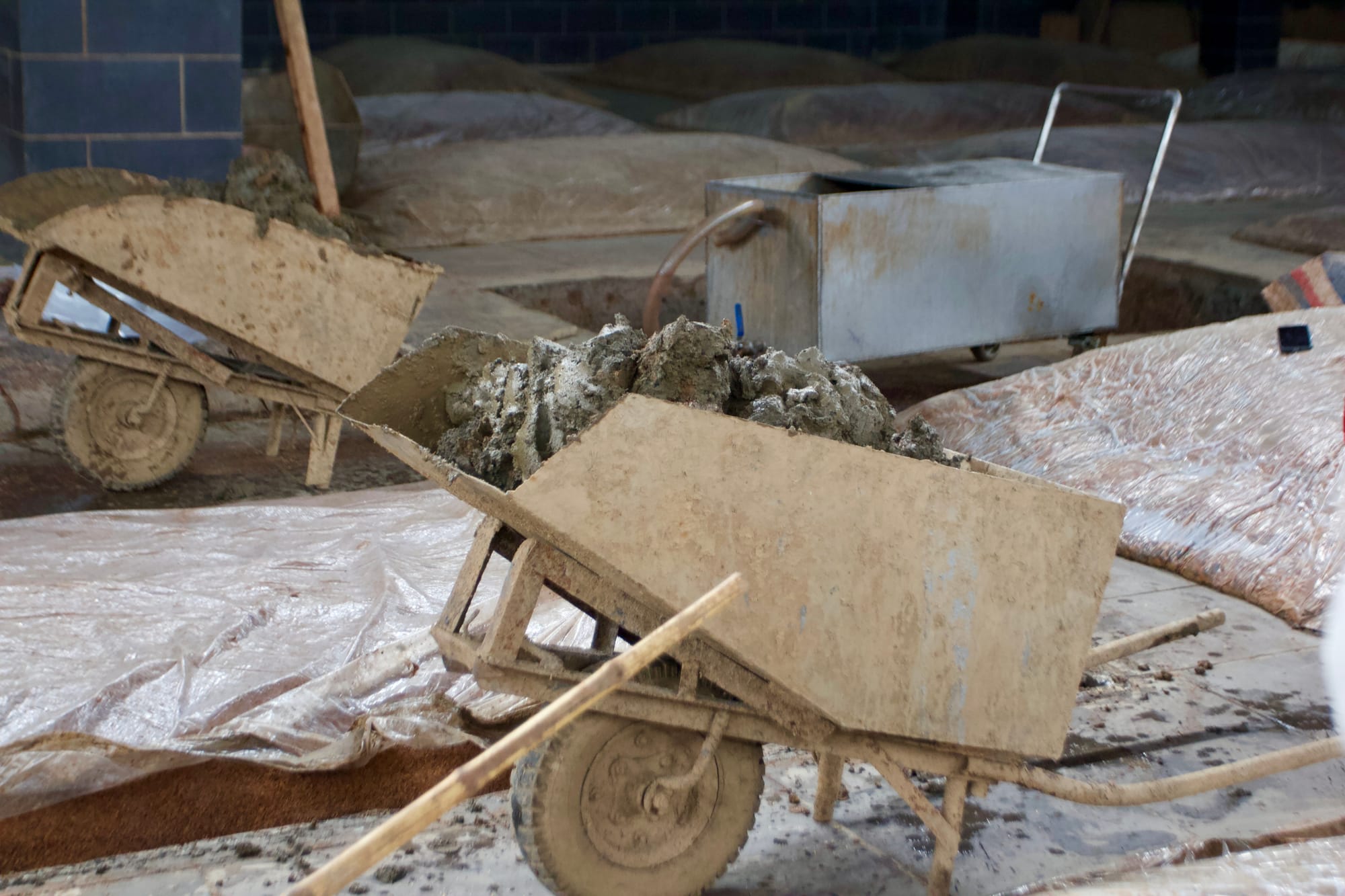
Over decades and centuries, microorganisms establish themselves within the pit mud, creating a complex living environment that cannot be replicated overnight. The older the pit, the more mature that ecosystem becomes. This is one reason why old fermentation pits are treated with such care. They are living assets.
Many of the fruity aromas associated with Sichuan’s strong-aroma baijiu originate from this environment. Notes of pineapple, pear, and other tropical fruits are often linked to compounds produced during fermentation, the result of countless microbial interactions taking place long before distillation begins.
For thousands of years, Chinese brewers did not have microscopes or microbiology textbooks. Yet through observation and experience, they learned how to cultivate environments where these invisible communities could thrive. Perhaps that is what fascinated me most about baijiu.
Chapter 6: Back at the Table
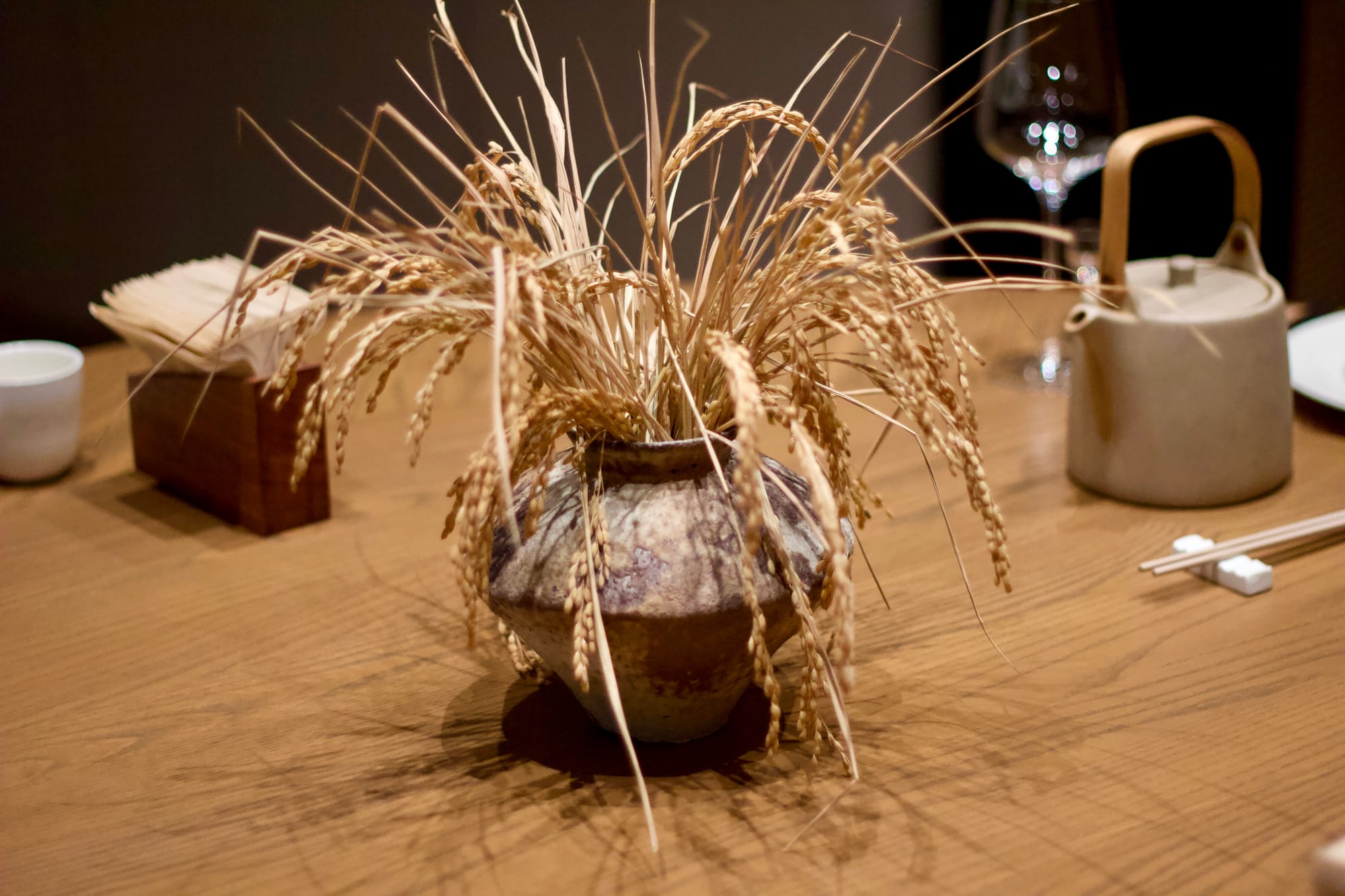
When you look at baijiu through a microscopic lens, it can seem almost overwhelming. Thousands of microorganisms work together during fermentation, generations of brewers have refined the process, and entire industries have been built around its production. From the outside, baijiu appears enormous in scale and complexity.
Yet after all the fermentation, blending, aging, and history, it eventually returns to a much simpler place: the dining table. There, baijiu is rarely the star of the show. Instead, it plays a supporting role, complementing the food while helping create the atmosphere around the meal.
It also helps put baijiu’s flavor into perspective when you ask someone trying it for the first time. Arnold, a professionally trained chef specializing in Western cuisine, had never seriously encountered baijiu before coming to China. Like many foreigners, he expected something closer to vodka.
“I was expecting baijiu to taste like vodka, a pure taste since it's made from sorghum, however I definitely underestimated the strong aromas coming from the flavors added in the mud pits during the fermentation process. I would describe the flavor as one similar to gin, meaning that there is a fruity after taste.”
Arnold’s comparison highlights something many people overlook about strong-aroma baijiu. Although it begins with grain, the aromas people notice first are often fruity rather than cereal-like.
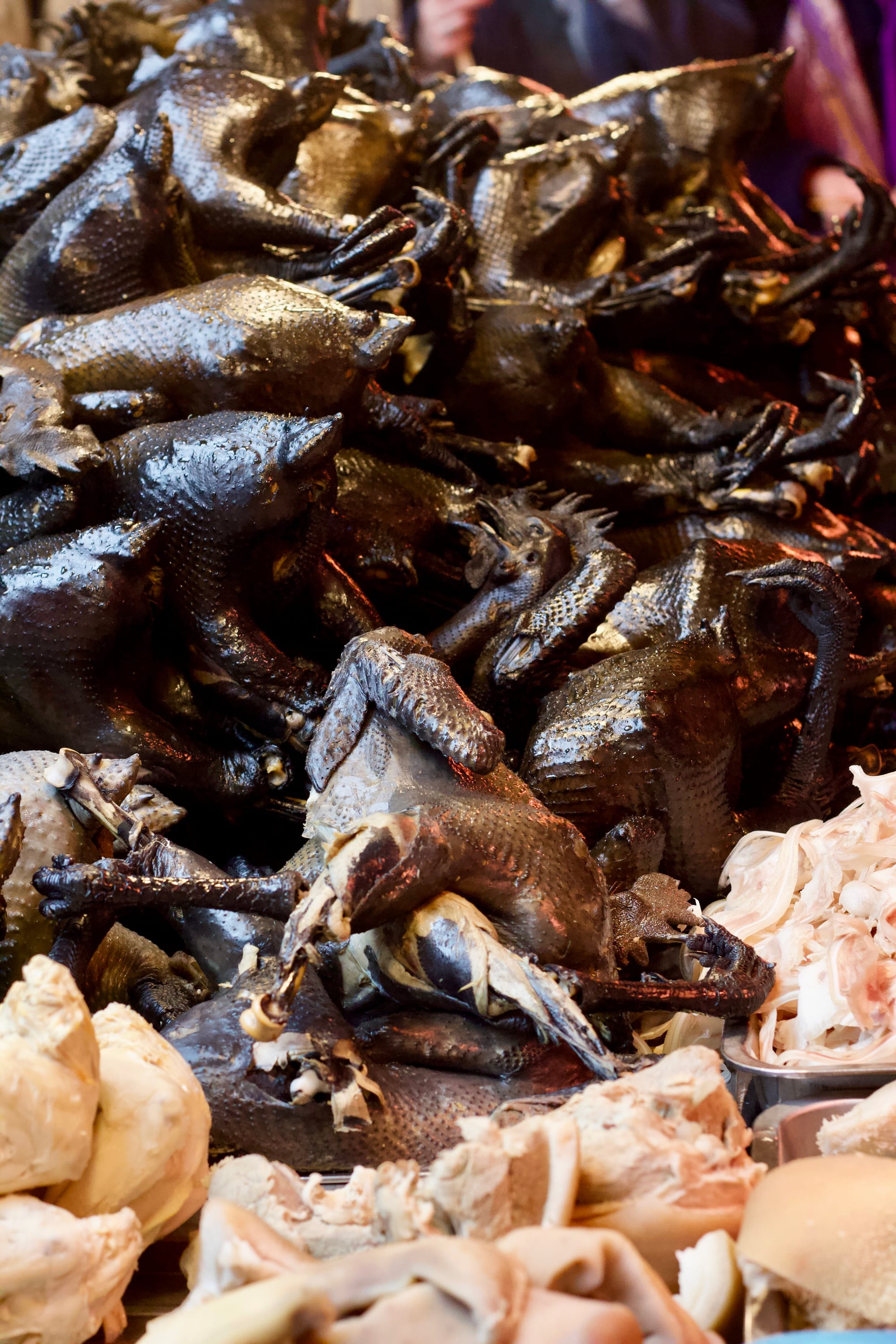
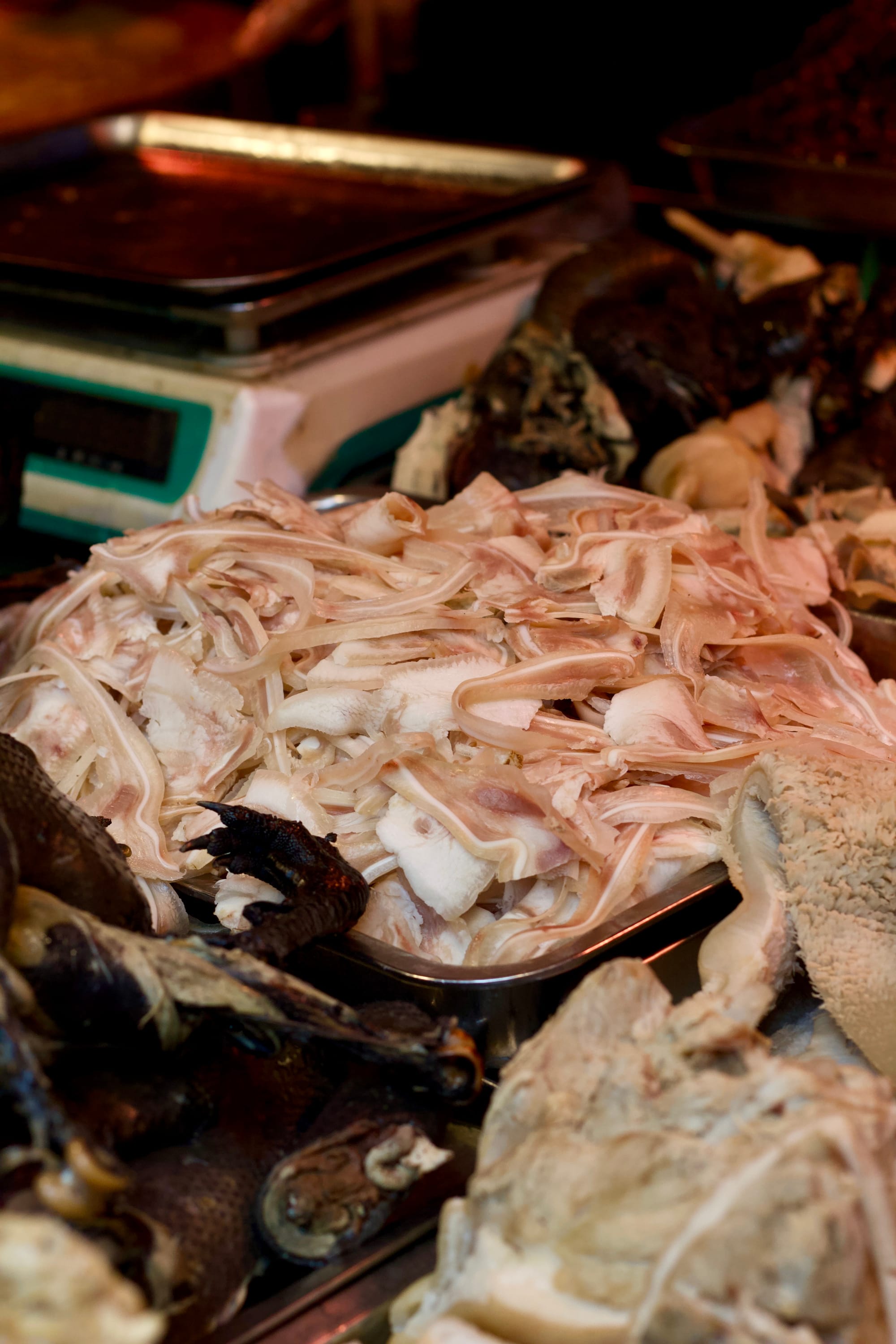
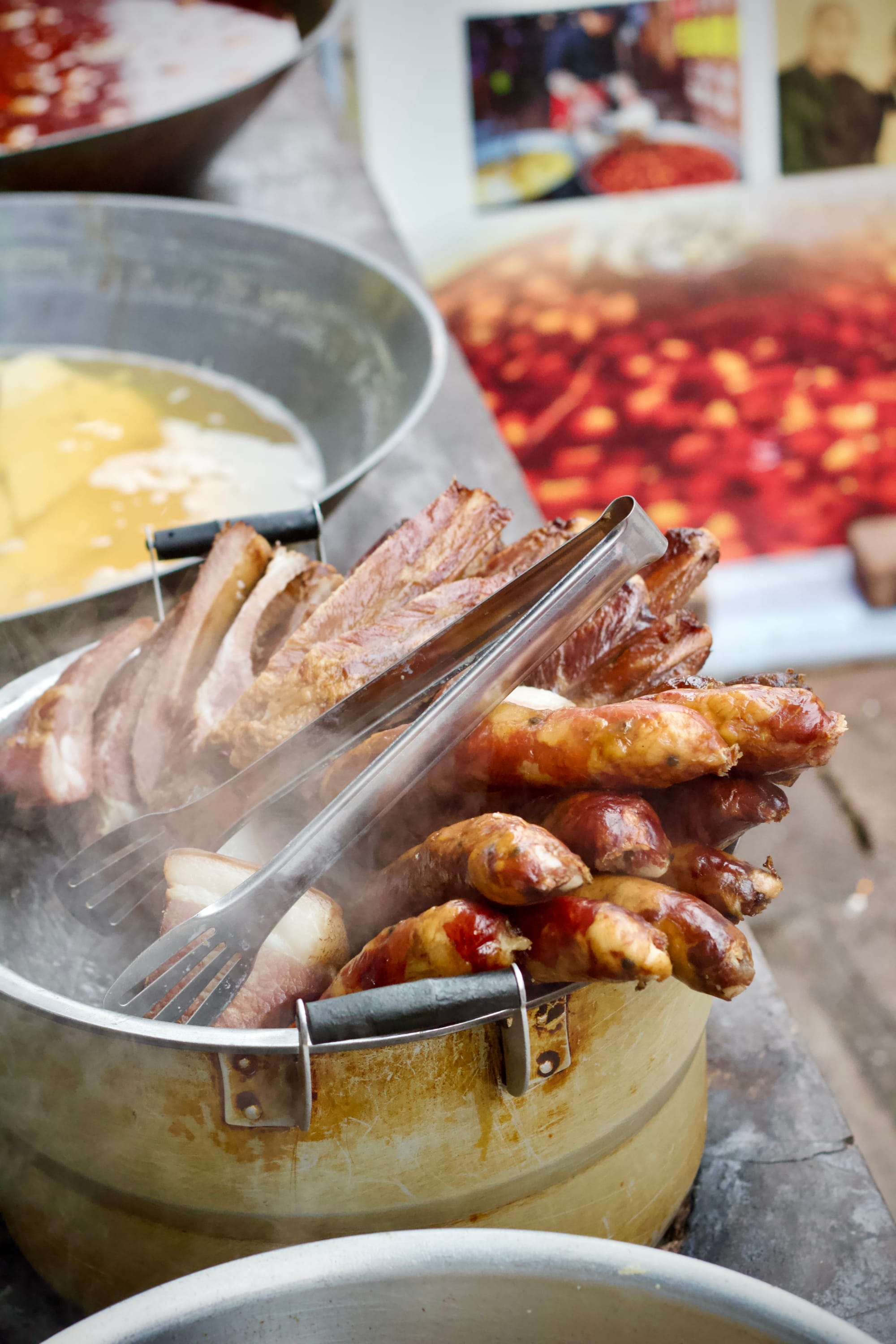
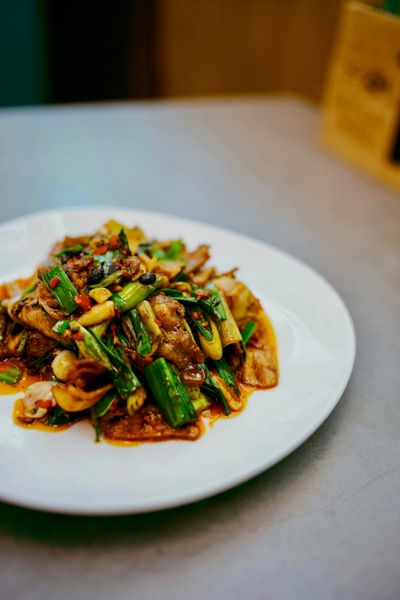
Cold and hot dishes that pair well with bajiu in Luzhou. Most of the dishes are marinated and pickled to compliment the strong taste of baijiu.
Its relationship with food is equally unique. Over generations, Chinese cuisine developed an entire category known as xiajiucai (下酒菜), dishes specifically enjoyed alongside alcohol. In Sichuan, some restaurants specialize almost entirely in these pairings. Pickled vegetables, marinated meats, peanuts, preserved ingredients, and cold appetizers are among the most common choices, their bold flavors designed to complement rather than compete with the baijiu.
On a warm evening, it is not uncommon to see people gathered around a small table on the sidewalk, sharing a few simple dishes and glasses of baijiu. The food may be modest, but the conversation rarely stays that way. As the evening progresses and the alcohol begins to take effect, stories become longer, laughter becomes louder, and emotions that might otherwise remain unspoken begin to surface.

A Tianjin, China native - Chloe has a deep appreciation for all things hotpot. Her appreciation of food and culture runs so deep that after a successful corporate career, she decided to uproot her life in China to attend Le Cordon Bleu Ottawa and Madrid. After working in the culinary industry in Canada, she decided to found Snout & Seek!
No spam, no sharing to third party. Only you and me.
Member discussion