24 Flavors of Sichuan: Red Chili Oil Flavor (Hongyou Wei)

Why So Much Oil?
Sichuan cuisine, with its global reputation, has been explored by locals, tourists, professionals, and influencers alike. One thing we have noticed when taking people to try Sichuan food is that there are two questions that constantly come up: Sichuan food tastes great, but why do so many dishes look so oily? And why are there always leftovers?
They are great questions, especially when outsiders notice patterns that locals often take for granted. Perhaps Hongyou Wei, or Red Chili Oil Flavor, can give us some hints about what makes a good dish in Sichuanese eyes.
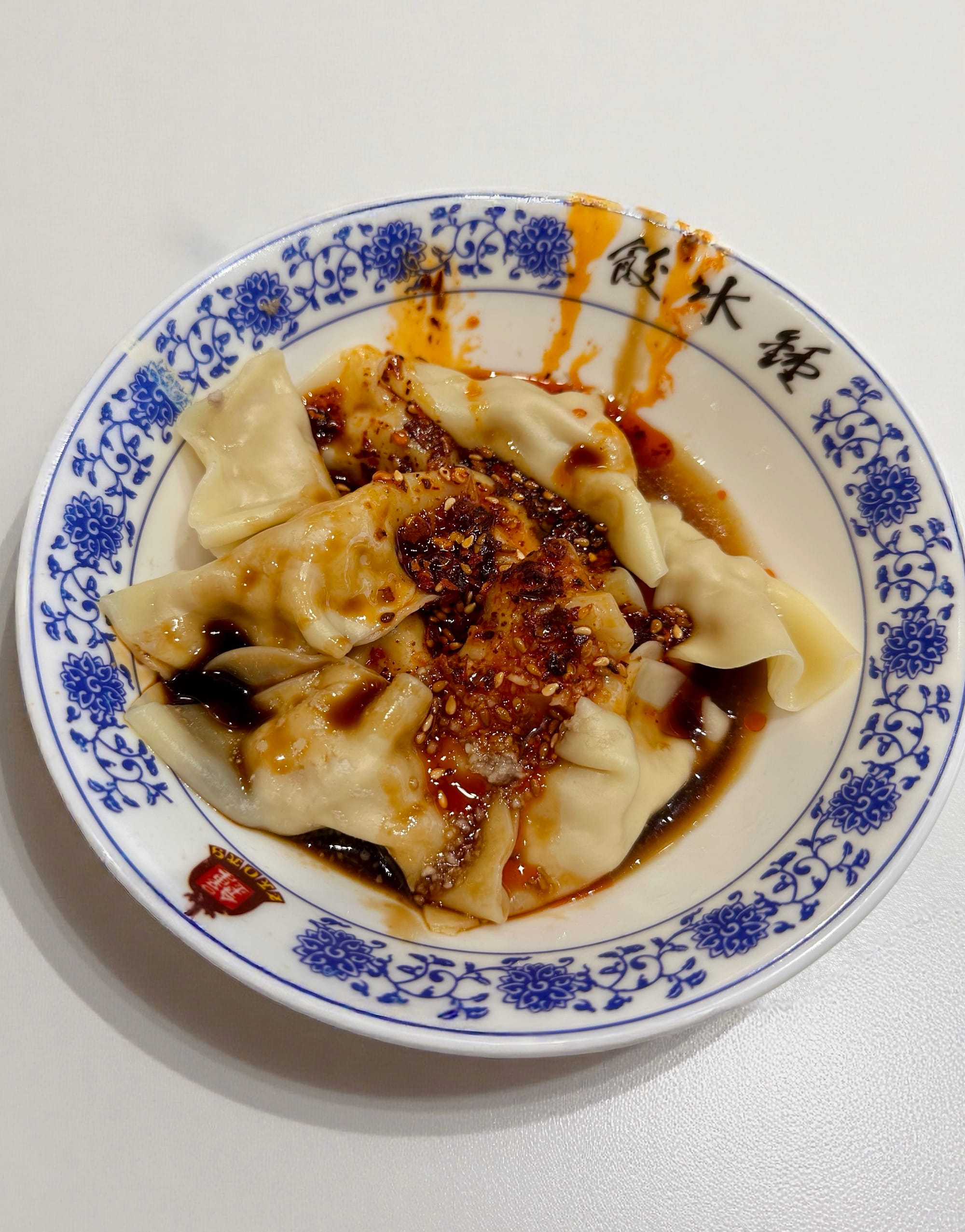
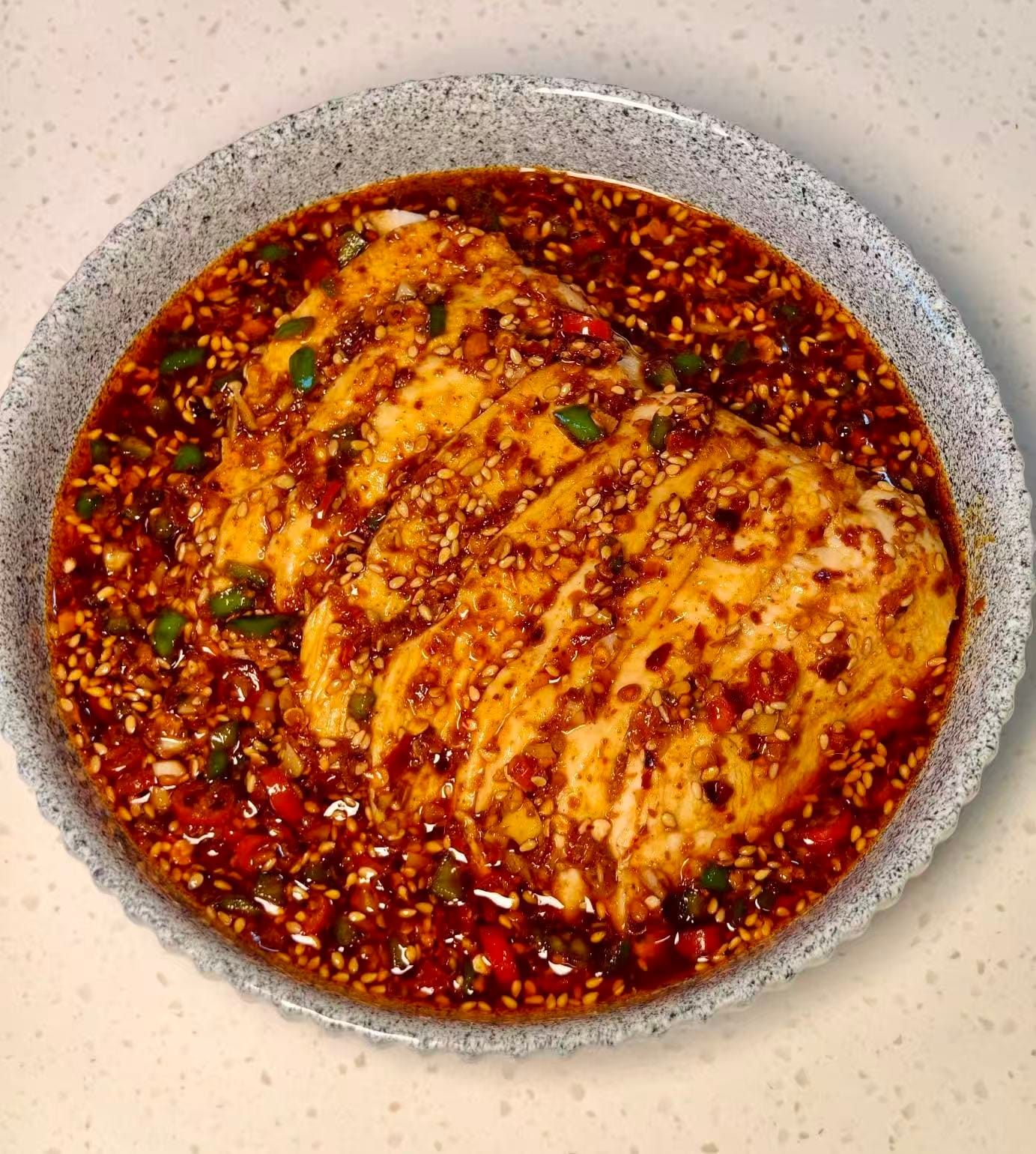
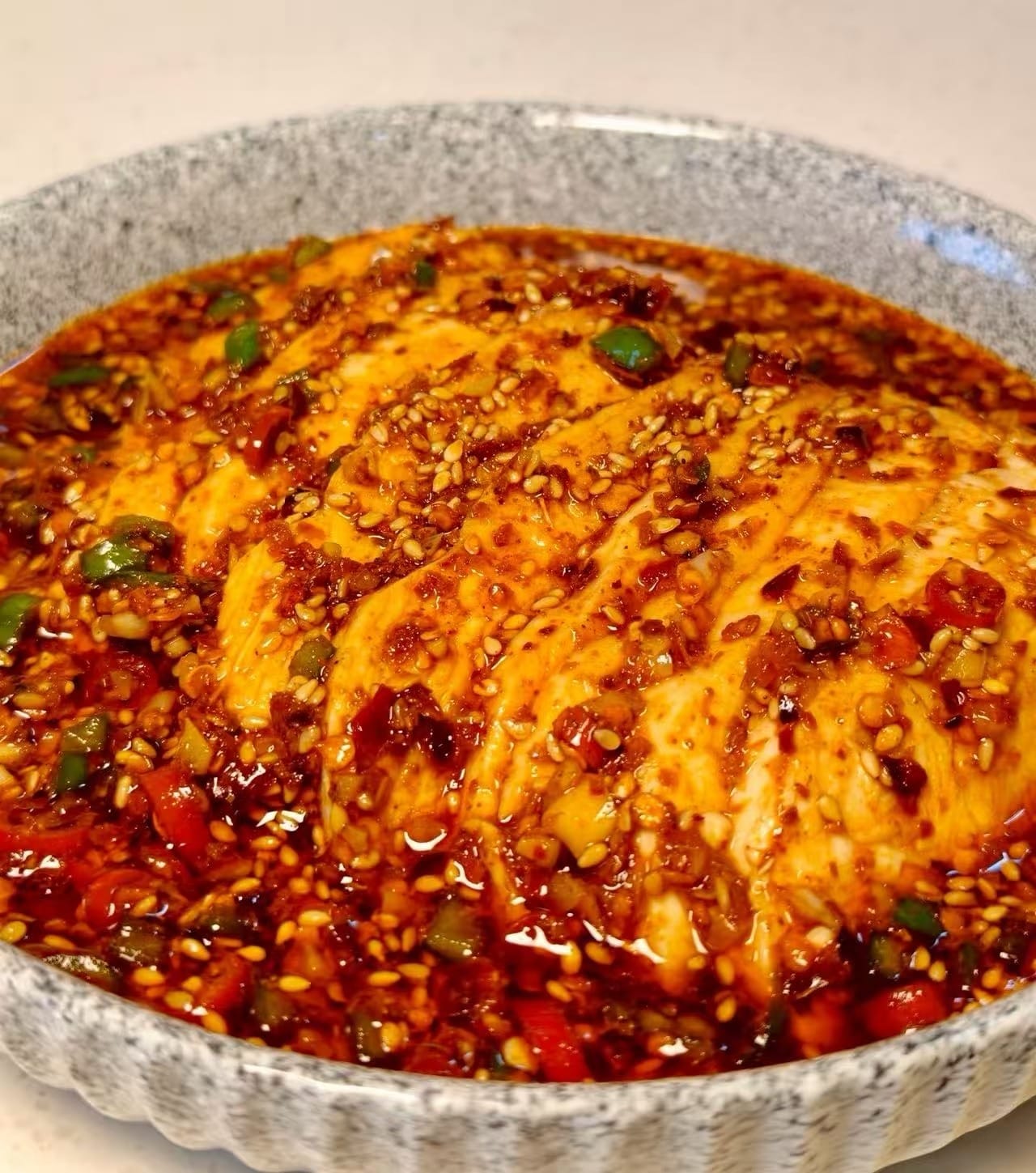
Some famous dishes that represents Red Chili Oil Flavor: Red Oil Dumplings and Red Oil Chicken Slices. Credit: Right RED 3642901044
Oil does indeed play an important role in Sichuan cuisine. When you try dishes such as 红油水饺 (red oil dumplings), 口水鸡 (mouthwatering chicken), 蒜泥白肉 (sliced pork with garlic sauce), and many other cold dishes, you will often find a pool of bright red, oily sauce left at the bottom of the bowl after the food is gone. And interestingly, servers will rarely give you a spoon to finish that sauce.
So why is that?
The answer lies partly in a cooking concept called 宽油 (kuānyóu), literally “generous oil.” In Sichuan cooking, oil is not always used simply as something to be consumed. It can act as a cooking medium and, more importantly, as a carrier for seasoning and aroma. This is particularly noticeable in cold dishes, where there is no last-minute wok cooking to bring all the flavors together. Instead, ingredients are often cooked first, cooled and then dressed with a generous amount of seasoned oil and sauce. Having enough sauce allows the ingredients to be thoroughly coated, carrying the aroma of chili, spices and other seasonings with every bite. The pool left at the bottom of the bowl is therefore not necessarily something you are expected to finish. In this case, abundance is part of the seasoning technique, rather than a suggested serving of oil.
Red Chili Oil Flavor, More Than Chili Oil
Red Chili Oil Flavor, or Hongyou Wei (红油味), is a great place to dive deeper. One thing we would like to point out is not to confuse this flavor profile with red chili oil itself. Although red chili oil forms the foundation of the flavor, Hongyou Wei represents much more than that.
At its core, Hongyou Wei is a compound flavor built around red chili oil, soy sauce, and sugar, with salt and other savory seasonings sometimes added depending on the recipe. Some regional and household versions may also include sesame oil, vinegar, or garlic. The classic flavor is described as 咸鲜辣香,回味略甜: savory and salty, fragrant with chili, with a slight sweetness in the finish.
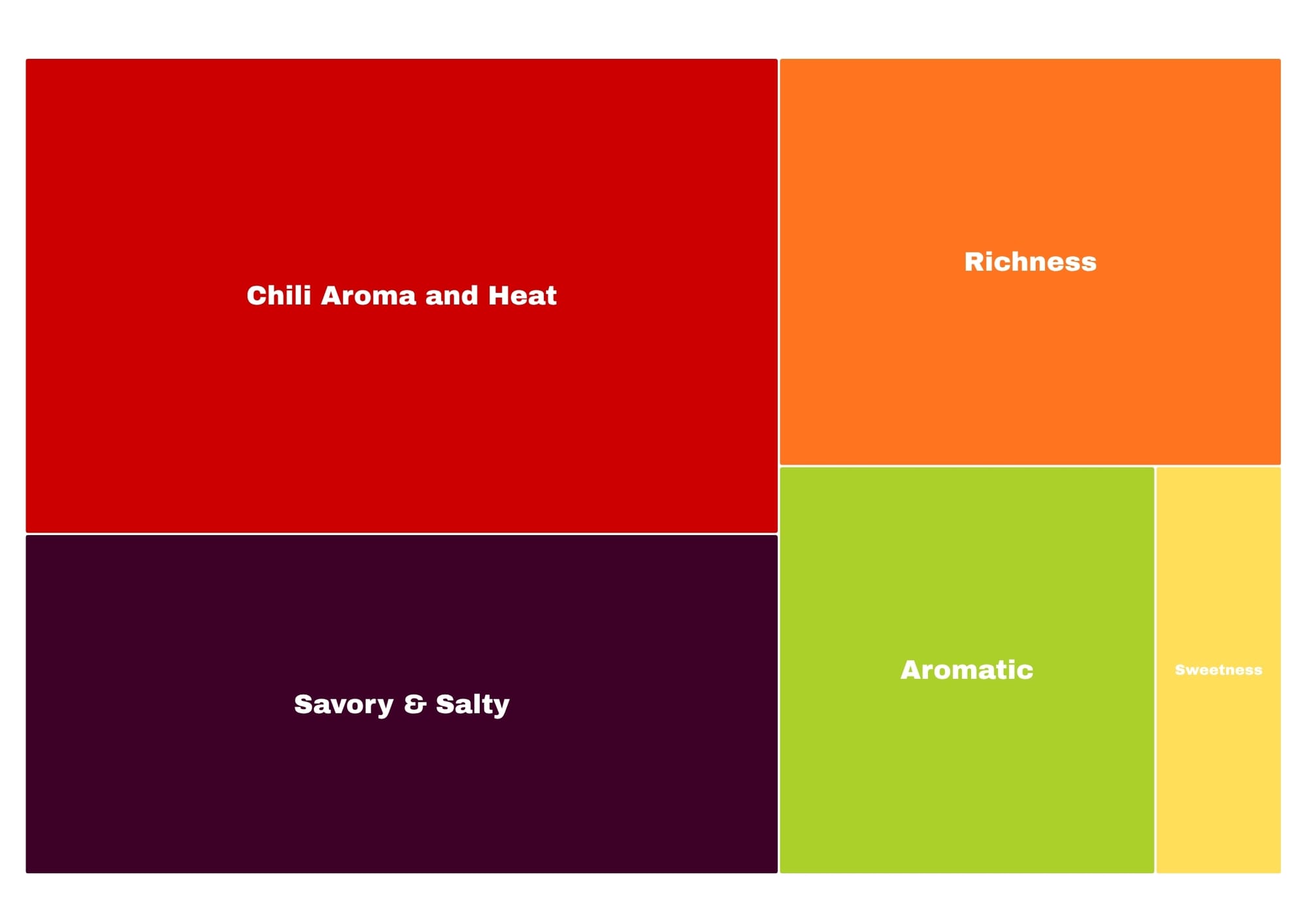
The balance is important. Hongyou Wei is not intended to be overwhelmingly spicy. In fact, traditional descriptions generally place its heat below that of Mala Wei (麻辣味). The red oil provides the color, chili fragrance, richness, and heat; soy sauce builds the savory and salty foundation; while a small amount of sugar softens the edges and leaves a subtle sweetness rather than making the dish noticeably sweet.
This is also why simply adding red chili oil to a dish does not automatically make it Hongyou Wei. Red chili oil is an ingredient; Hongyou Wei is the flavor created when that oil is balanced with the other seasonings. The same red oil can appear in other Sichuan flavor profiles, including garlic flavor, mala flavor, and even fish-fragrant flavor, but the relationship between the seasonings is what ultimately defines the dish.
Red Chili Oil: A Way to Utilize the Chili Pepper to Its Fullest
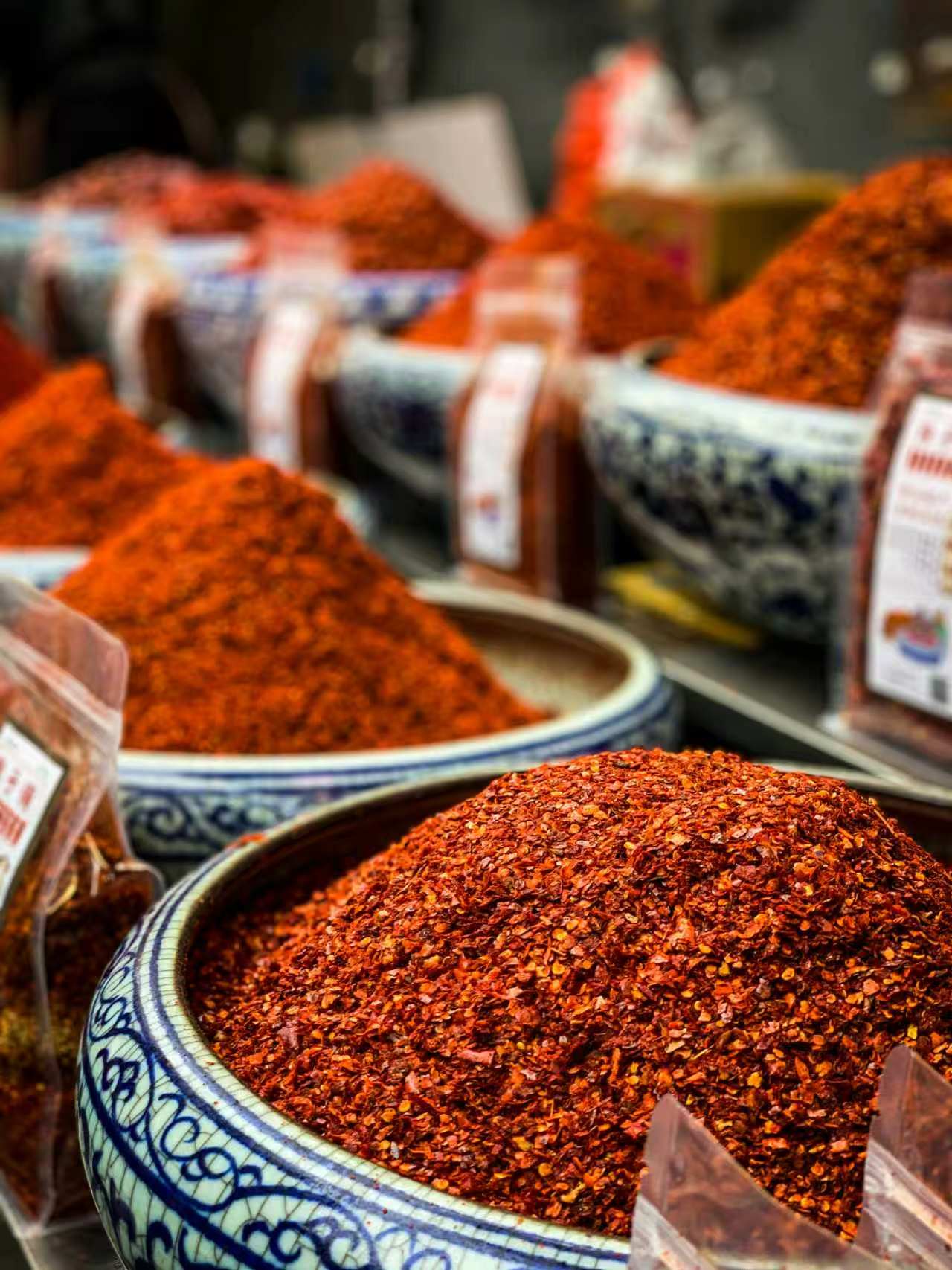
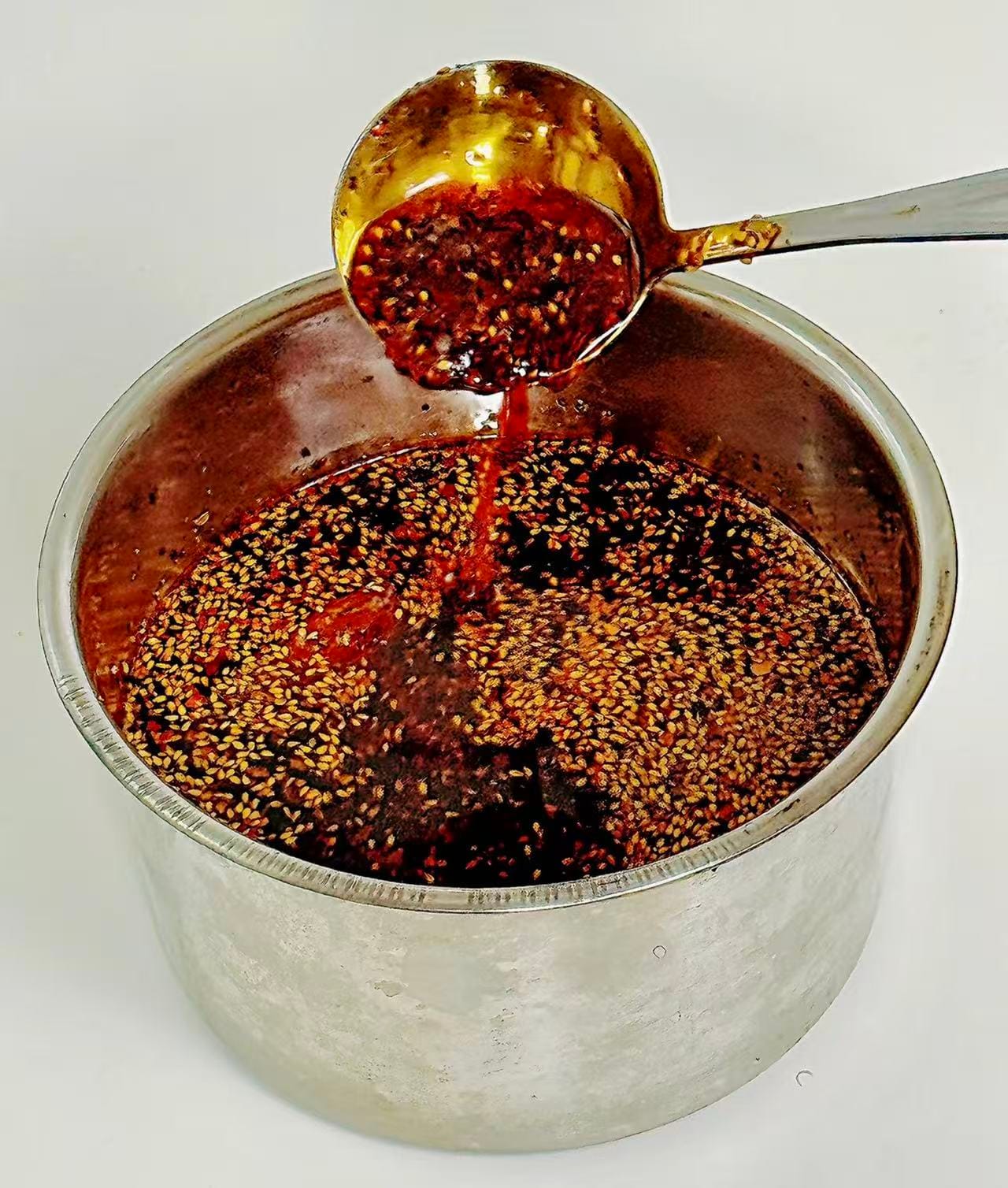
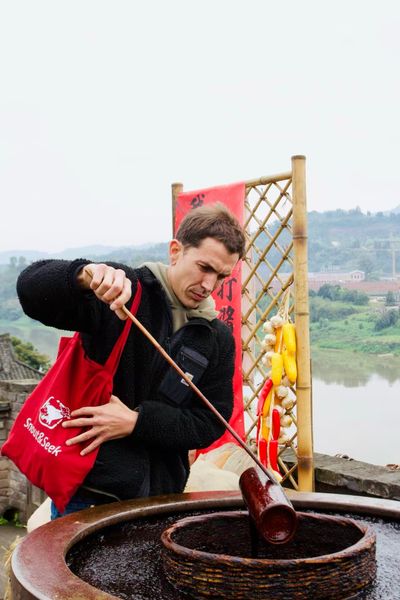
In Sichuan, making red chili oil is a serious business that involves multiple ingredients, each of which serves unique and important purposes to make it taste good. Credit: Right RED 2620281707
Of course, the biggest component of this flavor is red chili oil (红油), which can be a surprisingly good way for Sichuan locals to judge whether a restaurant is worth coming back to. Although chili oil sounds simple, making one that has the right color, aroma, heat, and flavor requires experience and careful control.
A good red chili oil draws out the color, aroma, flavor, and heat of the chili pepper to their fullest potential.
The ingredients can generally be divided into a few groups:
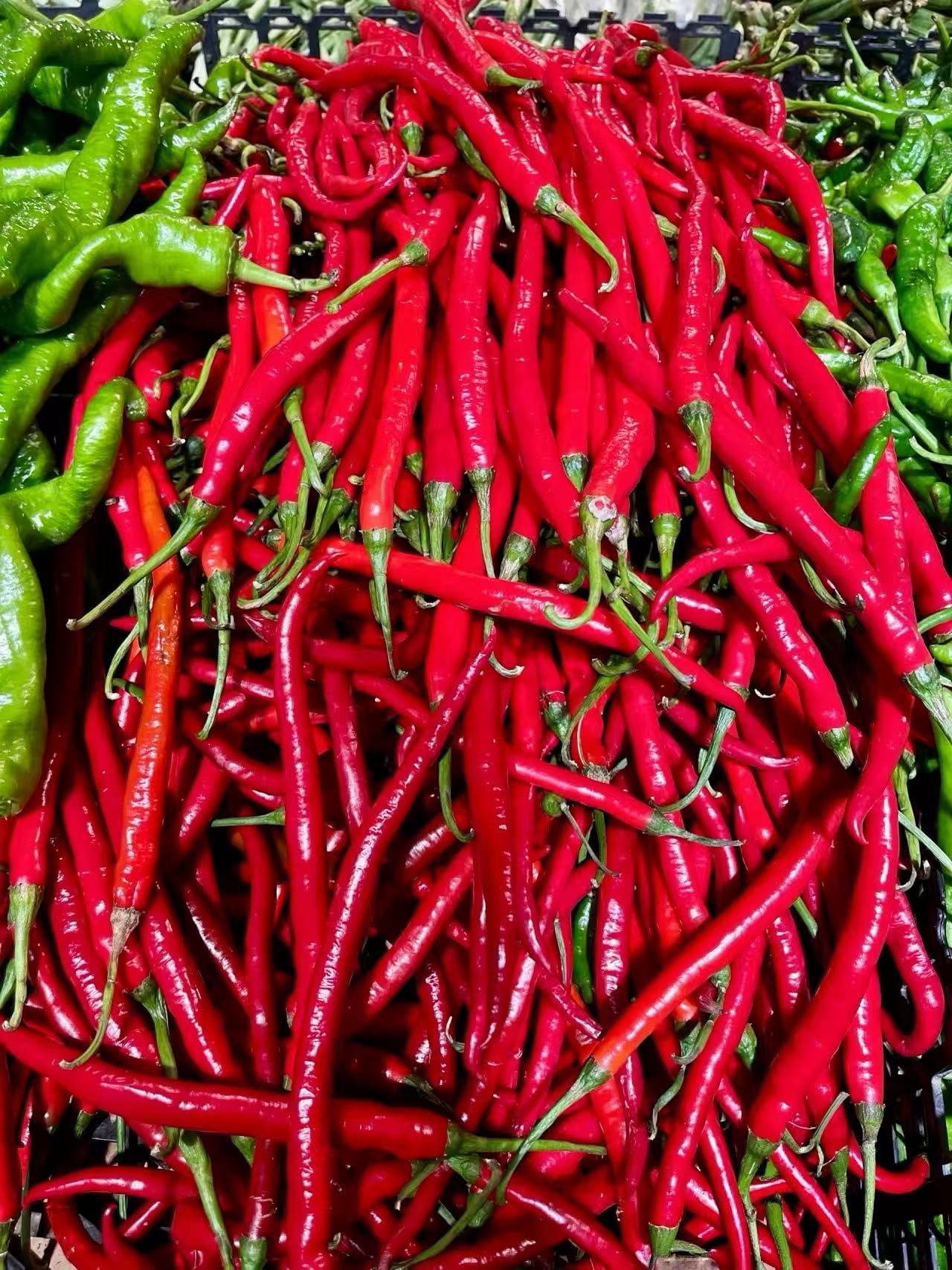
- Chili peppers: The heart of the oil. Erjingtiao (二荆条) is closely associated with Sichuan chili oil for its fragrance and rich red color. Other varieties, such as Denglongjiao (灯笼椒) from Guizhou and Chaotianjiao (朝天椒), can be blended in to contribute different levels of color, aroma, and heat. The chilies may also be ground to different sizes, which affects how they release their flavor and aroma when they come into contact with the hot oil.
- Oil: Rapeseed oil (菜籽油) is traditionally favored in Sichuan. Rather than acting as a completely neutral carrier, good rapeseed oil brings its own roasted, nutty aroma and becomes part of the final flavor. It also extracts and carries the color, aroma, and heat from the chilies.
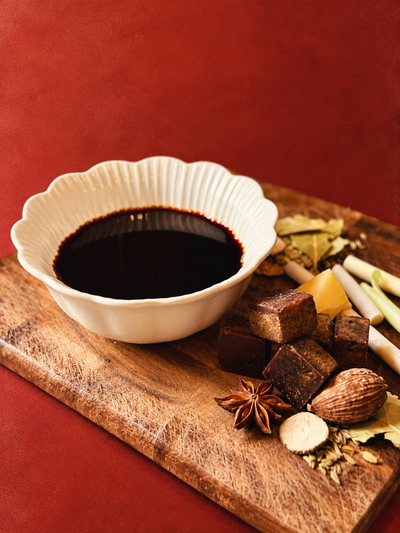
- Aromatics and spices: Depending on the recipe, ginger, scallion, onion, garlic, star anise, cassia, tsaoko, bay leaf, fennel, Sichuan pepper, and other spices may be infused into the oil. These ingredients are not required in every red oil, and a more complicated spice mixture does not necessarily make a better one. Their role is to support the chili rather than overpower it.
- Supporting ingredients: Sesame seeds are common, while a small amount of baijiu or water may be mixed with the chili before the hot oil is added. Besides contributing aroma in the case of baijiu, moistening the chili can help protect it from scorching when it first comes into contact with the hot oil.
But perhaps the most important ingredient is temperature. Oil that is too hot can burn the chili, creating bitterness and a dark color; oil that is too cool may fail to release enough fragrance and color. This is why many cooks pour the oil in stages or allow it to cool to different temperatures before each addition. The exact methods vary from cook to cook, but the goal remains similar: a red oil that is bright in color, fragrant before it is fiery, and spicy without tasting burnt.
Famous Dishes with Hongyou Wei as a Defining Character
- 红油鸡片 (Hóngyóu Jīpiàn) | Red Oil Chicken Slices: A classic and straightforward expression of Hongyou Wei. Tender poached chicken is sliced and dressed generously with seasoned red chili oil, allowing the savory, fragrant, spicy, and slightly sweet qualities of the flavor profile to stand out.
- 红油耳片 (Hóngyóu Ěrpiàn) | Pig Ear in Red Chili Oil: Thinly sliced pig ear is dressed with red oil and seasonings. Its crunchy texture holds the sauce particularly well and makes it a popular Sichuan cold dish.
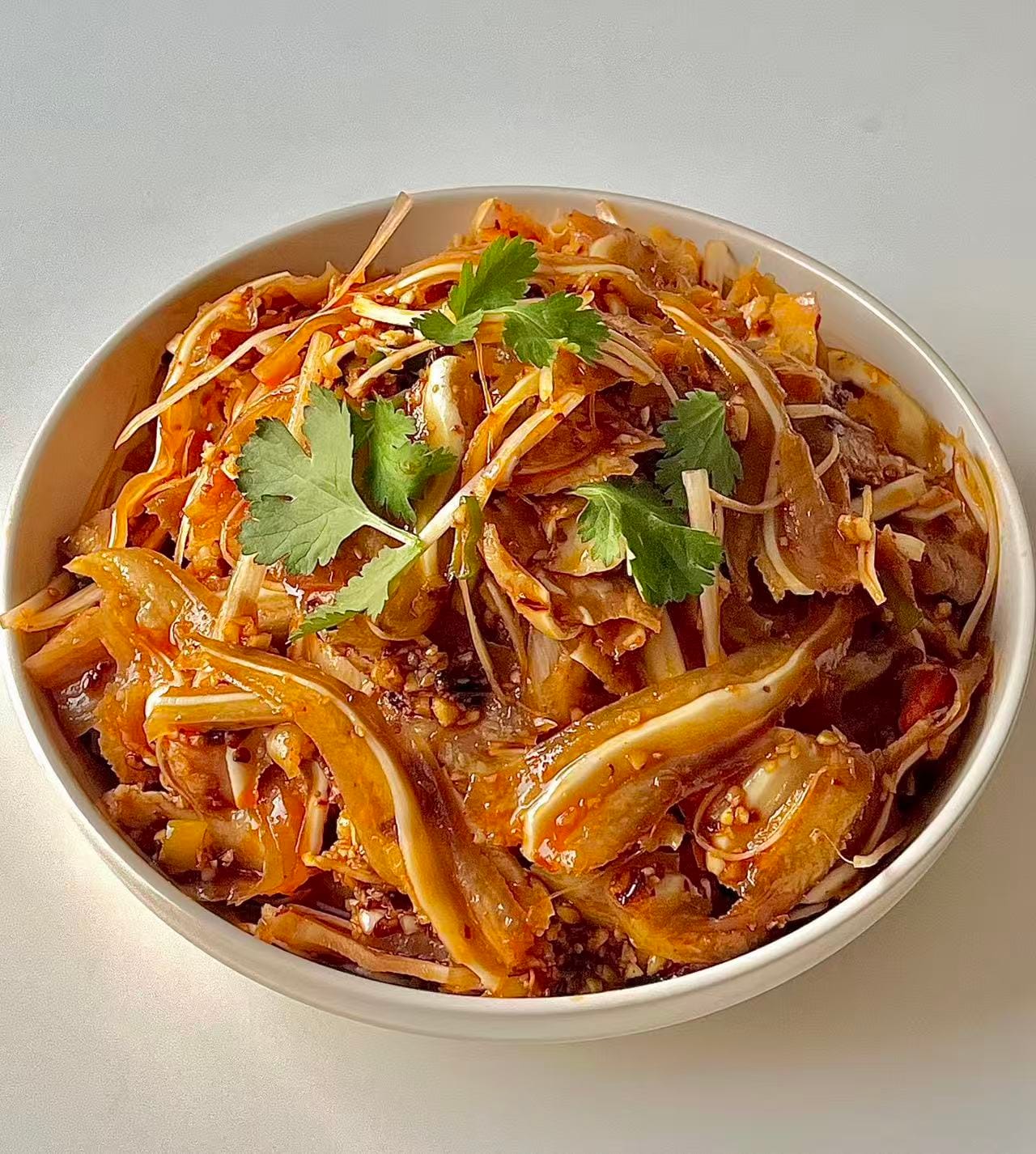
- 口水鸡 (Kǒushuǐ Jī) | Mouthwatering Chicken: One of Sichuan’s best-known cold chicken dishes. Red chili oil plays a major role in its bright color and aroma, although the seasoning is often more complex, with garlic, Sichuan pepper, vinegar, sesame, peanuts, and other ingredients depending on the recipe.
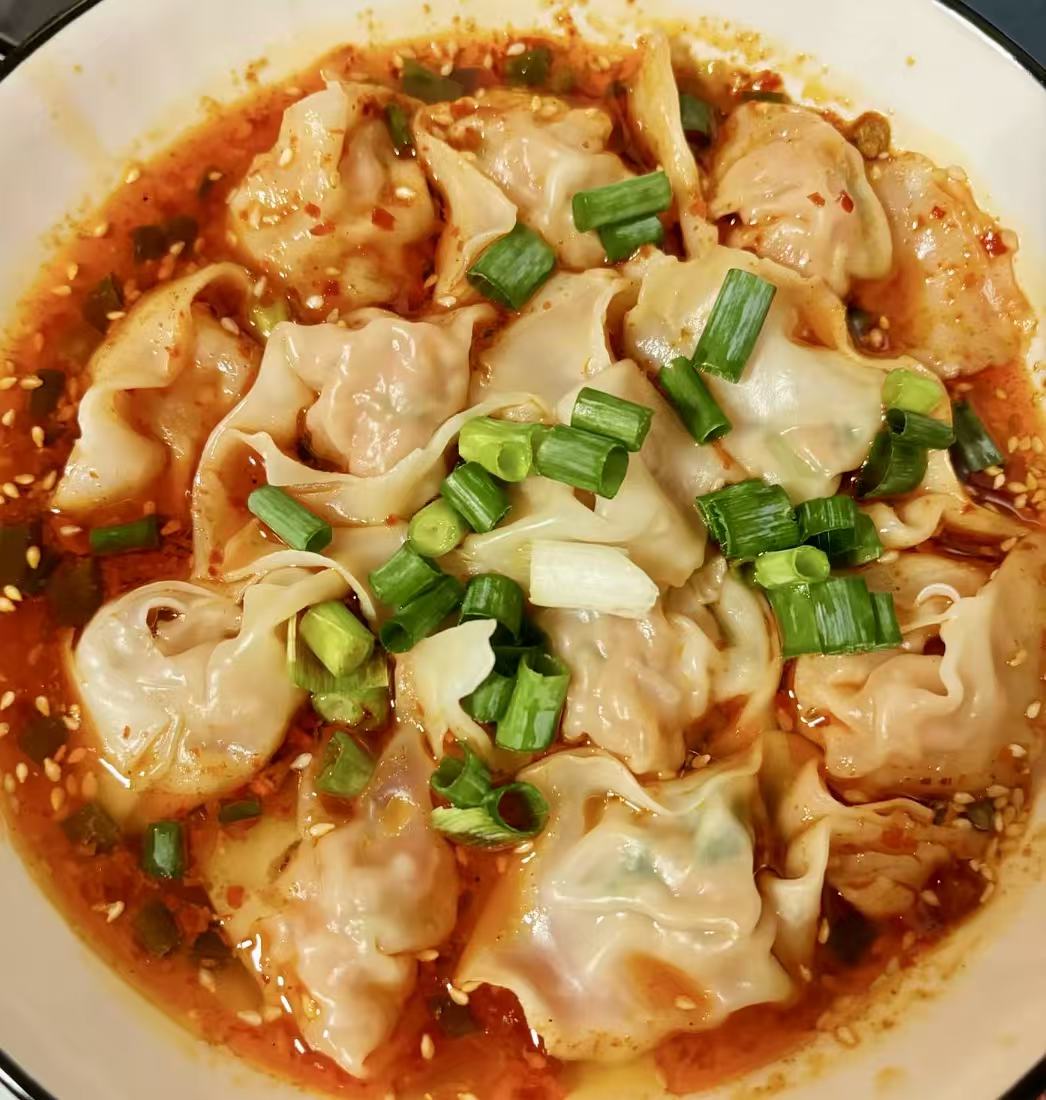
- 红油抄手 (Hóngyóu Chāoshǒu) | Wontons in Red Chili Oil: Sichuan-style wontons dressed in red oil, soy sauce, and other seasonings. Different shops have their own versions, ranging from predominantly savory and spicy to noticeably sweet.
Hongyou Wei: A Philosophical Way of Seasoning in Sichuan Cuisine
Hongyou Wei offers an interesting way to understand how seasoning works in Sichuan cuisine. A generous amount of oil does not necessarily mean that every drop is meant to be consumed, and the presence of chili does not mean that heat should dominate. Instead, the oil carries color, aroma, heat, and seasoning, coating the food with just enough of each as you eat. What remains at the bottom of the bowl has already done its job. Perhaps this is one answer to the questions we started with: in Sichuan cuisine, sometimes abundance on the plate is simply part of achieving balance in every bite.

A Tianjin, China native - Chloe has a deep appreciation for all things hotpot. Her appreciation of food and culture runs so deep that after a successful corporate career, she decided to uproot her life in China to attend Le Cordon Bleu Ottawa and Madrid. After working in the culinary industry in Canada, she decided to found Snout & Seek!
No spam, no sharing to third party. Only you and me.
Member discussion