Xianghe Glutinous Rice Harvest Festival
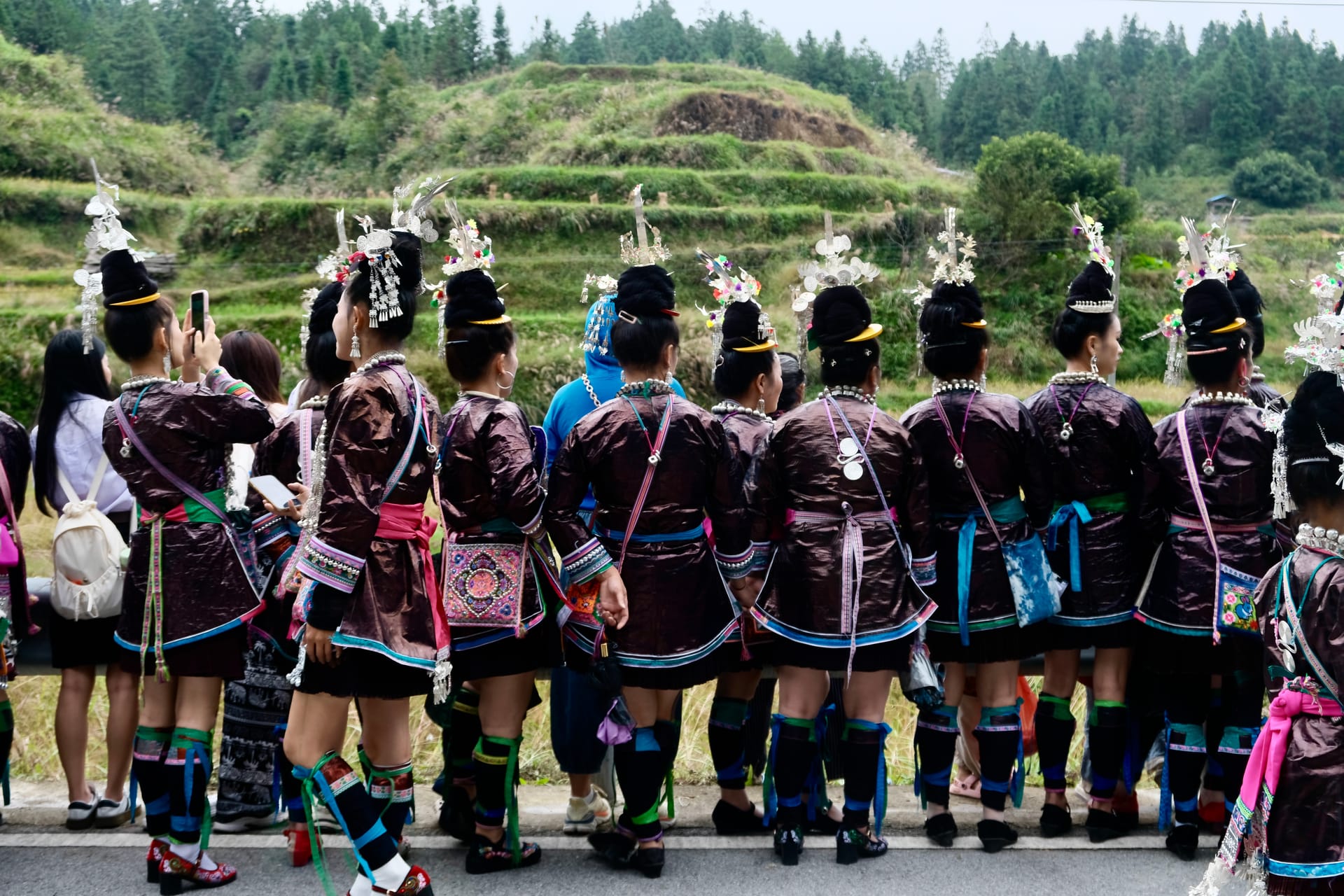
This October, in Huanggang Dong Village in Congjiang County, Guizhou Province, we encountered a ritual known as the Xianghe Glutinous Rice Harvest Festival (Xianghe Nuo Jie). Xianghe Nuo is an ancient glutinous rice variety native to the border region between Guizhou, Hunan, and Guangxi. Today, this type of glutinous rice is still widely cultivated only in Dong communities in Congjiang and Rongjiang counties of Guizhou. The Dong people are an ethnic group who migrated from the upper reaches of the Yangtze River more than two thousand years ago and eventually settled in Guizhou.
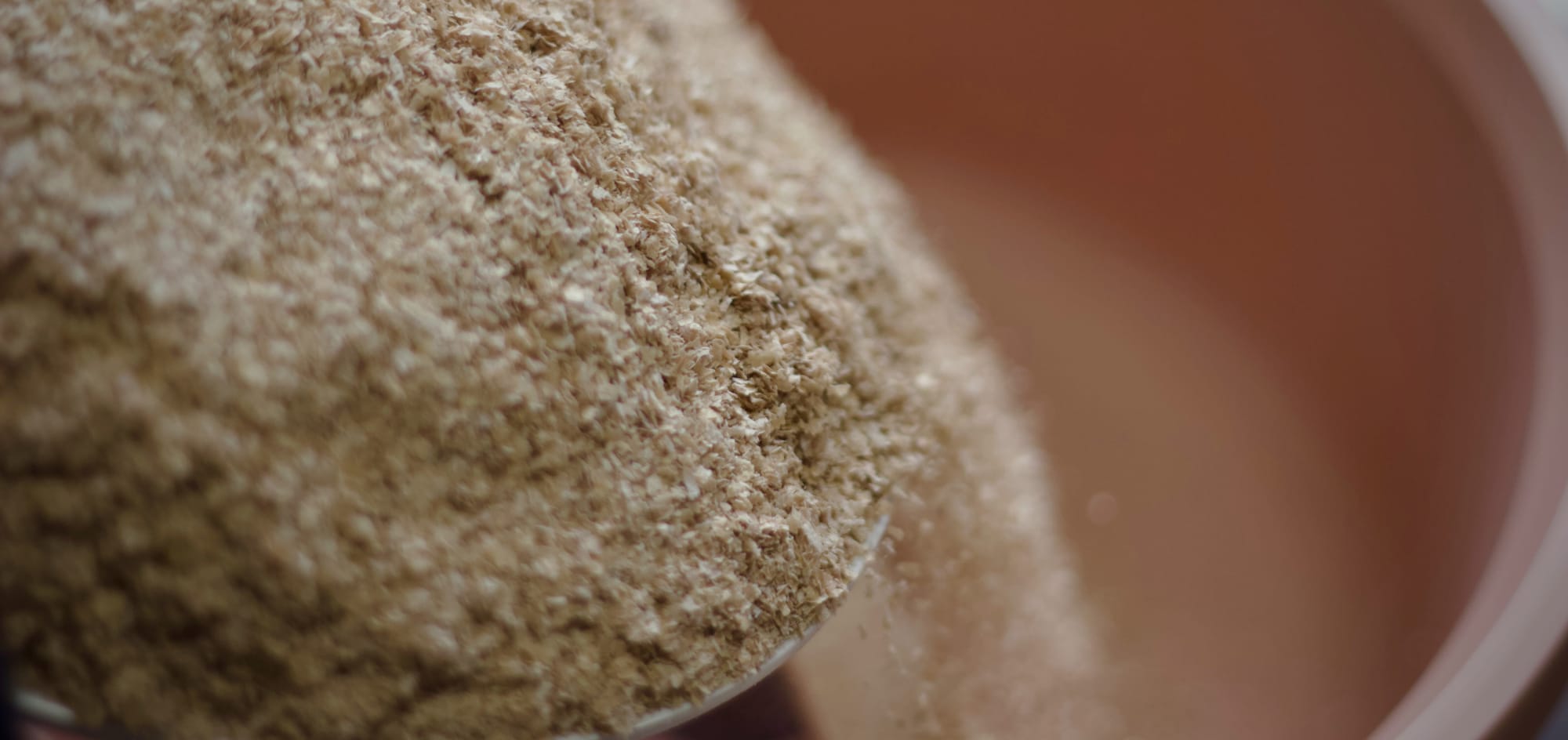
There is a theory that rice cultivation techniques now found in Zhejiang Province share similarities with those in southeastern Guizhou, and that these methods later spread eastward, influencing rice cultivation practices in Japan as well.
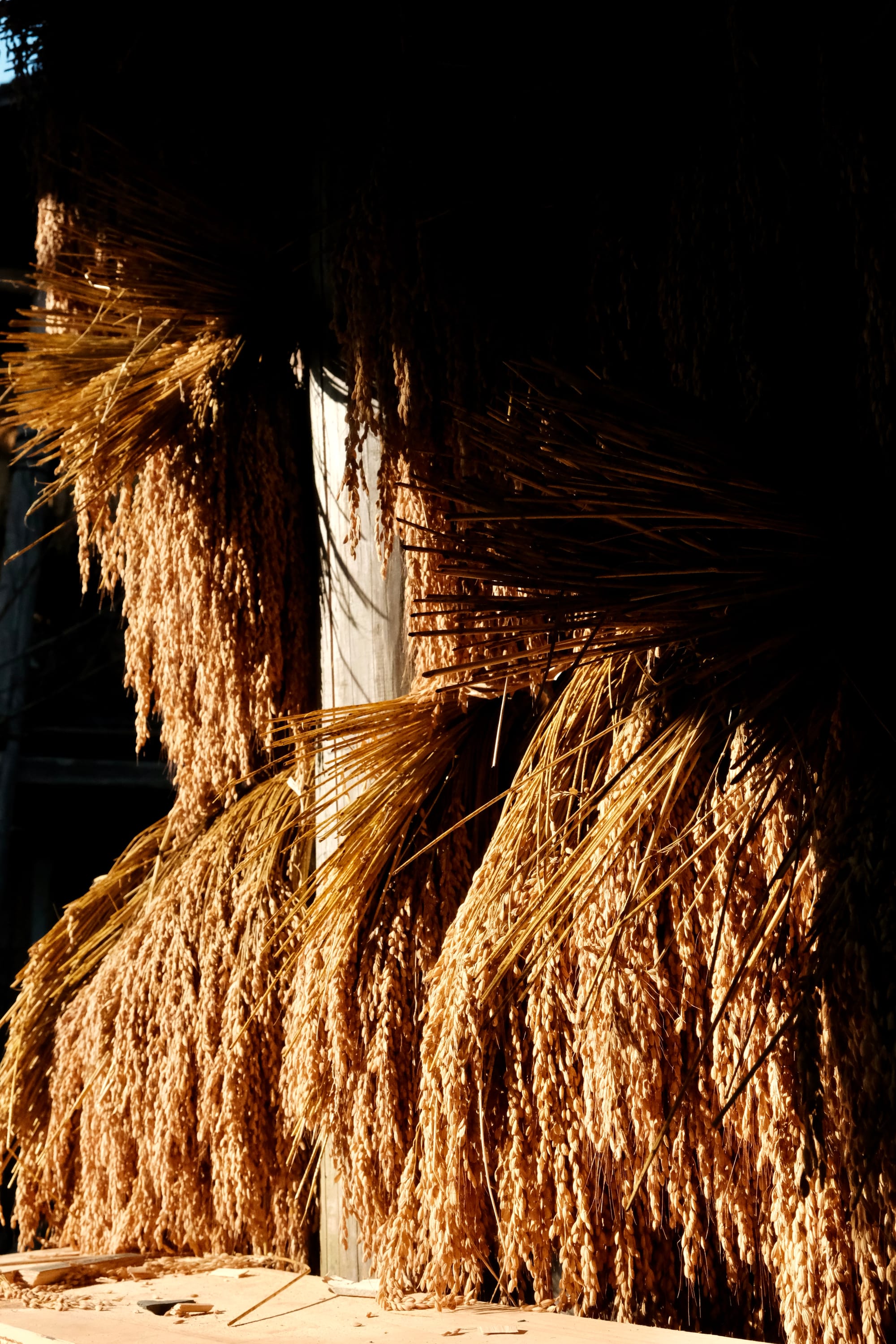
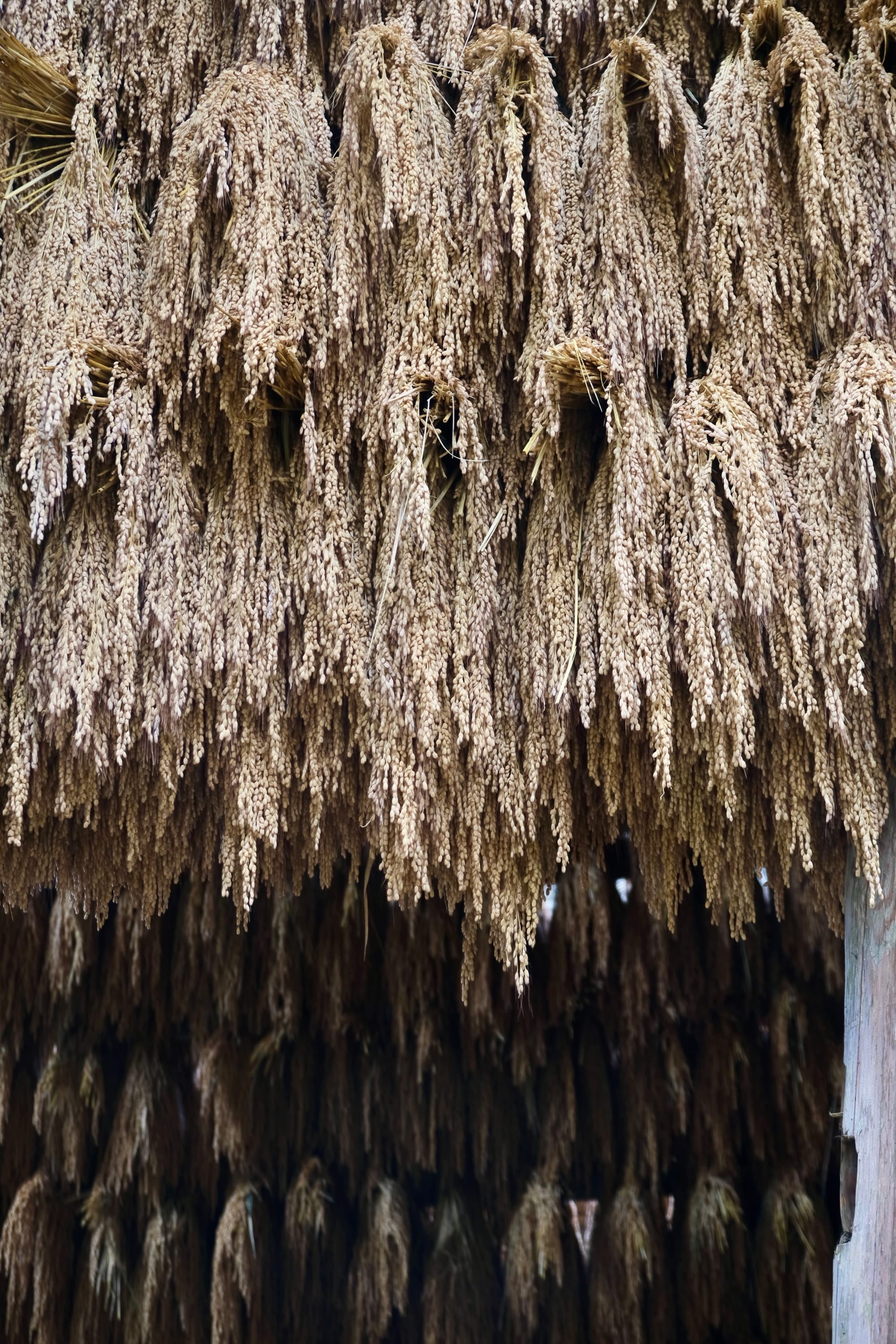
Xianghe Nuo rice drying in the sun
Celebrating rice at harvest time is a tradition shared by all rice-growing cultures. Among many ethnic groups in southwest China, this celebration is known as the “New Rice Festival.” In Dong communities, Xianghe Nuo is regarded as the most important and finest variety of rice. For this reason, their New Rice Festival is named after it and is called the Xianghe Nuo Festival.
Festivals are always lively. A village that is usually quiet suddenly fills with the sound of drums and music. The melodies come from traditional bamboo instruments used by the Miao and Dong peoples, known as the lusheng.
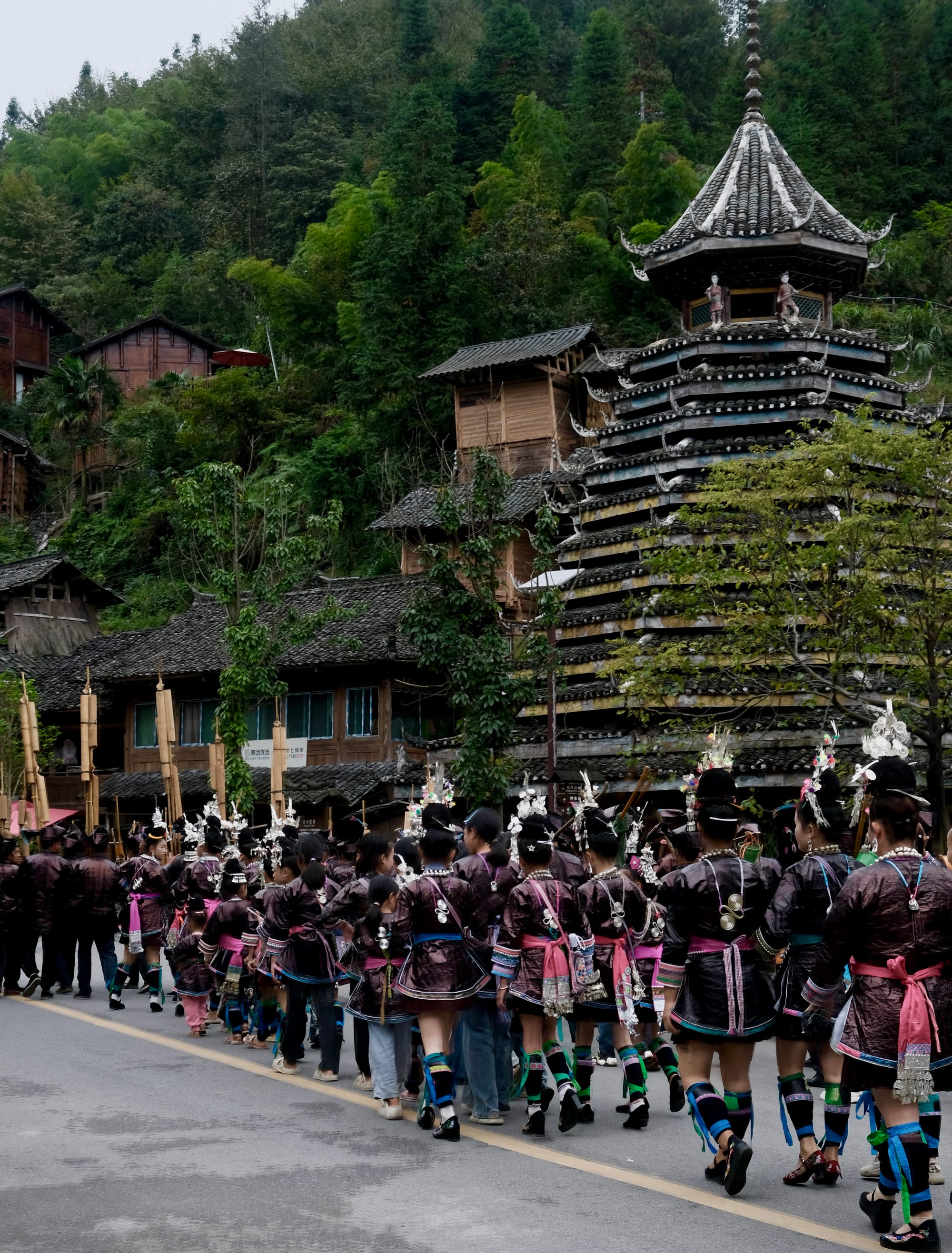
At two o’clock in the afternoon, men and women dressed in traditional Dong clothing begin to walk from the village entrance toward the rice fields where the ritual will take place. Leading the procession are men playing the lusheng, followed by young women walking behind them.
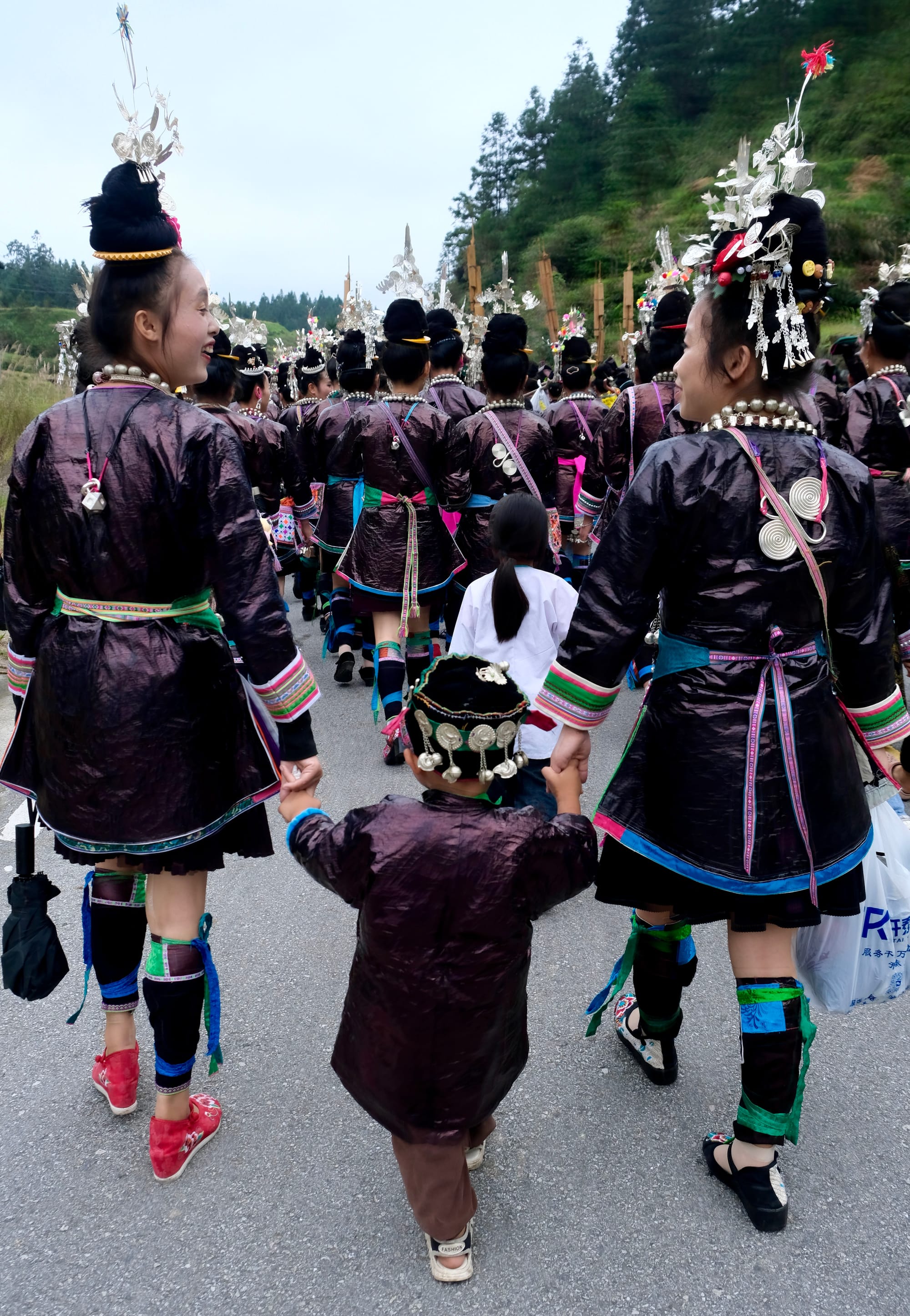
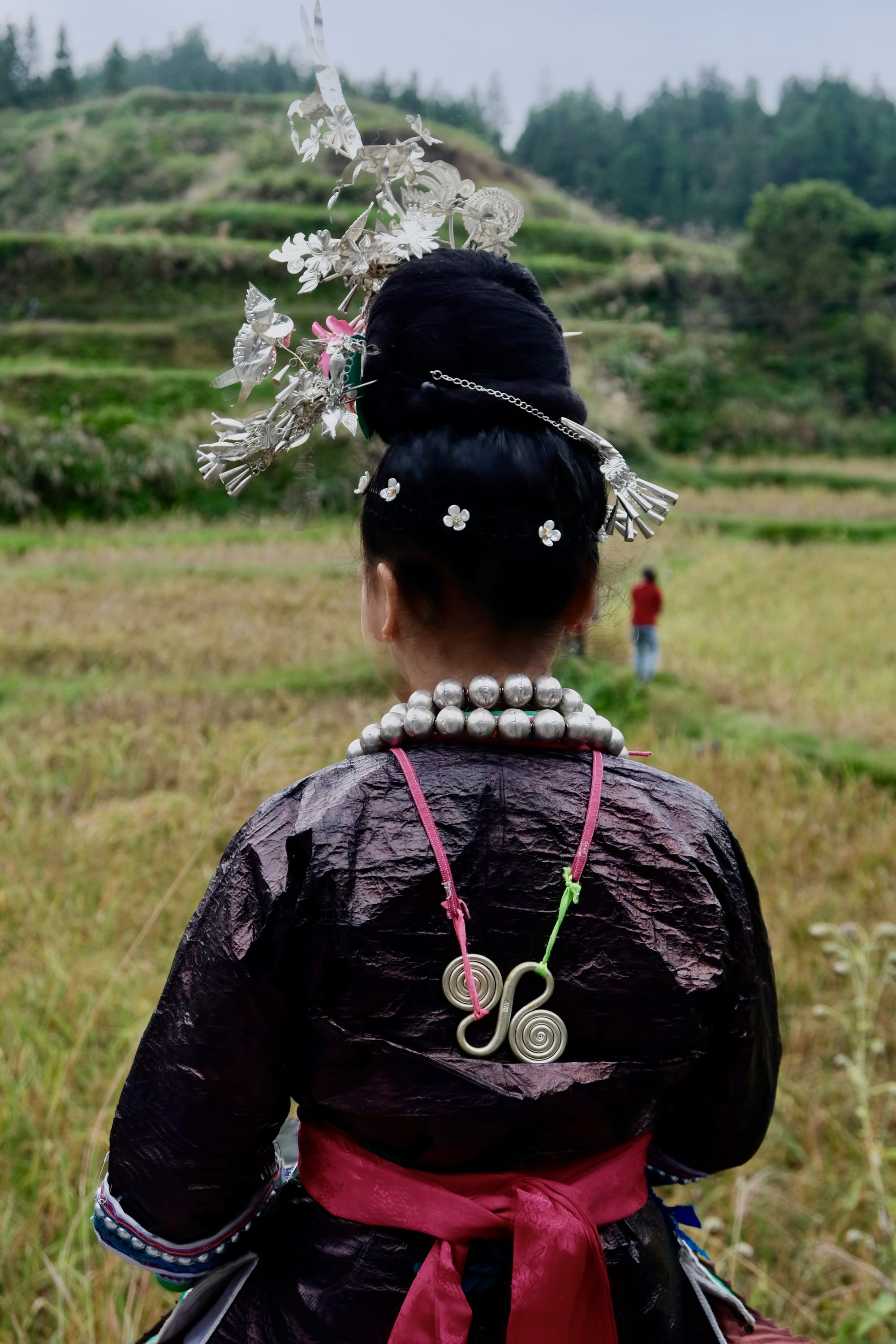
Mothers also bring their children to take part in the celebration. In Dong culture, children are considered the most important presence within a family and the community. When a child is born, a plot of land is set aside for them in advance, and their clothing and headpieces are decorated with symbols carrying the best wishes for their life.
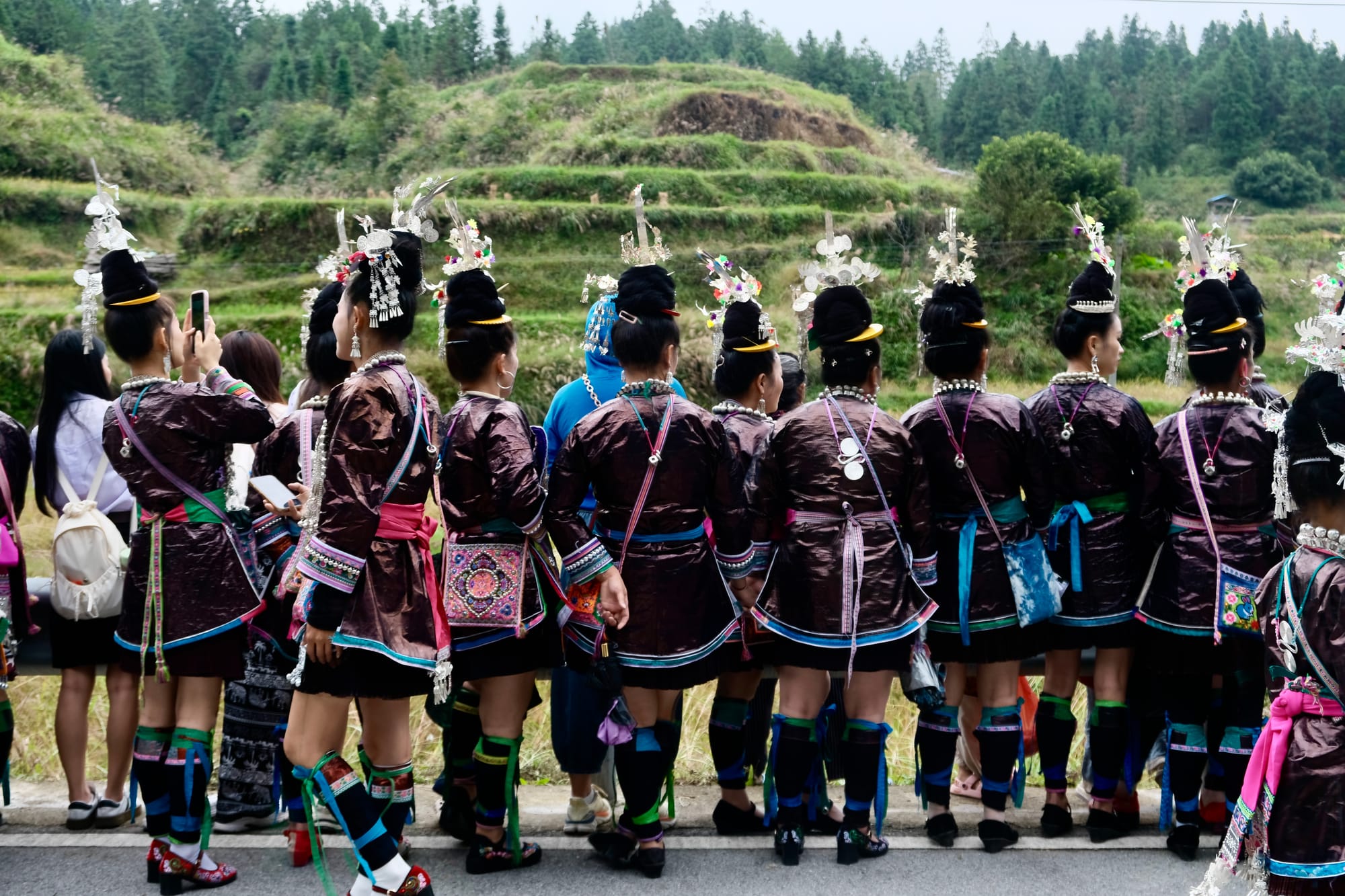
People gather to watch as the men catch rice field fish among the ripened paddies.
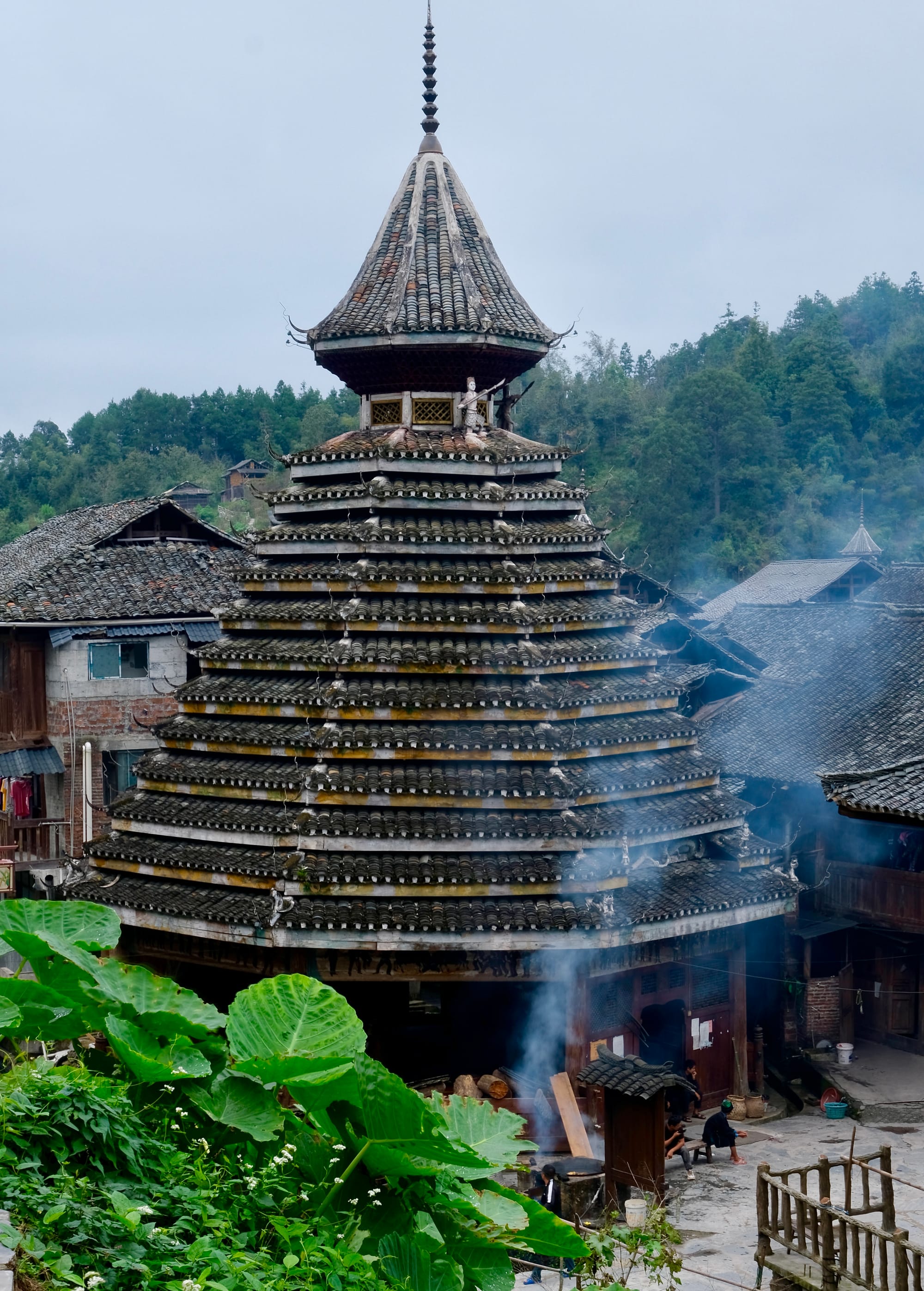
The Dong drum tower is the center of the village, much like a church serves as the center of a community in parts of Europe. It is a place for rituals, gatherings, and singing.
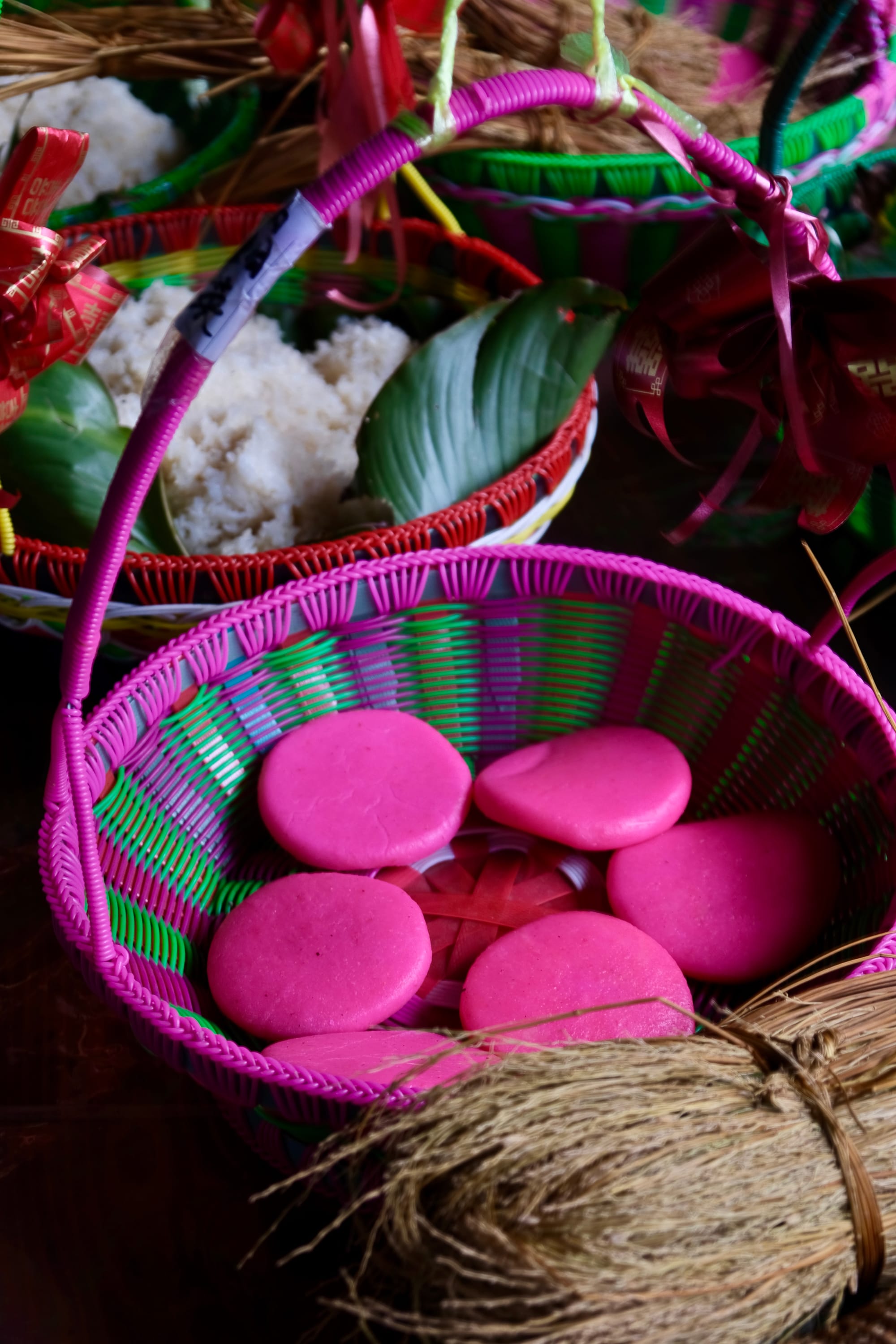
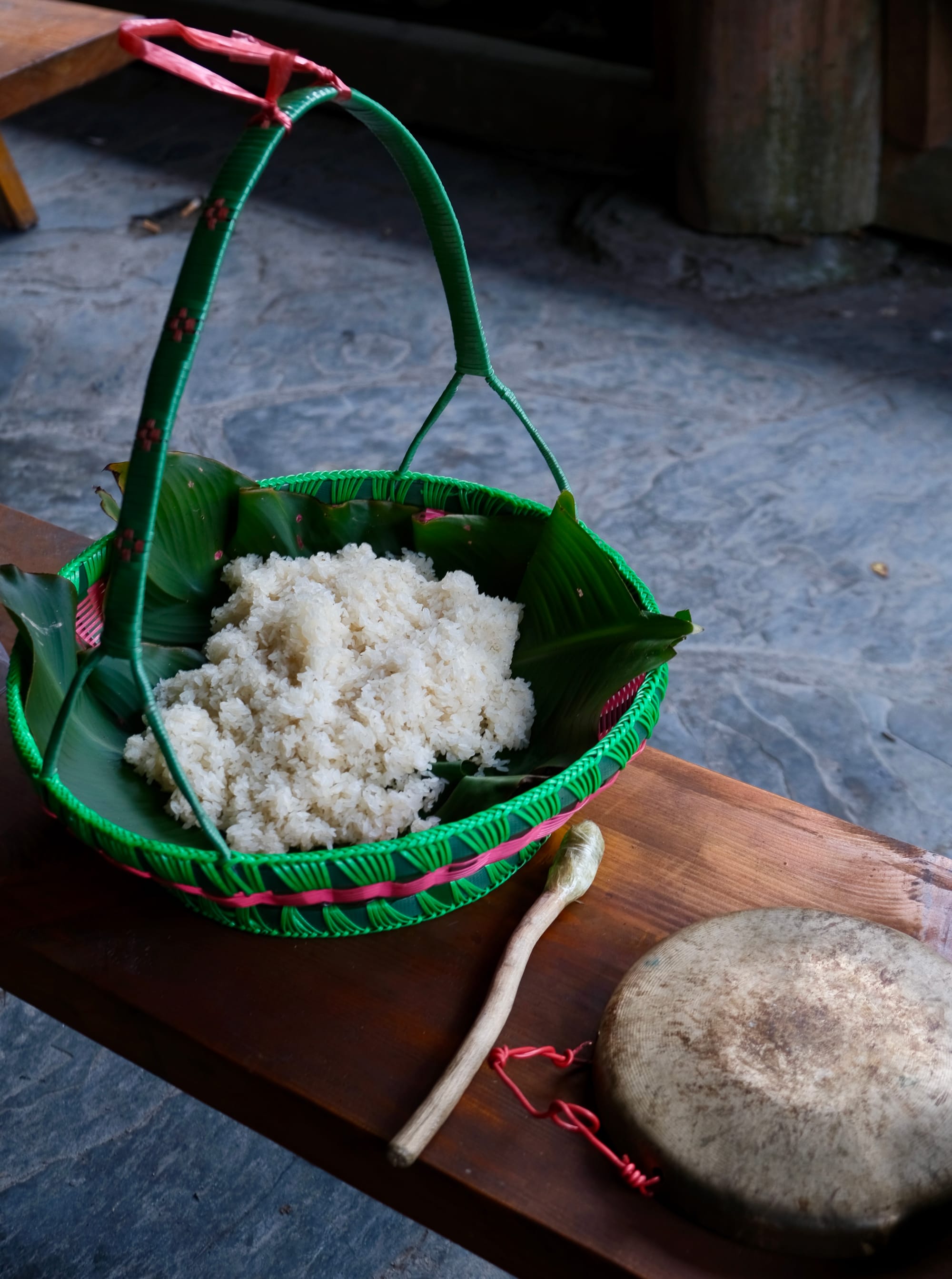
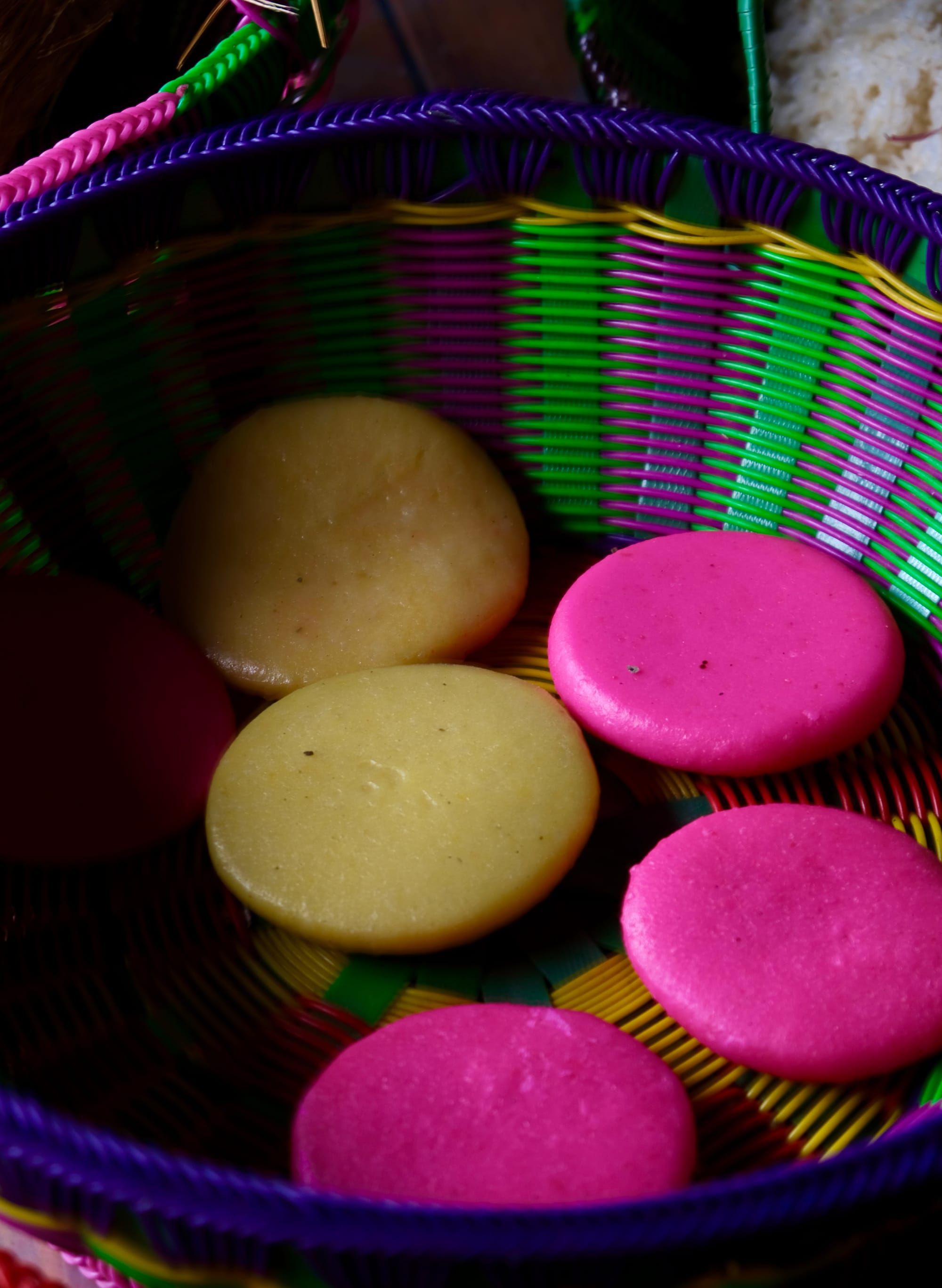
Inside the drum tower, families prepare offerings for the ancestors for the Xianghe Nuo Festival. These include glutinous rice cakes and rice dyed pink with flowers.
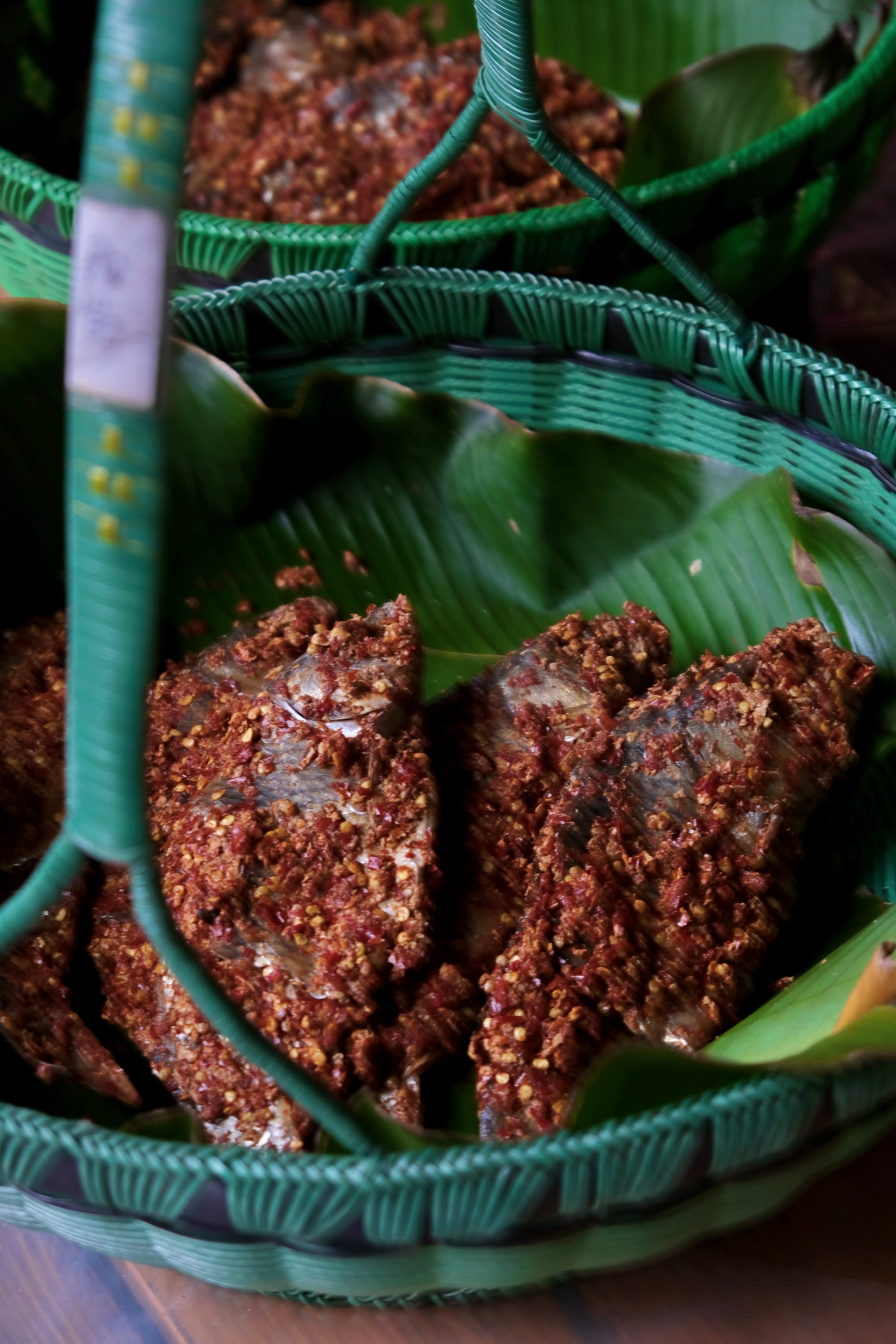
One of the most distinctive Dong foods is sour fish, made by fermenting fish with glutinous rice and chili. The fish must be fermented for more than six months before it reaches maturity. Dong people enjoy eating it with glutinous rice, and it is a dish reserved for festivals and important moments in life.

Co-founder of Snout & Seek and FARLAND, ZhuangZhuang is passionate about understanding the local cultures of different ethnic groups through an anthropological lens. She aims to share the sustainable wisdom of these cultures with a wider audience through publications, products, and other methods. Zhuang enjoys photography, jazz music, cute animals, and Chinese traditional divination culture.
No spam, no sharing to third party. Only you and me.

Member discussion