Wontons Soaked in Doubanjiang Soup, A Pleasant Surprise
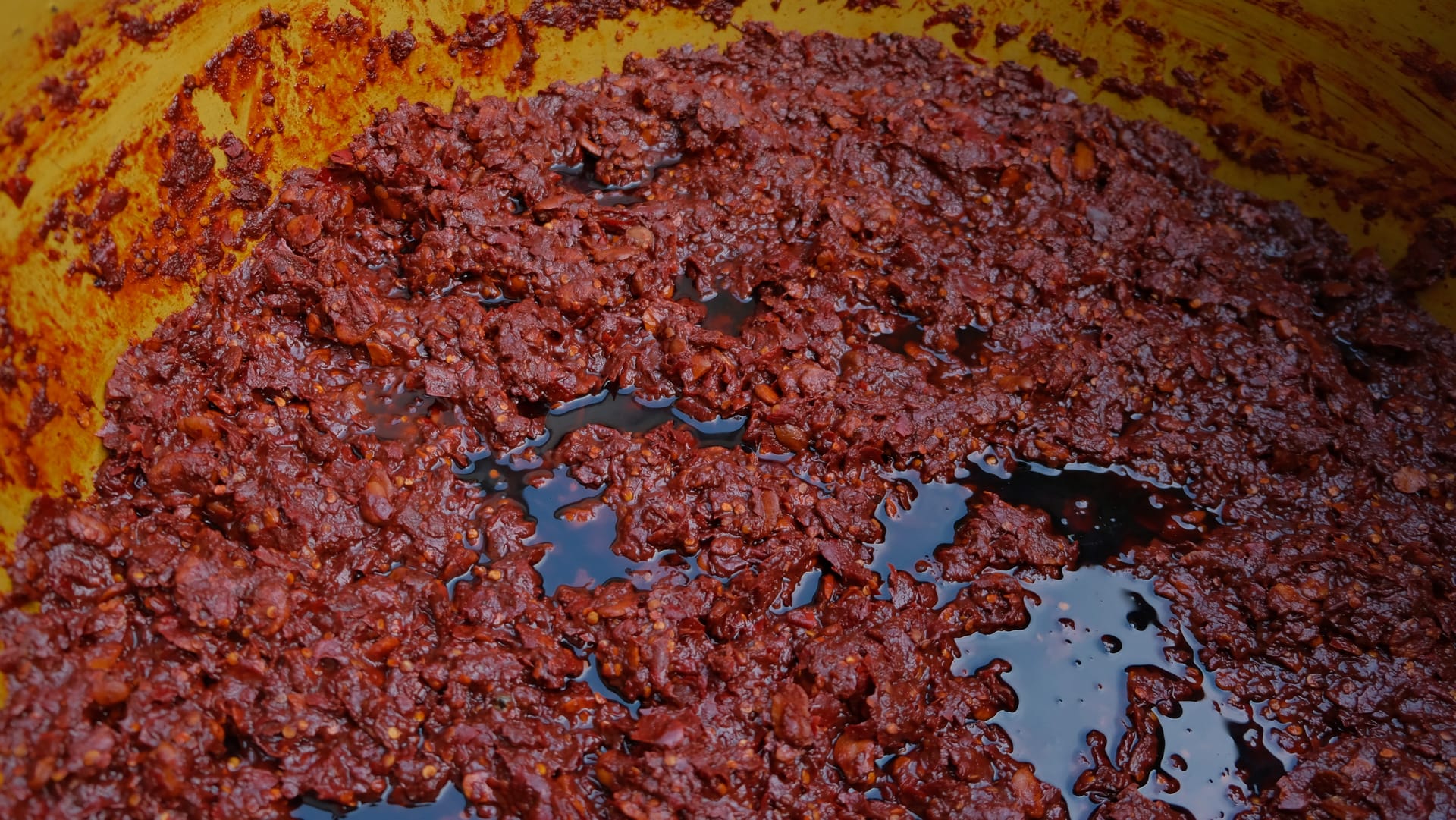
Pixian doubanjiang, often called the soul of Sichuan cuisine, is a traditional Chinese fermented condiment with a history of more than three hundred years. As it continues to evolve today, the question of how it can move beyond the Sichuan basin and find new ways to be passed on has become increasingly relevant. Doubanjiang wontons offer one possible answer.
Fermenting soybeans into paste is nothing unusual. Traditional yellow soybean paste and soy sauce are both products of soybean fermentation. Across East Asia, Korean doenjang and cheonggukjang, as well as Japanese miso, share the same basic raw material. More importantly, their role in everyday life is remarkably similar to that of Pixian doubanjiang in Sichuan.
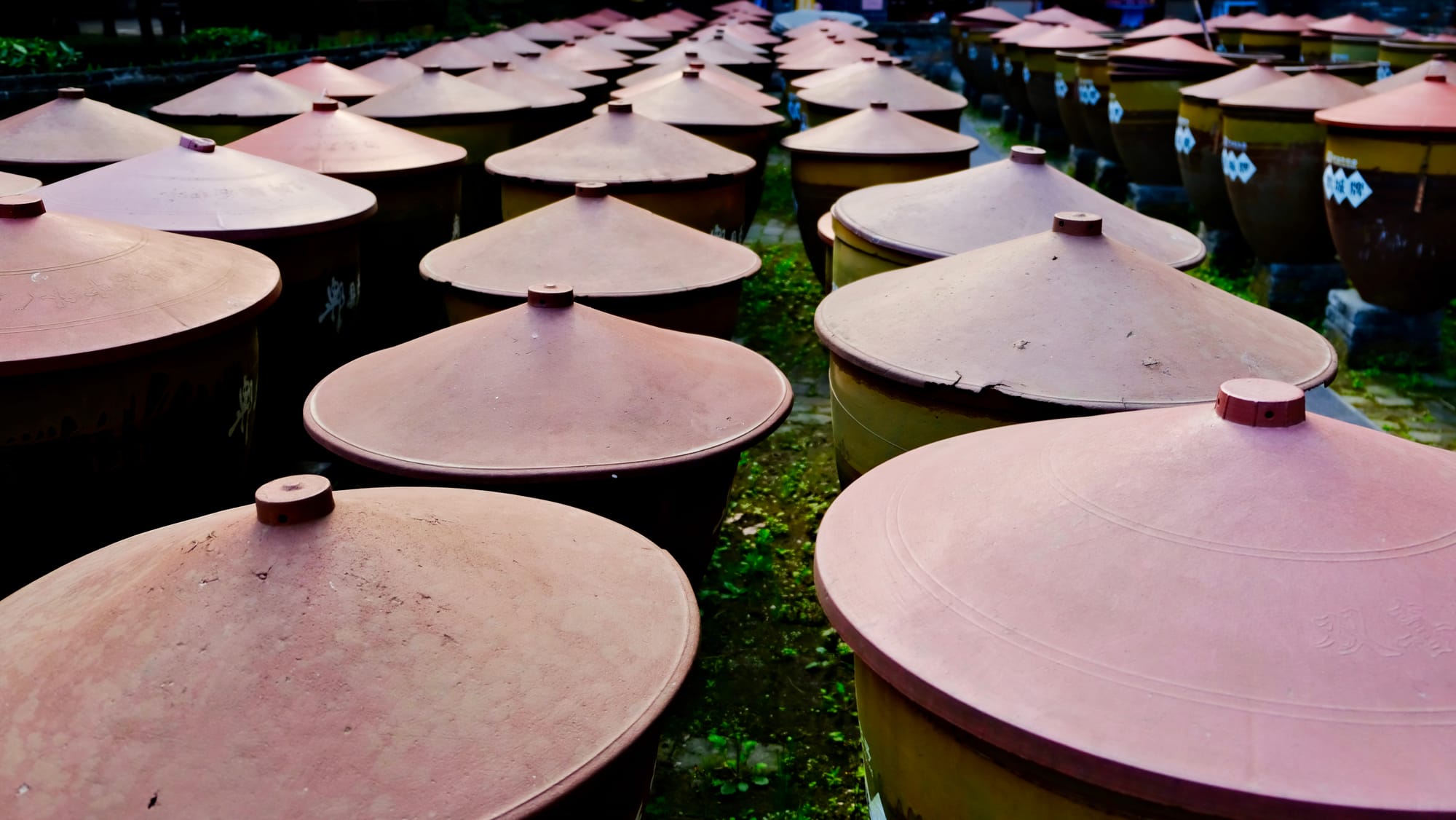
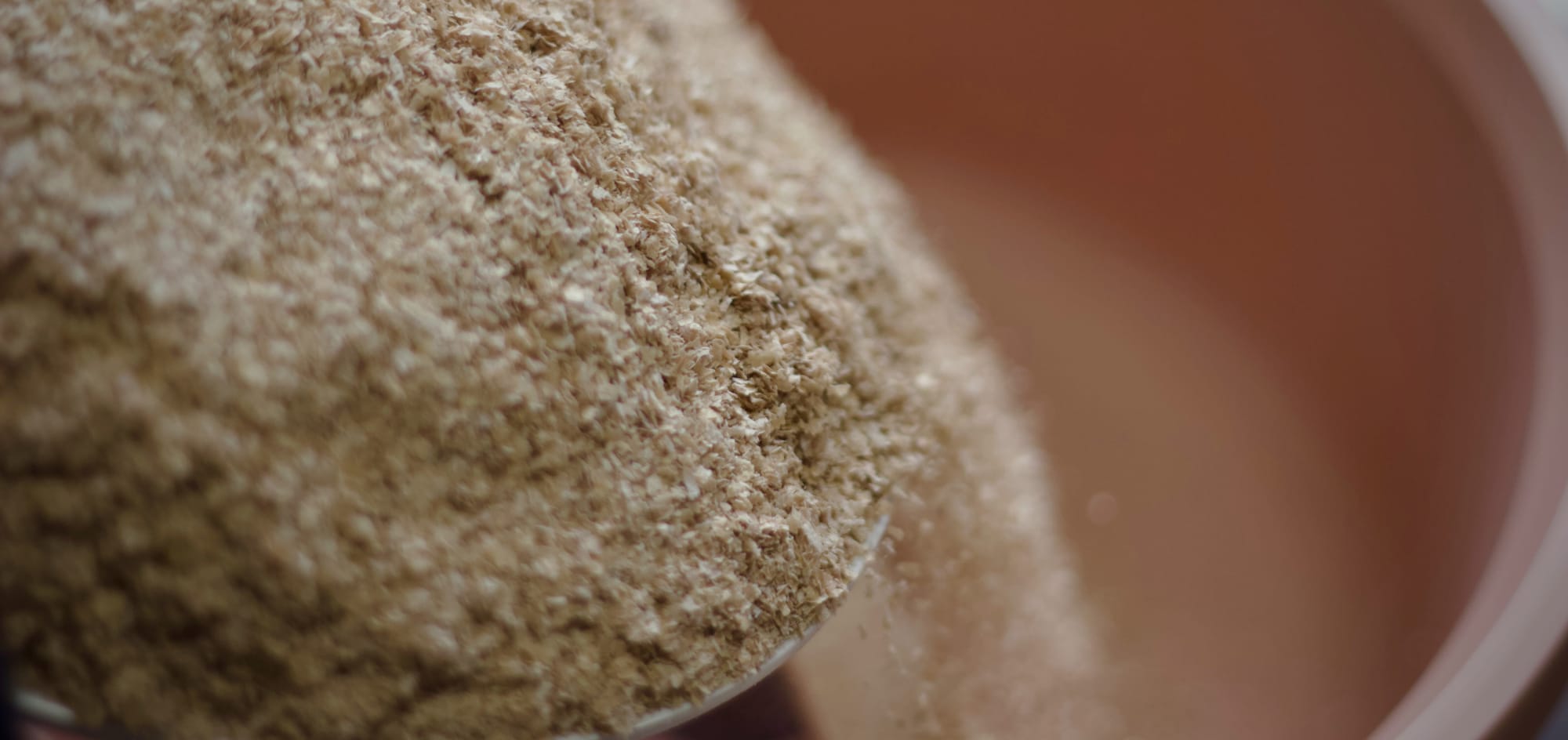
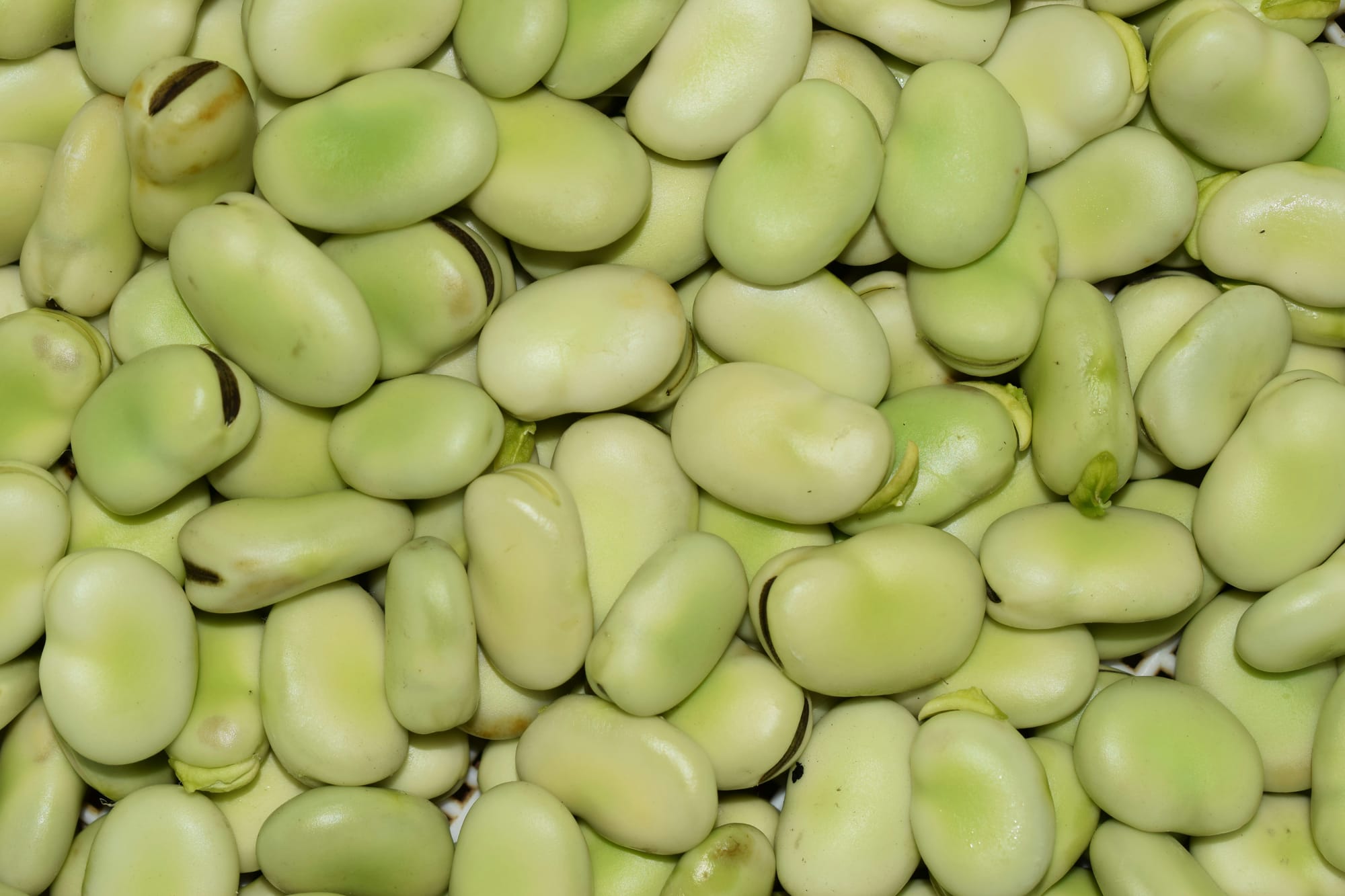
Pixan, a district located in northwest Chengdu, with its doubanjiang built through time, weather, and repetition. At its core are broad beans, Erjingtiao chilies, salt, wheat flour, and water, combined through a slow, open fermentation that depends as much on climate as on technique. The broad beans are soaked, hulled, mixed with flour, and allowed to ferment first, developing structure and depth. The chilies are salted and fermented separately, preserving their color and fragrance. Only after these two elements mature on their own are they brought together, packed into large earthen jars, and left outdoors to age under sun, wind, and seasonal change. Throughout the process, the paste is turned regularly by hand so air, moisture, and microbes can work evenly. Over months or years, amino acids accumulate, flavors deepen, and the paste transforms from sharp and raw into something rounded, savory, and quietly powerful. This method, rooted in the specific humidity, temperature, and microbial life of Pixian, is why doubanjiang carries a flavor that cannot be rushed or replicated elsewhere.
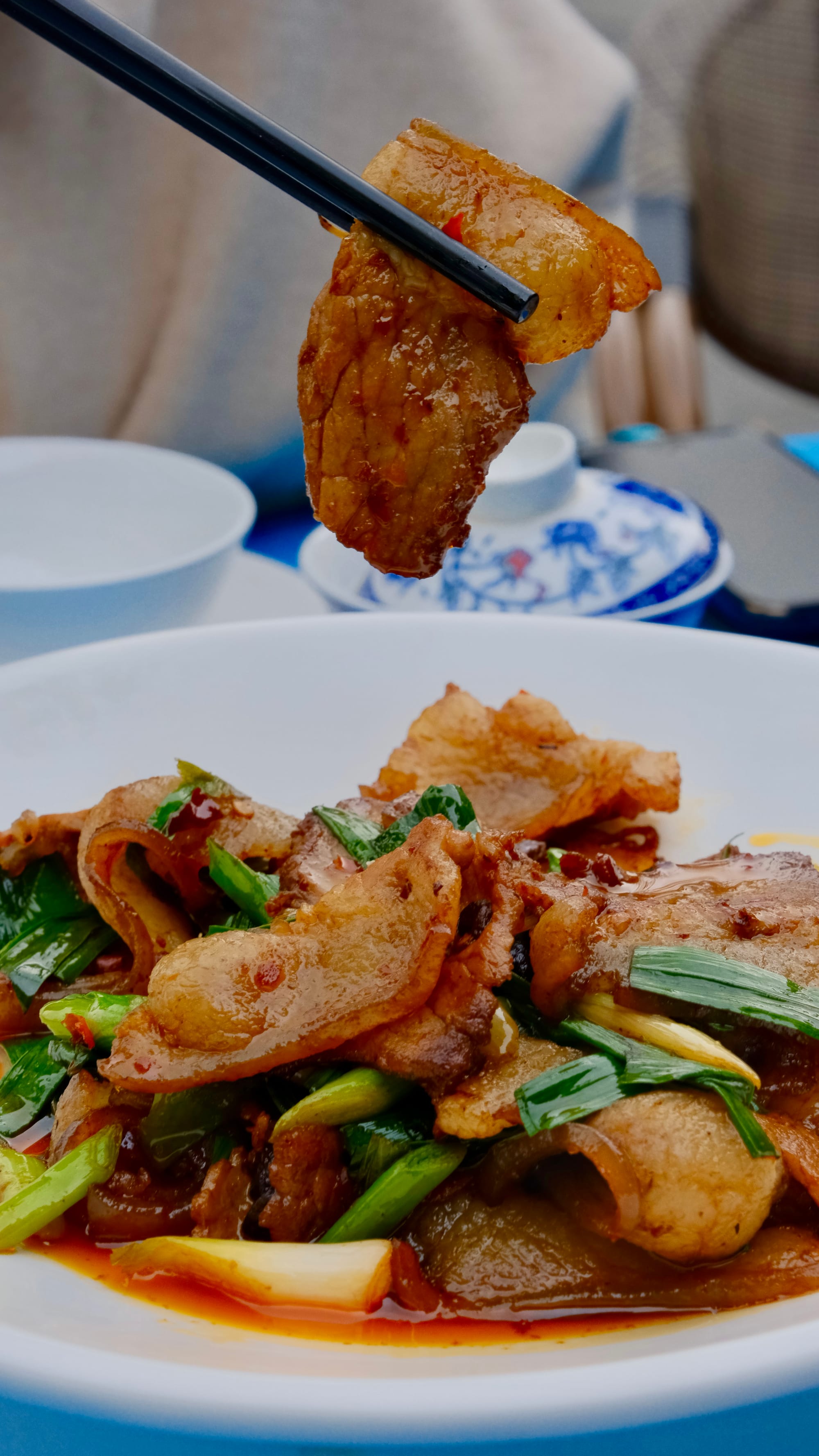
Pixian doubanjiang is indispensable not only to anyone learning Sichuan cooking, but also to daily home kitchens across the province. Sichuan cuisine places great emphasis on flavor systems, and one of the classic “twenty four traditional flavors,” the so called homestyle flavor, relies heavily on doubanjiang paste. Stir fried dishes made with it are glossy and red, savory with a gentle heat, and finish with a deep fermented aroma reminiscent of aged baijiu.
The depth of flavor comes from amino acids produced during fermentation. Doubanjiang fermented for less than one year typically contains around five to six types of amino acids, while doubanjiang aged for more than four years can contain over twenty six. One year of fermentation gives color, while three years or more builds structure and richness.
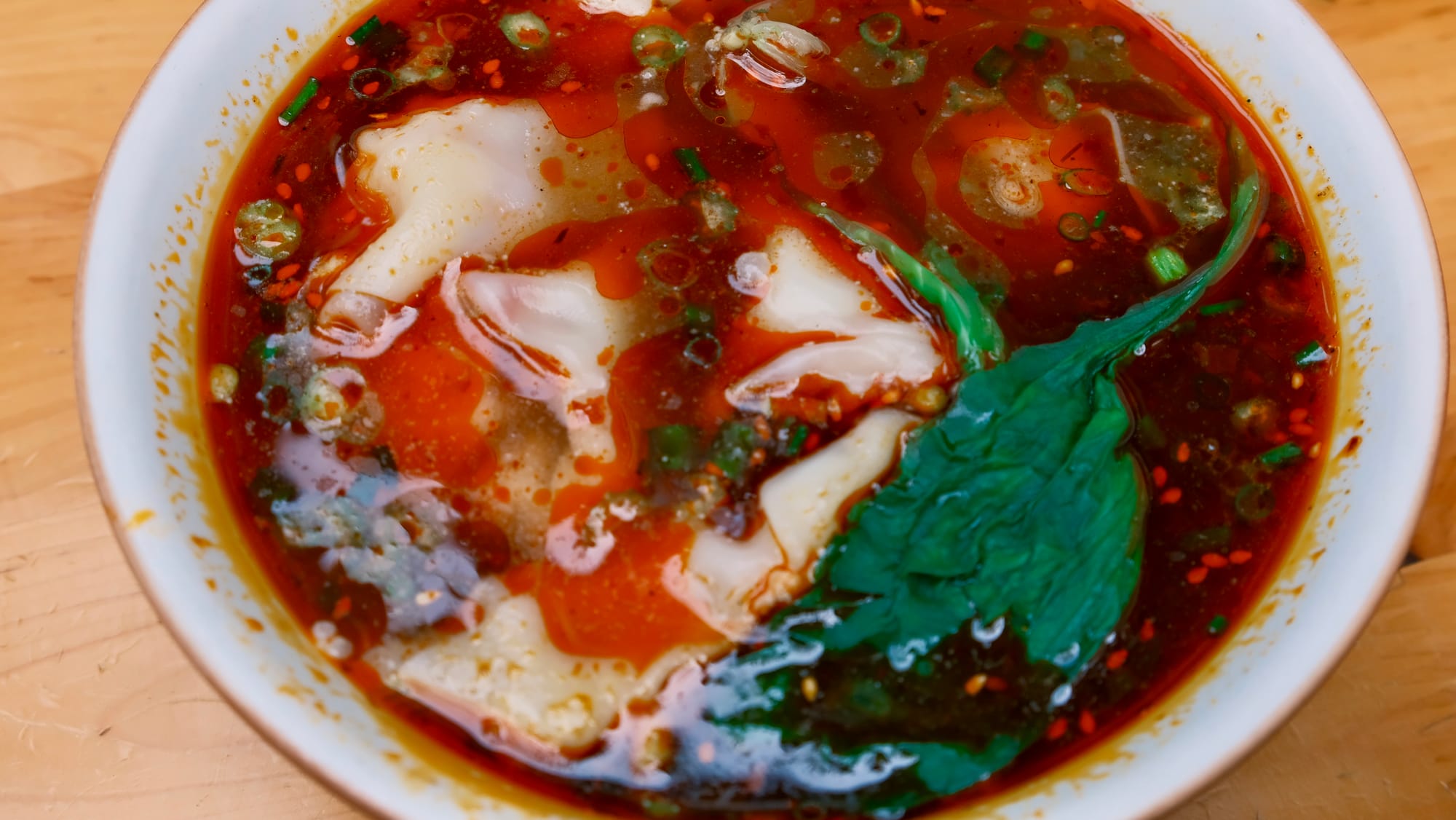
Pixian doubanjiang is most commonly used in hotpot and stir fried dishes. When the idea of “doubanjiang wontons” first comes up, it feels both intriguing and puzzling. How exactly would that work? The answer becomes clear when a bowl of doubanjiang wontons arrives at the table, floating in a lightly red, aromatic broth. After a few bites, the reactions are almost unanimous: surprisingly delicious, not salty at all, with a subtle sweetness. Built on the fermented aroma of doubanjiang, the wonton skins at Luo’s Doubanjiang Wontons are thin and softly chewy. The red broth is fragrant without being greasy, mildly spicy with a lingering savory finish. It completely overturns the common impression of doubanjiang as heavy, oily, and overly salty.
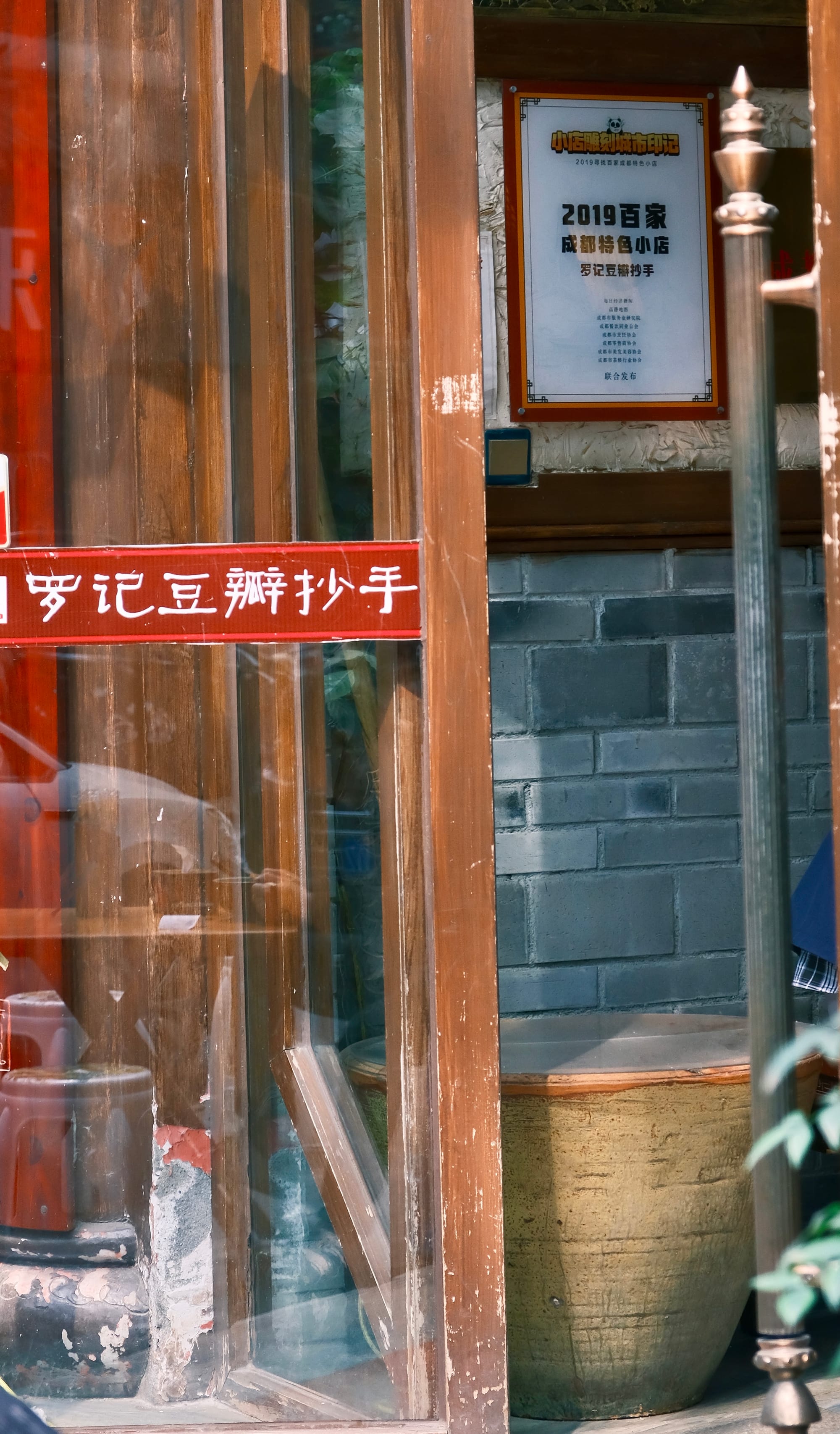
Although Lü Xiaohu is originally from Chongzhou, his more than ten years as a Sichuan chef gave him a deep understanding of how to use doubanjiang. After marrying his wife, Luo Jianghong, he moved to Pixian and settled there. Pixian is famous for doubanjiang, so from the very beginning, the couple decided their business would revolve around doubanjiang based products. Luo Jianghong’s family, moreover, included well known noodle makers in Pixian, which naturally led them to the idea of opening a doubanjiang wonton shop. As for why their doubanjiang wontons alone have won the affection of both locals and visitors, as well as numerous official recognitions, Lü Xiaohu traces it back to his understanding of Sichuan cuisine. “Sichuan is a province shaped by migration. Sichuan cuisine is, in a sense, a national cuisine.” In his view, for Pixian doubanjiang to travel beyond Sichuan, it must preserve its fermented soul while adapting to broader tastes.
At its core, doubanjiang is much like coffee. It is highly adaptable and capable of creating new flavors when combined thoughtfully. Starbucks popularized coffee by treating it as a base, adding syrups and fruit flavors, and turning it into something accessible to a wide audience. Lü Xiaohu’s approach follows a similar logic. By transforming the rich, intense character of doubanjiang into a condiment suitable for everyday eating, he opens it up to more people.
The finesse of Luoshi doubanjiang lies in its method. Different vintages of traditional Pixian doubanjiang are first blended and stir fried together, then combined with a proprietary mix of Chinese herbs. From there, various flavor profiles are developed using Sichuan culinary principles. In addition to the original doubanjiang wontons, Lü Xiaohu has created sweet and sour spicy, fish fragrant, sesame paste, and several other variations. His years of Sichuan cooking experience are fully put to use, creating doubanjiang flavors that visitors from different regions can enjoy and understand.
Co-founder of Snout & Seek and FARLAND, ZhuangZhuang is passionate about understanding the local cultures of different ethnic groups through an anthropological lens. She aims to share the sustainable wisdom of these cultures with a wider audience through publications, products, and other methods. Zhuang enjoys photography, jazz music, cute animals, and Chinese traditional divination culture.
No spam, no sharing to third party. Only you and me.


Member discussion