The Spirit of Rice: How an Ordinary Grain Becomes the Heart of a People

Author: Hui Mu
Beyond the Supermarket, the Rice in the Terraces Has a Soul
Rice has become so ordinary in modern life that we often forget its origins. With modern conveniences and a life where everything is easily bought, “grain” has become something people no longer think about deeply. People can purchase polished rice from supermarkets, or simply order a meal delivered to their door.
This is very different from the past, when grain was a direct gift from nature and the result of long arduous labor in the fields. Today, it has become just another part of city life, something we eat without much thought.
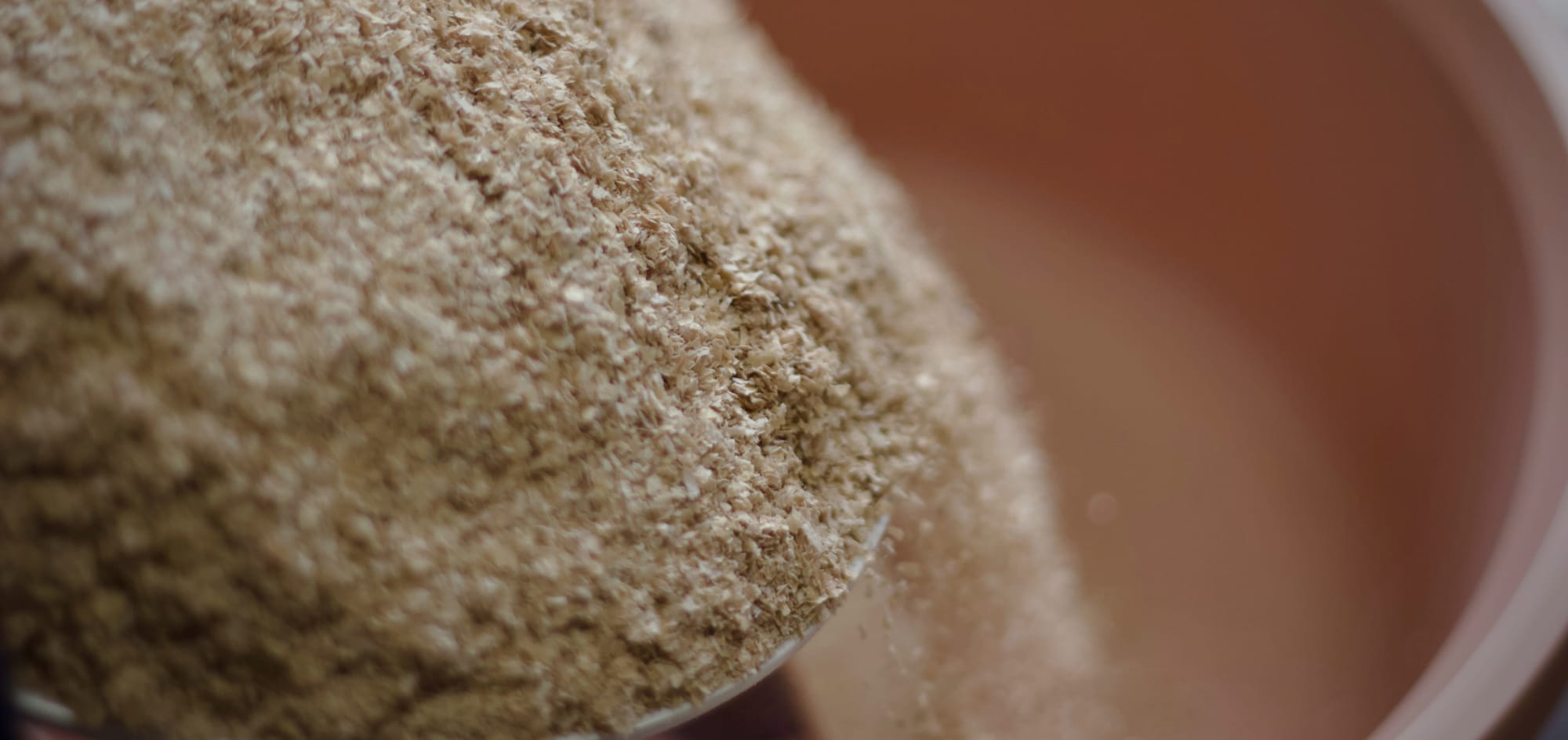
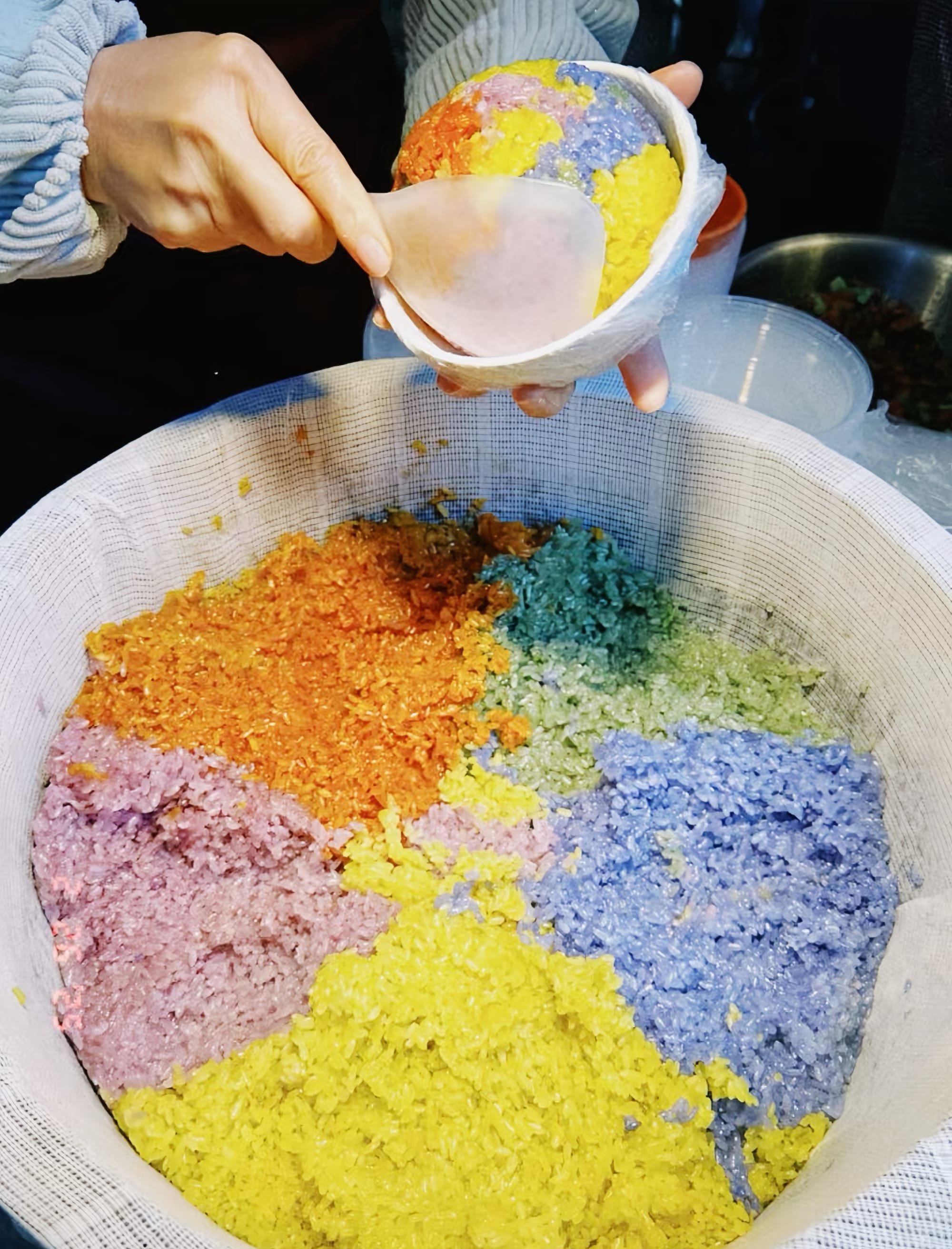
As a Yunnan native, I remain devoted to every food made from rice. Rice noodles, rolled rice sheets, er si, sticky rice cakes, and more. On every festive table there is a bowl of eight-treasure sticky rice, steamed with dried fruits. Once, a friend from the Huayao Dai community shared with me their traditional “sour pork,” a delicacy made by fermenting raw pork with sticky rice.
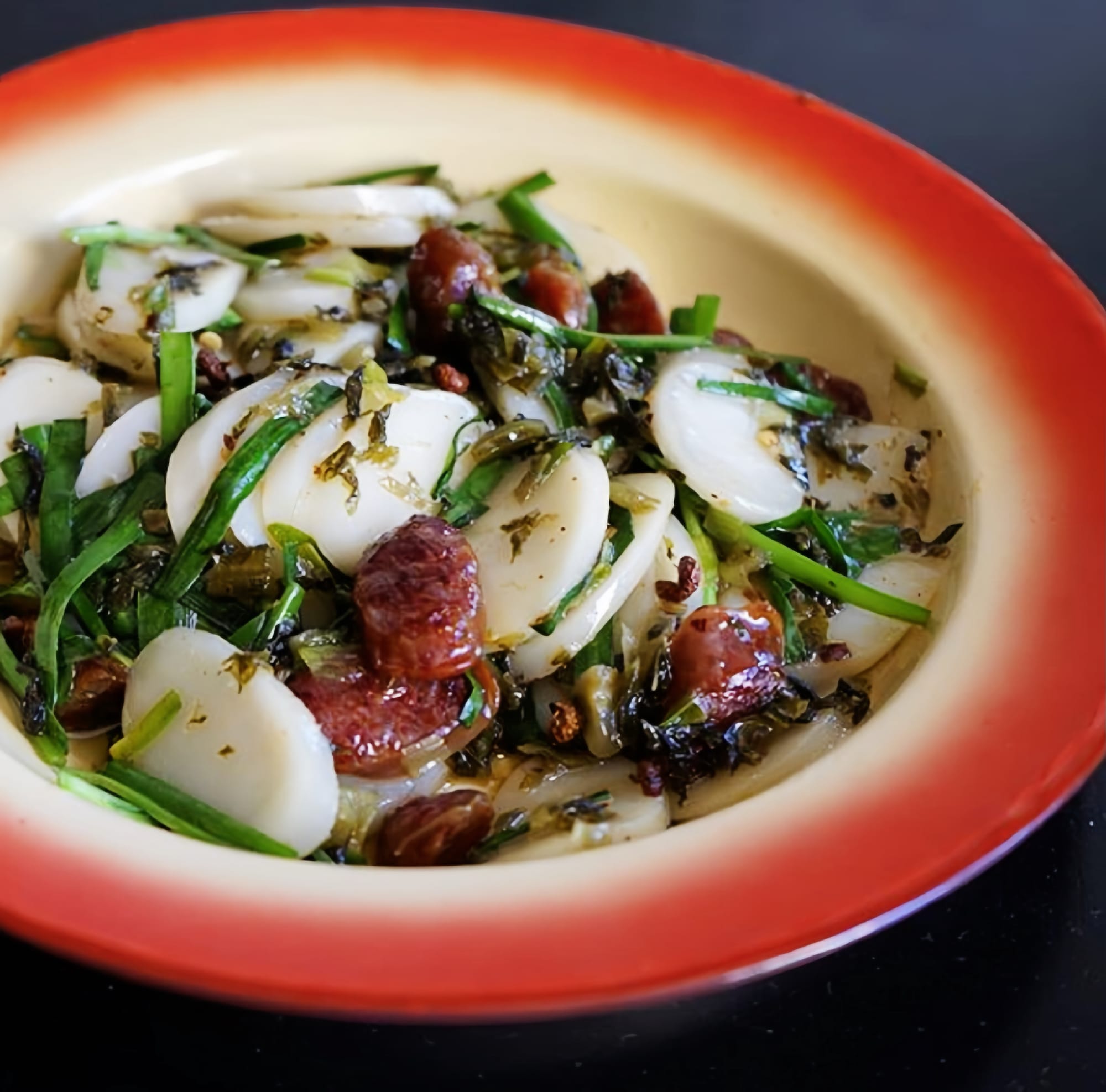
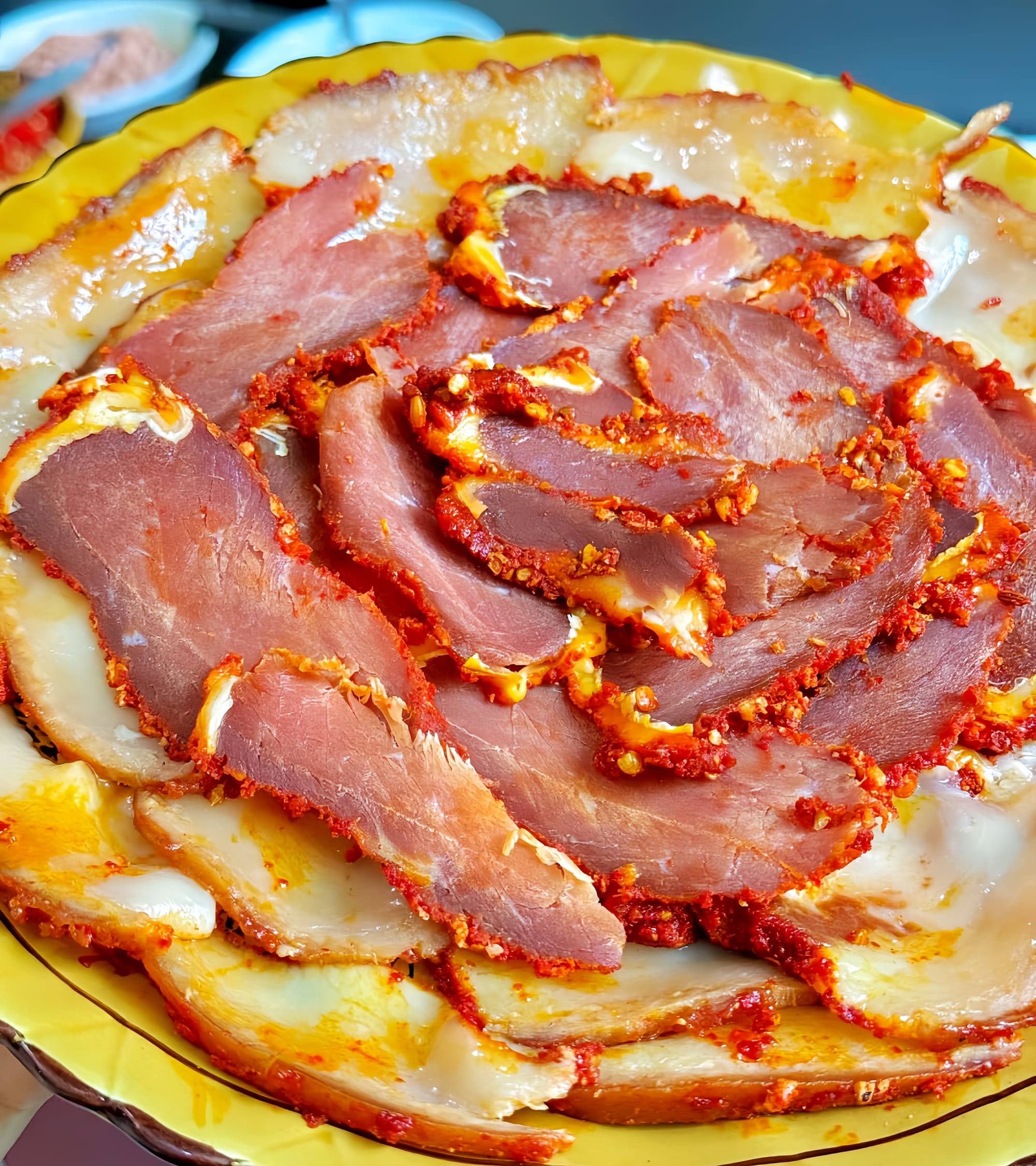
(left) A classic Yunnan dish, stir-fried er kuai (饵块), especially popular in Kunming, Dali and surrounding areas. (right) Sour pork, a traditional Dai food made by fermenting raw pork with sticky rice, Credit: 漠沙鸿鑫饭庄
Years away from home made me realize how rice had become a part of my body. No other staple could give me the same sense of comfort and belonging. I missed it the way one misses family.
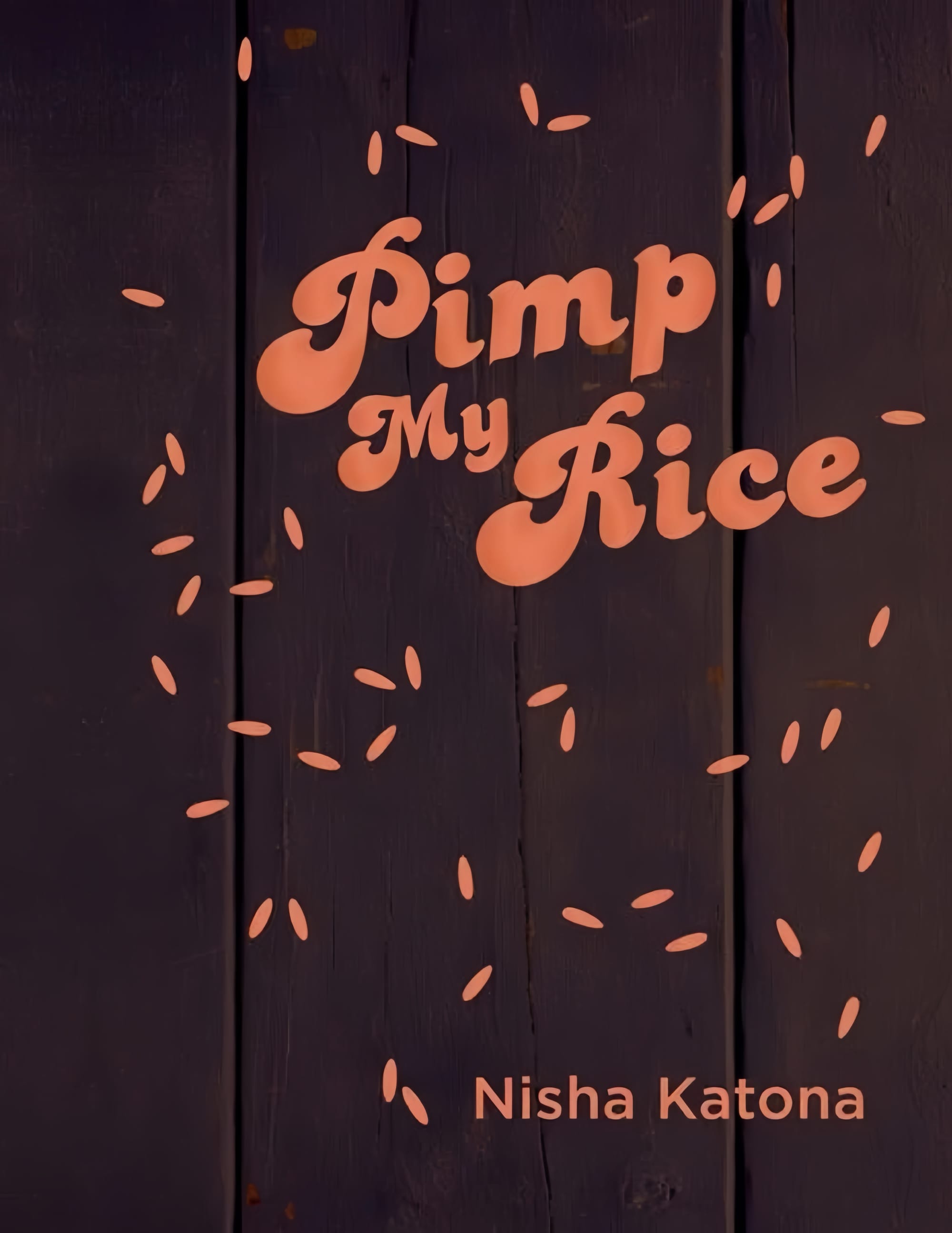
British food writer, Nisha Katona, describes rice in her book, Pimp My Rice, as an ingredient of humility. A small cup of grains, when cooked in water, becomes a full bowl of food. Coming from a culture where potatoes are the staple, she writes that no other ingredient asks for so little yet gives so much in return.
For the Hani People, Rice Has a Spirit and a Life of Its Own
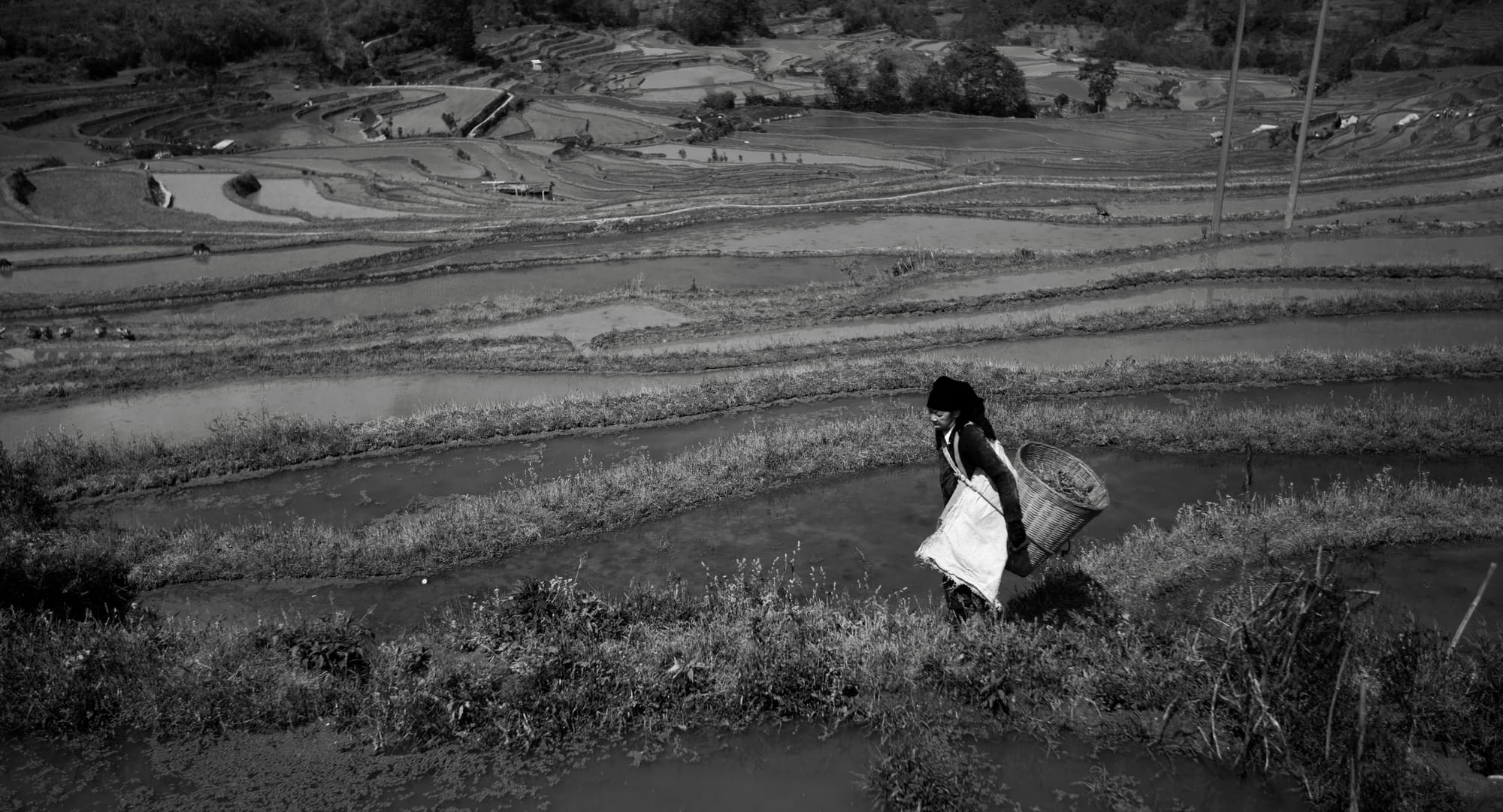
For the Hani people, who have followed the “soul of rice” belief for generations, rice is a living being with its own temperament and destiny. When planted, it is a child. During harvest, it becomes a young woman. When the rice granaries are full, it has its own descendants.
The Hani, one of China’s ethnic minority groups, live mainly in the mountainous region of the Honghe River in southern Yunnan. With its humid climate and steep terrain, the area is perfect for rice cultivation. The Hani are believed to be among the earliest rice growers in China and are renowned for creating the magnificent Hani rice terraces.
Rice is more than food for them. It shapes their labor patterns, village structures and cultural traditions. The cooperative spirit formed around rice farming, the deep respect for nature, and the long-standing coexistence with forests and water systems all reflect a worldview of harmony between humans and the land.
In the Hani belief system, every bite of rice is a gesture of gratitude toward a gift born from the laws of nature and chance.
They have never forgotten that even a single grain of rice carries a soul.
Rice Is a Child and Also a Maiden: Delicate Yet Strong
Japanese scholar, Katachi Makoto, visited fifty Hani villages and found that in their worldview, rice is imagined as spirited children or young women. It possesses human-like qualities: sensitivity, tenderness, resilience and a powerful protective force.
From spring plowing to autumn harvest, each household cares for the “soul of rice” using their own phenological calendar.
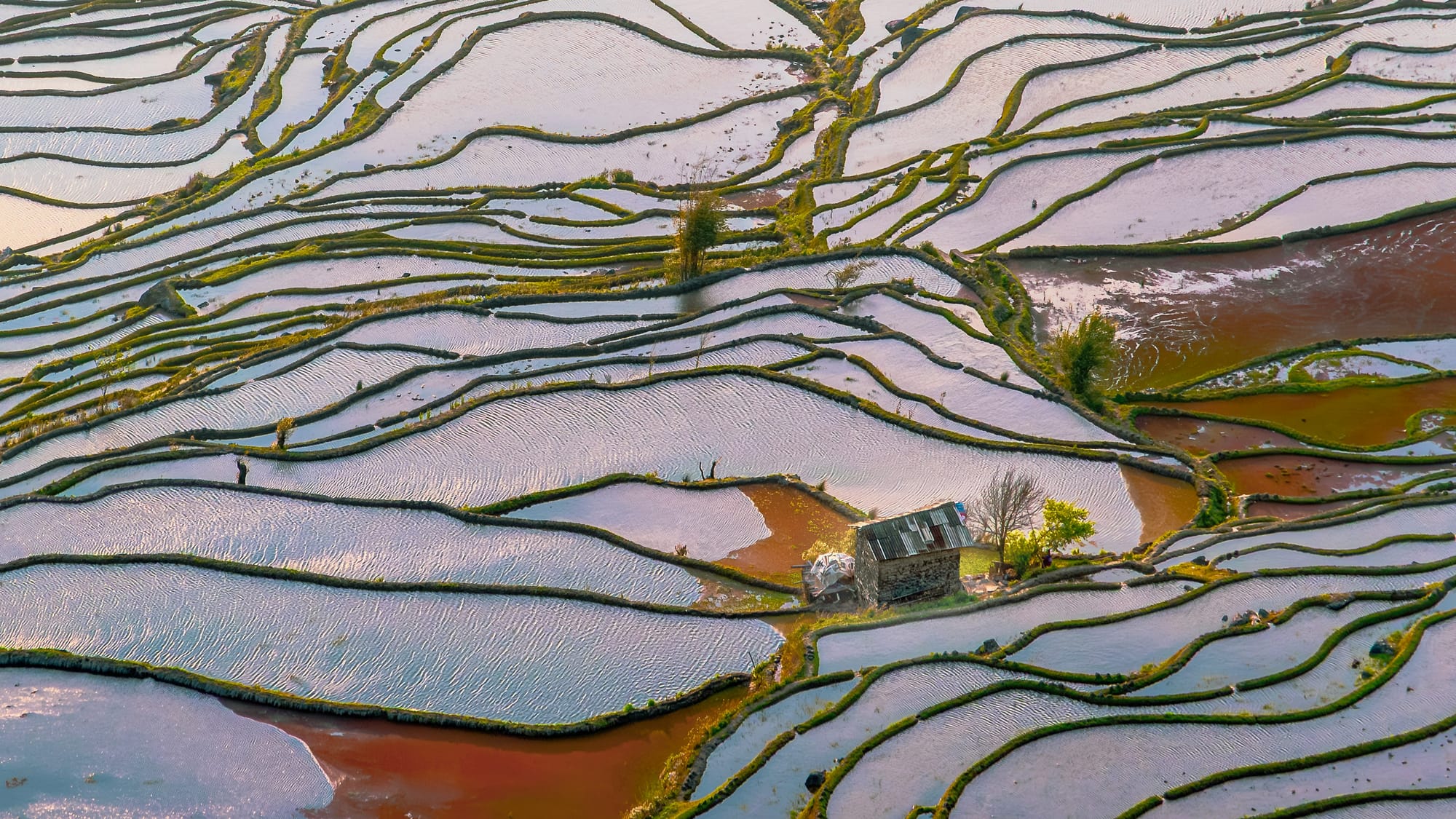
In spring, the first seedling planted in the field is affectionately called the “Young Rice Maiden". The task must be carried out by an experienced elder, because whether this first seedling survives foretells the harvest of the coming year. Afterward, dressed-up young women in each household plant the remaining seedlings.
Rice fields in summer are vulnerable to pests and disease. In ancient Hani mythology, the soul of rice, like that of humans, can flourish or weaken. If the rice becomes sick, it is believed the spirit has been startled or harmed. To prevent this, each household performs the ritual of “Calling Back the Rice Soul,” reinforcing its vitality and protecting the fields from disaster.

“Calling Back the Rice Soul” is a major ceremony. To welcome the rice spirits home and ensure a healthy harvest next year, families clean their homes and villagers sweep the paths, just as if they were expecting honored relatives who have traveled from afar.
On the final day of the ritual, each household prepares nine pine torches. A piece of chestnut wood is placed at the entrance of the village. Carrying the torches, villagers guide the ancestors and the rice soul back along the mountain path.
“Cheshi-za” marks the beginning of the harvest. At dawn, the most able woman in the family brings a bamboo basket and sickle to the field, quietly cutting three clusters of heavy rice heads to take home. In this moment the rice is like a child, and the entire process must be silent so the rice soul does not get frightened away.
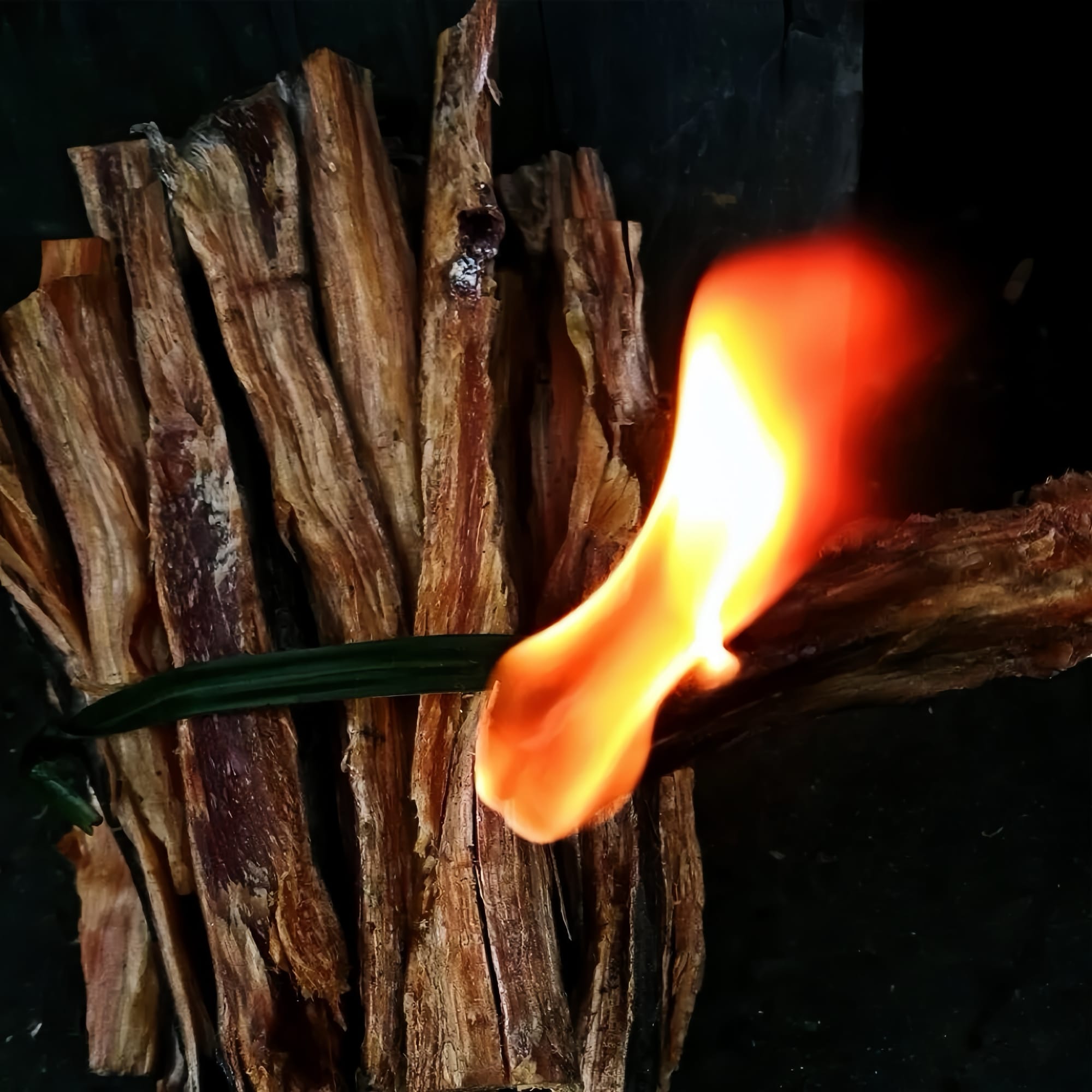
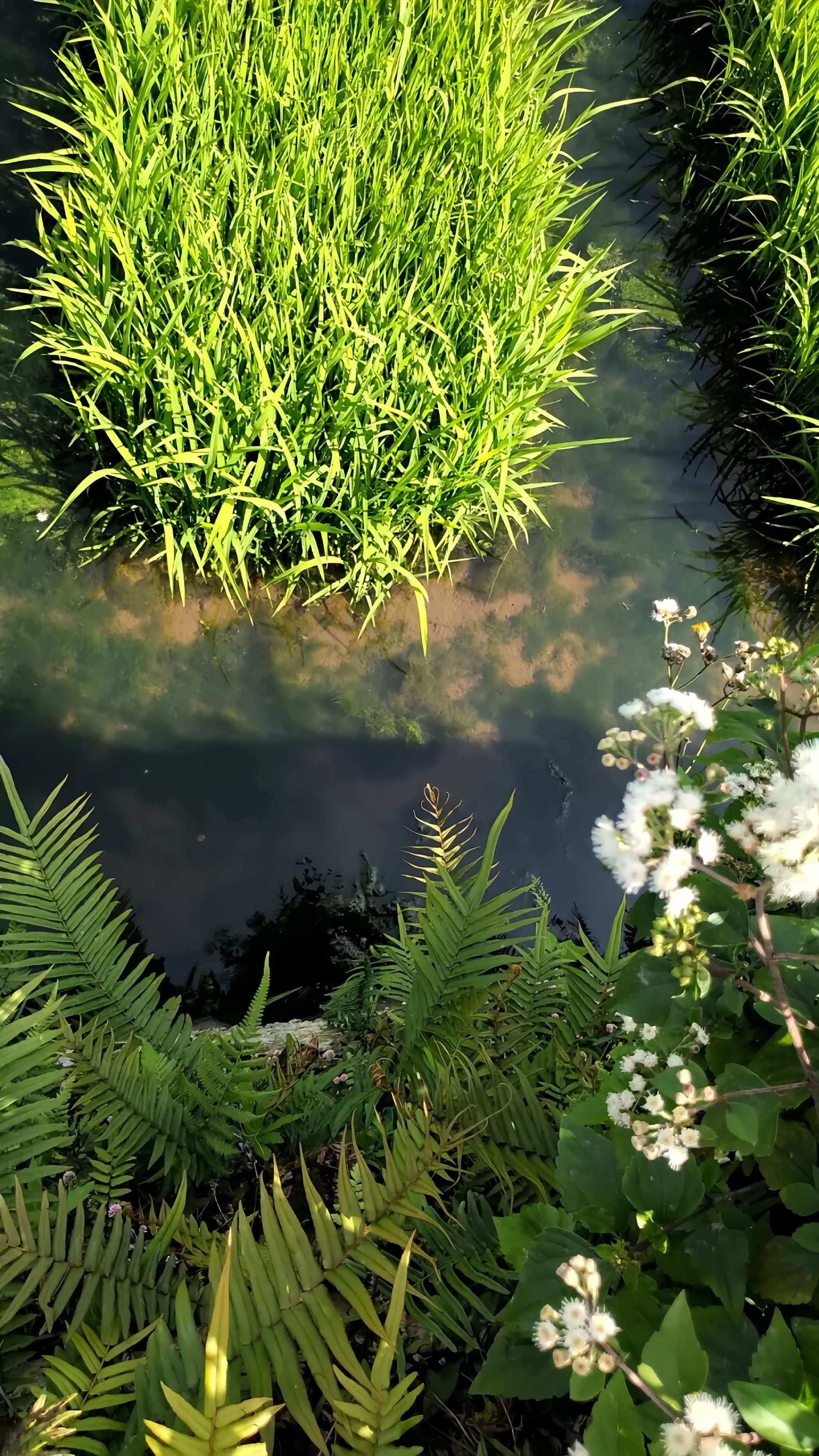
The Hani believe the flame of pine can show the rice spirits the way home. Rice is cared for with the tenderness one gives to a child.
Guarding the Rice Soul Connects Past, Present and Future
In the Hani worldview, the seasonal stages of rice bind the family together. The entire cycle of nurturing rice forms a dialogue between people, land, forests and all living things. The soul of rice is also the soul of the family.
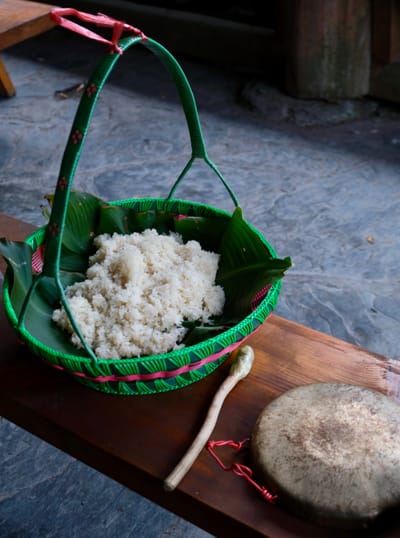
Because of this belief, Hani families use their own rice for divination, determining auspicious dates and calling upon the spirits of ancestors. Eating the first bowl of new rice each year symbolizes drawing the strength of the rice soul into the body. On this day, even married daughters must return home to sit with the women of the family and taste the newly harvested grain.
For the Hani, eating new rice is a moment when the family’s collective spirit is quietly renewed.
The rice soul symbolizes fertility and abundance, so its protective power is naturally associated with the life-giving strength of women. It is women who inherit and guard this sacred force.
Rice, therefore, becomes sacred in many ways. It is present in ceremonies, offerings and every important moment of Hani life. The Hani spend nearly one quarter of the year in ritual practices. These ceremonies are their language of communication with the spirits, a rhythm that has continued for more than thirteen hundred years.
Co-founder of Snout & Seek, Hui Mu is a Yunnan native who loves hometown cuisine and local culture, Hui is currently based in Chengdu, Sichuan, engaged in food culture writing and magazine editing. Hui enjoys reading, trying new cuisines, hiking, and people-watching.
No spam, no sharing to third party. Only you and me.
Member discussion