The Market That Bridges City and Home
Author: Qiu Juan
A journey through vegetables, memory, and the quiet rhythm that connects land and life.
For people who live in the mountains, food comes directly from the land beneath their feet. Their “market” is simply the soil around them, a place that provides everything they need. This closeness to the earth creates a natural sense of belonging and protection. In the city, the vegetable market becomes a symbolic version of that land. Especially after the pandemic, when everyone stayed home more often, the comfort that food brings became even more visible.
More and more people now grow herbs or vegetables on their balconies and in their apartments, trying to rebuild a connection with nature. That connection brings a sense of emotional grounding. In the same way, a city’s market is often the most soul-soothing place you can find.
Back home, we never used the word “market.” We only had the garden behind the house. Before each meal, you simply walked out to the vegetable patch, picked whatever looked the freshest that day, placed it in your basket or held it in your arms and headed home. I still remember mornings when sunlight rose slowly over layers of mountains and mist, washing the entire horizon in soft, warm colors.

Because our hometown sits in the transitional zone between the Sichuan Basin and the Yunnan–Guizhou Plateau, the climate is warm and humid. Our house is near the top of the mountain, so the view opens to rolling peaks in every direction, and in summer mornings the sun always rises through layers of mist and overlapping mountains.
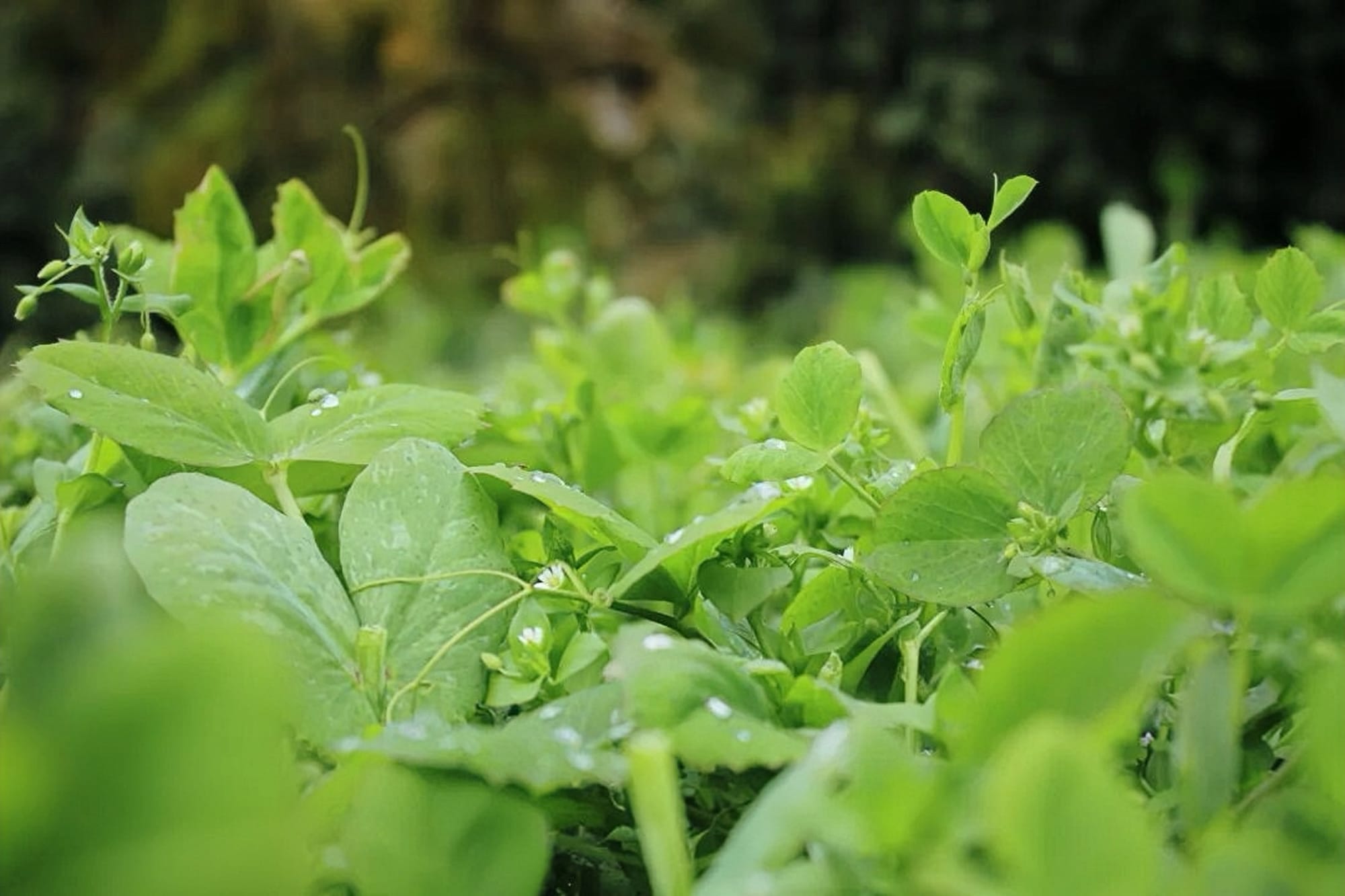
In early hours, dew clung to leaves and the sun had barely formed shadows. When you reached out to touch the vegetables, you could feel their freshness through sight, smell, and your fingertips. It was the most direct connection to nature I have ever known.
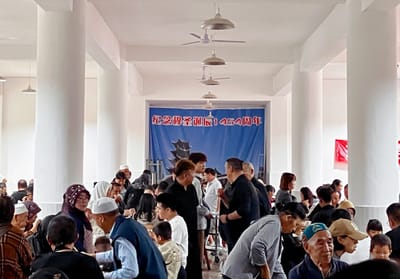
City markets and my hometown garden feel surprisingly similar. Whenever I walk into one, I feel a rush of recognition, like meeting people I have known all my life. I visit the market every weekend now, not only to buy seasonal produce but to find a space outside of work where I can breathe. It is one of the few places in a new city that makes me feel anchored. At Wenxing Market, the largest in Chengdu, I saw the closest reflection of home, and I began to understand Sichuan people’s flavor preferences with new clarity.
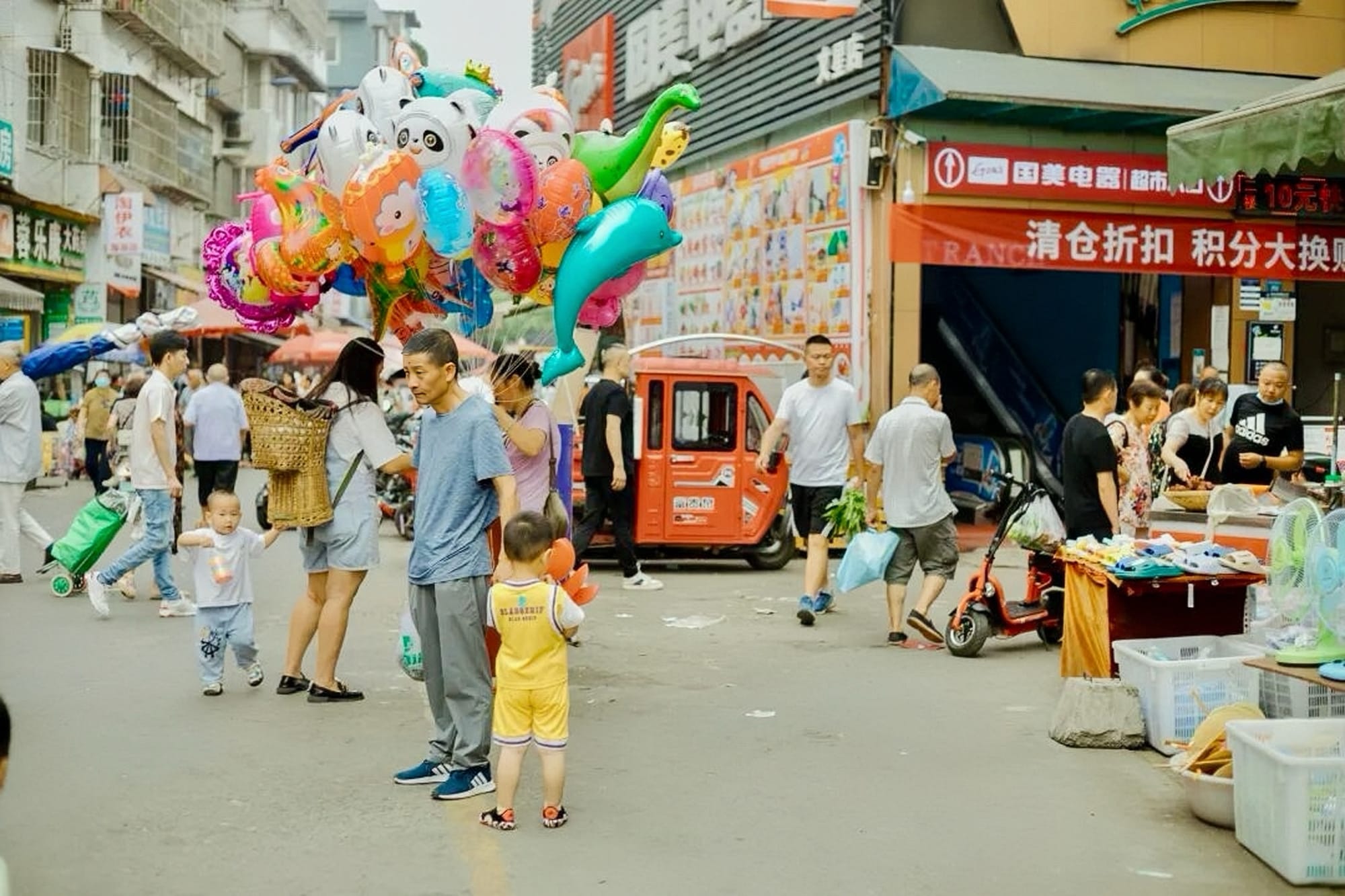
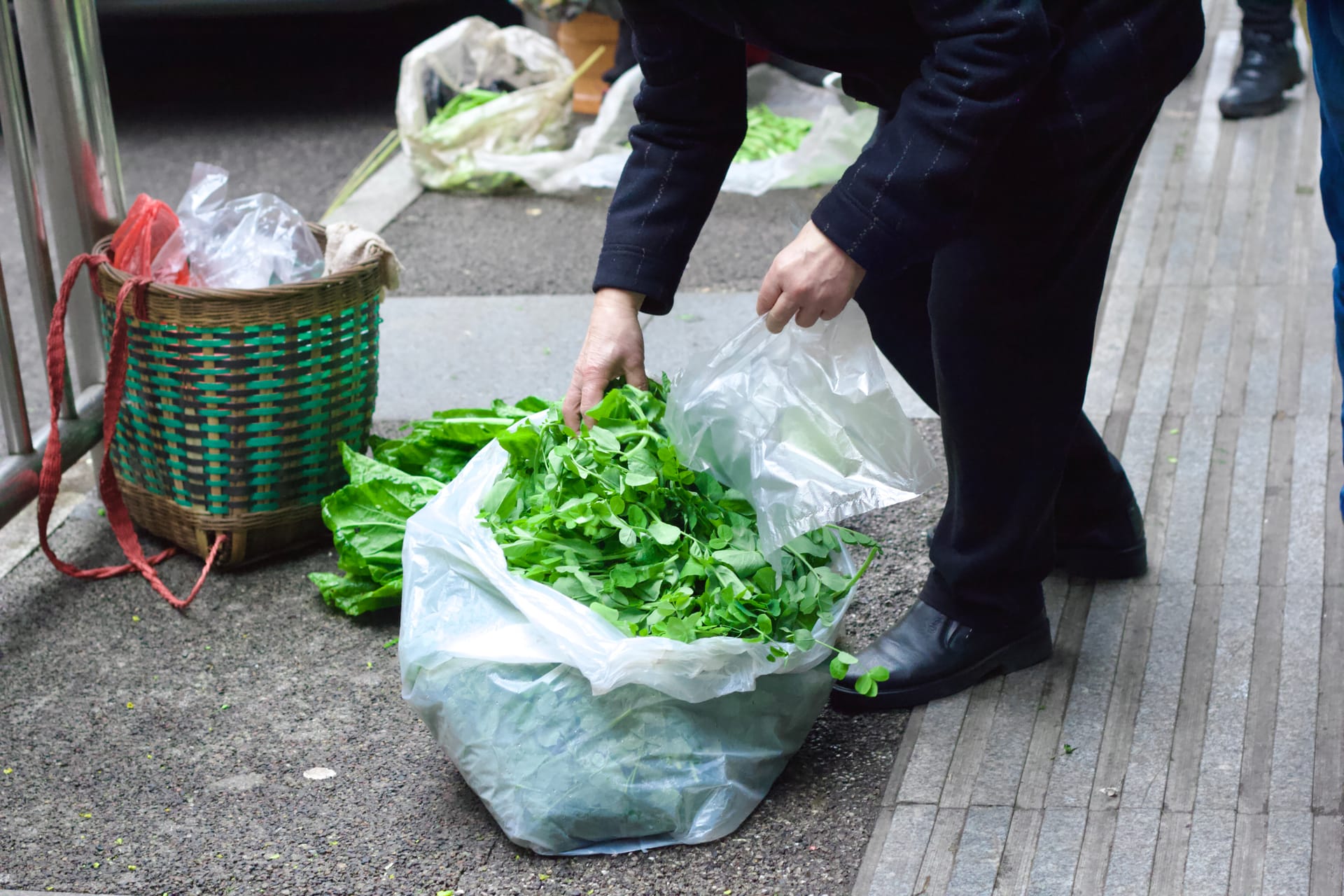
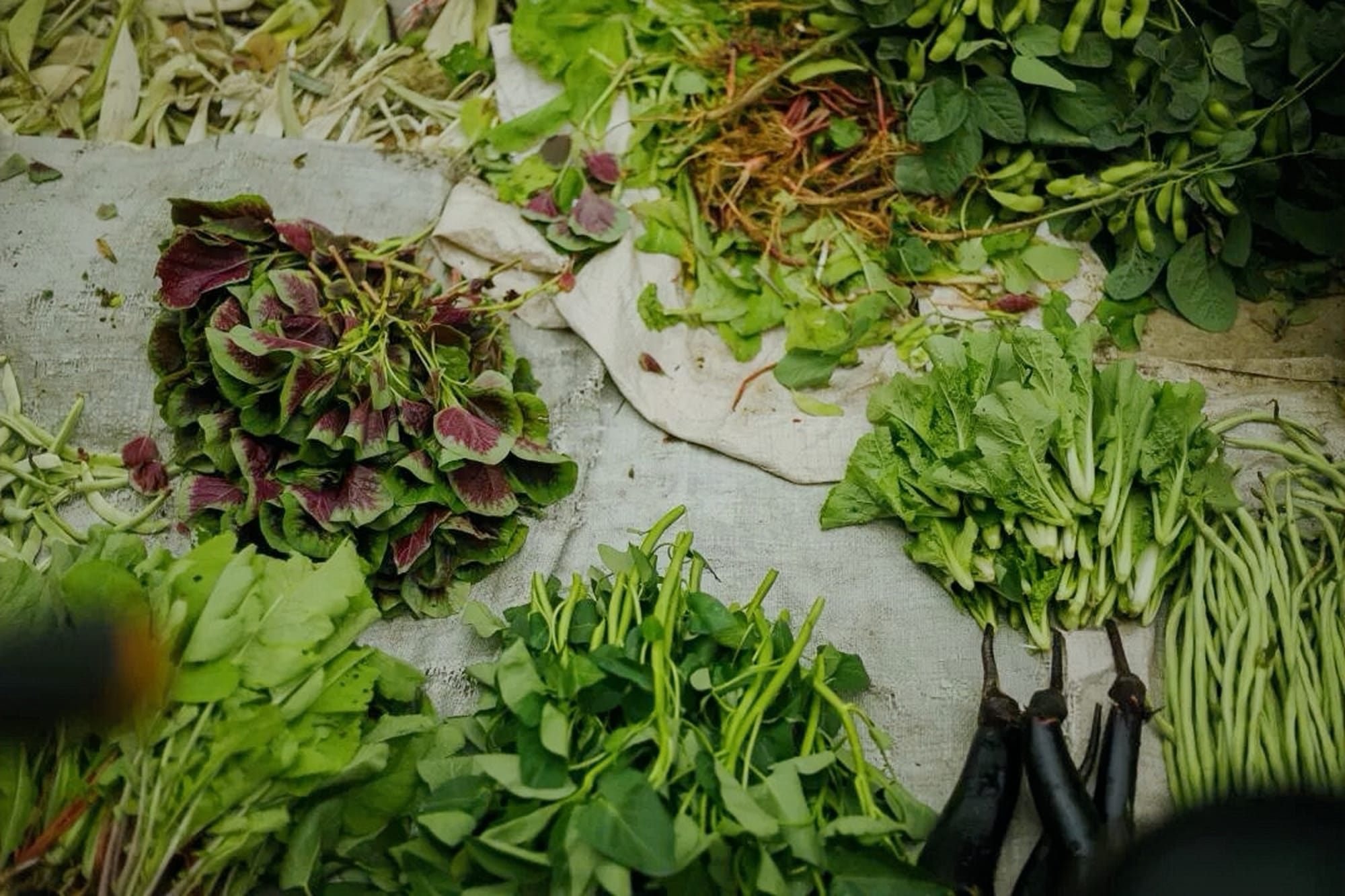
Here, vendors do not need shelves or displays. A simple cloth on the ground becomes enough. Their vegetables are harvested before dawn, whatever grew in their gardens that week. The market reveals the personality of the land.
In summer, cucumbers in the garden grew close to the soil. I used to pick them when they were barely three centimeters long, still bearing a tiny flower at the tip. Those little crunchy ones tasted the best. Once they grew larger, they lost their charm, but a new joy emerged — carrying a basket to harvest as many big ones as possible, searching for the biggest prize.
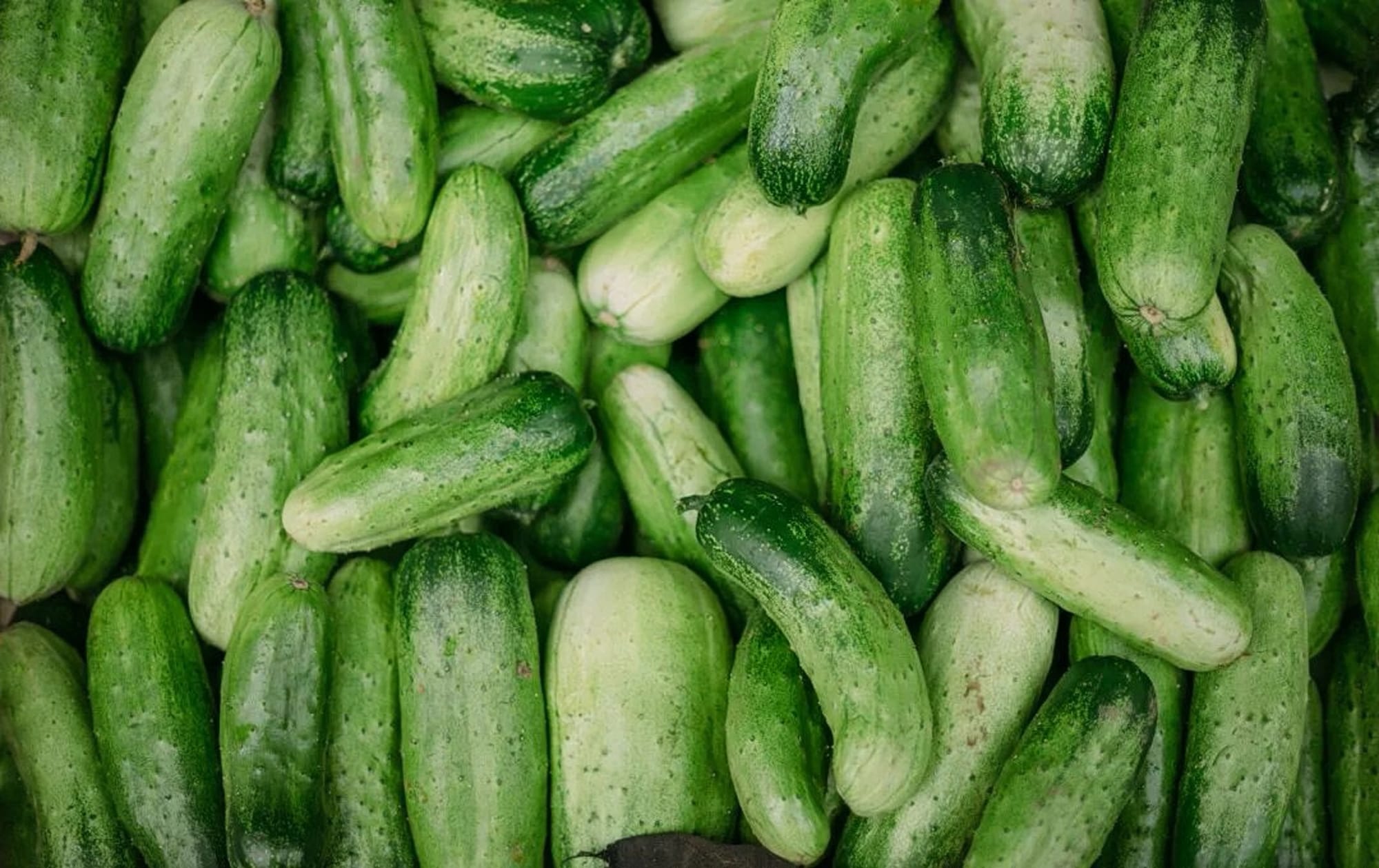
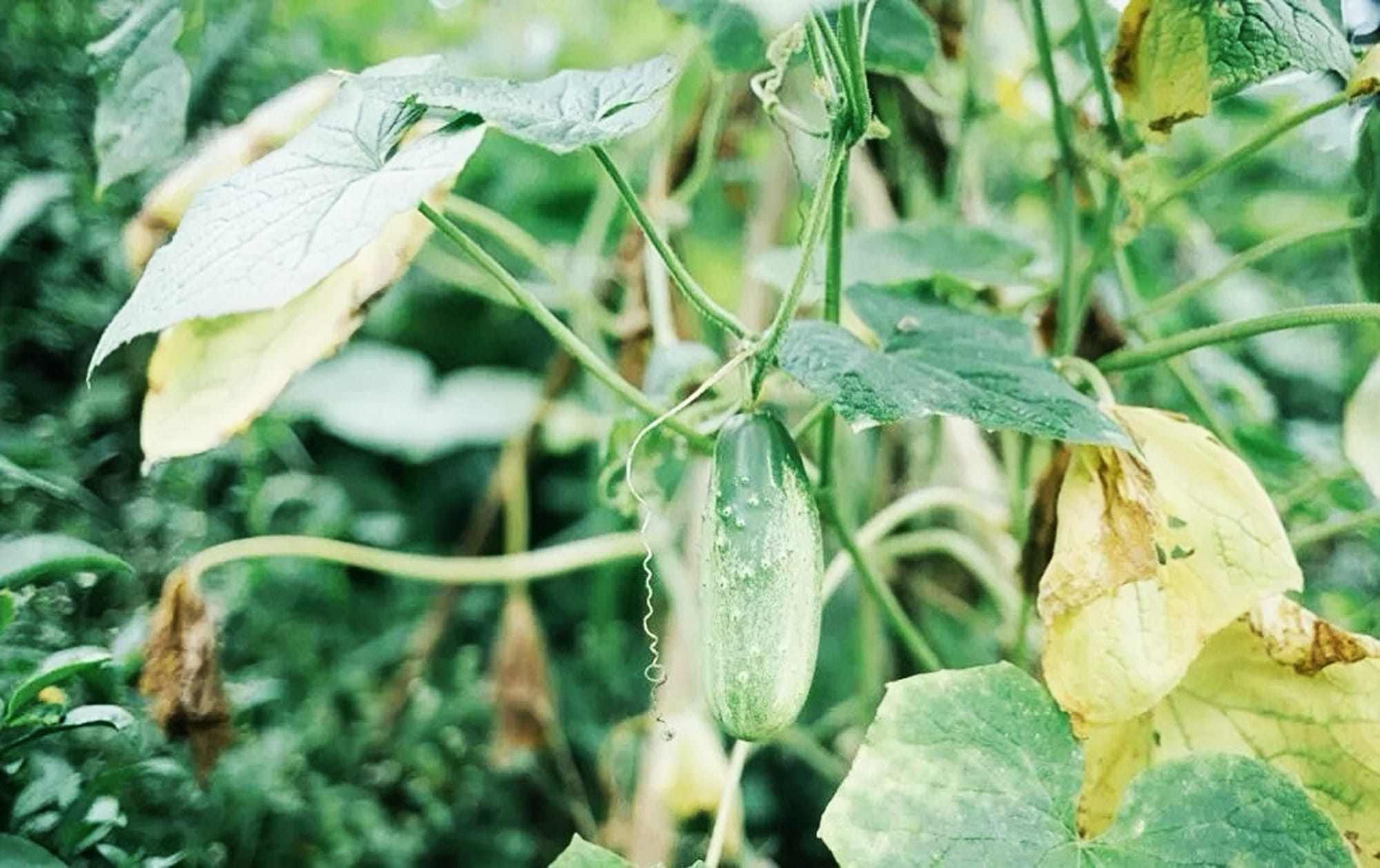
Long, smooth market cucumbers beside small, flower-tipped homegrown ones.
In May, the plums back home began to swell. I wondered when they would ripen, and then my mom sent a photo of baskets full of freshly picked plums. Ours were always better than those in city markets — naturally frosted skins with a perfect balance of sweetness and acidity. We called them “ice-crisp plums,” and the phoenix variety tasted as good as expensive honey plums from fruit shops.
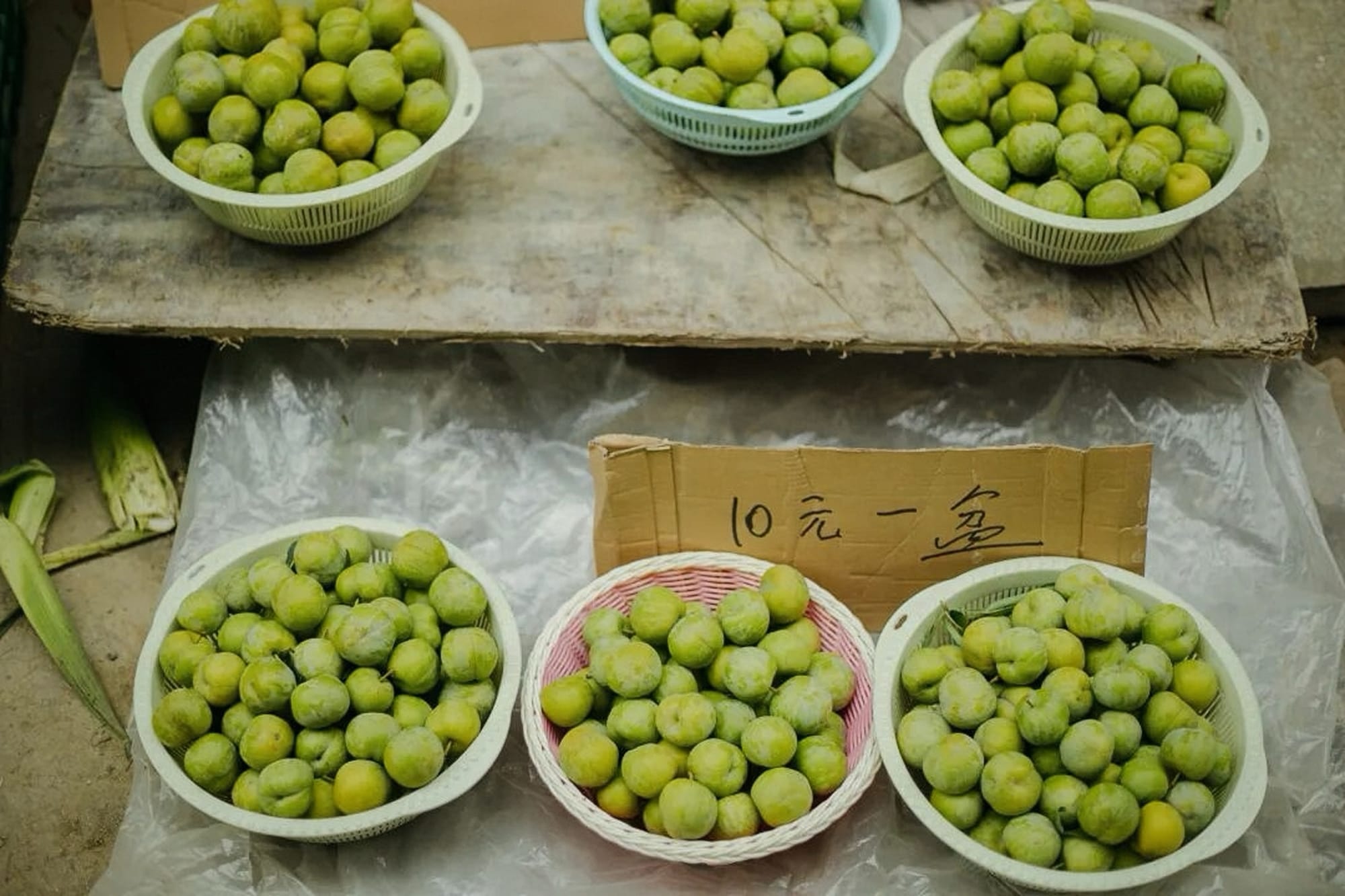
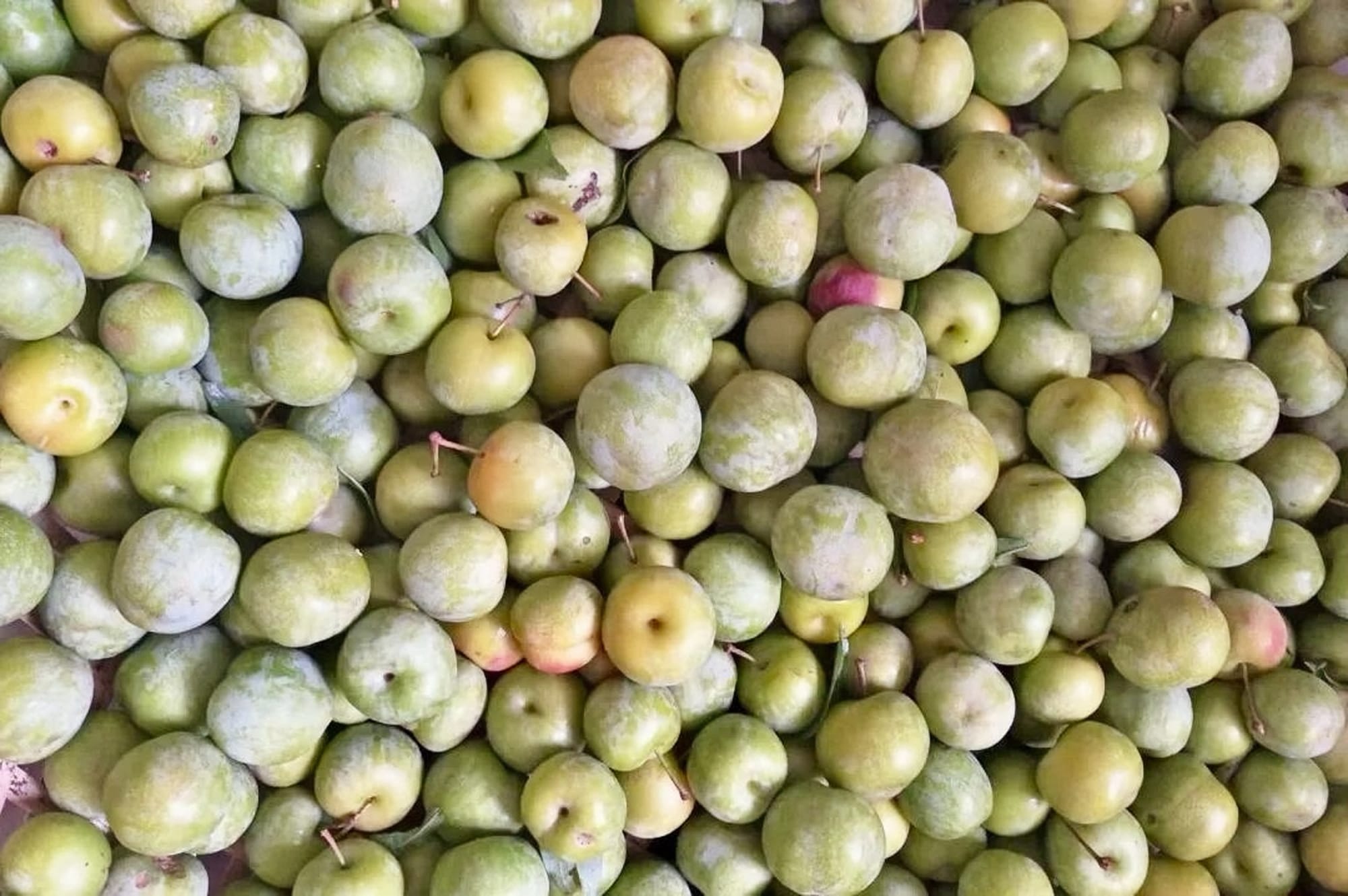
Market plums next to naturally frosted homegrown ones.
Pumpkin blossoms appeared rarely in city markets, and because of that, stir-fried pumpkin flowers with eggs became a dish tied tightly to my hometown. The blossoms removed any heaviness from the eggs and added a delicate fragrance. In Yunnan, many flowers are used in cooking. In Sichuan, pumpkin blossoms were more a clever response to scarcity: when vegetables were limited, blossoms became another source of nourishment and creativity.
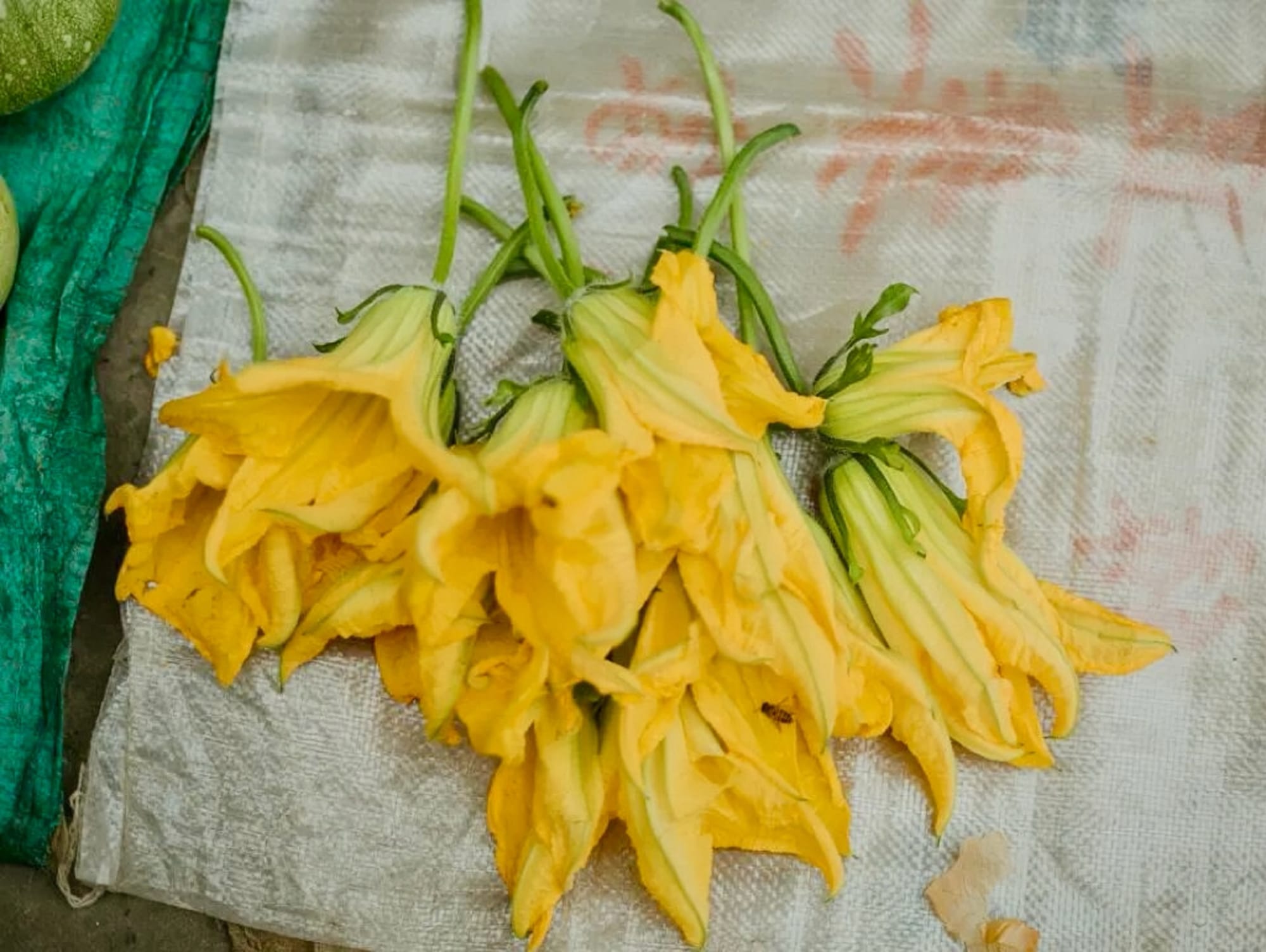
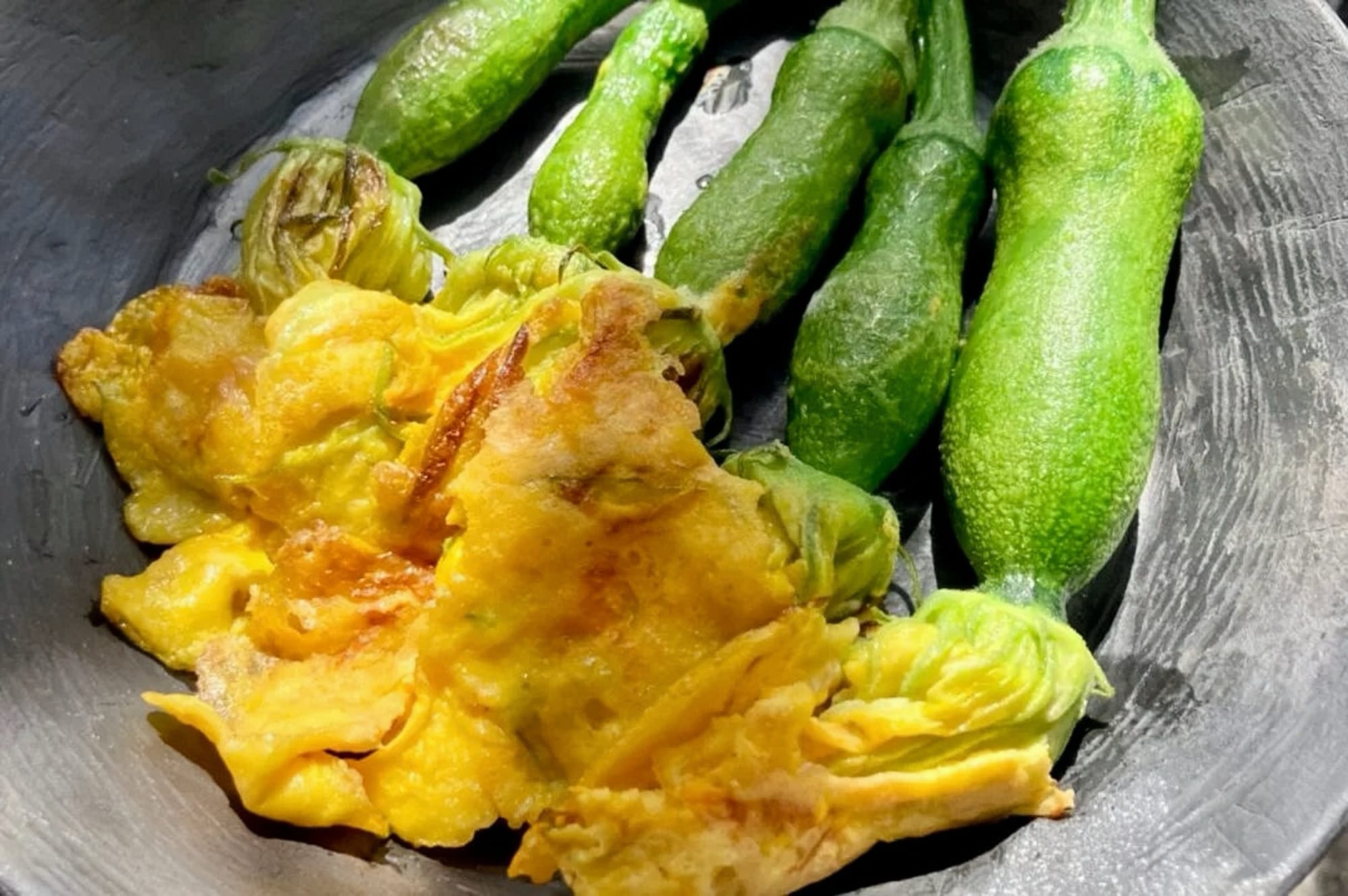
Pumpkin blossoms beside a plate of blossoms stir-fried with egg.
I lingered by a mudfish stall for a long time. As a child, I often caught mudfish in the rice fields after school, brought them home in a bottle, and raised them in a tank. I never ate them — just watched them swim. Now, that simple joy feels distant, yet the market brings it back every time.
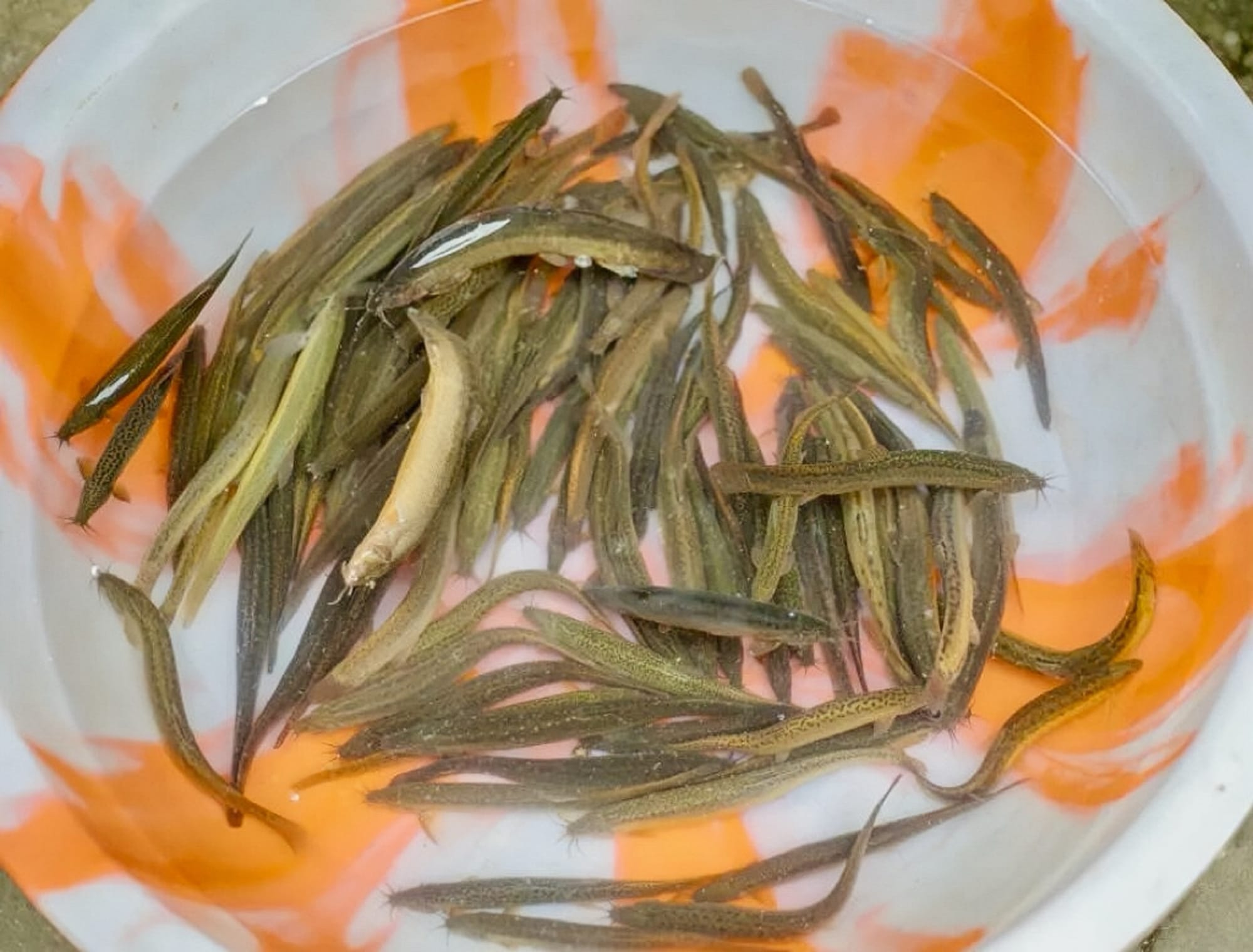
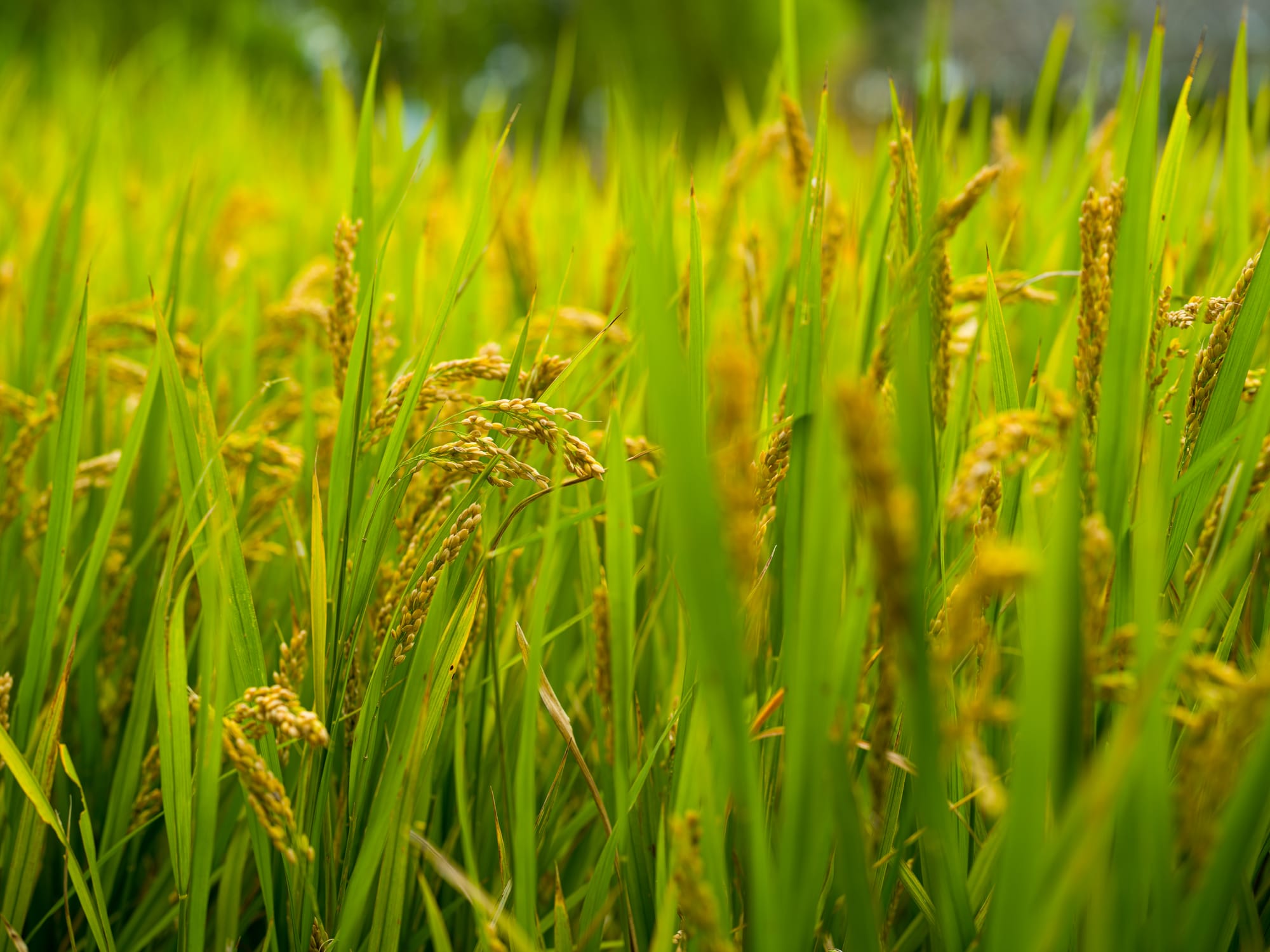
Live mudfish at a vendor’s stall next to a lush summer rice field.
One corner of the market displayed pumpkins so neatly it made me smile: long pumpkins stacked into a wall, round ones forming a perfect line.
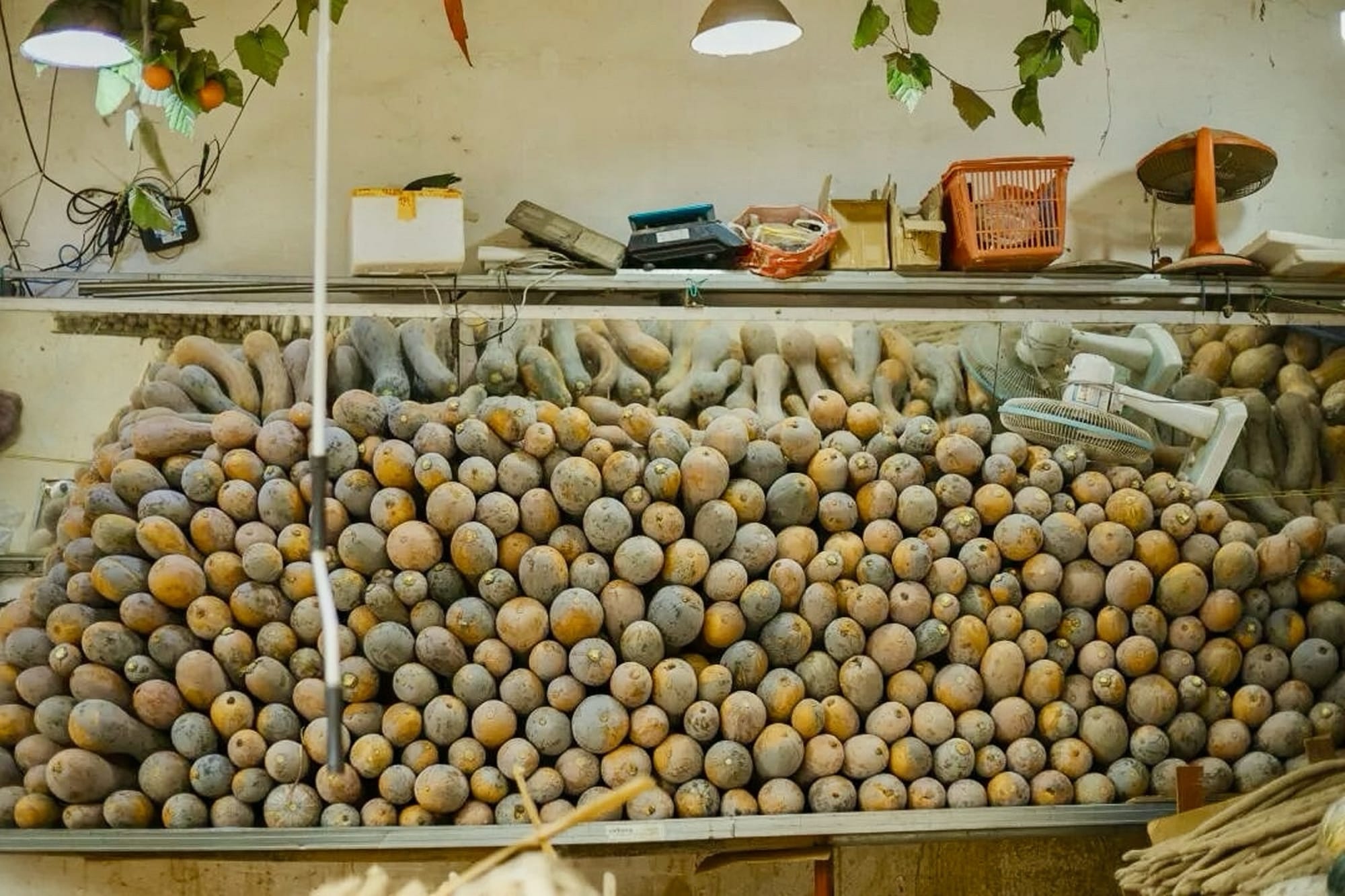
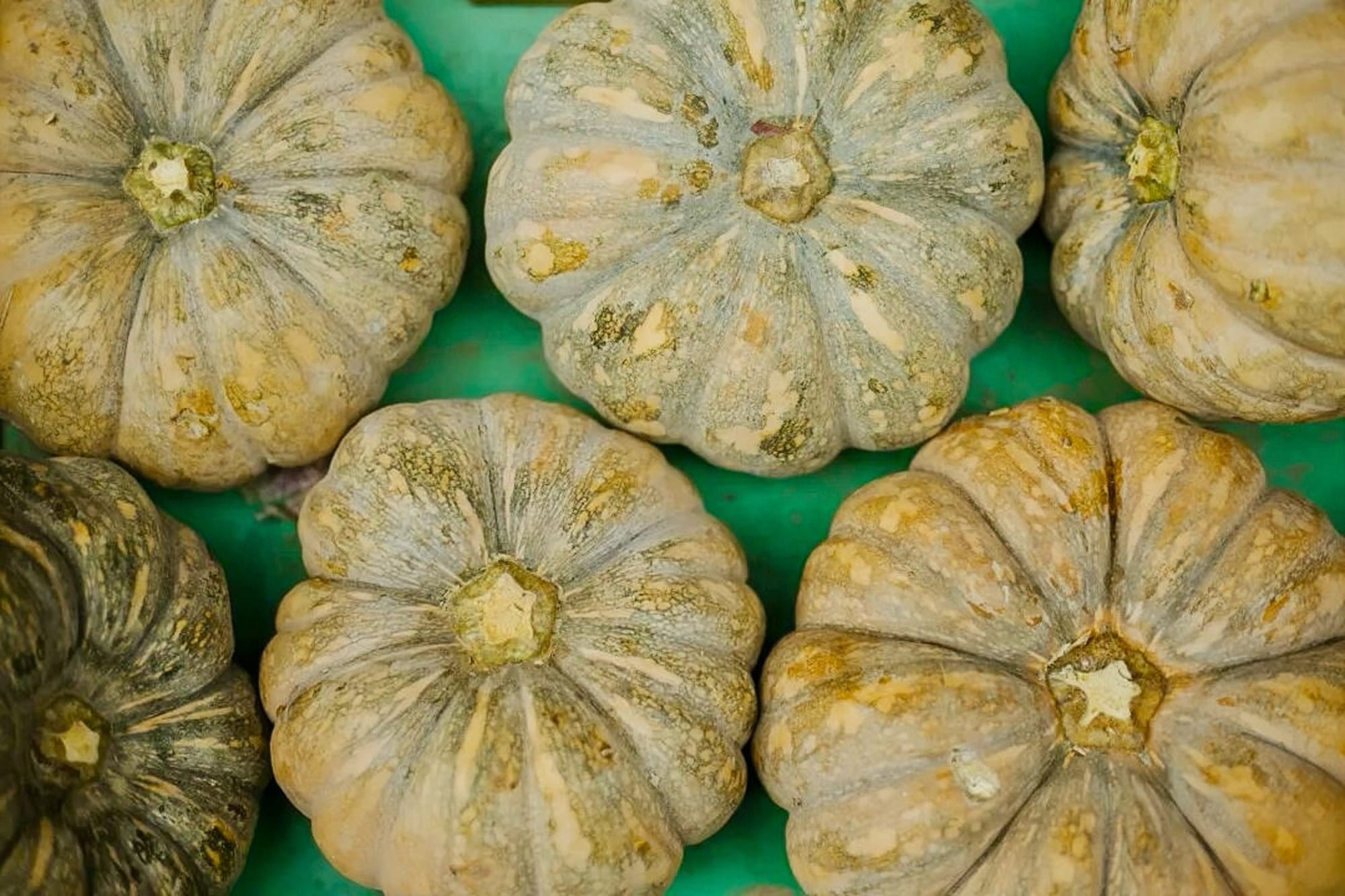
Long pumpkins stacked vertically beside perfectly arranged round pumpkins.
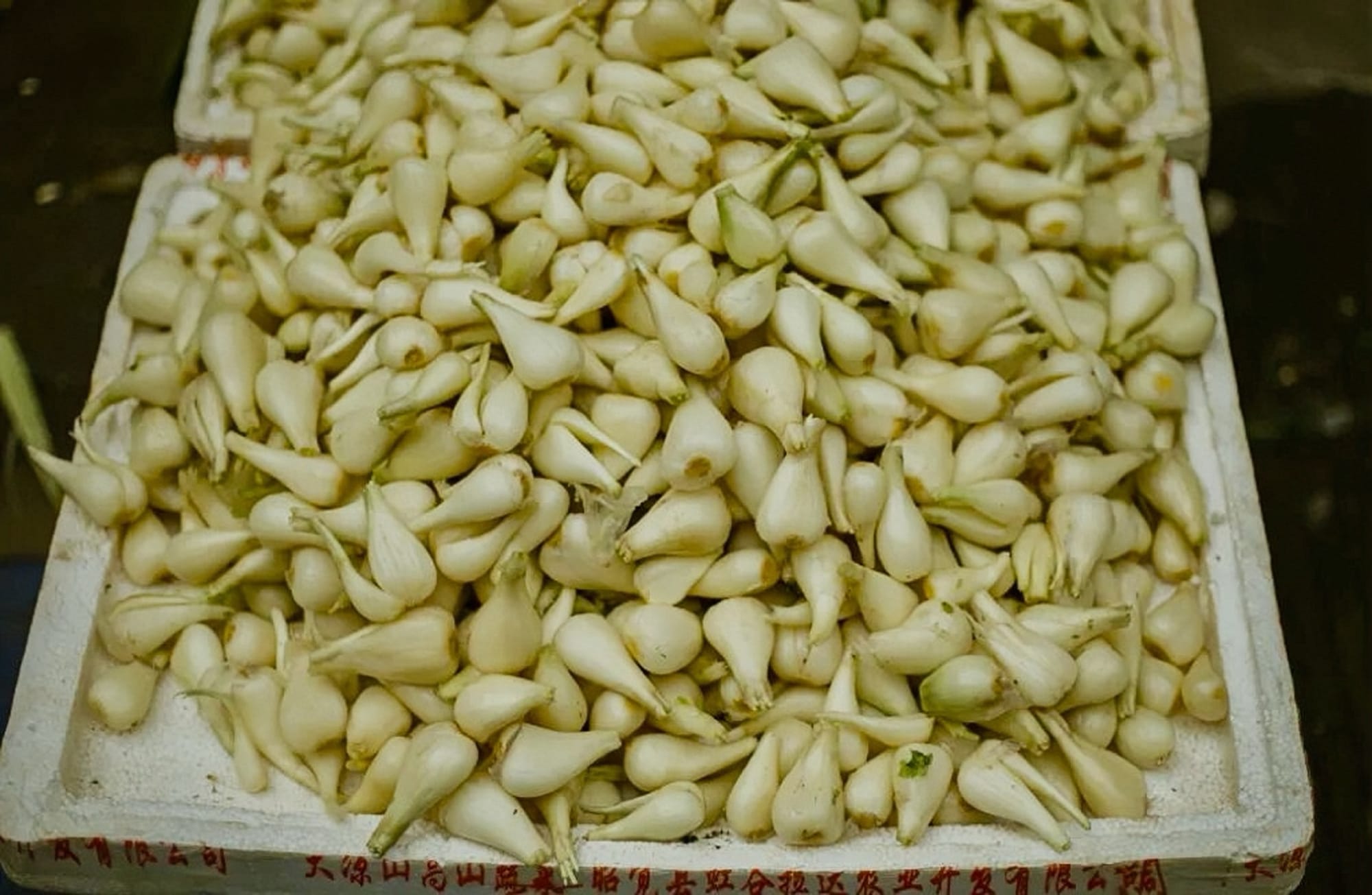
Sichuan has its own habits and tastes. Northerners love garlic; Sichuan people love pickled allium bulbs (藠头 - jiàotóu), a Chinese native to North American’s ramps. At home, we had seven or eight pickle jars in our storage room, one dedicated entirely to these bulbs. In summer, when thin porridge cooled the body, these bright red bulbs were the best companion — sour, spicy, crisp, unforgettable.
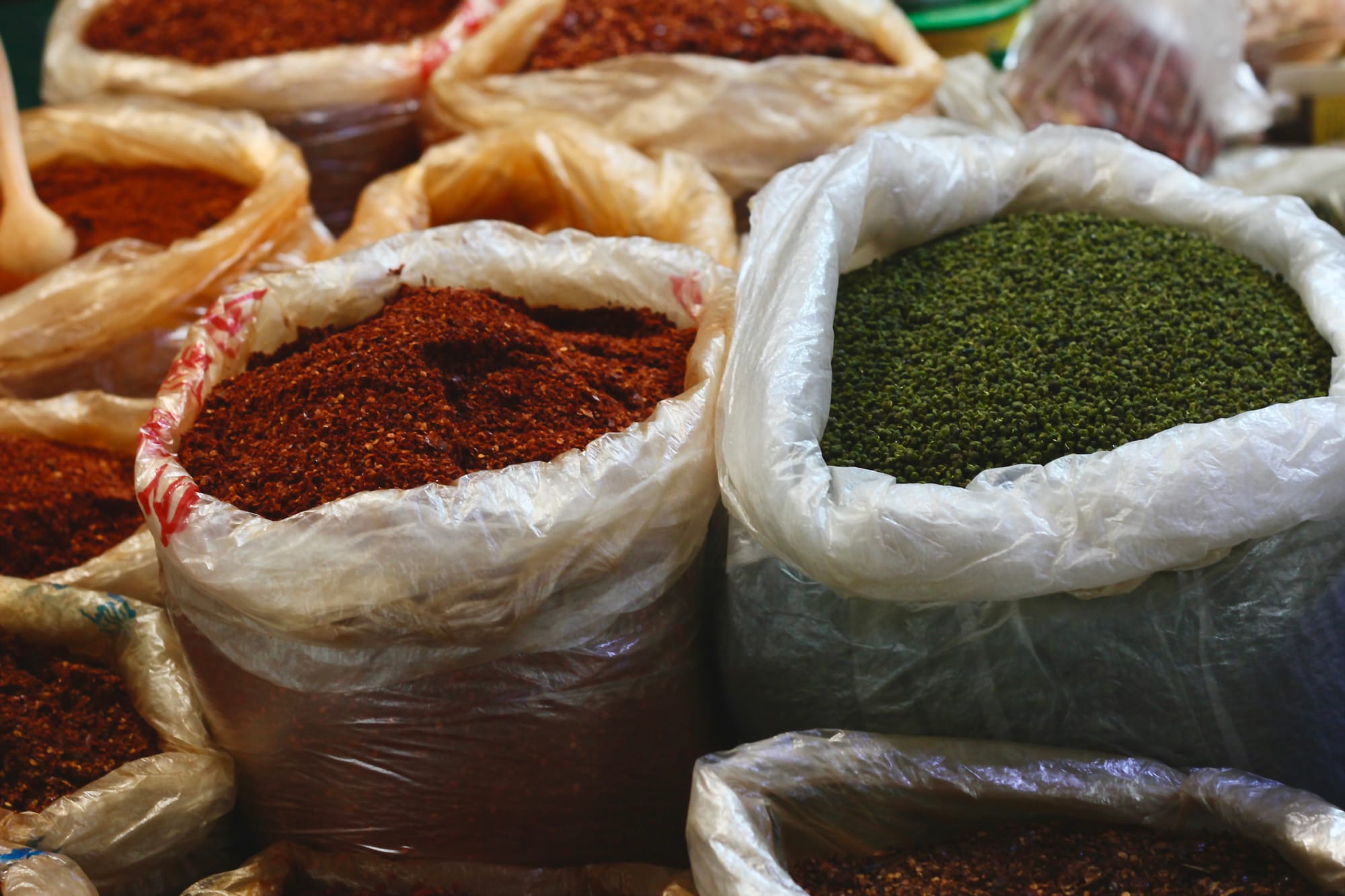
Every Sichuan kitchen contains the same set of essentials: green and red peppercorns, dried chilies, doubanjiang, and jars of pickles. A colleague once joked that if a lockdown ever happened again, Sichuan people would need only one thing: seasonings. Without them, they could not survive. Every household’s pickles taste unique. Some families still use brines passed down through generations.
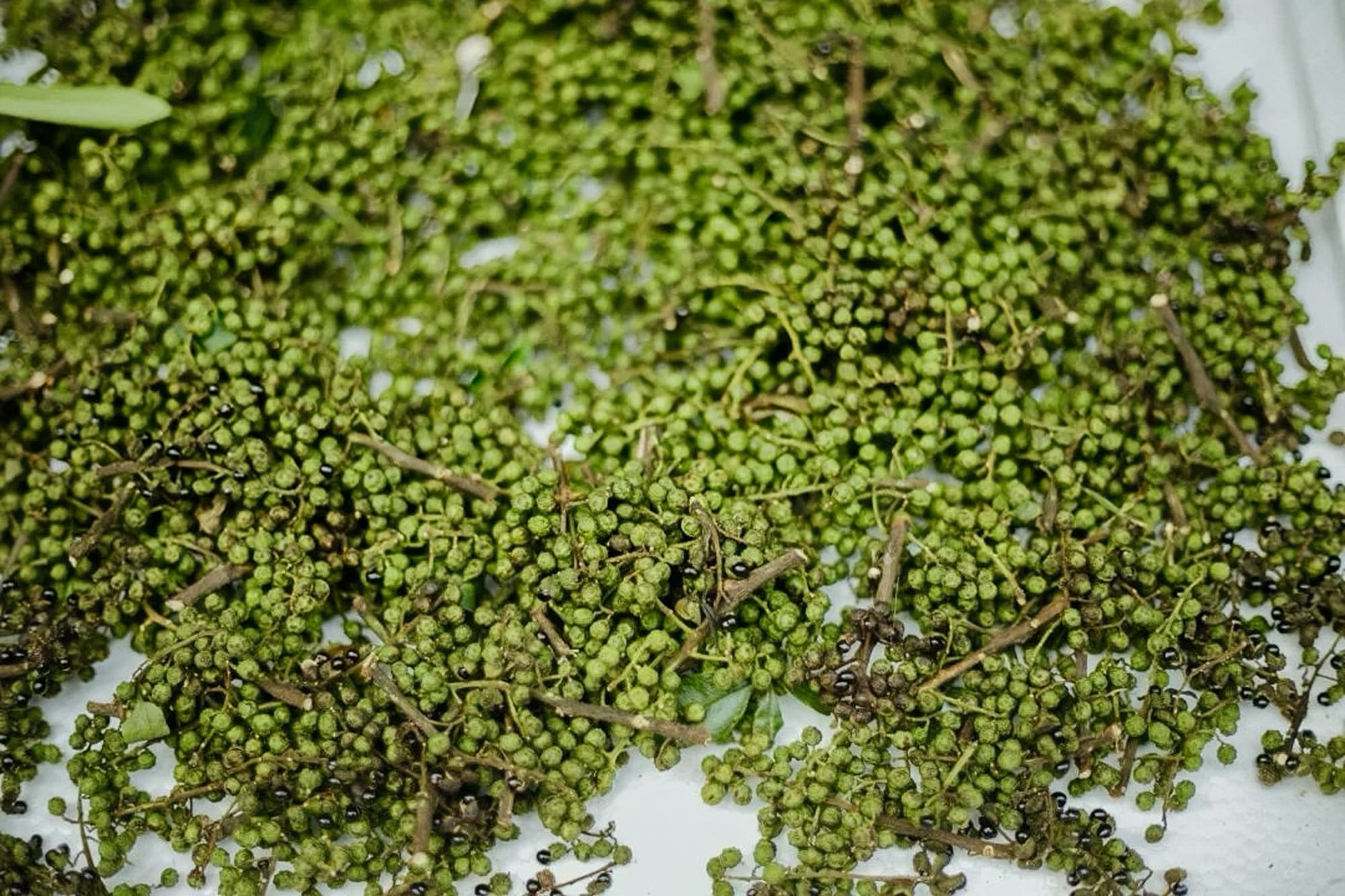
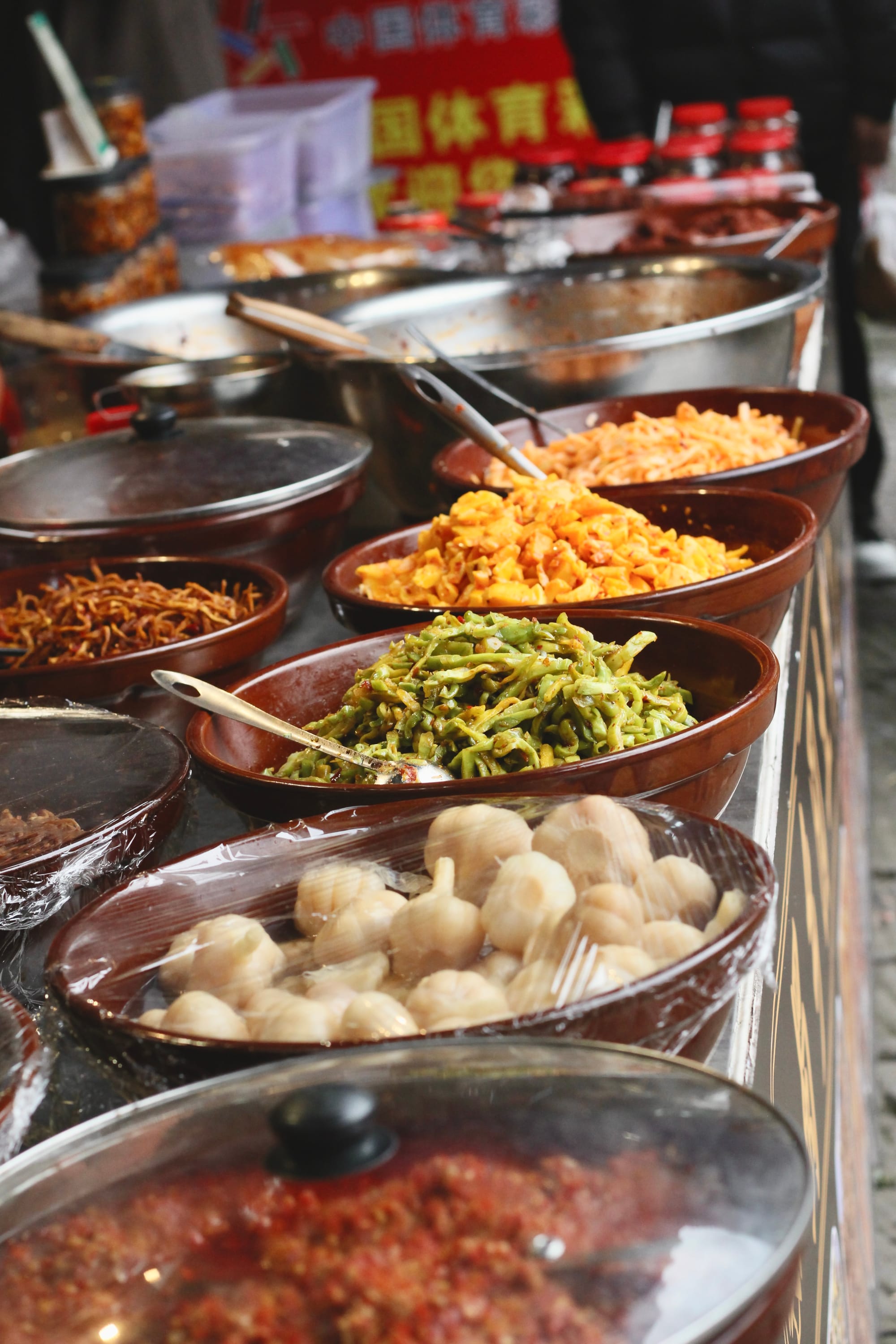
Green peppercorns, red chilies, doubanjiang, and jars of pickles laid out together.
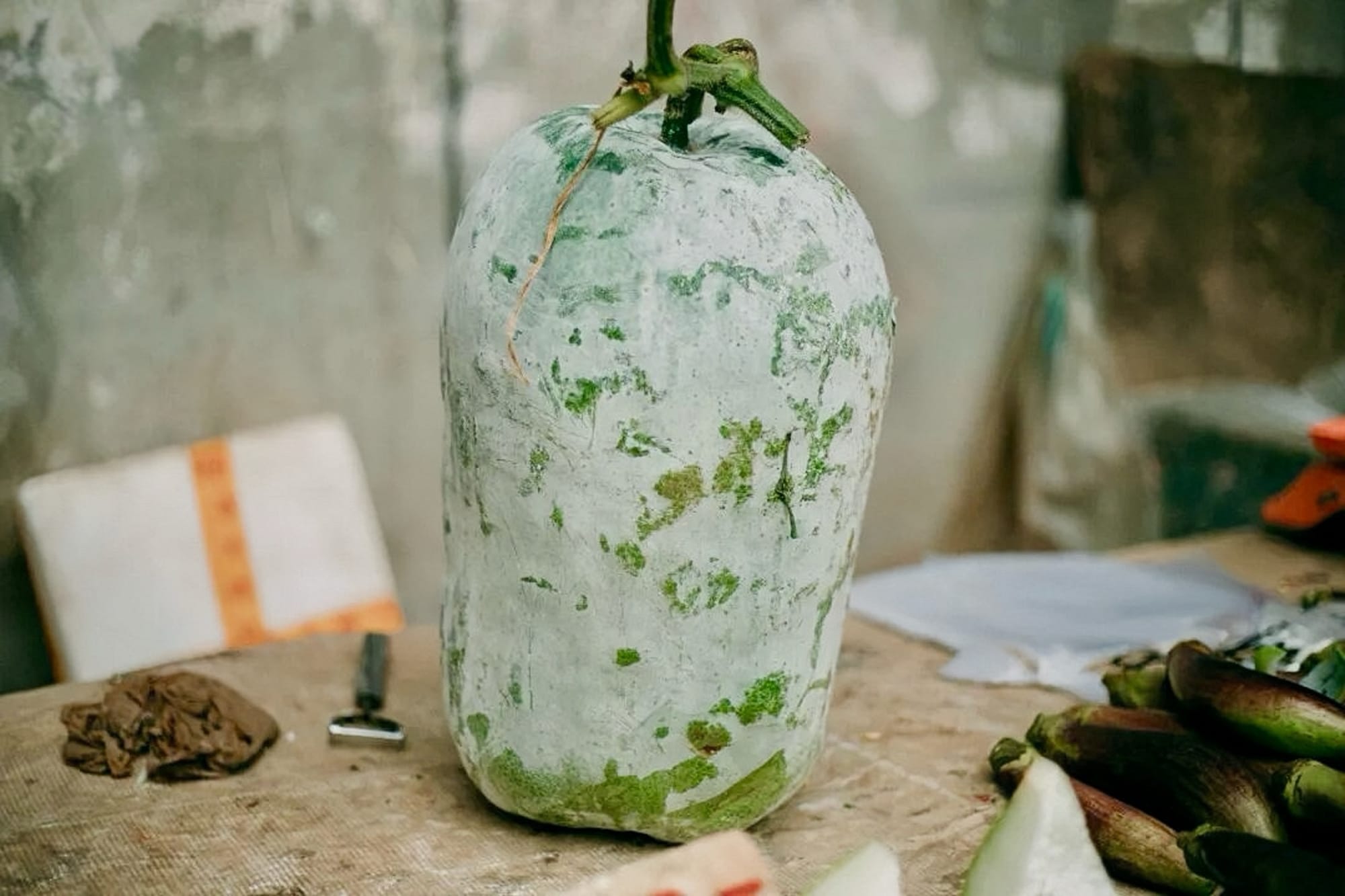
An older man lifted a massive winter melon proudly, telling me it was the largest from his garden — over 15kg. In markets, winter melon is always sold in manageable pieces; no one dares carry the whole thing. Sichuan people love winter melon soup during the hottest months because it helps remove internal humidity. Almost everyone buys a piece when passing through the market.
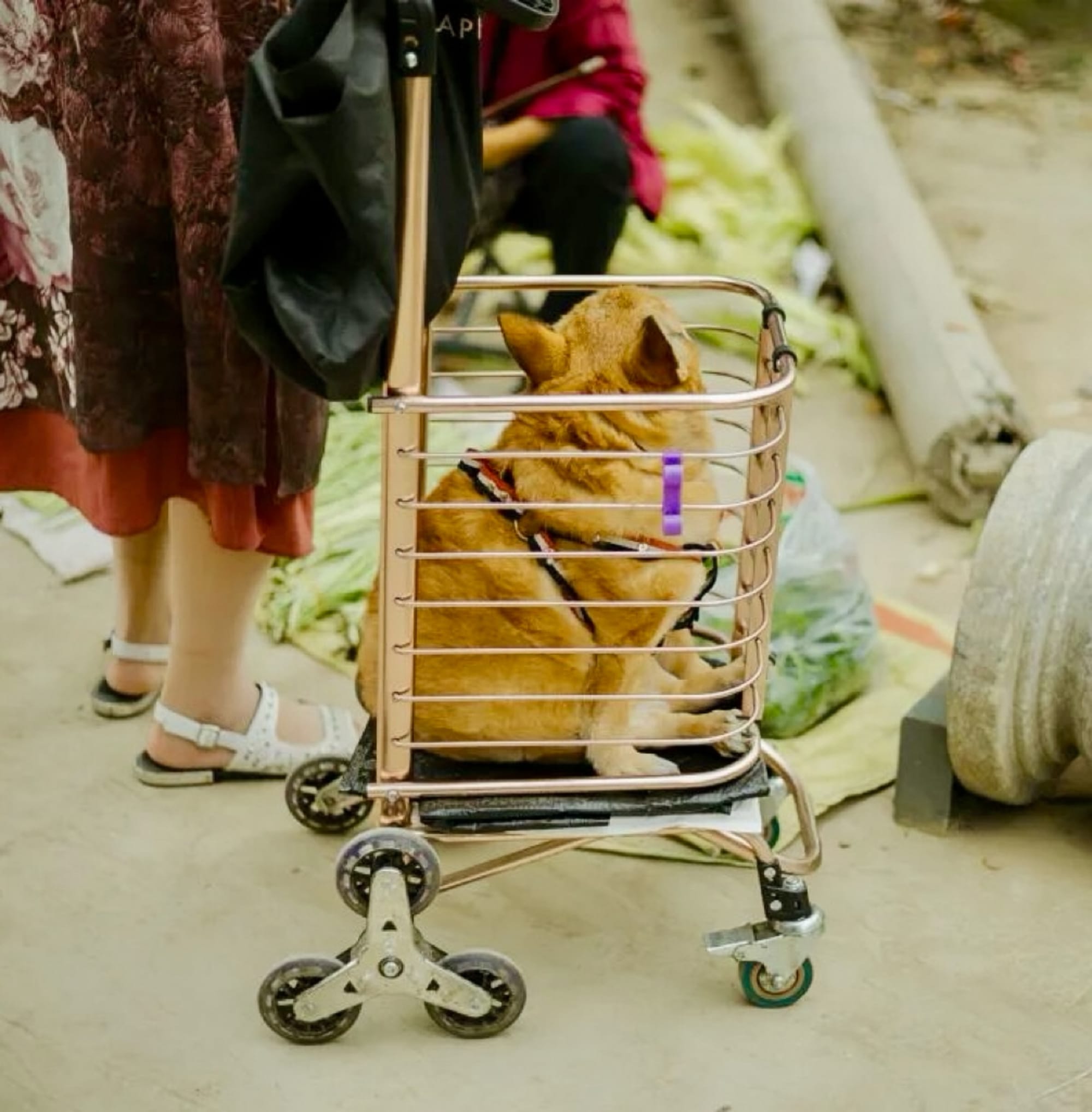
Then there was the happiest sight in the whole market: an auntie pushing her dog in a grocery trolley as if it were a grandchild. Even the vendor next to her burst into laughter.
We never ate bitter melon at home, but those who love bitter bamboo shoots often appreciate bitter melon too. Both have a sharp bite followed by a sweet aftertaste. Bamboo grows abundantly in our hometown. Shoots appear year-round, and bitter bamboo shoots are the only type you can eat raw. When we used to herd cattle in the mountains, we would simply break off a fresh shoot and snack on it right there.
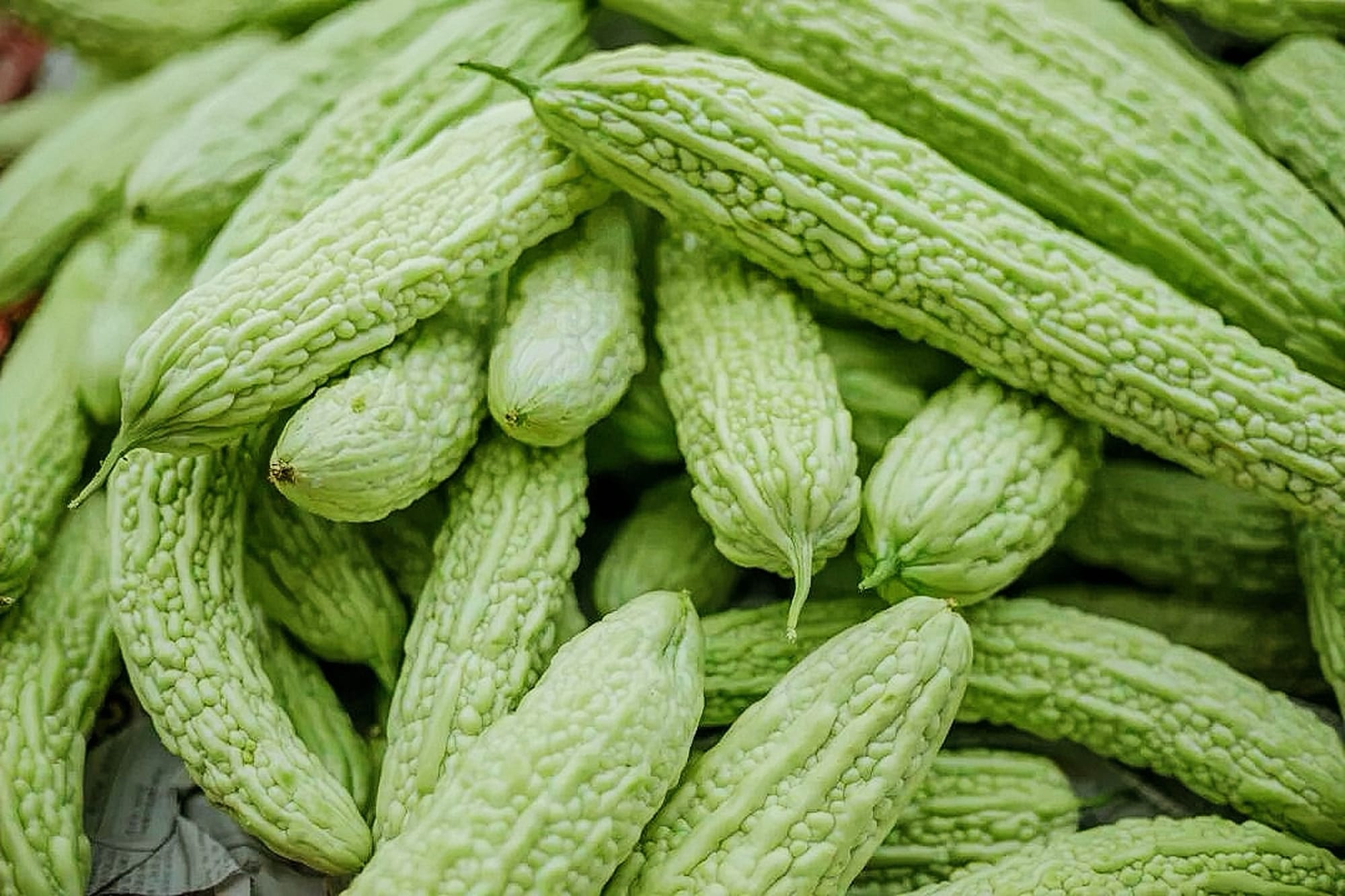
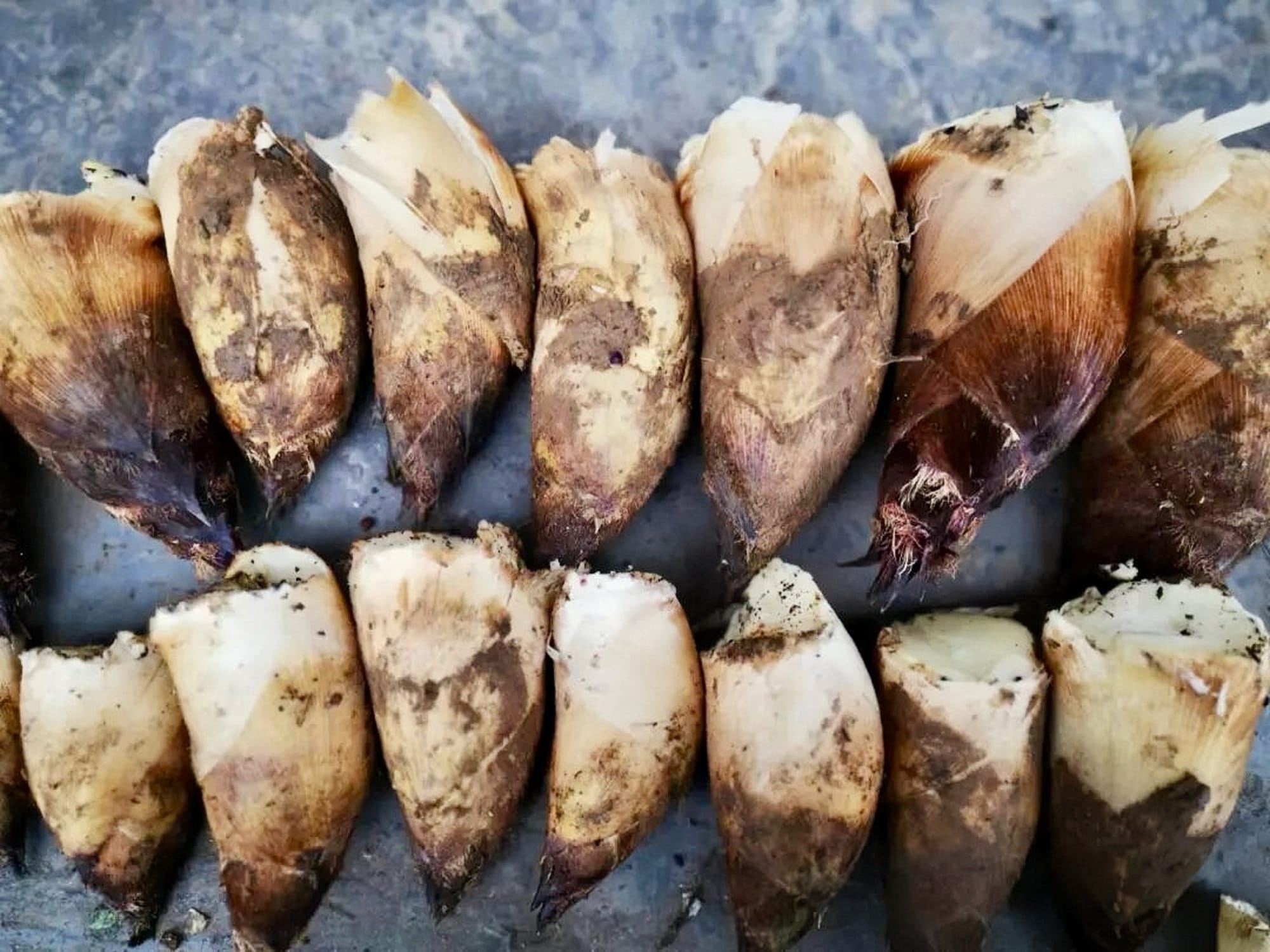
Bitter melons in a market basket next to freshly harvested bitter bamboo shoots.
The warm, humid mountains of southern Sichuan are rich with wild mushrooms. Varieties change with the month. Foraging was always as fun as cooking — walking with a small hoe and a basket, running freely across the mountains.
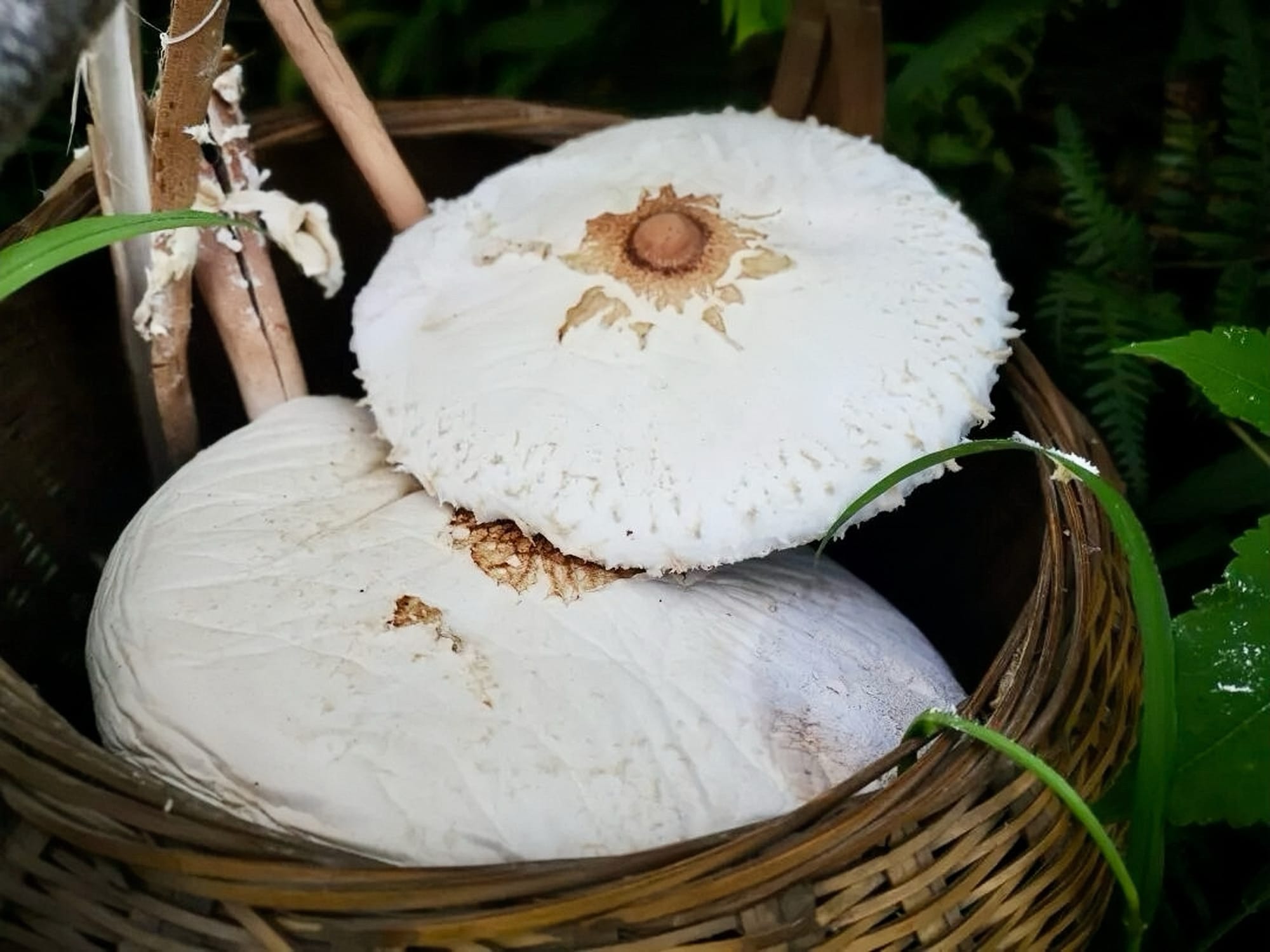
And there were the wildflowers and berries scattered along the mountain paths, changing with each season. The joy came from noticing them, tasting them, learning them.
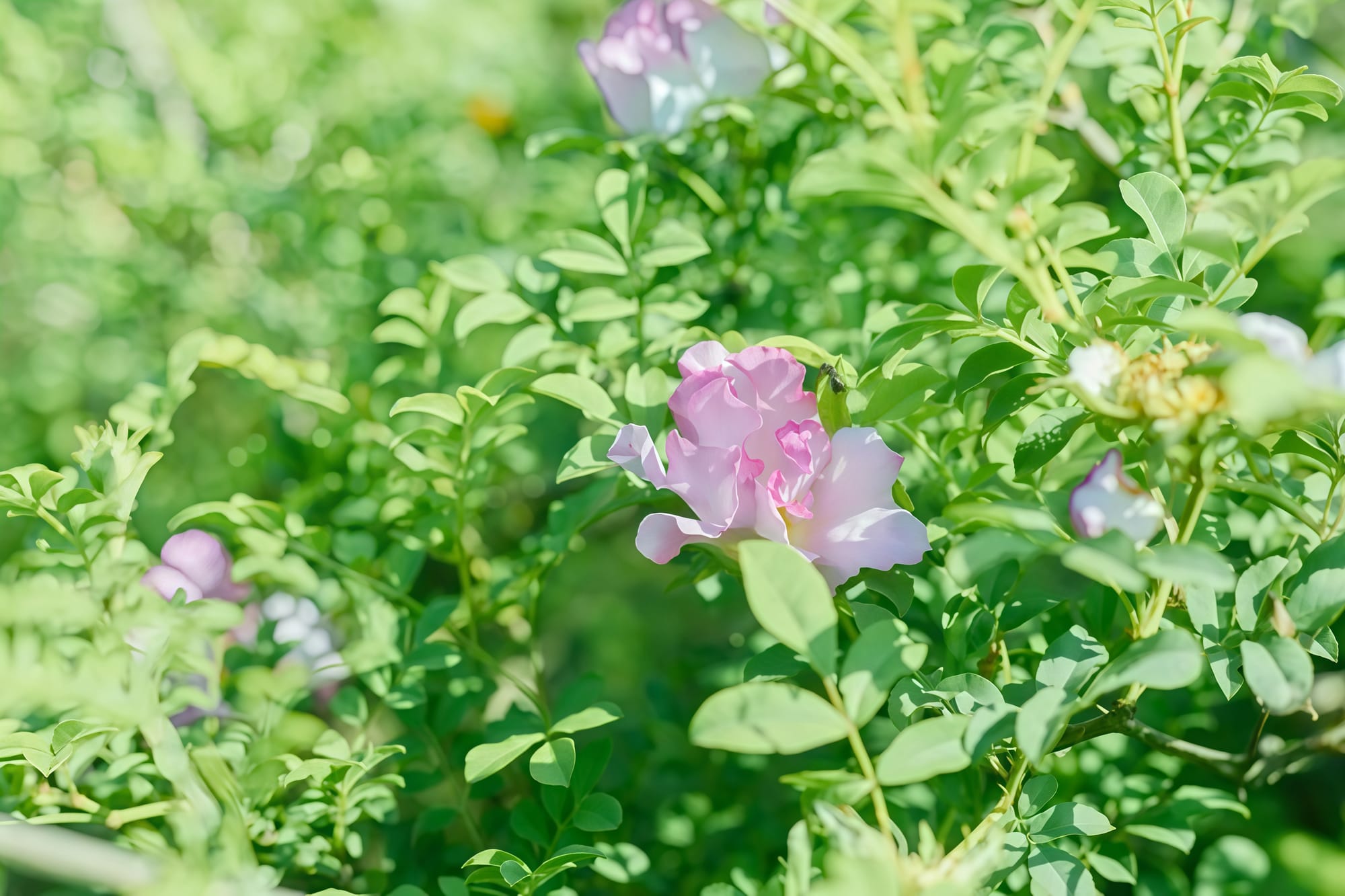
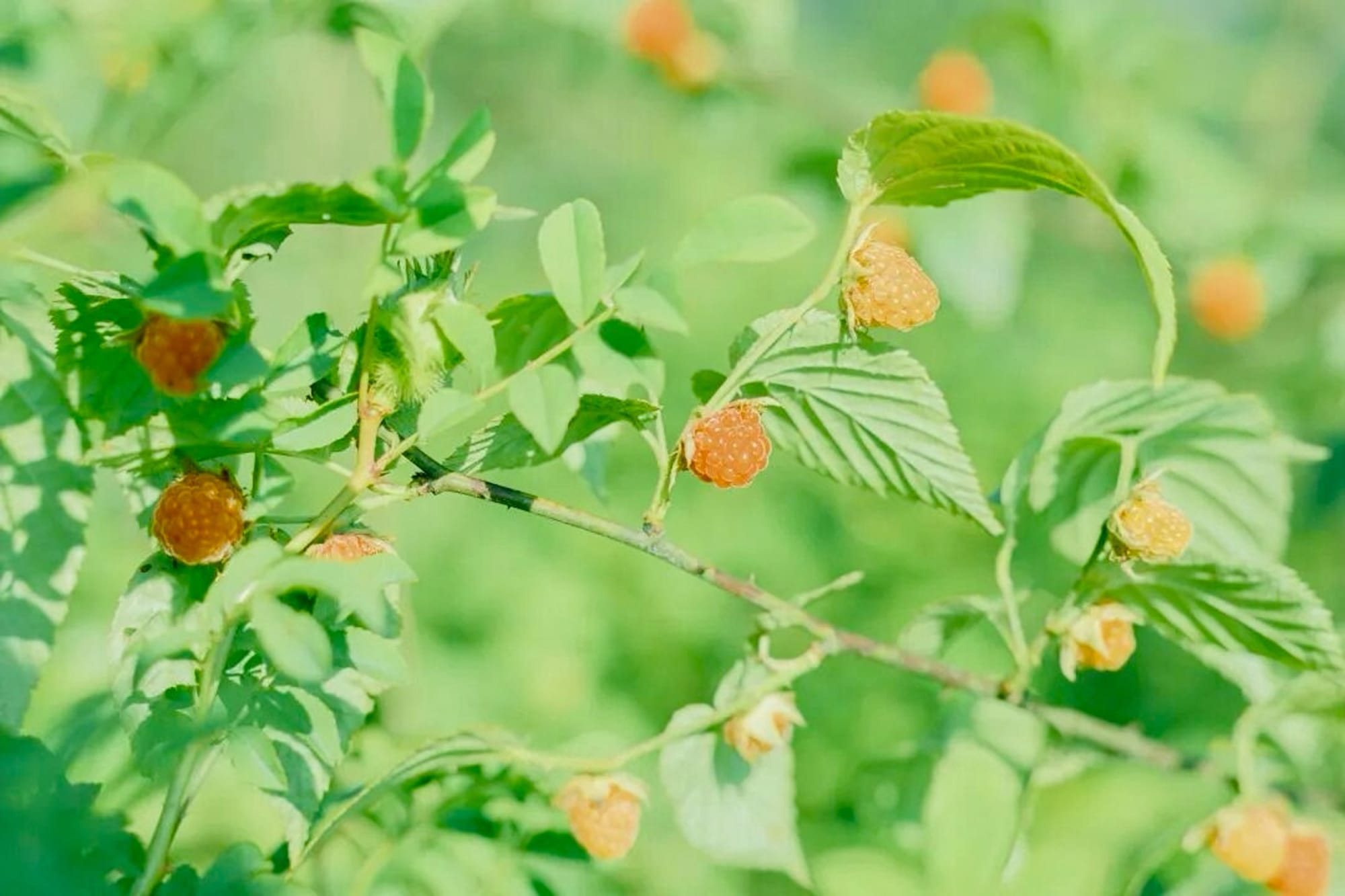
Seasonal wildflowers and berries laid across mossy ground.
The earth gives life to everything, and humans naturally feel close to nature. Every spring, climbing the mountain to pick fresh toon leaves opened the entire landscape before me, instantly lifting my mood. But if you live in a city and cannot touch nature except during trips home, then the vegetable market becomes your bridge. It is the place where city and land meet — where you can feel the pulse of the season, the breath of the local soil, and the quiet rhythm of life.
A lively market at the edge of the city becomes the doorway through which you remember where you come from, and where your food truly begins.


A travel planner and writer at FARLAND, Juan specializes in crafting immersive travel experiences and compelling narratives that bridge culture, adventure, and local authenticity. Lover of sports, cooking, nature and the pursuit of love.
No spam, no sharing to third party. Only you and me.
Member discussion