Tea Mountains, Tea Forests, and Life on Jingmai Mountain
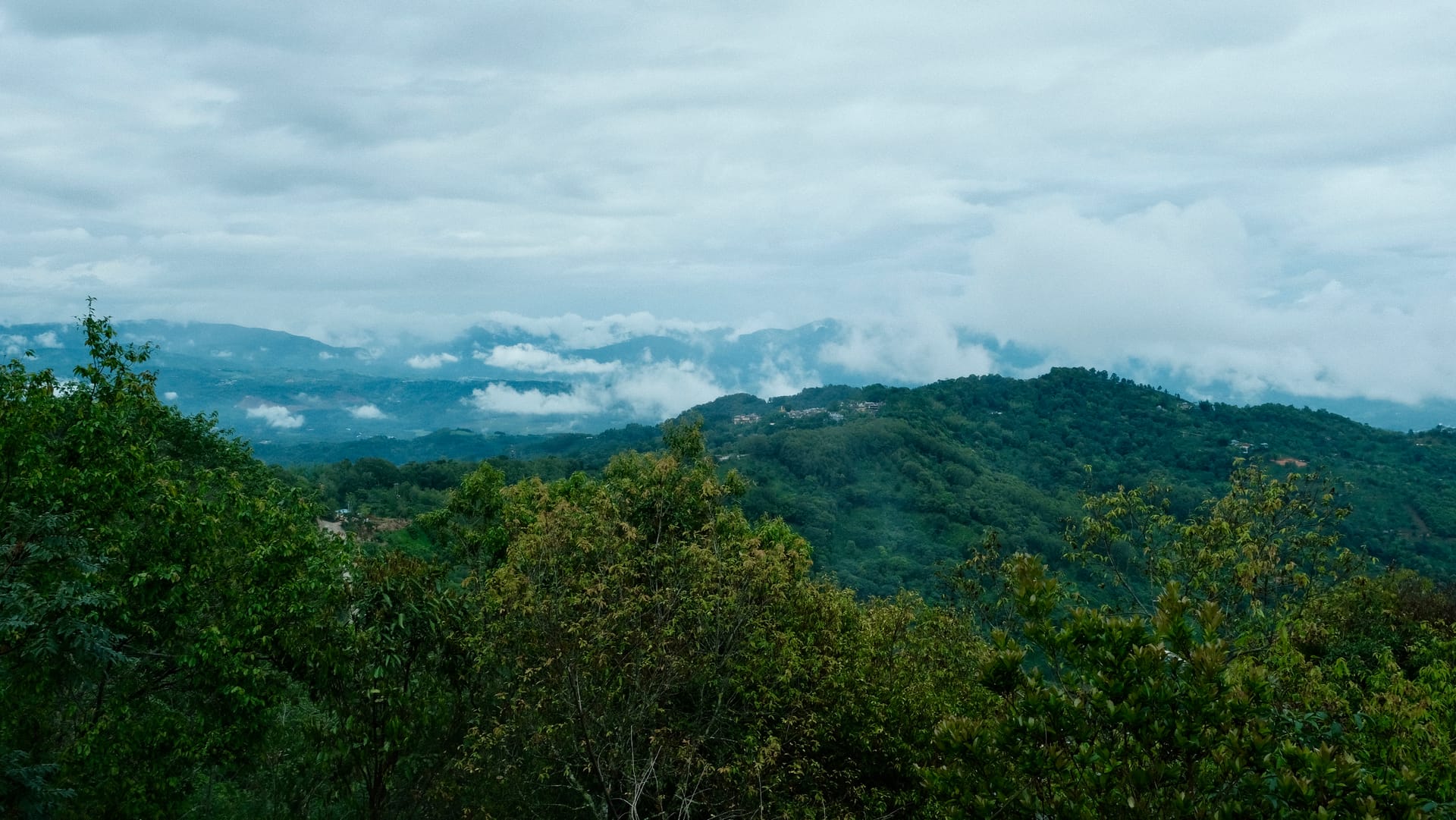
Jingmai Mountain lies in southwest Yunnan, China, and is the world’s first UNESCO World Heritage site centered on tea culture. This is not a place for “refined tea drinking” in the aesthetic, literary sense. It is a land where tea is lived as part of the body, the calendar, and the spirit.
In 2023, the Cultural Landscape of Old Tea Forests of Jingmai Mountain in Pu’er was inscribed on the World Heritage List. The site includes five ancient tea forests, nine traditional villages, and three protective forest areas, preserving a mountain civilization that has endured for nearly a thousand years, one built on a long, mutual life between humans and tea.
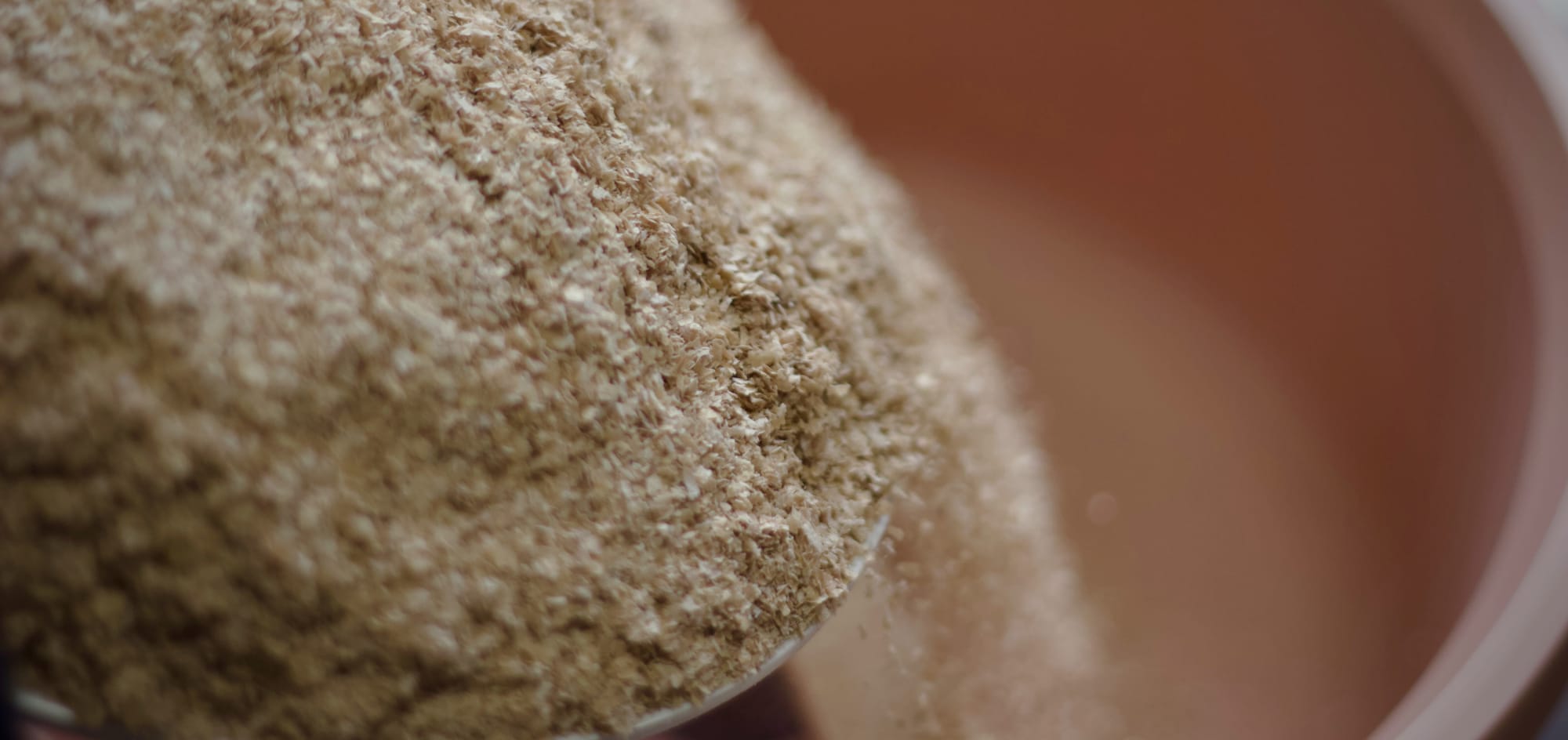
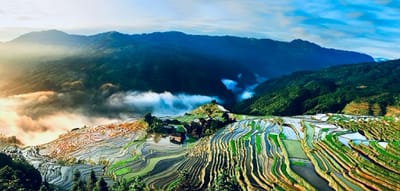
The name “Jingmai” comes from the Dai language and means “a newly established village.” In 101 BCE, Dai ancestors are said to have followed a sambar deer here and settled. Even earlier, the first tea forest was planted by the ancestors of the Blang people. Led by a chief named Aileng, they migrated from the Dianchi area and built their lives in these mist-covered mountains. The ancient tea trees you see in the forest today are not plantation rows. They are part of an old ecological system that is carefully tended by humans while still remaining in a forest state. Tea trees live alongside tall canopy trees, medicinal plants, and wild animals, forming a rare landscape of “tea forest,” not “tea garden.”
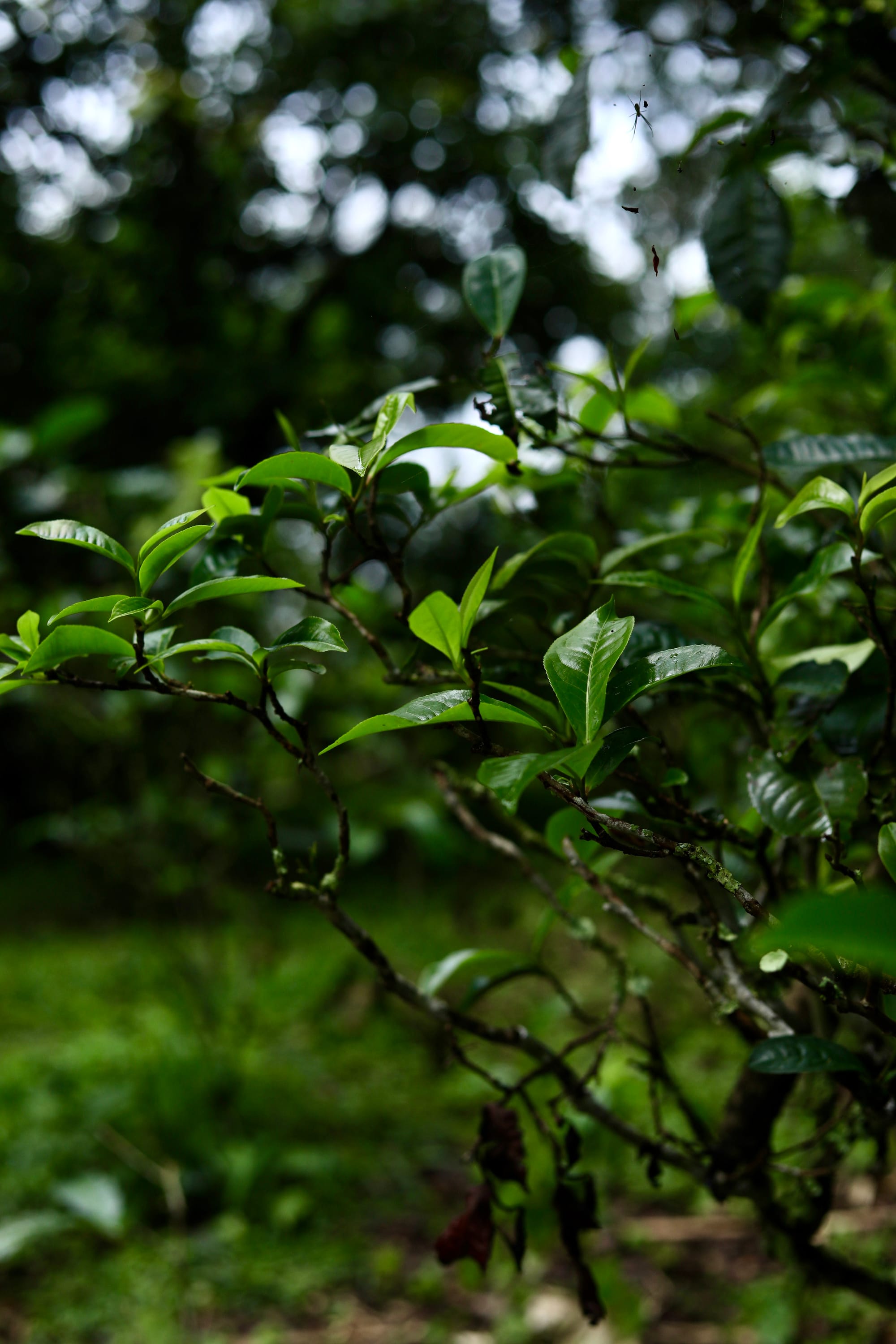
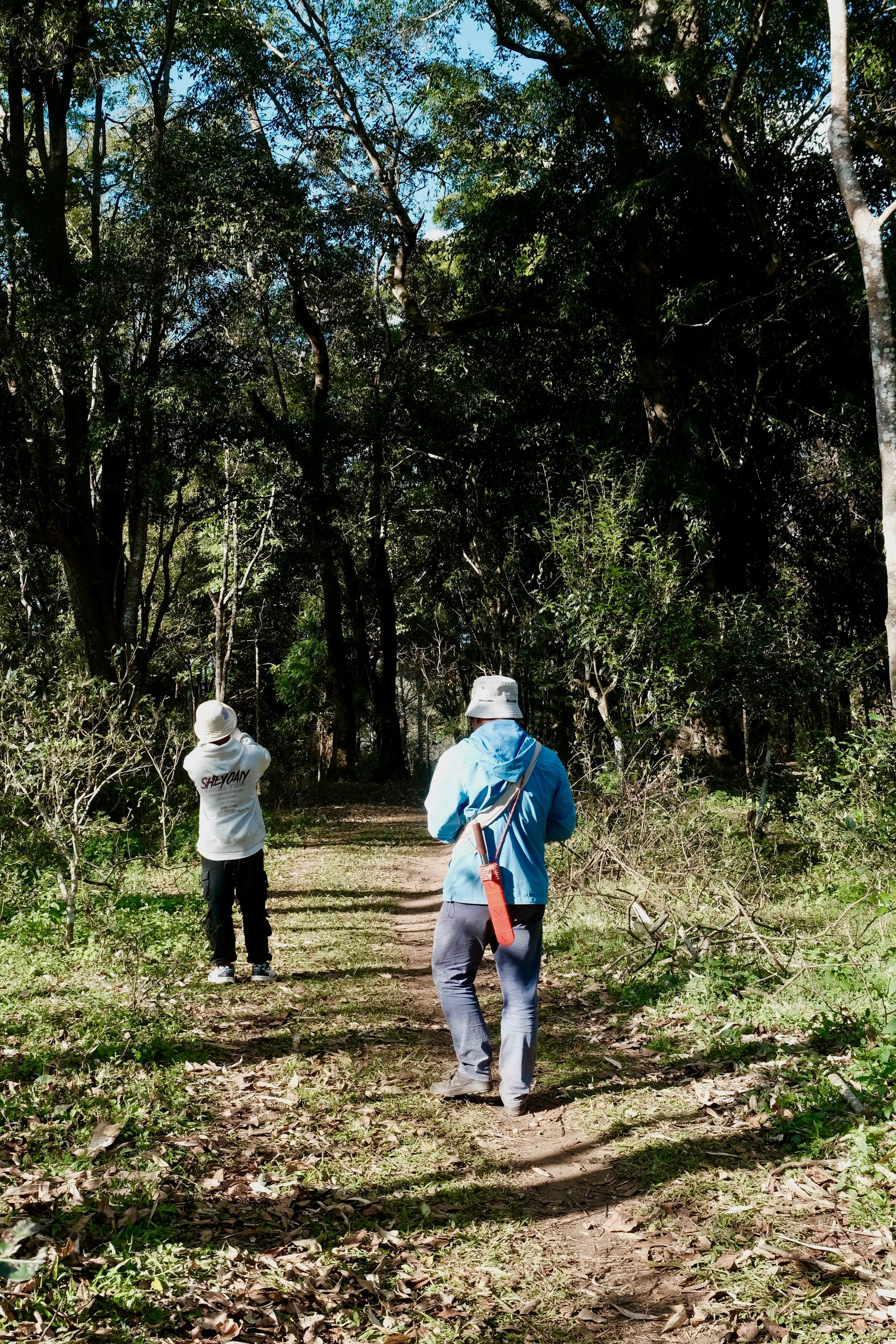
First: Pu’er tea trees. / Second: In the Blang tea mountain, deep in Aileng Mountain.
As one of Pu’er tea’s most important producing regions, Jingmai Mountain’s tea culture also looks very different from the scholar tradition of Chinese tea appreciation. There is no intense fixation on ritual, utensils, or visual aesthetics. Here, tea is closer to ethnobotany and herbal knowledge. It quenches thirst, dispels dampness, and supports the body. It also accompanies work and conversation. For generations, the Blang, Dai, and other communities have harvested tea, made tea, and drank tea in the mountains. Tea is simply part of daily life, as natural as rice and air.
For this reason, Jingmai Mountain’s value is not only in the tea itself, but in a whole living system: ancient tea forests, villages, collective memory, and a gentle, enduring relationship between humans and nature. To truly understand Jingmai Mountain, you do not begin by evaluating a cup of tea. You begin by watching how people live among rain mist, forest, and tea trees.
Tea Sustains the Spiritual World of Mountain Peoples
The Dai and the Blang arrived at Jingmai Mountain at different times. The forest nourished their generations, and tea became the thread that connected them to one another.
The Blang are believed to descend from the ancient Pu people. They are among the oldest Indigenous communities of the Lancang River basin, and are also regarded as one of the earliest peoples in the world to discover wild tea and cultivate it. Deep in the ancient tea mountains of the Lancang basin, wherever the Blang have lived, scattered old tea groves remain. After domesticating the tea tree, the Blang first planted tea as medicine, and gradually gave it wider meaning. Tea became “a vegetable, a ritual offering, a tribute, a gift, a drink, and a commodity.”
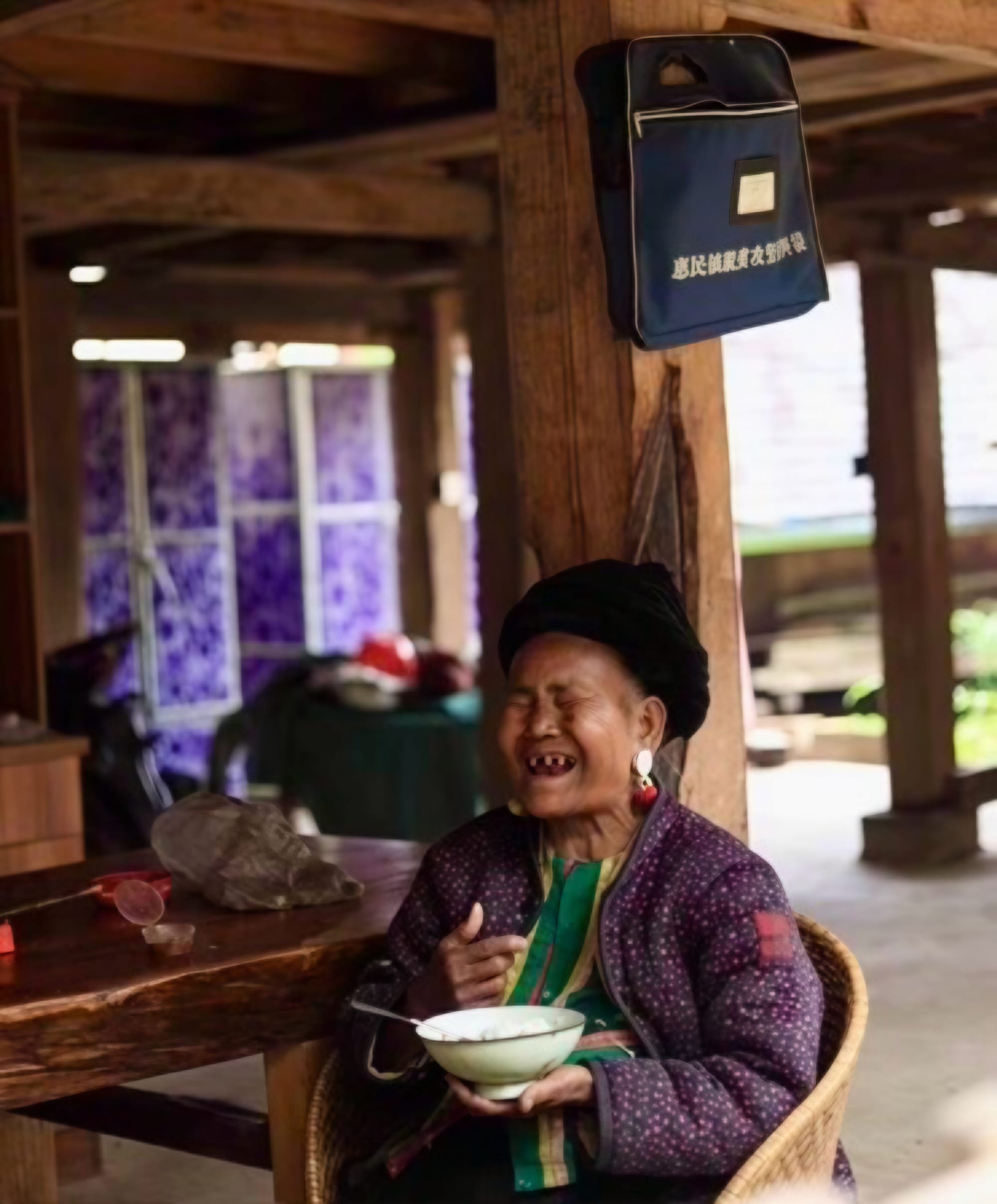
Not long after, the Dai leader Zhaonu also discovered tea’s effects. In Dai language, tea is called “la,” a word that originally meant “to discard” or “to throw away.” Local people explain it like this: when you are sick, if you eat “la,” or soak it and wash your whole body with it, you can “throw away” the illness. Over time, “la” became the shared term for tea among the mountain peoples of Jingmai.
On Jingmai Mountain, the Dai and the Blang maintain distinct ways of life shaped by belief and ancestral knowledge, yet in labor, tea unifies their entire year. Spring is the busiest harvest season. People must pick tea while buds are still tender, and they must also prepare ceremonies to honor the tea spirit. In the Buddhist calendar year 458, which corresponds to 85 BCE, Zhaonuo planted the first tea tree. From then on, that date became the day when Dai villagers of Jingmai worship the tea ancestor (Zhaoru La) and the tea deity. The Blang tea soul rituals begin around the same time. Each spring, before the first harvest of spring tea, Blang families in Mangjing Village prepare offerings. Tea farmers worship the tea deity in their own family tea groves, chanting prayers for protection from the tea soul. Then the most respected elder in the village symbolically picks leaves from the “tea soul tree.” Only after that can each household begin harvesting.
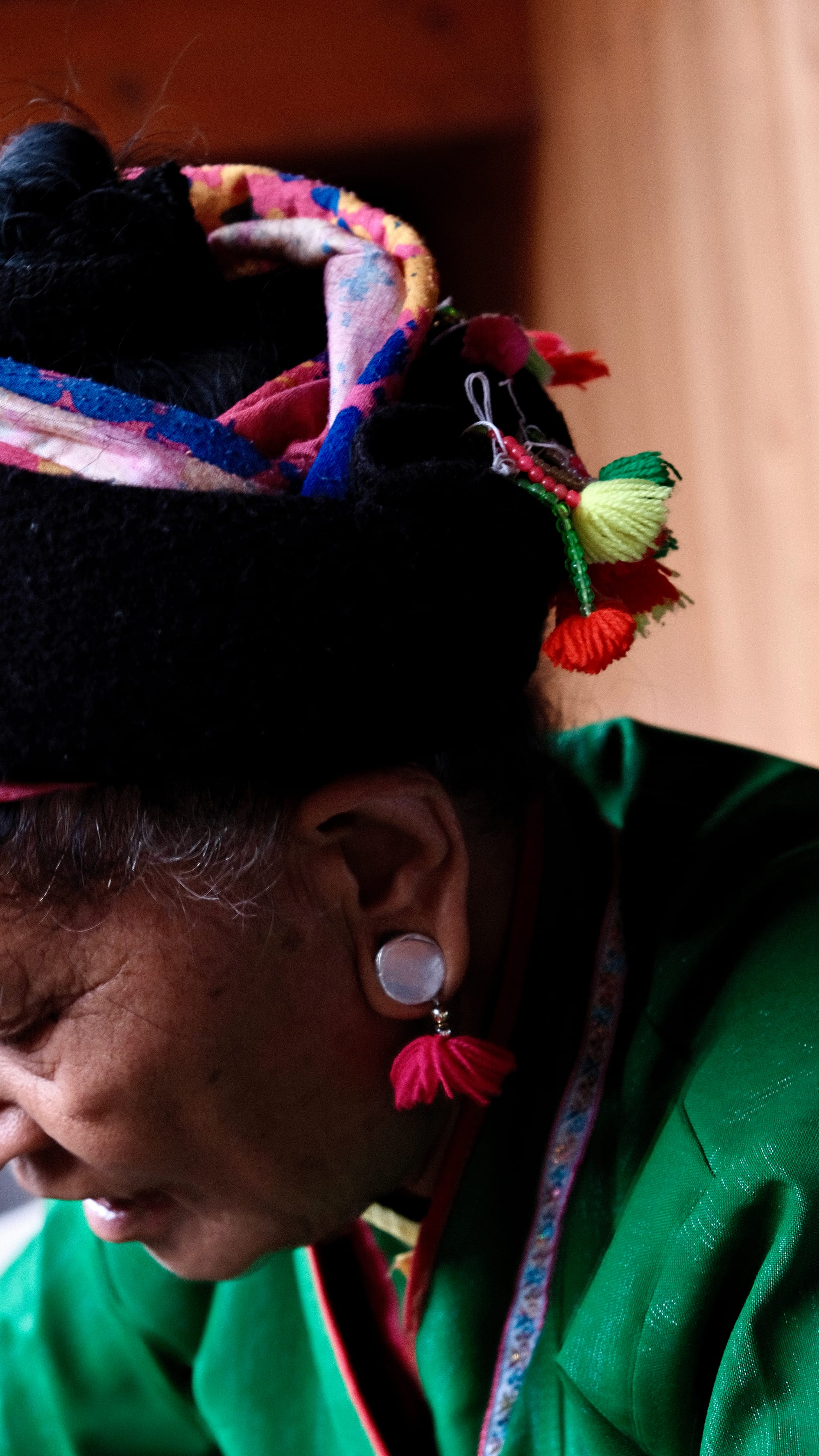
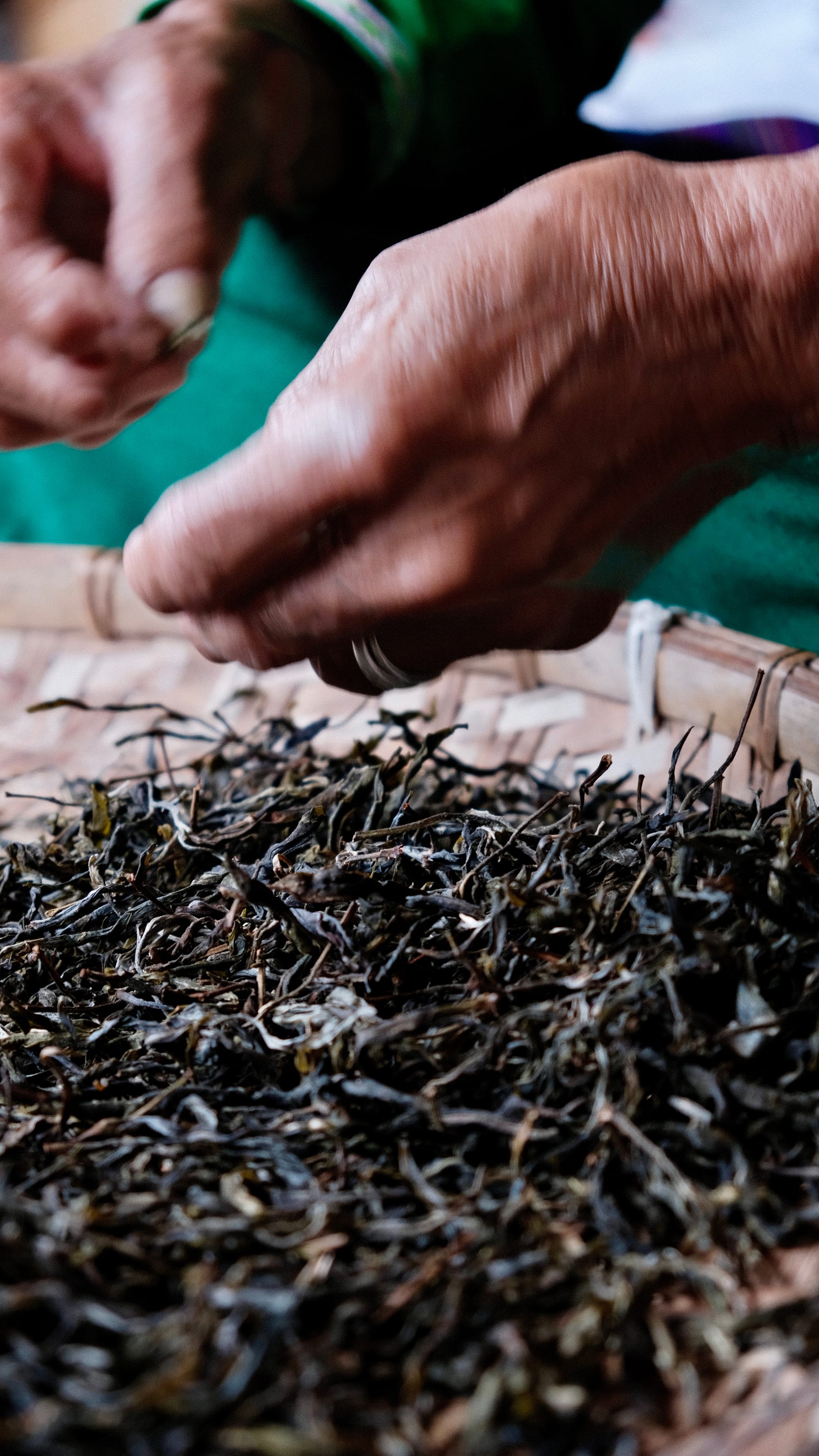
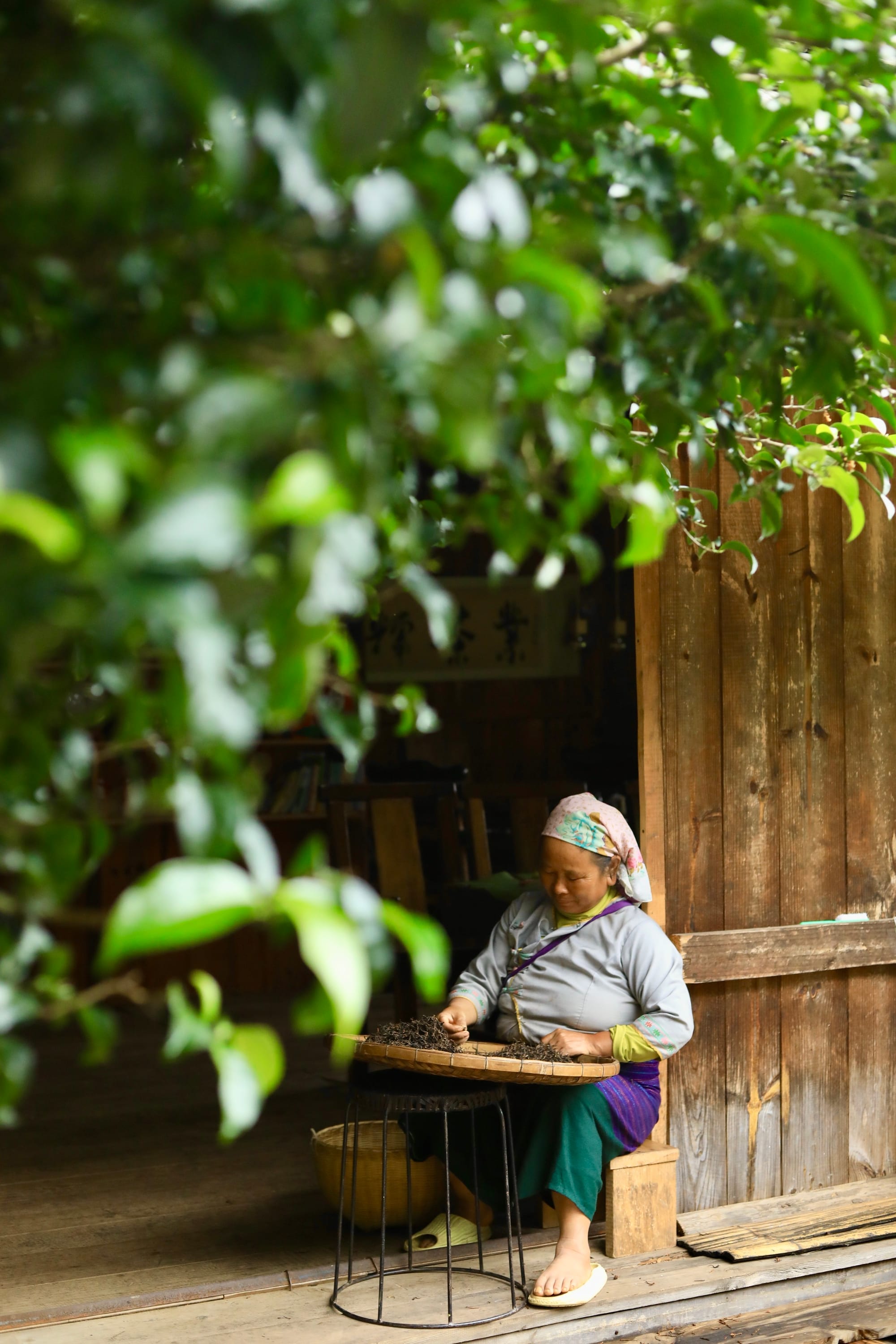
The wool pom poms hanging from the brim symbolize “tea seeds.” Dried tea leaves are sorted by hand to ensure quality.
Summer is a season of rest. In Jingmai’s subtropical mountains there are only two seasons, the rainy season and the dry season. The Dai Buddhist festival known as “Closing the Door Festival” marks a period of summer retreat and also signals the true arrival of the rainy season. This pause gives tea trees time to store nutrients and recover strength, and it also allows people’s spirits to renew through stillness and retreat. When “Opening the Door Festival” arrives, a sign that the rainy season is ending, life becomes busy again. Matters like settling a household and arranging marriage return to the agenda.
On Jingmai Mountain, They Still Remember the Language of Plants
One clear afternoon, we visited Sister Yiluo, a Blang woman who has been picking tea with her family since she was eight. Thirty years ago on Jingmai Mountain, the Dai farmed rice paddies at the foot of the mountain, the Blang cultivated dry fields along the slopes, and tea trees grew beside the rice paddies. After tending the rice, people would shoulder bamboo baskets and begin picking tea.
At that time, Pu’er tea did not carry the economic value it holds today. Yet daily life had already been steeped in tea, and a kind of universal meaning had quietly nourished the land of Jingmai.
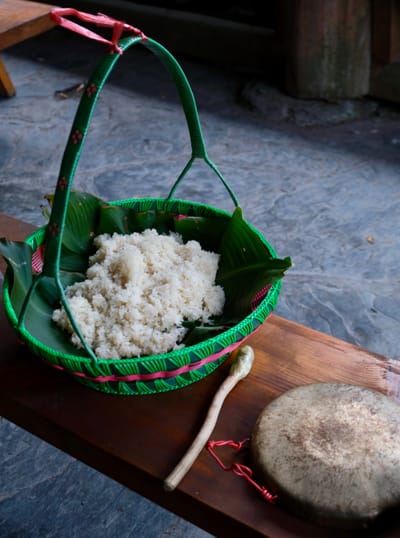
In Yiluo’s childhood, the first task each morning was to boil tea. In a traditional Blang stilt house, the young Yiluo would cross the main room to the fire pit near the central pillar. This was the heart of the home, where the family spent its days. Every morning, Yiluo’s mother would roast tea, call her daughter to boil water over the fire, then wait for the charcoal to glow hot. She would roll tea leaves with the scorching charcoal in a wooden bowl, then remove the ash and boil the leaves in rolling water.
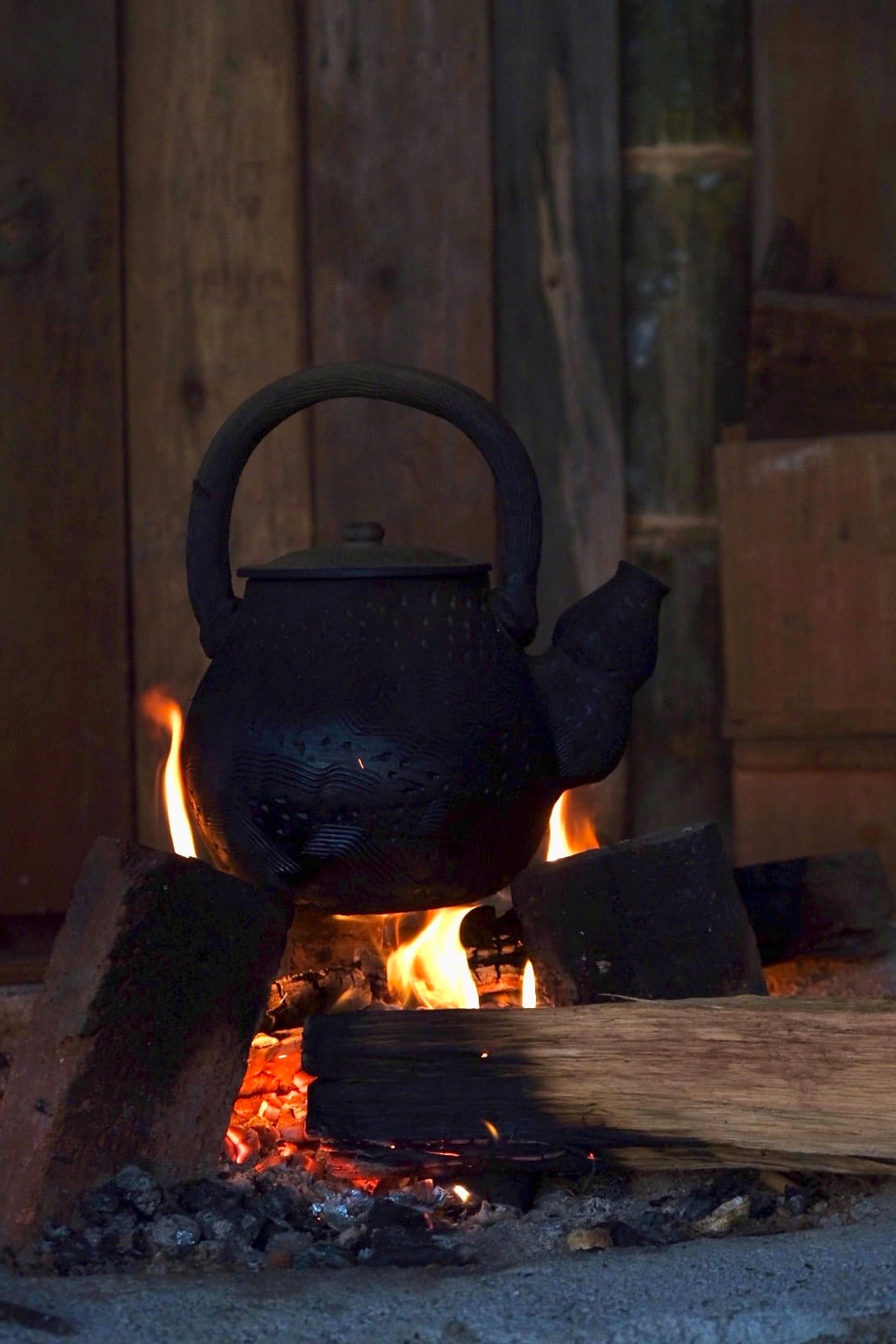
Yiluo still remembers how neighbors would catch the aroma and come over from next door. “Life was poor back then,” she said, “but it was pure and simple. Most of all, everyone’s eyes looked bright and clear.”
Jingmai Mountain is humid. Locals describe the weather like a crying baby: if it is sunny, it can suddenly rain, “crying and laughing in turns.” “The dampness is heavy, so in the past, mountain peoples mostly drank roasted tea.” Besides roasted tea, many people also love smoked tea. Tea leaves are placed above the fire pit and slowly dried by smoke. It has a smoky taste, and once it reaches your stomach, it feels deeply comforting. Some Blang people also like sour tea. “Especially in summer, when you come back from the fields, drinking it makes your whole body feel restored.”
Yiluo fries tea and drinks tea according to the weather. Life in dense forest taught her ancestors a body based understanding of how to live with climate. Following the nature of tea, people add ginger slices in winter when the body feels cold. If mosquito bites swell into pus, they boil tea leaves and wash the wound to reduce inflammation, ease itching, and support healing. If someone has walked through muddy wet ground and their feet have taken in cold dampness, they use boiling water steeped with tea leaves to soak their feet and drive out the chill.
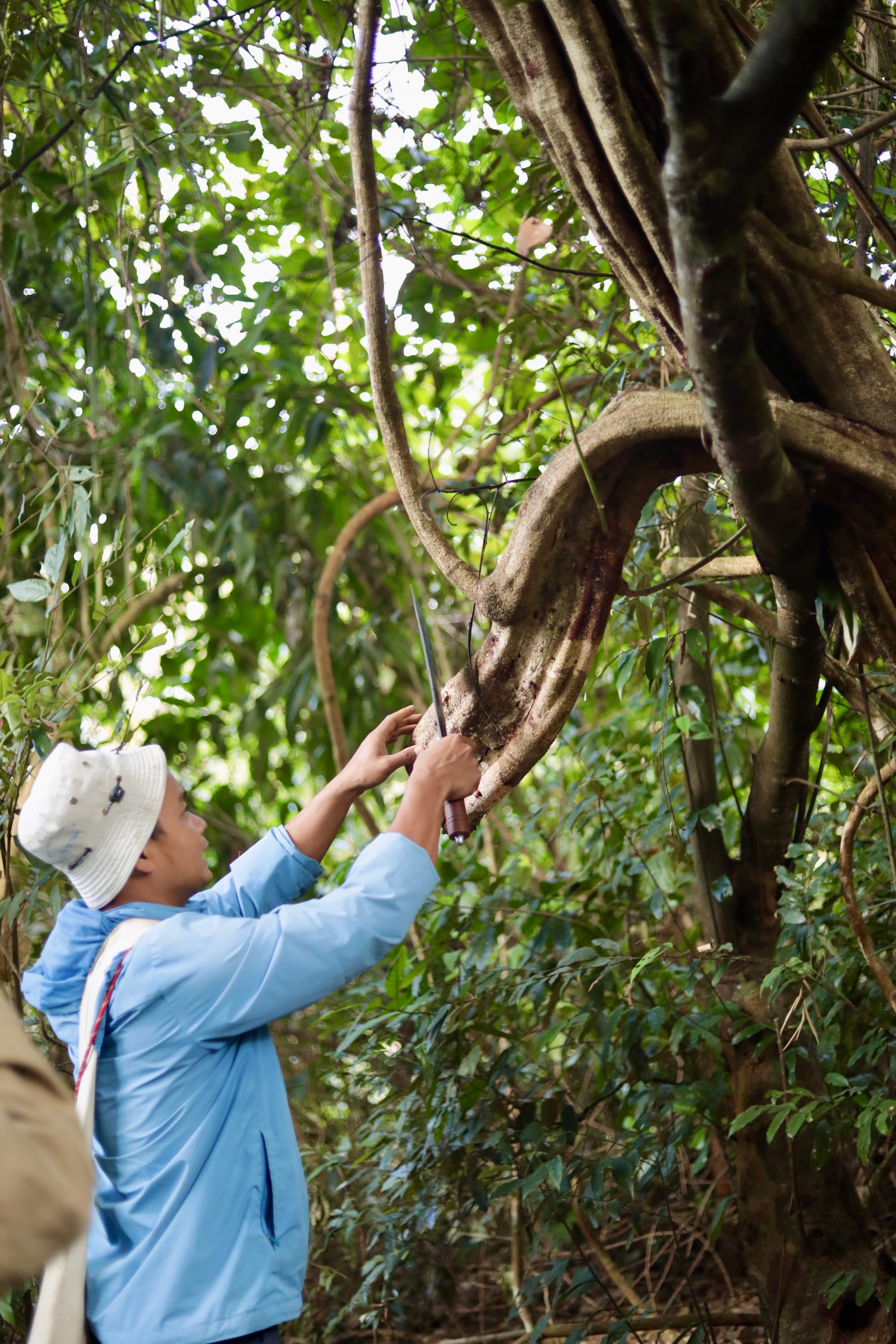
Jingmai’s ancient tea trees grow inside the forest, protected by tall trees and living in symbiosis with all things. The Dai and Blang who have lived here for generations still follow local knowledge shaped by tea, knowledge that maintains the tea forest’s ecology. In their experience, the forest is both dangerous and intimate. Everything has spirit. What is precious is that this is the kind of emotional connection to all life that many people have forgotten after urbanization. Yes, they have not forgotten how to speak with plants. Yiluo said that whenever she fries a truly good batch of tea, the lingering tea energy always brings her back to the sunlight, birdsong, and the shape of wind moving through the tea forest in a single day. In that moment, she feels the leaves are also in their most comfortable state.
Jingmai’s subtropical climate creates lush mountains, dense vegetation, and a world of abundance. When Jingmai Mountain became the world’s first tea themed cultural heritage site, perhaps it was also a kind of return, a renewed respect for a form of civilization shaped by following nature and living with it.
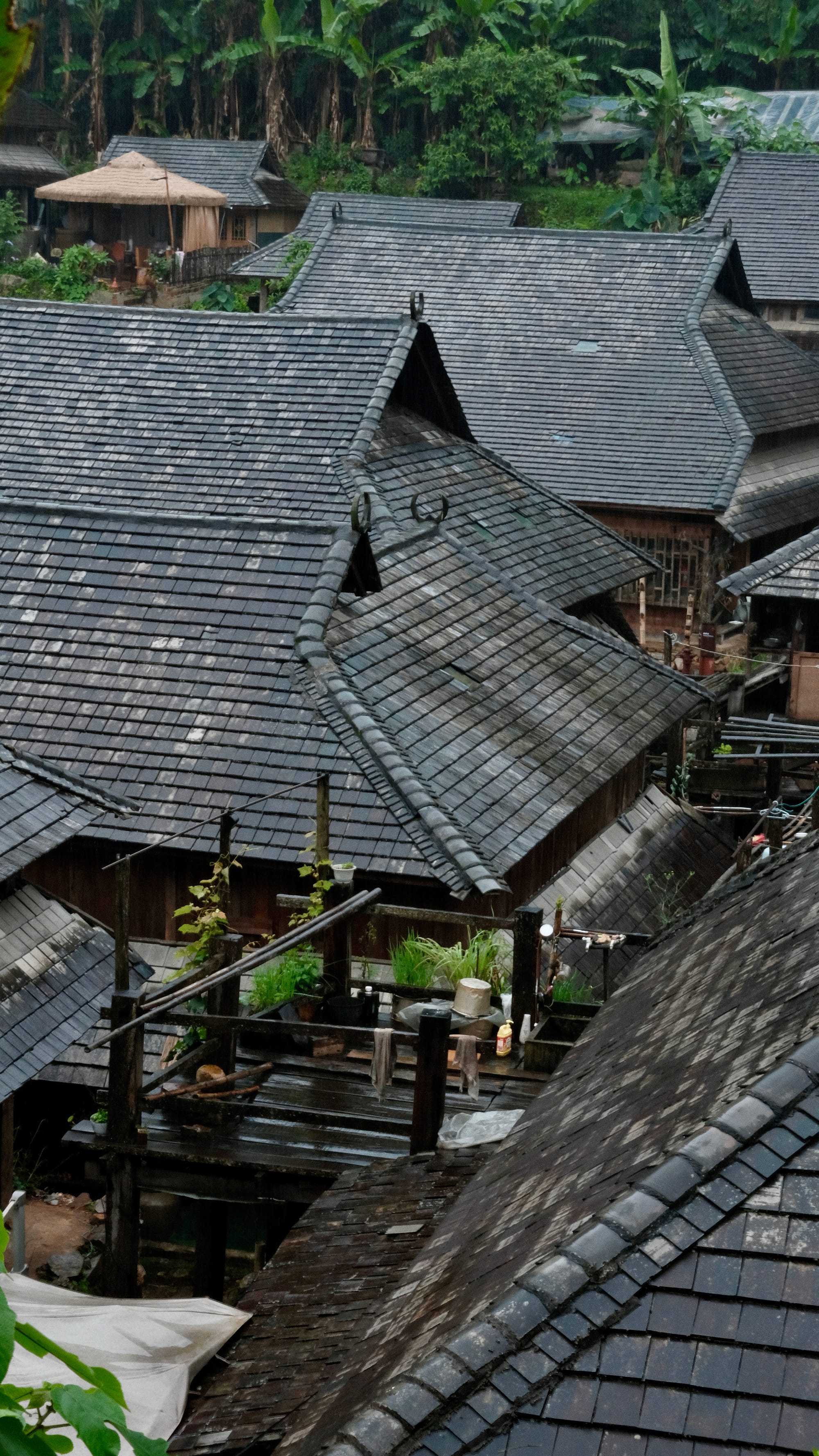
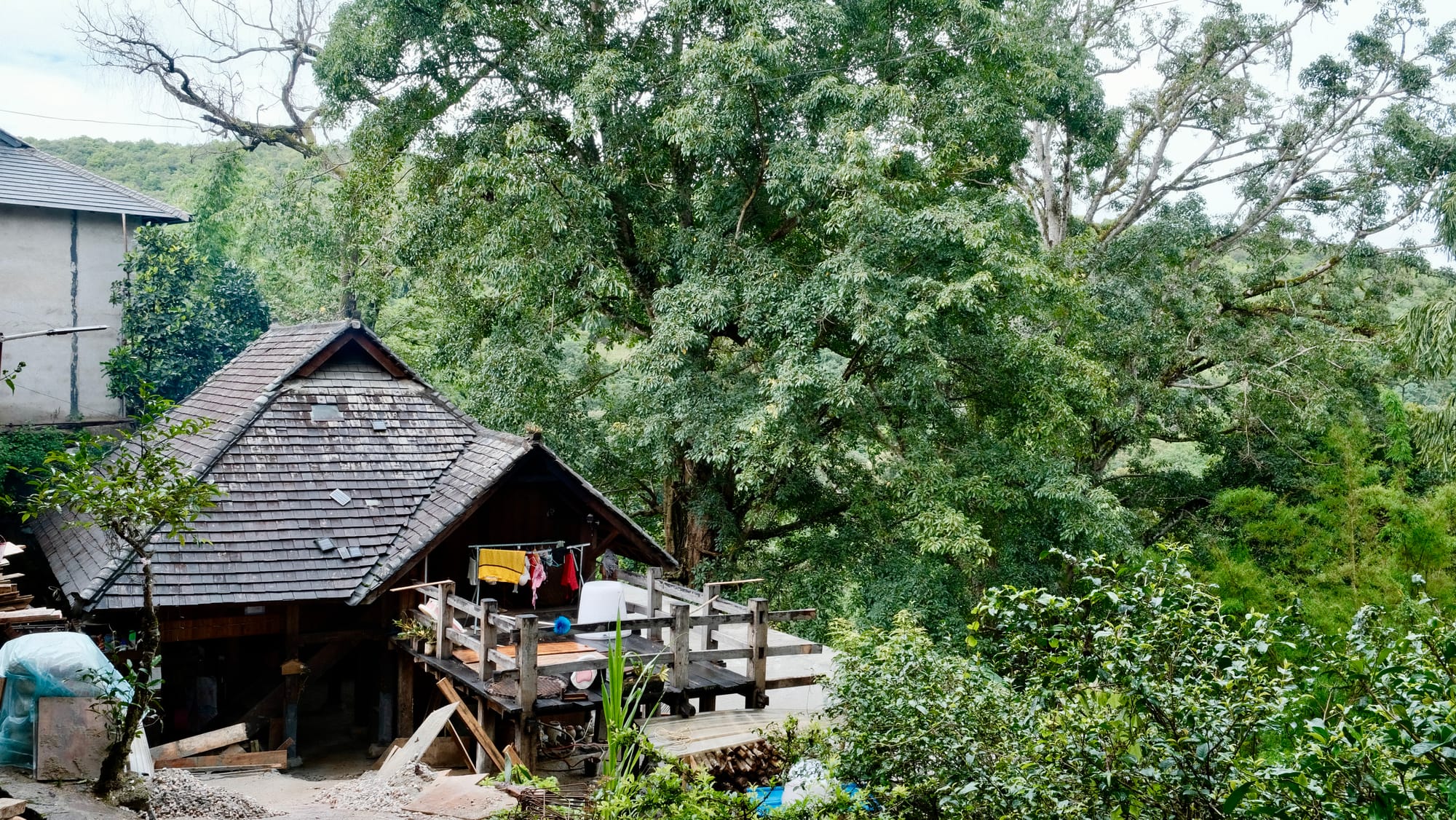
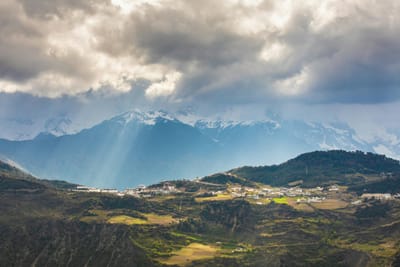
Villages and homes that live beside the tea forest.
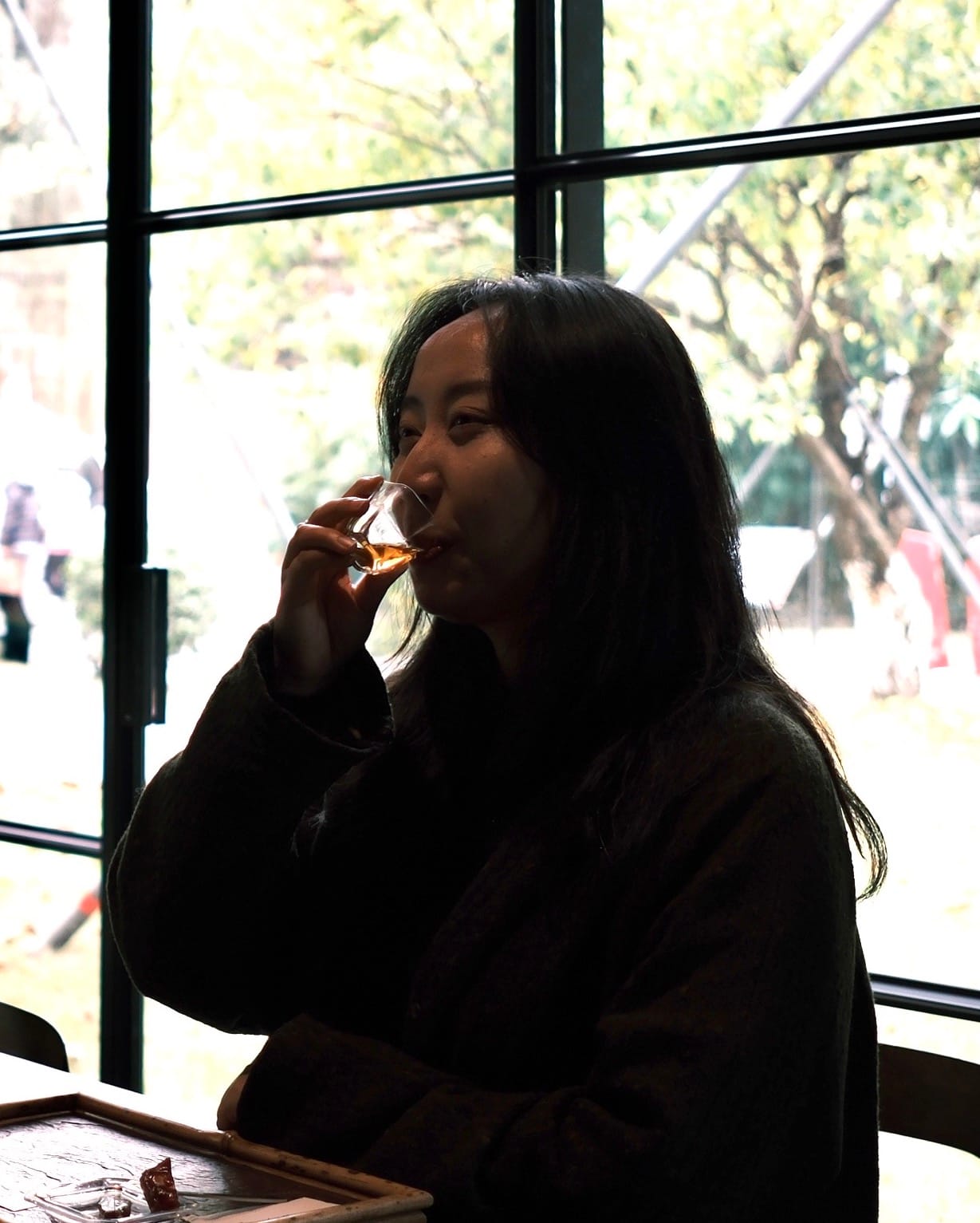
Co-founder of Snout & Seek, Hui Mu is a Yunnan native who loves hometown cuisine and local culture, Hui is currently based in Chengdu, Sichuan, engaged in food culture writing and magazine editing. Hui enjoys reading, trying new cuisines, hiking, and people-watching.
No spam, no sharing to third party. Only you and me.