Part One: Chengdu Snacks I Grew Up With
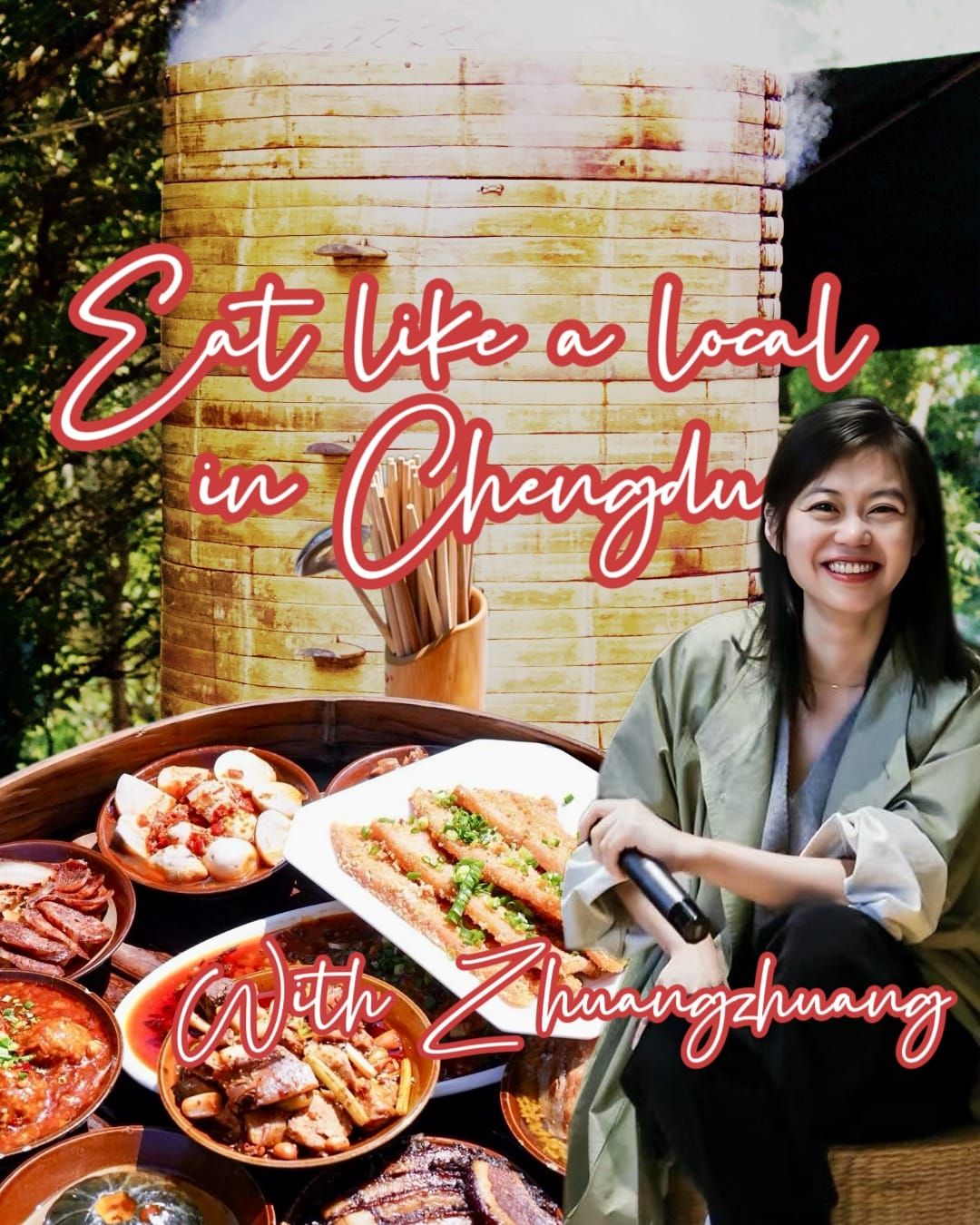
Editor’s Note:
We’re starting a new series with one of our founders, Zhuangzhuang. She grew up in Chengdu, and food has always been part of how she understands the city.
We asked her to write about the places she remembers, what she grew up eating, and the habits that never really left. It’s less about recommendations, more about how people actually eat in Chengdu.
Part One
Huangchengba Beef
I spent much of my childhood in the old districts of Chengdu. Older generations often spoke of a city gate that once stood there, said to resemble the Tiananmen Square in Beijing. It was eventually demolished, but the name “Huangchengba” remained, becoming a marker of Chengdu’s local food culture. You still see it today in names like Huangchengba Beef or Huangchengba Snacks.
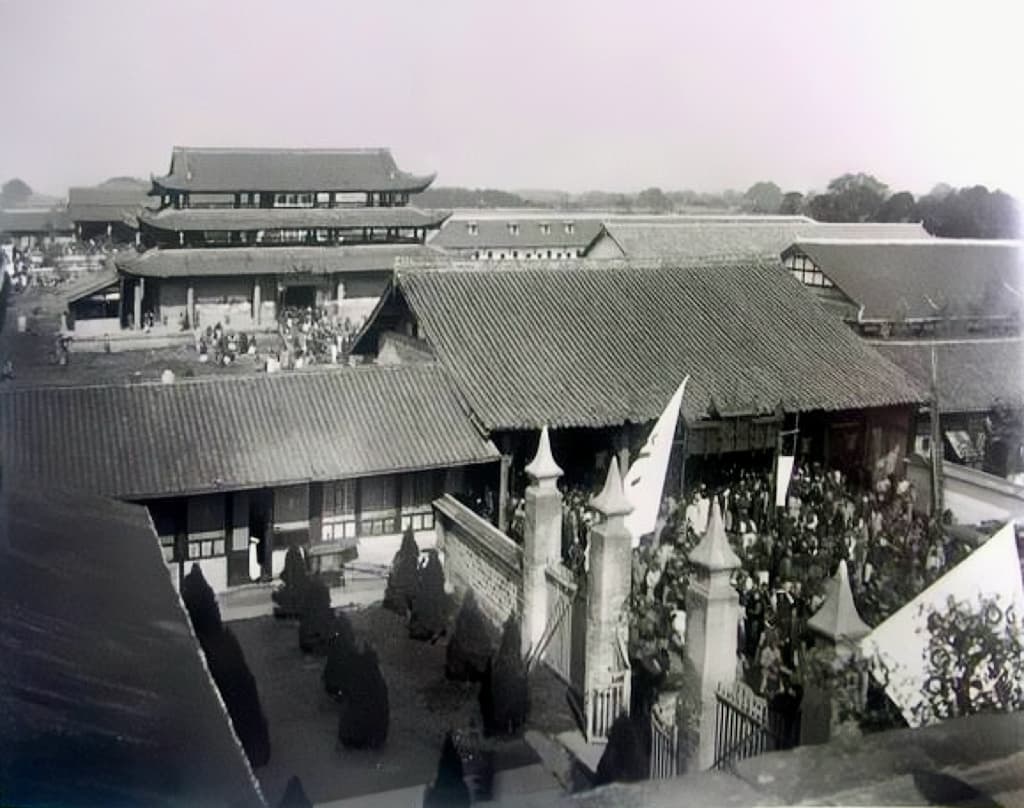
From the Qing dynasty onward, many Muslim communities lived near the old imperial city, with mosques and cemeteries scattered across the northern and western outskirts. Their skill in preparing beef and lamb made halal restaurants an important part of Chengdu’s food scene. Around these areas, locals developed a familiar way of ordering at beef restaurants, what many refer to as the “three-piece set”: steamed, dressed, and braised.
This usually means steamed beef, cold dressed beef or offal, and braised beef with bamboo shoots or radish depending on the season.
Steamed Beef with Rice Flour
Served in small bamboo steamers, each portion is just a bite or two. The beef is coated in seasoned rice flour and fermented broad bean paste, giving it a deep, savory, slightly spicy flavor. It is often finished with garlic, cilantro, and chili powder for added layers.
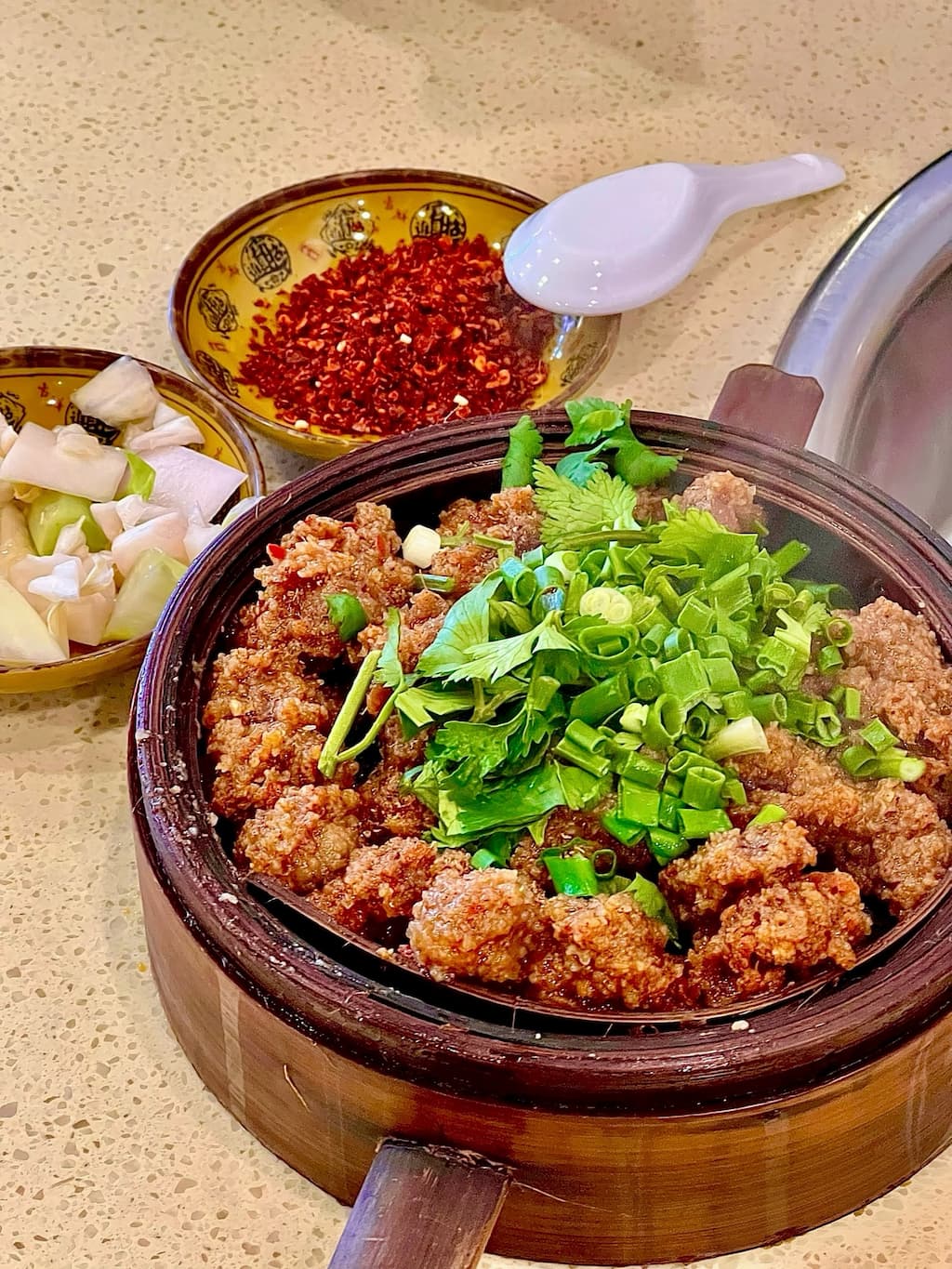
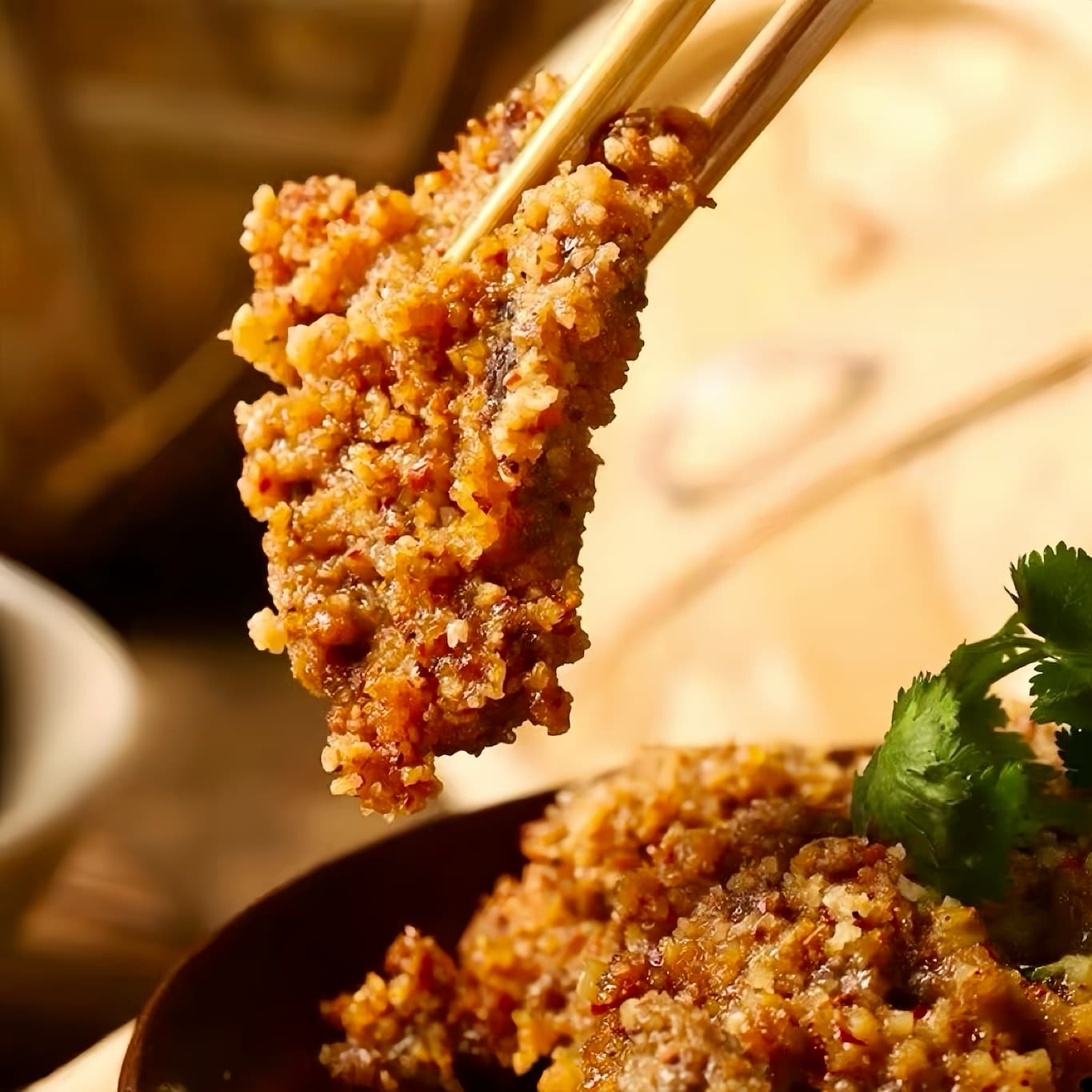
Credit: First: RED 499763716 | Second: RED 810061934
Cold Dressed Beef
This dish relies on its seasoning: chili oil, Sichuan pepper oil, sesame, crushed peanuts, soy sauce, sugar, and cilantro. It follows the same flavor logic as fuqi feipian, using bold seasonings to balance the richness of the meat and offal.
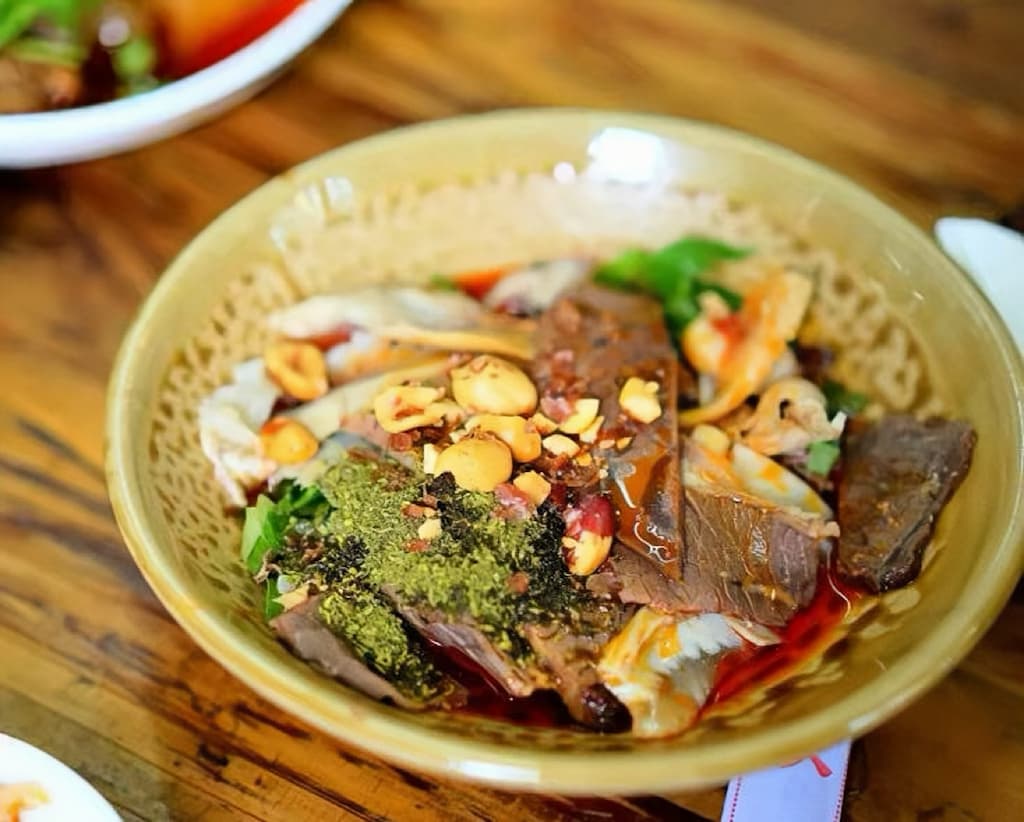
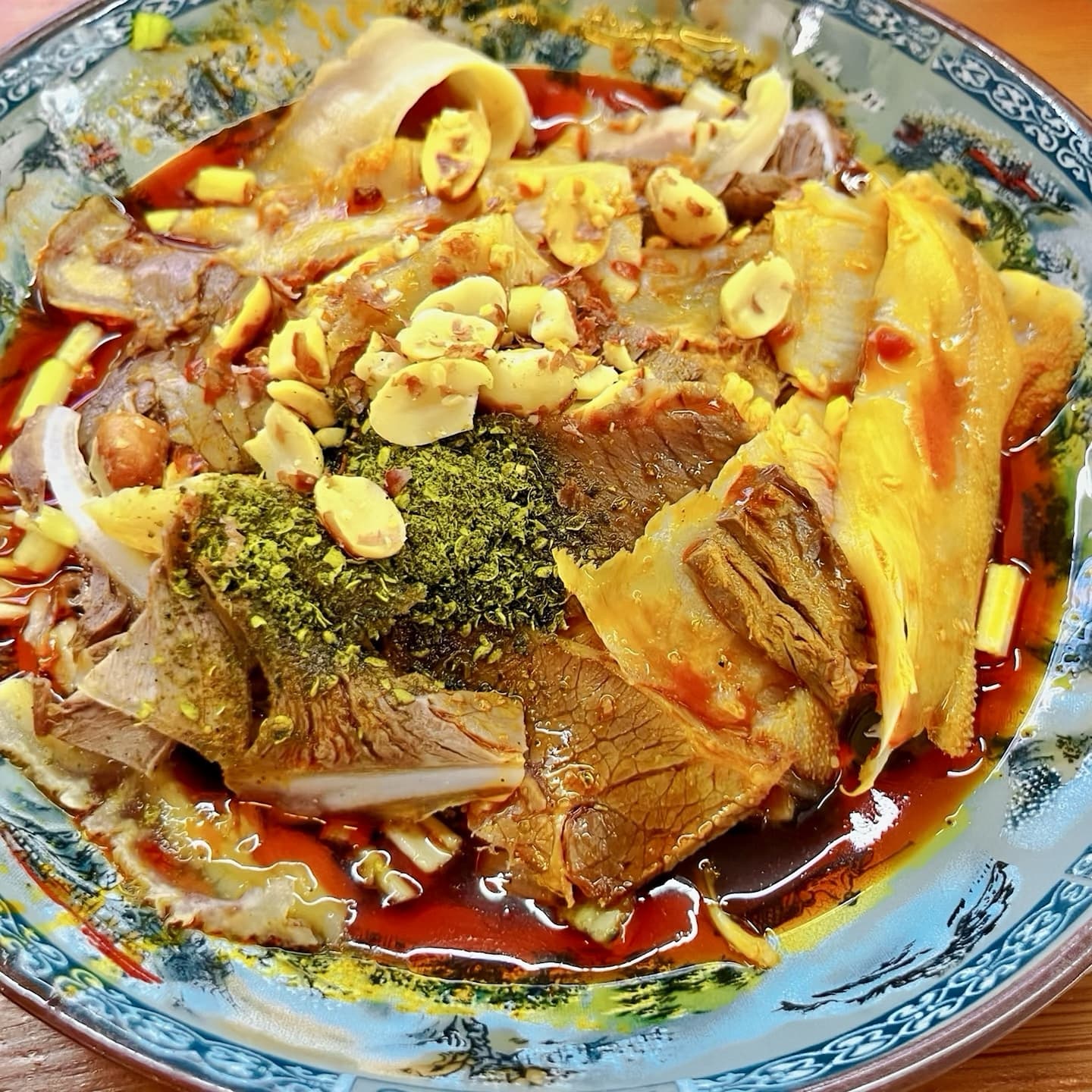
The most famous cold dishes with beef in Chengdu is called the Couples Beef Slices, or “Fuqi Feipian”. It is a classic Chengdu cold dish made from sliced beef and offal, dressed in chili oil and Sichuan pepper. The name may suggest lung, but the dish is really about texture and seasoning, thin cuts of meat coated in a rich, numbing, and aromatic sauce. Credit (second): RED 993875606
Braised Beef
Typically made with beef brisket, braised with ginger, garlic, scallions, spices, and doubanjiang (fermented bean paste). Braising is one of the core techniques in Sichuan cooking, building depth through time and layering.
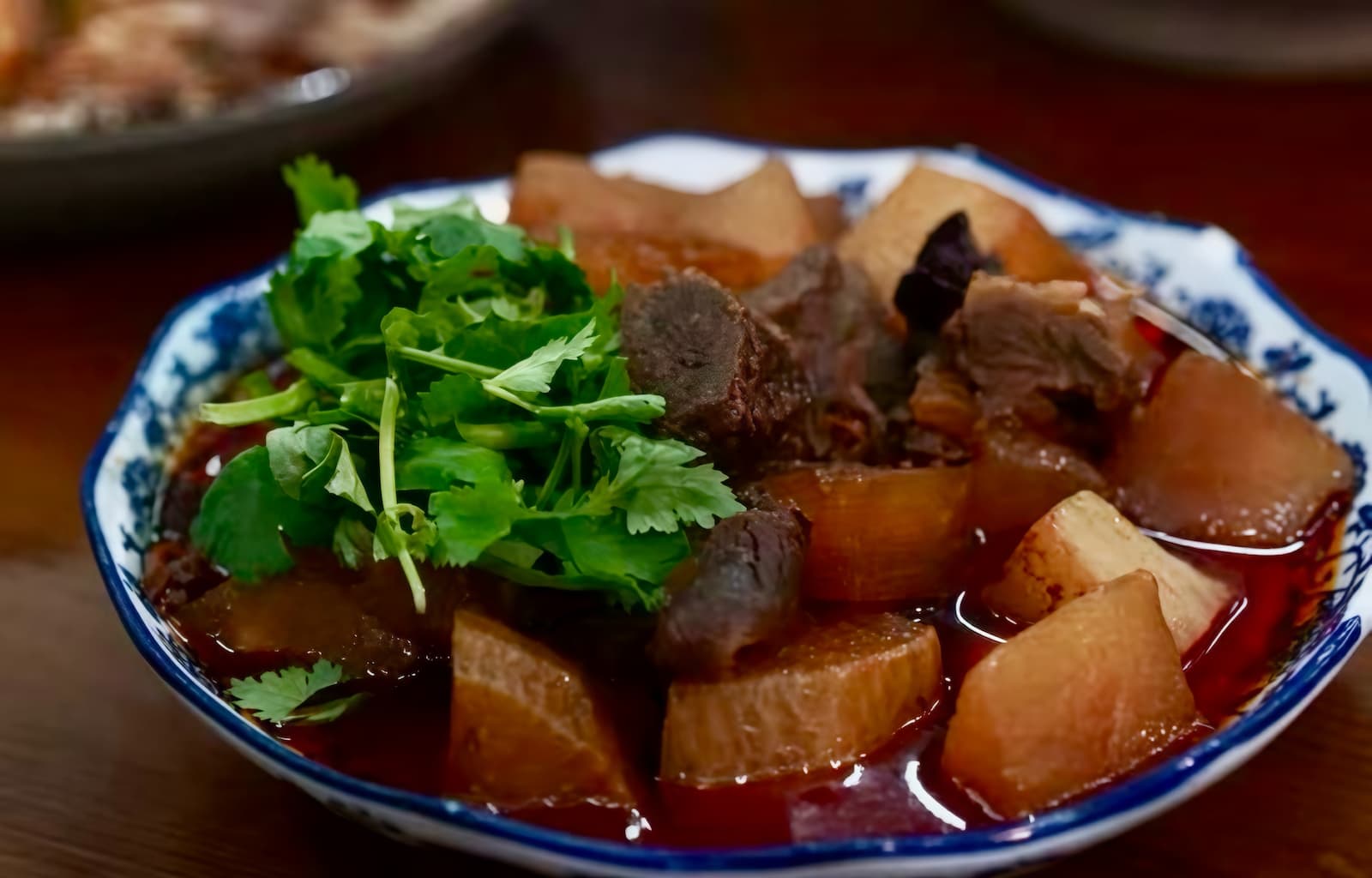
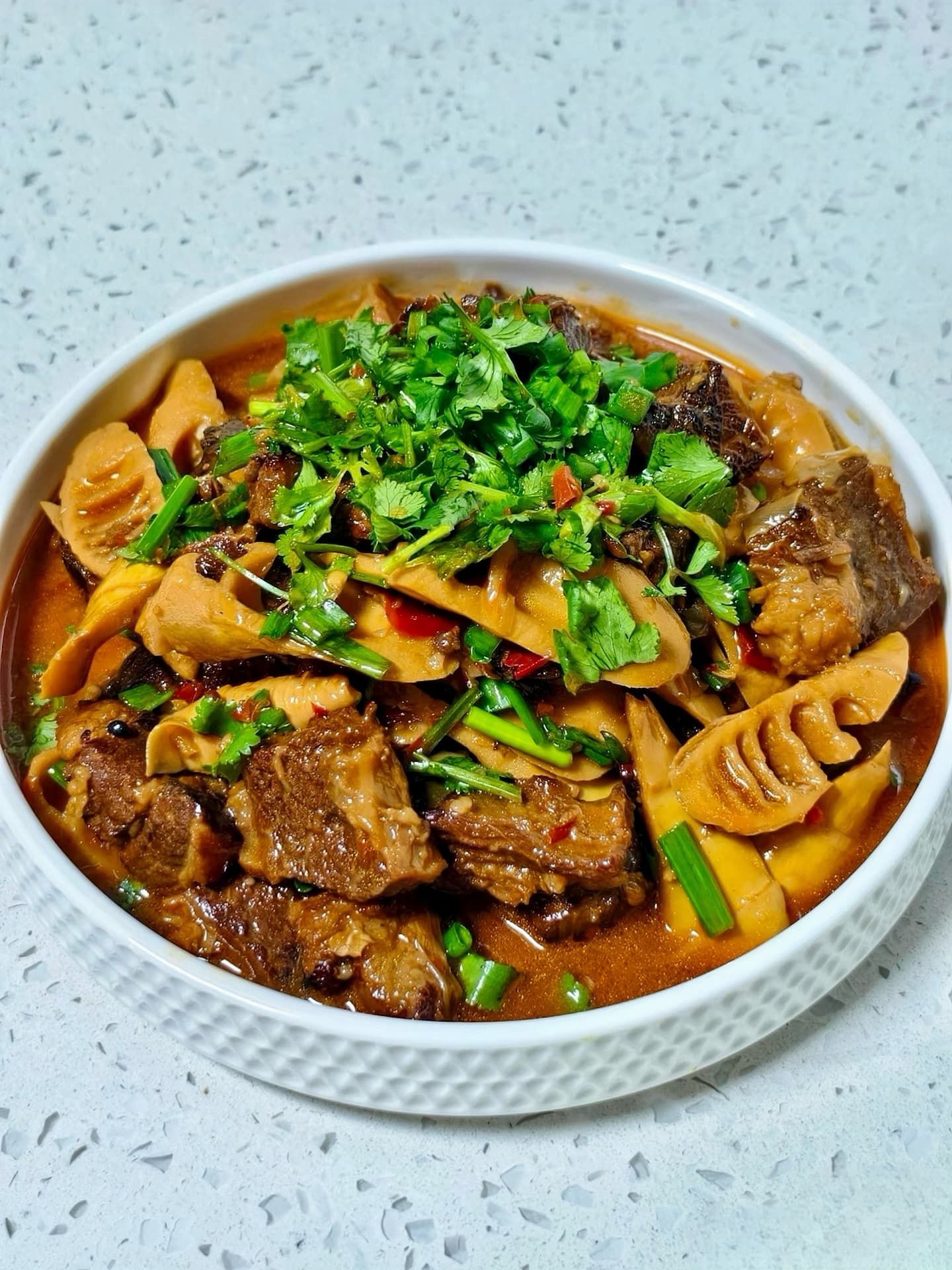
First: Braised beef with radish. | Second: Braised beef with fresh spring bamboo shoots. Credit: RED 500850359
Address: No. 51 Sanguqian Street, Jinjiang District, Chengdu
Zhang’s Liangfen (Zhang Shi Liangfen)
Wenshu Monastery sat just next to my grandmother’s home, and it was where I spent much of my childhood. Nearby is a liangfen shop that has been around since 1944. Although the sign says liangfen, the shop serves a wide range of Chengdu snacks: yellow liangfen, white liangfen, hot liangfen, as well as sweet water noodles and dumplings in chili oil.
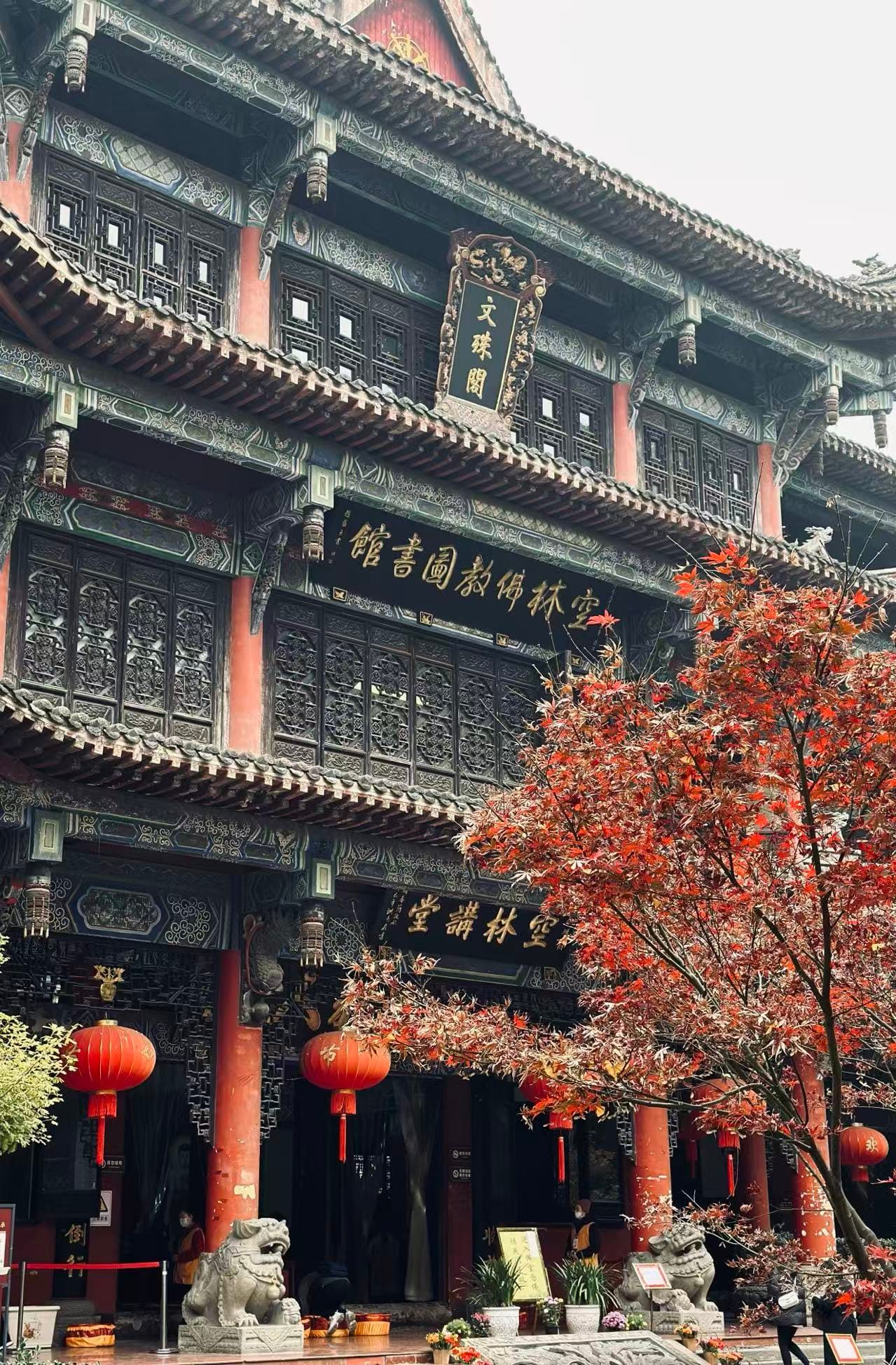
Chengdu’s snack culture comes from a long tradition of street vendors carrying shoulder poles through alleys and along the Jinjiang river docks. At the front of the pole sat a small pot kept warm over charcoal, while the back held bowls and seasonings. Portions were small, often just a few bites, and affordable. From this way of selling, Chengdu’s diverse small-plate snack culture took shape.
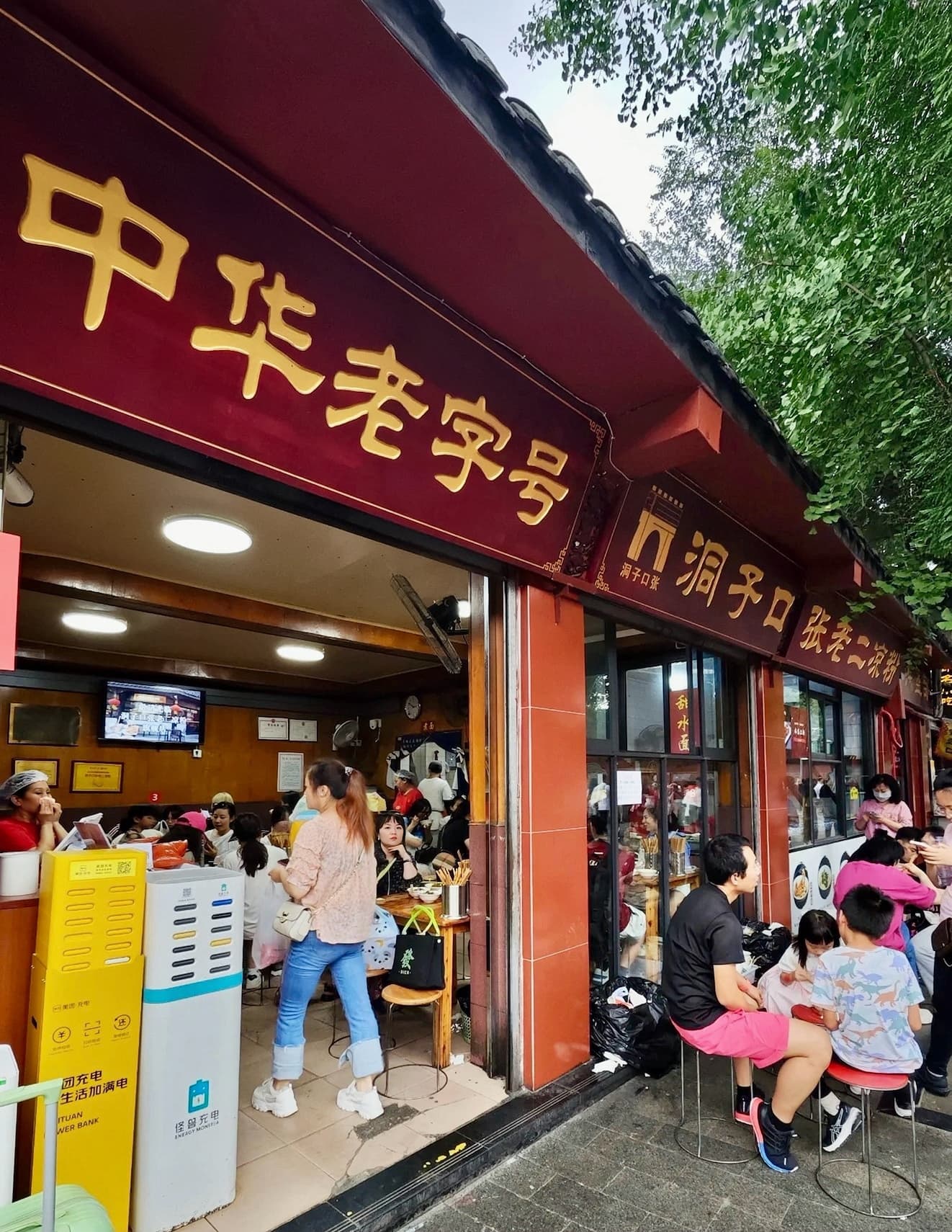
Zhang’s Liangfen originally came from Dongzikou in the northern outskirts of Chengdu, once a busy market town. Many people still refer to it by its full name, Dongzikou Zhang’s Liangfen.
My strongest memory is spending an entire afternoon playing in the temple garden, then being taken to the shop afterward. I always ordered sweet water noodles and yellow liangfen with the aroma of fermented black beans. The shop still stands in the same place today. It has gone through several renovations, but for those of us who grew up in the city, it remains a taste tied closely to memory.
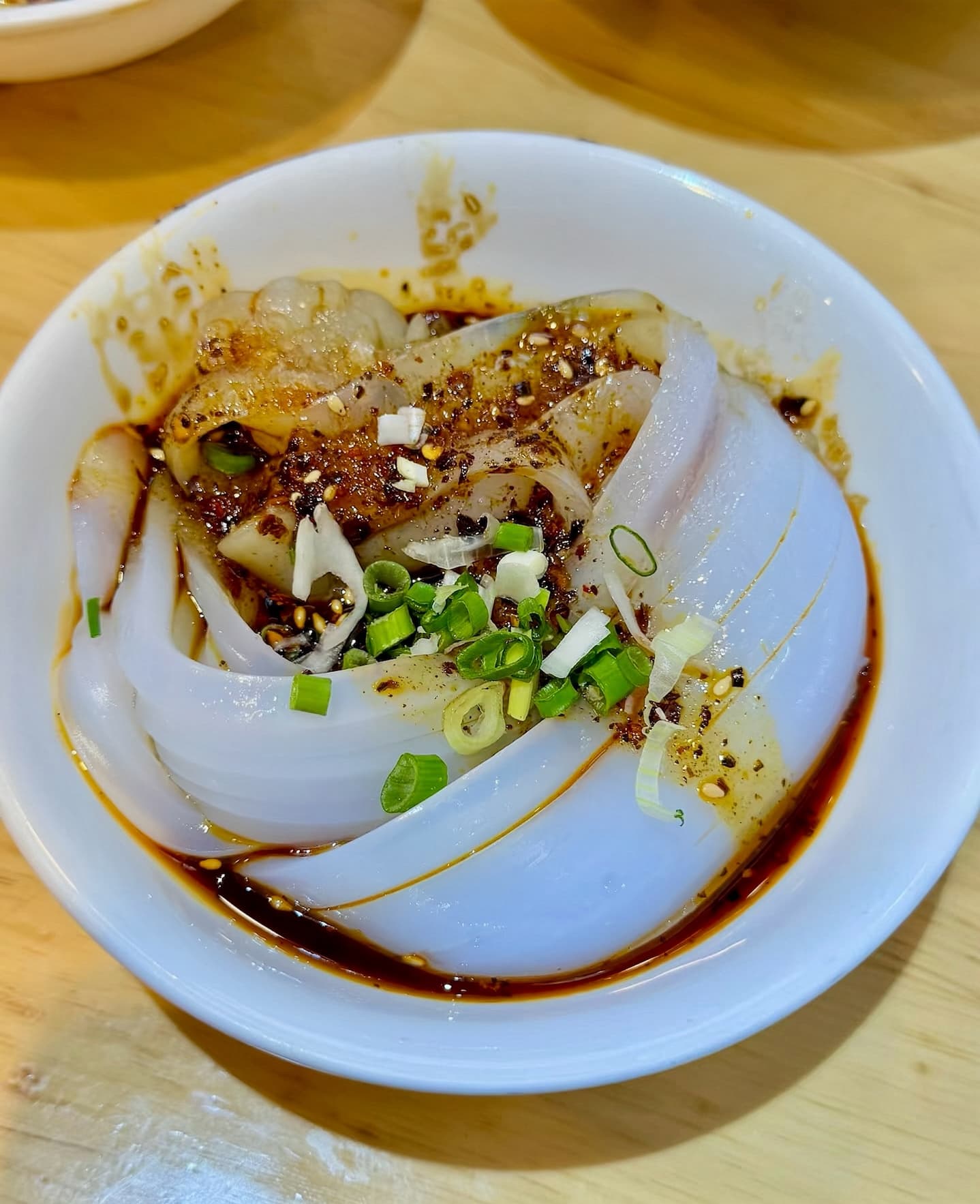
Yellow Liangfen
Made from pea starch, which gives it its yellow color. The texture is soft yet slightly firm, smooth and easy to eat. A single bowl can include over a dozen seasonings. The key lies in how these flavors interact with the starch. For yellow liangfen, fermented black beans are essential to bring out its depth.
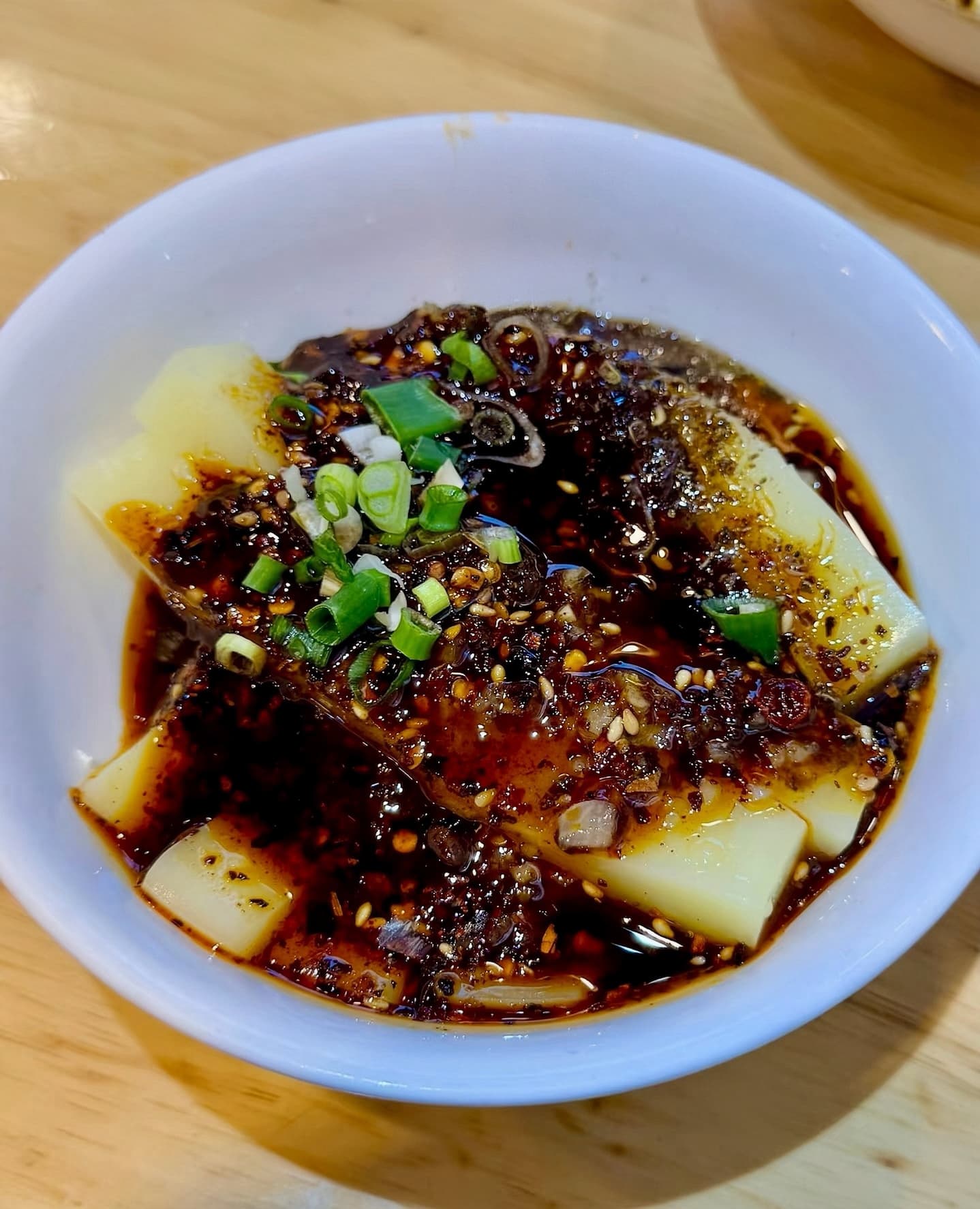
Address: No. 39 Wenshu Monastery Street, Qingyang District, Chengdu
To Be Continued…
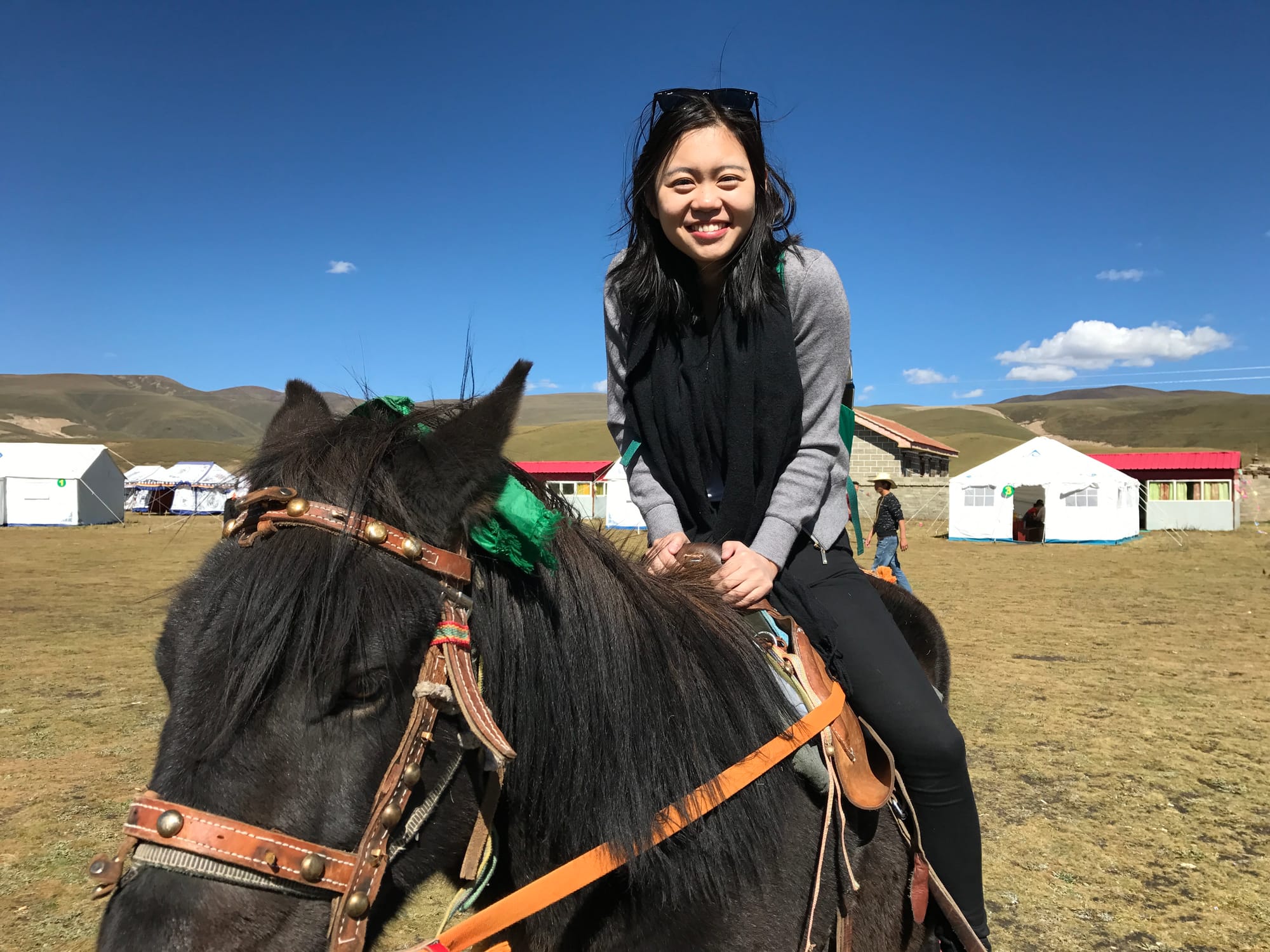
Co-founder of Snout & Seek and FARLAND, ZhuangZhuang is passionate about understanding the local cultures of different ethnic groups through an anthropological lens. She aims to share the sustainable wisdom of these cultures with a wider audience through publications, products, and other methods. Zhuang enjoys photography, jazz music, cute animals, and Chinese traditional divination culture.
No spam, no sharing to third party. Only you and me.
Member discussion