Italians Cook with Tomato Sauce, Qiandongnan Ferments Mao-la-suan
Author: Hui Mu
Across the world, a region’s most iconic flavors are often revealed through its seasoning principles. Guizhou is uniquely blessed with a microbial environment unlike any other. Located in southwest China, on the transition zone between the Yunnan Guizhou Plateau and the Sichuan Basin, Guizhou’s landscape is dominated by mountains, valleys, and rivers, with a warm, humid climate and long rainy seasons. These conditions create an ideal environment for diverse microbial life, making fermentation not only possible, but deeply embedded in everyday cooking. China’s finest baijiu and its richest fermentation based condiments all come from here.

“I believe there are other sources of wisdom in the world, and other, wiser truths about food.”
Food writer Michael Pollan writes in In Defense of Food: “Before nutrition science appeared to instruct us on what to eat, humans had already been eating well and living in good health for thousands of years. Even without knowing what antioxidants were, people were perfectly capable of eating healthfully.”
Iconic Flavors Begin with Everyday Seasonings
Much like Italians, the Dong, Bouyei, and Miao communities in Qiandongnan, Guizhou rely heavily on tomatoes as a fundamental seasoning, almost as essential as a staple food. As summer turns into autumn and mao-la fruit ripens, families begin fermenting their own mao-la-suan, a locally distinctive tomato based fermented sauce. This condiment appears in everyday meals, used for hot pots, stews, and even poured over rice.
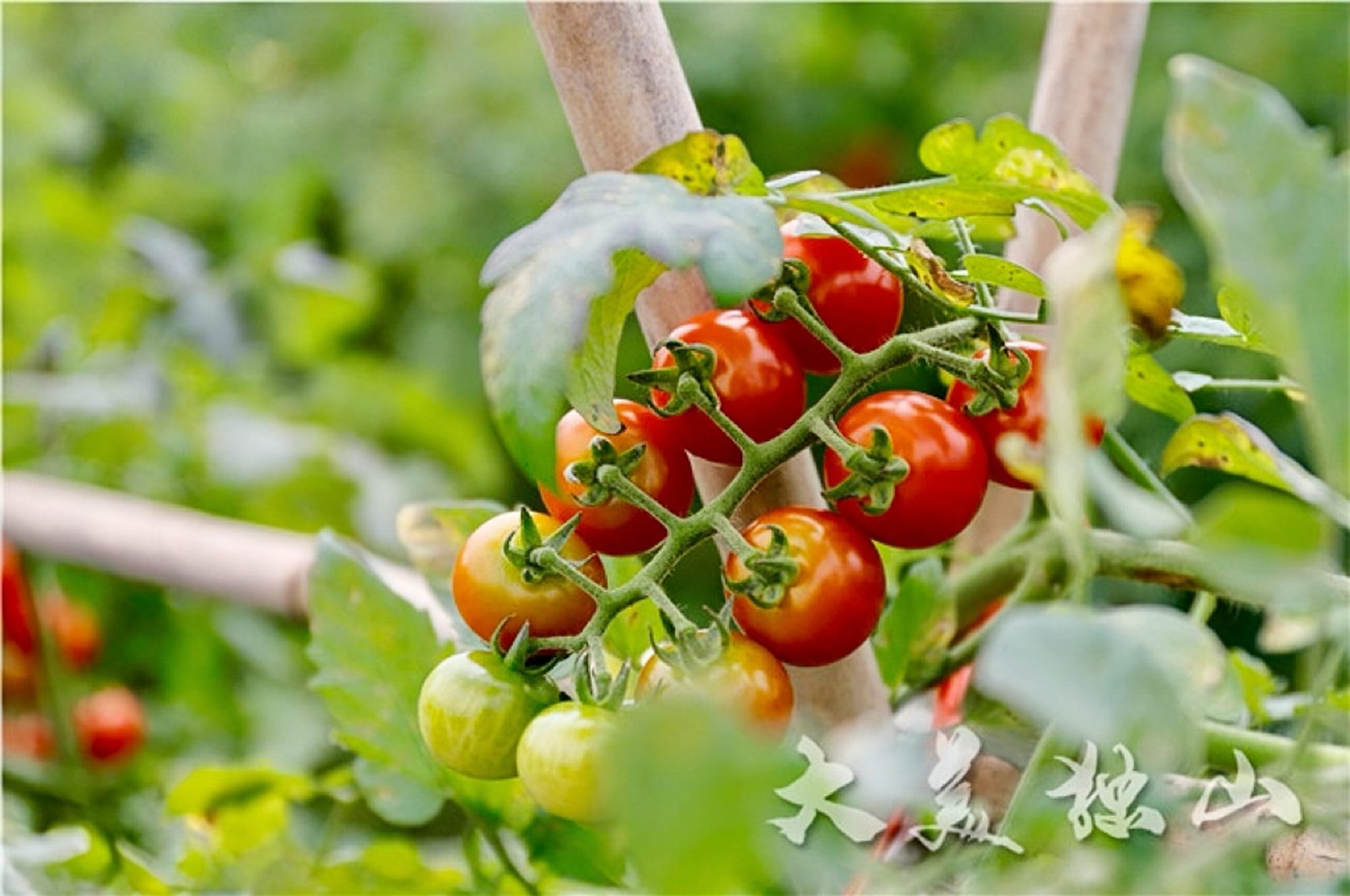
In Qiandongnan, 毛辣果 ( máo là guǒ) is often translated simply as tomato, but locals understand it as something quite different. It is a traditional landrace variety, smaller, firmer, and far more acidic than the sweet, juicy tomatoes common in supermarkets today. Its thicker skin and lower water content make it especially suited to fermentation, where acidity matters more than sweetness. Unlike modern tomatoes, which are bred for fresh eating and visual perfection, 毛辣果 is valued for how it behaves over time. It is not treated as a vegetable to be eaten on its own, but as a functional ingredient, one meant to be transformed. In this sense, 毛辣果 is less about taste in the moment and more about how flavor is built, preserved, and carried through seasons.
Among these dishes, sour soup hot pot has gained nationwide popularity, becoming one of the defining symbols of Guizhou cuisine, with a following comparable to that of Chongqing hot pot.
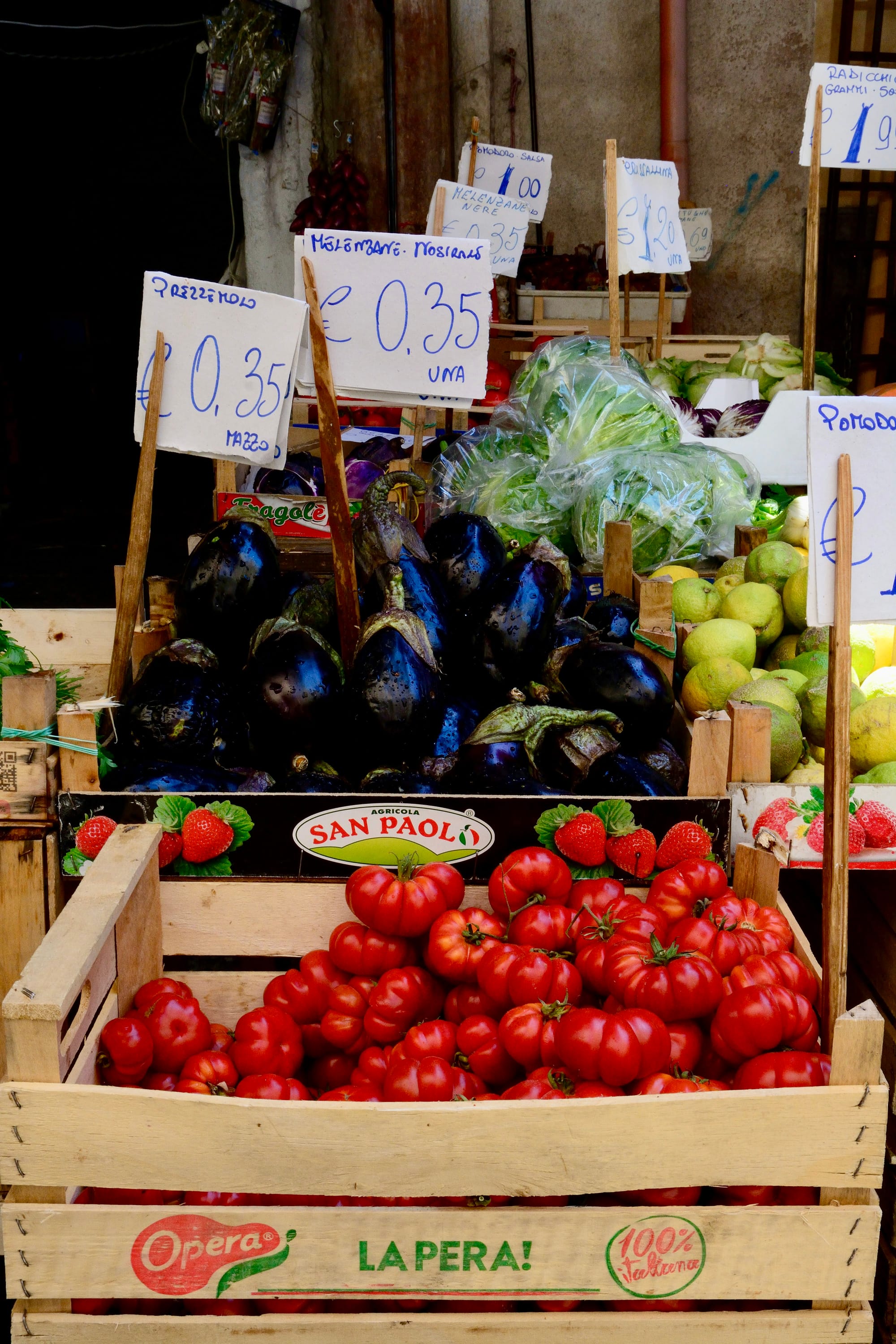
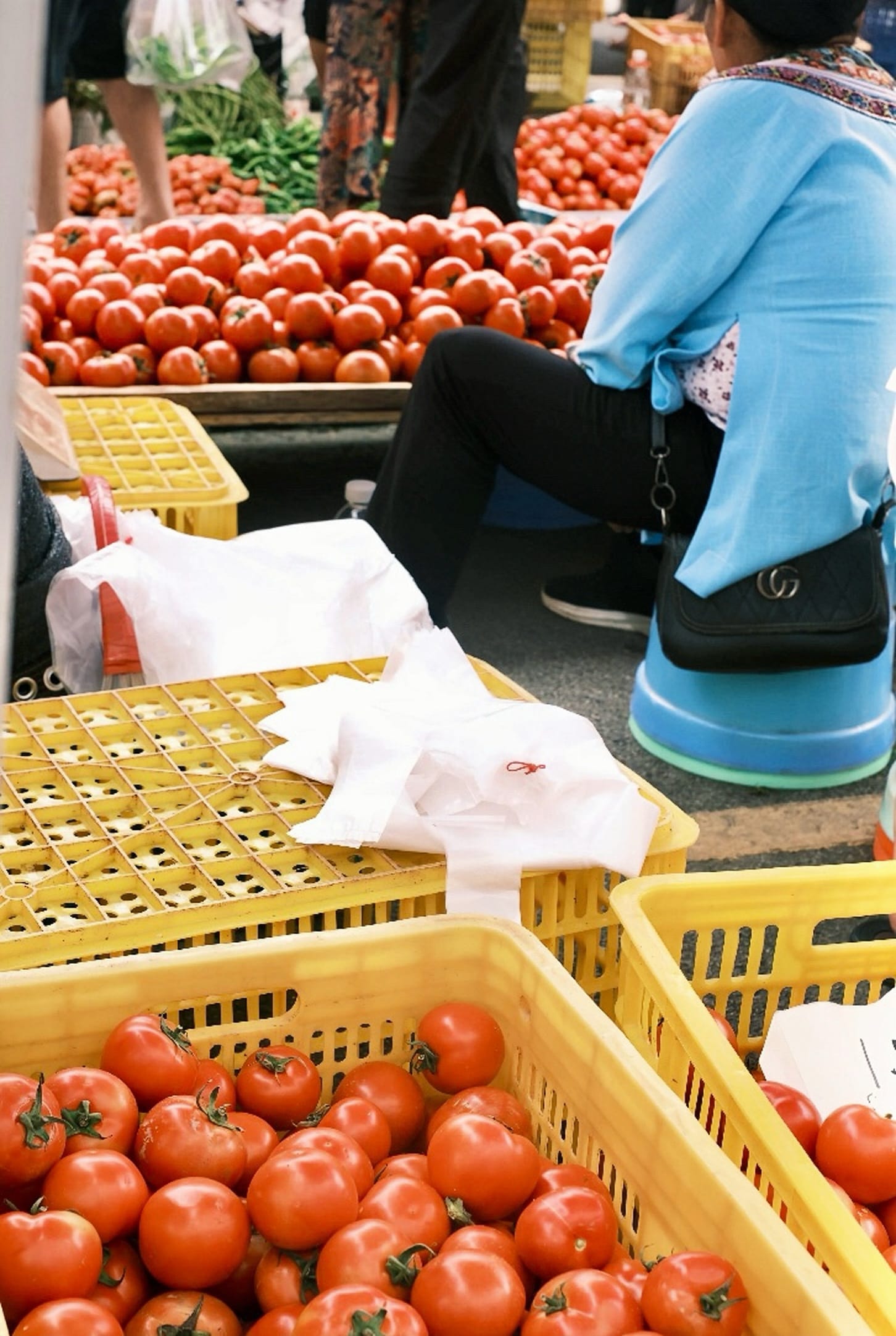
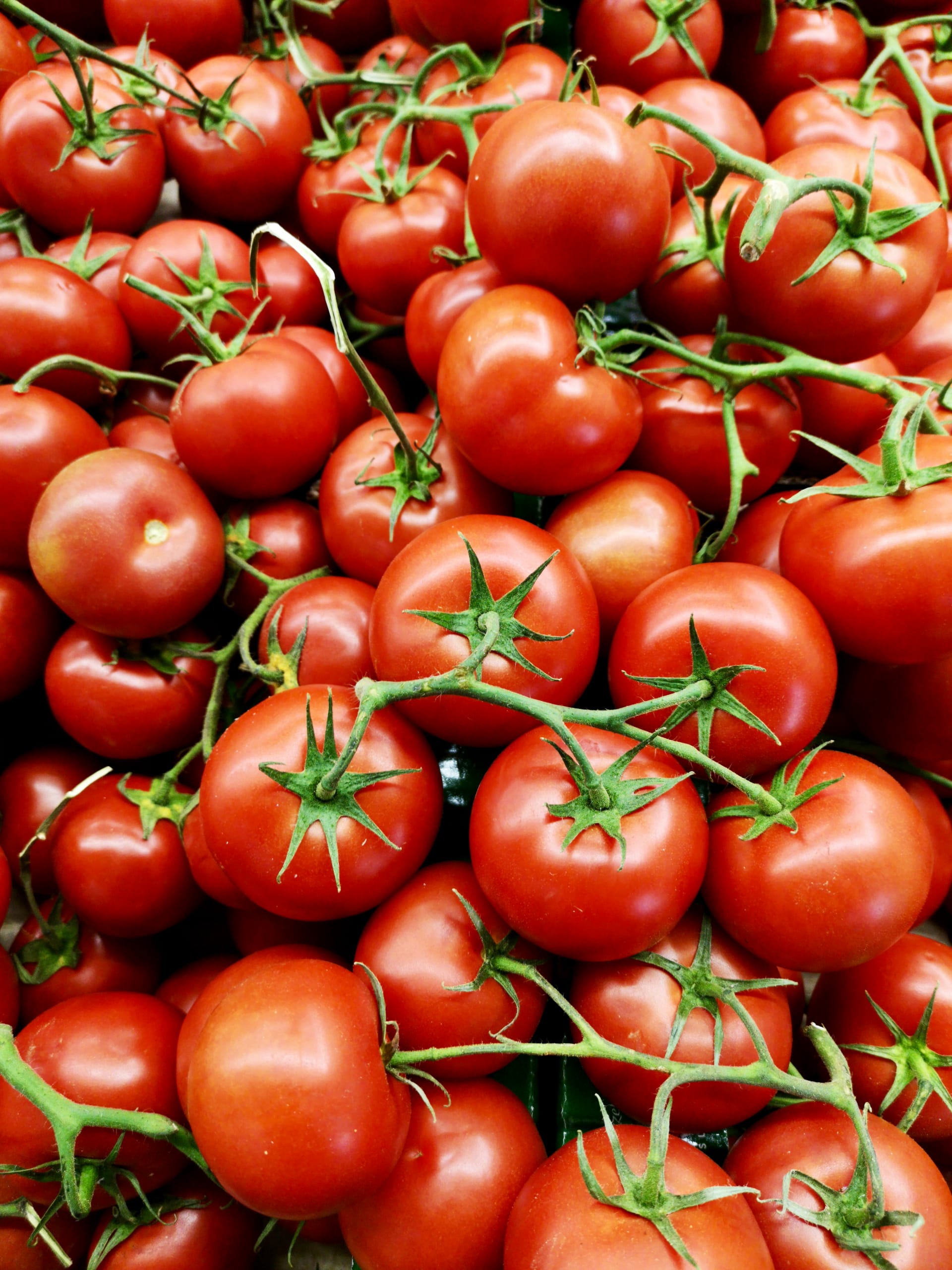
Left: Tomatoes in an Italian market. / Right: A local market in Guizhou.
In Qiandongnan, people’s attachment to flavor is so precise that it can be identified down to individual households or villages. By tasting different sauces, locals can imagine different ways of life, just as we associate Italian tomato sauce, Indian curry, or Thai shrimp paste with their places of origin.
More deeply, sauces made through long familiar experience do more than preserve cultural memory. They also help regulate the body’s nutritional balance.
Food scholar Elisabeth Rozin observed that iconic regional flavors around the world are rooted in local seasoning principles. “For example,” she wrote, “the use of soy sauce immediately signals East Asian cuisine. If you then add garlic, palm sugar, crushed peanuts, and chili, the dish unmistakably becomes Indonesian.”
Although fermentation exists in traditional food cultures worldwide, it is in Asia that naturally fermented foods became everyday household seasonings.
Vinegar, soy sauce, fish sauce, doubanjiang, miso, and many other familiar fermented condiments all contain varying amounts of glutamates. This is the secret behind umami or XIAN (鲜), a taste that can be perceived independently, alongside sourness, sweetness, bitterness, and saltiness. Western cuisines achieve a similar effect through long simmered stocks.
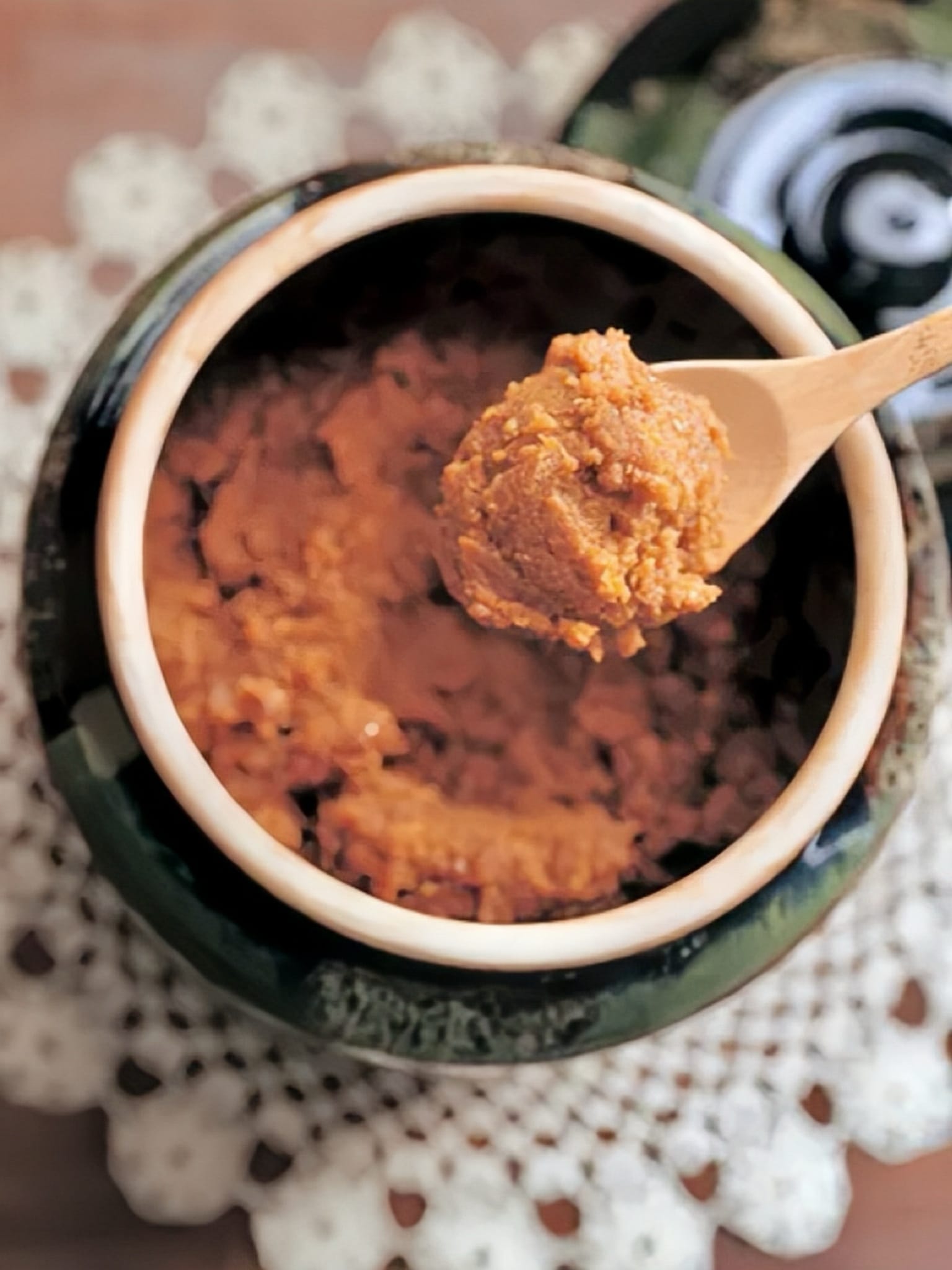
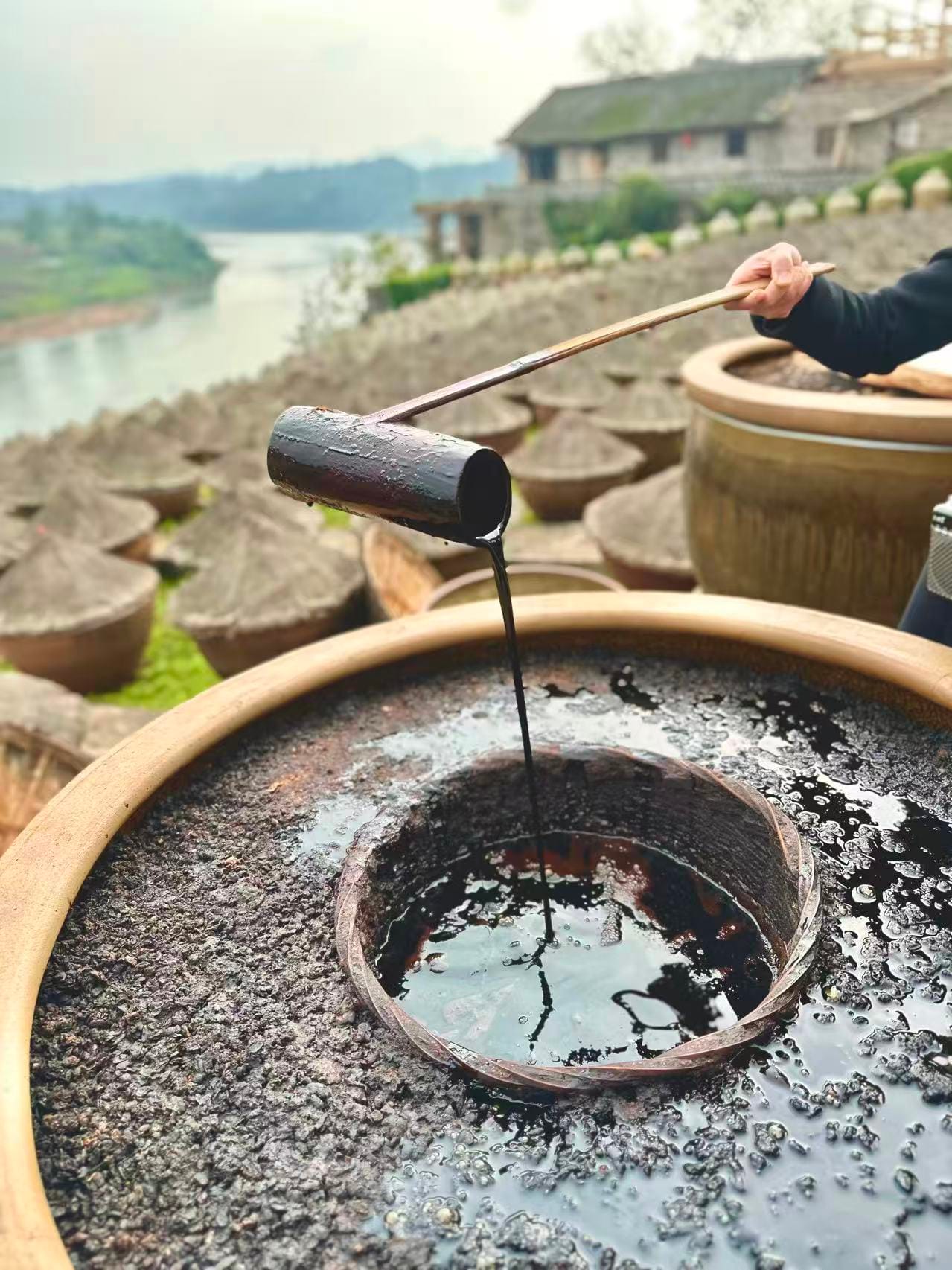
Miso paste and soy sauce are iconic seasoning and condiments in East Asia, although different countries have their own variations and names, the fundamental importance they represent are similar
In Guizhou, Fermentation Means Health and a Better Life
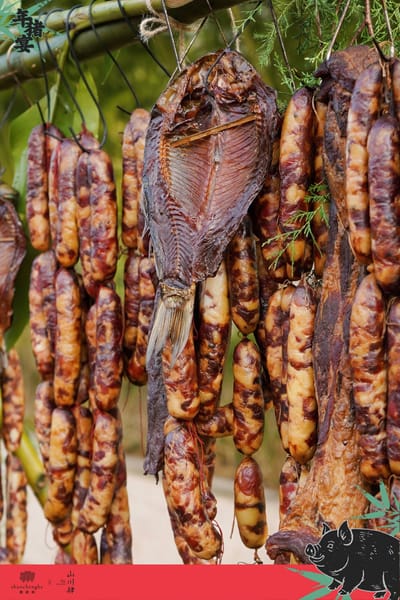
Guizhou itself is like a vast natural fermentation kitchen. Sour fermented flavors such as chou-suan (stinky sour), zao-la-suan (fermented chili sour), mao-la-suan (tomato sour), rice acid, shrimp acid, and salt acid are all part of everyday life. Eating sour foods according to the season remains a living practice, continuing to provide flavors that only this land can nurture.
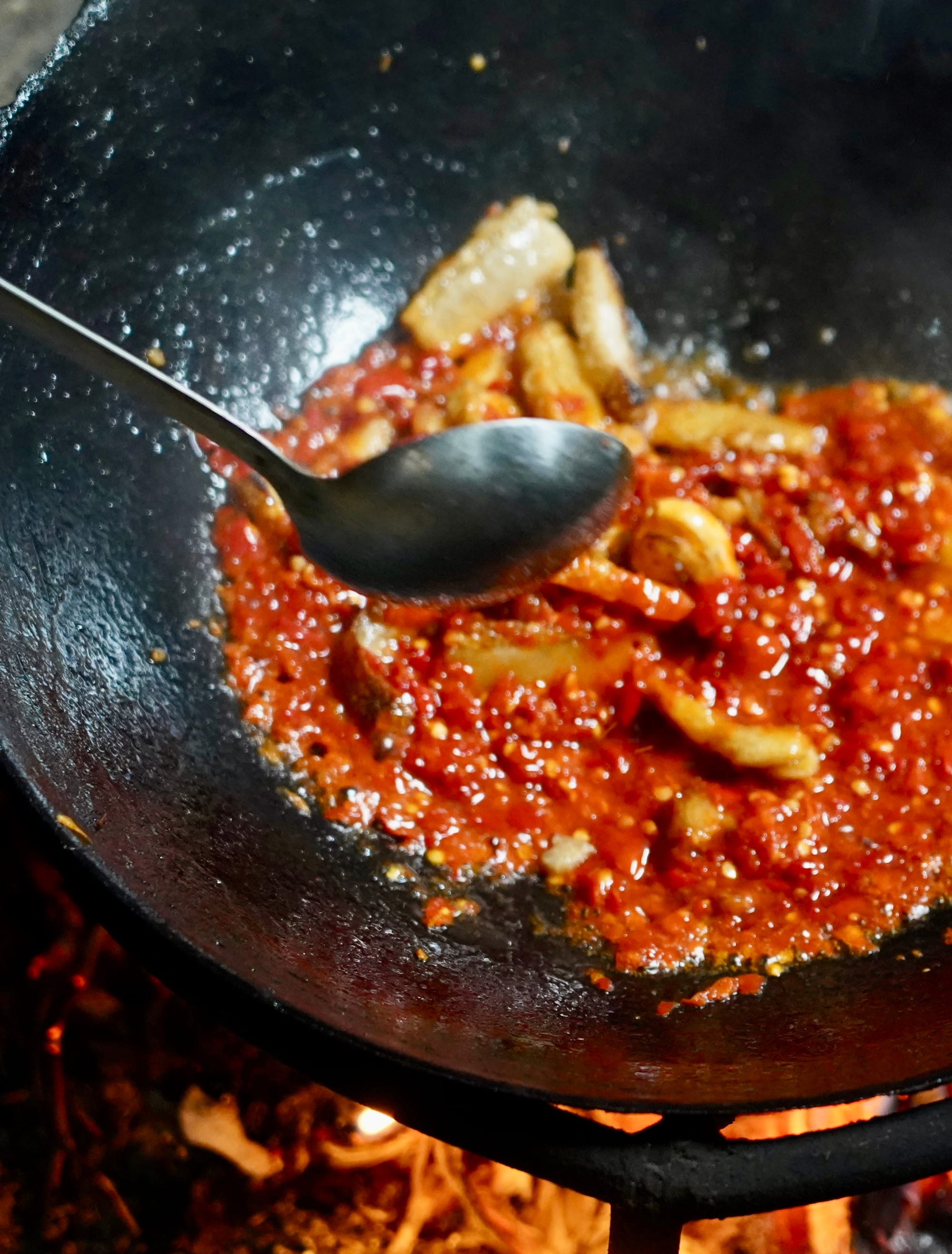

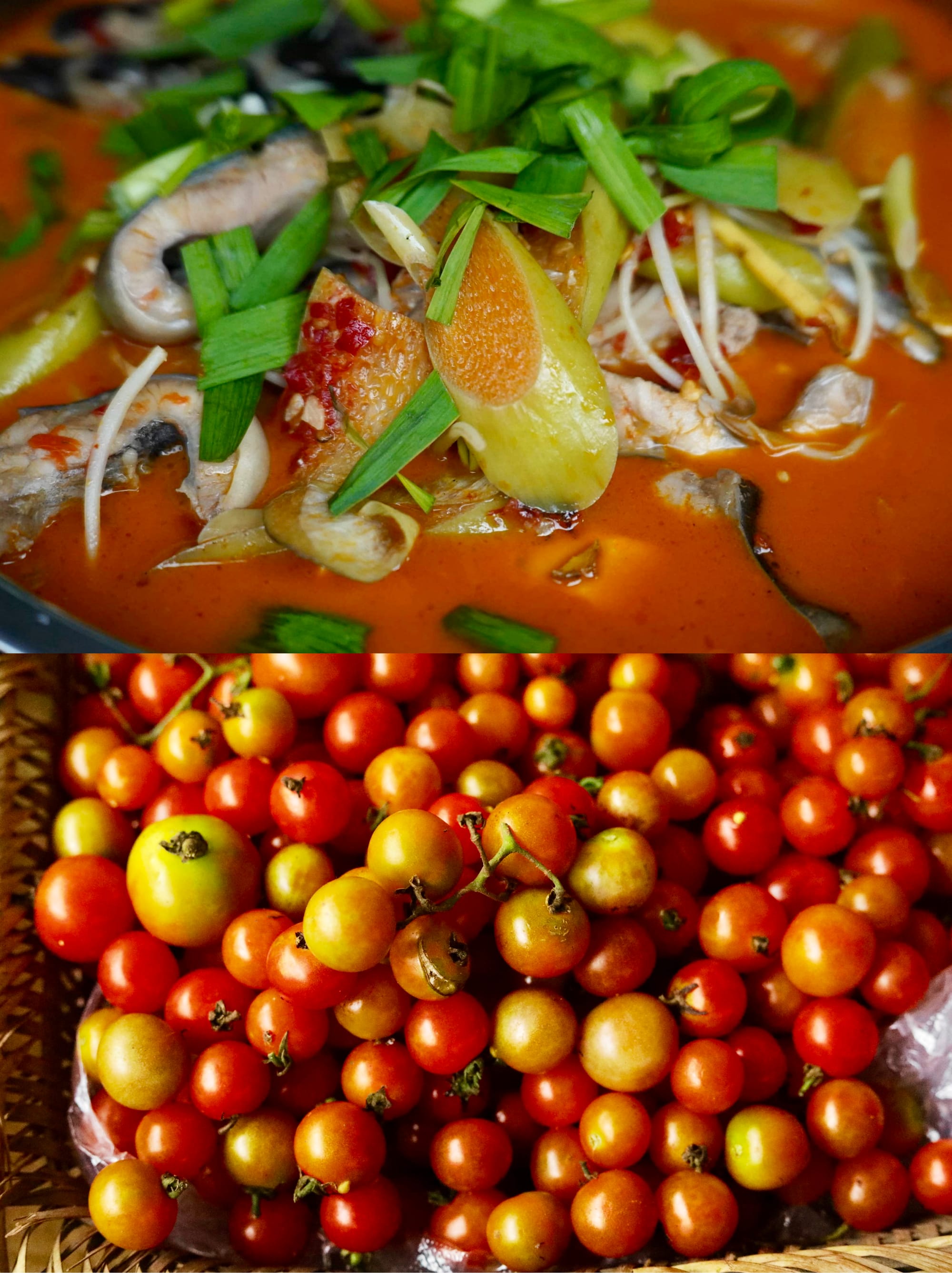
Left: Pork belly stir fried with zao-la sauce, then simmered into a fragrant soup. / Right: Fish raised in rice paddies are harvested after autumn, exceptionally rich and fermented with glutinous rice and chilies to make sour fish.
Food is the most direct bridge between the human body and nature.
Michael Pollan has explored the importance of traditional diets across three of his books, arguing that they guide people toward healthier and more balanced lives. He presents fast food culture and consumer driven “low fat, low sugar” narratives as counterexamples. Instead, he suggests trusting traditional food systems, which are closely tied to seasonal cycles, land health, labor, and accumulated ancestral knowledge.
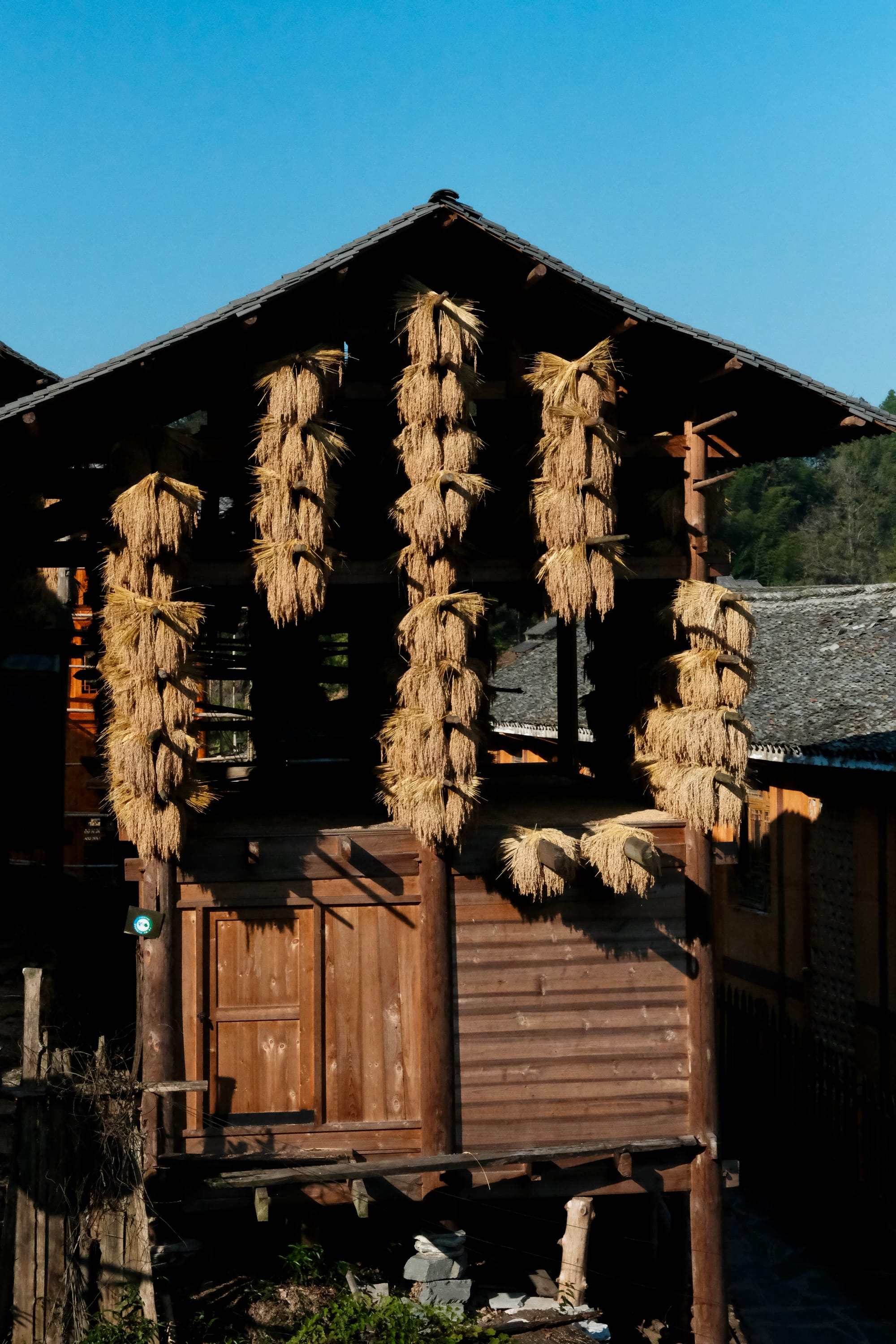

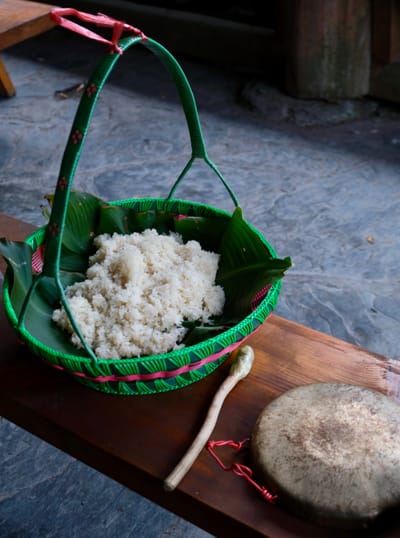
In Dong villages, glutinous rice harvested in autumn is hung in dedicated granaries to dry. It is both a staple food and a key fermentation ingredient, used to make rice acid and fermented fish. Fermentation makes glutinous rice easier to digest, while its ability to sustain energy supports long days of physical labor.
In Guizhou, people follow the seasons to make and eat sour foods. Yi Yan from Duyun prepares mao-la-suan every year, adding diced bamboo shoots harvested in July and August. This has long been a village tradition. Only after she began working did she realize that, from a scientific perspective, the bamboo shoots increase volume and space within the fermentation. No additives are needed. When the timing is right and seasonal ingredients are used, fermentation naturally produces healthy and delicious results.
Food fermentation, like wild mushroom foraging, is a form of knowledge that cannot be learned from recipes or books. It is bodily knowledge, built through experience and instinctive choice.
It is precisely through centuries of culinary decisions, learned fermentation practices, and seasonal, place based food choices that humans have entered into the planet’s living cycles.
This is the enduring significance of food traditions shaped by local landscapes and passed down across generations.
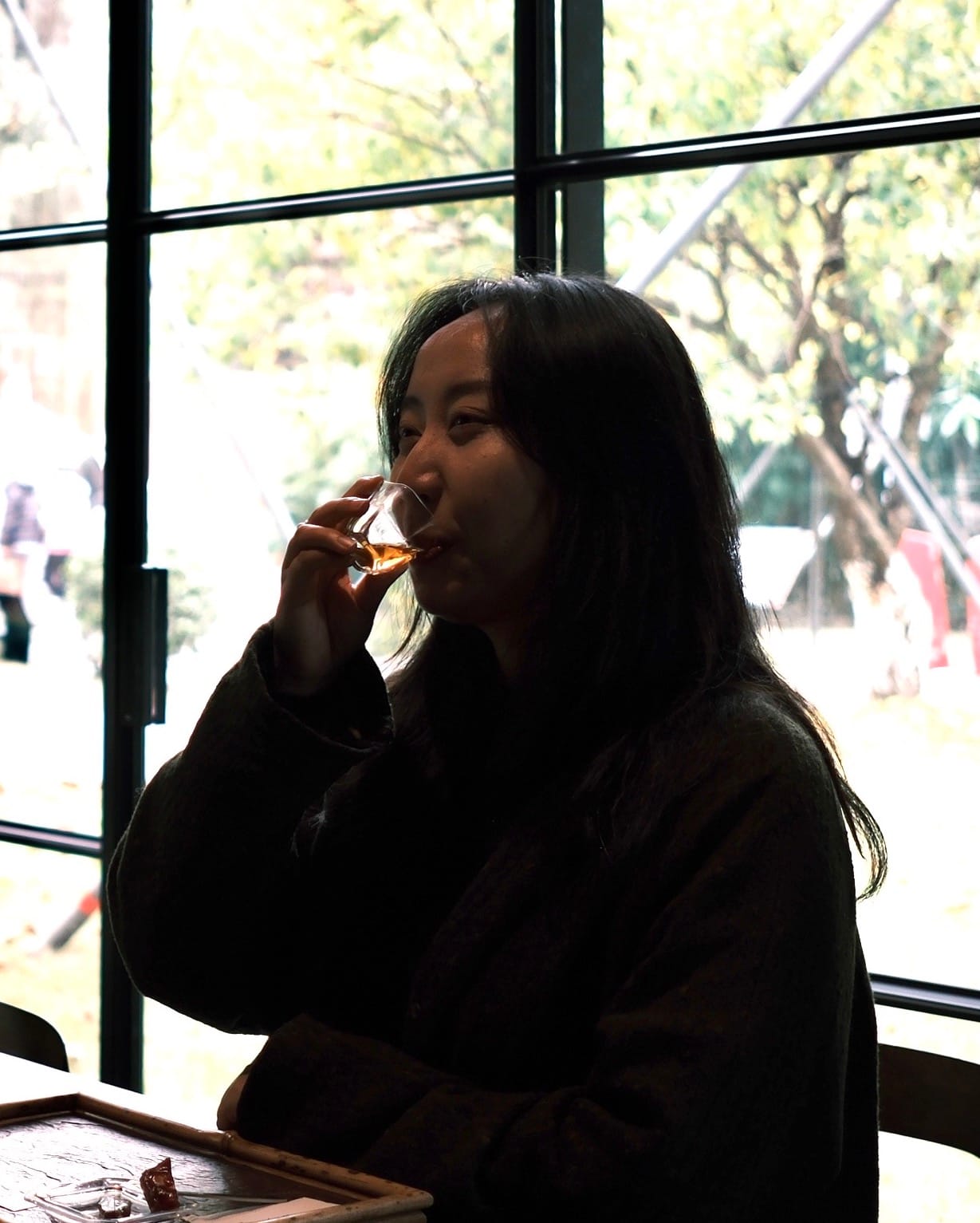
Co-founder of Snout & Seek, Hui Mu is a Yunnan native who loves hometown cuisine and local culture, Hui is currently based in Chengdu, Sichuan, engaged in food culture writing and magazine editing. Hui enjoys reading, trying new cuisines, hiking, and people-watching.
No spam, no sharing to third party. Only you and me.


Member discussion