Food Culture and Natural Philosophy Hidden in Yunnan’s “Pine Needles”
Author: Hui Mu
In Yunnan, pine needles are more than a fragrant ingredient. They are a natural witness to every important moment of life.
In Yunnan, people affectionately call pine needles “songmao” because they are long and fine like bristles, carrying the simplest life force of the mountains and forests. From the north of the province to the south, the vegetation changes constantly, yet one constant remains - the green pines. Standing tall and forever green through all seasons.
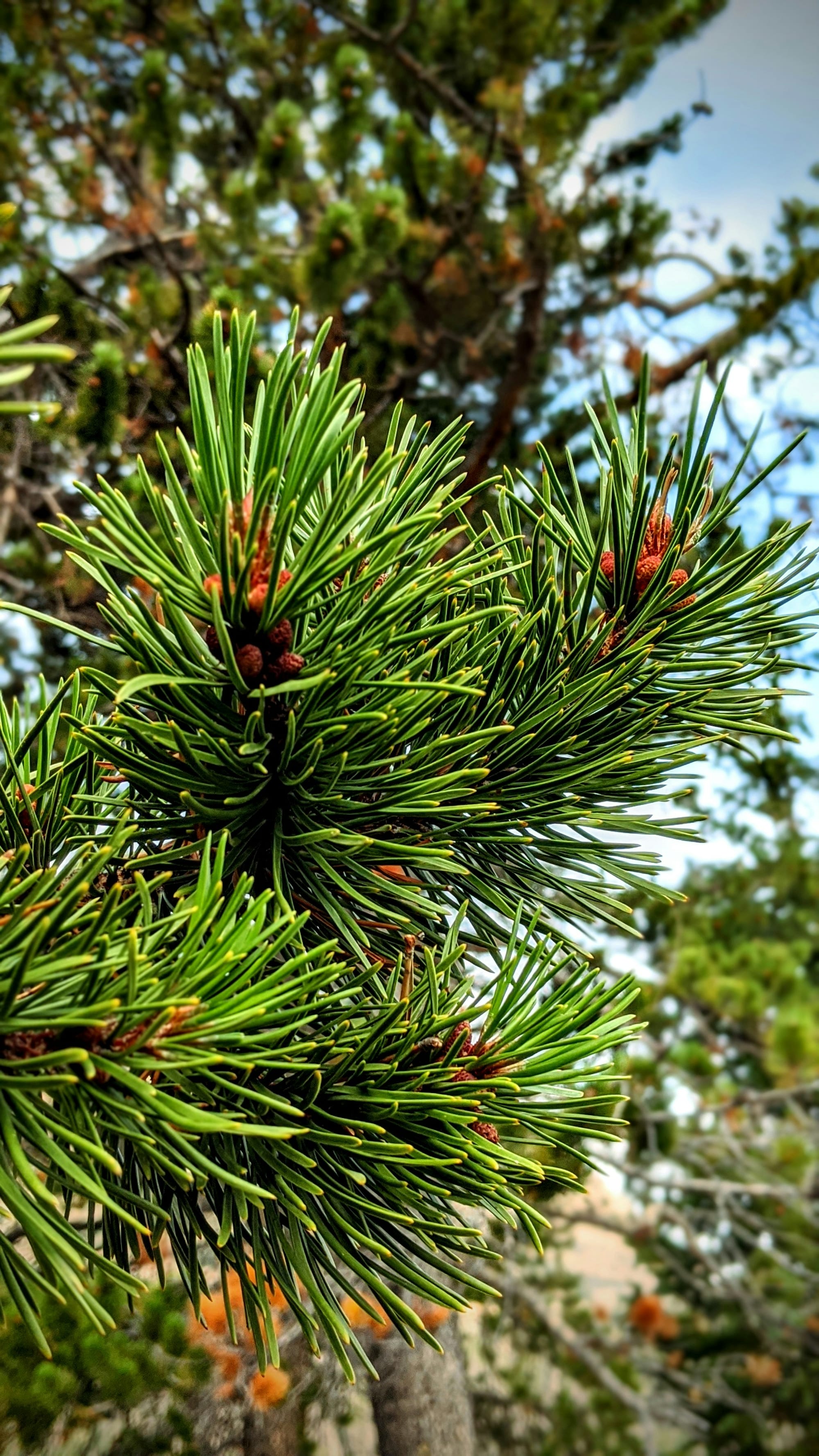
Just as the Dai people skillfully wrap food with banana leaves, Yunnan locals often use songmao in cooking and ceremonies. It not only imparts a clean, subtle fragrance but also carries meanings of blessings and good fortune. Since the Ming dynasty, pine needles have appeared quietly and consistently in all the important moments of everyday life — spread on the ground as a sort of carpet for large communal banquets, laid inside steamers when making cakes and sticky rice, and used during weddings and New Year rituals as symbols of purity and reunion.
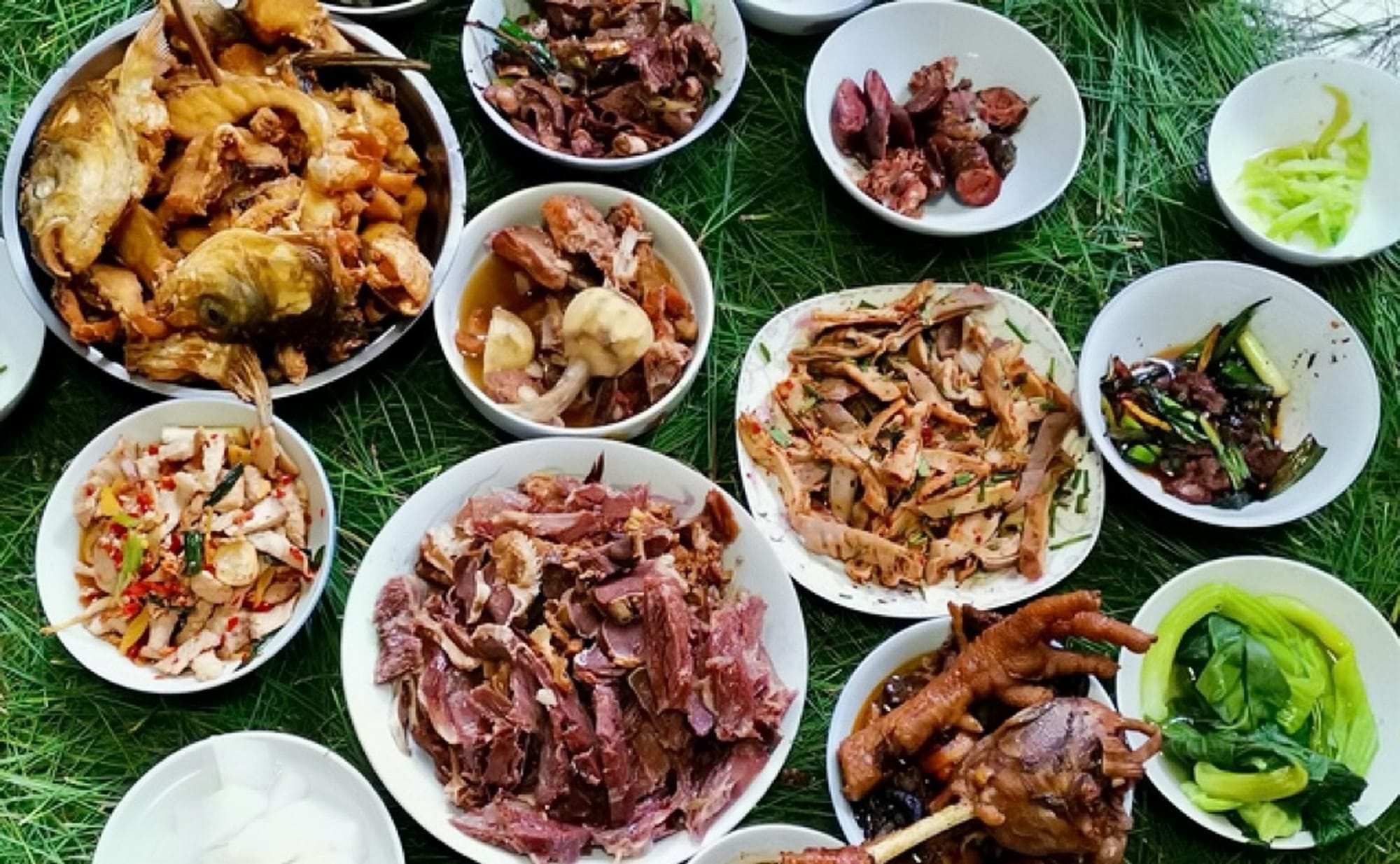
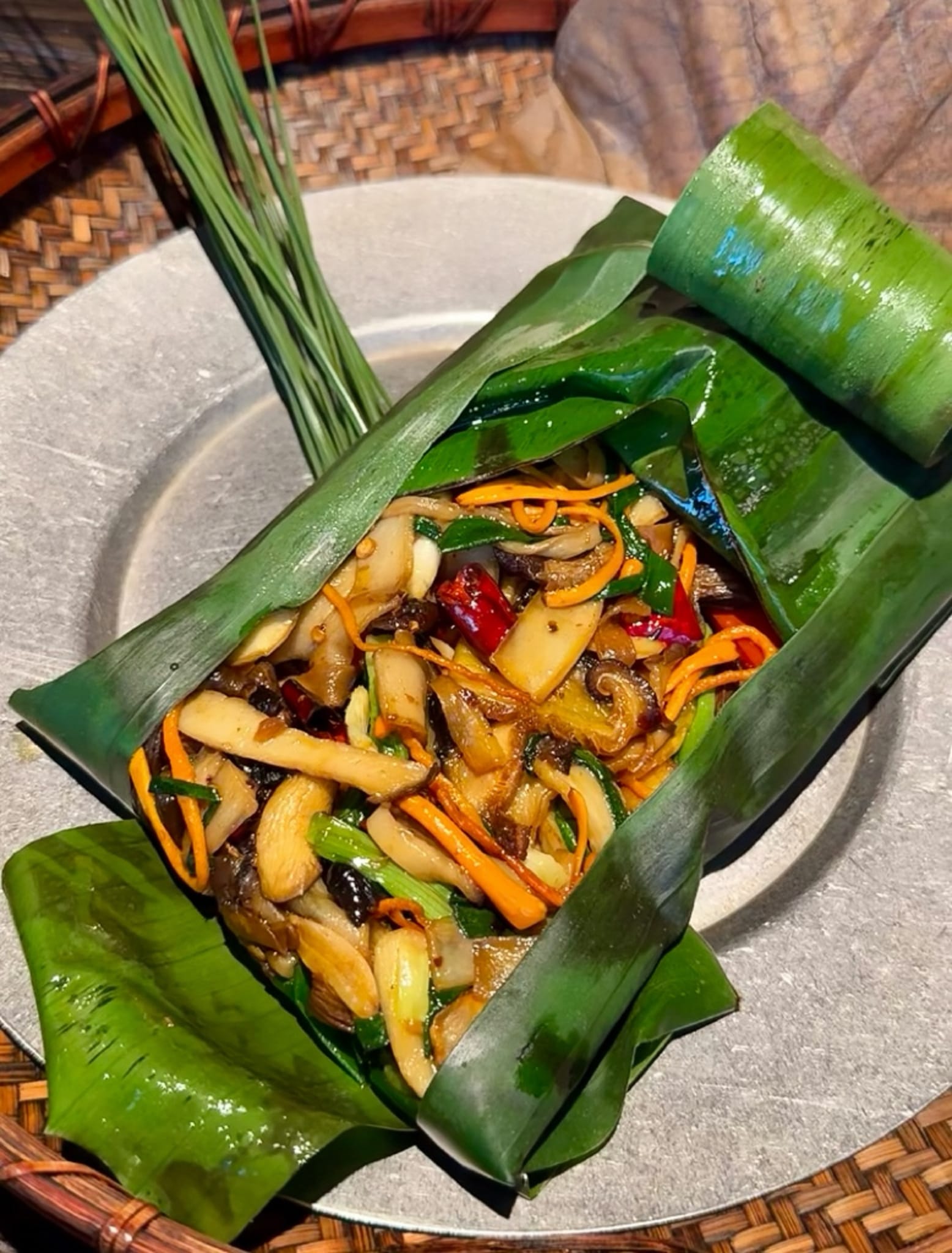
A mat of pine needles / Dai-style “wrapped roasting” with banana leaves Credit:不吃葱花
Chinese people often give emotional meaning to things found in nature. One of these meanings is the idea of a blessing. A blessing that the food we prepare, the decorations we hang, and the gifts we exchange all carry meaning and good energy. Evergreen pines hold such universal symbolic power in Yunnan. Why is pine so important?
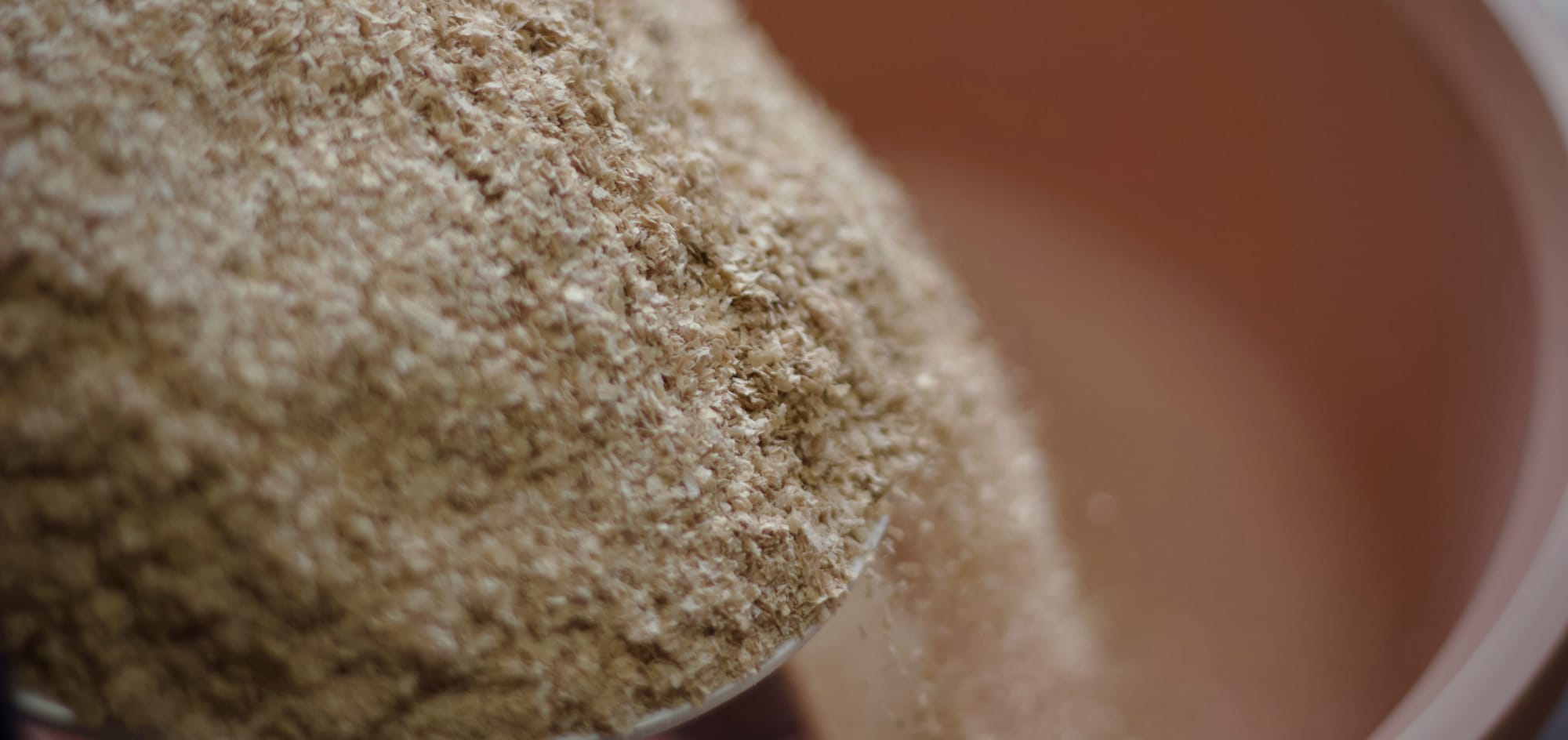
We can find clues in ancient poems, the customs of ethnic groups, and the stories passed down through the mountains. Whether it is Yi men and women singing love songs beneath a green canopy of pine branches, Hani people offering pine boughs at spring rituals, or a traveler carrying a small bundle of pine needles on the road — pine has always carried longing, protection, and the message of life continuing forward.
Following these clues through different ethnic groups and their folklore, I saw an enduring and intimate dialogue between humans and plants. This connection is quiet yet real, stretching across time and giving each generation a simple joy and a sense of ease.
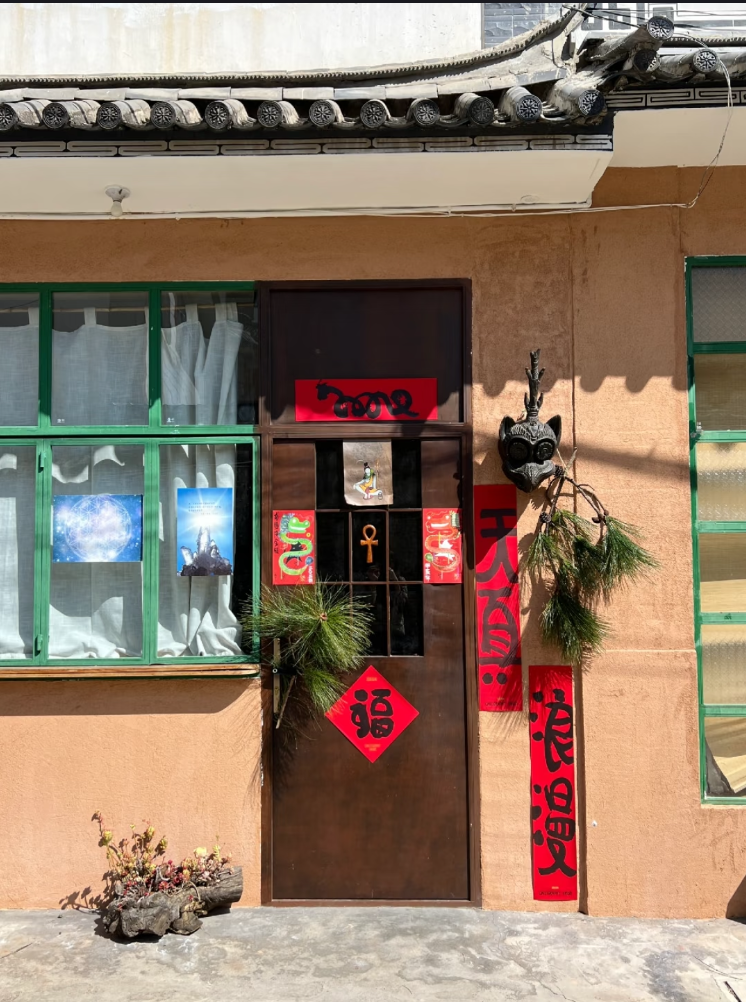
There Is No Picnic Without a Pine-Needle Mat
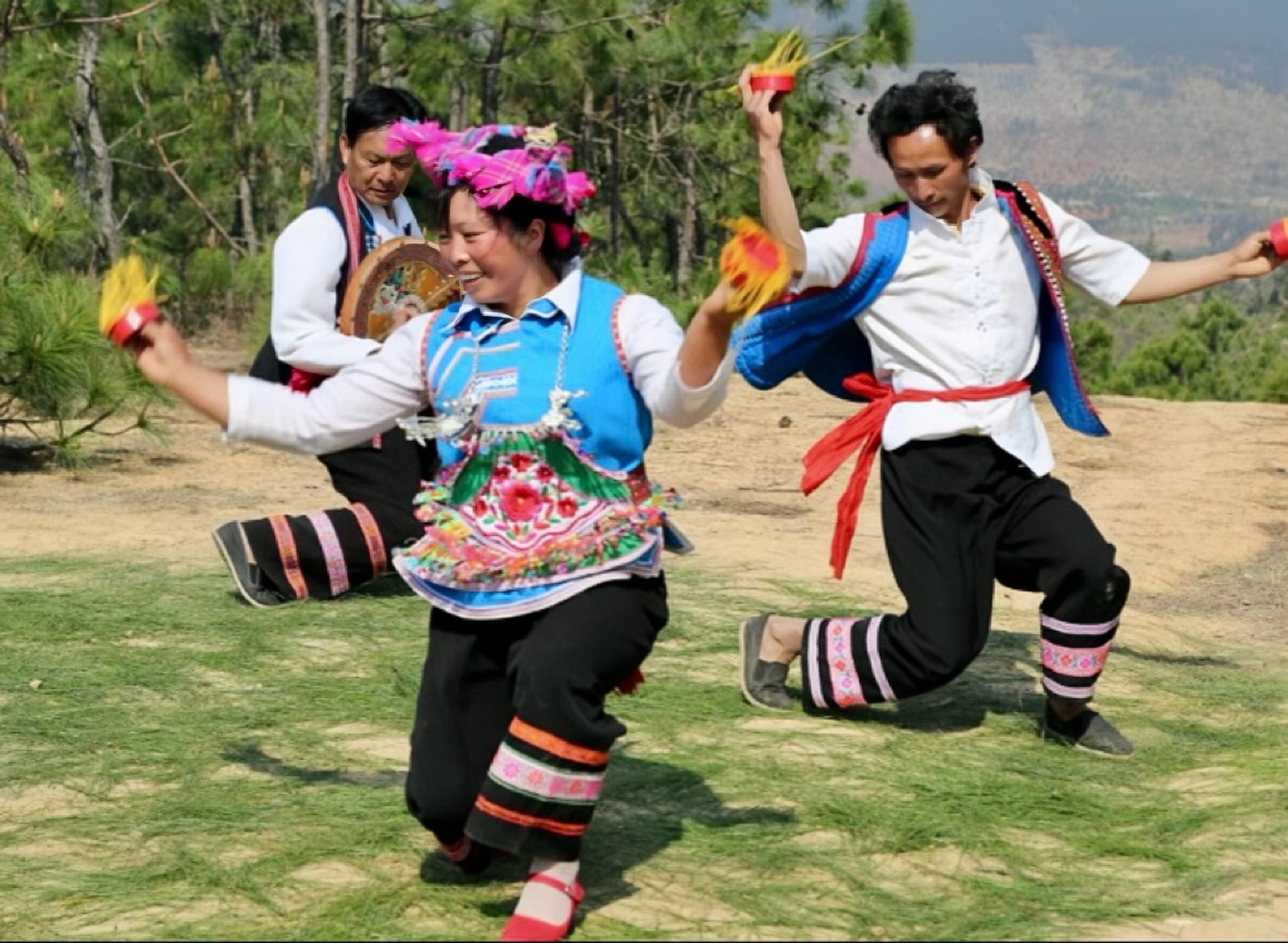
The Yi people are one of the original ethnic groups of Yunnan. The Samei — a small branch of the Yi — live near Kunming (the capital of Yunnan) in the flatlands surrounding Dianchi Lake, unlike most Yi groups who live deep in the mountains. Their culture reflects a blend of the ancient Dian kingdom, Yi migration history, and the distinctive traditions of central Yunnan.
In The Samei Chronicles by Qian Fengjuan, she records the Samei people’s fondness for using pine needles.
“The mountain areas where the Samei live are full of pine trees. When the city dwellers needed pine needles to light their fires, the Samei unknowingly brought pieces of their pine-needle culture into the city.”
A Qing dynasty text, Notes on Dian, also describes:
“When officials took office or during New Year celebrations, pine needles had to be prepared and spread on the ground. Their fragrance and cleanliness made them an ideal substitute for felt mats. During spring rituals, pine shelters were built. Whether for festivals, ceremonies, or welcoming deities, pine needles were always laid on the ground.”
I was fortunate enough to witness a Samei “pine-needle feast” — a modern, public version of the traditional pine-needle banquet. It was hosted outdoors in the mountains, and instead of the old practice of pooling food from each family, it was organized with meal tickets. Six yuan per meal, simple and efficient.
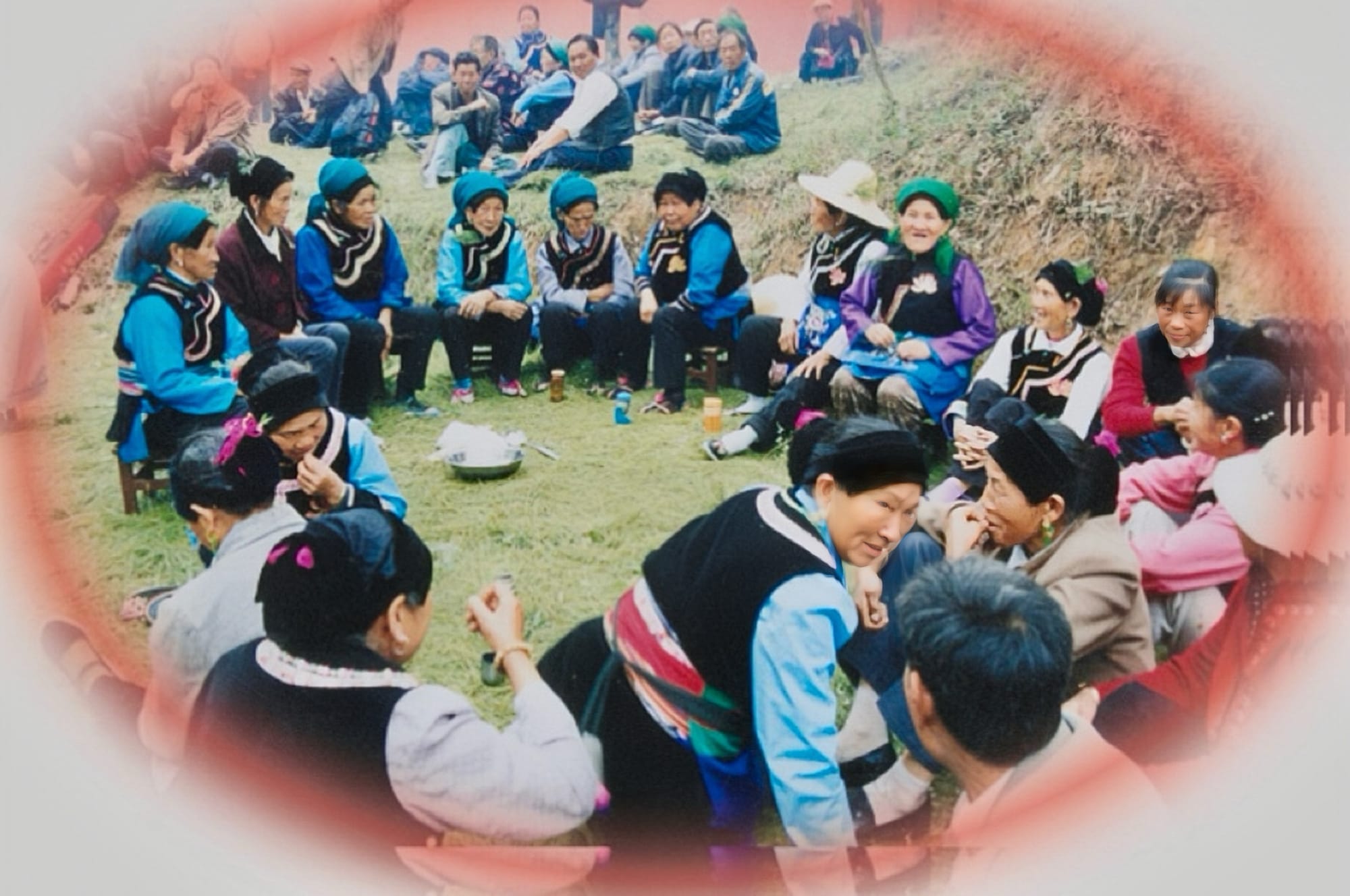
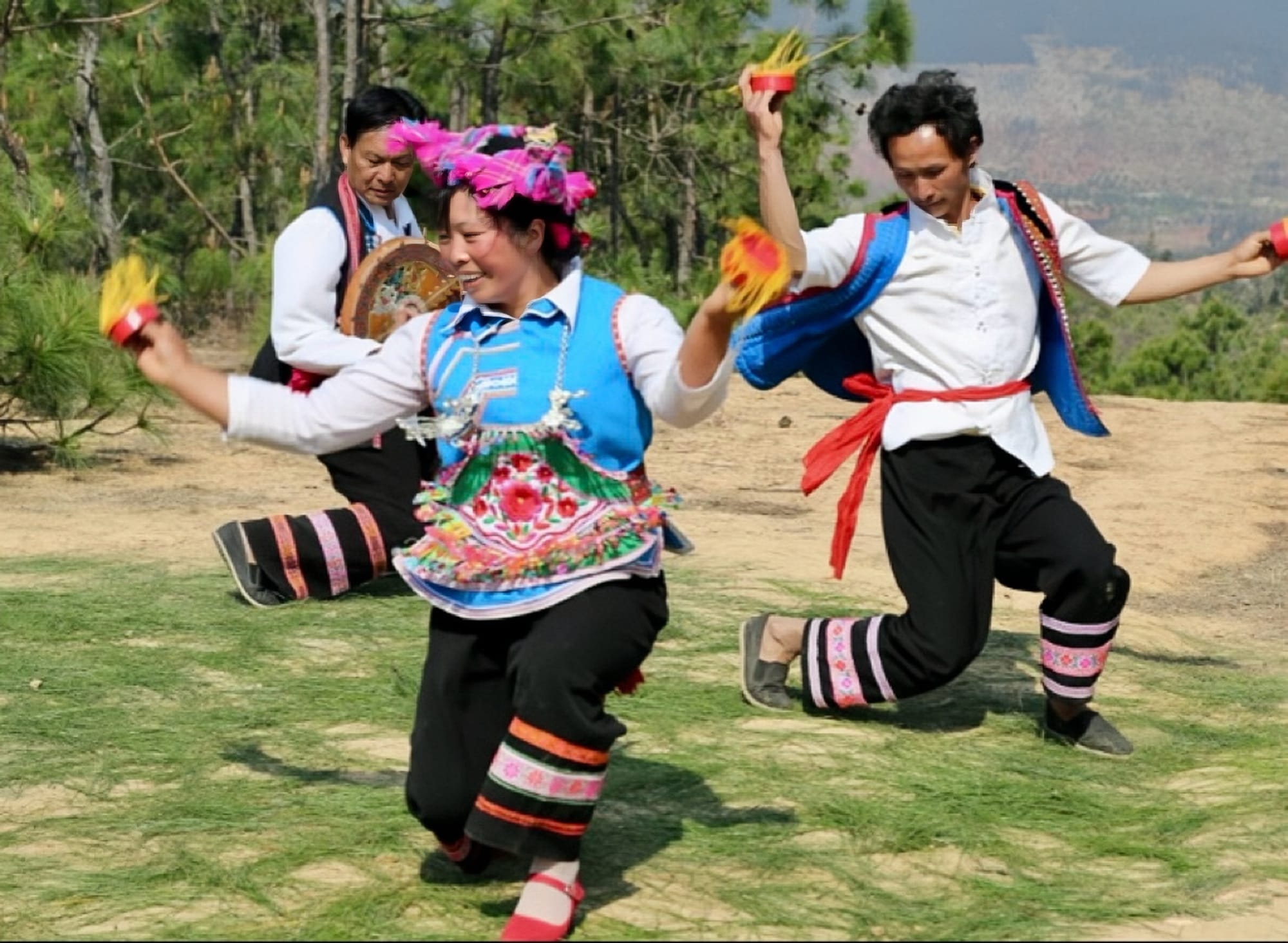
Several small hills form the natural venue. Before the banquet, the slopes were already covered with fragrant green pine needles. Middle-aged and elderly women in traditional clothing sat in large and small circles. The men formed their own group.
When the person who would be collecting meal tickets arrived, the large circles split into several smaller ones — ten people per circle, forming a “table” on the ground. Dishes were placed in the center: meat, chicken, tofu, peanuts, boiled, fried, steamed, stir-fried — more than a dozen bowls. Young people carried large trays, delivering entire table settings in one sweep. Although the weather was cloudy and attendance lower than usual, dozens of tables were still prepared. It was clear the Samei had deep experience hosting communal meals: calm, organized, and fair in price.
During the banquet, elders chatted, children laughed, pine scent drifted with the mountain wind, and people enjoyed the pleasure of a picnic in the wild.
A Blessing for the New Year, and a Witness to Love
The custom of creating pine-needle mats also influenced the Han people living in Yunnan. Yu Jian, a Kunming poet, writes in Record of Kunming:
“Spring Festival was once one of the great events in life. We prepared incense, candles, gold and silver paper, offerings, soap pods, and pine needles spread on the ground. We sat on the pine-needle mat to eat our New Year meal. Farmers would haul pine needles down from the mountains to sell in the city.”
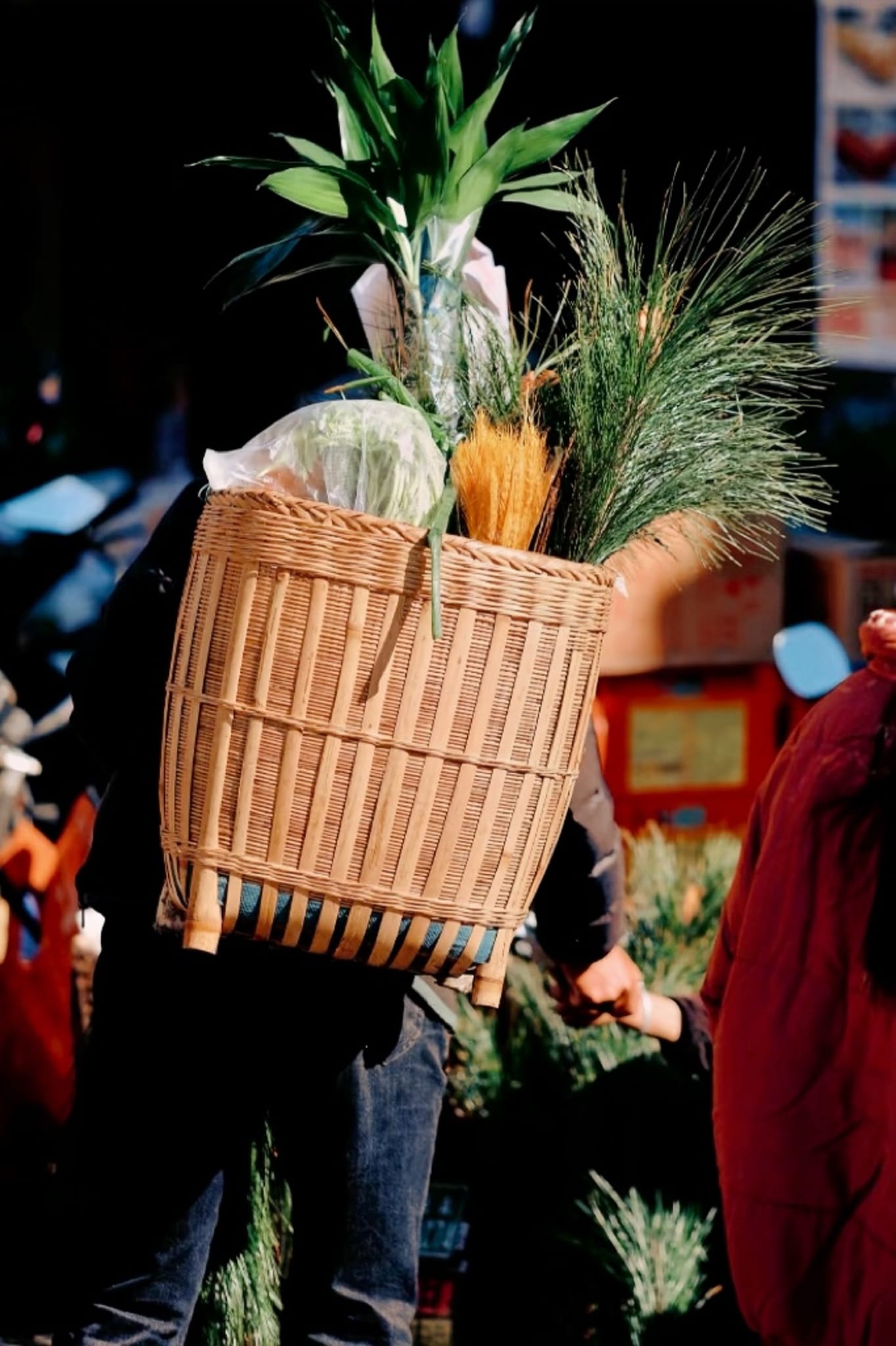
Our relationship with nature is so close that pine needles bare witness to every important moment of life, symbolizing reunion, sweetness, and protection.
Yu Jian also recorded a Yi village banquet that mirrors my memories from childhood, when I went with my parents to attend similar village feasts.
“At dusk, the great village banquet began. The pine needles carried down from the mountain by young women were spread into a 500-meter-long pine mat along the village path. Food was placed directly on the pine mat in sets of five bowls.
People sat on the ground along the pine-needle mat. The Bimo (Yi People’s priest) toasted, the village chief toasted, the singer sang blessings. Hundreds of voices opened at once. The wine flowed like a river. Young men and women began singing. Their music, outside of any written musical history, was like mountain springs, like the voices of forests, like a divine song from dreams.”
Yunnan Also Uses Pine Needles as a Culinary “Aroma”
Wang Zengqi, a writer known for his love of food, once described a snack in Kunming made with pine needles that he could never forget.
On Fengzhu Street, a shop made small, lightly fermented wheat cakes. They were half-cooked on a flat pan, then placed inside a stove to finish baking. The stove burned pine needles from Yunnan pines, giving the cakes a distinct, subtle fragrance.
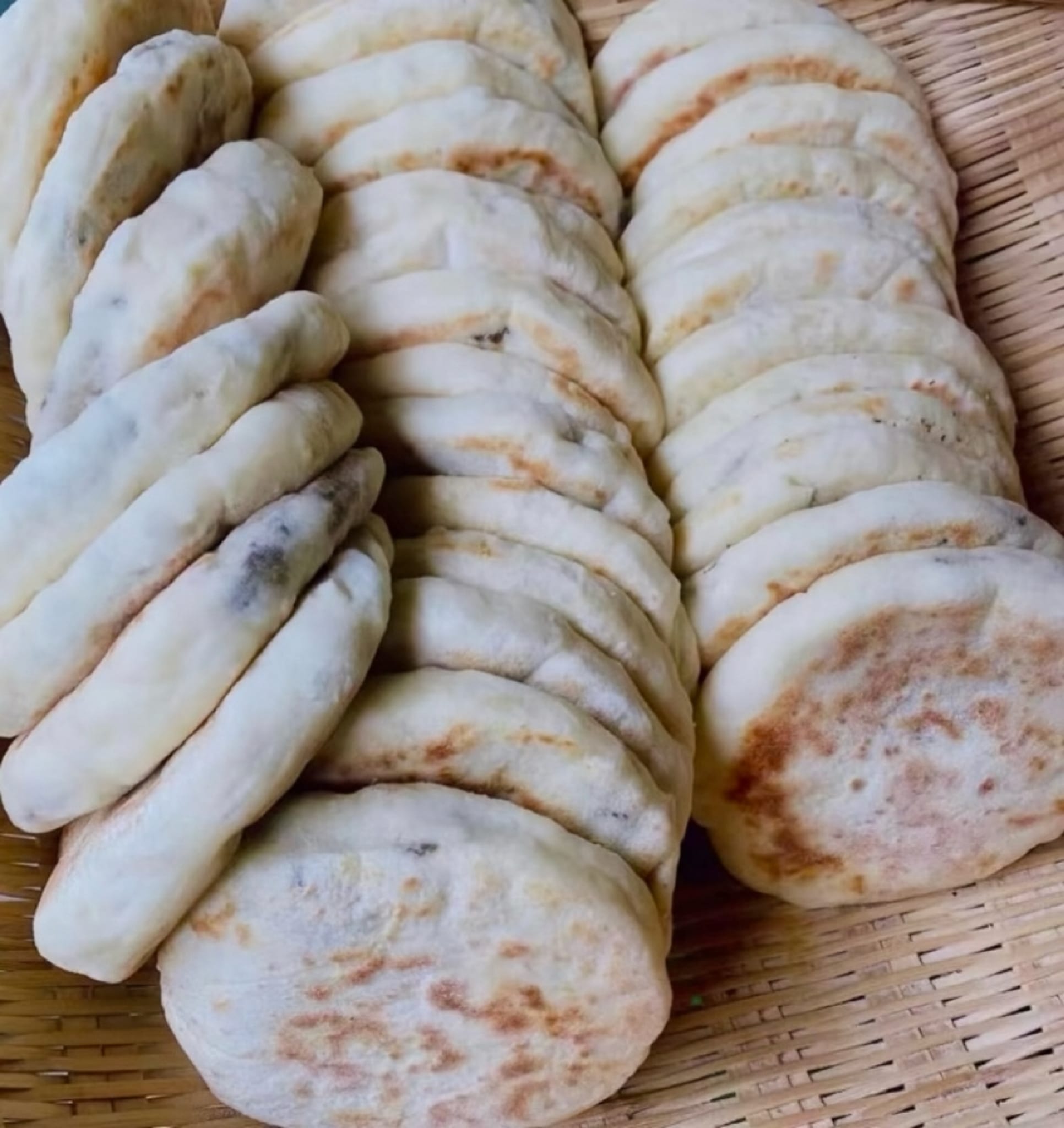
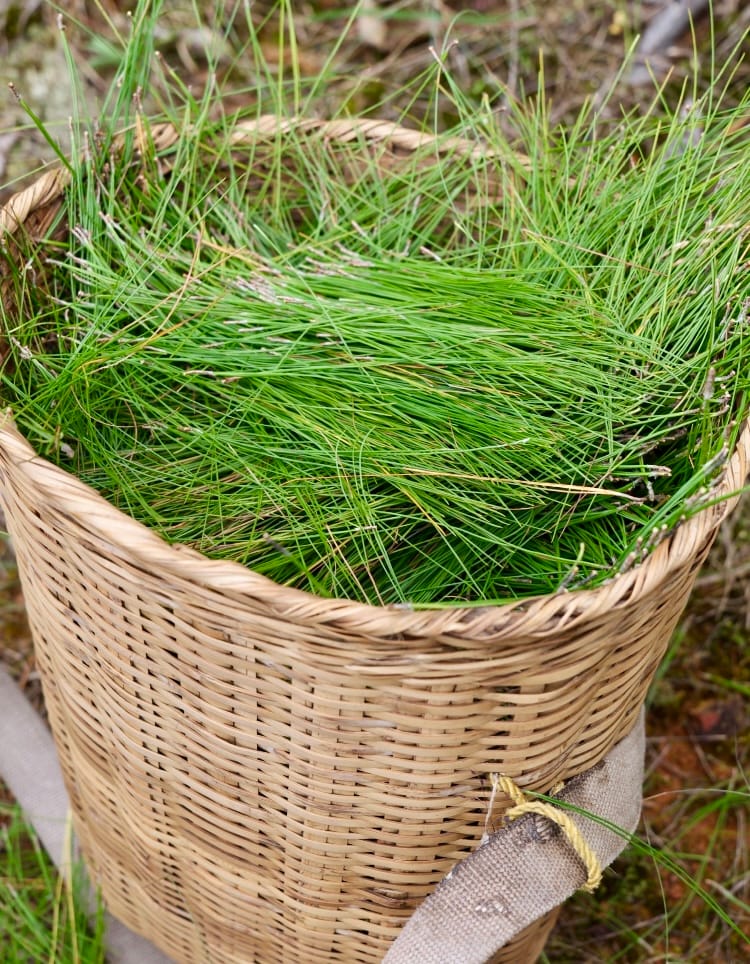
Traditional Kunming “Guandu Baba” Credit:两只老虎 / Fresh pine needles, a prized aromatic Credit:图 late野生菌研究所
Originally called “maibaba,” these cakes became wildly popular among female students from the National Southwest Associated University. Locals jokingly called these young women “modern girls,” or “modeng.” Eventually the cakes themselves were renamed “Modeng Baba.”
“Buy two Modeng Baba, add four liang of roasted pork from the neighboring shop, drink a bowl of strong tea — it is a ‘small joy’ that warms the stomach and the heart.”
Yunnan writer Yu Jicong also described the role of pine needles in fermentation, the same method my family used when I was young.
“To make pickles, my mother first had to prepare sweet rice wine. She steamed sticky rice, mixed it with yeast, placed it into a clay jar, then buried it inside a pile of fresh pine needles. After four or five days, the sweet white wine fermented, infused with the fragrance of pine.”
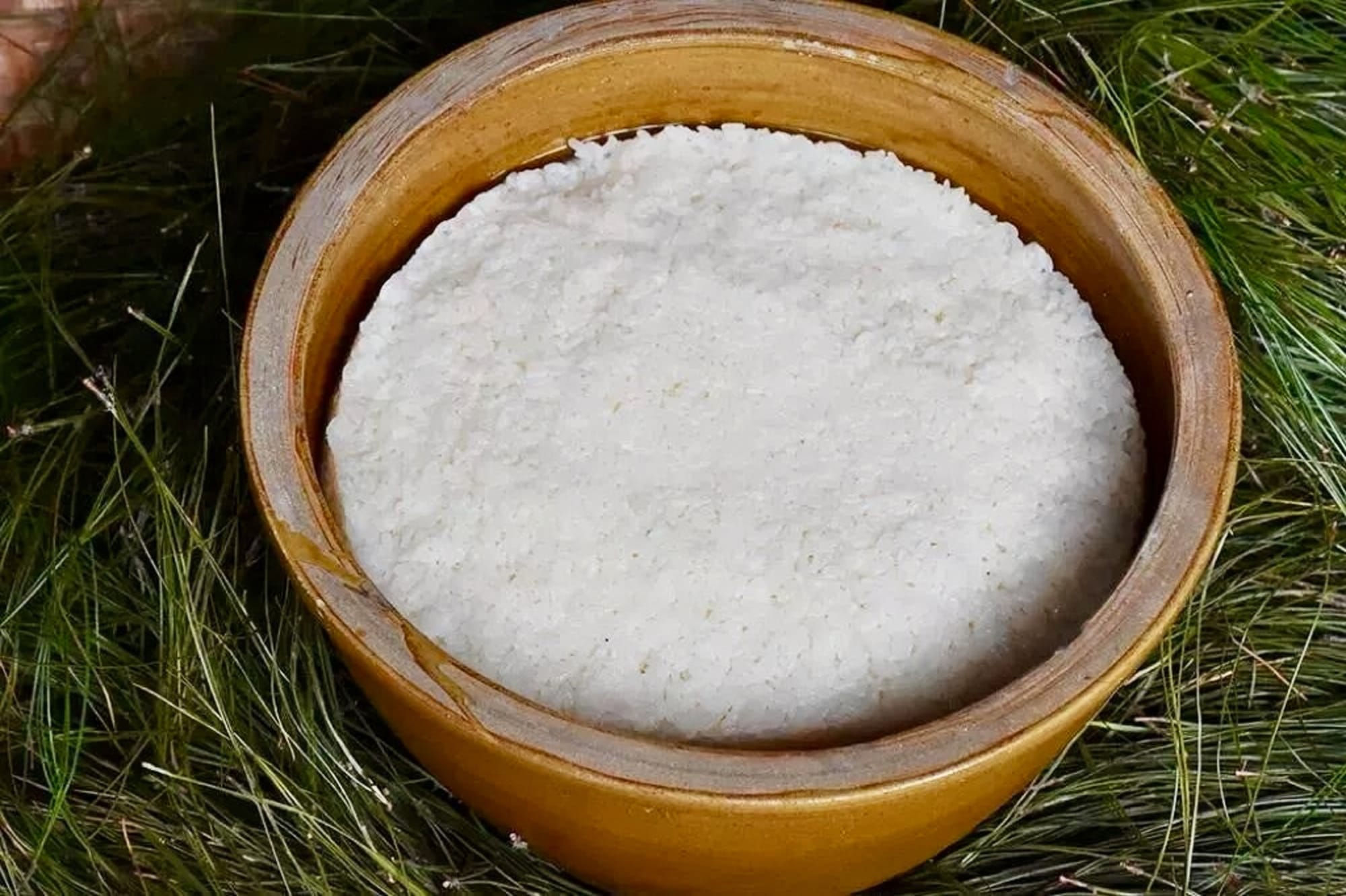
Cooked broad beans and soybeans were also buried in pine needles until lightly fermented and aromatic. They were then mixed with sweet rice wine, chili, fennel seeds, star anise powder, Sichuan pepper, and salt. The resulting preserved vegetables carried a fragrance I still call “my mother’s flavor.”
Co-founder of Snout & Seek, Hui Mu is a Yunnan native who loves hometown cuisine and local culture, Hui is currently based in Chengdu, Sichuan, engaged in food culture writing and magazine editing. Hui enjoys reading, trying new cuisines, hiking, and people-watching.
No spam, no sharing to third party. Only you and me.

Member discussion