Dong “Xianghe Nuo” Glutinous Rice, A Tradition That Nourishes Body and Spirit
“Glutinous Rice Is the Staple Food of Dong Families”
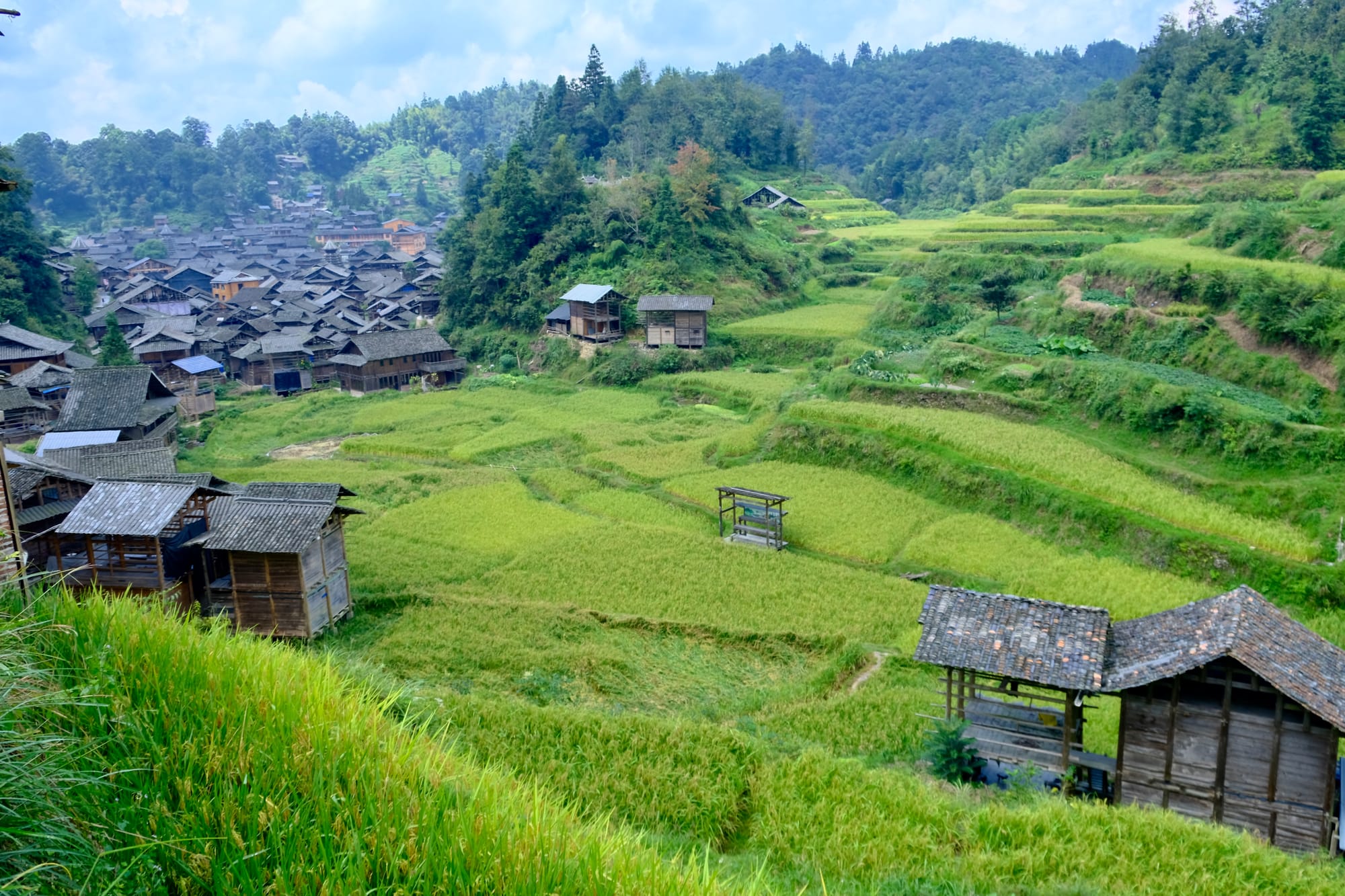
In September, in Huanggang Dong Village, you will see bundles of rice stalks hanging at the entrances of almost every home. They are decorations, but also next year’s seeds. Inside the kitchen, glutinous rice is the family’s daily staple, the most reliable food on the table for easing hunger and fatigue.
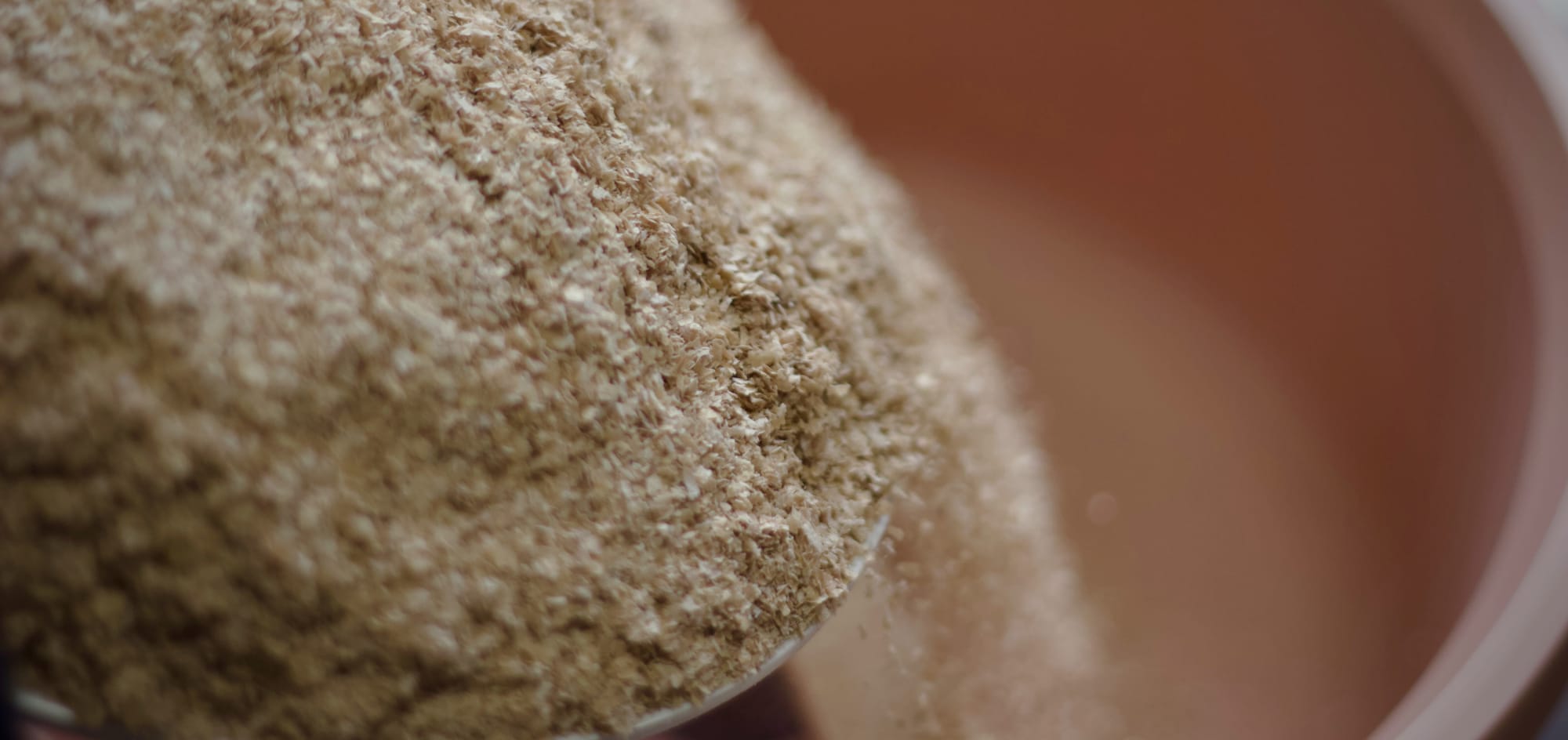
Huanggang Dong Village has a history of around 800 years. The village is made up of five clans and nearly 400 households. In Guizhou, many ethnic minority communities, including the Miao and the Dong, have long treated glutinous rice as their staple. Even after Han settlers moved into Guizhou to cultivate farmland and grow other types of rice, the Dong people’s tradition of eating glutinous rice never changed.
“Rice just doesn’t taste as good without glutinous rice.” “When we worked away from home, what we missed most was the rice from our village.” “We have more homemade rice wine than we can finish.” A local art teacher who teaches at Huanggang Primary School said this. His hometown, Zhaoxing Dong Village, is also a Dong community built around glutinous foods. It is only a 46 minute drive from Huanggang, yet the glutinous rice there tastes completely different. It lacks the springy chew and the fragrance that Huanggang rice has. For villagers who work far from home, what they find hardest to let go of is exactly this soft, sticky, irreplaceable taste of home.
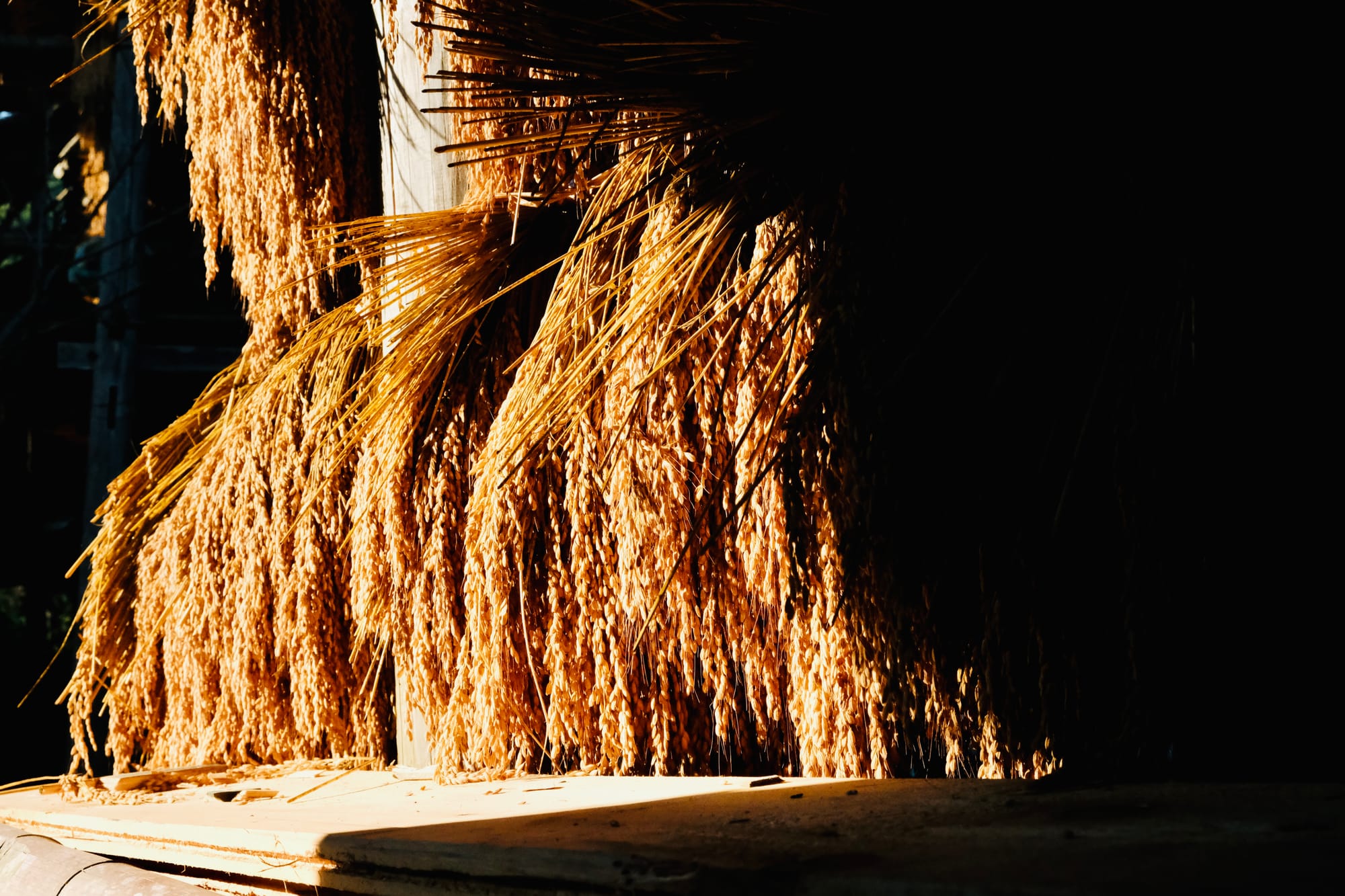
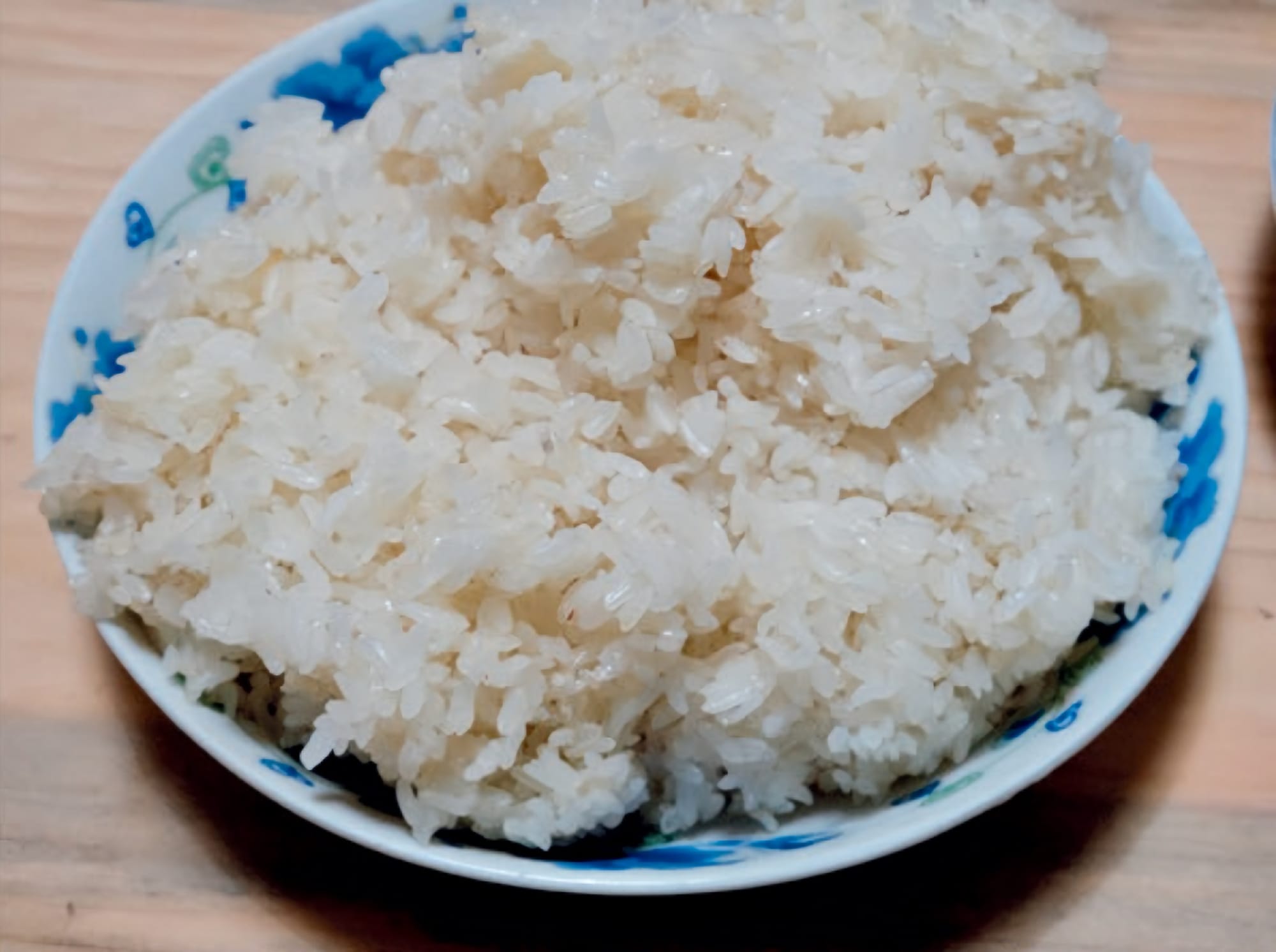
First: Bundles of glutinous rice hung up to dry. | Second: Steamed glutinous rice. Locals like to shape it into a ball by hand and eat it with duck eggs and sour soup.
Glutinous rice contains a high proportion of amylopectin. After you eat it, the breakdown process is slower. Compared with regular rice, it releases glucose more gradually in the gut, providing energy for longer, which is why it keeps you full. A villager named Wu Meihua said that they have eaten glutinous rice since childhood. Many families eat two meals a day, morning and evening. In the morning, they steam a big pot, and they do not need to cook rice again for the rest of the day. As children, they would tuck a lump of glutinous rice and some pickles into their bag and go to school. One portion could carry them through half the day, all the way until they got home after class.
 Snout & Seek
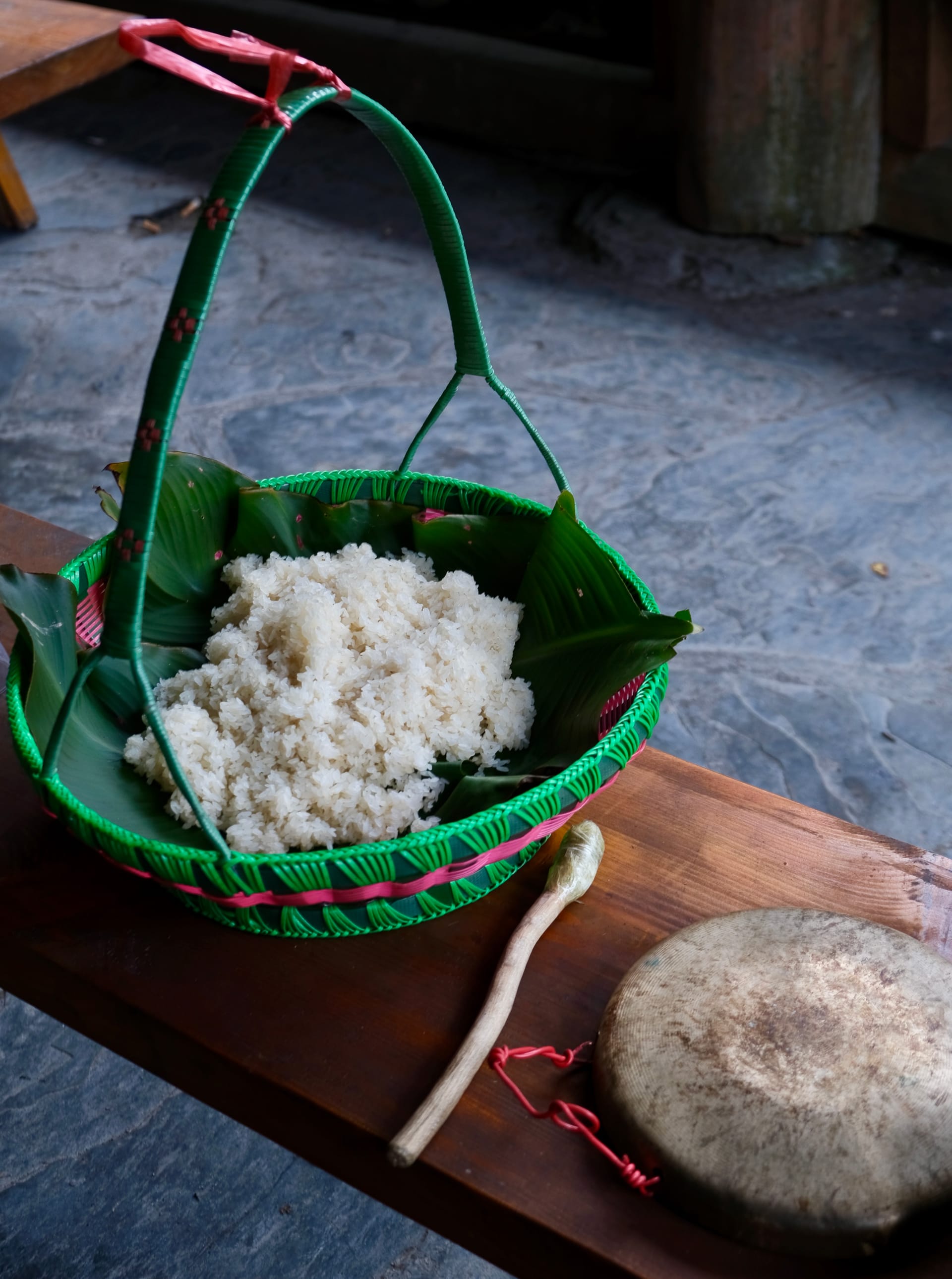
Most households farm roughly 1 acre of land, often located on mountain slopes several kilometers away from the village. In the past, before dawn, people would shoulder their tools, fill a woven bamboo basket with glutinous rice, and walk in the dark to the fields. Cooked glutinous rice is soft, fragrant, and gently sweet. It is filling and has a sheen. Even when it cools, it keeps the same pleasant texture, unlike many long grain rices that turn hard and dry and become difficult to swallow. No matter how far the journey to work, when noon came and bodies grew tired, “you could grab a handful of glutinous rice, catch a few fish from the paddy and roast them, or pick some wild greens and eat them with chili.” Glutinous rice met the need for energy during labor almost perfectly, giving hardworking farmers strength. And when they returned home after a day of physical work, even the simplest stir fry alongside glutinous rice became a steady kind of happiness.
“Eating Glutinous Rice Is an Attention to Flavor and to the Body”
In the Dong language, glutinous rice is pronounced “NUO DIO.” It is not an exaggeration to say that as growers of glutinous rice, villagers in Huanggang know where every grain comes from. They take part in the whole process, from sowing by hand, to daily fieldwork, to watching seeds grow into mature plants. After harvest, the rice is cooked and becomes the staple. Or it is brewed and becomes rice wine. Every grain has passed through villagers’ hands and eyes, and also through the patient nourishment of earth and weather. They love the sticky tenderness of glutinous rice, and they also love the long lingering finish of glutinous rice wine.
 Snout & Seek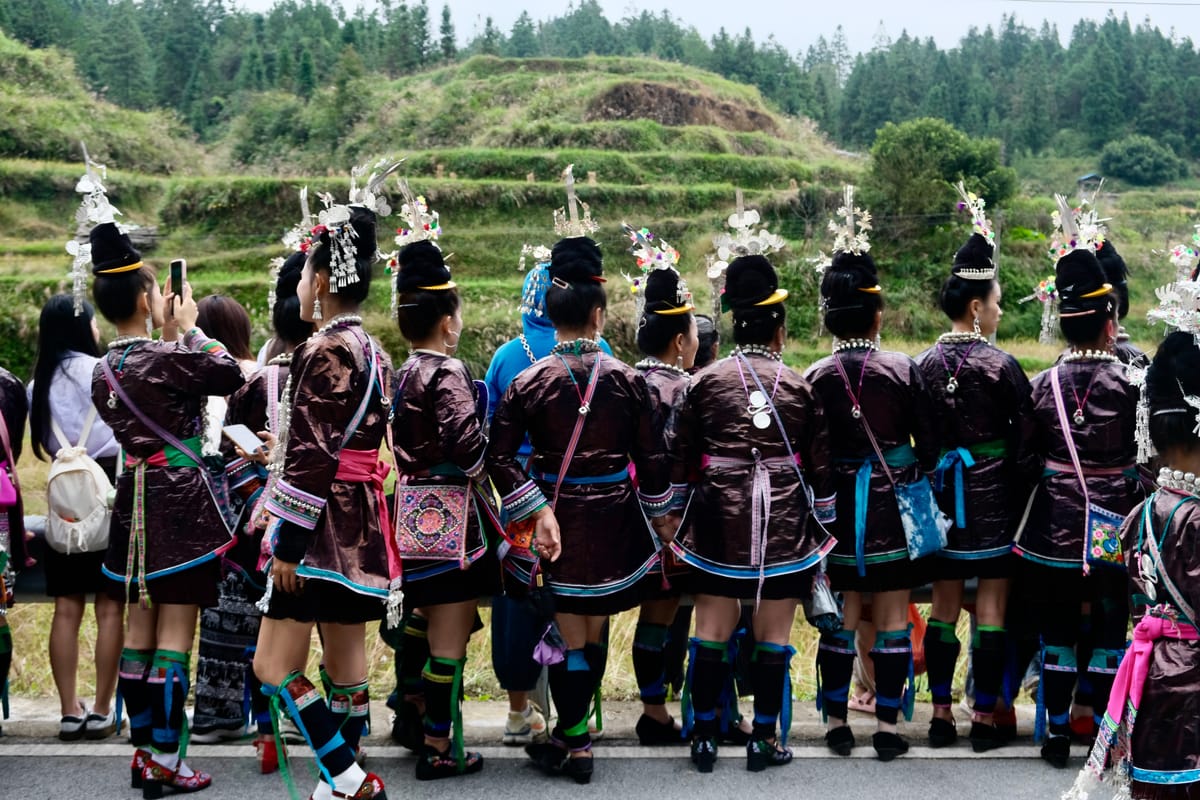
In Southeast Guizhou, glutinous foods and sour foods cannot be separated. This is the everyday logic behind the idea of “rice, broth, and fish.” Fermented foods serve two roles. First, they are side dishes that make staple foods easier and more pleasurable to eat. Second, in this mountainous region, salt was historically scarce because of geographic barriers. Over time, the distinctive sour fragrance produced by fermentation helped replace what the palate sought from salt, gradually shaping a preference for sour flavors. Inside that preference lies the Dong people’s lived wisdom in responding to nature, and their careful attention to what their bodies need.
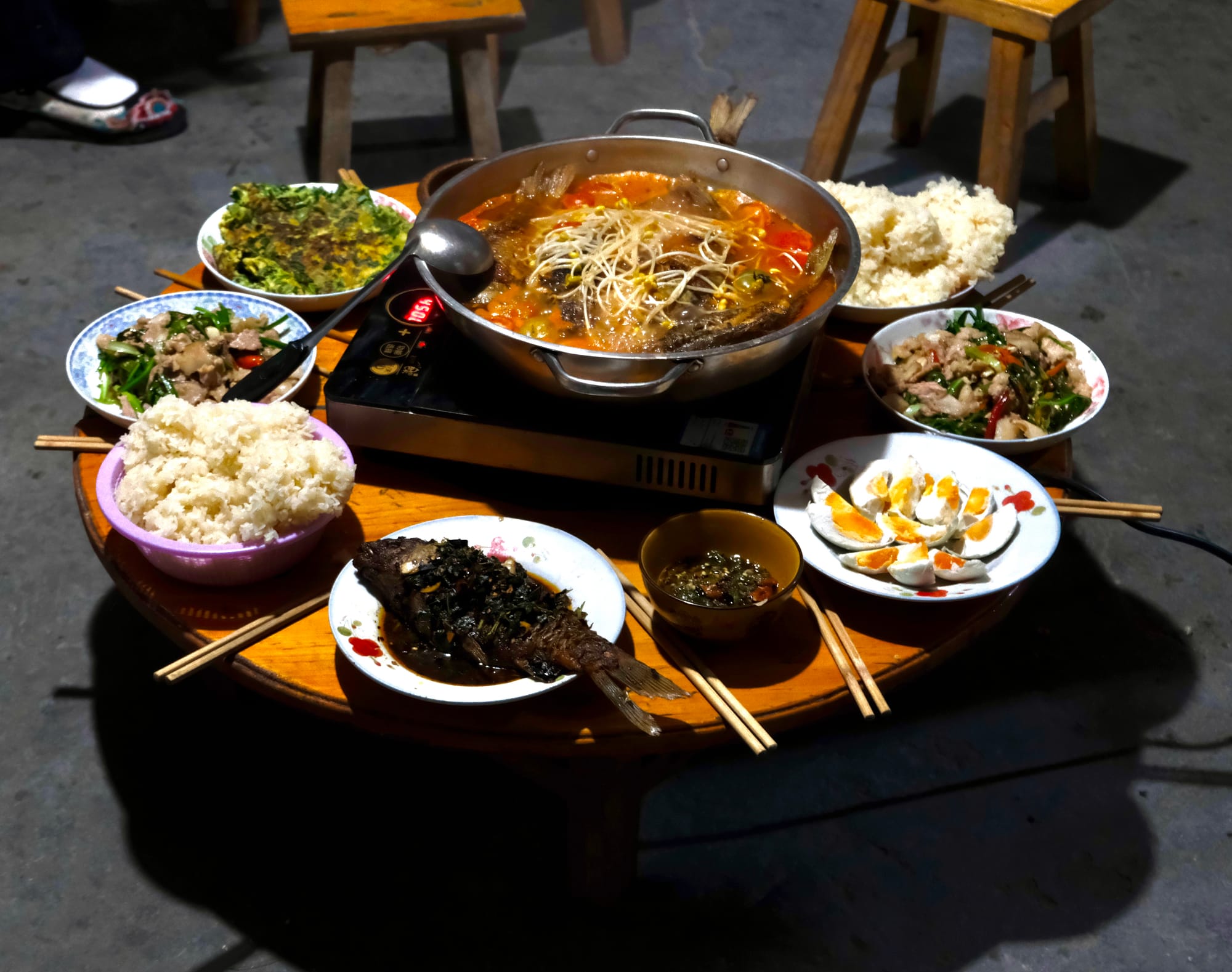
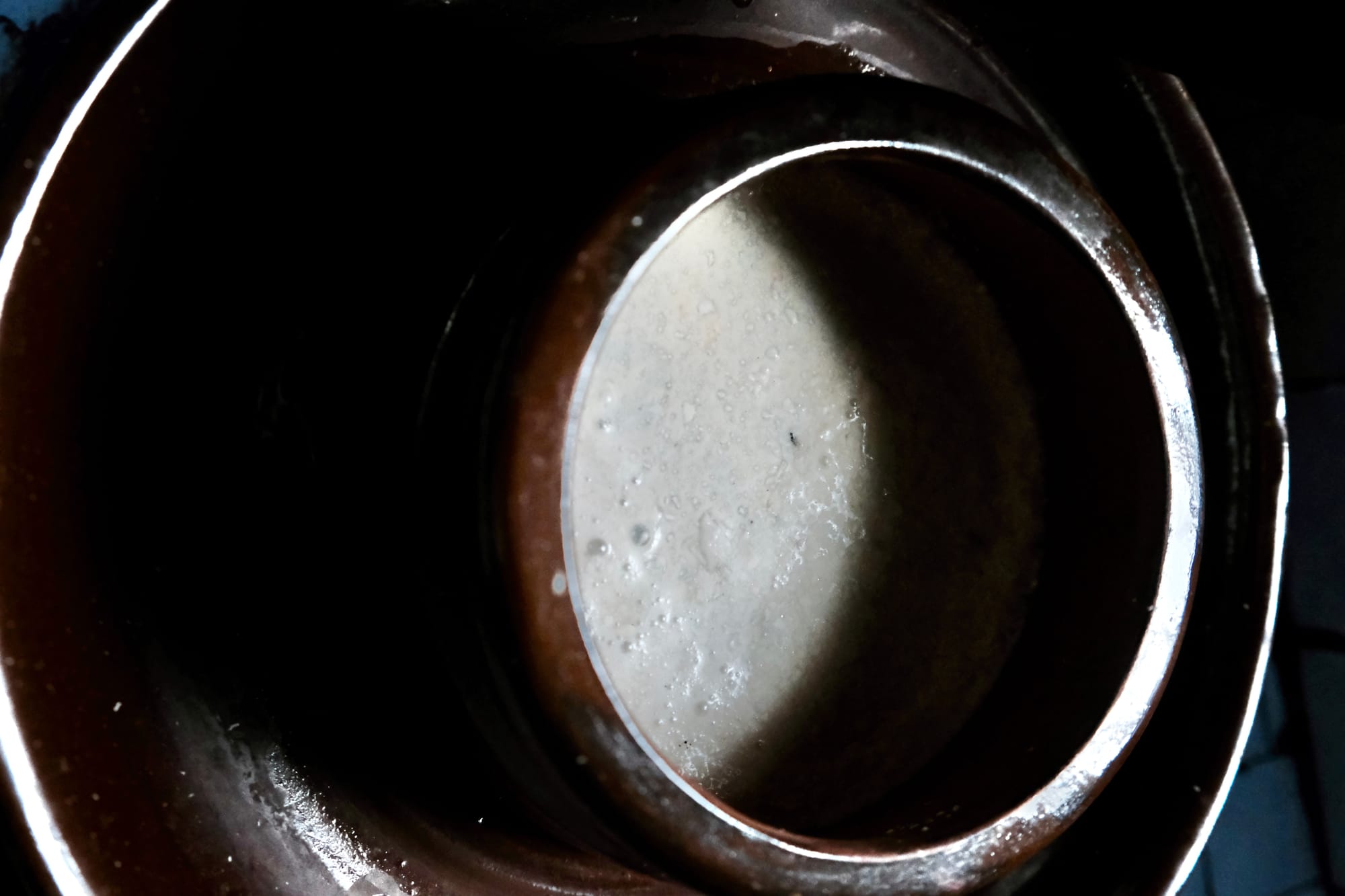
First: A family banquet in a Dong village. In the middle is sour soup fish. The sour soup comes from glutinous rice fermentation. The “sour fish” beside the rice is also fermented with glutinous rice and chili. | Second: “Mi suan,” a fermented rice base used to make sour soup.
Sour foods encourage saliva production and support digestion. Travelers who eat a bowl of glutinous rice often feel heavy or overfull, but locals rely on sour flavors to help keep their stomachs comfortable. Sour pickles, sour fish, sour meat, even dishes like niubie hotpot. These foods may seem intense at first, yet behind them is a delicate reasoning. The Huangdi Neijing speaks of “grains to nourish, vegetables to fill,” a balanced food structure that is wisdom you carry in the body. Many elders in Huanggang live long lives. Perhaps their eating habits, and their relaxed state of mind, are part of the reason.
For those of us who live in cities, our closest relationship with food is often the supermarket or the market. In a busy routine, the number of takeout orders can easily exceed the number of meals we cook. Eating becomes a basic act of filling the stomach, and we rarely pause to ask what our bodies truly need, or what we might be lacking. The body’s needs shift with the seasons. Spring and autumn call for warmth and gentleness. Summer and winter call for nourishment and restoration. To eat what the body most needs at the right time is part of the Dong people’s practice of listening inward.
On days without mountain work, villagers in Huanggang eat breakfast, which is also lunch, at around noon, and dinner at nine or ten at night. This is not only because glutinous rice is so filling. It also comes from a deliberate choice to create an unhurried life. “Mornings are for sleeping in, evenings are for singing Dong songs.” At night, when the mood arrives, neighbors gather to drink glutinous rice wine, eat roasted fish, and sing Dong songs, with old and young together. This is a kind of ease that belongs to the villages of Southeast Guizhou, under moonlight beside the drum tower.
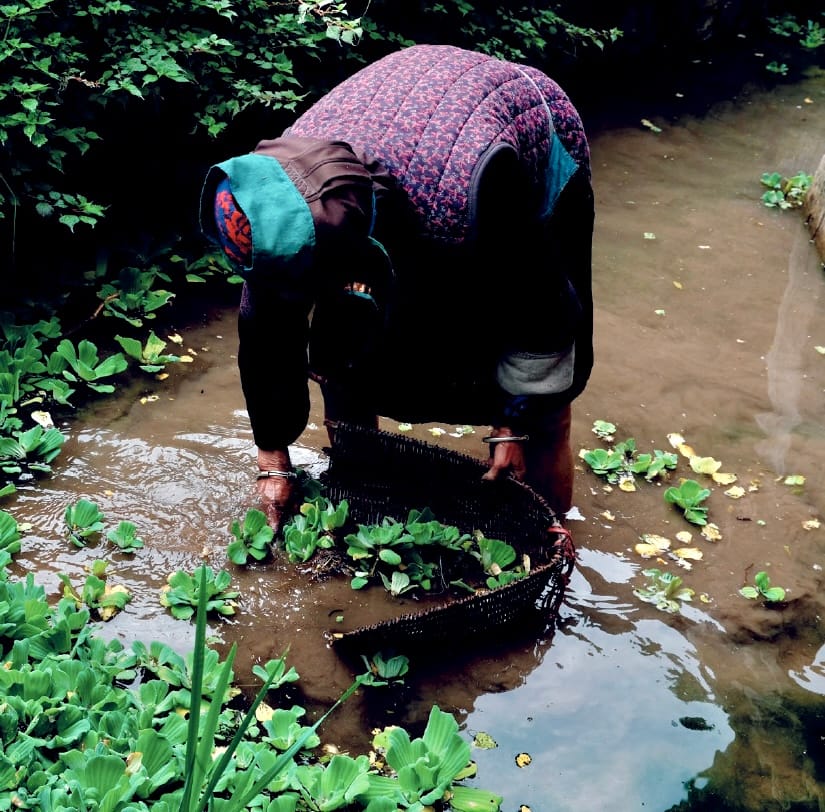
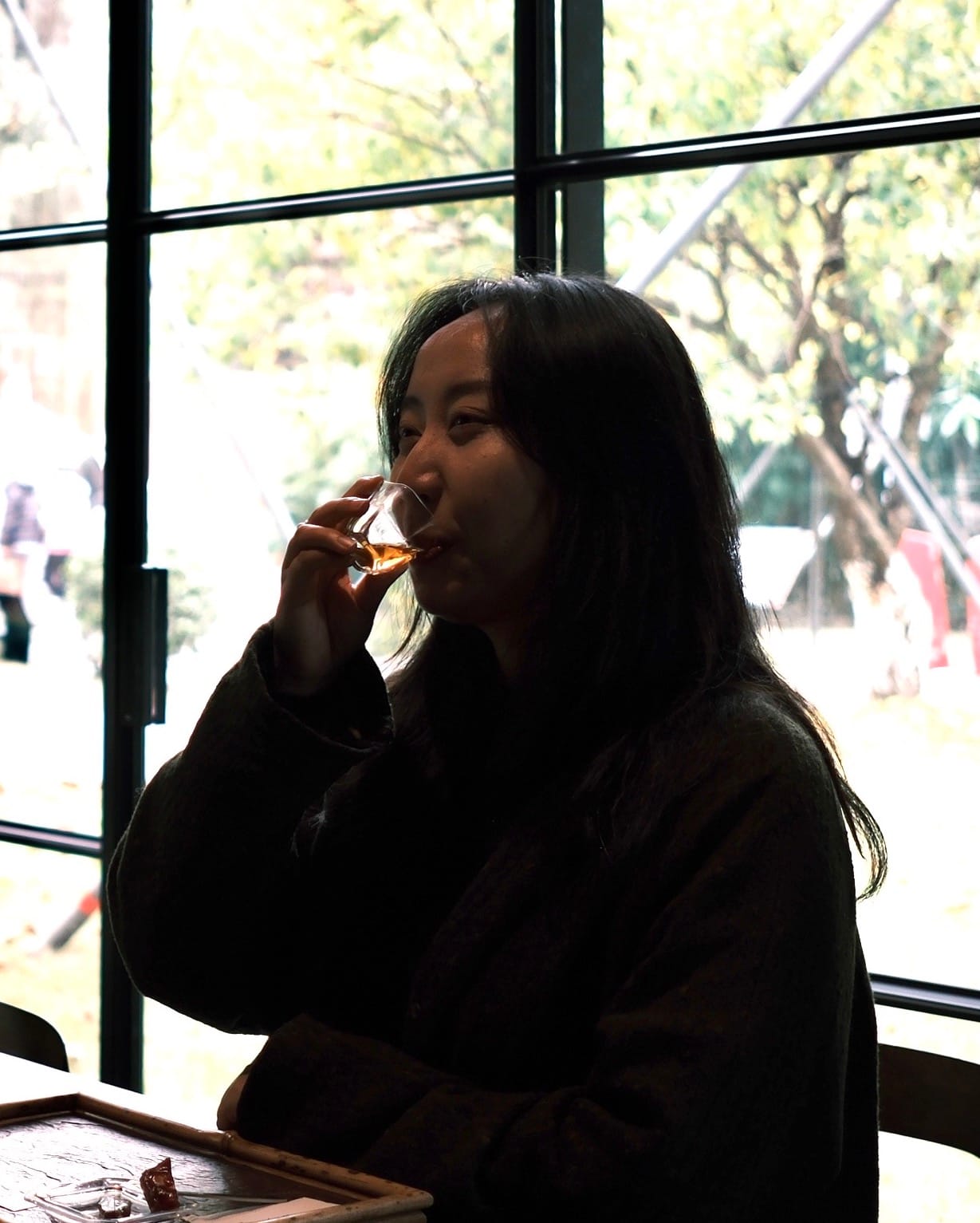
Co-founder of Snout & Seek, Hui Mu is a Yunnan native who loves hometown cuisine and local culture, Hui is currently based in Chengdu, Sichuan, engaged in food culture writing and magazine editing. Hui enjoys reading, trying new cuisines, hiking, and people-watching.
No spam, no sharing to third party. Only you and me.