A Modern Nomad Following Flowers for Wild Honey in China
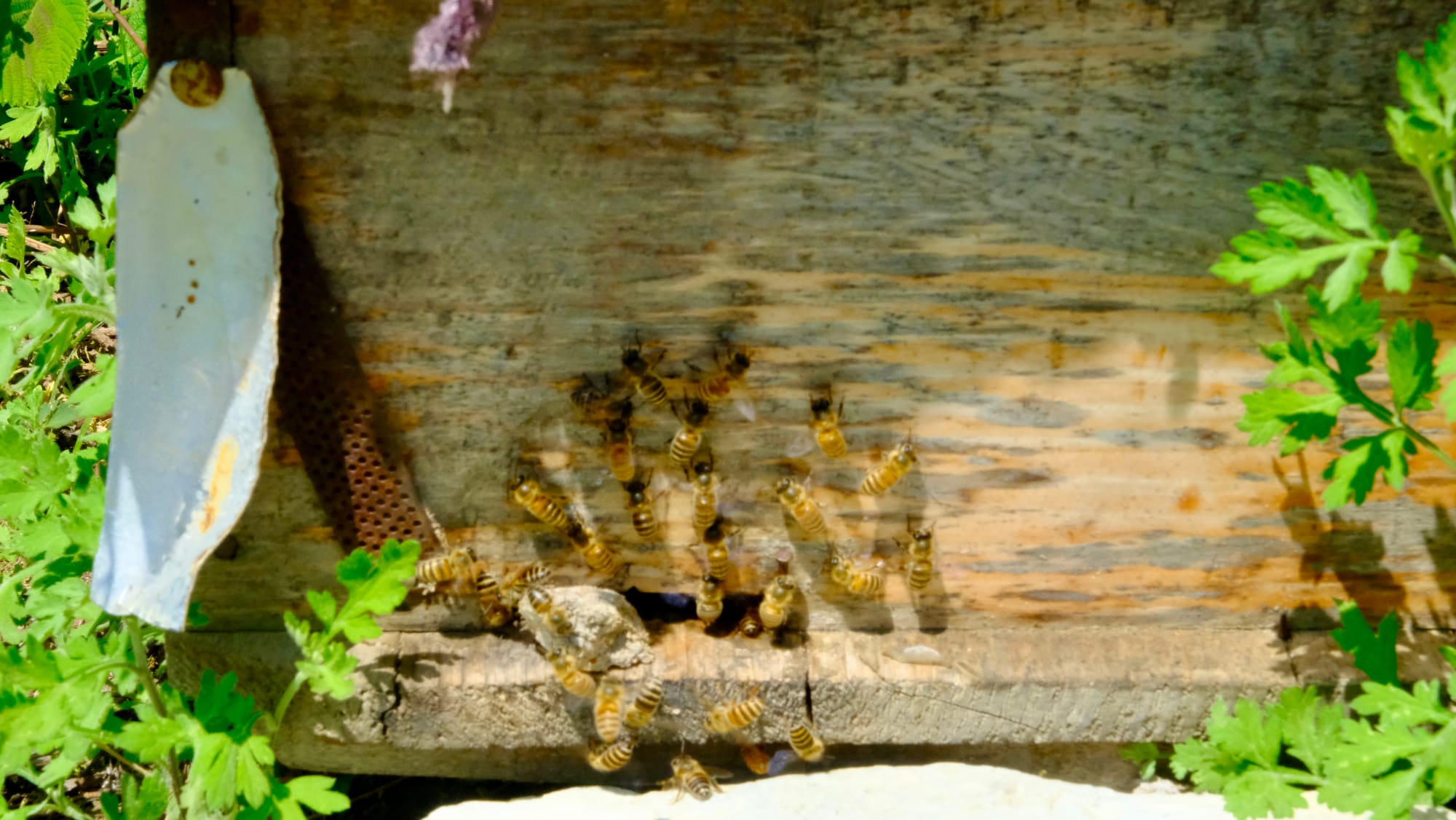
In April 2023, at the foot of the mountains in Mianning, Liangshan, we met a beekeeper named Jikang Tiegu. He is Yi, one of Southwest China’s minority peoples, and he is now the last beekeeper left in his village. He began keeping bees at the age of twenty-four, and his life has since moved with the seasons. Year after year, he relocates with each flowering period. Jikang Tiegu has built more than a hundred rectangular wooden hives by hand, using locally abundant fir trees. Because honey cannot handle direct, harsh sunlight, every hive is covered with branches and leaves he gathers nearby.
The traditional hives in this region are simple and old in design. A log or wooden box is hollowed out on one side, with a small square opening near the bottom as the bees’ doorway, and a lid placed on top. This style of hive has existed in China for thousands of years. Its shape encourages the colony to develop in a way that stays close to nature. But it is difficult to manage, and harvesting honey can easily injure bees, which is why this kind of hive is now rarely seen.
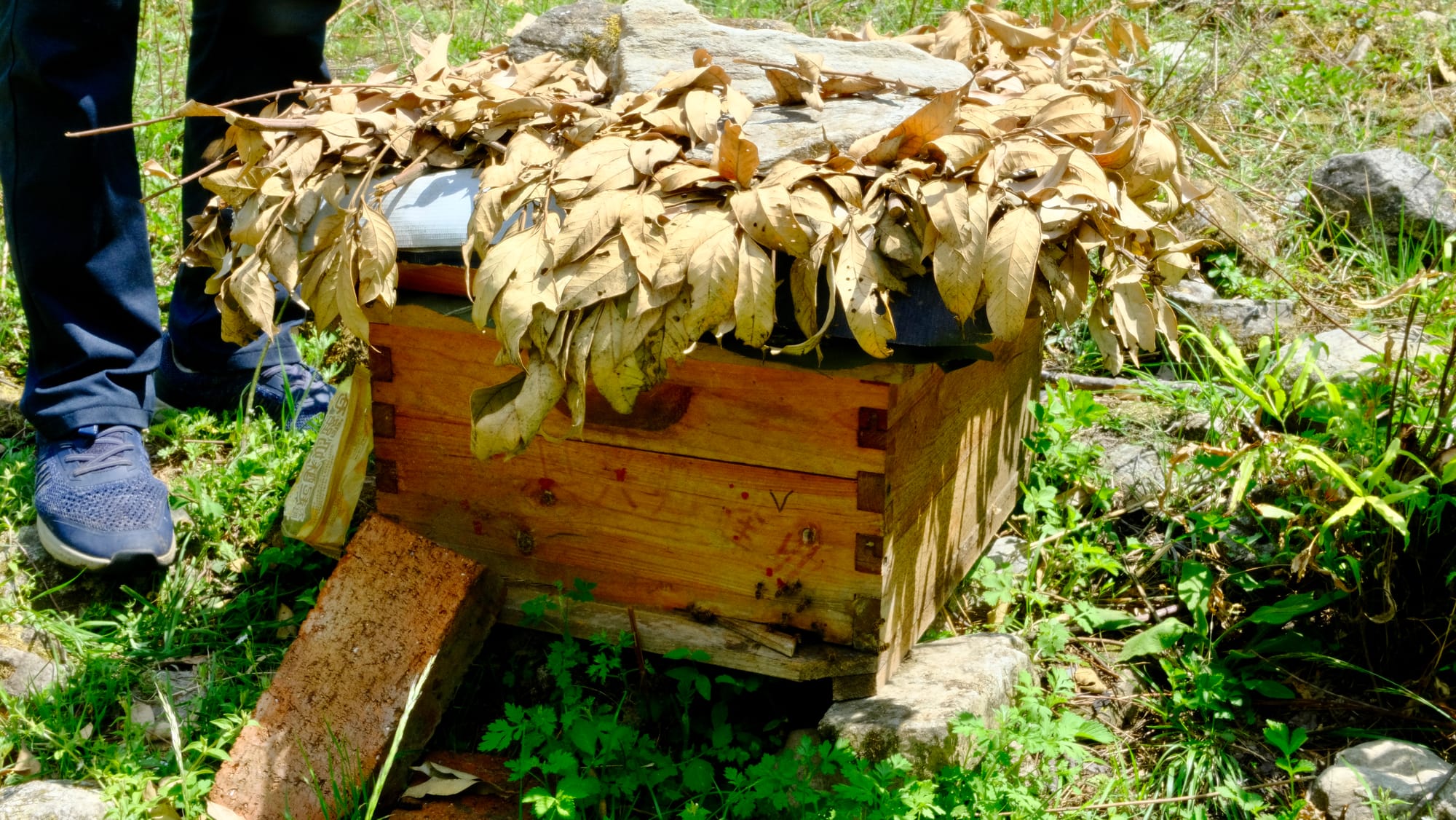
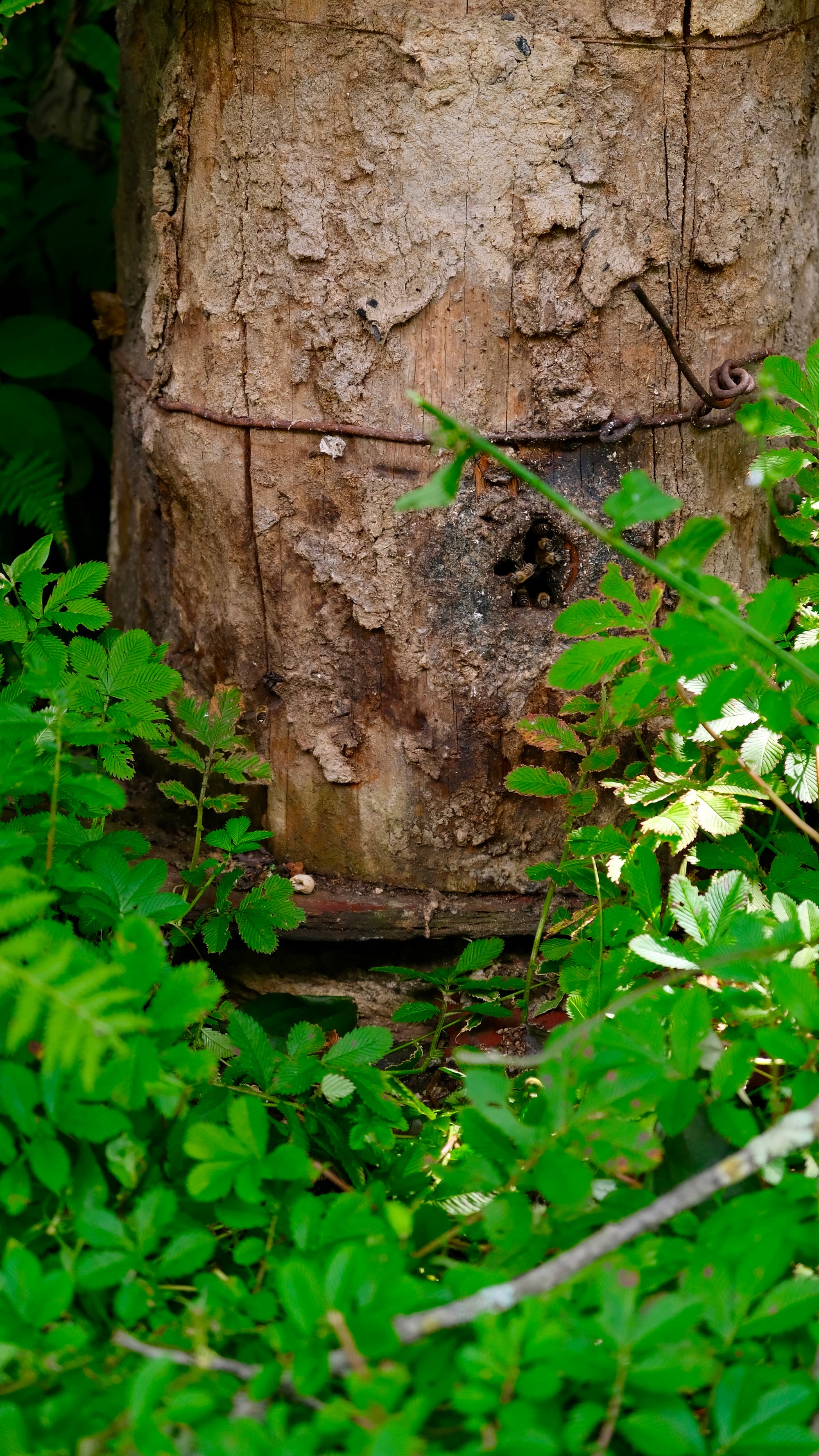
First: Wooden hives made by the beekeeper from local fir. / Second: The oldest hives are made from tree trunks, hollowed out for bees to build their nest inside.
Beside his hives, Jikang Tiegu has set up a makeshift tent. Beekeepers here often live outdoors, following their colonies from place to place. Sometimes they camp by a hidden mountain lake, sometimes on a gentle slope in a high forest, and sometimes beside an open plain covered in flowers. The location changes each year, but one thing stays the same: they always end up where the land is in full bloom.
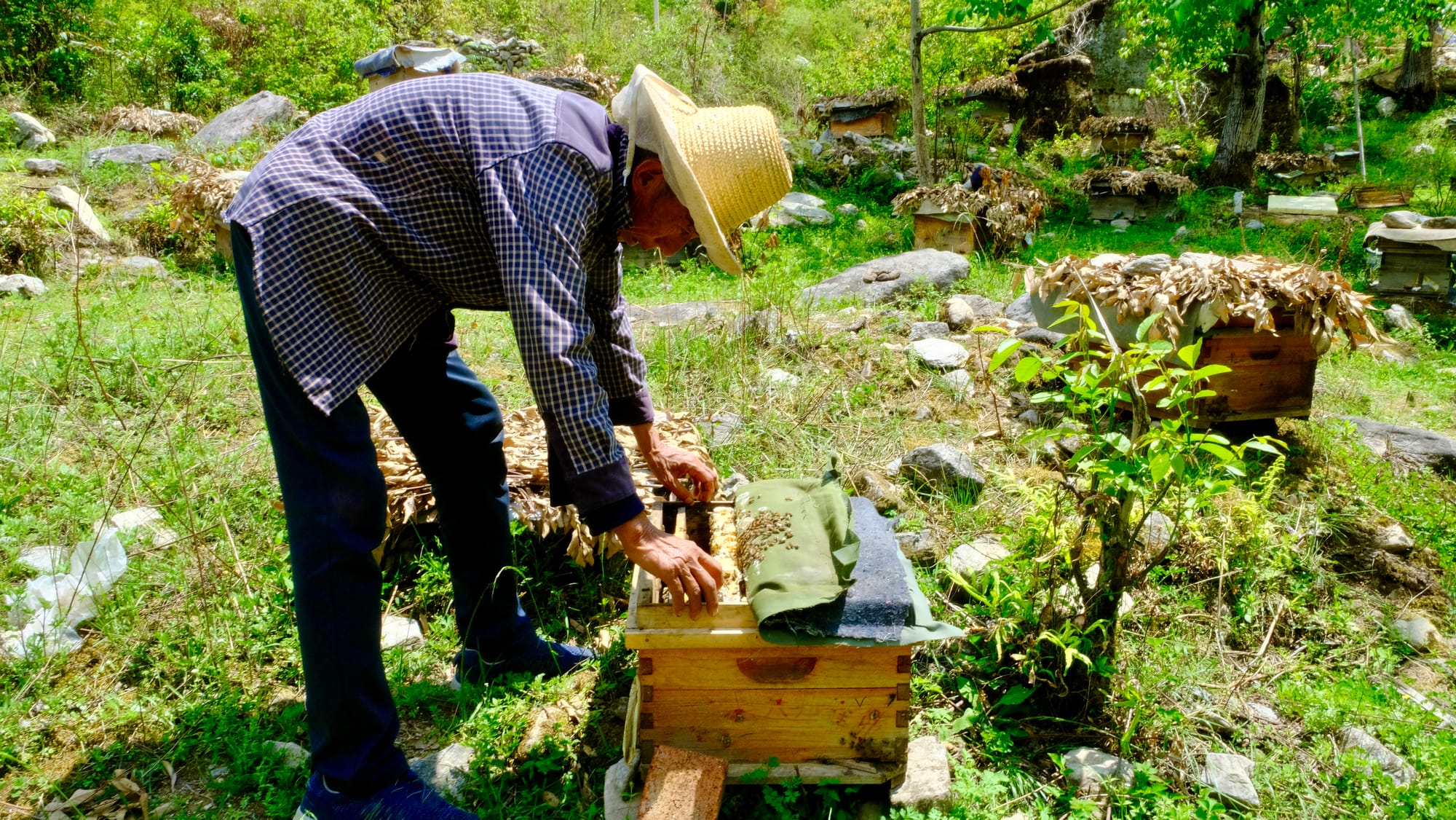
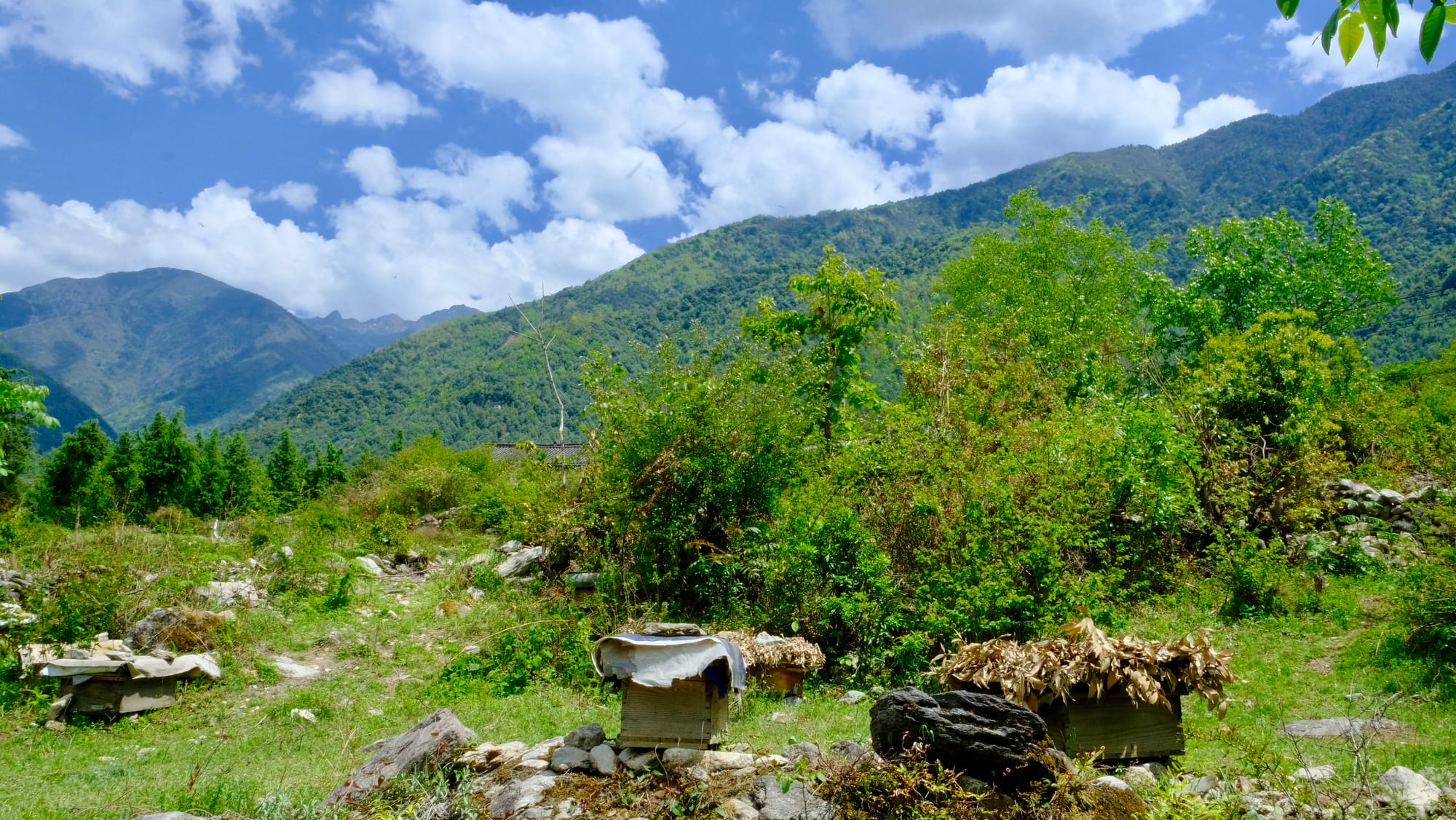
First: The bee keeper is dividing a colony to prevent overcrowding in one hive and to keep the bees comfortable. / Second: The tent sits next to the hives, with a view stretching toward distant mountain ranges.
“Usually they fly out in the morning to collect nectar,” he told us, “and they come back around five in the afternoon, like people getting off work. Sometimes they do not return until dusk.”
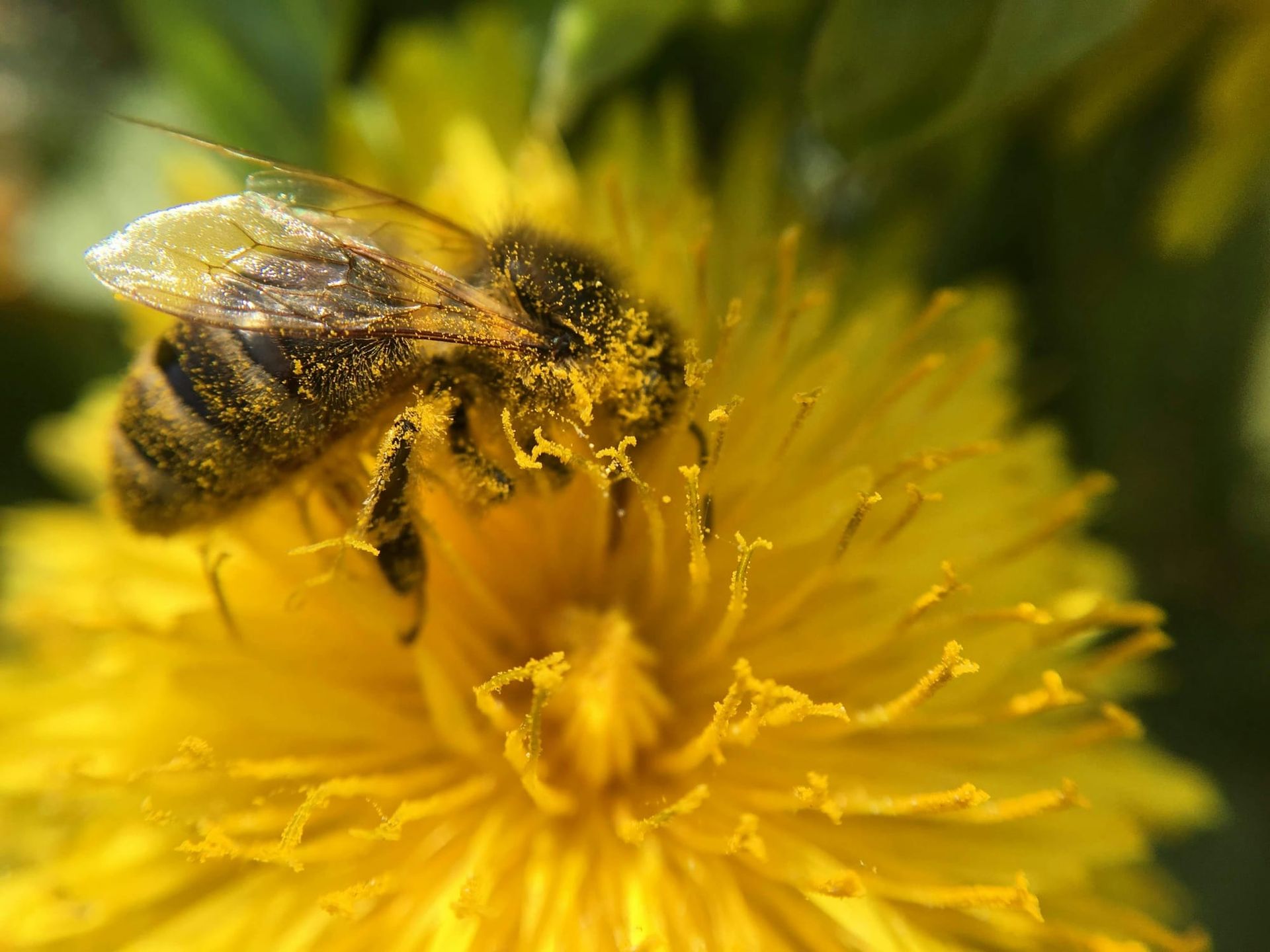
When a bee returns home, its legs are packed with pollen, food for the young bees. The nectar has already been swallowed and carried inside its body. Jikang Tiegu knows his bees well. Their flight radius is no more than three kilometers, which means he must move the hives before flowering begins, placing them within three kilometers of the best blooms.
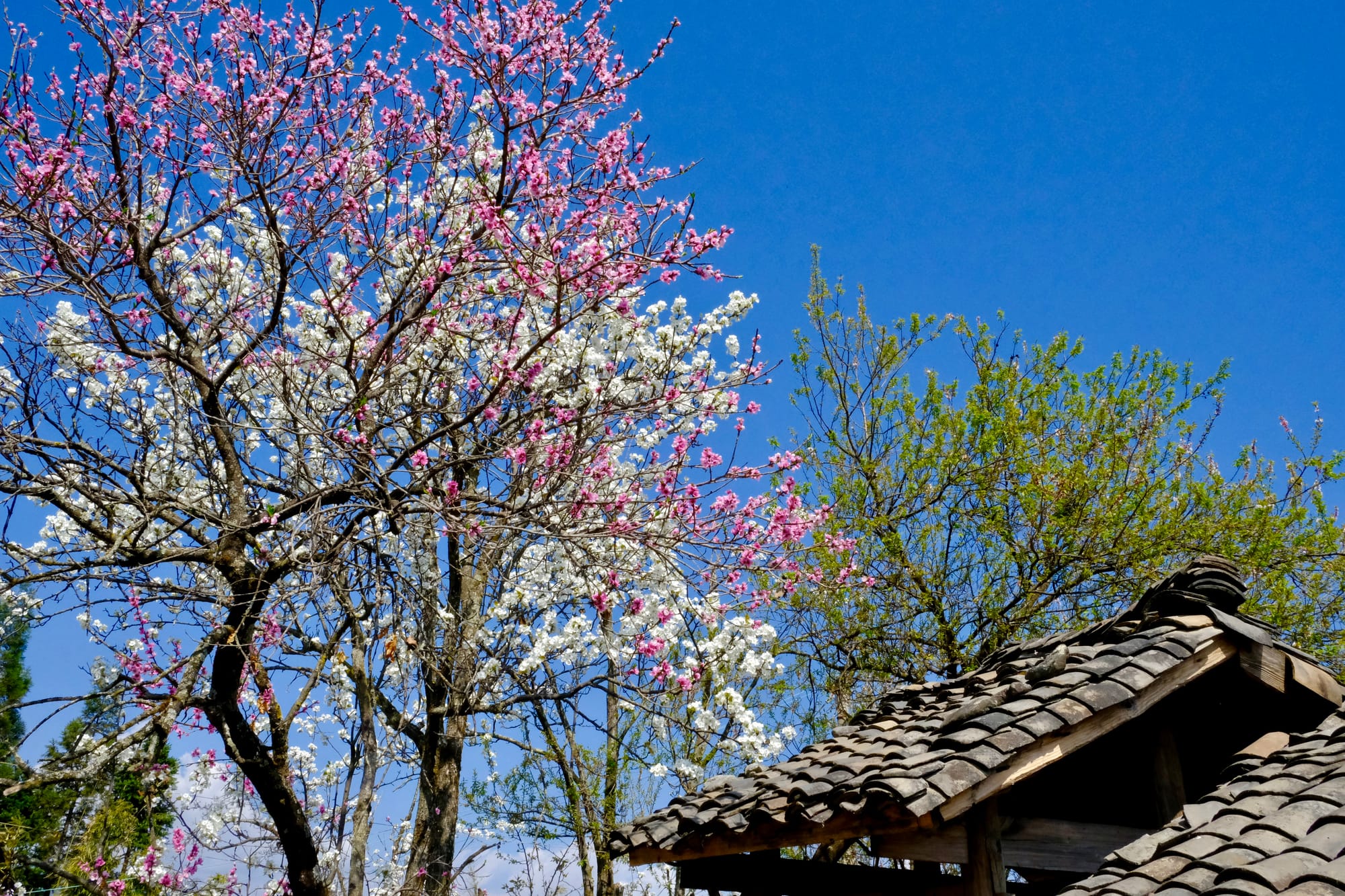
A beekeeper’s day can look almost leisurely. Beyond preparing his own meals, he spends most daylight hours near the hives mainly to prevent a new queen from splitting off and leaving, which would reduce the colony. It does not require constant labor. What it does require is presence. In many ways, these beekeepers are living inside the wilderness. Every tree, flower, insect, bird, and animal becomes part of their attention. The most ancient, unpolished beauty of the land is something they can witness in a way few others do.
They do not need an alarm clock. Insects and birds wake them. In the afternoon, they might nap in the shade of a large tree. Later they wander into the hills, gathering wild greens, mushrooms, or fruit. At sunset, they cook dinner while waiting for the bees to return. On clear summer nights there are fireflies and stars. The mountain wind turns cool quickly, and if you sit outside too long, you end up going back into the tent to warm yourself by a small fire.
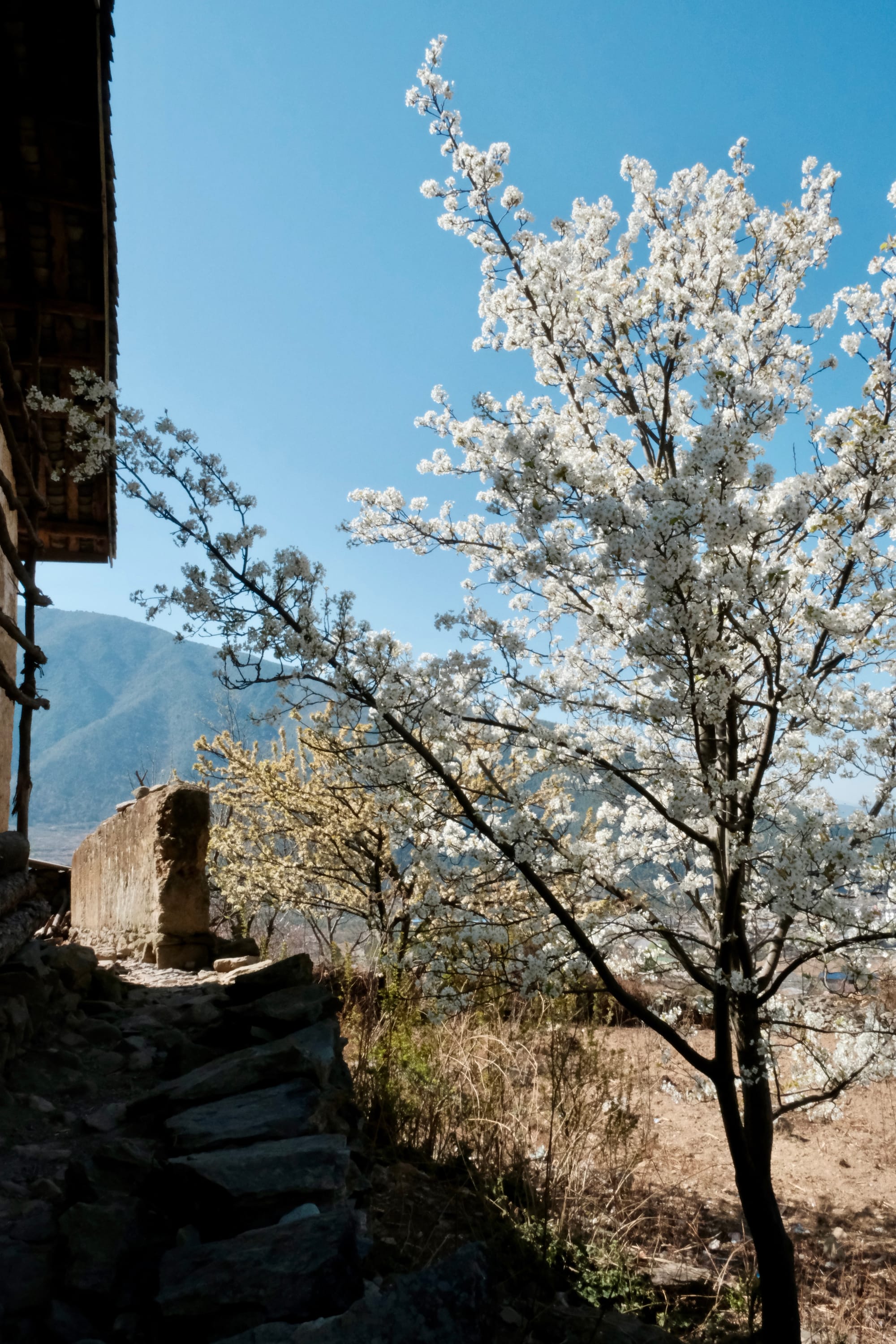
Depending on how the flowers bloom each year, local beekeepers harvest honey anywhere from one to four times annually, but never more than four, no matter how abundant the season. For bees to turn nectar into fully mature honey usually takes more than ten days. In countries such as Australia and New Zealand, some beekeepers harvest only once a year to protect quality and give bees enough time to complete the process. Here, too, people do not rush production. They do not feed bees white sugar to force output, and they harvest only when the honey is fully mature. Most commonly, they harvest twice a year, once in winter and once in summer. The beekeeper told us that the best honey is winter honey. After September, the heavy summer rains have passed, and wild mountain flowers are still blooming. The honey produced then tends to be more concentrated, so winter honey is priced higher than summer honey.
While people here stubbornly keep to an older way of life, they also end up protecting the local ecosystem without even naming it as such. “Half for the bees, half for ourselves,” is the principle they follow. Villagers give the bees a home, and the bees work tirelessly in return. As gratitude, people treat them gently. Even when winter honey sells for more, they do not take it all. They leave enough behind as food for the bees to survive the cold season.
Around Xichang, buying honey is less about choosing a labeled “acacia” or “lychee” jar and more about trusting a person. Locals know which beekeepers still move with the bloom, and they know when to ask for winter honey versus spring honey. The honey is usually sold in bulk and simply called “flower honey,” but that does not mean it tastes the same. Here, people understand difference through season rather than a single flower. Winter honey tends to be thicker and deeper, with a steadier, more resinous warmth. Spring honey is lighter and brighter, with clearer floral notes. It is not as narrowly categorized as supermarket honey, yet it still offers choice. You can taste the landscape through time, a year’s rain, temperature, and flowering rhythm, held in one jar. For many families, buying from these wild-season beekeepers is a way of living that follows the nature instead of the market.
By the standards of modern life, money is only one way to keep going. For them, there are other things worth watching and measuring. Where have the freshest flowers opened? What have this year’s rains and temperatures been like? Whether the bees are thriving. Perhaps keeping bees well is its own quiet achievement. Each time a beekeeper follows bees into the wild, they may come to know a new corner of the world, discover a different landscape, and witness a different kind of abundance. Even if the final harvest is only a small amount of honey, the journey itself still feels like a richer kind of expedition.
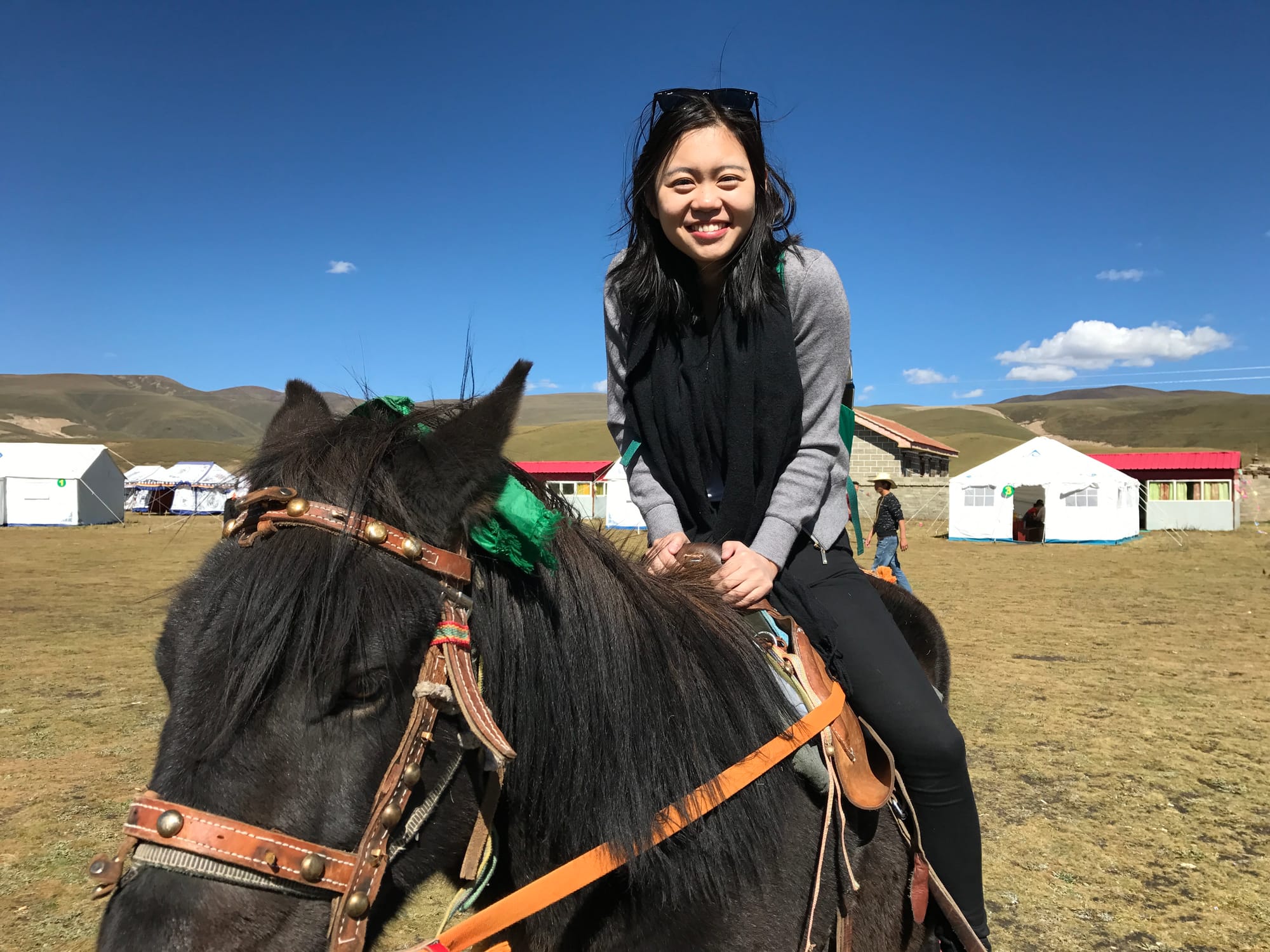
Co-founder of Snout & Seek and FARLAND, ZhuangZhuang is passionate about understanding the local cultures of different ethnic groups through an anthropological lens. She aims to share the sustainable wisdom of these cultures with a wider audience through publications, products, and other methods. Zhuang enjoys photography, jazz music, cute animals, and Chinese traditional divination culture.
No spam, no sharing to third party. Only you and me.
Member discussion